


Search results
Search for "calculations" in Full Text gives 926 result(s) in Beilstein Journal of Organic Chemistry. Showing first 200.
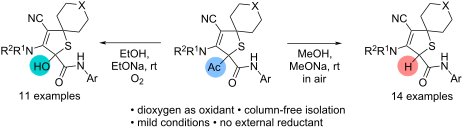
Base-promoted deacylation of 2-acetyl-2,5-dihydrothiophenes and their oxygen-mediated hydroxylation
Beilstein J. Org. Chem. 2026, 22, 192–204, doi:10.3762/bjoc.22.13
- ) Å, b = 9.3243(5) Å, c = 10.1072 (4) Å, β = 102.480(4)°, V = 776.19(7) Å3, Z = 2, μ(Mo Kα) = 0.217 mm−1, Dcalc = 1.345 g/cm3, 4252 reflections measured (7.378° ≤ 2Θ ≤ 61°), 4252 unique (Rint = 0.0407, Rsigma = 0.0545) which were used in all calculations. The final R1 = 0.0596, wR2 = 0.1470 (I >= 2σ(I




Improved synthesis and physicochemical characterization of the selective serotonin 2A receptor agonist 25CN-NBOH
Beilstein J. Org. Chem. 2026, 22, 175–184, doi:10.3762/bjoc.22.11
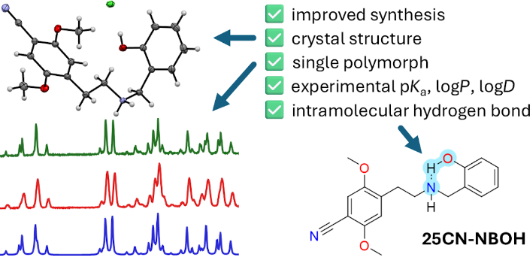
- be partially responsible for its high membrane permeability. To investigate if an IMHB is indeed present in 1, we combined DFT calculations with NMR spectroscopy titrations. For a system containing an IMHB, it would be expected that replacing the proton (O–H) with a deuteron (O–D) would lead to an
- isotope effect observable as changes in the 13C NMR chemical shift [18][19]. DFT calculations were based on a truncated model (Figure 6a) containing the essential elements for intramolecular hydrogen bonding. The structure was considered both in vacuum as well as with DMSO or water as implicit solvents
- and 0.1% phosphoric acid in the ratios 35:65 and 25:75, v/v for the distribution coefficient and stability experiments, respectively. The ChemStation software (Version B.04.03, Agilent Technologies) was used for instrument control and data collection. Computational chemistry DFT calculations were


Design and synthesis of an axially chiral platinum(II) complex and its CPL properties in PMMA matrix
Beilstein J. Org. Chem. 2026, 22, 143–150, doi:10.3762/bjoc.22.7
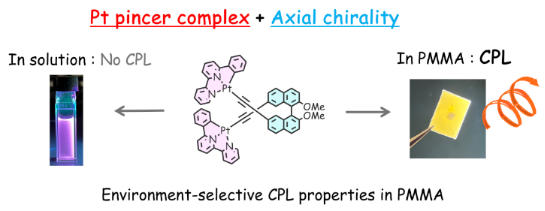
- chiral platinum(II) complex was synthesized via Sonogashira coupling and subsequent coordination of a pincer ligand to a precursor. The complex exhibited a broad absorption band ranging from 250 to 550 nm in the UV–vis spectrum, with TD-DFT calculations indicating mixed ligand-to-ligand charge transfer
- behavior, through a combination of experimental measurements and density functional theory (DFT) calculations. The experimental UV–vis spectrum was in good agreement with the DFT calculations, revealing that the electronic transitions originate from both ligand-to-ligand charge transfer (LL’CT) and metal
- spectroscopy, as well as high-resolution mass spectrometry (HRMS). Due to its low solubility, single crystals suitable for X-ray crystallographic analysis could not be obtained. Spectroscopic analysis and DFT calculations To elucidate the electronic structure of the platinum(II) complex, UV–vis absorption


Symmetrical D–π–A–π–D indanone dyes: a new design for nonlinear optics and cyanide detection
Beilstein J. Org. Chem. 2026, 22, 131–142, doi:10.3762/bjoc.22.6
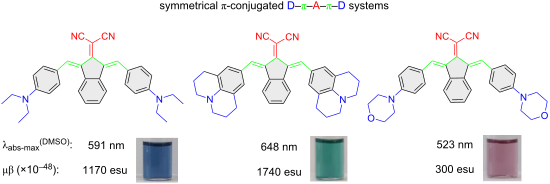
- cyanide and the chemosensor is determined by a 1H NMR study and explained by DFT calculations. Keywords: chemosensor; DFT calculations; donor–π–acceptor–π–donor based organic dyes; indan-2-one; NLO; Introduction Over the past decades, the functional heterocyclic push–pull dyes have attracted significant
- functional theory (DFT) and time-dependent DFT (TD-DFT) calculations, which were consistent with experimental results. NLO properties of the compounds were experimentally determined using the EFISH method and calculated using theoretical methods. Additionally, the thermal decomposition temperatures, an
- spectrometry methods (Figures S1–S10 in Supporting Information File 1). Optical properties of dyes Photophysical properties of dyes 2a–c were assessed in four different organic solvents with various polarities (DMSO, acetone, chloroform, and THF) via absorption spectra and DFT calculations (Table 2). Figure 2a


Highly electrophilic, gem- and spiro-activated trichloromethylnitrocyclopropanes: synthesis and structure
Beilstein J. Org. Chem. 2026, 22, 123–130, doi:10.3762/bjoc.22.5
- (Rigaku OD, 2021) software package. All of the structures were solved by direct methods using the SHELXT program [48] and refined by the full-matrix least squares method over F2 using the SHELXL program [49]. All of the calculations were performed in the WinGX software package [49], the calculation of the
- −3, μ(Mo Kα) 8.393 mm−1, F(000) = 504, 9545 reflections measured (6.762° ≤ 2Θ ≤ 139.896°), 3676 unique (Rint° = 0.0391, Rsigma° = 0.0425) which were used in all calculations. Flack parameter 0.299(14), crystal is a racemic twin, and final refinement of this structure was completed as racemic twin
- , F(000) = 576.0, 3763 reflections measured (8.352° ≤ 2Θ ≤ 139.956°), 2056 unique (Rint = 0.0223, Rsigma = 0.0260) which were used in all calculations. The final R1 was 0.0321 (I > 2σ(I)) and wR2 was 0.0844 (all data). Crystal of 9а, C13H10Cl3N3O3, M = 362.60, monoclinic, space group P21/n, at 100(2


Advances in Zr-mediated radical transformations and applications to total synthesis
Beilstein J. Org. Chem. 2026, 22, 71–87, doi:10.3762/bjoc.22.3
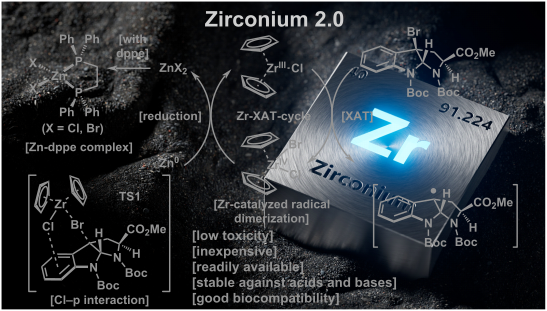
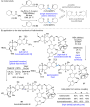
- for the success of the reaction. DFT calculations suggested that in the transition state (TS1), a Cl–π interaction between the chlorine atom on the zirconocene catalyst and the aromatic ring of the substrate facilitated rapid halogen atom transfer (XAT), generating a radical at the C3 position of
- potential and stabilizing the radical pathway. The DFT calculations are shown in Scheme 13A. The activation barrier for the XAT process was calculated to be ΔG‡ = 8.0 kcal/mol, indicating that this process can proceed spontaneously around room temperature. Moreover, the transition state (TS1) suggested the








Reactivity umpolung of the cycloheptatriene core in hexa(methoxycarbonyl)cycloheptatriene
Beilstein J. Org. Chem. 2026, 22, 64–70, doi:10.3762/bjoc.22.2
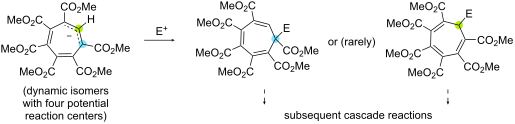
- possibility of i-halogenation via a chain radical mechanism (Scheme 3). The initiation stage includes an oxidation of anion 2 into the corresponding radical 13 which in turn reacts with halogens to form products 4a,b and a halogen atom which can also oxidize the anion. Quantum chemical calculations revealed


Sustainable electrochemical synthesis of aliphatic nitro-NNO-azoxy compounds employing ammonium dinitramide and their in vitro evaluation as potential nitric oxide donors and fungicides
Beilstein J. Org. Chem. 2025, 21, 2739–2754, doi:10.3762/bjoc.21.211
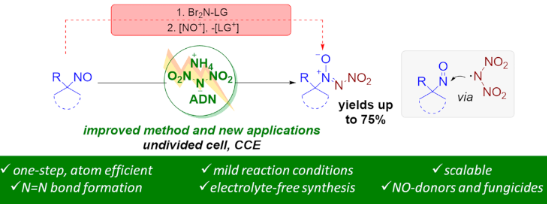
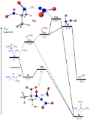
- calculations were performed [93] on ωB97X-3c [94] /CPCM(MeCN) level of theory (Figure 3). Based on cyclic voltammetry data, control experiments, and our previous study, the mechanism of the electrochemical synthesis of nitro-NNO-azoxy compounds 2 was proposed (Figure 3, Scheme 5). The reaction starts from
- end of the reaction), which is sufficient to oxidize ADN. According to the performed calculations, competitive oxidation of 1a does not occur, which is confirmed by the obtained CV-data (see Figure 1 and Figure 2). According to DFT calculations, the reaction of N-radical A with 2-nitro-2
- estimated, as this step requires the change in spin-state. However, unexpectedly we found that addition of higher energy singlet nitrene C-s to A is not barrierless (ΔG≠ 10.9 kcal/mol). Moreover, according to our calculations C-s can easily (ΔG≠ 5.7 kcal/mol) undergo unimolecular rearrangement to the dimer





Mechanistic insights into hydroxy(tosyloxy)iodobenzene-mediated ditosyloxylation of chalcones: a DFT study
Beilstein J. Org. Chem. 2025, 21, 2703–2715, doi:10.3762/bjoc.21.208
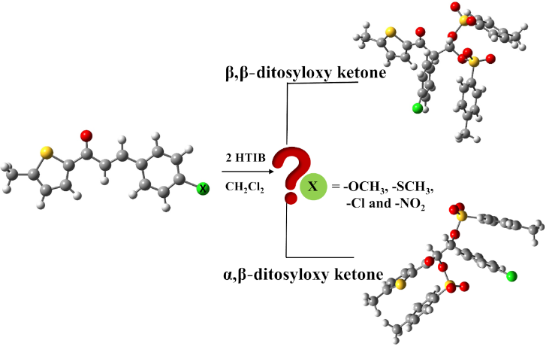
- computationally. The results obtained for chalcones are in qualitative agreement with results reported for substituted styrenes [31]. Computational Methodology Quantum chemical calculations were carried out using Gaussian 09 package [37]. The hybrid exchange-correlation functional B3LYP-D3 (including dispersion
- . The solvent considered for the present study was dichloromethane (CH2Cl2). Frequency calculations were performed for all optimized structures to confirm the stationary point and transition state. Intrinsic reaction coordinate (IRC) calculations were carried out to validate the transition states. The


Recent advancements in the synthesis of Veratrum alkaloids
Beilstein J. Org. Chem. 2025, 21, 2657–2693, doi:10.3762/bjoc.21.206
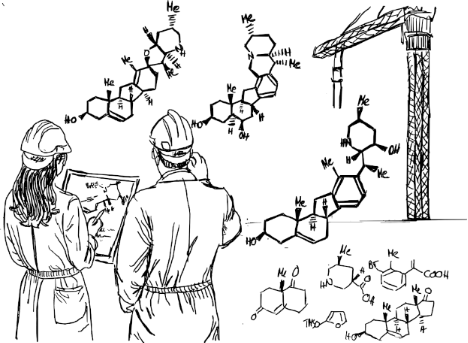
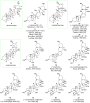
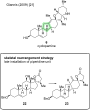
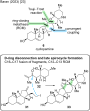
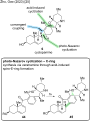
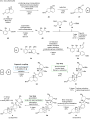
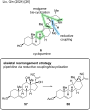
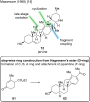
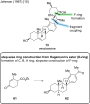
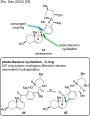
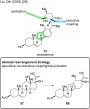
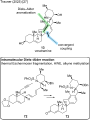
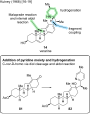
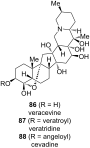
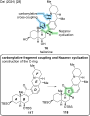
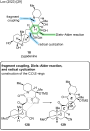
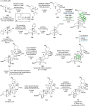
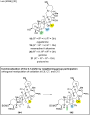
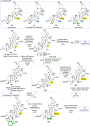
- -NOESY and DFT calculations. The tertiary amine was masked as the hydrochloride salt with concomitant ketal deprotection, which was followed by hydrogenation to remove the benzyl protecting group to obtain (±)-4-methylenegermine hydrochloride (17·HCl) in 31 steps (LLS from commercial materials) and an
















Thiazolidinones: novel insights from microwave synthesis, computational studies, and potentially bioactive hybrids
Beilstein J. Org. Chem. 2025, 21, 2618–2636, doi:10.3762/bjoc.21.203
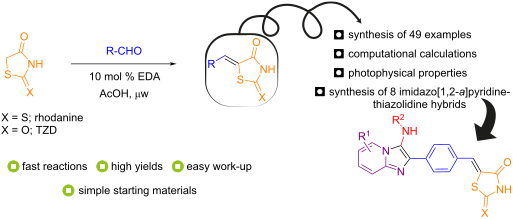
- compounds 3n and 4n was carried out using torsion angle analysis and 13C NMR chemical shift calculations to evaluate the absence of expected signals in the NMR spectra of these compounds. Their photophysical properties were also assessed, confirming a preference for a fluorescence mechanism via an ICT
- efficient synthesis of eight novel imidazo[1,2-a]pyridine–thiazolidinone hybrids in high yields (up to 99%). A spectroscopic analysis of selected compounds was carried out, including torsion angle evaluation and 13C NMR chemical shift calculations, justifying the absence of expected signals in some cases
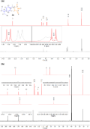
- Information File 1 (Tables S4 and S5). B97-D/def2-TZVPP calculations confirmed the hypothesis that the carbons labeled as 10, 11, 13, and 14 could be split in four peaks (Table 3) with chemical shift differences of ≈1 ppm and ≈8 ppm for the ortho and meta carbon atoms, respectively, with respect to the N






Recent advances in total synthesis of illisimonin A
Beilstein J. Org. Chem. 2025, 21, 2571–2583, doi:10.3762/bjoc.21.199
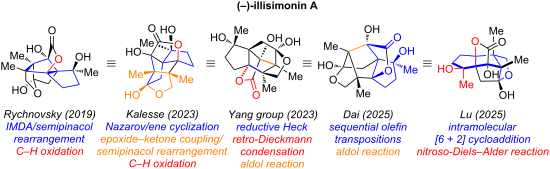
- . However, subsequent density functional theory (DFT) calculations by the Tantillo group on rearrangements of potential biosynthetic precursors revealed that structure 10 corresponds to a transition state rather than a stable intermediate of the 1,2-alkyl migration [27]. Their study further indicated that






Isoorotamide-based peptide nucleic acid nucleobases with extended linkers aimed at distal base recognition of adenosine in double helical RNA
Beilstein J. Org. Chem. 2025, 21, 2513–2523, doi:10.3762/bjoc.21.193
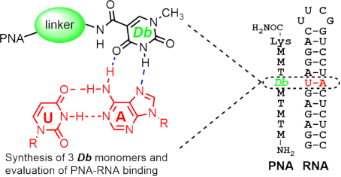
- phenomenon was observed previously with V and this design element was intentionally incorporated with an expectation toward aiding in triplex stability [33]. For Db1, calculations reveal that the intended H-bond between the cationic –NH2+– moiety did in fact form (ca. 2.1 Å, Figure 7A). However, the distal


Synthesis of the tetracyclic skeleton of Aspidosperma alkaloids via PET-initiated cationic radical-derived interrupted [2 + 2]/retro-Mannich reaction
Beilstein J. Org. Chem. 2025, 21, 2470–2478, doi:10.3762/bjoc.21.189
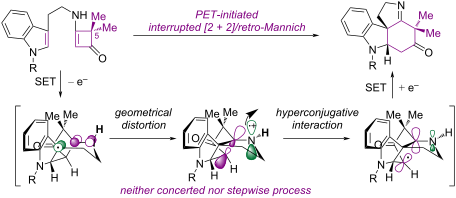
- of new reactions and strategies. In this work, a PET-initiated cationic radical-derived interrupted [2 + 2]/retro-Mannich reaction of N-substituted cyclobutenone provided a facile approach to the direct construction of the ABCE tetracyclic framework of Aspidosperma alkaloids. DFT calculations showed


The intramolecular stabilizing effects of O-benzoyl substituents as a driving force of the acid-promoted pyranoside-into-furanoside rearrangement
Beilstein J. Org. Chem. 2025, 21, 2456–2464, doi:10.3762/bjoc.21.187
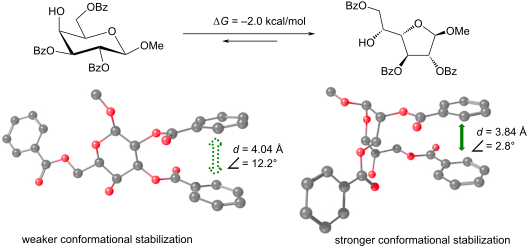
- in this case, a computational study was carried out. Herein, we report the obtained results. Computational Details All the calculations were performed using the ORCA 5.0.4 software package [32]. DFT B3LYP functional with the third order Grimme’s correction (D3) [33] and def2-TZVP [34] basis set were
- employed. CPCM model [35] with the default parameters for methylene chloride was used to account for bulk solvent effects. Such choice of computational parameters for protected carbohydrate molecules was validated in our previous investigation [36]. The defgrid3 option was used throughout the calculations
- . The optimized structures were subjected to hessian calculations and the resulting Gibbs free energies were used for the analysis in this work. For DLPNO-CCSD(T) calculations CC-pVTZ basis set was used. The Altona-Sundaralingam parameters [37][38] for furanoside rings were calculated using the online



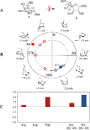

Catalytic enantioselective synthesis of selenium-containing atropisomers via C–Se bond formations
Beilstein J. Org. Chem. 2025, 21, 2447–2455, doi:10.3762/bjoc.21.186
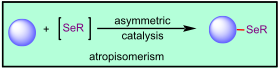
- excellent conversion rates (up to 95% yield) and high enantioselectivity (up to 96% ee). Notably, isoquinoline derivatives containing polycyclic naphthalene moieties or ortho-substituted phenyl groups also demonstrated good reactivity and compatibility. DFT calculations indicated that the C–Se bond
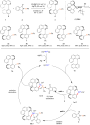
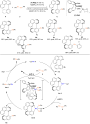
- products demonstrated complete E-stereoselectivity (E/Z ratio >20:1). Notably, under the same reaction conditions, aliphatic selenols remained unreactive. Density functional theory (DFT) calculations revealed that the rate-determining step involves the nucleophilic attack of the selenium anion in


The high potential of methyl laurate as a recyclable competitor to conventional toxic solvents in [3 + 2] cycloaddition reactions
Beilstein J. Org. Chem. 2025, 21, 2389–2415, doi:10.3762/bjoc.21.184
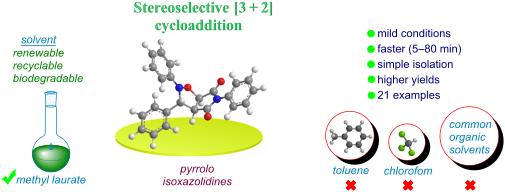
- given in Supporting Information File 1, Figure S1). In addition to the calculations already outlined, a series of toxicity properties of methyl laurate were calculated using ADMETLab 3.0 in comparison with common organic solvents and some green solvents. The obtained results were visualized with a


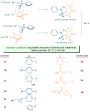


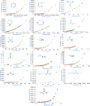


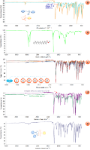
Conformational effects on iodide binding: a comparative study of flexible and rigid carbazole macrocyclic analogs
Beilstein J. Org. Chem. 2025, 21, 2369–2375, doi:10.3762/bjoc.21.181
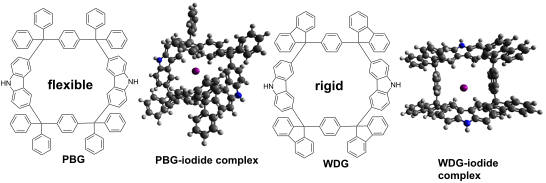
- . This further corroborates the decisive role of the macrocyclic architecture in the anion recognition process. Quantum chemical calculations were performed with the ORCA 5.0.3 software [29]. The geometry optimization was performed by using B3LYP with the def2-SVP basis set. As illustrated in the

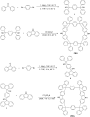


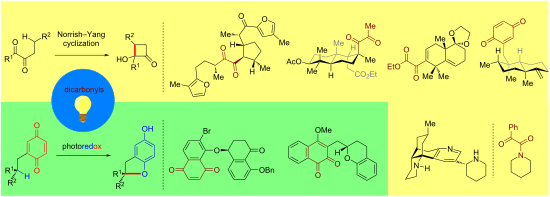
Recent advances in Norrish–Yang cyclization and dicarbonyl photoredox reactions for natural product synthesis
Beilstein J. Org. Chem. 2025, 21, 2315–2333, doi:10.3762/bjoc.21.177
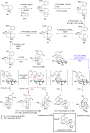
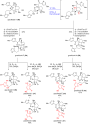
- conformation of the substrates, thereby modulating their reactivities. Density functional theory calculations show that 22 prefers to proceed its annulation through TS22b (ΔΔG‡ = 0) to afford 23 rather than that via TS22a (ΔΔG‡ = 1.5 kcal/mol). In contrast, annulation of 30 undergoes through the low barrier




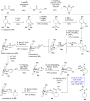


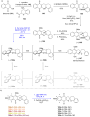

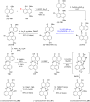
Pathway economy in cyclization of 1,n-enynes
Beilstein J. Org. Chem. 2025, 21, 2260–2282, doi:10.3762/bjoc.21.173
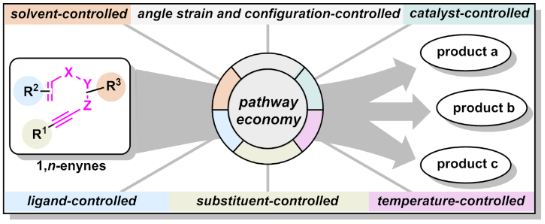
- product 49 (Scheme 11, path a). When aryl or alkyl substituents were introduced on the alkyne moiety, a more stable vinylidene intermediate 50 was formed via a 6-endo-dig cyclization, ultimately leading to the generation of the bicyclo[3.3.1]nonadiene product 51 (Scheme 11, path b). DFT calculations
- cleavage to form the boronated phenanthrene framework 170. It is worth mentioning that a unique skeleton rearrangement, supported by DFT calculations, was proposed in this work, which was unprecedented in BiCl3-promoted cyclization. Conclusion This comprehensive review has systematically delineated the


Thiadiazino-indole, thiadiazino-carbazole and benzothiadiazino-carbazole dioxides: synthesis, physicochemical and early ADME characterization of representatives of new tri-, tetra- and pentacyclic ring systems and their intermediates
Beilstein J. Org. Chem. 2025, 21, 2220–2233, doi:10.3762/bjoc.21.169
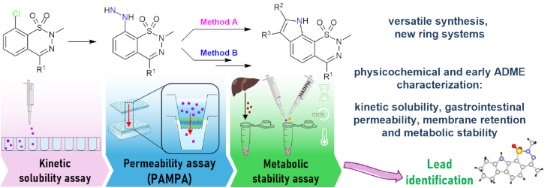
- % reference for clearance calculations. HPLC–MS analysis. The semi-quantitative determination of test compounds was carried out using a Waters Xevo G2-XS QToF mass spectrometer equipped with an electrospray ionization (ESI) source operating in positive ion mode. Chromatographic separation was performed on a


A m-quaterphenyl probe for absolute configurational assignments of primary and secondary amines
Beilstein J. Org. Chem. 2025, 21, 2211–2219, doi:10.3762/bjoc.21.168
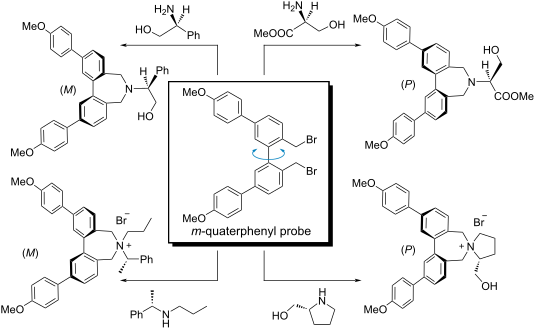
- secondary amines through the combined use of a m-quaterphenyl probe 1 and theoretical calculations. The probe 1 is covalently attached to chiral amines to form conjugates that exhibit exciton-coupled circular dichroism (ECCD) in the m-quaterphenyl chromophores. The calculated ratios of the P and M
- conformers, obtained via DFT calculations, show a correlation with both the sign and intensity of the experimentally observed CD spectra. Keywords: absolute configuration; chiral amine; chiral quaternary ammonium salt; circular dichroism; DFT calculation; Introduction Determining the absolute
- effect in CD, the direction of twist can be estimated. The absolute configuration of amines can be determined by comparing the direction of the twist determined by CD with that obtained by conformational analysis using theoretical calculations. However, this method has only been applied to simple primary


Electrochemical cyclization of alkynes to construct five-membered nitrogen-heterocyclic rings
Beilstein J. Org. Chem. 2025, 21, 2173–2201, doi:10.3762/bjoc.21.166
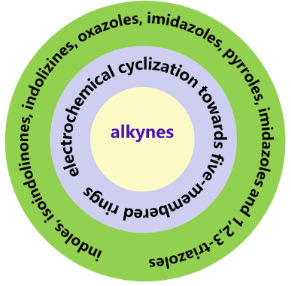
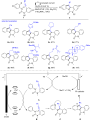
- mixture of propargyl alcohol 50 (0.7 mmol), NaN3 (2.8 mmol), n-Bu4NI (0.5 mmol) and MeCN (10 mL) under electrolysis (graphite rod as anode, stainless-steel plate as cathode, 11 mA) at rt for 10 h. According to the experimental results and density functional theory (DFT) calculations, a plausible mechanism


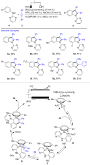

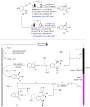
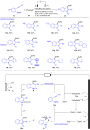


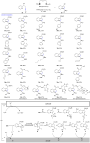
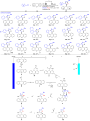
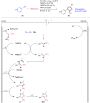

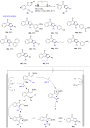


Bioinspired total syntheses of natural products: a personal adventure
Beilstein J. Org. Chem. 2025, 21, 2048–2061, doi:10.3762/bjoc.21.160
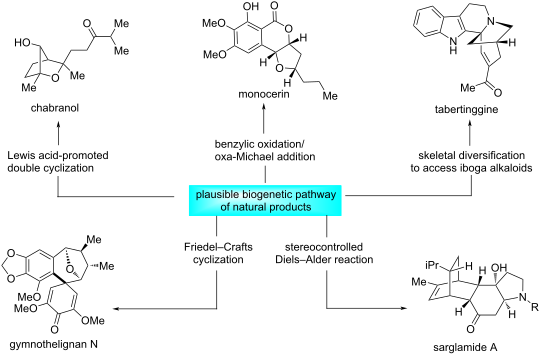
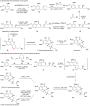
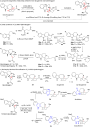
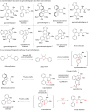
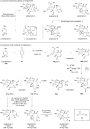
- calculations, and chemical transformations. Biologically, these molecules exhibit antineuroinflammatory activity against lipopolysaccharide (LPS)-induced inflammation in BV-2 microglial cells. Structurally, these molecules generally have a tetracyclic backbone (A–D rings), among which AB rings form a bridged



Understanding the origin of stereoselectivity in the photochemical denitrogenation of 2,3-diazabicyclo[2.2.1]heptene and its derivatives with non-adiabatic molecular dynamics
Beilstein J. Org. Chem. 2025, 21, 2007–2020, doi:10.3762/bjoc.21.156
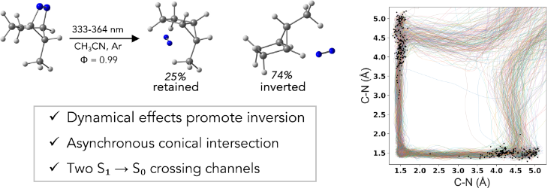
- combined with state-of-the-art multireference quantum mechanical calculations to understand the photophysical properties and mechanisms of these diazabicyclo[2.2.1]heptenes. The energetically accessible lowest excitations are nNN(σCN) → π* and range from 3.94–3.97 eV. From the >292 trajectories, the
- , thereby explaining the observed selectivities. A minority of trajectories undergo thermal conversion in the ground state, producing the minor retained housane product from inverted housane/diradical. Keywords: non-adiabatic molecular dynamics; photochemistry; quantum mechanical calculations
- calculations have provided valuable insights into the photochemical stereoselectivities of cyclic azoalkenes. In 1998, Yamamoto and co-workers investigated the reaction paths for α-C–N and β-C–C bond cleavage during the direct and sensitized photolysis of DBH [81]. The minimum energy geometries in S0, S1, T1





