


Search results
Search for "dehydrogenative coupling" in Full Text gives 45 result(s) in Beilstein Journal of Organic Chemistry.
Recent advances on the transition-metal-catalyzed synthesis of imidazopyridines: an updated coverage
- Gagandeep Kour Reen,
- Ashok Kumar and
- Pratibha Sharma
Beilstein J. Org. Chem. 2019, 15, 1612–1704, doi:10.3762/bjoc.15.165
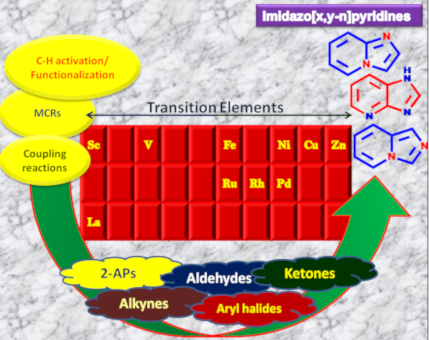

Graphical Abstract

Figure 1: Various drugs having IP nucleus.

Figure 2: Participation percentage of various TMs for the syntheses of IPs.

Scheme 1: CuI–NaHSO4·SiO2-catalyzed synthesis of imidazo[1,2-a]pyridines.

Scheme 2: Experimental examination of reaction conditions.

Scheme 3: One-pot tandem reaction for the synthesis of 2-haloimidazopyridines.

Scheme 4: Mechanistic scheme for the synthesis of 2-haloimidazopyridine.

Scheme 5: Copper-MOF-catalyzed three-component reaction (3-CR) for imidazo[1,2-a]pyridines.

Scheme 6: Mechanism for copper-MOF-driven synthesis.

Scheme 7: Heterogeneous synthesis via titania-supported CuCl2.

Scheme 8: Mechanism involving oxidative C–H functionalization.

Scheme 9: Heterogeneous synthesis of IPs.

Scheme 10: One-pot regiospecific synthesis of imidazo[1,2-a]pyridines.

Scheme 11: Vinyl azide as an unprecedented substrate for imidazo[1,2-a]pyridines.

Scheme 12: Radical pathway.

Scheme 13: Cu(I)-catalyzed transannulation approach for imidazo[1,5-a]pyridines.

Scheme 14: Plausible radical pathway for the synthesis of imidazo[1,5-a]pyridines.

Scheme 15: A solvent-free domino reaction for imidazo[1,2-a]pyridines.

Scheme 16: Cu-NPs-mediated synthesis of imidazo[1,2-a]pyridines.

Scheme 17: CuI-catalyzed synthesis of isoxazolylimidazo[1,2-a]pyridines.

Scheme 18: Functionalization of 4-bromo derivative via Sonogashira coupling reaction.

Scheme 19: A plausible reaction pathway.

Scheme 20: Cu(I)-catalyzed intramolecular oxidative C–H amidation reaction.

Scheme 21: One-pot synthetic reaction for imidazo[1,2-a]pyridine.

Scheme 22: Plausible reaction mechanism.

Scheme 23: Cu(OAc)2-promoted synthesis of imidazo[1,2-a]pyridines.

Scheme 24: Mechanism for aminomethylation/cycloisomerization of propiolates with imines.

Scheme 25: Three-component synthesis of imidazo[1,2-a]pyridines.

Figure 3: Scope of pyridin-2(1H)-ones and acetophenones.

Scheme 26: CuO NPS-promoted A3 coupling reaction.

Scheme 27: Cu(II)-catalyzed C–N bond formation reaction.

Scheme 28: Mechanism involving Chan–Lam/Ullmann coupling.

Scheme 29: Synthesis of formyl-substituted imidazo[1,2-a]pyridines.

Scheme 30: A tandem sp3 C–H amination reaction.

Scheme 31: Probable mechanistic approach.

Scheme 32: Dual catalytic system for imidazo[1,2-a]pyridines.

Scheme 33: Tentative mechanism.

Scheme 34: CuO/CuAl2O4/ᴅ-glucose-promoted 3-CCR.

Scheme 35: A tandem CuOx/OMS-2-based synthetic strategy.

Figure 4: Biomimetic catalytic oxidation in the presence of electron-transfer mediators (ETMs).

Scheme 36: Control experiment.

Scheme 37: Copper-catalyzed C(sp3)–H aminatin reaction.

Scheme 38: Reaction of secondary amines.

Scheme 39: Probable mechanistic pathway.

Scheme 40: Coupling reaction of α-azidoketones.

Scheme 41: Probable pathway.

Scheme 42: Probable mechanism with free energy calculations.

Scheme 43: MCR for cyanated IP synthesis.

Scheme 44: Substrate scope for the reaction.

Scheme 45: Reaction mechanism.

Scheme 46: Probable mechanistic pathway for Cu/ZnAl2O4-catalyzed reaction.

Scheme 47: Copper-catalyzed double oxidative C–H amination reaction.

Scheme 48: Application towards different coupling reactions.

Scheme 49: Reaction mechanism.

Scheme 50: Condensation–cyclization approach for the synthesis of 1,3-diarylated imidazo[1,5-a]pyridines.

Scheme 51: Optimized reaction conditions.

Scheme 52: One-pot 2-CR.

Scheme 53: One-pot 3-CR without the isolation of chalcone.

Scheme 54: Copper–Pybox-catalyzed cyclization reaction.

Scheme 55: Mechanistic pathway catalyzed by Cu–Pybox complex.

Scheme 56: Cu(II)-promoted C(sp3)-H amination reaction.

Scheme 57: Wider substrate applicability for the reaction.

Scheme 58: Plausible reaction mechanism.

Scheme 59: CuI assisted C–N cross-coupling reaction.

Scheme 60: Probable reaction mechanism involving sp3 C–H amination.

Scheme 61: One-pot MCR-catalyzed by CoFe2O4/CNT-Cu.

Scheme 62: Mechanistic pathway.

Scheme 63: Synthetic scheme for 3-nitroimidazo[1,2-a]pyridines.

Scheme 64: Plausible mechanism for CuBr-catalyzed reaction.

Scheme 65: Regioselective synthesis of halo-substituted imidazo[1,2-a]pyridines.

Scheme 66: Synthesis of 2-phenylimidazo[1,2-a]pyridines.

Scheme 67: Synthesis of diarylated compounds.

Scheme 68: CuBr2-mediated one-pot two-component oxidative coupling reaction.

Scheme 69: Decarboxylative cyclization route to synthesize 1,3-diarylimidazo[1,5-a]pyridines.

Scheme 70: Mechanistic pathway.

Scheme 71: C–H functionalization reaction of enamines to produce diversified heterocycles.

Scheme 72: A plausible mechanism.

Scheme 73: CuI-promoted aerobic oxidative cyclization reaction of ketoxime acetates and pyridines.

Scheme 74: CuI-catalyzed pathway for the formation of imidazo[1,2-a]pyridine.

Scheme 75: Mechanistic pathway.

Scheme 76: Mechanistic rationale for the synthesis of products.

Scheme 77: Copper-catalyzed synthesis of vinyloxy-IP.

Scheme 78: Regioselective product formation with propiolates.

Scheme 79: Proposed mechanism for vinyloxy-IP formation.

Scheme 80: Regioselective synthesis of 3-hetero-substituted imidazo[1,2-a]pyridines with different reaction su...

Scheme 81: Mechanistic pathway.

Scheme 82: CuI-mediated synthesis of 3-formylimidazo[1,2-a]pyridines.

Scheme 83: Radical pathway for 3-formylated IP synthesis.

Scheme 84: Pd-catalyzed urea-cyclization reaction for IPs.

Scheme 85: Pd-catalyzed one-pot-tandem amination and intramolecular amidation reaction.

Figure 5: Scope of aniline nucleophiles.

Scheme 86: Pd–Cu-catalyzed Sonogashira coupling reaction.

Scheme 87: One-pot amide coupling reaction for the synthesis of imidazo[4,5-b]pyridines.

Scheme 88: Urea cyclization reaction for the synthesis of two series of pyridines.

Scheme 89: Amidation reaction for the synthesis of imidazo[4,5-b]pyridines.

Figure 6: Amide scope.

Scheme 90: Pd NPs-catalyzed 3-component reaction for the synthesis of 2,3-diarylated IPs.

Scheme 91: Plausible mechanistic pathway for Pd NPs-catalyzed MCR.

Scheme 92: Synthesis of chromenoannulated imidazo[1,2-a]pyridines.

Scheme 93: Mechanism for the synthesis of chromeno-annulated IPs.

Scheme 94: Zinc oxide NRs-catalyzed synthesis of imidazo[1,2-a]azines/diazines.

Scheme 95: Zinc oxide-catalyzed isocyanide based GBB reaction.

Scheme 96: Reaction pathway for ZnO-catalyzed GBB reaction.

Scheme 97: Mechanistic pathway.

Scheme 98: ZnO NRs-catalyzed MCR for the synthesis of imidazo[1,2-a]azines.

Scheme 99: Ugi type GBB three-component reaction.

Scheme 100: Magnetic NPs-catalyzed synthesis of imidazo[1,2-a]pyridines.

Scheme 101: Regioselective synthesis of 2-alkoxyimidazo[1,2-a]pyridines catalyzed by Fe-SBA-15.

Scheme 102: Plausible mechanistic pathway for the synthesis of 2-alkoxyimidazopyridine.

Scheme 103: Iron-catalyzed synthetic approach.

Scheme 104: Iron-catalyzed aminooxygenation reaction.

Scheme 105: Mechanistic pathway.

Scheme 106: Rh(III)-catalyzed double C–H activation of 2-substituted imidazoles and alkynes.

Scheme 107: Plausible reaction mechanism.

Scheme 108: Rh(III)-catalyzed non-aromatic C(sp2)–H bond activation–functionalization for the synthesis of imid...

Scheme 109: Reactivity and selectivity of different substrates.

Scheme 110: Rh-catalyzed direct C–H alkynylation by Li et al.

Scheme 111: Suggested radical mechanism.

Scheme 112: Scandium(III)triflate-catalyzed one-pot reaction and its mechanism for the synthesis of benzimidazo...

Scheme 113: RuCl3-assisted Ugi-type Groebke–Blackburn condensation reaction.

Scheme 114: C-3 aroylation via Ru-catalyzed two-component reaction.

Scheme 115: Regioselective synthetic mechanism.

Scheme 116: La(III)-catalyzed one-pot GBB reaction.

Scheme 117: Mechanistic approach for the synthesis of imidazo[1,2-a]pyridines.

Scheme 118: Synthesis of imidazo[1,2-a]pyridine using LaMnO3 NPs under neat conditions.

Scheme 119: Mechanistic approach.

Scheme 120: One-pot 3-CR for regioselective synthesis of 2-alkoxy-3-arylimidazo[1,2-a]pyridines.

Scheme 121: Formation of two possible products under optimization of the catalysts.

Scheme 122: Mechanistic strategy for NiFe2O4-catalyzed reaction.

Scheme 123: Two-component reaction for synthesizing imidazodipyridiniums.

Scheme 124: Mechanistic scheme for the synthesis of imidazodipyridiniums.

Scheme 125: CuI-catalyzed arylation of imidazo[1,2-a]pyridines.

Scheme 126: Mechanism for arylation reaction.

Scheme 127: Cupric acetate-catalyzed double carbonylation approach.

Scheme 128: Radical mechanism for double carbonylation of IP.

Scheme 129: C–S bond formation reaction catalyzed by cupric acetate.

Scheme 130: Cupric acetate-catalyzed C-3 formylation approach.

Scheme 131: Control experiments for signifying the role of DMSO and oxygen.

Scheme 132: Mechanism pathway.

Scheme 133: Copper bromide-catalyzed CDC reaction.

Scheme 134: Extension of the substrate scope.

Scheme 135: Plausible radical pathway.

Scheme 136: Transannulation reaction for the synthesis of imidazo[1,5-a]pyridines.

Scheme 137: Plausible reaction pathway for denitrogenative transannulation.

Scheme 138: Cupric acetate-catalyzed C-3 carbonylation reaction.

Scheme 139: Plausible mechanism for regioselective C-3 carbonylation.

Scheme 140: Alkynylation reaction at C-2 of 3H-imidazo[4,5-b]pyridines.

Scheme 141: Two-way mechanism for C-2 alkynylation of 3H-imidazo[4,5-b]pyridines.

Scheme 142: Palladium-catalyzed SCCR approach.

Scheme 143: Palladium-catalyzed Suzuki coupling reaction.

Scheme 144: Reaction mechanism.

Scheme 145: A phosphine free palladium-catalyzed synthesis of C-3 arylated imidazopyridines.

Scheme 146: Palladium-mediated Buchwald–Hartwig cross-coupling reaction.

Figure 7: Structure of the ligands optimized.

Scheme 147: Palladium acetate-catalyzed direct arylation of imidazo[1,2-a]pyridines.

Scheme 148: Palladium acetate-catalyzed mechanistic pathway.

Scheme 149: Palladium acetate-catalyzed regioselective arylation reported by Liu and Zhan.

Scheme 150: Mechanism for selective C-3 arylation of IP.

Scheme 151: Pd(II)-catalyzed alkenylation reaction with styrenes.

Scheme 152: Pd(II)-catalyzed alkenylation reaction with acrylates.

Scheme 153: A two way mechanism.

Scheme 154: Double C–H activation reaction catalyzed by Pd(OAc)2.

Scheme 155: Probable mechanism.

Scheme 156: Palladium-catalyzed decarboxylative coupling.

Scheme 157: Mechanistic cycle for decarboxylative arylation reaction.

Scheme 158: Ligand-free approach for arylation of imidazo[1,2-a]pyridine-3-carboxylic acids.

Scheme 159: Mechanism for ligandless arylation reaction.

Scheme 160: NHC-Pd(II) complex assisted arylation reaction.

Scheme 161: C-3 arylation of imidazo[1,2-a]pyridines with aryl bromides catalyzed by Pd(OAc)2.

Scheme 162: Pd(II)-catalyzed C-3 arylations with aryl tosylates and mesylates.

Scheme 163: CDC reaction for the synthesis of imidazo[1,2-a]pyridines.

Scheme 164: Plausible reaction mechanism for Pd(OAc)2-catalyzed synthesis of imidazo[1,2-a]pyridines.

Scheme 165: Pd-catalyzed C–H amination reaction.

Scheme 166: Mechanism for C–H amination reaction.

Scheme 167: One-pot synthesis for 3,6-di- or 2,3,6-tri(hetero)arylimidazo[1,2-a]pyridines.

Scheme 168: C–H/C–H cross-coupling reaction of IPs and azoles catalyzed by Pd(II).

Scheme 169: Mechanistic cycle.

Scheme 170: Rh-catalyzed C–H arylation reaction.

Scheme 171: Mechanistic pathway for C–H arylation of imidazo[1,2-a]pyridine.

Scheme 172: Rh(III)-catalyzed double C–H activation of 2-phenylimidazo[1,2-a]pyridines and alkynes.

Scheme 173: Rh(III)-catalyzed mechanistic pathway.

Scheme 174: Rh(III)-mediated oxidative coupling reaction.

Scheme 175: Reactions showing functionalization of the product obtained by the group of Kotla.

Scheme 176: Mechanism for Rh(III)-catalyzed oxidative coupling reaction.

Scheme 177: Rh(III)-catalyzed C–H activation reaction.

Scheme 178: Mechanistic cycle.

Scheme 179: Annulation reactions of 2-arylimidazo[1,2-a]pyridines and alkynes.

Scheme 180: Two-way reaction mechanism for annulations reaction.

Scheme 181: [RuCl2(p-cymene)]2-catalyzed C–C bond formation reaction.

Scheme 182: Reported reaction mechanism.

Scheme 183: Fe(III) catalyzed C-3 formylation approach.

Scheme 184: SET mechanism-catalyzed by Fe(III).

Scheme 185: Ni(dpp)Cl2-catalyzed KTC coupling.

Scheme 186: Pd-catalyzed SM coupling.

Scheme 187: Vanadium-catalyzed coupling of IP and NMO.

Scheme 188: Mechanistic cycle.

Scheme 189: Selective C3/C5–H bond functionalizations by mono and bimetallic systems.

Scheme 190: rGO-Ni@Pd-catalyzed C–H bond arylation of imidazo[1,2-a]pyridine.

Scheme 191: Mechanistic pathway for heterogeneously catalyzed arylation reaction.

Scheme 192: Zinc triflate-catalyzed coupling reaction of substituted propargyl alcohols.
Multicomponent reactions (MCRs): a useful access to the synthesis of benzo-fused γ-lactams
- Edorta Martínez de Marigorta,
- Jesús M. de Los Santos,
- Ana M. Ochoa de Retana,
- Javier Vicario and
- Francisco Palacios
Beilstein J. Org. Chem. 2019, 15, 1065–1085, doi:10.3762/bjoc.15.104
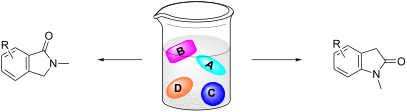
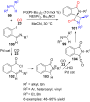
- metal catalyst. Through a tandem three-component cross-dehydrogenative coupling (CDC), they prepared, in a single step, more than thirty isoindolinone derivatives 4, including those originated from sulfonamides and carboxamides (Scheme 1). The scope of the reaction includes aromatic, some aliphatic and
- with the nucleophilic aromatic ring in a Friedel–Crafts alkylation process, thus incorporating the carbon atom in a formal C(sp2)–H/C(sp3)–H cross-dehydrogenative coupling. Finally, an oxidation of sulfide 7 to sulfoxide 8 and the subsequent attack of amide 2 with cleavage of the C–S bond and formation

Graphical Abstract

Figure 1: γ-Lactam-derived structures considered in this review.

Figure 2: Alkaloids containing an isoindolinone moiety.

Figure 3: Alkaloids containing the 2-oxindole ring system.
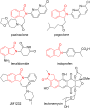
Figure 4: Drugs and biological active compounds containing an isoindolinone moiety.
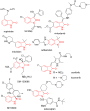
Figure 5: Drugs and biologically active compounds bearing a 2-oxindole skeleton.
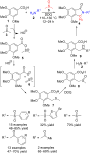
Scheme 1: Three-component reaction of benzoic acid 1, amides 2 and DMSO (3).

Scheme 2: Copper-catalysed three-component reaction of 2-iodobenzoic acids 10, alkynylcarboxylic acids 11 and...

Scheme 3: Proposed mechanism for the formation of methylene isoindolinones 13.

Scheme 4: Copper-catalysed three-component reaction of 2-iodobenzamide 17, terminal alkyne 18 and pyrrole or ...

Scheme 5: Palladium-catalysed three-component reaction of ethynylbenzamides 21, secondary amines 22 and CO (23...

Scheme 6: Proposed mechanism for the formation of methyleneisoindolinones 24.

Scheme 7: Copper-catalysed three-component reaction of formyl benzoate 29, amines 2 and alkynes 18.

Scheme 8: Copper-catalysed three-component reaction of formylbenzoate 29, amines 2 and ketones 31.

Scheme 9: Non-catalysed (A) and phase-transfer catalysed (B) three-component reactions of formylbenzoic acids ...

Scheme 10: Proposed mechanism for the formation of isoindolinones 36.

Scheme 11: Three-component reaction of formylbenzoic acid 33, amines 2 and fluorinated silyl ethers 39.

Scheme 12: Three-component Ugi reaction of 2-formylbenzoic acid (33), diamines 41 and isocyanides 42.

Scheme 13: Non-catalysed (A, B) and chiral phosphoric acid promoted (C) three-component Ugi reactions of formy...

Scheme 14: Proposed mechanism for the enantioselective formation of isoindolinones 46.

Scheme 15: Three-component reaction of benzoic acids 33 or 54, amines 2 and TMSCN (52).

Scheme 16: Several variations of the three-component reaction of formylbenzoic acids 33, amines 2 and isatoic ...

Scheme 17: Proposed mechanism for the synthesis of isoindoloquinazolinones 57.

Scheme 18: Three-component reaction of isobenzofuranone 61, amines 2 and isatoic anhydrides 56.

Scheme 19: Palladium-catalysed three-component reaction of 2-aminobenzamides 59, 2-bromobenzaldehydes 62 and C...
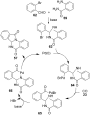
Scheme 20: Proposed mechanism for the palladium-catalysed synthesis of isoindoloquinazolinones 57.

Scheme 21: Four-component reaction of 2-vinylbenzoic acids 67, aryldioazonium tetrafluoroborates 68, DABCO·(SO2...

Scheme 22: Plausible mechanism for the formation of isoindolinones 71.

Scheme 23: Three-component reaction of trimethylsilylaryltriflates 77, isocyanides 42 and CO2 (78).

Scheme 24: Plausible mechanism for the three-component synthesis of phthalimides 79.
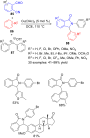
Scheme 25: Copper-catalysed three-component reaction of 2-formylbenzonitriles 85, arenes 86 and diaryliodonium...
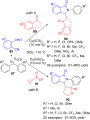
Scheme 26: Copper-catalysed three-component reaction of 2-formylbenzonitriles 85, diaryliodonium salts 87 and ...

Scheme 27: Proposed mechanism for the formation of 2,3-diarylisoindolinones 88, 89 and 92.

Scheme 28: Palladium-catalysed three-component reaction of chloroquinolinecarbaldehydes 97 with isocyanides 42...
Scheme 29: Palladium-catalysed three-component reaction of imines 99 with CO (23) and ortho-iodoarylimines 100....

Scheme 30: Palladium-catalysed three-component reaction of amines 2 with CO (23) and aryl iodide 105.

Scheme 31: Three-component reaction of 2-ethynylanilines 109, perfluoroalkyl iodides 110 and carbon monoxide (...

Scheme 32: Ultraviolet-induced three-component reaction of N-(2-iodoaryl)acrylamides 113, DABCO·(SO2)2 (69) an...

Scheme 33: Proposed mechanism for the preparation of oxindoles 115.

Scheme 34: Three-component reaction of acrylamide 113, CO (23) and 1,4-benzodiazepine 121.

Scheme 35: Multicomponent reaction of sulfonylacrylamides 123, aryldiazonium tetrafluoroborates 68 and DABCO·(...

Scheme 36: Proposed mechanism for the preparation of oxindoles 124.

Scheme 37: Three-component reaction of N-arylpropiolamides 128, aryl iodides 129 and boronic acids 130.

Scheme 38: Proposed mechanism for the formation of diarylmethylene- and diarylallylideneoxindoles 131 and 132.

Scheme 39: Three-component reaction of cyclohexa-1,3-dione (136), amines 2 and alkyl acetylenedicarboxylates 1...

Scheme 40: Proposed mechanism for the formation of 2-oxindoles 138.
Mechanochemistry of supramolecules
- Anima Bose and
- Prasenjit Mal
Beilstein J. Org. Chem. 2019, 15, 881–900, doi:10.3762/bjoc.15.86
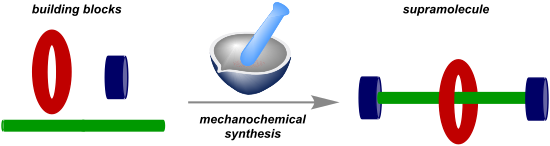
- maximum contact (solvent-free ball milling) of the reactants [113]. An acid salt, (sodium bisulfate) was used to control the reactivity of the highly basic primary amines to transform the exceedingly exothermic reactive substrates in a high-yielding cross-dehydrogenative coupling (CDC) reaction to obtain

Graphical Abstract

Figure 1: A generalized overview of coordination-driven self-assembly.

Figure 2: Examples of self-assembly or self-sorting and subsequent substitution.

Figure 3: Synthesis of salen-type ligand followed by metal-complex formation in the same pot [55].

Figure 4: Otera’s solvent-free approach by which the formation of self-assembled supramolecules could be acce...

Figure 5: Synthesis of a Pd-based metalla-supramolecular assembly through mechanochemical activation for C–H-...

Figure 6: a) Schematic representation for the construction of a [2]rotaxane. b) Chiu’s ball-milling approach ...

Figure 7: Mechanochemical synthesis of the smallest [2]rotaxane.

Figure 8: Solvent-free mechanochemical synthesis of pillar[5]arene-containing [2]rotaxanes [61].

Figure 9: Mechanochemical liquid-assisted one-pot two-step synthesis of [2]rotaxanes under high-speed vibrati...

Figure 10: Mechanochemical (ball-milling) synthesis of molecular sphere-like nanostructures [63].

Figure 11: High-speed vibration milling (HSVM) synthesis of boronic ester cages of type 22 [64].

Figure 12: Mechanochemical synthesis of borasiloxane-based macrocycles.

Figure 13: Mechanochemical synthesis of 2-dimensional aromatic polyamides.

Figure 14: Nitschke’s tetrahedral Fe(II) cage 25.

Figure 15: Mechanochemical one-pot synthesis of the 22-component [Fe4(AD2)6]4− 26, 11-component [Fe2(BD2)3]2− ...

Figure 16: a) Subcomponent synthesis of catalyst and reagent and b) followed by multicomponent reaction for sy...

Figure 17: A dynamic combinatorial library (DCL) could be self-sorted to two distinct products.

Figure 18: Mechanochemical synthesis of dynamic covalent systems via thermodynamic control.

Figure 19: Preferential formation of hexamer 33 under mechanochemical shaking via non-covalent interactions of...

Figure 20: Anion templated mechanochemical synthesis of macrocycles cycHC[n] by validating the concept of dyna...

Figure 21: Hydrogen-bond-assisted [2 + 2]-cycloaddition reaction through solid-state grinding. Hydrogen-bond d...

Figure 22: Formation of the cage and encapsulation of [2.2]paracyclophane guest molecule in the cage was done ...

Figure 23: Formation of the 1:1 complex C60–tert-butylcalix[4]azulene through mortar and pestle grinding of th...

Figure 24: Formation of a 2:2 complex between the supramolecular catalyst and the reagent in the transition st...

Figure 25: Halogen-bonded co-crystals via a) I···P, b) I···As, and c) I···Sb bonds [112].

Figure 26: Transformation of contact-explosive primary amines and iodine(III) into a successful chemical react...

Figure 27: Undirected C–H functionalization by using the acidic hydrogen to control basicity of the amines [114]. a...
Molecular iodine-catalyzed one-pot multicomponent synthesis of 5-amino-4-(arylselanyl)-1H-pyrazoles
- Camila S. Pires,
- Daniela H. de Oliveira,
- Maria R. B. Pontel,
- Jean C. Kazmierczak,
- Roberta Cargnelutti,
- Diego Alves,
- Raquel G. Jacob and
- Ricardo F. Schumacher
Beilstein J. Org. Chem. 2018, 14, 2789–2798, doi:10.3762/bjoc.14.256
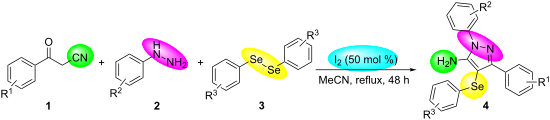
- -(phenylselanyl)-1H-pyrazol-5-amine was submitted to an oxidative dehydrogenative coupling to produce a diazo compound confirmed by X-ray analysis. Keywords: diaryl diselenide; diazo compound; 1H-pyrazole; molecular iodine; multicomponent reaction; Introduction Selenium-containing compounds are of great

Graphical Abstract

Scheme 1: Synthesis of selanyl-pyrazoles and their derivatives previously described.

Scheme 2: Multicomponent reaction proposed in this work.

Scheme 3: Direct selanylation reaction of 5-amino-pyrazole 5a with diphenyl diselenide (3a) under the optimiz...

Scheme 4: Proposed reaction mechanism.

Scheme 5: Synthesis of diazo pyrazole derivative 6.

Figure 1: Molecular structure of compound 6. The hydrogen atoms are omitted for clarity [27].
Direct electrochemical generation of organic carbonates by dehydrogenative coupling
- Tile Gieshoff,
- Vinh Trieu,
- Jan Heijl and
- Siegfried R. Waldvogel
Beilstein J. Org. Chem. 2018, 14, 1578–1582, doi:10.3762/bjoc.14.135
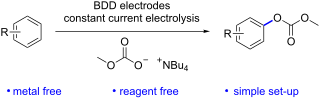
- ; dehydrogenative coupling; electrochemistry; organic carbonates; Introduction Polycarbonates are high-performance polymeric materials with versatile applications in various fields with economic impact, e.g., construction, food, and pharmaceutical industry [1]. For their technical large-scale production, organic
- [28][29][30]. In combination with easily accessible carbonate sources, we tried to establish a new dehydrogenative approach to organic carbonates. Here, the study on the first direct electrochemical generation of organic carbonates by dehydrogenative coupling is presented. Results and Discussion
- potentials and the oligomerization tendency of electron-rich arenes limit the scope (see Supporting Information File 1). Conclusion The first direct electrochemical generation of organic carbonates by dehydrogenative coupling at arenes was established. Even though this ambitious method is currently

Graphical Abstract

Figure 1: Current non-phosgene approaches to organic carbonates.

Scheme 1: Preparation of tetrabutylammonium methyl carbonate by direct carbon dioxide incorporation.

Scheme 2: Direct generation of mesityl methyl carbonate by dehydrogenative functionalization.

Figure 2: Influence of the electrode distance; a 1H NMR yield; bisolated yield.
Polysubstituted ferrocenes as tunable redox mediators
- Sven D. Waniek,
- Jan Klett,
- Christoph Förster and
- Katja Heinze
Beilstein J. Org. Chem. 2018, 14, 1004–1015, doi:10.3762/bjoc.14.86
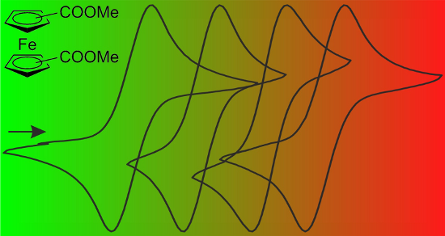
- dehydrogenative coupling reactions [34][35] and for olefin hydroamidations [36] (Scheme 1d–f). For potential applications of ferrocene derivatives as redox mediators or SET reagents, it is crucial to adjust the electrochemical potential to the potential of the substrate. The electrochemical potential of the

Graphical Abstract

Scheme 1: Selected transformations with ferrocene/ferrocenium as SET reagents (a) [27], catalyzed (b,c) [29-31] and medi...

Scheme 2: Methyl esters of ferrocene carboxylic acids 1 [45,46], 2 [47-49], 2a [50], 2b [51,52], 3, 4 [54] and pseudo octahedral high-spin...

Figure 1: Normalized cyclic voltammograms for anodic sweeps of 1–4 in CH2Cl2/[n-Bu4N][B(C6F5)4] (scan rate 10...

Figure 2: Electrochemical potentials E1/2 (vs FcH/FcH+) of esters 1–4 versus sum of Hammett values ∑σp/m with...

Figure 3: a) Partial ATR IR spectra (transmission normalized, C=O stretching vibration region) of solids 1–4....

Figure 4: IR spectroelectrochemical oxidation of 3 to 3+ in CH2Cl2/[n-Bu4N][B(C6F5)4] (C=O stretching vibrati...

Figure 5: a) Normalized UV–vis spectra of 1–4 in CH2Cl2. b) Normalized UV–vis absorptions of 1+–4+ in CH2Cl2/[...

Figure 6: Absorption energy E of ferrocene bands of 1–4 (a) and energies of the low energy absorption maxima ...

Figure 7: UV–vis spectroelectrochemical oxidation of 3 in CH2Cl2/[n-Bu4N][B(C6F5)4] (0–1.1 V vs Ag pseudo ref...

Figure 8: 1H NMR oxidation titration of 3 in CD2Cl2 with [N(2,4-C6H3Br2)3]+ as oxidant. a[N(2,4-C6H3Br2)3]. b...
Functionalization of N-arylglycine esters: electrocatalytic access to C–C bonds mediated by n-Bu4NI
- Mi-Hai Luo,
- Yang-Ye Jiang,
- Kun Xu,
- Yong-Guo Liu,
- Bao-Guo Sun and
- Cheng-Chu Zeng
Beilstein J. Org. Chem. 2018, 14, 499–505, doi:10.3762/bjoc.14.35

- . In addition, it is demonstrated that the mediated process is superior to the direct electrochemical functionalization. Keywords: C–C formation; electrochemical oxidative functionalization; n-Bu4NI; redox catalyst; Introduction The oxidative cross dehydrogenative coupling (CDC) of two C–H bonds has
- experiments described above, as well as related references [4], a plausible mechanism for the electrocatalytic cross dehydrogenative coupling of N-arylglycine esters 1 with C–H nucleophiles 2 is outlined in Scheme 6. The anodic oxidation of iodide generates the active species I2 or I+. Followed by a
- efficient electrocatalytic cross dehydrogenative coupling of arylglycine esters with C–H nucleophiles has been developed. This protocol employs simple n-Bu4NI as the redox catalyst, avoiding utilization of transition metals and excess amounts of external oxidant, thereby providing an environmentally benign

Graphical Abstract

Scheme 1: Cross dehydrogenative coupling of N-arylglycine esters with C–H nucleophiles.

Scheme 2: Electrochemical CDC reaction of 2a and various N-arylglycine esters. Reaction conditions for the in...

Scheme 3: Scope of 2 using n-Bu4NI as mediator. Reaction conditions:1a (0.5 mmol), 2 (0.6 mmol), n-Bu4NI (30 ...

Scheme 4: Scaling up.

Scheme 5: Control experiments.

Scheme 6: A plausible mechanism for the electrocatalytic cross dehydrogenative coupling of N-arylglycine este...
Mechanochemical synthesis of small organic molecules
- Tapas Kumar Achar,
- Anima Bose and
- Prasenjit Mal
Beilstein J. Org. Chem. 2017, 13, 1907–1931, doi:10.3762/bjoc.13.186
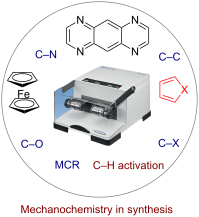
- example of a double Sonogashira reaction is shown [60]. Oxidative cross-dehydrogenative coupling Copper-catalyzed mechanochemical oxidative cross-dehydrogenative coupling (CDC) reactions [61][62][63][64][65][66] of tetrahydroisoquinolines with alkynes and indoles was reported by Su and co-workers (Scheme
- bond synthesis under ball-milling conditions. Cross dehydrogenative coupling reactions between benzaldehydes and benzylamines were performed in presence of phenyliodine diacetate (PIDA) using the acid salt NaHSO4 [81]. The highly exergonic reaction (contact explosive) of acidic iodine(III) and basic

Graphical Abstract

Scheme 1: Mechanochemical aldol condensation reactions [48].

Scheme 2: Enantioselective organocatalyzed aldol reactions under mechanomilling. a) Based on binam-(S)-prolin...

Scheme 3: Mechanochemical Michael reaction [51].

Scheme 4: Mechanochemical organocatalytic asymmetric Michael reaction [52].

Scheme 5: Mechanochemical Morita–Baylis–Hillman (MBH) reaction [53].

Scheme 6: Mechanochemical Wittig reactions [55].

Scheme 7: Mechanochemical Suzuki reaction [56].

Scheme 8: Mechanochemical Suzuki–Miyaura coupling by LAG [57].

Scheme 9: Mechanochemical Heck reaction [59].

Scheme 10: a) Sonogashira coupling under milling conditions. b) The representative example of a double Sonogas...

Scheme 11: Copper-catalyzed CDC reaction under mechanomilling [67].

Scheme 12: Asymmetric alkynylation of prochiral sp3 C–H bonds via CDC [68].

Scheme 13: Fe(III)-catalyzed CDC coupling of 3-benzylindoles [69].

Scheme 14: Mechanochemical synthesis of 3-vinylindoles and β,β-diindolylpropionates [70].

Scheme 15: Mechanochemical C–N bond construction using anilines and arylboronic acids [78].

Scheme 16: Mechanochemical amidation reaction from aromatic aldehydes and N-chloramine [79].

Scheme 17: Mechanochemical CDC between benzaldehydes and benzyl amines [81].

Scheme 18: Mechanochemical protection of -NH2 and -COOH group of amino acids [85].

Scheme 19: Mechanochemical Ritter reaction [87].

Scheme 20: Mechanochemical synthesis of dialkyl carbonates [90].

Scheme 21: Mechanochemical transesterification reaction using basic Al2O3 [91].

Scheme 22: Mechanochemical carbamate synthesis [92].

Scheme 23: Mechanochemical bromination reaction using NaBr and oxone [96].

Scheme 24: Mechanochemical aryl halogenation reactions using NaX and oxone [97].

Scheme 25: Mechanochemical halogenation reaction of electron-rich arenes [88,98].

Scheme 26: Mechanochemical aryl halogenation reaction using trihaloisocyanuric acids [100].

Scheme 27: Mechanochemical fluorination reaction by LAG method [102].

Scheme 28: Mechanochemical Ugi reaction [116].

Scheme 29: Mechanochemical Passerine reaction [116].

Scheme 30: Mechanochemical synthesis of α-aminonitriles [120].

Scheme 31: Mechanochemical Hantzsch pyrrole synthesis [121].

Scheme 32: Mechanochemical Biginelli reaction by subcomponent synthesis approach [133].

Scheme 33: Mechanochemical asymmetric multicomponent reaction[134].

Scheme 34: Mechanochemical Paal–Knorr pyrrole synthesis [142].

Scheme 35: Mechanochemical synthesis of benzothiazole using ZnO nano particles [146].

Scheme 36: Mechanochemical synthesis of 1,2-di-substituted benzimidazoles [149].

Scheme 37: Mechanochemical click reaction using an alumina-supported Cu-catalyst [152].

Scheme 38: Mechanochemical click reaction using copper vial [155].

Scheme 39: Mechanochemical indole synthesis [157].

Scheme 40: Mechanochemical synthesis of chromene [158].

Scheme 41: Mechanochemical synthesis of azacenes [169].

Scheme 42: Mechanochemical oxidative C-P bond formation [170].

Scheme 43: Mechanochemical C–chalcogen bond formation [171].

Scheme 44: Solvent-free synthesis of an organometallic complex.
Scheme 45: Selective examples of mechano-synthesis of organometallic complexes. a) Halogenation reaction of Re...

Scheme 46: Mechanochemical activation of C–H bond of unsymmetrical azobenzene [178].

Scheme 47: Mechanochemical synthesis of organometallic pincer complex [179].

Scheme 48: Mechanochemical synthesis of tris(allyl)aluminum complex [180].

Scheme 49: Mechanochemical Ru-catalyzed olefin metathesis reaction [181].

Scheme 50: Rhodium(III)-catalyzed C–H bond functionalization under mechanochemical conditions [182].

Scheme 51: Mechanochemical Csp2–H bond amidation using Ir(III) catalyst [183].

Scheme 52: Mechanochemical Rh-catalyzed Csp2–X bond formation [184].

Scheme 53: Mechanochemical Pd-catalyzed C–H activation [185].

Scheme 54: Mechanochemical Csp2–H bond amidation using Rh catalyst.

Scheme 55: Mechanochemical synthesis of indoles using Rh catalyst [187].

Scheme 56: Mizoroki–Heck reaction of aminoacrylates with aryl halide in a ball-mill [58].

Scheme 57: IBX under mechanomilling conditions [8].

Scheme 58: Thiocarbamoylation of anilines; trapping of reactive aryl-N-thiocarbamoylbenzotriazole intermediate...
Oxidative dehydrogenation of C–C and C–N bonds: A convenient approach to access diverse (dihydro)heteroaromatic compounds
- Santanu Hati,
- Ulrike Holzgrabe and
- Subhabrata Sen
Beilstein J. Org. Chem. 2017, 13, 1670–1692, doi:10.3762/bjoc.13.162
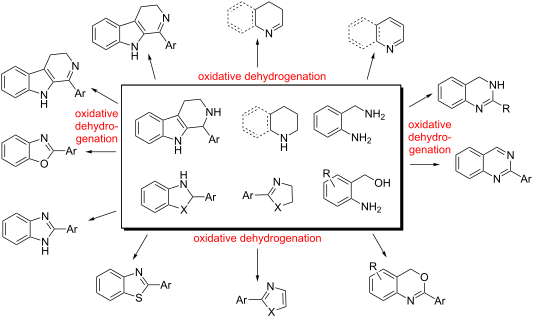
- reacted with o-aminobenzylamine and substituted o-aminobenzylamines to provide the desired products in decent yields (Scheme 8b). Kumar et al. demonstrated transition metal-free α-C(sp3)–H bond functionalization of amines via an oxidative cross-dehydrogenative coupling reaction [44]. They reported a one
- to generate the desired substituted dihydroquinazolines 35 in moderate to excellent yields (Scheme 9) [44]. In another example commercially available sodium hypochlorite (NaOCl) was used as an oxidant, under mild conditions in a highly efficient oxidative dehydrogenative coupling of o
- quinazolinones with I2 and DDQ [37][38][39][40]. DDQ-mediated oxidative dehydrogenation of thiazolidines and oxazolidines. Oxone-mediated oxidative dehydrogenation of intermediates from o-phenylenediamine and o-aminobenzylamine [42][43]. Transition metal-free oxidative cross-dehydrogenative coupling. NaOCl

Graphical Abstract

Figure 1: Representative bioactive heterocycles.

Scheme 1: The concept of oxidative dehydrogenation.
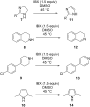
Scheme 2: IBX-mediated oxidative dehydrogenation of various heterocycles [31-34].

Scheme 3: Potential mechanism of IBX-mediated oxidative dehydrogenation of N-heterocycles [31-34].

Scheme 4: IBX-mediated room temperature one-pot condensation–oxidative dehydrogenation of o-aminobenzylamines....
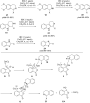
Scheme 5: Anhydrous cerium chloride-catalyzed, IBX-mediated oxidative dehydrogenation of various heterocycles...

Scheme 6: Oxidative dehydrogenation of quinazolinones with I2 and DDQ [37-40].

Scheme 7: DDQ-mediated oxidative dehydrogenation of thiazolidines and oxazolidines.

Scheme 8: Oxone-mediated oxidative dehydrogenation of intermediates from o-phenylenediamine and o-aminobenzyl...

Scheme 9: Transition metal-free oxidative cross-dehydrogenative coupling.

Scheme 10: NaOCl-mediated oxidative dehydrogenation.

Scheme 11: NBS-mediated oxidative dehydrogenation of tetrahydro-β-carbolines.

Scheme 12: One-pot synthesis of various methyl(hetero)arenes from o-aminobenzamide in presence of di-tert-buty...

Scheme 13: Oxidative dehydrogenation of 1, 4-DHPs.

Scheme 14: Synthesis of quinazolines in the presence of MnO2.

Scheme 15: Selenium dioxide and potassium dichromate-mediated oxidative dehydrogenation of tetrahydro-β-carbol...

Scheme 16: Synthesis of substituted benzazoles in the presence of barium permanganate.
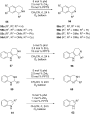
Scheme 17: Oxidative dehydrogenation with phenanthroline-based catalysts. PPTS = pyridinium p-toluenesulfonic ...

Scheme 18: Oxidative dehydrogenation with Flavin mimics.

Scheme 19: o-Quinone based bioinspired catalysts for the synthesis of dihydroisoquinolines.

Scheme 20: Cobalt-catalyzed aerobic dehydrogenation of Hantzch 1,4-DHPs and pyrazolines.

Scheme 21: Mechanism of cobalt-catalyzed aerobic dehydrogenation of Hantzch 1,4-DHPs.

Scheme 22: DABCO and TEMPO-catalyzed aerobic oxidative dehydrogenation of quinazolines and 4H-3,1-benzoxazines....

Scheme 23: Putative mechanism for Cu(I)–DABCO–TEMPO catalyzed aerobic oxidative dehydrogenation of tetrahydroq...

Scheme 24: Potassium triphosphate modified Pd/C catalysts for the oxidative dehydrogenation of tetrahydroisoqu...

Scheme 25: Ruthenium-catalyzed polycyclic heteroarenes.

Scheme 26: Plausible mechanism of the ruthenium-catalyzed dehydrogenation.

Scheme 27: Bi-metallic platinum/iridium alloyed nanoclusters and 5,5’,6,6’-tetrahydroxy-3,3,3’,3’-tetramethyl-...

Scheme 28: Magnesium iodide-catalyzed synthesis of quinazolines.

Scheme 29: Ferrous chloride-catalyzed aerobic dehydrogenation of 1,2,3,4-tetrahydroquinolines.

Scheme 30: Cu(I)-catalyzed oxidative aromatization of indoles.

Scheme 31: Putative mechanism of the transformation.

Scheme 32: Oxidative dehydrogenation of pyrimidinones and pyrimidines.
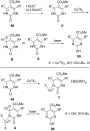
Scheme 33: Putative mechanisms (radical and metal-catalyzed) of the transformation.

Scheme 34: Ferric chloride-catalyzed, TBHP-oxidized synthesis of substituted quinazolinones and arylquinazolin...

Scheme 35: Iridium-catalyzed oxidative dehydrogenation of quinolines.

Scheme 36: Microwave-assisted synthesis of β-carboline with a catalytic amount of Pd/C in lithium carbonate at...

Scheme 37: 4-Methoxy-TEMPO-catalyzed aerobic oxidative synthesis of 2-substituted benzazoles.

Scheme 38: Plausible mechanism of the 4-methoxy-TEMPO-catalyzed transformation.

Scheme 39: One-pot synthesis of 2-arylquinazolines, catalyzed by 4-hydroxy-TEMPO.

Scheme 40: Oxidative dehydrogenation – a key step in the synthesis of AZD8926.

Scheme 41: Catalytic oxidative dehydrogenation of tetrahydroquinolines to afford bioactive molecules.

Scheme 42: Iodobenzene diacetate-mediated synthesis of β-carboline natural products.
Synthesis of 2-oxindoles via 'transition-metal-free' intramolecular dehydrogenative coupling (IDC) of sp2 C–H and sp3 C–H bonds
- Nivesh Kumar,
- Santanu Ghosh,
- Subhajit Bhunia and
- Alakesh Bisai
Beilstein J. Org. Chem. 2016, 12, 1153–1169, doi:10.3762/bjoc.12.111
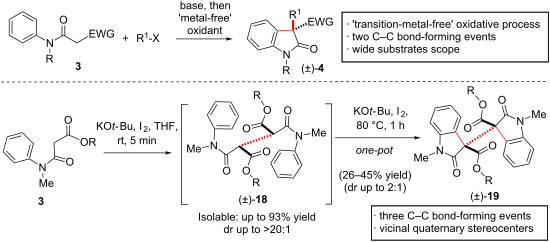
- -carbon quaternary center at the pseudo benzylic position has been achieved via a ‘transition-metal-free’ intramolecular dehydrogenative coupling (IDC). The construction of 2-oxindole moieties was carried out through formation of carbon–carbon bonds using KOt-Bu-catalyzed one pot C-alkylation of β-N
- -arylamido esters with alkyl halides followed by a dehydrogenative coupling. Experimental evidences indicated toward a radical-mediated path for this reaction. Keywords: C−H functionalization; intramolecular dehydrogenative coupling (IDC); iodine; N-iodosuccinimide; oxidants; 2-oxindoles; Introduction The
- oxidative coupling of two C–H bonds [also termed as cross-dehydrogenative-coupling (CDC)] in the formation of C–C bonds [11][12][13][14][15][16]. This was facilitated by the introduction of transition metals in organic synthesis providing an amazing tool to explore these oxidative coupling reactions in an

Graphical Abstract

Scheme 1: Synthesis of 2-oxindoles via oxidative processes.
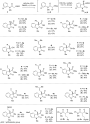
Figure 1: Substrates scope of one-pot ‘transition-metal-free’ IDC. The syntheses of compounds 4a–s according ...

Figure 2: Further substrates scope of one-pot ‘transition metal-free’ IDC. Conditions A: KOt-Bu, iodine; cond...
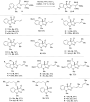
Figure 3: Substrates scope of ‘transition-metal-free’ IDC using KOt-Bu/I2. Reproduced from [46].
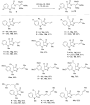
Figure 4: C-Alkylation of anilides using KOt-Bu.

Figure 5: Substrates scope of ‘transition-metal-free’ IDC of C-alkylated anilides using DBU/I2.

Scheme 2: Oxidative coupling of C-arylated anilides (±)-11a–d. The synthesis of 12b as per method A has been ...

Scheme 3: Synthesis of spirocyclic product through IDC The synthesis of 14 as per method A has been reproduce...

Scheme 4: Dimerization of β-N-aryl-amidoesters 3a and b. Reproduced from [46].

Scheme 5: Synthesis of dimeric 2-oxindoles utilizing IDC. The syntheses of 19a and b have been reproduced fro...

Scheme 6: Plausible mechanism of ‘transition-metal-free’ IDC The mechanistic consideration in Scheme 6 has been repro...

Scheme 7: Intramolecular-dehydrogenative-coupling (IDC) of 3a and 5a. Reproduced from [46].

Scheme 8: IDC of 3a and 5a using different oxidants. Reproduced from [46].

Scheme 9: Synthesis of 3-substituted-2-oxindoles from benzyl esters.

Scheme 10: 3-Substituted-2-oxindoles from p-methoxybenzyl esters.

Scheme 11: Synthetic elaboration using Tsuji–Trost reactions. Reproduced from [46].
Cascade alkylarylation of substituted N-allylbenzamides for the construction of dihydroisoquinolin-1(2H)-ones and isoquinoline-1,3(2H,4H)-diones
- Ping Qian,
- Bingnan Du,
- Wei Jiao,
- Haibo Mei,
- Jianlin Han and
- Yi Pan
Beilstein J. Org. Chem. 2016, 12, 301–308, doi:10.3762/bjoc.12.32

- cross-dehydrogenative coupling (CDC) reactions of alkanes, which were reported by Li and other groups [11][12][13][14][15]. Recently, several types of reactions with alkanes as substrates have been developed, such as the Minisci reaction with heteroarenes [16][17], radical addition to unsaturated bonds

Graphical Abstract

Scheme 1: Cascade 1,2-difunctionalization and cyclization to construct heterocycles.
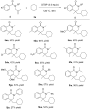
Scheme 2: Cyclization of cyclohexane (2a) with substituted N-(2-methylallyl)benzamide (reaction conditions: 4...

Scheme 3: Cyclization of cycloalkanes with N-methyl-N-(2-methylallyl)benzamide (reaction conditions: 4a (0.2 ...
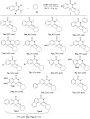
Scheme 4: Cyclization reaction of 6 with cyclohexane 2a (reaction conditions: 6 (0.2 mmol), cyclohexane 2a (2...

Scheme 5: Control experiments for the mechanism studies. a) Reaction with N-unprotected substrate 8a; b) reac...

Scheme 6: Proposed mechanism.
Enantioselective additions of copper acetylides to cyclic iminium and oxocarbenium ions
- Jixin Liu,
- Srimoyee Dasgupta and
- Mary P. Watson
Beilstein J. Org. Chem. 2015, 11, 2696–2706, doi:10.3762/bjoc.11.290
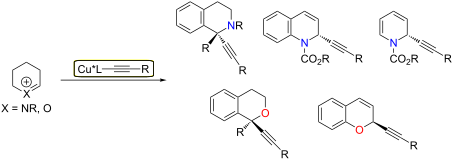
- for enantioselective alkynylations of cyclic electrophiles. The first enantioselective, copper-catalyzed alkynylation of a cyclic iminium ion was reported by Li’s research group in 2004 [22]. Building on their development of a cross-dehydrogenative coupling (CDC) reaction between benzylic amines and

Graphical Abstract
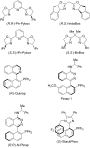
Figure 1: Chiral ligands utilized in copper-catalyzed alkynylations of cyclic iminium and oxocarbenium ions.

Scheme 1: Li’s alkynylation of acyclic N-arylimines.

Scheme 2: Knochel’s alkynylation of acyclic N-alkylenamines.

Scheme 3: Li’s CDC of tetrahydroisoquinolines and alkynes.

Scheme 4: Li’s alkynylation of N-aryldihydroisoquinolinium ions.

Scheme 5: Schreiber’s alkynylation of N-alkylisoquinolinium ions.

Scheme 6: Ma’s alkynylation of pyridium ions.

Scheme 7: Arndtsen’s alkynylation of cyclic iminium ions.

Scheme 8: Maruoka’s alkynylation of azomethine imines.

Scheme 9: Su’s CDC of tetrahydroisoquinolines and alkynes under ball milling conditions.

Scheme 10: Ma’s A3-coupling.

Scheme 11: Li’s CDC reaction using photoredox catalysis.
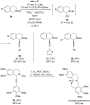
Scheme 12: Liu’s CDC reaction of N-carbamoyltetrahydroisoquinolines. T+BF4– = 2,2,6,6-tetramethylpiperidine N-...

Scheme 13: Aponick’s alkynylation of N-carbomoylquinolinium ions using StackPhos as ligand.

Scheme 14: Carreira’s enantioselective, catalytic alkynylation of aldehydes.

Scheme 15: Watson’s alkynylation of isochroman oxocarbenium ions.

Scheme 16: Watson’s alkynylation of chromene oxocarbenium ions.

Scheme 17: Watson’s alkynylation to set diaryl tetrasubstituted stereocenters.
Pd(OAc)2-catalyzed dehydrogenative C–H activation: An expedient synthesis of uracil-annulated β-carbolinones
- Biplab Mondal,
- Somjit Hazra,
- Tarun K. Panda and
- Brindaban Roy
Beilstein J. Org. Chem. 2015, 11, 1360–1366, doi:10.3762/bjoc.11.146
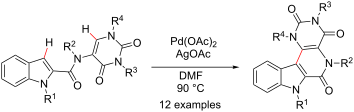
- rich indole C3–H bond for the synthesis of uracil annulated β-carbolinones [54][55][56]. Herein, we report our novel approach towards the synthesis of uracil annulated β-carbolinones via an intramolecular dehydrogenative coupling reaction of indole-2-carboxamides. Results and Discussion We started our
- point for catalyst screening. The amide 4a (R1 = R2 = R3 = R4 = Me) was used as a model substrate for this dehydrogenative coupling reaction. The reaction was set up in the presence of Pd(OAc)2 (10 mol %), Cu(OAc)2 (2 equiv) in DMF under open air at 70 °C (Table 1, entry 1). After 8 h we obtained 35
- the eluent to afford product 5. For details see Supporting Information File 1. Naturally occurring β-carbolinones. ORTEP diagram of 5h. Preparation of starting substrate. Synthesis of various β-carbolinone derivatives. Proposed mechanistic pathway. Optimization of intramolecular dehydrogenative

Graphical Abstract

Figure 1: Naturally occurring β-carbolinones.

Scheme 1: Preparation of starting substrate.
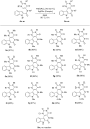
Scheme 2: Synthesis of various β-carbolinone derivatives.

Figure 2: ORTEP diagram of 5h.

Scheme 3: Proposed mechanistic pathway.
Cross-dehydrogenative coupling for the intermolecular C–O bond formation
- Igor B. Krylov,
- Vera A. Vil’ and
- Alexander O. Terent’ev
Beilstein J. Org. Chem. 2015, 11, 92–146, doi:10.3762/bjoc.11.13
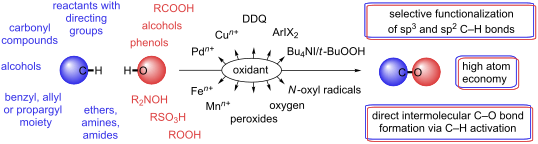
- -dehydrogenative C–O coupling reaction are dictated mainly by the nature of the C-reagent. Hence, in the present review the data are classified according to the structures of C-reagents, and, in the second place, according to the type of oxidative systems. Besides the typical cross-dehydrogenative coupling
- ; C–H functionalization; C–O bond formation; cross-dehydrogenative coupling; oxidative cross-coupling; Introduction The development of methods for the cross-dehydrogenative coupling (CDC; or oxidative cross coupling) is an important field of modern organic chemistry. These terms commonly refer to
- -dehydrogenative coupling can be employed to form a new bond with high atomic efficiency and does not require additional synthetic steps for the introduction of functional groups (for example, such as -Hal, -OTf, -BR2, -SnR3, -SiR3, -ZnHal, -MgHal) into molecules necessary in other cross-coupling reactions

Graphical Abstract

Scheme 1: Cross-dehydrogenative coupling.

Scheme 2: Cross-dehydrogenative C–O coupling.

Scheme 3: Regioselective ortho-acetoxylation of meta-substituted arylpyridines and N-arylamides.
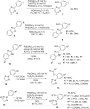
Scheme 4: ortho-Acyloxylation and alkoxylation of arenes directed by pyrimidine, benzoxazole, benzimidazole a...

Scheme 5: Cu(OAc)2/AgOTf/O2 oxidative system in the ortho-alkoxylation of arenes.
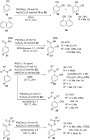
Scheme 6: Pd(OAc)2/persulfate oxidative system in the ortho-alkoxylation and acetoxylation of arenes with nit...
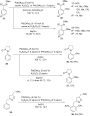
Scheme 7: ortho-Acetoxylation and methoxylation of O-methyl aryl oximes, N-phenylpyrrolidin-2-one, and (3-ben...

Scheme 8: Ruthenium-catalyzed ortho-acyloxylation of acetanilides.

Scheme 9: Acetoxylation and alkoxylation of arenes with amide directing group using Pd(OAc)2/PhI(OAc)2 oxidat...

Scheme 10: Alkoxylation of azoarenes, 2-aryloxypyridines, picolinamides, and N-(1-methyl-1-(pyridin-2-yl)ethyl...

Scheme 11: Acetoxylation of compounds containing picolinamide and quinoline-8-amine moieties using the Pd(OAc)2...

Scheme 12: (CuOH)2CO3 catalyzed oxidative ortho-etherification using air as oxidant.

Scheme 13: Copper-catalyzed aerobic alkoxylation and aryloxylation of arenes containing pyridine-N-oxide moiet...

Scheme 14: Cobalt-catalyzed aerobic alkoxylation of arenes and alkenes containing pyridine N-oxide moiety.

Scheme 15: Non-symmetric double-fold C–H ortho-acyloxylation.

Scheme 16: N-nitroso directed ortho-alkoxylation of arenes.

Scheme 17: Selective alkoxylation and acetoxylation of alkyl groups.

Scheme 18: Acetoxylation of 2-alkylpyridines and related compounds.
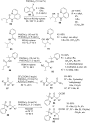
Scheme 19: Acyloxylation and alkoxylation of alkyl fragments of substrates containing amide or sulfoximine dir...

Scheme 20: Palladium-catalyzed double sp3 C–H alkoxylation of N-(quinolin-8-yl)amides for the synthesis of sym...

Scheme 21: Copper-catalyzed acyloxylation of methyl groups of N-(quinolin-8-yl)amides.

Scheme 22: One-pot acylation and sp3 C–H acetoxylation of oximes.

Scheme 23: Possible mechanism of oxidative esterification catalyzed by N-heterocyclic nucleophilic carbene.

Scheme 24: Oxidative esterification employing stoichiometric amounts of aldehydes and alcohols.

Scheme 25: Selective oxidative coupling of aldehydes with alcohols in the presence of amines.

Scheme 26: Iodine mediated oxidative esterification.

Scheme 27: Oxidative C–O coupling of benzyl alcohols with methylarenes under the action of Bu4NI/t-BuOOH syste...

Scheme 28: Oxidative coupling of methyl- and ethylarenes with aromatic aldehydes under the action of Bu4NI/t-B...

Scheme 29: Cross-dehydrogenative C–O coupling of aldehydes with t-BuOOH in the presence of Bu4NI.

Scheme 30: Bu4NI-catalyzed α-acyloxylation reaction of ethers and ketones with aldehydes and t-BuOOH.

Scheme 31: Oxidative coupling of aldehydes with N-hydroxyimides and hexafluoroisopropanol.

Scheme 32: Oxidative coupling of alcohols with N-hydroxyimides.

Scheme 33: Oxidative coupling of aldehydes and primary alcohols with N-hydroxyimides using (diacetoxyiodo)benz...

Scheme 34: Proposed mechanism of the oxidative coupling of aldehydes and N-hydroxysuccinimide under action of ...

Scheme 35: Oxidative coupling of aldehydes with pivalic acid (172).

Scheme 36: Oxidative C–O coupling of aldehydes with alkylarenes using the Cu(OAc)2/t-BuOOH system.

Scheme 37: Copper-catalyzed acyloxylation of C(sp3)-H bond adjacent to oxygen in ethers using benzyl alcohols.

Scheme 38: Oxidative C–O coupling of aromatic aldehydes with cycloalkanes.

Scheme 39: Ruthenium catalyzed cross-dehydrogenative coupling of primary and secondary alcohols.

Scheme 40: Cross-dehydrogenative C–O coupling reactions of β-dicarbonyl compounds with sulfonic acids, acetic ...

Scheme 41: Acyloxylation of ketones, aldehydes and β-dicarbonyl compounds using carboxylic acids and Bu4NI/t-B...

Scheme 42: Acyloxylation of ketones using Bu4NI/t-BuOOH system.

Scheme 43: Cross-dehydrogenative C–O coupling of β-dicarbonyl compounds and their heteroanalogues with N-hydro...

Scheme 44: Cross-dehydrogenative C–O coupling of β-dicarbonyl compounds and their heteroanalogues with t-BuOOH....

Scheme 45: Oxidative C–O coupling of 2,6-dialkylphenyl-β-keto esters and thioesters with tert-butyl hydroxycar...

Scheme 46: α’-Acyloxylation of α,β-unsaturated ketones using KMnO4.

Scheme 47: Possible mechanisms of the acetoxylation at the allylic position of alkenes by Pd(OAc)2.

Scheme 48: Products of the oxidation of terminal alkenes by Pd(II)/AcOH/oxidant system.

Scheme 49: Acyloxylation of terminal alkenes with carboxylic acids.

Scheme 50: Synthesis of linear E-allyl esters by cross-dehydrogenative coupling of terminal alkenes wih carbox...

Scheme 51: Pd(OAc)2-catalyzed acetoxylation of Z-vinyl(triethylsilanes).

Scheme 52: α’-Acetoxylation of α-acetoxyalkenes with copper(II) chloride in acetic acid.

Scheme 53: Oxidative acyloxylation at the allylic position of alkenes and at the benzylic position of alkylare...

Scheme 54: Copper-catalyzed alkoxylation of methylheterocyclic compounds using di-tert-butylperoxide as oxidan...

Scheme 55: Oxidative C–O coupling of methylarenes with β-dicarbonyl compounds or phenols.

Scheme 56: Copper-catalyzed esterification of methylbenzenes with cyclic ethers and cycloalkanes.

Scheme 57: Oxidative C–O coupling of carboxylic acids with toluene catalyzed by Pd(OAc)2.

Scheme 58: Oxidative acyloxylation at the allylic position of alkenes with carboxylic acids using the Bu4NI/t-...

Scheme 59: Cross-dehydrogenative C–O coupling of carboxylic acids with alkylarenes using the Bu4NI/t-BuOOH sys...

Scheme 60: Oxidative C–O cross-coupling of methylarenes with ethyl or isopropylarenes.

Scheme 61: Phosphorylation of benzyl C–H bonds using the Bu4NI/t-BuOOH oxidative system.

Scheme 62: Selective C–H acetoxylation of 2,3-disubstituted indoles.

Scheme 63: Acetoxylation of benzylic position of alkylarenes using DDQ as oxidant.

Scheme 64: C–H acyloxylation of diarylmethanes, 3-phenyl-2-propen-1-yl acetate and dimethoxyarene using DDQ.

Scheme 65: Cross-dehydrogenative C–O coupling of 1,3-diarylpropylenes and 1,3-diarylpropynes with alcohols.

Scheme 66: One-pot azidation and C–H acyloxylation of 3-chloro-1-arylpropynes.

Scheme 67: Cross-dehydrogenative C–O coupling of 1,3-diarylpropylenes, (E)-1-phenyl-2-isopropylethylene and is...

Scheme 68: Cross-dehydrogenative C–O coupling of alkylarenes and related compounds with N-hydroxyphthalimide.

Scheme 69: Acetoxylation at the benzylic position of alkylarenes mediated by N-hydroxyphthalimide.

Scheme 70: C–O coupling of methylarenes with aromatic carboxylic acids employing the NaBrO3/NaHSO3 system.

Scheme 71: tert-Butyl peroxidation of allyl, propargyl and benzyl ethers catalyzed by Fe(acac)3.

Scheme 72: Cross-dehydrogenative C–O coupling of ethers with carboxylic acids mediated by Bu4NI/t-BuOOH system....

Scheme 73: Oxidative acyloxylation of dimethylamides and dioxane with 2-aryl-2-oxoacetic acids accompanied by ...

Scheme 74: tert-Butyl peroxidation of N-benzylamides and N-allylbenzamide using the Bu4NI/t-BuOOH system.

Scheme 75: Cross-dehydrogenative C–O coupling of aromatic carboxylic acids with ethers using Fe(acac)3 as cata...

Scheme 76: Cross-dehydrogenative C–O coupling of cyclic ethers with 2-hydroxybenzaldehydes using iron carbonyl...
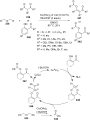
Scheme 77: Cross-dehydrogenative C–O coupling of ethers with β-dicarbonyl compounds and phenols using copper c...

Scheme 78: Cross-dehydrogenative C–O coupling of 2-hydroxybenzaldehyde with dioxane catalyzed by Cu2(BPDC)2(BP...

Scheme 79: Ruthenium chloride-catalyzed acyloxylation of β-lactams.

Scheme 80: Ruthenium-catalyzed tert-butyl peroxydation amides and acetoxylation of β-lactams.

Scheme 81: PhI(OAc)2-mediated α,β-diacetoxylation of tertiary amines.

Scheme 82: Electrochemical oxidative methoxylation of tertiary amines.

Scheme 83: Cross-dehydrogenative C–O coupling of ketene dithioacetals with carboxylic acids in the presence of...

Scheme 84: Cross-dehydrogenative C–O coupling of enamides with carboxylic acids using iodosobenzene as oxidant....

Scheme 85: Oxidative alkoxylation, acetoxylation, and tosyloxylation of acylanilides using PhI(O(O)CCF3)2 in t...

Scheme 86: Proposed mechanism of the oxidative C–O coupling of actetanilide with O-nucleophiles in the presenc...

Scheme 87: Three-component coupling of aldehydes, anilines and alcohols involving oxidative intermolecular C–O...

Scheme 88: Oxidative coupling of phenols with alcohols.

Scheme 89: 2-Acyloxylation of quinoline N-oxides with arylaldehydes in the presence of the CuOTf/t-BuOOH syste...

Scheme 90: Cross-dehydrogenative C–O coupling of azoles with primary alcohols.

Scheme 91: Oxidation of dipyrroles to dipyrrins and subsequent oxidative alkoxylation in the presence of Na3Co...

Scheme 92: Oxidative dehydrogenative carboxylation of alkanes and cycloalkanes to allylic esters.

Scheme 93: Pd-catalyzed acetoxylation of benzene.
Sequential decarboxylative azide–alkyne cycloaddition and dehydrogenative coupling reactions: one-pot synthesis of polycyclic fused triazoles
- Kuppusamy Bharathimohan,
- Thanasekaran Ponpandian,
- A. Jafar Ahamed and
- Nattamai Bhuvanesh
Beilstein J. Org. Chem. 2014, 10, 3031–3037, doi:10.3762/bjoc.10.321
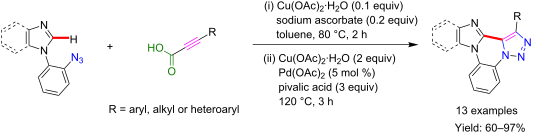
- methodology is more convenient to produce the complex polycyclic molecules in a simple way. Keywords: copper(II) acetate; decarboxylative CuAAC; dehydrogenative coupling; fused triazoles; one-pot synthesis; Introduction The copper-catalyzed Huisgen [3 + 2] cycloaddition (or copper-catalyzed azide–alkyne
- were developed for the synthesis of fused triazoles [40]. Ackermann referred to an intramolecular dehydrogenative coupling of 1,4-disubstituted triazoles to achieve tri- and tetracyclic triazoles [34]. Recently, Lautens et al. [41] described a one-pot synthesis of fused triazoles through CuAAC reaction
- According to the report of Kolarovič et al., the decarboxylative CuAAC reaction occurs efficiently with a CuSO4/NaAsc/DMSO catalytic system [6]. The palladium-catalyzed oxidative dehydrogenative coupling reaction may be effected by various oxidants [42][43] such as Ag2O, AgOAc, Ag2CO3, Na2S2O8, Cu(OPiv)2

Graphical Abstract

Scheme 1: Synthesis of polycyclic fused triazoles.

Scheme 2: Synthesis of fused triazole 4a using phenylacetylene.

Scheme 3: Synthesis of 1a, 1b and 1c.

Scheme 4: Synthesis of fused polycyclic triazole analogs 4.

Figure 1: ORTEP diagram of 4f (CCDC 979471).

Scheme 5: Proposed mechanism for the formation of 4.
Exploration of C–H and N–H-bond functionalization towards 1-(1,2-diarylindol-3-yl)tetrahydroisoquinolines
- Michael Ghobrial,
- Marko D. Mihovilovic and
- Michael Schnürch
Beilstein J. Org. Chem. 2014, 10, 2186–2199, doi:10.3762/bjoc.10.226

- salt [11]. This synthesis has been streamlined by cross dehydrogenative coupling (CDC) – a powerful method for C–C-bond formation via the C–H bonds of a pro-nucleophile and a pro-electrophile [12][13][14]. A landmark contribution published by Li and co-workers reported the successful introduction of
- wanted to use direct functionalization either via C–H activation or cross dehydrogenative coupling for C–C-bond-forming reactions avoiding the use of two prefunctionalized building blocks. Naturally, C–N-bond formation should proceed via Buchwald–Hartwig coupling. The target molecules can be considered

Graphical Abstract

Figure 1: General structures of biologically active dihydroisoquinolines, THIQs and 1,2-diarylindoles.

Scheme 1: Li’s THIQ indolation protocol.

Scheme 2: Possible strategies for the synthesis of target structure 1. Dashed arrows indicate literature-know...

Scheme 3: Nucleophilic substitution of DMEDA with 2-fluoro-3-iodopyridine (10).

Scheme 4: Decomposition of 1-(indol-3-yl)-THIQ 4d during N-arylation (monitored by GC–MS).

Scheme 5: Formation of byproduct 13 via benzylic oxidation.

Scheme 6: Routes towards 1,2-diarylindoles starting from indole; a: PhB(OH)2 (3 equiv), Pd(OAc)2 (5 mol %), A...

Scheme 7: Palladium-catalyzed C2-arylation attempt of 1-(1-phenylindol-3-yl)-N-Boc-THIQ.
Iron-catalyzed decarboxylative alkenylation of cycloalkanes with arylvinyl carboxylic acids via a radical process
- Jincan Zhao,
- Hong Fang,
- Jianlin Han and
- Yi Pan
Beilstein J. Org. Chem. 2013, 9, 1718–1723, doi:10.3762/bjoc.9.197
- reactions. Additionally, metal-free methodologies, which use TBHP, PhI(OAc)2, TBAI, I2 or Lewis/Brønsted acids, have also been employed for cross-dehydrogenative coupling reactions [48][49][50][51][52][53][54][55][56][57]. Owing to the general low reactivity of cycloalkane C(sp3)–H bonds, the direct

Graphical Abstract

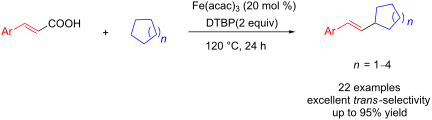
Scheme 1: Fe(acac)3-catalyzed alkenylation of cyclohexane. Catalytic conditions: cinnamic acid (1) (0.3 mmol)...

Scheme 2: Fe(acac)3-catalyzed alkenylation of cyclopentan, cycloheptane and cyclooctane. Catalytic conditions...

Scheme 3: A plausible pathway for the reaction.
A3-Coupling catalyzed by robust Au nanoparticles covalently bonded to HS-functionalized cellulose nanocrystalline films
- Jian-Lin Huang,
- Derek G. Gray and
- Chao-Jun Li
Beilstein J. Org. Chem. 2013, 9, 1388–1396, doi:10.3762/bjoc.9.155
- environmental pollution [1][2]. In the past few decades, aqueous-phase organic reactions have achieved great success [3][4][5]. The classic examples include the Grignard-type reactions [6][7], transition-metal catalyzed C–C bond formations [8][9] and cross-dehydrogenative coupling (CDC) reactions [10][11][12

Graphical Abstract

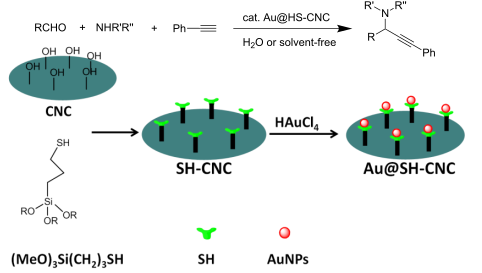
Scheme 1: Sketch illustrating preparation of the Au@HS-CNC catalyst.

Figure 1: Au4f and S2p XPS spectra of the Au@HS-CNC (4.4 mol %) catalyst.

Figure 2: TEM pictures of the HS-NCC and Au@HS-CNC (4.4 mol %) catalyst (scale bar: 5 nm).

Figure 3: Thermogravimetric behavior of the Au@HS-CNC (4.4 mol %) catalyst (A) and CNC (B).

Figure 4: FT-IR spectra of CNC, HS-CNC, and Au@HS-CNC (4.4 mol %) catalyst.

Figure 5: Solid-state 13C NMR spectra of the CNC and Au@HS-CNC (4.4 mol %) catalyst.

Figure 6: Recycling test of Au@HS-CNC (4.4 mol %) catalyst for the three-component coupling of formaldehyde, ...
Ru-catalyzed dehydrogenative coupling of carboxylic acids and silanes - a new method for the preparation of silyl ester
- Guo-Bin Liu and
- Hong-Yun Zhao
Beilstein J. Org. Chem. 2008, 4, No. 27, doi:10.3762/bjoc.4.27

- the transition metal-catalyzed cross-coupling of an active hydrogen-moiety containing substances such as water and alcohols with silanes [27]. There are still few examples of dehydrogenative coupling reaction of carboxylic acids with silanes. Silylating agents such as allyltrimethylsilane
- finding that a catalytic system of dodecacarbonyltriruthenium and ethyl iodide [Ru3(CO)12/EtI] effectively promotes the dehydrogenative coupling of carboxylic acids with silanes, yielding the corresponding silyl esters selectively. The results are summarized in Scheme 1 and Table 1–Table 4
- . Dehydrogenative coupling reactions were carried out by heating a mixture of carboxylic acid, silane and a catalytic amount of Ru3(CO)12/EtI in solvents under a nitrogen atmosphere for several hours (Scheme 1, Table 1–Table 4, dehydrocoupling reaction was monitored by GC). The transformation of propionic acid with

Graphical Abstract

Scheme 1: Dehydrogenative silyl ester synthesis with Ru3(CO)12/EtI.
Conformational rigidity of silicon- stereogenic silanes in asymmetric catalysis: A comparative study
- Sebastian Rendler and
- Martin Oestreich
Beilstein J. Org. Chem. 2007, 3, No. 9, doi:10.1186/1860-5397-3-9
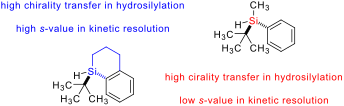
- reagents for the silicon-to-carbon chirality transfer. Kinetic resolution of secondary alcohols using a dehydrogenative coupling reaction. Catalytic cycle for hydrosilylation. Postulated catalytic cycle for dehydrogenative coupling. Supporting Information Supporting Information File 88: Supporting

Graphical Abstract

Figure 1: Cyclic and acyclic sterically encumbered silanes.

Scheme 1: Cyclic and acyclic chiral silanes as potent reagents for the silicon-to-carbon chirality transfer.

Scheme 2: Kinetic resolution of secondary alcohols using a dehydrogenative coupling reaction.

Scheme 3: Catalytic cycle for hydrosilylation.
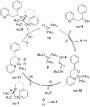
Scheme 4: Postulated catalytic cycle for dehydrogenative coupling.



