Search results
Search for "epimer" in Full Text gives 99 result(s) in Beilstein Journal of Organic Chemistry.
Indium-mediated C-allylation of melibiose
Beilstein J. Org. Chem. 2019, 15, 2458–2464, doi:10.3762/bjoc.15.238

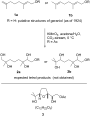
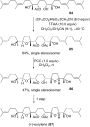
- main product was crystallized and the configuration was determined by X-ray analysis proving the expected syn-configuration (compound 2-syn) [CCDC 1922520] (Figure 1). Epimer 2-syn was applied to Zemplén conditions prior to the ozonolysis. Conventional work-up, neutralization with acidic ion exchange
- further work up. This reaction mixture was cooled to −78 °C, purged with ozone for two minutes followed by reductive work-up employing triphenylphosphine which gave the corresponding glycosylated elongated aldoses 4-syn in full conversion as determined by TLC. Epimer 2-anti was reacted accordingly, after


A review of the total syntheses of triptolide
Beilstein J. Org. Chem. 2019, 15, 1984–1995, doi:10.3762/bjoc.15.194
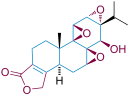
- difficulty in extraction of 40 and 41 from the large quantity of alumina. Dehydration of the mixture of 40 and 41 in benzene quantitatively afforded a 1:2 mixture of 42 and its C-3 epimer 41. Reduction of the epimers with sodium borohydride and subsequent treatment with hydrochloric acid (2 N) gave single
- isomer 43. Treatment of 43 with methoxide ions in methanol at room temperature for 15 min gave the desired C-5 trans-butenolide 8 (40%) along with its C-5 cis-epimer 44 (60%), which is the sole product from the base-catalyzed isomerization of 43. Epoxidation of 43 gave a C-4,5-epoxide intermediate, which
- troublesome work (60% yield) due to the formation of the thermodynamic more stable C-5 cis-epimer 44 [66]. Thus, it may not be possible to obtain the desired triptophenolide methyl ether (8) in a satisfactory yield for a target-oriented synthesis. As the key structure element of various di- and triterpenes


N-(1-Phenylethyl)aziridine-2-carboxylate esters in the synthesis of biologically relevant compounds
Beilstein J. Org. Chem. 2019, 15, 1722–1757, doi:10.3762/bjoc.15.168

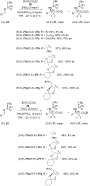
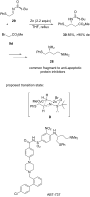
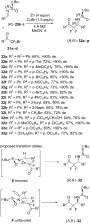
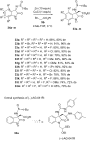
- stereochemistry, they were synthesized from the aziridine ketone (2S,1'R)-36 readily available from Weinreb amide (2S,1'R)-18 which already contained the required configuration at C2 (Scheme 11) [47]. Introduction of the 3R configuration in xestoaminol C and 3S in its epimer was achieved by stereoselective
- syntheses of this compound the general approach which employs the aziridine ester (2R,1'R)-5b as a starting material allows to also obtain its 5'-epimer and norfuranomycin (2S,2'R)-133 [87]. To construct the 2,5-dihydrofurane ring the aziridine alcohol (2R,1'R,1''R)-134 (Scheme 35) [88] was converted to the
- )-135 instead of the allyl residue opened the way to synthesis of ʟ-(+)-furanomycin and its 5'-epimer. MeBmt (2S,3R,4R,6E)-139 is a nonproteinogenic amino acid found as a constituent of the naturally occurring cyclic peptide cyclosporine currently in medical use as immunosuppressant [89]. Syntheses of


Anomeric sugar boronic acid analogues as potential agents for boron neutron capture therapy
Beilstein J. Org. Chem. 2019, 15, 1355–1359, doi:10.3762/bjoc.15.135
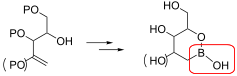
- the arabino-configurated epimer from the reaction mixture, which, if present, may therefore be formed in a very small amount. As expected, no regioisomer was detected, due to the contribution of both steric and electronic effects on the hydroboration at C-1 [7]. In order to explain the


Genomics-inspired discovery of massiliachelin, an agrochelin epimer from Massilia sp. NR 4-1
Beilstein J. Org. Chem. 2019, 15, 1298–1303, doi:10.3762/bjoc.15.128
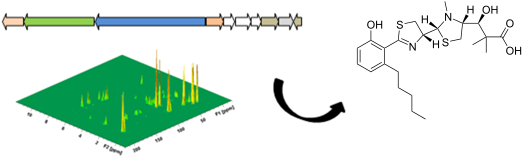
- production and complexing properties [15]. Therefore, we decided to initially focus our genome mining efforts on the micacocidin-type cluster in Massilia sp. NR 4-1. Here, we report the outcome of this study, which led to the identification of a previously unrecognized agrochelin epimer and, furthermore
- S3, Supporting Information File 1). Conclusion In summary, Massilia sp. NR 4-1 was found to synthesize an epimer of the alkaloid agrochelin under iron-deficient conditions. The structure of massiliachelin is consistent with the architecture of a biosynthetic assembly line, which is encoded in the


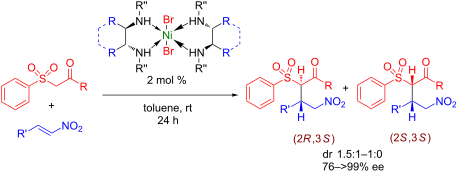
Synthesis of non-racemic 4-nitro-2-sulfonylbutan-1-ones via Ni(II)-catalyzed asymmetric Michael reaction of β-ketosulfones
Beilstein J. Org. Chem. 2019, 15, 1289–1297, doi:10.3762/bjoc.15.127
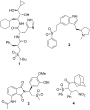
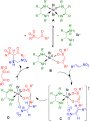
- more rapid than the epimerization of product 8a. After about 60 hours the content of sulfone 5a in solution became almost constant, while the amount of epimer 9a continued to increase. This fact may indicate that the formation of compound 9a may occur not only as a result of keto–enol tautomerism in




Steroid diversification by multicomponent reactions
Beilstein J. Org. Chem. 2019, 15, 1236–1256, doi:10.3762/bjoc.15.121
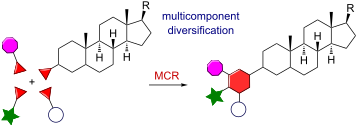
- stepwise Pd(II)-catalyzed cascade process or a [4 + 2] cycloaddition reaction, both providing the cis stereochemistry at C-2 and C-3. When the reaction was carried out with the epimer of substrate 33 (having the 5β-hydroxy group), the cis stereochemistry was also achieved at the newly formed C-2 and C-3
- , but with the tetrahydropyrane ring having α orientation. A mixture of epimers at position 4' was also obtained when using the C-5 epimer of substrate 33. Asif et al. [36] developed another 3CR for the synthesis of steroidal thiazole derivatives. As shown in Scheme 11, cholestanic ketone 7 was reacted



Alkylation of lithiated dimethyl tartrate acetonide with unactivated alkyl halides and application to an asymmetric synthesis of the 2,8-dioxabicyclo[3.2.1]octane core of squalestatins/zaragozic acids
Beilstein J. Org. Chem. 2019, 15, 1194–1202, doi:10.3762/bjoc.15.116
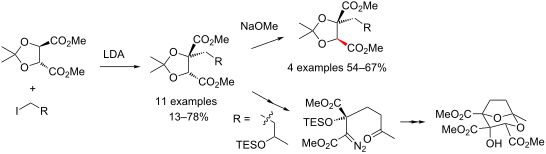
- ) and cephalezomine C (44) [51]. In these latter natural products, the monoalkylated tartaric acid residues typically possess 2R,3S stereochemistry (Figure 2); one exception is cephalezomine D [51], which is the 3R-epimer of cephalezomine C (44). Since the chiral (R,R- S,S-) tartrate acetonides undergo


Pd-Catalyzed microwave-assisted synthesis of phosphonated 13α-estrones as potential OATP2B1, 17β-HSD1 and/or STS inhibitors
Beilstein J. Org. Chem. 2018, 14, 2838–2845, doi:10.3762/bjoc.14.262
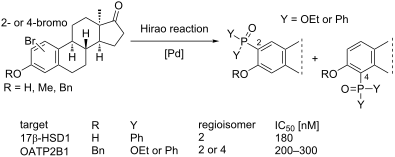
- -sulfate uptake by OATP2B1 [6]. None of the steroidal STS or 17β-HSD1 inhibitors reached the clinical trial, which is mainly due to their retained estrogenic activity. This side-effect could be eliminated by the inhibitor design based on the 13-epimer of natural estrone (13α-estrone, 13αE1OH) [17][18
- ]. Poirier et al. proved that 13α-derivatives of 3,17-estradiols have reduced binding affinity for estrogen receptor alpha and display no uterotropic activity [19]. The conformational change resulting from the inversion at C-13 leads to an epimer unable to bind to its nuclear receptors. We have recently


Synthesis of cis-hydrindan-2,4-diones bearing an all-carbon quaternary center by a Danheiser annulation
Beilstein J. Org. Chem. 2018, 14, 2597–2601, doi:10.3762/bjoc.14.237

- relative configuration of the major epimer of 8 (Figure 3) was established on the basis of a cross peak in the NOESY spectrum that correlated the methyl group at C3 with a methylene proton adjacent to the quaternary carbon of the side chain at C3a. The configuration at C3, adjacent to a carbonyl group, is


Synthesis of eunicellane-type bicycles embedding a 1,3-cyclohexadiene moiety
Beilstein J. Org. Chem. 2018, 14, 2461–2467, doi:10.3762/bjoc.14.222
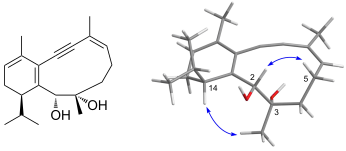
- diastereoselectivity, which means that every single example has to be explored independently. The assignment of the configuration and preferred conformation of product 18 was conducted on the basis of NOESY NMR experiments. Our analysis was aided by the observation that the 2-epimer 19 was accessible by oxidation of




Glycosylation reactions mediated by hypervalent iodine: application to the synthesis of nucleosides and carbohydrates
Beilstein J. Org. Chem. 2018, 14, 1595–1618, doi:10.3762/bjoc.14.137
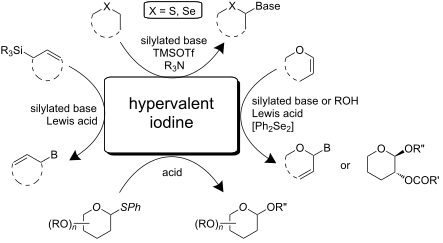
- performed using “odorless” thioglycoside 155 and 149 as the donor and the acceptor [81]. Even with the combination of “disarmed” 155 and “armed” 149, the reaction gave rise to the desired disaccharide 157 in 87% yield. The same reaction of the corresponding 3-epimer 156 proceeded smoothly to give the


Lanyamycin, a macrolide antibiotic from Sorangium cellulosum, strain Soce 481 (Myxobacteria)
Beilstein J. Org. Chem. 2018, 14, 1554–1562, doi:10.3762/bjoc.14.132
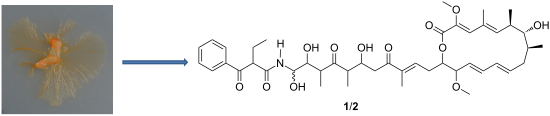
- acetonitrile solvent system (isocratic) at 48% acetonitrile and 52% water for 1 hour with a flow rate of 20 mL/min and UV detection at 254 nm. Compound 1 (5.6 mg) eluted with a retention time of tR = 20.8 min and its epimer, 2 (2.8 mg) at tR = 22.3 min. Both peaks overlapped slightly at the centre giving 15.2


An overview of recent advances in duplex DNA recognition by small molecules
Beilstein J. Org. Chem. 2018, 14, 1051–1086, doi:10.3762/bjoc.14.93






The first Pd-catalyzed Buchwald–Hartwig aminations at C-2 or C-4 in the estrone series
Beilstein J. Org. Chem. 2018, 14, 998–1003, doi:10.3762/bjoc.14.85

- (dba)3 as catalysts, X-Phos as a ligand, Cs2CO3 as a base in toluene or DMF solvent under thermal heating or microwave irradiation [18]. We recently described halogenations [19] and Sonogashira couplings on ring A of 13α-estrone and its 3-methyl ether [20]. The 13-epimer of natural estrone is a non

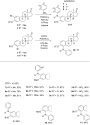

Latest development in the synthesis of ursodeoxycholic acid (UDCA): a critical review
Beilstein J. Org. Chem. 2018, 14, 470–483, doi:10.3762/bjoc.14.33
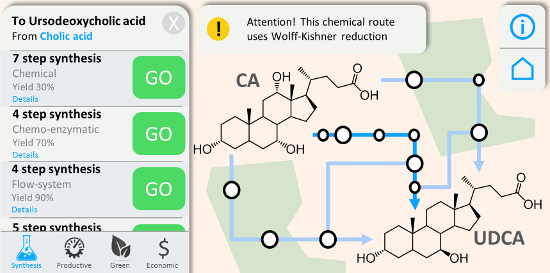
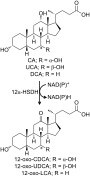
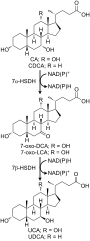
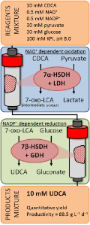
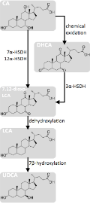
- ] (yield 90%) and subsequently reduced with metallic sodium in presence of imidazole and 1-propanol (yield 80%) yielding the 7β-OH epimer (UDCA) as imidazole salt. Notably, the regiospecific oxidoreduction of the 7α-OH group is achieved using weak oxidants: this behavior can be explained by the peculiar
- conformation of CDCA (the 7α-OH group is surrounded by alkyl chains, generating an hydrophobic environment that favors oxidation to the ketone, which is not the case for the other epimer). These data are supported by a density functional calculation or rather the differential change in electron density due to



Recent developments in the asymmetric Reformatsky-type reaction
Beilstein J. Org. Chem. 2018, 14, 325–344, doi:10.3762/bjoc.14.21
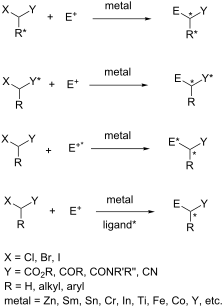
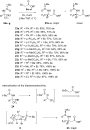
- . This constituted the key step of the first total synthesis of (30S)-apratoxin E and its (30R)-epimer. Comparing the spectroscopic data of these two diastereomers with those of natural apratoxin E unambiguously confirmed that (30R)-apratoxin E was the natural product and that (30S)-apratoxin E was
- actually 30-epiapratoxin E, thus correcting the originally proposed absolute configuration. Both diastereomers were tested for their antiproliferative activities in HCT116 cells, showing that natural (30R)-apratoxin E exhibited a higher activity than its (30S)-epimer. Due to their lower basicity, samarium
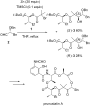
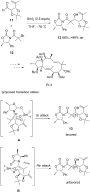
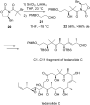
- under mild and neutral conditions. Among them, many syntheses of naturally occurring products have been described for the first time, such as those of the glucose-regulated protein 78 expression inhibitor agent prunustatin A, the antiproliferative agent apratoxin E and its C30 epimer, prebiscibactin











Enzymatic separation of epimeric 4-C-hydroxymethylated furanosugars: Synthesis of bicyclic nucleosides
Beilstein J. Org. Chem. 2017, 13, 2078–2086, doi:10.3762/bjoc.13.205
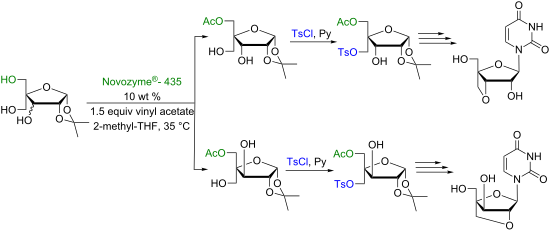
- ribo-trihydroxy sugar derivative starting from diacetone-D-glucose led to the formation of an inseparable 1:1 mixture of the required compound and its C-3 epimer, i.e., 4-C-hydroxymethyl-1,2-O-isopropylidene-α-D-xylofuranose [10]. Lipases have been used extensively for the selective manipulation of


Are boat transition states likely to occur in Cope rearrangements? A DFT study of the biogenesis of germacranes
Beilstein J. Org. Chem. 2017, 13, 1969–1976, doi:10.3762/bjoc.13.192
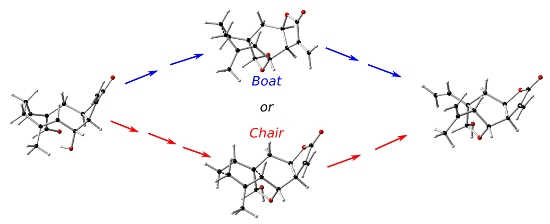
- direction there are some examples [37][69][76]. The hemiacetalization by itself does not guarantee the stabilization of an elemane. If compound 1 had to suffer a normal Cope (chair TS), it would generate the C5 epimer of 2 (2’, Figure 2). This epimer is 2.6 kcal/mol less stable than 1a, so the formation of
- 2’ from 1, as in case of 2, is thermodynamically forbidden. Epimer 2’ can also produce a hemiacetal (3’) but this compound has a higher energy than 3 by 4.2 kcal/mol; this is due to the C5 propenyl group in 3’ is axially oriented instead of equatorially as in 3. In contrast to 3, the formation of
- epimer 3’ from 1 is not thermodynamically highly favored. Therefore, the hemiacetal formation with the right orientation is fundamental to produce an elemanolide more stable than the (Z,E)-germacranolide. It has been proposed that the configuration of an elemane depends on the most stable conformation of



The chemistry and biology of mycolactones
Beilstein J. Org. Chem. 2017, 13, 1596–1660, doi:10.3762/bjoc.13.159









Aqueous semisynthesis of C-glycoside glycamines from agarose
Beilstein J. Org. Chem. 2017, 13, 1222–1229, doi:10.3762/bjoc.13.121

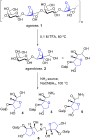
- obtained in the absence of its epimer, epi-8. Moreover, the chemical entities described herein offer opportunities for studies in glycobiology, biomedicinal chemistry and drug design. The use of these compounds as starting material to access new small ligands as GPCR modulators is ongoing in our



Polyketide stereocontrol: a study in chemical biology
Beilstein J. Org. Chem. 2017, 13, 348–371, doi:10.3762/bjoc.13.39
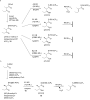
- residues or alternatively abstraction by an available water molecule. The resulting enol/enolate could tautomerize spontaneously back to the original substrate or its epimer, with only the epimerized substrate possessing the required C-2 methyl stereochemistry for subsequent reduction. This epimer would




New syntheses of (±)-tashiromine and (±)-epitashiromine via enaminone intermediates
Beilstein J. Org. Chem. 2016, 12, 2609–2613, doi:10.3762/bjoc.12.256

- of the naturally occurring indolizidine alkaloid (±)-tashiromine and its unnatural epimer (±)-epitashiromine are demonstrated through the use of enaminone chemistry. The impact of various electron-withdrawing substituents at the C-8 position of the indolizidine core on the preparation of the bicyclic
- [3] (Figure 1). To date this natural product and its unnatural epimer 2 have been the targets of numerous enantioselective and racemic syntheses [4][5][6][7][8][9]. Typical approaches to accessing the alkaloid’s indolizidine skeleton have included a key cyclisation onto the nitrogen atom of either a
- (±)-tashiromine (1) and its epimer (±)-epitashiromine (2) in an overall yield of 87% and in a 13:87 ratio, which matches the diastereoisomeric ratio in the precursor (Scheme 3). Pure samples for characterisation could be obtained by flash column chromatography on silica gel using a 95:4.75:0.25 mixture of


Enduracididine, a rare amino acid component of peptide antibiotics: Natural products and synthesis
Beilstein J. Org. Chem. 2016, 12, 2325–2342, doi:10.3762/bjoc.12.226
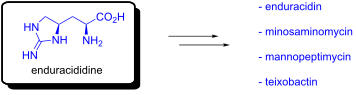
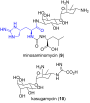
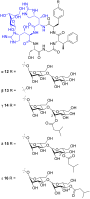
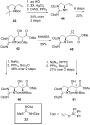
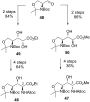
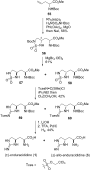
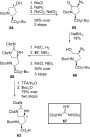
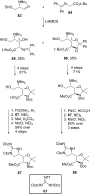
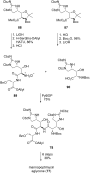
- to orthogonally protected amino acids 46 and 47 (Scheme 7) [58]. Installation of the C-2 stereocentre again began with Garner’s aldehyde 48 and Wittig olefination, followed by Sharpless dihydroxylation to stereoselectively afford diol 49 [59][60]. The C-2 epimer was accessed via Still–Gennari
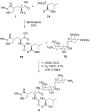
- cyclic guanidines 51 and 52 was initiated through cleavage of the N,O-acetonide and guanylation using isothiourea 33 activated with HgCl2 (Scheme 8). Cyclisation of the guanidine afforded protected β-hydroxyenduracididine 51 in 21% yield in seven steps from diol 49. The C-2 epimer 47 was converted to β












The direct oxidative diene cyclization and related reactions in natural product synthesis
Beilstein J. Org. Chem. 2016, 12, 2104–2123, doi:10.3762/bjoc.12.200
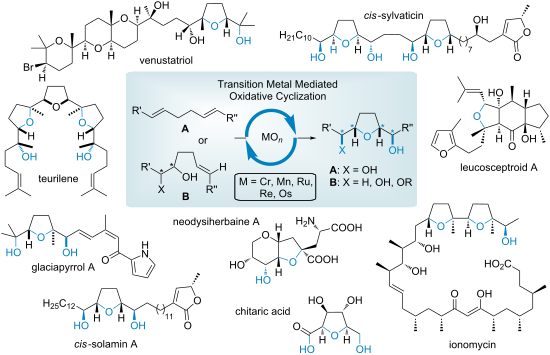
- ]. Based on this approach, in 2009, Donohoe and co-workers also reported the first total synthesis of (+)-sylvaticin [92][96], the C12-epimer of cis-sylvaticin (40) using oxidative cyclization chemistry to establish both the 2,5-cis- and the 2,5-trans-substituted THF ring of the natural product. However