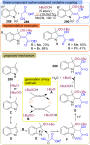
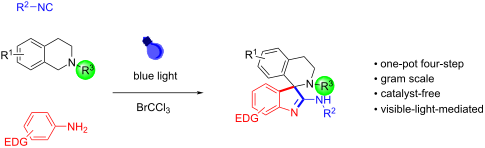
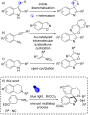
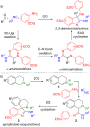
Search for "multistep" in Full Text gives 288 result(s) in Beilstein Journal of Organic Chemistry. Showing first 200.
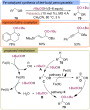
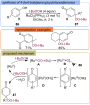
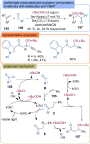
Beilstein J. Org. Chem. 2024, 20, 2476–2492, doi:10.3762/bjoc.20.212
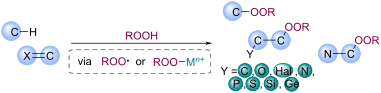
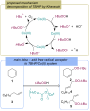
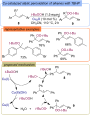
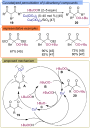
Graphical Abstract
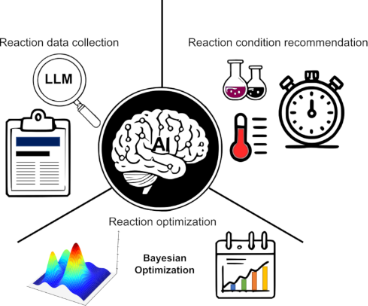
Figure 1: Schematic diagram illustrating the data mining and preprocessing steps for chemical reaction datase...
Figure 2: A comparison of three types of reaction embedding methods: (A) descriptor-based, which use predefin...
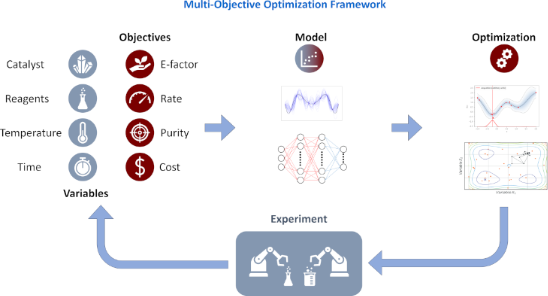
Figure 3: A schematic diagram of how ML algorithms can be combined with HTE platforms to optimize reaction co...
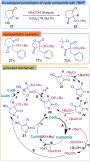
Beilstein J. Org. Chem. 2024, 20, 2455–2460, doi:10.3762/bjoc.20.209
Graphical Abstract
Figure 1: Functional molecules containing a substituted pyrrolidine core.
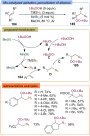
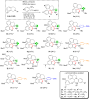
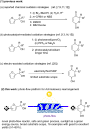
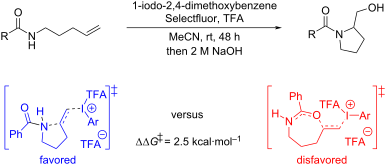
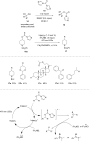
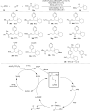
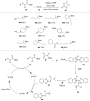
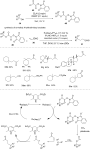
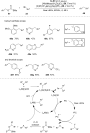
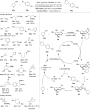
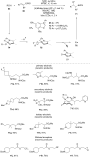
Scheme 1: A) Our previous report on N-alkenylamide cyclizations. B) An overview of the present work.
Scheme 2: Calculated mechanism for the cyclization of amide 3a optimized at the B3LYP/ 6-31+G(d,p) level of t...
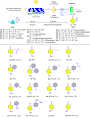
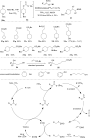
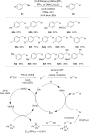
Scheme 3: Scope of cyclization reaction.
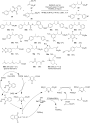
Scheme 4: Reactions of di- and trisubstituted alkene substrates.
Beilstein J. Org. Chem. 2024, 20, 2323–2341, doi:10.3762/bjoc.20.199
Graphical Abstract
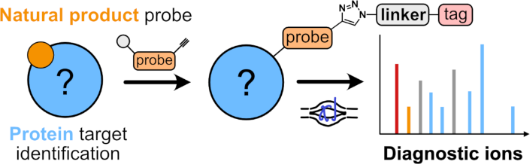
Figure 1: Overall chemical proteomics strategy to identify protein targets of natural products (NPs) and simi...
Figure 2: A) Design of mostly used photo-crosslinking groups. B) Mass spectrometry properties of proteins PTM...
Figure 3: Direct and indirect approach to identify protein targets and representative chemical proteomics wor...
Figure 4: Products of the CuAAC side reactions.
Figure 5: Search possibilities on peptide-level characterization. A) Comparison of DDA and DIA techniques. B)...
Figure 6: In-gel analysis using a tag with fluorophore (A) or via shift-assay (B).
Figure 7: Reporter linkers. A) DMP-tag. B) AzidoTMT tag. C) SOX-tag. D) Imidazolium tag. *A star indicates th...
Figure 8: Biotin and desthiobition-based sample linkers and their associated diagnostic peaks. A) Structure o...
Figure 9: A) isoDTB linker and probe-specific diagnostic ions (B). *A star indicates the possible introductio...
Figure 10: TEV-cleavable linker structure with its characteristic diagnostic ions (A) and probe-specific diagn...
Figure 11: A) Structure of the full length DADPS linker and remaining part after cleavage. B) Diagnostic ions....
Figure 12: Diagnostic peaks included in the search identify higher numbers of modified PSMs and peptides using...
Figure 13: An alternative DADPS linker.
Figure 14: Chemical structure of the trifunctional trypsin cleavable AzKTB linker.
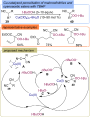
Beilstein J. Org. Chem. 2024, 20, 2024–2077, doi:10.3762/bjoc.20.178
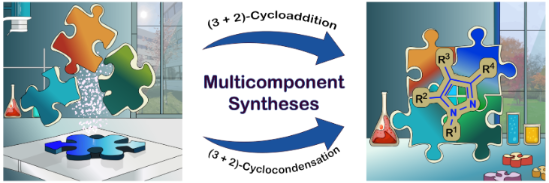
Graphical Abstract
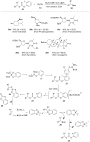
Scheme 1: Consecutive three-component synthesis of pyrazoles 1 via in situ-formed 1,3-diketones 2 [44].
Scheme 2: Consecutive three-component synthesis of 4-ethoxycarbonylpyrazoles 5 via SmCl3-catalyzed acylation ...
Scheme 3: Consecutive four-component synthesis of 1-(thiazol-2-yl)pyrazole-3-carboxylates 8 [51].
Scheme 4: Three-component synthesis of thiazolylpyrazoles 17 via in situ formation of acetoacetylcoumarins 18 ...
Scheme 5: Consecutive pseudo-four-component and four-component synthesis of pyrazoles 21 from sodium acetylac...
Scheme 6: Consecutive three-component synthesis of 1-substituted pyrazoles 24 from boronic acids, di(Boc)diim...
Scheme 7: Consecutive three-component synthesis of N-arylpyrazoles 25 via in situ formation of aryl-di(Boc)hy...
Scheme 8: Consecutive three-component synthesis of 1,3,4-substituted pyrazoles 27 and 28 from methylhydrazine...
Scheme 9: Consecutive three-component synthesis of 4-allylpyrazoles 32 via oxidative allylation of 1,3-dicarb...
Scheme 10: Pseudo-five-component synthesis of tris(pyrazolyl)methanes 35 [61].
Scheme 11: Pseudo-three-component synthesis of 5-(indol-3-yl)pyrazoles 39 from 1,3,5-triketones 38 [64].
Scheme 12: Three-component synthesis of thiazolylpyrazoles 43 [65].
Scheme 13: Three-component synthesis of triazolo[3,4-b]-1,3,4-thiadiazin-3-yl substituted 5-aminopyrazoles 47 [67]....
Scheme 14: Consecutive three-component synthesis of 5-aminopyrazoles 49 via formation of β-oxothioamides 50 [68].
Scheme 15: Synthesis of 3,4-biarylpyrazoles 52 from aryl halides, α-bromocinnamaldehyde, and tosylhydrazine vi...
Scheme 16: Consecutive three-component synthesis of 3,4-substituted pyrazoles 57 from iodochromones 55 by Suzu...
Scheme 17: Pseudo-four-component synthesis of pyrazolyl-2-pyrazolines 59 by ring opening/ring closing cyclocon...
Scheme 18: Consecutive three-component synthesis of pyrazoles 61 [77].
Scheme 19: Three-component synthesis of pyrazoles 62 from malononitrile, aldehydes, and hydrazines [78-90].
Scheme 20: Four-component synthesis of pyrano[2,3-c]pyrazoles 63 [91].
Scheme 21: Three-component synthesis of persubstituted pyrazoles 65 from aldehydes, β-ketoesters, and hydrazin...
Scheme 22: Three-component synthesis of pyrazol-4-carbodithioates 67 [100].
Scheme 23: Regioselective three-component synthesis of persubstituted pyrazoles 68 catalyzed by ionic liquid [...
Scheme 24: Consecutive three-component synthesis of 4-halopyrazoles 69 and anellated pyrazoles 70 [102].
Scheme 25: Three-component synthesis of 2,2,2-trifluoroethyl pyrazole-5-carboxylates 72 [103].
Scheme 26: Synthesis of pyrazoles 75 in a one-pot process via carbonylative Heck coupling and subsequent cycli...
Scheme 27: Copper-catalyzed three-component synthesis of 1,3-substituted pyrazoles 76 [105].
Scheme 28: Pseudo-three-component synthesis of bis(pyrazolyl)methanes 78 by ring opening-ring closing cyclocon...
Scheme 29: Three-component synthesis of 1,4,5-substituted pyrazoles 80 [107].
Scheme 30: Consecutive three-component synthesis of 3,5-bis(fluoroalkyl)pyrazoles 83 [111].
Scheme 31: Consecutive three-component synthesis of difluoromethanesulfonyl-functionalized pyrazole 88 [114].
Scheme 32: Consecutive three-component synthesis of perfluoroalkyl-substituted fluoropyrazoles 91 [115].
Scheme 33: Regioselective consecutive three-component synthesis of 1,3,5-substituted pyrazoles 93 [116].
Scheme 34: Three-component synthesis of pyrazoles 96 mediated by trimethyl phosphite [117].
Scheme 35: One-pot synthesis of pyrazoles 99 via Liebeskind–Srogl cross-coupling/cyclocondensation [118].
Scheme 36: Synthesis of 1,3,5-substituted pyrazoles 101 via domino condensation/Suzuki–Miyaura cross-coupling ...
Scheme 37: Consecutive three-component synthesis of 1,3,5-trisubstituted pyrazoles 102 and 103 by Sonogashira ...
Scheme 38: Polymer analogous consecutive three-component synthesis of pyrazole-based polymers 107 [132].
Scheme 39: Synthesis of 1,3,5-substituted pyrazoles 108 by sequentially Pd-catalyzed Kumada–Sonogashira cycloc...
Scheme 40: Consecutive four-step one-pot synthesis of 1,3,4,5-substituted pyrazoles 110 [137].
Scheme 41: Four-component synthesis of pyrazoles 113, 115, and 117 via Sonogashira coupling and subsequent Suz...
Scheme 42: Consecutive four- or five-component synthesis for the preparation of 4-pyrazoly-1,2,3-triazoles 119...
Scheme 43: Four-component synthesis of pyrazoles 121 via alkynone formation by carbonylative Pd-catalyzed coup...
Scheme 44: Preparation of 3-azulenyl pyrazoles 124 by glyoxylation, decarbonylative Sonogashira coupling, and ...
Scheme 45: Four-component synthesis of a 3-indoloylpyrazole 128 [147].
Scheme 46: Two-step synthesis of 5-acylpyrazoles 132 via glyoxylation-Stephen–Castro sequence and subsequent c...
Scheme 47: Copper on iron mediated consecutive three-component synthesis of 3,5-substituted pyrazoles 136 [150].
Scheme 48: Consecutive three-component synthesis of 3-substituted pyrazoles 141 by Sonogashira coupling and su...
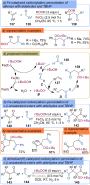
Scheme 49: Consecutive three-component synthesis of pyrazoles 143 initiated by Cu(I)-catalyzed carboxylation o...
Scheme 50: Consecutive three-component synthesis of benzamide-substituted pyrazoles 146 starting from N-phthal...
Scheme 51: Consecutive three-component synthesis of 1,3,5-substituted pyrazoles 148 [156].
Scheme 52: Three-component synthesis of 4-ninhydrin-substituted pyrazoles 151 [158].
Scheme 53: Consecutive four-component synthesis of 4-(oxoindol)-1-phenylpyrazole-3-carboxylates 155 [159].
Scheme 54: Three-component synthesis of pyrazoles 160 [160].
Scheme 55: Consecutive three-component synthesis of pyrazoles 165 [162].
Scheme 56: Consecutive three-component synthesis of 3,5-disubstituted and 3-substituted pyrazoles 168 and 169 ...
Scheme 57: Three-component synthesis of 3,4,5-substituted pyrazoles 171 via 1,3-dipolar cycloaddition of vinyl...
Scheme 58: Three-component synthesis of pyrazoles 173 and 174 from aldehydes, tosylhydrazine, and vinylidene c...
Scheme 59: Three-component synthesis of pyrazoles 175 from glyoxyl hydrates, tosylhydrazine, and electron-defi...
Scheme 60: Pseudo-four-component synthesis of pyrazoles 177 from glyoxyl hydrates, tosylhydrazine, and aldehyd...
Scheme 61: Consecutive three-component synthesis of pyrazoles 179 via Knoevenagel-cycloaddition sequence [179].
Scheme 62: Three-component synthesis of 5-dimethylphosphonate substituted pyrazoles 182 from aldehydes, the Be...
Scheme 63: Consecutive three-component synthesis of 5-(dimethyl phosphonate)-substituted pyrazoles 185 from al...
Scheme 64: Three-component synthesis of 5-(dimethyl phosphonate)-substituted pyrazoles 187 from aldehydes, the...
Scheme 65: Three-component synthesis of 5-diethylphosphonate/5-phenylsulfonyl substituted pyrazoles 189 from a...
Scheme 66: Pseudo-three-component synthesis of 3-(dimethyl phosphonate)-substituted pyrazoles 190 [185].
Scheme 67: Three-component synthesis of 3-trifluoromethylpyrazoles 193 [186].
Scheme 68: Consecutive three-component synthesis of 5-stannyl-substituted 4-fluoropyrazole 197 [191,192].
Scheme 69: Pseudo-three-component synthesis of 3,5-diacyl-4-arylpyrazoles 199 [195].
Scheme 70: Three-component synthesis of pyrazoles 204 via nitrilimines [196].
Scheme 71: Three-component synthesis of 1,3,5-substituted pyrazoles 206 via formation of nitrilimines and sali...
Scheme 72: Pseudo four-component synthesis of pyrazoles 209 from acetylene dicarboxylates 147, hydrazonyl chlo...
Scheme 73: Consecutive three-component synthesis of pyrazoles 213 via syndnones 214 [200].
Scheme 74: Consecutive three-component synthesis of pyrazoles 216 via in situ-formed diazomethinimines 217 [201].
Scheme 75: Consecutive three-component synthesis of 3-methylthiopyrazoles 219 from aldehydes, hydrazine, and 1...
Scheme 76: Three-component synthesis of 1,3,5-substituted pyrazoles 220 from aldehydes, hydrazines, and termin...
Scheme 77: Three-component synthesis of 1,3,4,5-substituted pyrazoles 222 from aldehydes, hydrazines, and DMAD ...
Scheme 78: Pseudo three-component synthesis of pyrazoles 224 from sulfonyl hydrazone and benzyl acrylate under...
Scheme 79: Titanium-catalyzed consecutive four-component synthesis of pyrazoles 225 via enamino imines 226 [211]. a...
Scheme 80: Titanium-catalyzed three-component synthesis of pyrazoles 227 via enhydrazino imine complex interme...
Scheme 81: Pseudo-three-component synthesis of pyrazoles 229 via Glaser coupling of terminal alkynes and photo...
Scheme 82: Copper(II)acetate-mediated three-component synthesis of pyrazoles 232 [216].
Scheme 83: Copper-catalyzed three-component synthesis of 1,3,4-substituted pyrazole 234 from oxime acetates, a...
Scheme 84: Three-component synthesis of 3-trifluoroethylpyrazoles 239 [218].
Scheme 85: Pseudo-three-component synthesis of 1,4-bisulfonyl-substituted pyrazoles 242 [219].
Scheme 86: Three-component synthesis of 4-hydroxypyrazole 246 [221].
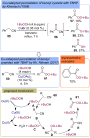
Beilstein J. Org. Chem. 2024, 20, 1839–1879, doi:10.3762/bjoc.20.162
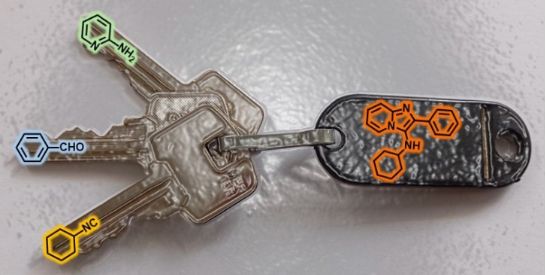
Graphical Abstract
Scheme 1: Mechanism of the GBB reaction.
Scheme 2: Comparison of the performance of Sc(OTf)3 with some RE(OTf)3 in a model GBB reaction. Conditions: a...
Scheme 3: Comparison of the performance of various Brønsted acid catalysts in the synthesis of GBB adduct 6. ...
Scheme 4: Synthesis of Brønsted acidic ionic liquid catalyst 7. Conditions: a) neat, 60 °C, 24 h; b) TfOH, DC...
Scheme 5: Aryliodonium derivatives as organic catalysts in the GBB reaction. In the box the proposed binding ...
Scheme 6: DNA-encoded GBB reaction in micelles made of amphiphilic polymer 13. Conditions: a) 13 (50 equiv), ...
Scheme 7: GBB reaction catalyzed by cyclodextrin derivative 14. Conditions: a) 14 (1 mol %), water, 100 °C, 4...
Scheme 8: Proposed mode of activation of CALB. a) activation of the substrates; b) activation of the imine; c...
Scheme 9: One-pot GBB reaction–Suzuki coupling with a bifunctional hybrid biocatalyst. Conditions: a) Pd(0)-C...
Scheme 10: GBB reaction employing 5-HMF (23) as carbonyl component. Conditions: a) TFA (20 mol %), EtOH, 60 °C...
Scheme 11: GBB reaction with β-C-glucopyranosyl aldehyde 26. Conditions: a) InCl3 (20 mol %), MeOH, 70 °C, 2–3...
Scheme 12: GBB reaction with diacetylated 5-formyldeoxyuridine 29, followed by deacetylation of GBB adduct 30....
Scheme 13: GBB reaction with glycal aldehydes 32. Conditions: a) HFIP, 25 °C, 2–4 h.
Scheme 14: Vilsmeier–Haack formylation of 6-β-acetoxyvouacapane (34) and subsequent GBB reaction. Conditions: ...
Scheme 15: GBB reaction of 4-formlyl-PCP 37. Conditions: a) HOAc or HClO4, MeOH/DCM (2:3), rt, 3 d.
Scheme 16: GBB reaction with HexT-aldehyde 39. Conditions: a) 39 (20 nmol) and amidine (20 μmol), MeOH, rt, 6 ...
Scheme 17: GBB reaction of 2,4-diaminopirimidine 41. Conditions: a) Sc(OTf)3 (20 mol %), MeCN, 120 °C (MW), 1 ...
Scheme 18: Synthesis of N-edited guanine derivatives from 3,6-diamine-1,2,4-triazin-5-one 44. Conditions: a) S...
Scheme 19: Synthesis of 2-aminoimidazoles 49 by a Mannich-3CR followed by a one-pot intramolecular oxidative a...
Scheme 20: On DNA Suzuki–Miyaura reaction followed by GBB reaction. Conditions: a) CsOH, sSPhos-Pd-G2; b) AcOH...
Scheme 21: One-pot cascade synthesis of 5-iminoimidazoles. Conditions: a) Na2SO4, DMF, 220 °C (MW).
Scheme 22: GBB reaction of 5-amino-1H-imidazole-4-carbonile 57. Conditions: a) HClO4 (5 mol %), MeOH, rt, 24 h....
Scheme 23: One-pot cascade synthesis of indole-imidazo[1,2,a]pyridine hybrids. In blue the structural motif in...
Scheme 24: One-pot cascade synthesis of fused polycyclic indoles 67 or 69 from indole-3-carbaldehyde. Conditio...
Scheme 25: One-pot cascade synthesis of linked- and bridged polycyclic indoles from indole-2-carbaldehyde (70)...
Scheme 26: One-pot cascade synthesis of pentacyclic dihydroisoquinolines (X = N or CH). In blue the structural...
Scheme 27: One-pot stepwise synthesis of imidazopyridine-fused benzodiazepines 85. Conditions: a) p-TsOH (20 m...
Scheme 28: One-pot stepwise synthesis of benzoxazepinium-fused imidazothiazoles 89. Conditions: a) Yb(OTf)3 (2...
Scheme 29: One-pot stepwise synthesis of fused imidazo[4,5,b]pyridines 95. Conditions: a) HClO4, MeOH, rt, ove...
Scheme 30: Synthesis of heterocyclic polymers via the GBB reaction. Conditions: a) p-TsOH, EtOH, 70 °C, 24 h.
Scheme 31: One-pot multicomponent reaction towards the synthesis of covalent organic frameworks via the GBB re...
Scheme 32: One-pot multicomponent reaction towards the synthesis of covalent organic frameworks via the GBB re...
Scheme 33: GBB-like multicomponent reaction towards the synthesis of benzothiazolpyrroles (X = S) and benzoxaz...
Scheme 34: GBB-like multicomponent reaction towards the formation of imidazo[1,2,a]pyridines. Conditions: a) I2...
Scheme 35: Post-functionalization of GBB products via Ugi reaction. Conditions a) HClO4, DMF, rt, 24 h; b) MeO...
Scheme 36: Post-functionalization of GBB products via Click reaction. Conditions: a) solvent-free, 150 °C, 24 ...
Scheme 37: Post-functionalization of GBB products via cascade alkyne–allene isomerization–intramolecular nucle...
Scheme 38: Post-functionalization of GBB products via metal-catalyzed intramolecular N-arylation. In red and b...
Scheme 39: Post-functionalization of GBB products via isocyanide insertion (X = N or CH). Conditions: a) HClO4...
Scheme 40: Post-functionalization of GBB products via intramolecular nucleophilic addition to nitriles. Condit...
Scheme 41: Post-functionalization of GBB products via Pictet–Spengler cyclization. Conditions: a) 4 N HCl/diox...
Scheme 42: Post-functionalization of GBB products via O-alkylation. Conditions: a) TFA (20 mol %), EtOH, 120 °...
Scheme 43: Post-functionalization of GBB products via macrocyclization (X = -CH2CH2O-, -CH2-, -(CH2)4-). Condi...
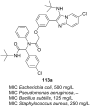
Figure 1: Antibacterial activity of GBB-Ugi adducts 113 on both Gram-negative and Gram-positive strains.
Scheme 44: GBB multicomponent reaction using trimethoprim as the precursor. Conditions: a) Yb(OTf)3 or Y(OTf)3...
Figure 2: Antibacterial activity of GBB adducts 152 against MRSA and VRE; NA = not available.
Figure 3: Antibacterial activity of GBB adduct 153 against Leishmania amazonensis promastigotes and amastigot...
Figure 4: Antiviral and anticancer evaluation of the GBB adducts 154a and 154b. In vitro antiproliferative ac...
Figure 5: Anticancer activity of the GBB-furoxan hybrids 145b, 145c and 145d determined through antiprolifera...
Scheme 45: Synthesis and anticancer activity of the GBB-gossypol conjugates. Conditions: a) Sc(OTf)3 (10 mol %...
Figure 6: Anticancer activity of polyheterocycles 133a and 136a against human neuroblastoma. Clonogenic assay...
Figure 7: Development of GBB-adducts 158a and 158b as PD-L1 antagonists. HTRF assays were carried out against...
Figure 8: Development of imidazo[1,2-a]pyridines and imidazo[1,2-a]pyrazines as TDP1 inhibitors. The SMM meth...
Figure 9: GBB adducts 164a–c as anticancer through in vitro HDACs inhibition assays. Additional cytotoxic ass...
Figure 10: GBB adducts 165, 166a and 166b as anti-inflammatory agents through HDAC6 inhibition; NA = not avail...
Scheme 46: GBB reaction of triphenylamine 167. Conditions: a) NH4Cl (10 mol %), MeOH, 80 °C (MW), 1 h.
Scheme 47: 1) Modified GBB-3CR. Conditions: a) TMSCN (1.0 equiv), Sc(OTf)3 (0.2 equiv), MeOH, 140 °C (MW), 20 ...
Scheme 48: GBB reaction to assemble imidazo-fused heterocycle dimers 172. Conditions: a) Sc(OTf)3 (20 mol %), ...
Figure 11: Model compounds 173 and 174, used to study the acid/base-triggered reversible fluorescence response...
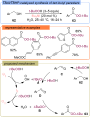
Beilstein J. Org. Chem. 2024, 20, 1693–1712, doi:10.3762/bjoc.20.151
Graphical Abstract
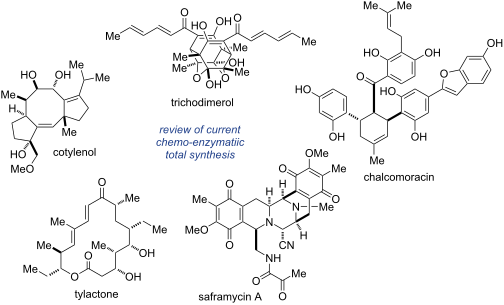
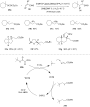
Scheme 1: Targeted natural products and key enzymatic transformations in the chemo-enzymatic total syntheses ...
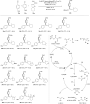
Scheme 2: Biosynthetic pathway to brassicicenes in Pseudocercospora fijiensis [14]. (A) Cyclization phase catalyz...
Scheme 3: Chemo-enzymatic total synthesis of cotylenol (1) and brassicicenes. (A) Chemical cyclization phase....
Scheme 4: (A) Biosynthetic pathway for trichodimerol (2) in Penicillium chrysogenum. (B) Chemo-enzymatic tota...
Scheme 5: (A) Proposed biosynthetic pathway for chalcomoracin (3) in Morus alba. (B) Outline of the biosynthe...
Scheme 6: (A) Chemo-enzymatically synthesized natural products by using the originally identified MaDA. (B) M...
Scheme 7: Proposed biosynthetic mechanism of tylactone (4) in Streptomyces fradiae.
Scheme 8: (A) Chemical synthesis and cascade enzymatic transformations of cyclization precursors. (B) Late-st...
Scheme 9: Proposed biosynthetic mechanism of saframycin A (5) in Streptomyces lavendulae.
Scheme 10: (A) Chemo-enzymatic total synthesis of saframycin A (5) and jorunnamycin A (103). (B) Chemo-enzymat...
Beilstein J. Org. Chem. 2024, 20, 1348–1375, doi:10.3762/bjoc.20.119
Graphical Abstract
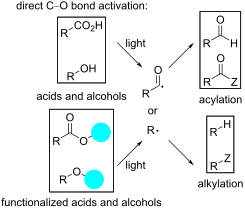
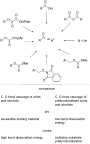
Figure 1: Generation of alkyl and acyl radicals via C–O bond breaking.
Figure 2: General photocatalytic mechanism.
Scheme 1: Photoredox-catalyzed hydroacylation of olefins with aliphatic carboxylic acids.
Scheme 2: Acylation–aromatization of p-quinone methides using carboxylic acids.
Scheme 3: Visible-light-induced deoxygenation–defluorination for the synthesis of γ,γ-difluoroallylic ketones....
Scheme 4: Photochemical hydroacylation of azobenzenes with carboxylic acids.
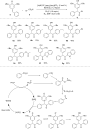
Scheme 5: Photoredox-catalyzed synthesis of flavonoids.
Scheme 6: Synthesis of O-thiocarbamates and photocatalytic reduction of O-thiocarbamates.
Scheme 7: Deoxygenative borylation of alcohols.
Scheme 8: Trifluoromethylation of O-alkyl thiocarbonyl substrates.
Scheme 9: Redox-neutral radical coupling reactions of alkyl oxalates and Michael acceptors.
Scheme 10: Visible-light-catalyzed and Ni-mediated syn-alkylarylation of alkynes.
Scheme 11: 1,2-Alkylarylation of alkenes with aryl halides and alkyl oxalates.
Scheme 12: Deoxygenative borylation of oxalates.
Scheme 13: Coupling of N-phthalimidoyl oxalates with various acceptors.
Scheme 14: Cross-coupling of O-alkyl xanthates with aryl halides via dual photoredox and nickel catalysis.
Scheme 15: Deoxygenative borylation of secondary alcohol.
Scheme 16: Deoxygenative alkyl radical generation from alcohols under visible-light photoredox conditions.
Scheme 17: Deoxygenative alkylation via alkoxy radicals against hydrogenation or β-fragmentation.
Scheme 18: Direct C–O bond activation of benzyl alcohols.
Scheme 19: Deoxygenative arylation of alcohols using NHC to activate alcohols.
Scheme 20: Deoxygenative conjugate addition of alcohol using NHC as alcohol activator.
Scheme 21: Synthesis of polysubstituted aldehydes.
Beilstein J. Org. Chem. 2024, 20, 1292–1297, doi:10.3762/bjoc.20.112
Graphical Abstract
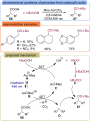
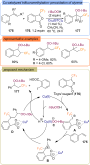
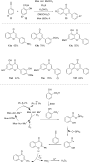
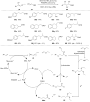
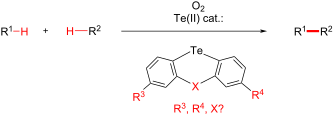
Scheme 1: Phenotellurazine-catalyzed cross-dehydrogenative couplings.
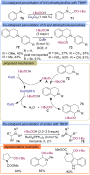
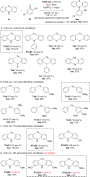
Scheme 2: Screening of new Te(II)-catalyst candidates. ODCB: ortho-dichlorobenzene.
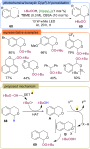
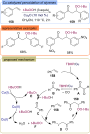
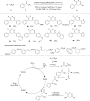
Scheme 3: Phenotellurazine-catalyzed cross-dehydrogenative indole dimerization.
Beilstein J. Org. Chem. 2024, 20, 1189–1197, doi:10.3762/bjoc.20.101
Graphical Abstract
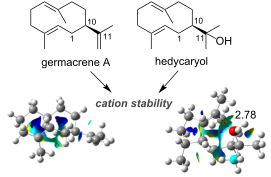
Scheme 1: Biosynthesis of (A) germacrene A and (B) hedycaryol from FPP. Here the abbreviations represent, FPP...
Figure 1: 6-6 and 5-7 bicyclic carbocations formed by protonation and cyclization of germacrene A and hedycar...
Figure 2: Bar plot for the relative free energies of germacrene A and hedycaryol carbocations relative to car...
Figure 3: NCI plot for A (left) and B (right). Blue corresponds to repulsive and yellow represents slightly a...
Figure 4: NCI plots for F and H hedycaryol cations. The C+···OH distances (Å) are shown in black.
Figure 5: Correlation plot relating between the stability of hedycaryols (ΔΔEe) and C+···OH bond distances.
Beilstein J. Org. Chem. 2024, 20, 950–958, doi:10.3762/bjoc.20.85
Graphical Abstract
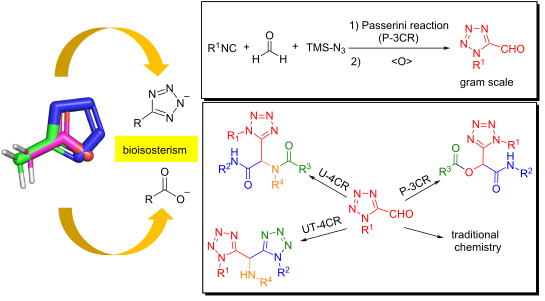
Figure 1: Tetrazole drugs, current assembly strategies, and novel building block strategy.
Scheme 1: Synthesis of tetrazole building blocks. Isolated yields.
Scheme 2: Substrate scope of Passerini products 3. Isolated yields.
Scheme 3: Substrate scope of Ugi products 4 and 5. Isolated yields.
Scheme 4: Synthesis of tetrazole building block 6. Isolated yield.
Beilstein J. Org. Chem. 2024, 20, 859–890, doi:10.3762/bjoc.20.78
Graphical Abstract
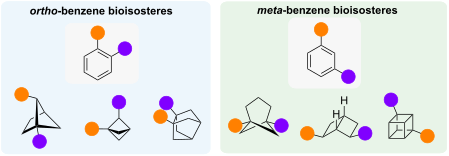
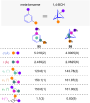
Figure 1: Scaffolds commonly reported as bioisosteric replacements of para-substituted benzene and examples p...
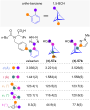
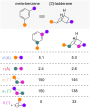
Figure 2: 1,2-BCPs as isosteres for ortho-and meta-substituted benzenes: comparison of reported exit vector p...
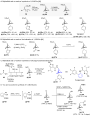
Scheme 1: 1,2-Disubstituted bicyclo[1.1.1]pentanes as isosteres of ortho-substituted benzenes. A: Baran, Coll...
Scheme 2: Synthesis of 1,2-BCPs from BCP 15 by bridge C–H bromination as reported by MacMillan and co-workers ...
Figure 3: Comparative physicochemical data of telmisartan, lomitapide and their BCP isosteres [26,33]. Shake flask d...
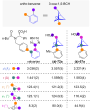
Figure 4: 1,2-Disubstituted bicyclo[2.1.1]hexanes as isosteres of ortho-benzenes: Exit vector parameters of t...
Scheme 3: Synthesis of 1,2-disubstituted bicyclo[2.1.1]hexanes via alkene insertion into bicyclo[1.1.0]butane...
Scheme 4: Synthesis of 1,2-disubstituted bicyclo[2.1.1]hexanes via intramolecular crossed [2 + 2] cycloadditi...
Figure 5: Comparison of physicochemical data of fluxapyroxad and boscalid and their 1,2-BCH bioisosteres [36]. Sh...
Figure 6: Antifungal activity of fluxapyroxad, its 1,5-BCH bioisostere (±)-55, boscalid and its bioisostere 1...
Figure 7: 1,5-Disubstituted bicyclo[2.1.1]hexanes as isosteres of ortho-substituted benzenes. Comparison of e...
Scheme 5: Synthesis of 1,5-disubstituted bicyclo[2.1.1]hexanes as isosteres of ortho-benzenes via intramolecu...
Figure 8: Comparison of physicochemical data of fluxapyroxad and boscalid and their 1,5-BCH bioisosteres [45]. Sh...
Figure 9: Antifungal activity of fluxapyroxad, its 1,5-BCH bioisostere (±)-64, boscalid and its bioisostere 1...
Figure 10: 1,5-Disubstituted 3-oxabicylco[2.1.1]hexanes as isosteres for ortho-benzenes: Comparison of exit ve...
Scheme 6: Synthesis of 1,5-disubstituted 3-oxabicyclo[2.1.1]hexanes as isosteres for ortho-benzenes via intra...
Figure 11: Comparison of physicochemical data of fluxapyroxad and boscalid and their 3-oxa-1,5-BCH bioisostere...
Figure 12: Antifungal activity of fluxapyroxad and boscalid and their 3-oxa-1,5-BCH bioisosteres (±)-75 and (±...
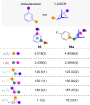
Figure 13: 1,2-Disubstituted bicyclo[3.1.1]heptanes as isosteres of ortho-benzenes. Schematic representation o...
Scheme 7: Synthesis of 1,2-disubstituted bicyclo[3.1.1]heptanes as isosteres for ortho-benzenes via alkene in...
Figure 14: 1,2-Disubstituted stellanes as ortho-benzene isosteres: Comparison of selected exit vector paramete...
Scheme 8: Synthesis of 1,2-disubstituted stellanes as isosteres for ortho-benzenes reported by Ryabukhin, Vol...
Figure 15: 1,2-Disubstituted cubanes as ortho-benzene isosteres: Comparison of substituent distances and angle...
Scheme 9: Synthesis of 1,2-disubsituted cubanes as isosteres for ortho-benzenes. A: Synthesis of 1,2-cubane d...
Figure 16: 1,3-Disubstituted bicyclo[2.1.1]hexanes as isosteres of meta-benzenes: comparative exit vector para...
Scheme 10: Synthesis of 1,3-disubstituted bicyclo[2.1.1]hexanes as isosteres for meta-benzenes reported by Wal...
Figure 17: 1,4-Disubstituted bicyclo[2.1.1]hexanes as isosteres of meta-benzenes: comparative exit vector para...
Scheme 11: Synthesis of 1,4-disubstituted bicyclo[2.1.1}hexanes as isosteres for ortho-benzenes via intramolec...
Figure 18: 1,4-Disubstituted-2-oxabicyclo[2.1.1]hexanes as meta-benzene isosteres: comparison of selected exit...
Scheme 12: Synthesis of 1,4-disubstituted 2-oxabicyclo[2.1.1]hexanes as isosteres for meta-benzenes. A: Mykhai...
Figure 19: Comparative physicochemical data for 2- and 3-oxa-1,4-BCHs and para-substituted benzene equivalents...
Figure 20: 1,5-Disubstituted bicyclo[3.1.1]heptanes as isosteres of meta-benzenes: comparison of exit vector p...
Scheme 13: Synthesis of [3.1.1]propellane as a precursor for 1,5-disubsituted bicyclo[3.1.1]heptanes. A: aGass...
Scheme 14: Synthesis of iodine-substituted 1,5-disubstituted bicyclo[3.1.1]heptanes as isosteres for meta-benz...
Scheme 15: Synthesis of nitrogen-, chalcogen- and tin-substituted 1,5-disubstituted bicyclo[3.1.1]heptanes as ...
Figure 21: Comparative physicochemical data of URB597 and 1,5-BCHep isostere 146 [27]. Kinetic aqueous solubility ...
Figure 22: [2]-Ladderanes as isosteres of meta-benzenes: comparison of reported exit vector parameters [63].
Scheme 16: Synthesis of cis-2,6-disubstituted bicyclo[2.2.0]hexanes as isosteres for meta-benzenes. A: Brown a...
Figure 23: Comparative physicochemical data of meta-benzene 158 and [2]-ladderane isostere 159 [63]. Partition coe...
Figure 24: 1,3-Disubstituted cubanes as isosteres of meta-benzenes: comparison of selected exit vector paramet...
Scheme 17: Synthesis of 1,3-disubsituted cubanes as isosteres for meta-benzenes. A: MacMillan and co-workers’ ...
Figure 25: Comparative physicochemical data of lumacaftor and its 1,3-cubane bioisostere 183 [51]. Distribution co...
Figure 26: 1,3-Disubstituted cuneanes as isosteres of meta-benzenes: comparison of selected exit vector parame...
Scheme 18: Synthesis of 1,3-cuneanes as isosteres of meta-benzene. A: Synthesis of 1,3-cuneanes reported by La...
Figure 27: Comparative physicochemical data of sonidegib and its 1,3-cuneane isostere 190 [71]. aSolubility was to...
Figure 28: Exemplary polysubstituted scaffolds related to disubstituted scaffolds suggested as isosteres of or...
Beilstein J. Org. Chem. 2024, 20, 721–733, doi:10.3762/bjoc.20.66
Graphical Abstract
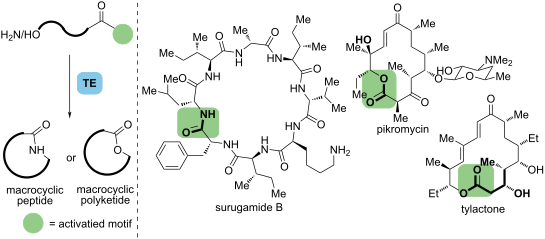
Scheme 1: Brief introduction of thioesterase (TE) domain. (a) NRPS and PKS assembly lines. (b) Mechanism of T...
Scheme 2: Chemoenzymatic synthesis of tyrocidine A and its analogs. (a) First-gen chemoenzymatic synthesis of...
Scheme 3: Representative examples of NAC-activated thioesters-mediated biocatalytic macrolactamization.
Scheme 4: Chemoenzymatic synthesis of CDA, daptomycin and their analogs. (a) Biocatalytic macrocyclization of...
Scheme 5: Chemoenzymatic synthesis of surugamide B and related natural products. (a) Three synthetic strategi...
Scheme 6: Chemoenzymatic synthesis of the pikromycins. (a) Macrocyclization of 10-deoxymethynolide catalyzed ...
Scheme 7: Chemoenzymatic synthesis of the juevnimicins.
Scheme 8: Chemoenzymatic synthesis of the cryptophycins.
Beilstein J. Org. Chem. 2024, 20, 578–588, doi:10.3762/bjoc.20.50
Graphical Abstract
Figure 1: Examples of bioactive fungal meroterpenoids.
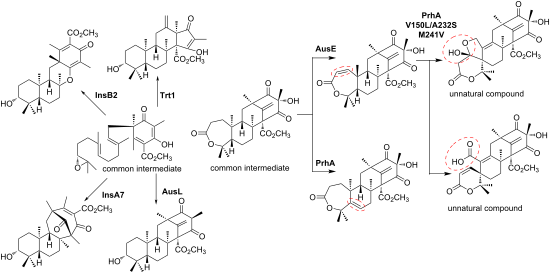
Figure 2: The diversity of DMOA-derived meroterpenoid biosyntheses.
Figure 3: The combinatorial biosynthesis of diterpene pyrone meroterpenoids. The production of subglutinol A ...
Figure 4: The biosynthetic reaction from the common intermediate 21 to ascochlorin (22) and ascofuranone (23)...
Figure 5: The multistep oxidations catalyzed by AusE and PrhA from the common intermediate 24.
Figure 6: Reactions of SptF with native substrates 31 and 32.
Figure 7: A) Reactions of SptF with unnatural substrates. B) Reactions of SptF variants with 31.
Figure 8: The reaction of the αKG enzyme AndA and its variants generated via saturated mutagenesis.
Figure 9: The synthetic biological production of daurichromenic acid and its halogenated derivative.
Beilstein J. Org. Chem. 2024, 20, 125–154, doi:10.3762/bjoc.20.13
Graphical Abstract
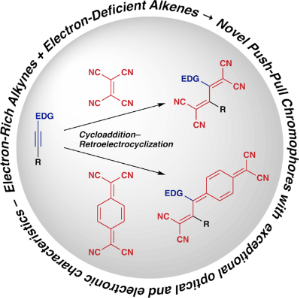
Scheme 1: Pathway of the [2 + 2] CA–RE reaction of an electron-rich alkyne with TCNE or TCNQ. EDG = electron-...
Scheme 2: Reaction pathway for DMA-appended acetylene and TCNEO.
Scheme 3: Pathway of the [2 + 2] CA–RE reaction between 1 and DCFs.
Scheme 4: Sequential double [2 + 2] CA–RE reactions between 1 and TCNE.
Scheme 5: Divergent chemical transformation pathways of TCBD 6.
Scheme 6: Synthesis of 12.
Scheme 7: [2 + 2] CA–RE reaction of 1 with 14. TCE = 1,1,2,2-tetrachloroethane.
Scheme 8: Autocatalytic model proposed by Nielsen et al.
Scheme 9: Synthesis of anthracene-embedded TCBD compound 19.
Scheme 10: Sequence of the [2 + 2] CA–RE reaction between dibenzo-fused cyclooctyne or cyclooctadiyne and TCNE...
Scheme 11: [2 + 2] CA–RE reaction between the CPP derivatives and TCNE. THF = tetrahydrofuran.
Scheme 12: [2 + 2] CA–RE reaction between ethynylfullerenes 31 and TCNE and subsequent thermal rearrangement.
Scheme 13: Pathway of the [2 + 2] CA–RE reaction between TCNE and 34, followed by additional skeletal transfor...
Scheme 14: Synthesis scheme for heterocycle 38 from the reaction between TCNE and 1 in water and a surfactant.
Scheme 15: Synthesis scheme of the CDA product 41.
Scheme 16: Synthesis of rotaxanes 44 and 46 via the [2 + 2] CA–RE reaction.
Scheme 17: Synthesis of a CuI bisphenanthroline-based rotaxane 50.
Figure 1: Structures of the chiral push–pull chromophores 51–56.
Figure 2: Structures of the axially chiral TCBD 57 and DCNQ 58 bearing a C60 core.
Figure 3: Structures of the axially chiral SubPc–TCBD–aniline conjugates 59 and 60 and the subporphyrin–TCBD–...
Figure 4: Structures of 63 and the TCBD 64.
Figure 5: Structures of the fluorophore-containing TCBDs 65–67.
Figure 6: Structures of the fluorophore-containing TCBDs 68–72.
Figure 7: Structures of the urea-containing TCBDs 73–75.
Figure 8: Structures of the fullerene–TCBD and DCNQ conjugates 76–79 and their reference compounds 80–83.
Figure 9: Structures of the ZnPc–TCBD–aniline conjugates 84 and 85.
Figure 10: Structures of the ZnP–PCBD and TCBD conjugates 86–88.
Figure 11: Structures of the porphyrin-based donor–acceptor conjugates (89–104).
Figure 12: Structures of the porphyrin–PTZ or DMA conjugates 105–112.
Figure 13: Structures of the BODIPY–Acceptor–TPA or PTZ conjugates 113–116.
Figure 14: Structures of the corrole–TCBD conjugates 117 and 118.
Figure 15: Structure of the dendritic TCBD 119.
Figure 16: Structures of the TCBDs 120–126.
Figure 17: Structures of the precursor 127 and TCBDs 128–130.
Figure 18: Structures of 131–134 utilized for BHJ OSCs.
Beilstein J. Org. Chem. 2023, 19, 1858–1866, doi:10.3762/bjoc.19.138
Graphical Abstract
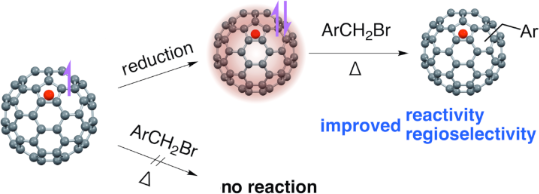
Scheme 1: Reaction of the La@C2v-C82 anion with benzyl bromide derivatives.
Figure 1: Changes in absorption spectra during the reaction of La@C2v-C82 anion with 1a.
Figure 2: HPLC profiles of the reaction mixture. Conditions: Buckyprep column (⌀ = 4.6 × 250 mm); eluent, tol...
Figure 3: HPLC profiles (Buckyprep column (⌀ = 4.6 × 250 mm); eluent, toluene; flow rate, 1.0 mL/min; UV dete...
Figure 4: Absorption spectra of 2, 3, 4, and 5 in CS2 and absorption spectra of C14, C10, C18, and C9 in Ce@C2...
Figure 5: ORTEP drawing of 3a with thermal ellipsoids shown at 50% probability level. Only an independent uni...
Figure 6: (a) Charge density of La@C2v-C82 anion as a function of its POAV values and (b) an enlarged part vi...
Beilstein J. Org. Chem. 2023, 19, 1728–1740, doi:10.3762/bjoc.19.126
Graphical Abstract
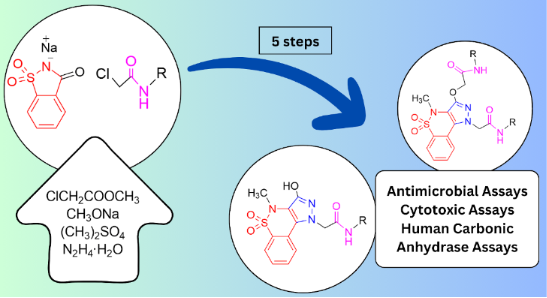
Scheme 1: Synthesis of the key intermediate of the macrocycle preparation, 3-[(ethoxymethylene)amino]-1-methy...
Scheme 2: Synthesis of macrocycle 5 by the reaction of imidate 4 with hydrazine hydrate.
Scheme 3: Plausible pathway for the transformation of imidate 4 into macrocycle 5.
Scheme 4: Synthesis of pyrazolopyrimidine 8 by the reaction of imidate 4 with hydrazine hydrate.
Scheme 5: Synthesis of macrocycle 5 by the dimerization of pyrazolopyrimidine 8.
Scheme 6: Plausible pathway for the dimerization of pyrazolopyrimidine 8 into macrocycle 5.
Figure 1: Gibbs free energy diagram (B3LYP/6-311++G(d,p)) for the N2H4-promoted transformation of pyrazolopyr...
Scheme 7: Transformation of macrocycle 5 into pyrazolo[4,3-e][1,2,4]triazolo[1,5-c]pyrimidine 13 and pyrazolo...
Beilstein J. Org. Chem. 2023, 19, 1677–1693, doi:10.3762/bjoc.19.123
Graphical Abstract
Figure 1: Classification of AMYs.
Scheme 1: Aminoester- and amino acid-based AMYs for single and double [3+2] cycloadditions.
Scheme 2: Formation of semi-stabilized AMYs B1 from pyrrolidines.
Scheme 3: Cyclic amine-based AMYs A3 and B1 for [3 + 2] cycloadditions.
Scheme 4: Proposed double cycloaddition reactions involving semi-stabilized AMYs.
Scheme 5: [3 + 2] Cycloaddition for the synthesis of trifluoromethylated pyrrolidines 9.
Figure 2: Biologically interesting pyrrolizidines.
Scheme 6: Double cycloadditions with glycine for the synthesis of products 10 (dr > 9:1).
Scheme 7: Double cycloadditions with α-substituted amino acids leading to products 11 (≈8.5:1 dr).
Scheme 8: Stereochemistry for the formation of products 10 or 11.
Scheme 9: One-pot and stepwise double cycloadditions. Conditions: i) MeCN (0.02 M), 90 °C, 6 h; ii) then AcOH...
Figure 3: Biologically interesting spirooxindole-pyrrolizidines.
Scheme 10: Double cycloadditions for the synthesis of bis[spirooxindole-pyrrolizidine]s.
Scheme 11: Mechanism for the diastereoselective synthesis of bis[spirooxindole-pyrrolizidine]s.
Scheme 12: Stepwise synthesis of triazolobenzodiazepine 21a.
Scheme 13: One-pot synthesis of triazolobenzodiazepines.
Figure 4: Bioactive triazolobenzodiazepine derivatives.
Scheme 14: One-pot synthesis of tetrahydropyrroloquinazolines.
Scheme 15: One-pot synthesis of tetrahydropyrrolobenzodiazepines.
Figure 5: Bioactive pyrroloquinazolines and pyrrolobenzodiazepines.
Scheme 16: Stepwise synthesis of pyrrolo[2,1-a]isoquinolines.
Figure 6: Bioactive pyrrolo[2,1-a]isoquinolines and hexahydropyrrolo[2,1-a]isoquinolines.
Figure 7: Bioactive tetrahydropyrrolothiazoles.
Scheme 17: Pseudo-four-component reaction for the synthesis of tetrahydropyrrolothiazoles 29 and 30 (>4:1 dr).
Scheme 18: One-pot two-step synthesis of spirooxindole-pyrrolothiazoles 31 (>4:1 dr).
Beilstein J. Org. Chem. 2023, 19, 1664–1676, doi:10.3762/bjoc.19.122
Graphical Abstract
Scheme 1: Synthesis of D–A–D chromophore TPECNz.
Figure 1: a) The optimized structure and HOMO/LUMO distributions calculated by B3LYP/6-31G(d,p) method. b) Th...
Figure 2: UV–vis absorption and PL spectra in a) toluene solution (≈1 × 10⁻⁵ M) and b) thin film spin-coated ...
Figure 3: a) Normalized UV–vis absorption/PL spectra in different solvents. b) Lippert–Mataga plot of Stokes ...
Figure 4: a) PL spectra in THF/water mixtures (5 μM) with different water fractions (fw). b) Plot of relative...
Figure 5: a) DSC and TGA thermograms measured at a heating rate of 10 °C min−1 under N2 flow. b) Cyclic volta...
Figure 6: a) Schematic structure of the hole-only and electron-only MIS devices. b) Electric-field dependence ...
Figure 7: a) Schematic energy diagram of OLED and organic materials used in the device. b) EL spectra at vari...
Beilstein J. Org. Chem. 2023, 19, 1503–1510, doi:10.3762/bjoc.19.107
Graphical Abstract
Scheme 1: Proposed biosynthetic pathway for variexenol B.
Figure 1: (A) Results of DFT evaluation of the whole pathway of variexenol B without cation–π interaction. (B...
Figure 2: (A) Results of the DFT evaluation of the whole pathway of variexenol B including cation–π interacti...
Figure 3: (A) A representative example of the evolution of key bond lengths in the conversion of path a. (B) ...
Beilstein J. Org. Chem. 2023, 19, 991–997, doi:10.3762/bjoc.19.74
Graphical Abstract
Figure 1: Examples of natural and bioactive hydrogenated furo[3,2-c]pyridines.
Scheme 1: The described approaches to tetrahydrofuro[3,2-c]pyridines and our work.
Scheme 2: The synthesis of tetrahydrofuro[3,2-c]pyridines 4. Conditions: athe reaction was performed at 1 mmo...
Scheme 3: The acid-catalyzed reversible transformation of tetrahydrofuro[3,2-c]pyridine 4a and 3-(2-oxopropyl...
Scheme 4: Synthesis of tetrahydropyrrolo[3,2-c]pyridine 6a.
Scheme 5: Reactivity of tetrahydrofuro[3,2-c]pyridine 4a.
Beilstein J. Org. Chem. 2023, 19, 918–927, doi:10.3762/bjoc.19.70
Graphical Abstract
Figure 1: (a) Transformations of DMAT to different classes of ergot alkaloids. (b) and (c) Strategies for the...
Scheme 1: Synthesis of compound 5.
Scheme 2: Photoredox-catalyzed radical decarboxylative cyclization of 5.
Figure 2: Proposed reaction mechanism for photoredox-catalyzed radical decarboxylative cyclization.
Scheme 3: Synthesis of tryptophan derivatives 8 and 10.
Figure 3: Proposed reaction mechanism for photoredox-catalyzed radical decarboxylative cyclization.
Scheme 4: Methylation of 11 and the formal total synthesis of (±)-6,7-secoagroclavine.
Beilstein J. Org. Chem. 2023, 19, 593–634, doi:10.3762/bjoc.19.44
Graphical Abstract
Scheme 1: General scheme depicting tandem reactions based on an asymmetric conjugate addition followed by an ...
Scheme 2: Cu-catalyzed tandem conjugate addition of R2Zn/aldol reaction with chiral acetals.
Scheme 3: Cu-catalyzed asymmetric desymmetrization of cyclopentene-1,3-diones using a tandem conjugate additi...
Scheme 4: Stereocontrolled assembly of dialkylzincs, cyclic enones, and sulfinylimines utilizing a Cu-catalyz...
Scheme 5: Cu-catalyzed tandem conjugate addition/Mannich reaction (A). Access to chiral isoindolinones and tr...
Scheme 6: Cu-catalyzed tandem conjugate addition/nitro-Mannich reaction (A) with syn–anti or syn–syn selectiv...
Figure 1: Various chiral ligands utilized for the tandem conjugate addition/Michael reaction sequences.
Scheme 7: Cu-catalyzed tandem conjugate addition/Michael reaction: side-product formation with chalcone (A) a...
Scheme 8: Zn enolate trapping using allyl iodides (A), Stork–Jung vinylsilane reagents (B), and allyl bromide...
Scheme 9: Cu-catalyzed tandem conjugate addition/acylation through Li R2Zn enolate (A). A four-component coup...
Scheme 10: Selected examples for the Cu-catalyzed tandem conjugate addition/trifluoromethylthiolation sequence....
Scheme 11: Zn enolates trapped by vinyloxiranes: synthesis of allylic alcohols.
Scheme 12: Stereoselective cyclopropanation of Mg enolates formed by ACA of Grignard reagents to chlorocrotona...
Scheme 13: Domino aldol reactions of Mg enolates formed from coumarin and chromone.
Scheme 14: Oxidative coupling of ACA-produced Mg enolates.
Scheme 15: Tandem ACA of Grignard reagents to enones and Mannich reaction.
Scheme 16: Diastereodivergent Mannich reaction of Mg enolates with differently N-protected imines.
Scheme 17: Tandem Grignard–ACA–Mannich using Taddol-based phosphine-phosphite ligands.
Scheme 18: Tandem reaction of Mg enolates with aminomethylating reagents.
Scheme 19: Tandem reaction composed of Grignard ACA to alkynyl enones.
Scheme 20: Rh/Cu-catalyzed tandem reaction of diazo enoates leading to cyclobutanes.
Scheme 21: Tandem Grignard-ACA of cyclopentenones and alkylation of enolates.
Scheme 22: Tandem ACA of Grignard reagents followed by enolate trapping reaction with onium compounds.
Scheme 23: Mg enolates generated from unsaturated lactones in reaction with activated alkenes.
Scheme 24: Lewis acid mediated ACA to amides and SN2 cyclization of a Br-appended enolate.
Scheme 25: Trapping reactions of aza-enolates with Michael acceptors.
Scheme 26: Si enolates generated by TMSOTf-mediated ACA of Grignard reagents and enolate trapping reaction wit...
Scheme 27: Trapping reactions of enolates generated from alkenyl heterocycles (A) and carboxylic acids (B) wit...
Scheme 28: Reactions of heterocyclic Mg enolates with onium compounds.
Scheme 29: Synthetic transformations of cycloheptatrienyl and benzodithiolyl substituents.
Scheme 30: Aminomethylation of Al enolates generated by ACA of trialkylaluminum reagents.
Scheme 31: Trapping reactions of enolates with activated alkenes.
Scheme 32: Alkynylation of racemic aluminum or magnesium enolates.
Scheme 33: Trapping reactions of Zr enolates generated by Cu-ACA of organozirconium reagents.
Scheme 34: Chloromethylation of Zr enolates using the Vilsmeier–Haack reagent.
Scheme 35: Tandem conjugate borylation with subsequent protonation or enolate trapping by an electrophile.
Scheme 36: Tandem conjugate borylation/aldol reaction of cyclohexenones.
Scheme 37: Selected examples for the tandem asymmetric borylation/intramolecular aldol reaction; synthesis of ...
Scheme 38: Cu-catalyzed tandem methylborylation of α,β-unsaturated phosphine oxide in the presence of (R,Sp)-J...
Scheme 39: Cu-catalyzed tandem transannular conjugated borylation/aldol cyclization of macrocycles containing ...
Scheme 40: Stereoselective tandem conjugate borylation/Mannich cyclization: selected examples (A) and a multi-...
Scheme 41: Some examples of Cu-catalyzed asymmetric tandem borylation/aldol cyclization (A). Application to di...
Scheme 42: Atropisomeric P,N-ligands used in tandem conjugate borylation/aldol cyclization sequence.
Scheme 43: Selected examples for the enantioselective Cu-catalyzed borylation/intramolecular Michael addition ...
Scheme 44: Selected examples for the preparation of enantioenriched spiroindanes using a Cu-catalyzed tandem c...
Scheme 45: Enantioselective conjugate borylation of cyclobutene-1-carboxylic acid diphenylmethyl ester 175 wit...
Scheme 46: Cu-catalyzed enantioselective tandem conjugate silylation of α,β-unsaturated ketones with subsequen...
Scheme 47: Cu-catalyzed enantioselective tandem conjugate silylation of α,β-unsaturated ketones with subsequen...
Scheme 48: Cu-catalyzed tandem conjugate silylation/aldol condensation. The diastereoselectivity is controlled...
Scheme 49: Chiral Ru-catalyzed three-component coupling reaction.
Scheme 50: Rh-Phebox complex-catalyzed reductive cyclization and subsequent reaction with Michael acceptors th...
Scheme 51: Rh-catalyzed tandem asymmetric conjugate alkynylation/aldol reaction (A) and subsequent spiro-cycli...
Scheme 52: Rh-bod complex-catalyzed tandem asymmetric conjugate arylation/intramolecular aldol addition (A). S...
Scheme 53: Co-catalyzed C–H-bond activation/asymmetric conjugate addition/aldol reaction.
Scheme 54: (Diisopinocampheyl)borane-promoted 1,4-hydroboration of α,β-unsaturated morpholine carboxamides and...
Figure 2: Some examples of total syntheses that have been recently reviewed.
Scheme 55: Stereoselective synthesis of antimalarial prodrug (+)-artemisinin utilizing a tandem conjugate addi...
Scheme 56: Amphilectane and serrulatane diterpenoids: preparation of chiral starting material via asymmetric t...
Scheme 57: Various asymmetric syntheses of pleuromutilin and related compounds based on a tandem conjugate add...
Scheme 58: Total synthesis of glaucocalyxin A utilizing a tandem conjugate addition/acylation reaction sequenc...
Scheme 59: Installation of the exocyclic double bond using a tandem conjugate addition/aminomethylation sequen...
Scheme 60: Synthesis of the taxol core using a tandem conjugate addition/enolate trapping sequence with Vilsme...
Scheme 61: Synthesis of the tricyclic core of 12-epi-JBIR-23/24 utilizing a Rh-catalyzed asymmetric conjugate ...
Scheme 62: Total synthesis of (−)-peyssonoside A utilizing a Cu-catalyzed enantioselective tandem conjugate ad...
Beilstein J. Org. Chem. 2023, 19, 477–486, doi:10.3762/bjoc.19.37
Graphical Abstract
Scheme 1: Experimental data (series a–d, k) and non-studied examples (series e–j) for transannular cycloaddit...
Figure 1: Optimized (m062x/6-31G(d)) geometries for the transition structures of series a–f.
Figure 2: Top: Cycloaddition of protonated hydrazones as inverse-demand reaction of cycloaddition of azomethi...
Figure 3: Global electron density transfer (GEDT). Dashed black line indicates both TS.
Figure 4: ELF analysis for the reaction of series b leading to a system 6-6. Black trace corresponds to IRC. ...
Figure 5: Quantitative NCI analysis [36] for the reaction of series a–f leading to fused cyclohexanes. The result...
Figure 6: (a) Transannular cycloadditons of compounds 1a–k. (b) Houk’s distortion model applied to the reacti...
Scheme 2: Reaction with simple models.
Beilstein J. Org. Chem. 2023, 19, 245–281, doi:10.3762/bjoc.19.23
Graphical Abstract
Figure 1: Examples of terpenes containing a bicyclo[3.6.0]undecane motif.
Figure 2: Commercially available first and second generation Grubbs and Hoveyda–Grubbs catalysts.
Figure 3: Examples of strategies to access the fusicoccan and ophiobolin tricyclic core structure by RCM.
Scheme 1: Synthesis of bicyclic core structure 12 of ophiobolin M (13) and cycloaraneosene (14).
Scheme 2: Synthesis of the core structure 21 of ophiobolins and fusicoccanes.
Scheme 3: Ring-closing metathesis attempts starting from thioester 22.
Scheme 4: Total synthesis of ent-fusicoauritone (28).
Figure 4: General structure of ophiobolins and congeners.
Scheme 5: Total synthesis of (+)-ophiobolin A (8).
Scheme 6: Investigation of RCM for the synthesis of ophiobolin A (8). Path A) RCM with TBDPS-protected alcoho...
Scheme 7: Synthesis of the core structure of cotylenin A aglycon, cotylenol (50).
Scheme 8: Synthesis of tricyclic core structure of fusicoccans.
Scheme 9: Total synthesis of (−)-teubrevin G (59).
Scheme 10: Synthesis of the core skeleton 63 of the basmane family.
Scheme 11: Total synthesis of (±)-schindilactone A (68).
Scheme 12: Total synthesis of dactylol (72).
Scheme 13: Ring-closing metathesis for the total synthesis of (±)-asteriscanolide (2).
Scheme 14: Synthesis of the simplified skeleton of pleuromutilin (1).
Scheme 15: Total synthesis of (−)-nitidasin (93) using a ring-closing metathesis to construct the eight-member...
Scheme 16: Total synthesis of (±)-naupliolide (97).
Scheme 17: Synthesis of the A-B ring structure of fusicoccane (101).
Scheme 18: First attempts of TRCM of dienyne substrates.
Scheme 19: TRCM on optimized substrates towards the synthesis of ophiobolin A (8).
Scheme 20: Tandem ring-closing metathesis for the synthesis of variecolin intermediates 114 and 115.
Scheme 21: Synthesis of poitediol (118) using the allylsilane ring-closing metathesis.
Scheme 22: Access to scaffold 122 by a NHK coupling reaction.
Scheme 23: Key step to construct the [5-8] bicyclooctanone core of aquatolide (4).
Scheme 24: Initial strategy to access aquatolide (4).
Scheme 25: Synthetic plan to cotylenin A (130).
Scheme 26: [5-8] Bicyclic structure of brachialactone (7) constructed by a Mizoroki–Heck reaction.
Scheme 27: Influence of the replacement of the allylic alcohol moiety.
Scheme 28: Formation of variecolin intermediate 140 through a SmI2-mediated Barbier-type reaction.
Scheme 29: SmI2-mediated ketyl addition. Pleuromutilin (1) eight-membered ring closure via C5–C14 bond formati...
Scheme 30: SmI2-mediated dialdehyde cyclization cascade of [5-8-6] pleuromutilin scaffold 149.
Scheme 31: A) Modular synthetic route to mutilin and pleuromutilin family members by Herzon’s group. B) Scaffo...
Scheme 32: Photocatalyzed oxidative ring expansion in pleuromutilin (1) total synthesis.
Scheme 33: Reductive radical cascade cyclization route towards (−)-6-epi-ophiobolin N (168).
Scheme 34: Reductive radical cascade cyclization route towards (+)-6-epi-ophiobolin A (173).
Scheme 35: Radical 8-endo-trig-cyclization of a xanthate precursor.
Figure 5: Structural representations of hypoestin A (177), albolic acid (178), and ceroplastol II (179) beari...
Scheme 36: Synthesis of the common [5-8-5] tricyclic intermediate of hypoestin A (177), albolic acid (178), an...
Scheme 37: Asymmetric synthesis of hypoestin A (177), albolic acid (178), and ceroplastol II (179).
Figure 6: Scope of the Pauson–Khand reaction.
Scheme 38: Nazarov cyclization revealing the fusicoauritone core structure 192.
Scheme 39: Synthesis of fusicoauritone (28) through Nazarov cyclization.
Scheme 40: (+)-Epoxydictymene (5) synthesis through a Nicholas cyclization followed by a Pauson–Khand reaction...
Scheme 41: Synthesis of aquatolide (4) by a Mukaiyama-type aldolisation.
Scheme 42: Tandem Wolff/Cope rearrangement furnishing the A-B bicyclic moiety 204 of variecolin.
Scheme 43: Asymmetric synthesis of the A-B bicyclic core 205 and 206 of variecolin.
Scheme 44: Formation of [5-8]-fused rings by cyclization under thermal activation.
Scheme 45: Construction of the [5-8-6] tricyclic core structure of variecolin (3) by Diels–Alder reaction.
Scheme 46: Synthesis of the [6-4-8-5]-tetracyclic skeleton by palladium-mediated cyclization.
Scheme 47: Access to the [5-8] bicyclic core structure of asteriscanolide (227) through rhodium-catalyzed cycl...
Scheme 48: Total syntheses of asterisca-3(15),6-diene (230) and asteriscanolide (2) with a Rh-catalyzed cycliz...
Scheme 49: Photocyclization of 2-pyridones to access the [5-8-5] backbone of fusicoccanes.
Scheme 50: Total synthesis of (+)-asteriscunolide D (245) and (+)-aquatolide (4) through photocyclization.
Scheme 51: Biocatalysis pathway to construct the [5-8-5] tricyclic scaffold of brassicicenes.
Scheme 52: Influence of the CotB2 mutant over the cyclization’s outcome of GGDP.
Beilstein J. Org. Chem. 2023, 19, 186–203, doi:10.3762/bjoc.19.18
Graphical Abstract
Scheme 1: Possible cyclisation modes of FPP.
Scheme 2: Structures of germacrene B (1), germacrene A (2) and hedycaryol (3).
Scheme 3: The chemistry of germacrene B (1). A) Synthesis from germacrone (4), B) the four conformers of 1 es...
Scheme 4: The chemistry of germacrene B (1). A) Cyclisation of 1 to 9 and 10 upon treatment with alumina, B) ...
Scheme 5: Possible cyclisation reactions upon reprotonation of 1. A) Cyclisations to eudesmane sesquiterpenes...
Scheme 6: Cyclisation modes for 1 to the eudesmane skeleton. A) The reprotonation of 1 at C-1 potentially lea...
Scheme 7: The sesquiterpenes derived from cation I1. WMR = Wagner–Meerwein rearrangement.
Scheme 8: The sesquiterpenes derived from cation I1. A) Pyrolysis of 23 to yield 9 and 10, B) deprotonation–r...
Scheme 9: The sesquiterpenes derived from cation I1. A) Acid-catalysed conversion of 18 into 26, B) conversio...
Scheme 10: The sesquiterpenes derived from cation I1. A) Formation of 20 by pyrolysis of 33, B) acid-catalysed...
Scheme 11: The sesquiterpenes derived from cation I2. WMR = Wagner–Meerwein rearrangement.
Scheme 12: The sesquiterpenes derived from cation I2. A) Acid catalysed conversion of 41 into 38, B) dehydrati...
Scheme 13: The sesquiterpenes derived from cation I3. WMR = Wagner–Meerwein rearrangement.
Scheme 14: Cyclisation modes for 1 to the guaiane skeleton. A) The reprotonation of 1 at C-4 potentially leads...
Scheme 15: The sesquiterpenes derived from cations K1, K2 and K4. A) Mechanisms of formation for compounds 53–...
Scheme 16: The sesquiterpenes derived from cations L1–L4. A) Mechanisms of formation for compounds 54, 56, 59 ...