


Search results
Search for "substitution" in Full Text gives 1512 result(s) in Beilstein Journal of Organic Chemistry. Showing first 200.
Rongalite addition to dienones: diastereoselectivity in cyclic sulfone synthesis; stereochemical rationalization and prospects as a general conjugate nucleophile
Beilstein J. Org. Chem. 2026, 22, 742–752, doi:10.3762/bjoc.22.56

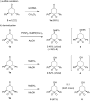
- therefore more likely that steric effects in the transition state for the putative cyclization to give 8 are prohibitive. Indeed, we were unable to locate a transition state for this process computationally. In order to test the limits of the reaction with related substitution patterns in this process, we
- shift by a remarkable 1.0 ppm. Similarly, in the 13C NMR spectrum, the ortho-disubsituted ring produces 6 aromatic and 2 aliphatic signals, rather than the 4 aromatic and 1 aliphatic signals that would be expected given the symmetrical aromatic substitution pattern. These data indicate that the ortho




Harnessing light energy with molecules
Beilstein J. Org. Chem. 2026, 22, 680–682, doi:10.3762/bjoc.22.52

- . Systematic tuning of photochromic properties is the focus of several articles in this thematic issue. Kitagawa, Kobatake, and co-workers [15] studied the effect of the substitution position of aryl groups on the thermal back-reaction of azadiarylethene photoswitches. Simeth and co-workers [16] present a
Computational prediction of C–H hydricities and their use in predicting the regioselectivity of electron-rich C–H functionalisation reactions
Beilstein J. Org. Chem. 2026, 22, 603–610, doi:10.3762/bjoc.22.46
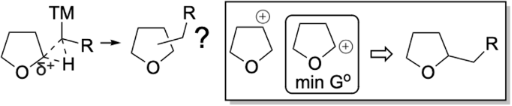
- . These properties encompass the site of metabolism [25][27], the strengths of hydrogen bond donors and acceptors [28][29][30], the regioselectivity of electrophilic aromatic substitution reactions [10], C–H pKa values [3], and electro- and nucleophilicity [31]. Building on the methodology from Finkelmann


![[Graphic 6]](/bjoc/content/inline/1860-5397-22-46-i8.svg?max-width=637&scale=1.18182)


Regioselective approach to 5-arylsulfonylisoxazoles and their antimicrobial activity
Beilstein J. Org. Chem. 2026, 22, 592–602, doi:10.3762/bjoc.22.45
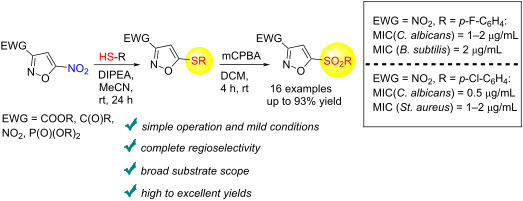
- nucleophilic aromatic substitution with thiophenols followed by oxidation with m-chloroperbenzoic acid (mCPBA). The scope of the reactions was explored, demonstrating high yields across a variety of functional groups and substituents. Optimized conditions enabled selective oxidation of thioaryl groups to
- as promising antimicrobial agents and provide new insights into their mechanism of action. Keywords: antimicrobial activity; aromatic nucleophilic substitution; isoxazoles; oxidation; sulfonylisoxazoles; Introduction The isoxazole ring represents an important building block for the synthesis of
- -sulfonylisoxazoles based on nucleophilic aromatic substitution of the nitro group in 3-EWG-5-nitroisoxazoles by treatment with thiophenols as S-nucleophiles and subsequent oxidation of the thioaryl group (Scheme 1, approach D). Previously, we reported that 3-EWG-5-nitroisoxazoles readily react with various N,O,S


Kinetic resolution of racemic planar-chiral vinylcymantrenes by molybdenum-catalyzed asymmetric metathesis dimerization
Beilstein J. Org. Chem. 2026, 22, 568–574, doi:10.3762/bjoc.22.42
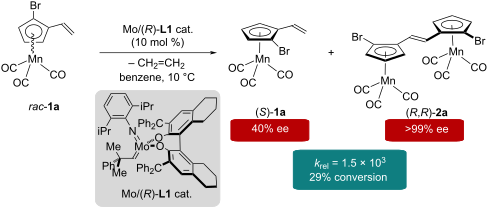
- (I). Indeed, the Friedel–Crafts acetylation of cymantrene, a typical electrophilic aromatic substitution reaction, is much slower than that of ferrocene. Consequently, vinylcymantrenes are electron-deficient olefins and less reactive in olefin metathesis. For this reason, the present AMD/KR reactions


Get a better glimpse on sequential photoreactions of trisnorbornadienes with 19F NMR spectroscopy
Beilstein J. Org. Chem. 2026, 22, 527–534, doi:10.3762/bjoc.22.38
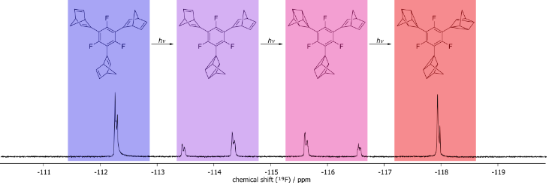
- hindrance induced by the fluoro substituents in the ortho positions [54]. It should be noted that there is only very limited data available to compare the effect of the substitution pattern on the half-life of aryl-substituted norbornadienes to support this interpretation [55]. However, the effect of ortho


Modern synthetic pathways towards eribulin and its subunits
Beilstein J. Org. Chem. 2026, 22, 495–526, doi:10.3762/bjoc.22.37
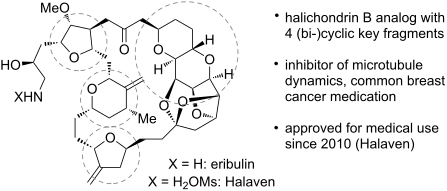
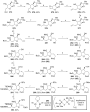
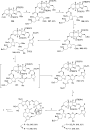
- –Kishi (NHK) coupling and Pd-mediated cyclization. Fragment 31 was synthesized from known precursor 28 [74] in 9 steps via MMTr-protection, replacement of the Bn- with TBDMS-protecting groups, hydroxylation of sulfone 29 to alcohol 30, tosylation, bromide substitution, acidic MMTr-cleavage and DMP
- )/Cr(II)-mediated coupling of 1-bromo-2-trimethylsilylethene, acidic cleavage of the remaining cyclohexylidene ring, TBDMS-protection of the three alcohol units and electrophilic substitution of the silyl moiety to afford vinyl iodide 103 was applied. Eventually, ester 103 was reduced to target
- formation of 252. Next, conditions reported by Kishi and co-workers were applied for the nucleophilic substitution of the chloride by the oxygen from the tetrahydrofuran ring towards 253 [94], before an adjacent secondary alcohol group reopened the bicyclic cationic intermediate. Cleavage of the TBDMS








Recent advances in the stereoselective synthesis of distal biaxially chiral molecules
Beilstein J. Org. Chem. 2026, 22, 461–479, doi:10.3762/bjoc.22.34
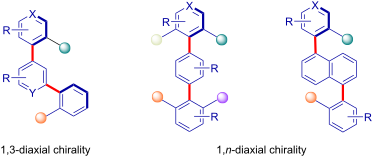
- carboxylic acid derivatives (Scheme 2b) [43]. They revealed that ortho-alkoxy substitution on the benzene-derived alkyne markedly enhanced both reactivity and enantioselectivity, while incorporation of a naphthyl substituent into the diyne enabled access to remote biaxially chiral molecules. Subsequent
- first enantioselective C–H amination of arenes catalyzed by a chiral phosphoric acid. Thus, this nucleophilic aromatic substitution reaction not only enables the synthesis of compounds bearing two chiral N-aryl axes but also provides a viable alternative to metal-catalyzed C–N cross-coupling reactions


Synthesis and anti-cancer activity of naphthalimide–organylselanyl conjugates
Beilstein J. Org. Chem. 2026, 22, 416–435, doi:10.3762/bjoc.22.29
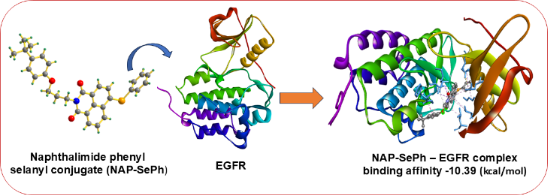
- major strategy involves fused-ring modification, wherein heteroatoms such as azo or thiol groups are introduced either linearly at the 4,5-position or laterally at the 5,6-position of the naphthalimide ring [32][33][34][35][36][37]. A second approach involves positional substitution, shifting functional
- enhancing lysosomal membrane permeability and aqueous solubility [42]. Interestingly, for the first time, N-(n-octyl) chain substitution has been shown to demonstrate remarkable anticancer activity, particularly through tyrosine kinase inhibition, without significant DNA intercalation [43]. Among these
- derivatives, N-(n-octyl) substitution at the 6-position exhibits a more pronounced effect as compared to octyl substitutions linked to the imide nitrogen of the naphthalimide ring [44]. Furthermore, comparative studies between sulfur- and selenium-containing naphthalimide analogues revealed that the selenium


Cone p-aminocalix[4]arenes enriched with ‘clickable’ alkyne or azide functionalities
Beilstein J. Org. Chem. 2026, 22, 399–415, doi:10.3762/bjoc.22.28
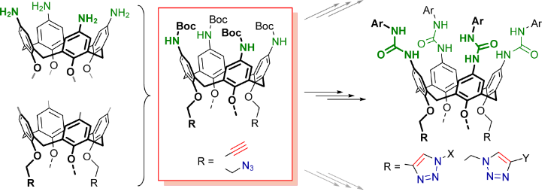
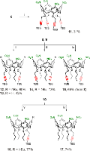
- substitution patterns were selected as the starting materials to enable further preparation of the respective mono-, di- and tetrapropargylated calix[4]arene tetraamines and their derivatives. The silylation of propargyl ethers 1–5 was first attempted using tert-butyldimethylsilyl chloride (TBSCl) and the
- conditions. In line with this, compounds 8–10 having less sterically hindered narrow-rim substitution patterns were found to be more resistant to side reactions during wide-rim nitration as well as to the target exhaustive nitration itself. These reactions required a higher nitric acid concentration of ≈2.5
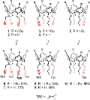
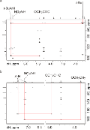
- only the reaction time increased (Scheme 2). The 1D NMR spectra for the dinitrocalix[4]arenes 12 and 13 provided no definitive data on the substitution patterns at their wide-rims except for the presence of two nitro groups in the distal aromatic units. To localize the nitro groups in the structures of




Design, synthesis and biological evaluation of 2,5-diaryloxazolo[4,5-d]pyrimidin-7-ylamines as selective cytotoxic agents against HeLa cells
Beilstein J. Org. Chem. 2026, 22, 390–398, doi:10.3762/bjoc.22.27

- therapeutic potential. Analyzing the structure–activity relationship with respect to the HeLa cancer cell line, it can be seen that among the diphenyloxazolopyridine derivatives, the substitution of the piperidine functional motif at position 7 in compound 1 by 4-ethylpiperazine leads to a decrease in the
- cytotoxicity by two times (compound 3). Whereas its substitution by morpholine lead to inactive compound 2. The same result was obtained by substituting 2-piperidin-1-ylpropylamine in 1 with hexahydro-1,5-methanopyrido[1,2-a][1,5]diazocin-8-one (6). However, methylation of the phenyl group at the 5-position of
- addition of a 4-chlorophenyl group instead of the methyl group as a functional motif at position 7 (4) sharply reduced the cytotoxicity of compound 1. The substitution of piperidine by morpholine in this motif in compound 4 resulted in a 2-fold increase in the activity of the obtained derivative 5. However


Dialkylaminoalkylation of β-ketosulfones via ring-opening of 3-sulfonylpyrrolidines
Beilstein J. Org. Chem. 2026, 22, 383–389, doi:10.3762/bjoc.22.26
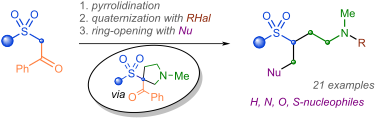
- obtained products with LiAlH4 leads to a substitution of the attached nucleophilic moiety with hydrogen in good yields. Keywords: aminoalkylation; aminosulfones; ketosulfones; pyrrolidines; Introduction Sulfones and sulfonic acids are valuable structural motifs in organic chemistry, notable for their
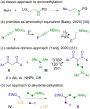
- commonly achieved by a classic nucleophilic substitution of a leaving group at the β-position relative to the N-protected nitrogen (Figure 2a). While this approach addresses most needs of targeted synthesis, developing alternative methods from inexpensive starting materials via domino-processes, allowing




Electrosynthetic access to unsymmetrical oxaza[8]helicenes with high chiral stability and strong circularly polarized luminescence (CPL)
Beilstein J. Org. Chem. 2026, 22, 372–382, doi:10.3762/bjoc.22.25
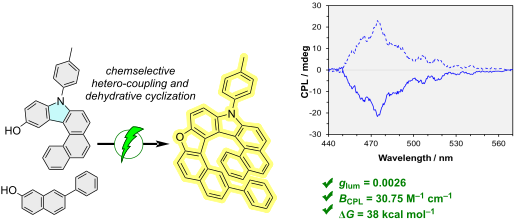
- hand, the brightness BCPL values were calculated to be 30.75 M−1 cm−1 for 5b and 31.46 M−1 cm−1 for 6b. This comprehensive understanding of the influence of phenyl substitution and helical extension on the CPL features of oxaza[n]helicenes provides a valuable roadmap for designing future CPL- emitters




Recent advances in the cleavage of non-activated amides
Beilstein J. Org. Chem. 2026, 22, 352–369, doi:10.3762/bjoc.22.23
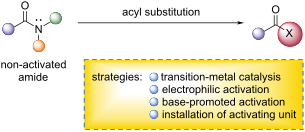
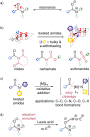
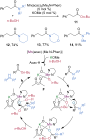
- a major objective in contemporary synthetic chemistry [12][13][14][15][16]. Despite their ubiquity, amides are notoriously unreactive toward classical acyl-substitution pathways. This inertness arises from a strong amidic resonance, which confers partial C=N double-bond character and a planar
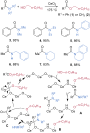
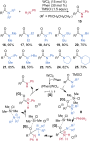
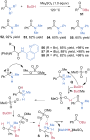
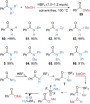
- % yield. Mechanistically, WCl6 coordinates with Phen to generate the active tungsten species [G]. In cooperation with TMSCl as a Lewis acid, the catalyst activates the amide toward nucleophilic attack by forming an electron-deficient intermediate H that readily undergoes substitution. Palladium complexes
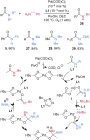
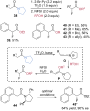
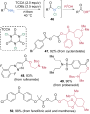
- of 2 equivalents of TCCA as a chlorinating reagent and 2.5 equivalents of lithium benzoate (LiOBz) as a base, primary amides are converted into the corresponding N,N-dichloroamide intermediates 46, which then undergo smooth nucleophilic acyl substitution with alcohols to afford esters. The substrate










Synthesis of tricyclic fused pyrrolidine nitroxides from 2-alkynylpyrrolidine-1-oxyls
Beilstein J. Org. Chem. 2026, 22, 344–351, doi:10.3762/bjoc.22.22

- literature data on reactivity of 5-azidopentyne derivatives in intramolecular Huisgen cycloaddition reactions are contradictory. Some authors successfully obtained 5-azidopentyne derivatives upon nucleophilic substitution at 80 °C in DMF, and additional heating at 170 °C was necessary for cyclization to




Ring contraction and ring expansion reactions in terpenoid biosynthesis and their application to total synthesis
Beilstein J. Org. Chem. 2026, 22, 289–343, doi:10.3762/bjoc.22.21
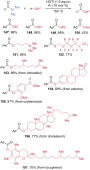
- that, in analogy to related compounds 114 and 131, an initial oxidative event at C-17 (145a) results in the 1,2-methyl group shift (see Scheme 35A). Capture of the tertiary carbocation by a peroxy-species would deliver 145b, which upon C-11 hydroxylation and SN’ substitution by the hydroperoxide could






Spirobarbiturates with a pyrrolizidine moiety: synthesis, structure and biological evaluation
Beilstein J. Org. Chem. 2026, 22, 274–288, doi:10.3762/bjoc.22.20
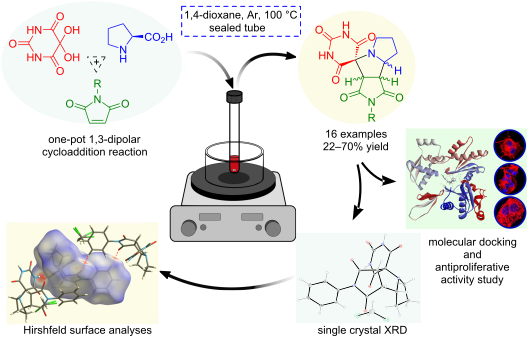
- ). Substitution of the meta-chlorine with fluorine also favored the exo-isomer (compound 4j, 70%, endo/exo 1:2), similar to 4l. The presence of an electron-withdrawing group at the meta-position of the maleimide’s N-aryl group likely facilitates exo-isomer formation. Reactions with maleimides containing meta-NO2
- -halogen substitution in aromatic maleimides was found to preferentially direct the cycloaddition toward the formation of exo-isomers. The structures of all obtained diastereomers were thoroughly characterized by 1H and 13C NMR spectroscopy. Single crystal XRD analysis of two representative compounds




Arene activation via π-bond localization: concepts and opportunities
Beilstein J. Org. Chem. 2026, 22, 257–273, doi:10.3762/bjoc.22.19
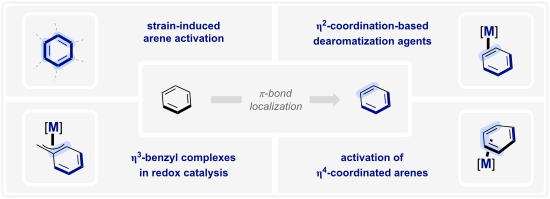
- also profoundly influences the electronic character of the aromatic ring. The ring becomes more electron-rich, akin to substitution with electron-donating groups, and exhibits distinct distortions in the bond lengths of the ring, consistent with localization of the π-system (i.e., dearomatization
- , display remarkable substitution inertness, even toward strong π-acids and good σ-donors. The substitution rate being relatively independent of the incoming ligand is consistent with a dissociative substitution mechanism. Typically, coordination occurs at positions that minimally disrupt the arene π-system
- metal center with α-pinene and subsequent ligand substitution proceeds with retention of configuration, the corresponding Mo(0) complex undergoes racemization during substitution (Scheme 2A). This obstacle was overcome by a redox-based approach: oxidation of the Mo(0)–α-pinene complex with iodine to a




Conformational analysis of difluoromethylornithine: factors influencing its gas-phase and bioactive conformations
Beilstein J. Org. Chem. 2026, 22, 237–243, doi:10.3762/bjoc.22.17
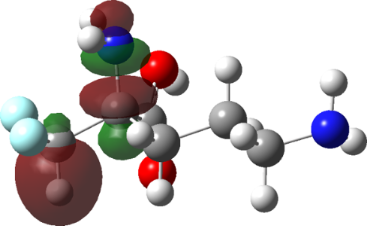
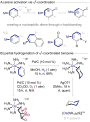
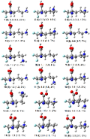
- decarboxylase and as a therapeutic agent against African trypanosomiasis. Beyond its pharmacological importance, DFMO provides a valuable model for examining how fluorine substitution governs molecular conformation. A comprehensive quantum-chemical study was performed to elucidate the origins of DFMO’s




Screwing the helical chirality through terminal peri-functionalization
Beilstein J. Org. Chem. 2026, 22, 205–212, doi:10.3762/bjoc.22.14
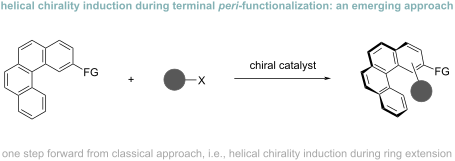
- substitution pattern along the plane of symmetry, is known as planar chirality, as seen in metallocene and cyclophanes. Molecules containing planar chirality have greater relevance in materials science and stereoselective transformations [12][13]. The fourth branch of the chiral tree is helical chirality. A
- nucleophilic substitution reactions (Scheme 5). A stereochemical model was proposed for the phospha-Michael addition, indicating that enantioselectivity was primarily influenced by steric effects arising from hydrogen bonding and ion pairing between the peptide mimetic phosphonium salt (PPS)-activated


Improved synthesis and physicochemical characterization of the selective serotonin 2A receptor agonist 25CN-NBOH
Beilstein J. Org. Chem. 2026, 22, 175–184, doi:10.3762/bjoc.22.11
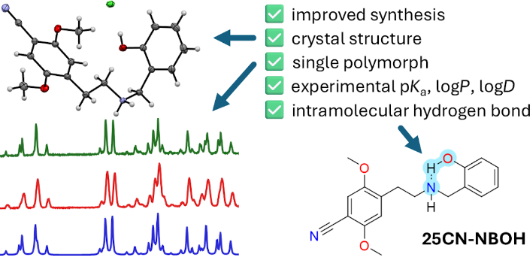
- effect is a clear indication that the OH group is engaged in an IMHB [19]. Furthermore, the relatively small isotope effect on C11 and C12 also indicates a hydrogen bond to nitrogen (i.e., nitrogen as hydrogen bond acceptor), as the effect caused solely by NH(D) substitution would have been expected to


A new synthesis of Tyrian purple (6,6’-dibromoindigo) and its corresponding sulfonate salts
Beilstein J. Org. Chem. 2026, 22, 167–174, doi:10.3762/bjoc.22.10
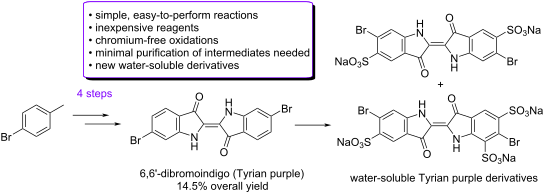
- Scheme 5A, dimethyl sulfoxide (DMSO) did not react with the benzyl bromide and instead only returned the starting material. The addition of 1.2 equivalents of silver nitrate promoted the substitution of the benzyl bromide with DMSO to yield an alkoxysulfonium ion 8 [22]. Following substitution, the


Circumventing Mukaiyama oxidation: selective S–O bond formation via sulfenamide–alcohol coupling
Beilstein J. Org. Chem. 2026, 22, 158–166, doi:10.3762/bjoc.22.9
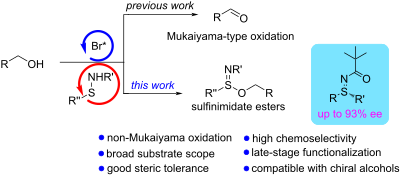
- , indicating partial stereochemical transfer from the chiral alcohol. We next investigated the stereochemical outcome of the Grignard substitution using diastereomeric sulfilimidate ester 5 (dr = 1.6:1), derived from ʟ-menthol. When treated with MeMgI, product 6a was obtained in 88% yield but with no
- enrichment of one enantiomer in the product mixture. To further probe this possibility, the two diastereomers of 5 were carefully separated and individually subjected to Grignard substitution. Reactions of the isolated diastereomers with MeMgI and PhMgBr afforded 6a-1 and 6b-1 with 92% ee and 93% ee
- , respectively (see the Supporting Information File 1 for more details). These results demonstrate that each diastereomer undergoes substitution with high stereospecificity. The moderate ee observed in the reaction of the diastereomeric mixture can therefore be rationalized by the differing intrinsic


Asymmetric Mannich reaction of aromatic imines with malonates in the presence of multifunctional catalysts
Beilstein J. Org. Chem. 2026, 22, 151–157, doi:10.3762/bjoc.22.8
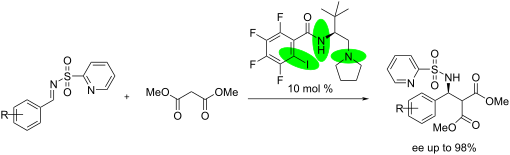
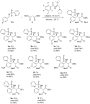
- petroleum ether/Et2O (see the Experimental section). Generally, the reactions are fast and afford products in high to excellent enantiomeric purities. The substitution pattern in the phenyl ring has some influence on the results (compare compounds 3a–d). The ortho-Cl substituent in the aromatic ring of 1b


Highly electrophilic, gem- and spiro-activated trichloromethylnitrocyclopropanes: synthesis and structure
Beilstein J. Org. Chem. 2026, 22, 123–130, doi:10.3762/bjoc.22.5
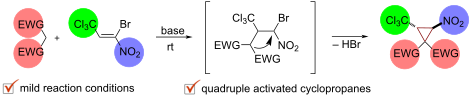
- to the bromonitroalkene afford the intermediate anion II, followed by tautomerization and formation of anion IV, which undergoes intramolecular nucleophilic substitution of the bromide along the C-alkylation pathway [37][38][39] (Scheme 6). The trans-configuration of the methine protons of the





