Search results
Search for "switching" in Full Text gives 332 result(s) in Beilstein Journal of Organic Chemistry. Showing first 200.
On the photoluminescence in triarylmethyl-centered mono-, di-, and multiradicals
Beilstein J. Org. Chem. 2025, 21, 964–998, doi:10.3762/bjoc.21.80
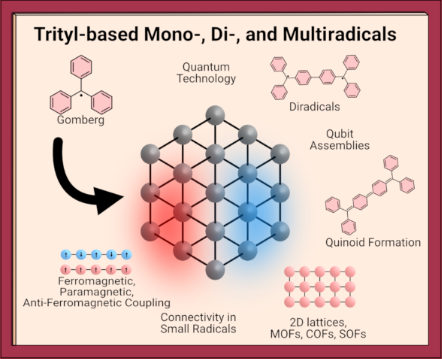
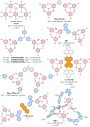
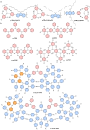
- [79]. In the latter case, alternation of an electric field would realign the mesogen allowing for reversible switching between CPL and depolarized emission. Multi-donor-functionalized triarylmethyl radicals Before iodinated TTM derivatives became available – enabling mild reaction conditions for









Recent advances in controllable/divergent synthesis
Beilstein J. Org. Chem. 2025, 21, 890–914, doi:10.3762/bjoc.21.73
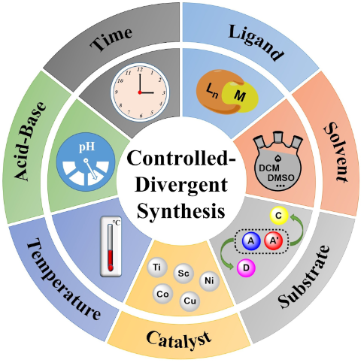
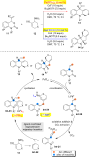
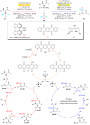
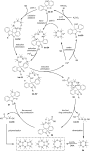
- afforded phenanthridinones. Intriguingly, switching to the electron-rich bidentate ligand bis(diphenylphosphino)methane (dppm) redirected the pathway to yield acridones. Time-dependent NMR studies revealed that the selectivity hinges on the aryne release kinetics from its precursor. Employing CsF
- )–H functionalization/thiolation to deliver indane-fused pyrrolidines 43 in excellent yields (up to 92%). Strikingly, switching the solvent to acetonitrile completely suppresses carbene formation under identical conditions, redirecting the pathway toward an unconventional diazo reduction wherein aryl







Synthesis and photoinduced switching properties of C7-heteroatom containing push–pull norbornadiene derivatives
Beilstein J. Org. Chem. 2025, 21, 807–816, doi:10.3762/bjoc.21.64
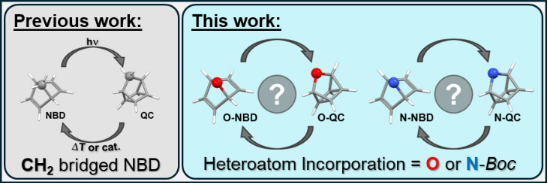
- , it is essential not only to achieve a high storage density and good quantum efficiency for the isomerization process but also to ensure large half-lifes and durability in switching reliability [20]. By making structural adjustments to the parent carbon scaffold, it is possible to target specific
- variations in the switching properties. However, it is important to note that altering one property typically impacts other characteristics as well [21][22]. In this regard, both the substitution of the NBD periphery to produce push–pull derivatives and the variation of the central scaffold itself have been
- considering the carbon-based scaffold as superior regarding their properties, while also highlighting some unique properties exhibited by heterocyclic derivatives [21]. C7-substituted NBD species have been scarcely investigated in terms of their switching behavior but have been employed as synthetic


Orthogonal photoswitching of heterobivalent azobenzene glycoclusters: the effect of glycoligand orientation in bacterial adhesion
Beilstein J. Org. Chem. 2025, 21, 736–748, doi:10.3762/bjoc.21.57
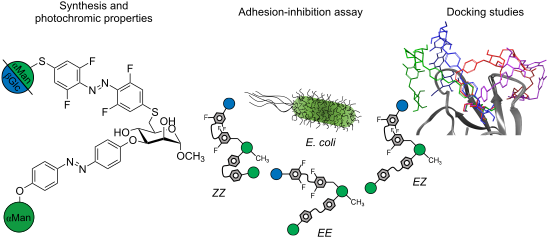
- UV–vis spectra of the two photoswitchable units. This design laid the basis for a robust switching cycle comprising the EManEGlc, the EManZGlc, and the ZManZGlc isomer of 1 [24]. In this contribution, we address the question of how the different isomers of 1 perform as inhibitors of bacterial
- leading to PSS with E/Z ratios of 18:82 for 3 and 4 and 3:97 for 5. Back switching occurs upon irradiation with 435 nm light that excites the n–π* band of the Z isomers and leads to almost identical E/Z ratios (64:36 and 65:35) in all three cases (3, 4, and 5). Irradiation of 5 with 520 nm light, on the
- Table 1 shows that the PSS values of the bis-azobenzene glycoclusters 1 and 2 are in a similar range. Furthermore, the glycoazobenzene antennas comprised in 1 and 2 show a similar switching behavior as the individual antennas 6αMan 3, 6βGlc 4, and 3αMan 5. Wavelength-selective photoswitching of 2 as


Recent advances in allylation of chiral secondary alkylcopper species
Beilstein J. Org. Chem. 2025, 21, 639–658, doi:10.3762/bjoc.21.51
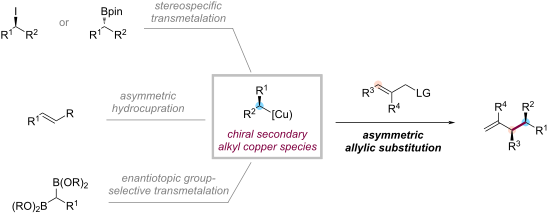
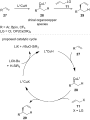
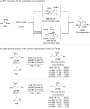
- breakthrough in this process was the discovery of a solvent effect: switching from Et2O/hexane to THF at −50 °C after organocopper species formation dramatically enhances configurational stability. Further investigations into the stability of the secondary organocopper species 14a revealed the critical
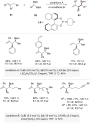
- -substituted terminal alkynes 42, including the industrially relevant acetylene and propyne. Interestingly, switching to the ligand (S,S)-Ph-BPE (L1) resulted in the asymmetric 1,2-difunctionalization of aryl-substituted terminal alkynes 42. The high levels of regio- and stereoselectivity achieved under mild





Synthesis of N-acetyl diazocine derivatives via cross-coupling reaction
Beilstein J. Org. Chem. 2025, 21, 490–499, doi:10.3762/bjoc.21.36
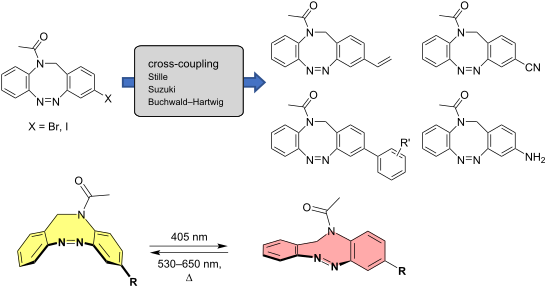
- Abstract Diazocines are photoswitches derived from azobenzenes by bridging the two phenyl rings in ortho position with a CH2CH2 group forming an eight membered (diazocine) ring. Diazocine is superior to most azobenzenes in almost all photophysical properties (switching efficiency, quantum yield
- , wavelengths etc.). The biggest advantage, especially in photopharmacology and when used in photoswitchable materials, is the inverted thermodynamic stability of the two switching states (isomers). The Z isomer is more stable than the E form. However, one disadvantage that it shares with the frequently used
- azobenzene is that the switching efficiency decreases sharply with increasing water content in the solvent. In a recently published paper, we reported that replacing one CH2 group in the bridge with NCOCH3 not only confers intrinsic water solubility, but also largely eliminates the problem of reduced


Beyond symmetric self-assembly and effective molarity: unlocking functional enzyme mimics with robust organic cages
Beilstein J. Org. Chem. 2025, 21, 421–443, doi:10.3762/bjoc.21.30
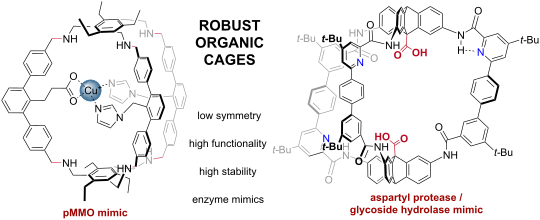
- studying switchable, functionally dynamic and strained systems, since metastable cavities are less likely to tolerate the structural strain that switching can induce [345][436][437]. We end by noting a recent perspective on cavity catalysis, which concluded that: “How much of a real comparison can be drawn




Identification and removal of a cryptic impurity in pomalidomide-PEG based PROTAC
Beilstein J. Org. Chem. 2025, 21, 407–411, doi:10.3762/bjoc.21.28
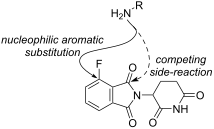
- formed due to the decomposition of DMF. Whereas switching the solvent could prevent its formation, the accumulation of 7 remained an issue, giving no substantial improvement in the yield of 3 in, for example, NMP. In MeCN, glutarimide displacement became a major reaction. Because NMP was significantly




Synthesis, structure, ionochromic and cytotoxic properties of new 2-(indolin-2-yl)-1,3-tropolones
Beilstein J. Org. Chem. 2025, 21, 358–368, doi:10.3762/bjoc.21.26
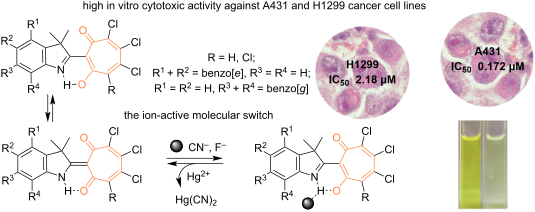
- determined. The structure of 2-(3,3-dimethyl-3H-benzo[g]indolin-2-yl)-5,6,7-trichloro-1,3-tropolone was determined by X-ray diffraction analysis. The compounds obtained are capable of switching emission at 420–440 nm and 476–530 nm upon successive exposure to CN− and Hg2+ ions in an acetonitrile solution. 2




Red light excitation: illuminating photocatalysis in a new spectrum
Beilstein J. Org. Chem. 2025, 21, 296–326, doi:10.3762/bjoc.21.22
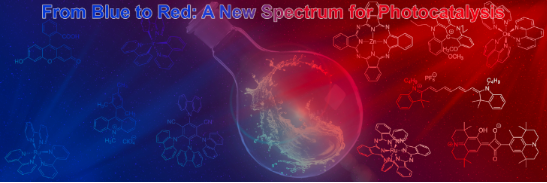
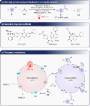
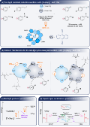
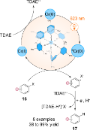
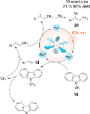
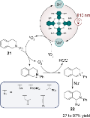
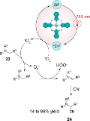
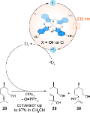
- poor light penetration, side reactions, and scalability related to traditional blue-light-driven metallophotoredox reactions. By switching from blue light (460 nm) to red light (660 nm) and osmium complex [Os(phen)3]2+ instead of an iridium complex, the authors have been able to significantly enhance
















Cu(OTf)2-catalyzed multicomponent reactions
Beilstein J. Org. Chem. 2025, 21, 122–145, doi:10.3762/bjoc.21.7

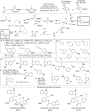
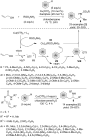
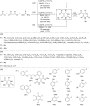
- possible to exclude its action also as Lewis acid. Confirming this dual activity, it should be noted that copper triflate can rarely be replaced by other copper salts or complexes to obtain the same results. In general, catalyst switching does not work with copper triflate, thus supporting its unique










Emerging trends in the optimization of organic synthesis through high-throughput tools and machine learning
Beilstein J. Org. Chem. 2025, 21, 10–38, doi:10.3762/bjoc.21.3
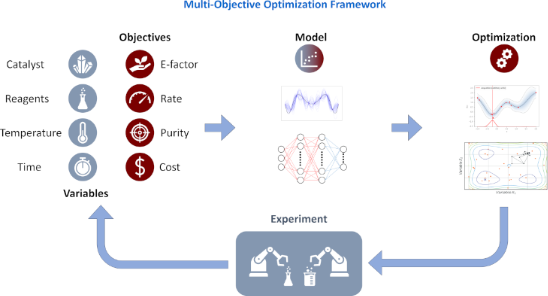
- multistep reactions into parallel processes. Individually accessible reactors are arranged around a central switching station that enables the delivery of independent reaction mixtures or reagents. Each reactor loop functions as an independent unit to carry out thermal or photochemical reactions under


Direct trifluoroethylation of carbonyl sulfoxonium ylides using hypervalent iodine compounds
Beilstein J. Org. Chem. 2024, 20, 3182–3190, doi:10.3762/bjoc.20.263
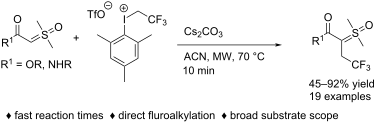
- % yield, however, the related benzyl derived ylides gave 3i and 3j in 73% and 61% yields, respectively. Phenyl esters performed well with this methodology (3k,l), but switching to anilide-derived ylides were consistently poorer performing. The N-phenyl ylide derivative reacted to produce 3m in only 50


Extension of the π-system of monoaryl-substituted norbornadienes with acetylene bridges: influence on the photochemical conversion and storage of light energy
Beilstein J. Org. Chem. 2024, 20, 3061–3068, doi:10.3762/bjoc.20.254
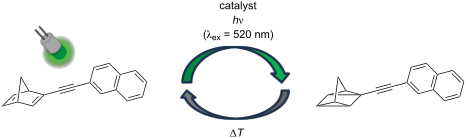
- that the triplet energy of 1i is significantly lower than 2.4 eV and even triplet sensitizers with lower triplet energies than that of [Ru(phen)3](PF6)2 could be employed for this reaction, which might even allow red light-driven switching. In addition to these kinetic studies, the photoisomerization


4,6-Diaryl-5,5-difluoro-1,3-dioxanes as chiral dopants for liquid crystal compositions
Beilstein J. Org. Chem. 2024, 20, 2940–2945, doi:10.3762/bjoc.20.246
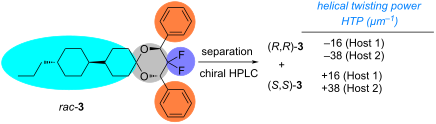
- of double twist cylinders [10][11]. A prototype of a polymer-stabilized Blue Phase LCD with ultra-fast switching times has been presented in 2008 by Samsung [12]. Another class of materials including high HTP chiral dopants are cholesteric films prepared by the polymerization of reactive mesogens


Recent advances in transition-metal-free arylation reactions involving hypervalent iodine salts
Beilstein J. Org. Chem. 2024, 20, 2891–2920, doi:10.3762/bjoc.20.243

- product were obtained. However, the yield of products 52 could be improved up to 66% by using iodonium salt 51 having the TMP group substituted with anisyl (Scheme 21) [72]. Switching the base in the arylation process can influence the chemoselectivity of the reaction as was reported by Onomura and group




C–C Coupling in sterically demanding porphyrin environments
Beilstein J. Org. Chem. 2024, 20, 2784–2798, doi:10.3762/bjoc.20.234
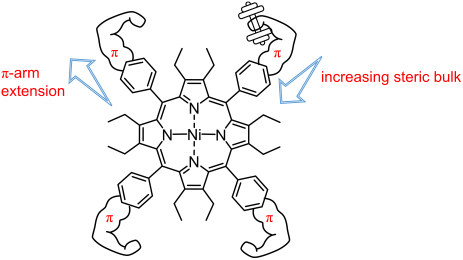
- the starting material porphyrin 13 being left unreacted. On switching the substrate from boronic acid to the boronic acid ester and opting for the weaker base Cs2CO3 instead of K3PO4, a significant difference in reactivity was observed with a 72% yield accomplished in the synthesis of porphyrin 29
- (Table 1, entry 9), bearing a methoxycarbonyl electron-withdrawing group utilizing boronic acid pinacol ester 18b. Following on from these results porphyrin 30 was synthesized in an 8% yield, when switching to weaker base Cs2CO3 using pinacol ester 16b (Table 1, entry 6). Switching the base to a weaker
- [48], switching catalyst to Pd(PPh)3, and base to Na2CO3 (Table 1, entry 16) gave no product. Ultimately, an increased catalyst loading of 25 mol % per C–Br bond gave the desired porphyrin in a 16% yield when using Cs2CO3 as base. The synthesis of other heterocycle-appended dodecasubstituted


Asymmetric organocatalytic synthesis of chiral homoallylic amines
Beilstein J. Org. Chem. 2024, 20, 2349–2377, doi:10.3762/bjoc.20.201
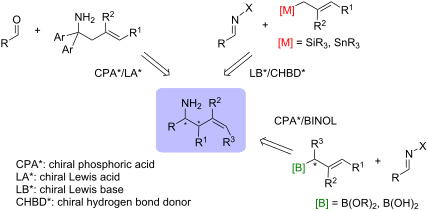
- almost exclusively produced anti-homoallylamine 7, with (E)-6 being slightly more efficient. This was explained by the reaction switching from the chair-like TS in (E)-crotylation to the boat-like TS in (Z)-crotylation. The developed methodology was successfully applied for the total synthesis of




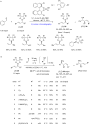


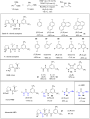


Stereoselective mechanochemical synthesis of thiomalonate Michael adducts via iminium catalysis by chiral primary amines
Beilstein J. Org. Chem. 2024, 20, 2313–2322, doi:10.3762/bjoc.20.198
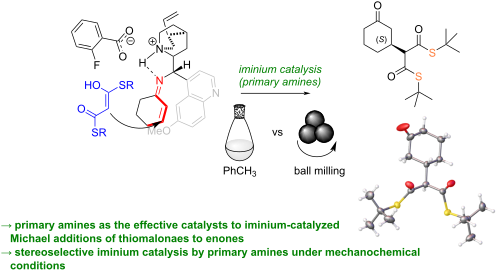
- enhancing the reactivity of a relatively inert acceptor does not necessarily lead to increased reaction rates, involves the use of more reactive nucleophiles. In this context, varying the stabilization energy of carboxylic acid derivatives by switching from oxoesters to thioesters is the significant


Electrochemical allylations in a deep eutectic solvent
Beilstein J. Org. Chem. 2024, 20, 2217–2224, doi:10.3762/bjoc.20.189
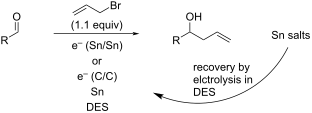
- product, although in this case, reduction of the nitro group to an amino group was observed and the resulting 4-aminobenzaldehyde is likely too electron-rich to undergo allylation. The use of other halides was also explored (Table 3). Switching to allyl chloride (Table 3, entry 2) did result in partial

Understanding X-ray-induced isomerisation in photoswitchable surfactant assemblies
Beilstein J. Org. Chem. 2024, 20, 2005–2015, doi:10.3762/bjoc.20.176
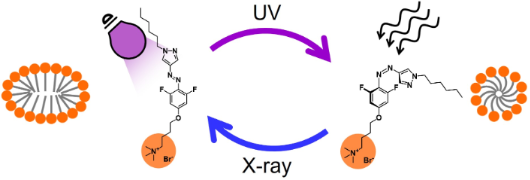
- , respectively, with comparable dimensions to those in H2O (Tables S1 and S3, Supporting Information File 1). However, there is a large difference in the interactions between AAPTAB micelles on switching solvents, which can be seen as a decrease in the interaction hump in the SAXS pattern at Q ≈ 0.045 Å−1
- isomers. It is thought that this is due to X-ray-induced radiolysis of water, which produces many primary species, including H+ ions, that are known to catalyse the Z–E isomerisation reaction. By switching the H2O solvent to D2O, we observed that the increased viscosity and reduced acidification acted to



Supramolecular assemblies of amphiphilic donor–acceptor Stenhouse adducts as macroscopic soft scaffolds
Beilstein J. Org. Chem. 2024, 20, 1590–1603, doi:10.3762/bjoc.20.142
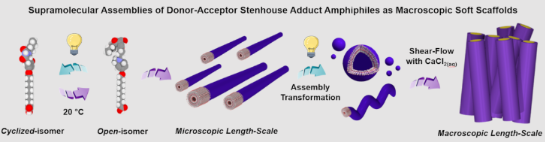
- design of the reported DAs, we designed and synthesized a series of DAs featuring a second-generation DASA switching motif and different chain lengths of the alkyl linker (i.e., DAn) that connects the DASA indoline motif with the hydrophilic part (i.e., the carboxylic acid motif, Scheme 1). The alkyl
- compared to the THF (Figure 1a). The thermal back reaction in the resulting aqueous solution was further studied, showing no reverse switching to O-DA11 upon storage in the dark at 20 °C (Figure S2, Supporting Information File 1). It has previously been observed that the cyclized-isomers of common DASAs




Synthesis and optical properties of bis- and tris-alkynyl-2-trifluoromethylquinolines
Beilstein J. Org. Chem. 2024, 20, 1246–1255, doi:10.3762/bjoc.20.107
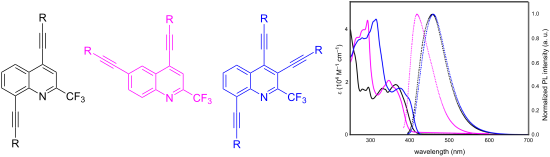
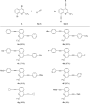
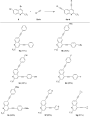
- 2.5 mol % or switching to more simple Pd(PPh3)4 still achieved quantitative yields. Less catalyst led to a reduced yield (Table 1). Consequently, we chose 2.5 mol % Pd(PPh3)4 for all further reactions. As a next step, we analysed the scope of our methodology (Scheme 2). The optimized conditions allow






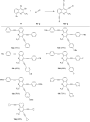


Kinetically stabilized 1,3-diarylisobenzofurans and the possibility of preparing large, persistent isoacenofurans with unusually small HOMO–LUMO gaps
Beilstein J. Org. Chem. 2024, 20, 1099–1110, doi:10.3762/bjoc.20.97
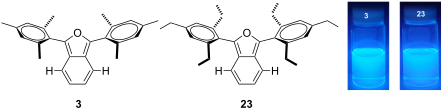
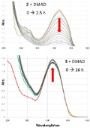
- switching the dienophile from DMAD to acrylonitrile. Once again, compounds 3 and 23 were unreactive, even after 184 hours of reaction time with a 13,500-fold excess of acrylonitrile. The reaction between 3 and a large excess of DMAD (116 equivalents) in boiling toluene (111 °C) was also studied by 1H NMR






Enantioselective synthesis of β-aryl-γ-lactam derivatives via Heck–Matsuda desymmetrization of N-protected 2,5-dihydro-1H-pyrroles
Beilstein J. Org. Chem. 2024, 20, 940–949, doi:10.3762/bjoc.20.84
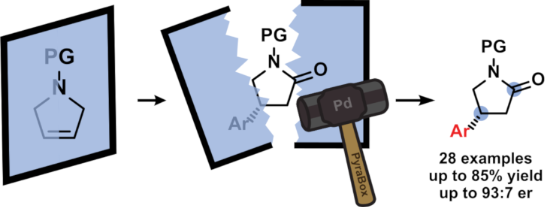
- 1). However, neither one of these new ligands performed better than L1 (see Table 1 below). In an attempt to enhance the protocol performance, we also evaluated the palladium source as indicated in Table 1. Switching Pd(TFA)2 by Pd(OAc)2 led to a minor increase in the yield, but without any changes