Search results
Search for "transition states" in Full Text gives 224 result(s) in Beilstein Journal of Organic Chemistry. Showing first 200.
Effect of substitution position of aryl groups on the thermal back reactivity of aza-diarylethene photoswitches and prediction by density functional theory
Beilstein J. Org. Chem. 2025, 21, 242–252, doi:10.3762/bjoc.21.16
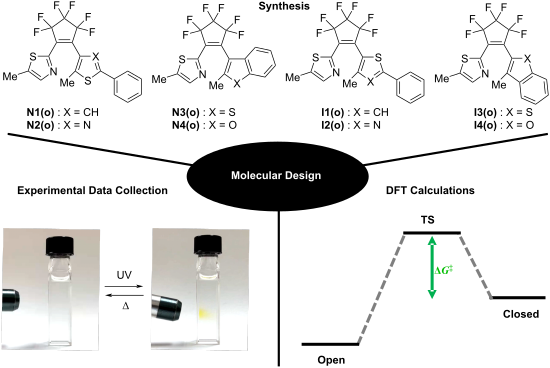
- and frequency calculations of closed-ring isomers (closed) and transition states (TS) were carried out using Gaussian 16 Rev. C.01 program package. The TS structure was optimized using Opt = TS keyword with Berny algorithm. To obey unrestricted Kohn–Sham solution, the broken-symmetry guess was



Recent advances in electrochemical copper catalysis for modern organic synthesis
Beilstein J. Org. Chem. 2025, 21, 155–178, doi:10.3762/bjoc.21.9
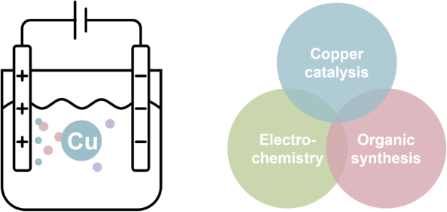
- enantio-determining transition states. Based on the mechanistic studies, a reaction mechanism is proposed in Figure 14. First, the in situ-generated Cu(I)–CN complex 83 is oxidized at the anode to form a Cu(II)–CN complex 84, which reacts with diarylphosphine oxide 80 to generate a transient P-centered








Direct trifluoroethylation of carbonyl sulfoxonium ylides using hypervalent iodine compounds
Beilstein J. Org. Chem. 2024, 20, 3182–3190, doi:10.3762/bjoc.20.263
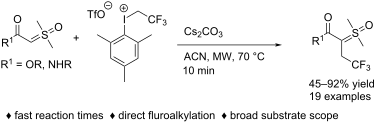
- met convergence criteria. Consistent with the PES scan outcome, the NEB-CI approach also indicated that the SN2 mechanistic proposal (Figure 2, path 2) dominates. Finally, for both mechanistic pathways, all intermediates and transition states were subjected to optimization and frequency calculations


Enantioselective regiospecific addition of propargyltrichlorosilane to aldehydes catalyzed by biisoquinoline N,N’-dioxide
Beilstein J. Org. Chem. 2024, 20, 3069–3076, doi:10.3762/bjoc.20.255
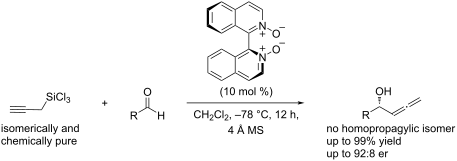
- exergonic from Rprop. These results show that the presence of N,N-diisopropylethylamine as base makes this process more energetically feasible by substantially stabilizing the transition states and intermediates in the pathway. These results are strongly supported by the experimental data. In a previous


The charge transport properties of dicyanomethylene-functionalised violanthrone derivatives
Beilstein J. Org. Chem. 2024, 20, 2921–2930, doi:10.3762/bjoc.20.244
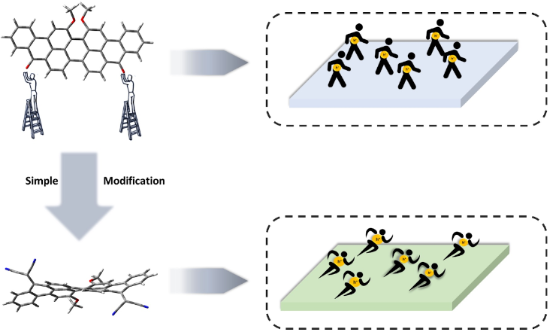
- otherwise. The absence of transition states was confirmed by the absence of imaginary frequencies in vibrational frequency calculations. The long side chains were replaced by methyl units to aid the convergence of the geometry optimisations. Crystallography Single crystal X-ray diffraction data for 3b were


Recent advances in transition-metal-free arylation reactions involving hypervalent iodine salts
Beilstein J. Org. Chem. 2024, 20, 2891–2920, doi:10.3762/bjoc.20.243





Access to optically active tetrafluoroethylenated amines based on [1,3]-proton shift reaction
Beilstein J. Org. Chem. 2024, 20, 2776–2783, doi:10.3762/bjoc.20.233
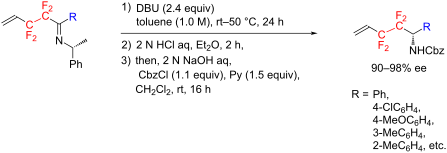
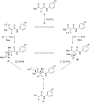
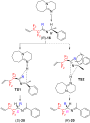
- which is being abstracted simultaneously interacts with the carbon possessing the tetrafluoroethylene fragment. At this time, transition states TS1 or TS2 are possible, but the reaction proceeds exclusively through the transition state TS1 to avoid significant steric repulsion between the substituent R



Computational design for enantioselective CO2 capture: asymmetric frustrated Lewis pairs in epoxide transformations
Beilstein J. Org. Chem. 2024, 20, 2668–2681, doi:10.3762/bjoc.20.224
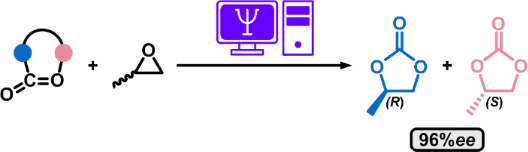
- confirm that the relaxed structures correspond to local minima (no imaginary frequencies) or transition states (one imaginary frequency). The reaction simulations were run in chloroform using the “Solvation Model based on Density” (SMD) [36] at 273.0 K to reproduce the most commonly used experimental
- favourable process. During the study, it will be observed that several transition states (TSs) can lead to the same product. As there is no possible interconversion between the reactant states, the different reactions will be considered independent, and it will be necessary to use an effective rate constant
- activated CO2 was found to proceed through two transition states. The calculations showed that the breaking of the O–CH(CH3) bond was more kinetically favourable, with a TS 7.6 kcal·mol−1 lower in free energy than the corresponding TS for breaking the O–CH2 bond. The electron-donating nature of the methyl


Hypervalent iodine-mediated cyclization of bishomoallylamides to prolinols
Beilstein J. Org. Chem. 2024, 20, 2455–2460, doi:10.3762/bjoc.20.209
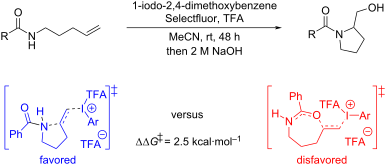
- . Optimized structures are shown for the cyclization transition states (hydrogen atoms are omitted for clarity and bond lengths are given in Å). Scope of cyclization reaction. Reactions of di- and trisubstituted alkene substrates. Optimization of cyclization reaction. Supporting Information Supporting


Asymmetric organocatalytic synthesis of chiral homoallylic amines
Beilstein J. Org. Chem. 2024, 20, 2349–2377, doi:10.3762/bjoc.20.201
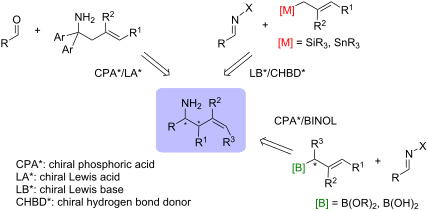
- reversible coordination of BINOLs 13 or 21 to the prenyl- or geranylboronic acids 14, favouring one of the four possible chair-like transition states. The reaction scope for indoles 15 was demonstrated on a limited set of 5-methoxyindole, 5-bromoindole, and 4-indolyl-pinacol boronates reacting with E- and Z
- 24, which supported the hypotheses regarding the selectivity-determining transition states arrangement. It is important to note, that boronic acids 14 are highly sensitive to oxidation by air and could only be purified in air-free conditions and stored in airtight containers. Additionally
- –Sakurai reaction of allyltrimethylsilane with N-Fmoc aldimines. The pyrrolidine unit gem-methyl group conformational control in the squaramide-based catalyst [34]. The energetic difference between the transition states of the two proposed modes of the reaction (SN1 and SN2 mechanisms). The concerted SN2








Catalysing (organo-)catalysis: Trends in the application of machine learning to enantioselective organocatalysis
Beilstein J. Org. Chem. 2024, 20, 2280–2304, doi:10.3762/bjoc.20.196
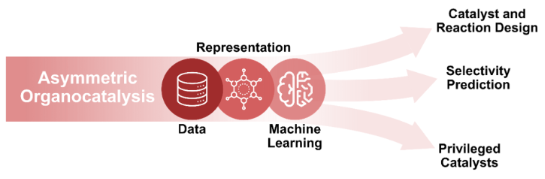
- of interest is the selectivity (either enantio- or diastereoselectivity), which is predicted as the difference in energies between the selectivity-governing transition states ∆∆G‡ (Figure 3). Whereas the application of the above described representations and models to such problems is rather modern




Diastereoselective synthesis of highly substituted cyclohexanones and tetrahydrochromene-4-ones via conjugate addition of curcumins to arylidenemalonates
Beilstein J. Org. Chem. 2024, 20, 2016–2023, doi:10.3762/bjoc.20.177
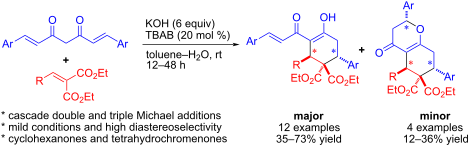
- curcumins 1 with arylidenemalonate 2 can be explained in terms of the relative stereochemistry of the substituents in the enolate arising from the first Michael addition (Figure 3). Comparison of the two possible transition states TSI and TSII for second Michael addition suggests that a severe 1,3-allylic


Regioselective alkylation of a versatile indazole: Electrophile scope and mechanistic insights from density functional theory calculations
Beilstein J. Org. Chem. 2024, 20, 1940–1954, doi:10.3762/bjoc.20.170
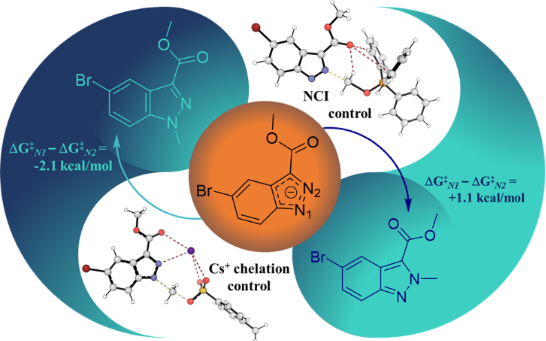
- to be driven by stabilizing non-covalent interactions. Specifically, the carbonyl O in N2-s-cis shows NCIs with one of the benzene rings of PPh3 as well as a hydrogen bond-like NCI with a H-atom of the electrophilic methyl. Thus, the partitioning between transition states favor the N2-pathway over
- system (Figure 10). Under conditions A, deprotonation and cesium coordination were heavily favored by 11.1 kcal/mol (18(N-H)). Transition states 18-N2-Cs and 18-N1-Cs were found leading to N1- and N2-products, respectively. NCIs between the cesium cation with the ester and sulfonate oxygens, and
- heavily favored in complex with Cs+ by 20.6 kcal/mol under conditions A, and 13.6 kcal/mol under conditions B. Transition states were found for the reaction of 21 under both conditions (see Supporting Information File 1). However, in this case, neither chelation nor other NCIs resulted in an energy


Divergent role of PIDA and PIFA in the AlX3 (X = Cl, Br) halogenation of 2-naphthol: a mechanistic study
Beilstein J. Org. Chem. 2024, 20, 1580–1589, doi:10.3762/bjoc.20.141
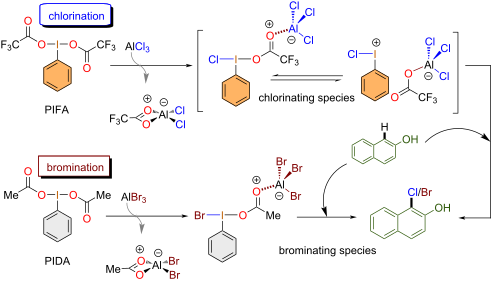
- PIDA/AlCl3, 1:2). Overall, we characterized four transition states along the reaction coordinates for both pathways. Although the PIFA-assisted mechanism follows a similar route to that described in Figure 1 until the formation of the active chlorinating species, in this case, the formation of TS2
- AlBr3 (Figures S5 and S6, Supporting Information File 1). Calculations indicated that each of these pathways proceeds along four transition states. Moreover, we found that the coordination of AlBr3 to I-2 to form TS2 has the highest energy barrier (determining step, ΔG‡ for TS2 53.3 kcal/mol) in the
- presence of PIDA. Meanwhile, formation of TS3 (ΔG‡ = 21.3 kcal/mol) is the limiting step of the mechanism in the presence of PIFA. Then, in the presence of the PIFA/AlBr3 system, bromination of 2-naphthol is the energetically most favored pathway. Although all these reactions occur through four transition


Computation-guided scaffold exploration of 2E,6E-1,10-trans/cis-eunicellanes
Beilstein J. Org. Chem. 2024, 20, 1320–1326, doi:10.3762/bjoc.20.115

- chemically-induced cationic cyclization mechanisms, we performed quantum chemical calculations [mPW1PW91/6–31+G(d/p)/SMD(chloroform)] [13][14][15][16][17][18][19][20] to obtain the relative free energies of the cationic intermediates and transition states that interconvert them, as well as the relative free
- higher free energy barriers of 38.0 and 38.8 kcal mol−1, respectively, to react through their associated chair–boat Cope transition states (Figure S11, Supporting Information File 1). In addition, the resulting products were predicted to be approximately 10 kcal mol−1 higher in free energies than the


Stability trends in carbocation intermediates stemming from germacrene A and hedycaryol
Beilstein J. Org. Chem. 2024, 20, 1189–1197, doi:10.3762/bjoc.20.101
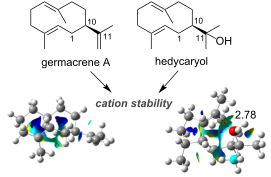
- the minimum geometries are reported, as no transition states were obtained because the carbocation ring formation is a spontaneous process. Moreover, it is noteworthy that for each cation optimized, we examined several other conformers (specifically rotamers), but these were of higher energy than the


Skeletal rearrangement of 6,8-dioxabicyclo[3.2.1]octan-4-ols promoted by thionyl chloride or Appel conditions
Beilstein J. Org. Chem. 2024, 20, 823–829, doi:10.3762/bjoc.20.74
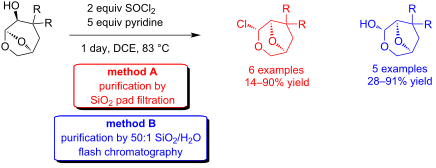
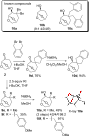
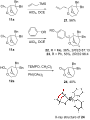
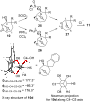
- vicinal proton. These results suggested that the formation of the allylic cation occurred readily from alcohols 15 and 18; however, the transition states leading to the rearrangement products were inaccessible and so only chloride addition occurred. The generation of the rearrangement products from the




Ligand effects, solvent cooperation, and large kinetic solvent deuterium isotope effects in gold(I)-catalyzed intramolecular alkene hydroamination
Beilstein J. Org. Chem. 2024, 20, 479–496, doi:10.3762/bjoc.20.43
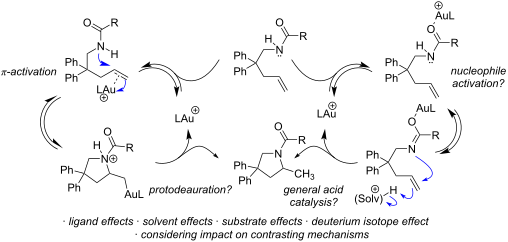
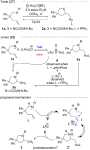
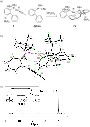
- linear or nearly linear transition states [76]. Isotope effects can also be maximized when the acid strength is the same on both sides of the reaction [77]. On the one hand, small variations observed here with different substrates and ligands could reflect the modulation of acidity from the presence of






Electron-beam-promoted fullerene dimerization in nanotubes: insights from DFT computations
Beilstein J. Org. Chem. 2024, 20, 92–100, doi:10.3762/bjoc.20.10
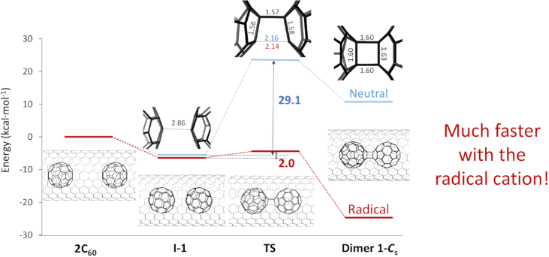
- cubic box of 30 Å side. The k-point sampling was performed through the Gamma–Pack scheme with one point. Transition states were obtained through the climbing image version of the nudged elastic band algorithm [32] and dimer method [33]. These structures showed a single imaginary frequency or with some
- -TEM images and movies will provide us a deeper understanding of fullerene coalescence processes in peapods. Computational Methods The Amsterdam Density Functional (ADF) code [21][22] was used for the electronic structure calculations and to optimize reactants, products, intermediates and transition
- states. The Perdew, Burke and Ernzerhoff (PBE) functional provided the electronic density [23]. Electrons were described with Slater-type basis functions of triple-ζ + polarization quality. We have included scalar relativistic corrections using the zeroth-order regular approximation (ZORA) formalism




Anion–π catalysis on carbon allotropes
Beilstein J. Org. Chem. 2023, 19, 1881–1894, doi:10.3762/bjoc.19.140
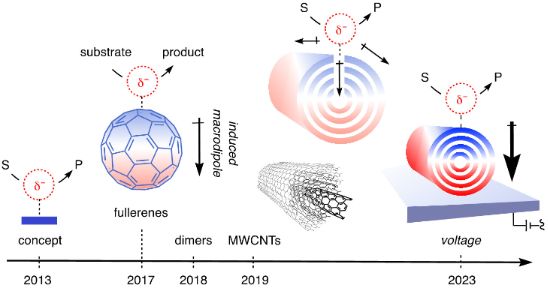
- , stands for the stabilization of anionic transition states on π-acidic aromatic surfaces. Anion–π catalysis on carbon allotropes is particularly attractive because high polarizability promises access to really strong anion–π interactions. With these expectations, anion–π catalysis on fullerenes has been
- catalysis; electromicrofluidics; enolate addition; ether cyclizations; fullerenes; Introduction Anion–π catalysis was introduced ten years ago [1]. The idea is to stabilize anionic transition states on electron-deficient, π-acidic aromatic surfaces (Figure 1A). The true beginning is arguably in 2015
- polarizability [9][10][11], the dream scaffolds for induced anion–π interactions are carbon allotropes. Anionic transition states placed on C60 fullerenes 1 will drive the 60 π electrons toward the other side, thus inducing a transient macrodipole that will stabilize the same transition state that induced its




Unraveling the role of prenyl side-chain interactions in stabilizing the secondary carbocation in the biosynthesis of variexenol B
Beilstein J. Org. Chem. 2023, 19, 1503–1510, doi:10.3762/bjoc.19.107
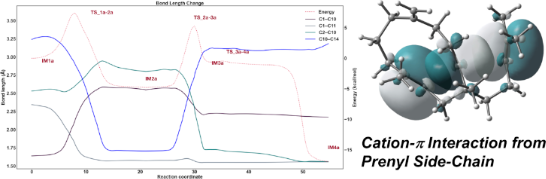
- investigated the biosynthetic pathways using DFT calculations to validate the above-mentioned aspects. Results and Discussion The detailed structures of the intermediates and transition states were elucidated by computational analysis. Interestingly, we have found an interaction between the secondary


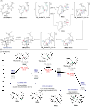

Aromatic C–H bond functionalization through organocatalyzed asymmetric intermolecular aza-Friedel–Crafts reaction: a recent update
Beilstein J. Org. Chem. 2023, 19, 956–981, doi:10.3762/bjoc.19.72

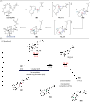
- site (see transition states 66 and 67, Scheme 17) [45]. In 2020, Fu and co-workers developed a novel aza-Friedel–Crafts reaction between 3-arylindoles 68 and 2-aryl-3H-indol-3-ones 69 activating the C2–H bond of the heteroaromatic ring. Chiral phosphoric acid P12 catalyzed this transformation


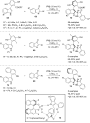


Combining the best of both worlds: radical-based divergent total synthesis
Beilstein J. Org. Chem. 2023, 19, 1–26, doi:10.3762/bjoc.19.1
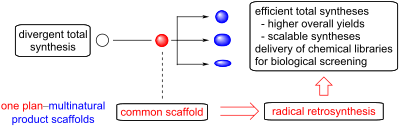
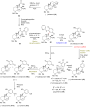
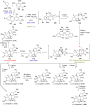
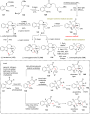
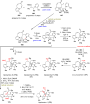
- cation cis-218. On the other hand, when polysubstitution with methoxy groups is present, the cation in 216 is delocalized, inhibiting the production of cyclobutene 217. Thus, radical cyclization according to the Beckwith–Houk model [108][109] via transition states TSI and TSII would take place, leading

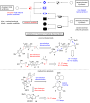










Supramolecular approaches to mediate chemical reactivity
Beilstein J. Org. Chem. 2022, 18, 1463–1465, doi:10.3762/bjoc.18.152
- reactants are confined in the restricted space provided by an enzyme binding pocket, the increase in local concentration, due to the proximity effect, the stabilization of intermediates and transition states cause the acceleration of the reaction. Thus, learning from natural enzymes, novel supramolecular
- capsules [5][6][8][9]. The capsules feature sizeable internal hydrophobic cavities that can accommodate large substrates and even allow bimolecular reactions to take place. In addition, they may ensure catalytic turnover. Transition states and reaction intermediates may also be stabilized in the cavities
- distributions when performed inside the containers compared to the bulk solution. As mentioned above, activation of substrates, stabilization of intermediates and transition states through intermolecular interactions was established as one of the fundamental factors of supramolecular catalysis, and among these
Experimental and theoretical studies on the synthesis of 1,4,5-trisubstituted pyrrolidine-2,3-diones
Beilstein J. Org. Chem. 2022, 18, 1140–1153, doi:10.3762/bjoc.18.118
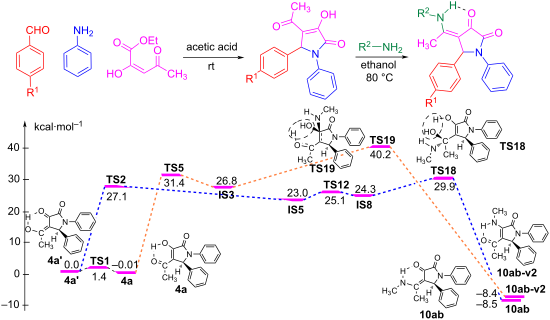
- reactants, intermediates, transition states, and products were optimized and are illustrated in Figure S7 in Supporting Information File 1. The relative free energy (ΔG, ΔG#) values for all species are presented in Figure 4, the reaction potential energy surface. This figure is a detailed reaction mechanism
- (Scheme 5). The first two stages occur through the TS10, TS15 transition states with Ea values ca. 7.4 and 28.4 kcal·mol−1, respectively. The last stage is a thermodynamically favorable H-shift process with ΔG of −8.9 kcal·mol−1 which is similar to the transformation from IS9 to 10ab. In addition, we
- form an N–H bond leads to 10ab-v3 (Scheme S1, Supporting Information File 1). These processes are carried out through the TS11, TS16, and TS20 transition states with ΔG# values of 4.7, 26.9, and 7.1 kcal·mol−1, respectively. For the reaction pathway starting from 4a’, the first steps lead to