Search results
Search for "tricyclic" in Full Text gives 278 result(s) in Beilstein Journal of Organic Chemistry. Showing first 200.
Recent total synthesis of natural products leveraging a strategy of enamide cyclization
Beilstein J. Org. Chem. 2025, 21, 999–1009, doi:10.3762/bjoc.21.81
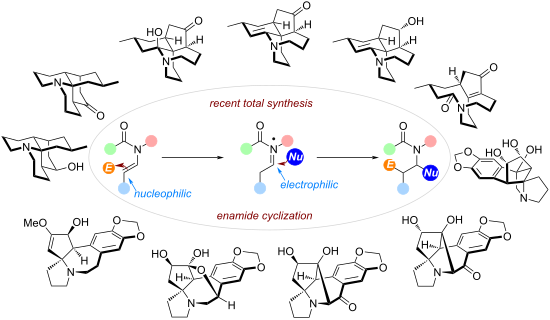
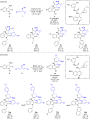
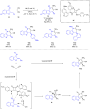
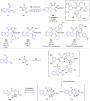
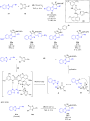
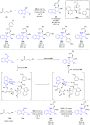
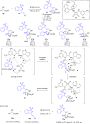
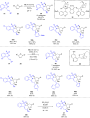
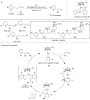
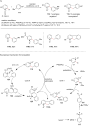
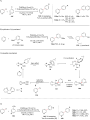
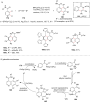
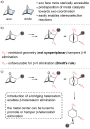
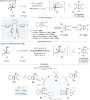
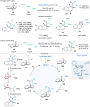
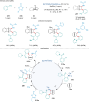
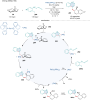
- the terminal alkene and the conformational strain of forming a bridge[3.2.1]bicycle might be responsible for a selective 6-exo-trig cyclization. From tricyclic compound 4, anti-Markovnikov oxidation catalyzed by palladium led to the formation of aldehyde 5. When treated with p-TsOH, the intramolecular
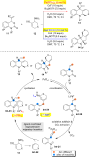
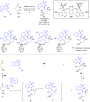
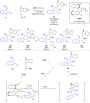
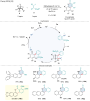
- . Cyclization/isomerization – collective total synthesis of fawcettimine-type alkaloids The bicyclic decahydroquinoline enamide motif can serve as a versatile precursor to access different types of tricyclic N-heterocycles. As demonstrated in the above work from She’s group, the aza-Prins cyclization renders
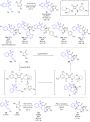
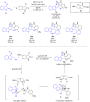
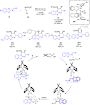
- acetylcholinesterase (AChE) inhibitory activities [18]. In the presence of a catalytic amount of PPh3AuCl and AgSbF6, the enamide–alkyne cycloisomerization of bromo-substituted alkyne 8 proceeded via a 5-endo-dig cyclization to afford tricyclic compound 10 through the formation of iminium intermediate 9. The azepane



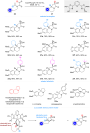


Silver(I) triflate-catalyzed post-Ugi synthesis of pyrazolodiazepines
Beilstein J. Org. Chem. 2025, 21, 915–925, doi:10.3762/bjoc.21.74
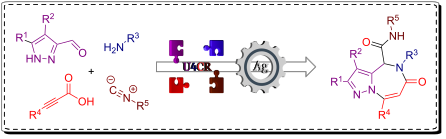
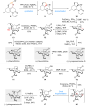
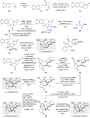
- formation of the tricyclic triazolo[1,5-a][1,4]benzodiazepine scaffold 10 (Scheme 1b) [39]. Triple bond-containing Ugi adducts showed a great promise for the assembly of various seven-membered nitrogen-containing heterocyclic cores through transition-metal-catalyzed alkyne hydroarylations [40][41][42][43


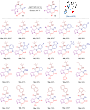


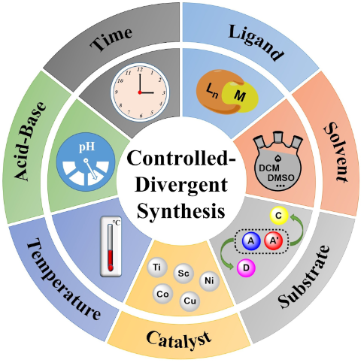
Recent advances in controllable/divergent synthesis
Beilstein J. Org. Chem. 2025, 21, 890–914, doi:10.3762/bjoc.21.73
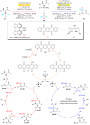
- ligand-controlled regioselective migratory insertion process, reaction of Int-21 and Int-22 leads to the formation of π-allylpalladium intermediates Int-23 or Int-24, depending on the ligand employed. Finally, cyclization of Int-23 or Int-24 yields the tricyclic product 13 or the tetracyclic product 14







Total synthesis of (±)-simonsol C using dearomatization as key reaction under acidic conditions
Beilstein J. Org. Chem. 2025, 21, 601–606, doi:10.3762/bjoc.21.47
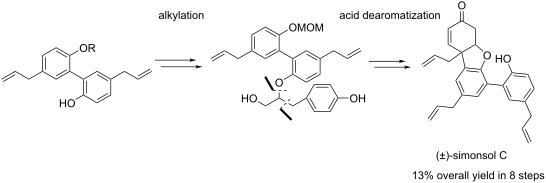
- , including insecticidal, antibacterial, anti-inflammatory, analgesic, and neurotrophic activities [3]. In 2013, Wang’s group isolated (±)-simonsol C from star anise, which features a unique 6/5/6 tricyclic benzofuran structure [4]. They found that it exhibits biological activity that promotes neuronal
- oxy-Michael addition from dienone 15. The 6/6/6 tricyclic structure in 15 can be constructed through dearomatization of compound 16, which in turn can be readily synthesized through consecutive alkylation steps starting from magnolol (11). Additionally, using magnolol as the starting material brings
- elimination was utilized to liberate the allyl group and to simultaneously construct the 6/5/6 tricyclic skeleton via an oxy-Michael addition affording (±)-simonsol C in 70% yield (Scheme 4). The spectral data were in agreement with the reported ones [4][15][16] and the cis relation between the protons at C5


Synthesis of N-acetyl diazocine derivatives via cross-coupling reaction
Beilstein J. Org. Chem. 2025, 21, 490–499, doi:10.3762/bjoc.21.36
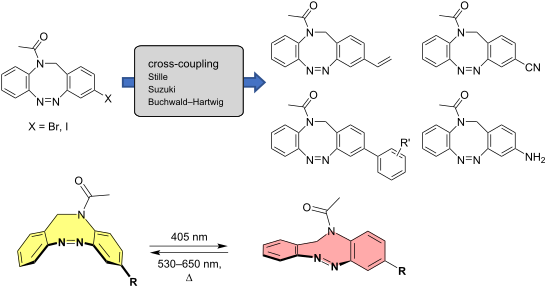
- azobenzenes, spiropyranes and diarylethenes in organic solvents [3][13][15]. There are two strategies of applying diazocines in photopharmacology. The first one exploits the structural similarity of the tricyclic diazocine framework to the tricyclic structure of, e.g., tetrahydrodibenzazocines [16][17] and


Visible-light-promoted radical cyclisation of unactivated alkenes in benzimidazoles: synthesis of difluoromethyl- and aryldifluoromethyl-substituted polycyclic imidazoles
Beilstein J. Org. Chem. 2025, 21, 234–241, doi:10.3762/bjoc.21.15
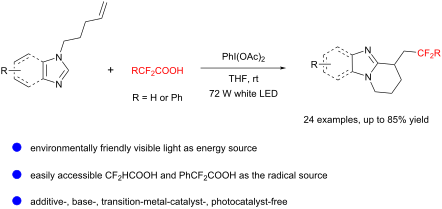
- as a vital pharmacophore in medicinal chemistry due to its special biological activity [11][12][13]. In particular, the tricyclic benzimidazole skeleton is ubiquitous in many bioactive compounds and therapeutic agents (Figure 1b) [14][15][16]. Recent studies have shown that fluorinated benzimidazole
- groups have reported the direct difluoromethylation/cyclization reaction of benzimidazoles with alkenes for the syntheses of difluoromethylated tricyclic benzimidazoles to date. For example, in 2023, Chen and co-workers pioneered an electrochemical approach for the difluoromethylation and cyclization
- broader applicability in drug design to some extent. Besides, the incorporation of the PhCF2 group into tricyclic imidazoles has never been reported according to our best knowledge. Therefore, it is essential to explore environmentally friendly, cost-effective synthetic approaches for the construction of


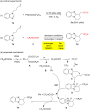
Cu(OTf)2-catalyzed multicomponent reactions
Beilstein J. Org. Chem. 2025, 21, 122–145, doi:10.3762/bjoc.21.7

- the triple bond furnishes the furo-ring and the final oxidation affords the tricyclic product 22. Substituted quinolines 23 were obtained in a convenient solvent-free multicomponent reaction starting from electron-rich or electron-poor anilines, alkyl or arylaldehydes and terminal alkynes, performing
- corresponding saturated compounds. Subsequent nucleophilic addition of the cyclic vinyl ether to the iminium salt generates an intermediate XXI susceptible of intramolecular electrophilic attack to give a tricyclic structure XXII. The final deprotonation provides the desired product 24. The multicomponent


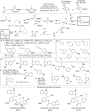
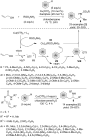


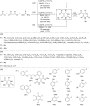






Non-covalent organocatalyzed enantioselective cyclization reactions of α,β-unsaturated imines
Beilstein J. Org. Chem. 2024, 20, 3221–3255, doi:10.3762/bjoc.20.268
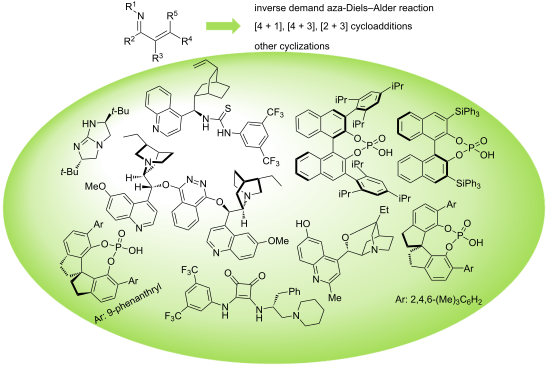
- furnish the cycloaddition product 13a. In 2019, Xu’s group published a bifunctional squaramide-catalyzed inverse electron demand aza-Diels–Alder reaction of saccharin-derived 1-azadienes 14 and azlactones 15 [27]. This methodology enables chiral tricyclic derivatives 16 bearing a quaternary amino acid
- azlactones through H-bond interactions with the squaramide moiety. The activated complex undergoes a [4 + 2] cyclization, through the Si-face attack of the enolate to the 1-azadiene leading to intermediate A which undergoes tautomerization and protonation to yield the chiral tricyclic derivative 16. To
- further investigate the potential utility of this methodology, a gram scale experiment was conducted affording product 16f in a good yield and a slight decrease of the enantioselectivity. Additionally, a derivatization of product 16f by hydrogenation was carried out to yield the tricyclic piperidine 17











Efficacy of radical reactions of isocyanides with heteroatom radicals in organic synthesis
Beilstein J. Org. Chem. 2024, 20, 2114–2128, doi:10.3762/bjoc.20.182
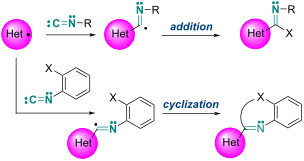
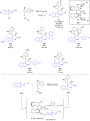
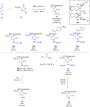
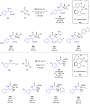
- synthesize tricyclic pyridine derivatives in a single step (Scheme 22) [75]. Zhang and Yu et al. also developed a cyclization of 2-isocyanobiaryls using a photoredox system [76][77][78][79][80] in which carbon radicals were generated by a photoredox reaction of α-bromopropanoates under visible light


The Groebke–Blackburn–Bienaymé reaction in its maturity: innovation and improvements since its 21st birthday (2019–2023)
Beilstein J. Org. Chem. 2024, 20, 1839–1879, doi:10.3762/bjoc.20.162
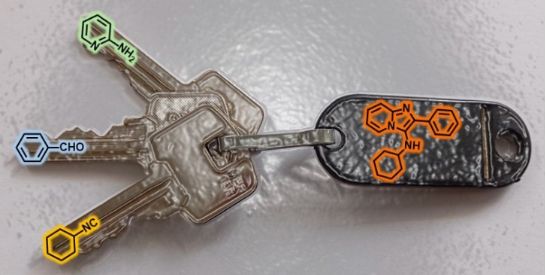
- interesting strategy for the construction of new tricyclic systems (Scheme 29). Adducts 92 were prepared from 3-phenylpropiolaldehyde (90), benzylisocyanides 91 and 2-aminopyridines via a HClO4-promoted GBB reaction, then, under thermal conditions, in the presence of tetrabutylammonium bromide, an






Chemo-enzymatic total synthesis: current approaches toward the integration of chemical and enzymatic transformations
Beilstein J. Org. Chem. 2024, 20, 1693–1712, doi:10.3762/bjoc.20.151
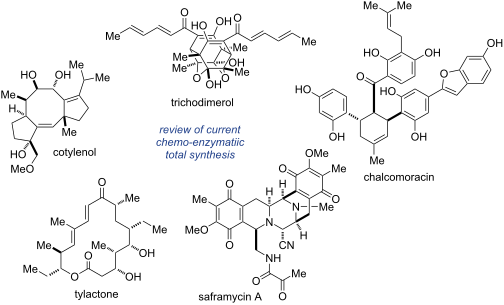
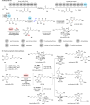
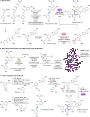
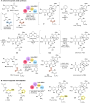
- considered a remarkable example of utilizing the complementarity between chemical and enzymatic transformations (Scheme 1 and Scheme 2). The cotylenin and fusicoccin families comprise structurally related diterpene glucosides with a 5/8/5 fused tricyclic aglycon and a sugar moiety linked through the C9
- prenyltransferase (PT) domain located at the C-terminus of BscA (Scheme 2A). Subsequently, the terpene cyclase (TC) domain at the N-terminal of BscA generates fusicocca-2,10(14)-diene (6), which bears the common 5/8/5 fused tricyclic scaffold common to this natural products family. Sequential oxidative conversions
- tricyclic scaffold was produced through scalable chemical synthesis. Subsequently, in vitro enzymatic oxidative functionalizations were carried out during the oxidation stage. The exploration of Bsc9 homologs and directed evolution expanded the scope of substrates of the dioxygenase beyond the natural




Rapid construction of tricyclic tetrahydrocyclopenta[4,5]pyrrolo[2,3-b]pyridine via isocyanide-based multicomponent reaction
Beilstein J. Org. Chem. 2024, 20, 1436–1443, doi:10.3762/bjoc.20.126
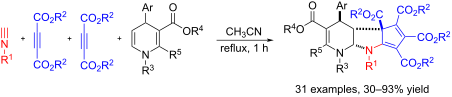
- ). The reaction in toluene, methylene dichloride or acetonitrile at room temperature afforded an unexpected tricyclic compound 4a in 12–18% yields (Table 1, entries 4–6). 1H NMR spectra clearly indicated that two molecules of dimethyl but-2-ynedioates took part in the reaction. The yields of the product
- 4a slightly increased to 29–45% yields when the reaction was carried out at elevated temperature in toluene, methylene dichloride or acetonitrile (Table 1, entries 7–10). When the reaction was carried out in refluxing acetonitrile, the tricyclic compound 4a can be obtained in 47% yield (Table 1
- -ynedioate usually gave the expected tricyclic products in good yields. However, the reaction with diethyl but-2-ynedioate afforded products 4p, 4r and 4t in moderate to lower yields. The 5,6- unsubstituted dihydropyridines with various substituents showed marginal effects on the yields. These results


Computation-guided scaffold exploration of 2E,6E-1,10-trans/cis-eunicellanes
Beilstein J. Org. Chem. 2024, 20, 1320–1326, doi:10.3762/bjoc.20.115

- collected NMR data of 1 in chloroform [5], but when we dissolved 2 in chloroform for NMR, it cyclized into two 6/6/6-tricyclic diterpenes (5 and 6) [7]. We discovered that 2 was much more sensitive to acid than 1 and eventually took advantage of its reactivity to determine its absolute configuration [7
- ]. Here, we sought to understand the molecular basis of chemical and thermal reactivities of these diterpene skeletons. We also took advantage of their intrinsic chemical properties to transform the eunicellanes in functionalized tricyclic skeletons of natural product importance. Results and Discussion
- Ring fusion configuration does not affect protonation-induced cyclization Our initial observation that albireticulene (2) was unstable in chloroform, resulting in two tricyclic isomers gersemienes A (5) and B (6) [7], while benditerpetriene (1) was stable [5], led us to investigate the protonation


Sustainable tandem acylation/Diels–Alder reaction toward versatile tricyclic epoxyisoindole-7-carboxylic acids in renewable green solvents
Beilstein J. Org. Chem. 2024, 20, 1308–1319, doi:10.3762/bjoc.20.114
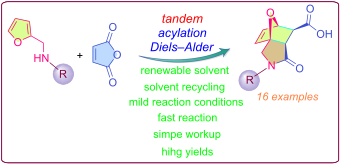
- second step of this reaction, regio- and stereochemically controlled intramolecular cyclization leads to the formation of versatile nitrogen-containing tricyclic systems. However, these useful organic transformations are usually carried out in highly toxic organic solvents such as benzene, toluene
- biocompatible solvents for IMDAF reactions. The corresponding tricyclic epoxyisoindole-7-carboxylic acids were obtained in less time and in higher yields than in reactions carried out in conventional toxic and volatile organic solvents. A challenge in the use of vegetable oils as solvents in organic
- maleamic acid precursors. Optimization of IMDAF cycloaddition using different solvents.a Synthesized tricyclic epoxyisoindole-7-carboxylic acidsa. Supporting Information Supporting Information File 88: Tables S1 and S2, Cartesian coordinates of the optimized structures and copies of NMR spectra.


Secondary metabolites of Diaporthe cameroonensis, isolated from the Cameroonian medicinal plant Trema guineensis
Beilstein J. Org. Chem. 2023, 19, 1555–1561, doi:10.3762/bjoc.19.112
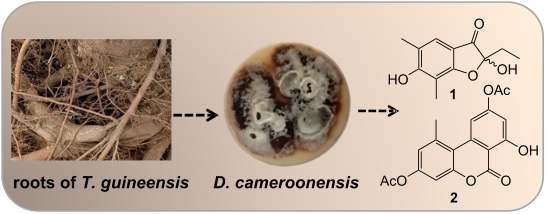
- derivative of alternariol, a heptaketide coumarin derivative with a fused tricyclic ring called dibenzo-α-pyrone [31][32]. Alternariol is one of the toxic metabolites isolated from Alternaria strains, that grow on various natural resources such as corn, rice, fruits, vegetables, oilseeds, juices, wins, and


Non-noble metal-catalyzed cross-dehydrogenation coupling (CDC) involving ether α-C(sp3)–H to construct C–C bonds
Beilstein J. Org. Chem. 2023, 19, 1259–1288, doi:10.3762/bjoc.19.94
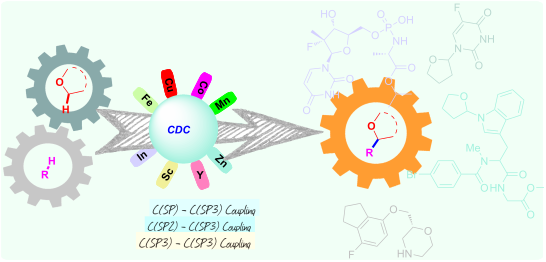
- tricyclic chromane nucleus from 8-hydroxyisochromanes and 1,3-dicarbonyl compounds in the presence of Cu(OTf)2 and T+BF4− (Scheme 7b) [57]. The strategy has a wide range of applications and is highly diastereoselective, making it an attractive strategy for synthesizing related natural products. The role of










Synthesis of imidazo[4,5-e][1,3]thiazino[2,3-c][1,2,4]triazines via a base-induced rearrangement of functionalized imidazo[4,5-e]thiazolo[2,3-c][1,2,4]triazines
Beilstein J. Org. Chem. 2023, 19, 1047–1054, doi:10.3762/bjoc.19.80
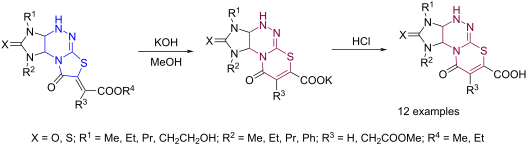
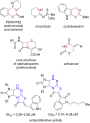
- ][1,2,4]triazine or imidazo[4,5-e]thiazolo[2,3-c][1,2,4]triazine and the expansion of the thiazolidine ring to a thiazine core. The methodology proved to be effective for the preparation of a series of target compounds with different substituents in the tricyclic fragment. Examples of natural and



Photoredox catalysis enabling decarboxylative radical cyclization of γ,γ-dimethylallyltryptophan (DMAT) derivatives: formal synthesis of 6,7-secoagroclavine
Beilstein J. Org. Chem. 2023, 19, 918–927, doi:10.3762/bjoc.19.70
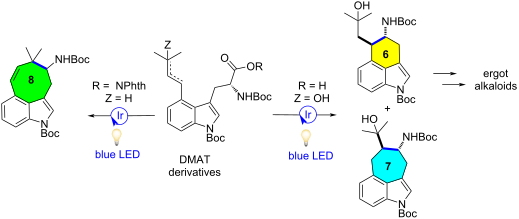
- -dimethylallyltryptophan (DMAT) derivatives containing unactivated alkene moieties has been developed, providing green and efficient access to various six-, seven-, and eight-membered ring 3,4-fused tricyclic indoles. This type of cyclization, which was hitherto very difficult to comprehend in ergot biosynthesis and to
- no desired cyclized product was observed, an interesting aspect of this reaction was the access of an attractive, unusual, and highly functionalized 3,4-fused eight-membered tricyclic indole, whose ring closure would not have been possible or at least very difficult in the ground state [87][88][89
- functionalized 3,4-fused tricyclic indoles with medium-sized rings (seven and eight), which have been largely neglected in previous studies, can be synthesized by this new protocol. Notably, the reaction has been successfully applied in the formal synthesis of (±)-6,7-secoagroclavine, a key intermediate for a


Pyridine C(sp2)–H bond functionalization under transition-metal and rare earth metal catalysis
Beilstein J. Org. Chem. 2023, 19, 820–863, doi:10.3762/bjoc.19.62
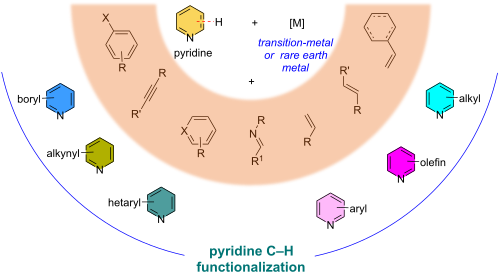
- tricyclic imidazonaphthyridinone derivative having antibacterial properties, with low catalyst loading (0.1 mol %) (Scheme 20b). Later, in 2014, the same authors, using an amide as directing group (DG), developed a protocol for the regioselective C3-alkenylation of pyridines through syn-addition of alkynes












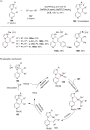


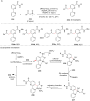


Eschenmoser coupling reactions starting from primary thioamides. When do they work and when not?
Beilstein J. Org. Chem. 2023, 19, 808–819, doi:10.3762/bjoc.19.61
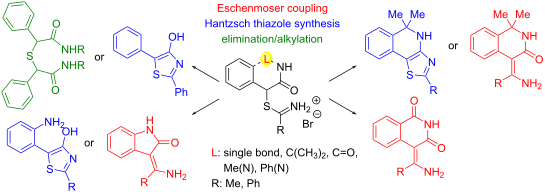
- (9a) or decomposition (Scheme 3 and Table 1). Table 1 shows that in both polar aprotic solvents without base and thiophile (entries 1 and 4) only tricyclic 5,5-dimethyl-2-phenyl-4,5-dihydrothiazolo[4,5-c]isoquinoline (8a) was formed probably through unstable intermediate (7a). Compound 7a can be
- also briefly investigated, but the corresponding salt 6b was not isolated. The reaction in DMF without any additive (16 h, rt) also led to tricyclic 5,5-dimethyl-2-methyl-4,5-dihydrothiazolo[4,5-c]isoquinoline (8b) but its isolated yield was only 40% in addition to thioacetamide (19%) and unidentified
- give the zwitterionic intermediates 6a,b'' necessary for successful ECR. On the other hand, without any base only thiazoles 7a,b are formed probably from isomeric forms 6a,b' of the starting salts 6a,b. In contrast to the tricyclic intermediate 16 formed from oxindole α-thioiminium salt (15), which in


Strategies in the synthesis of dibenzo[b,f]heteropines
Beilstein J. Org. Chem. 2023, 19, 700–718, doi:10.3762/bjoc.19.51
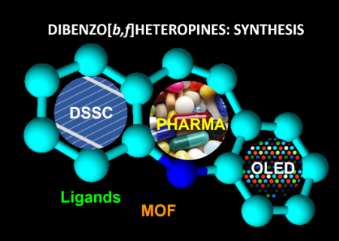
- ) [8][9][10]. Commercial pharmaceutical agents based on dibenzo[b,f]azepine (1a), or the 10,11-dihydro derivative thereof (2a), include imipramine (3) and clomipramine (4) (tricyclic antidepressants) [11][12][13][14], opipramol (5) (generalized anxiety disorder) [15] and carbamazepine (6) (seizure
- etherification entails the palladium or copper-catalysed formation of a carbon–heteroatom bond. Despite significant successes and facile access to the core tricyclic motif, access to dibenzo[b,f]heteropines with disparately substituted aromatic rings fused to the heterocyclic ring and varied substitution
- ]oxepine 54 and -azepine 55 derivatives via (i) Heck reaction and (ii) Buchwald–Hartwig-type etherification or amination. Double Buchwald–Hartwig amination and thioetherification in the synthesis of tricyclic azepines 60 and thiepines 52. Double Buchwald–Hartwig amination towards substituted


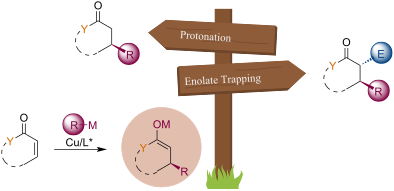
Enolates ambushed – asymmetric tandem conjugate addition and subsequent enolate trapping with conventional and less traditional electrophiles
Beilstein J. Org. Chem. 2023, 19, 593–634, doi:10.3762/bjoc.19.44
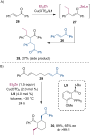
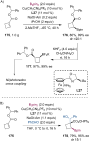
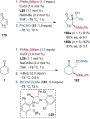
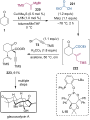
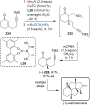
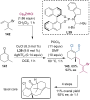
- war against resistant bacteria strains. The tricyclic diterpene fungal metabolite (+)-pleuromutilin was isolated in 1951 [104]. Since then it has served as a starting point for developing new antibiotics, including semisynthetic derivatives effective against Gram-positive or even both types of
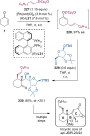
- in the first step by the phosphoramidite ligand L39 (92% ee, dr 1:1) (Scheme 60). Recently, Liu and co-workers reported the stereoselective synthesis of the tricyclic core of dodecahydrodibenzo[b,d]furan skeleton containing 12-epi-JBIR-23 and -24 [111]. Besides their intriguing complex structures
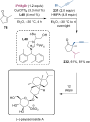
- :1). Additional transformation of compound 230 following an A–AB–ABC synthetic strategy resulted in the desired complex tricyclic skeleton opening the door for the total synthesis of 12-epi-JBIR-23/24 (Scheme 61). The sulfated β-glycoside peyssonnoside A was isolated only recently from the red algae









Transition-metal-catalyzed domino reactions of strained bicyclic alkenes
Beilstein J. Org. Chem. 2023, 19, 487–540, doi:10.3762/bjoc.19.38
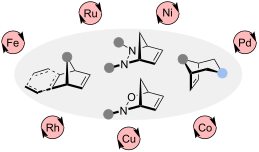
- substituents on the nitrogens and sterically more hindered tricyclic adducts. Mechanistically, the authors proposed the reaction begins with a transmetalation of 2-cyanophenylboronic acid with the Rh(I) species resulting in 143. Upon association of 143 with the diazabicyclic alkene 132a a syn exo-addition



















Strategies to access the [5-8] bicyclic core encountered in the sesquiterpene, diterpene and sesterterpene series
Beilstein J. Org. Chem. 2023, 19, 245–281, doi:10.3762/bjoc.19.23
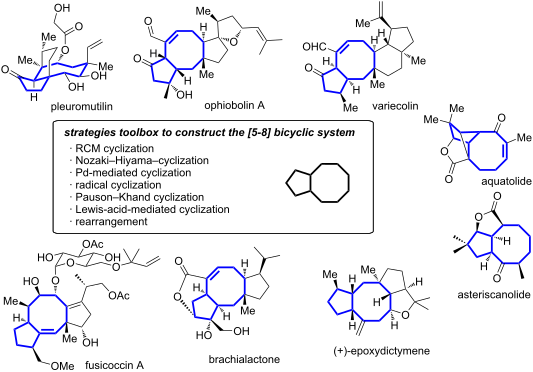
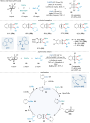
- ), respectively (Figure 1). Both families share the same core structure bearing a fused [5-8-5] tricyclic skeleton and they vary within their decorative functional groups. Over the years, many different syntheses to access compounds from the fusicoccan and ophiobolin family have been reported, with two strategies
- to the final [5-8-5] tricyclic core: The synthesis of the core bicyclic structure 12 of ophiobolin M (13) isolated from the fungus Cochliobolus heterostrophus and cycloaraneosene (14) firstly isolated in 1975 from the fungus Sordaria araneosa, was undertaken by Williams et al. in 2002 [15]. Compound
- 14 shares the common [5-8-5] tricyclic framework emblematic of the fusicoccan series, albeit cycloaraneosene (14) does not have any heteroatom (Scheme 1) [16]. Focusing on the B–C bicyclic fragment, they used diene 10, readily available from cyclopentane-1,3-dione (9), as the precursor for installing


Catalytic aza-Nazarov cyclization reactions to access α-methylene-γ-lactam heterocycles
Beilstein J. Org. Chem. 2023, 19, 66–77, doi:10.3762/bjoc.19.6

- cyclization of 3,4-dihydroisoquinolines with α,β-unsaturated acyl chlorides gives tricyclic lactam products 7 in up to 79% yield with full diastereocontrol (dr = >99:1). The use of acyclic imines in a similar catalytic aza-Nazarov reaction with 20 mol % of AgOTf results in the formation of α-methylene-γ
- the synthesis of tricyclic α-methylene-γ-lactams 7 as single diastereomers and in good to high yields through the use of a catalytic amount of AgOTf (silver trifluoromethanesulfonate) as an anion-exchange agent (Scheme 1d) [35]. In this transformation, treatment of 3,4-dihydroisoquinolines 5 with acyl
- the reactivity of a thiophene-fused dihydropyridine as a cyclic imine. The tricyclic α-methylene-γ-lactam product 19k was obtained in 40% yield and as single diastereomer. It should be noted that due to the low solubility of the imine substrate in CH3CN, this reaction was carried out in CH2Cl2 at 23