


Search results
Search for "glycosylation" in Full Text gives 197 result(s) in Beilstein Journal of Organic Chemistry.
GlypNirO: An automated workflow for quantitative N- and O-linked glycoproteomic data analysis
Beilstein J. Org. Chem. 2020, 16, 2127–2135, doi:10.3762/bjoc.16.180
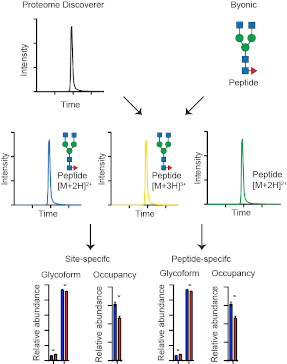
- Queensland, St. Lucia, QLD 4072, Australia 10.3762/bjoc.16.180 Abstract Mass spectrometry glycoproteomics is rapidly maturing, allowing unprecedented insights into the diversity and functions of protein glycosylation. However, quantitative glycoproteomics remains challenging. We developed GlypNirO, an
- statistical workflows. We used GlypNirO to analyse a published plasma glycoproteome dataset and identified changes in site-specific N- and O-glycosylation occupancy and structure associated with hepatocellular carcinoma as putative biomarkers of disease. Keywords: glycoproteomics; mass spectrometry; N
- -glycosylation; O-glycosylation; Python; Introduction Glycosylation is a key post-translational modification critical for protein folding and function in eukaryotes [1][2][3]. Diverse types of glycosylation are known, all involving modification of specific amino acid residues with complex carbohydrate



Clustering and curation of electropherograms: an efficient method for analyzing large cohorts of capillary electrophoresis glycomic profiles for bioprocessing operations
Beilstein J. Org. Chem. 2020, 16, 2087–2099, doi:10.3762/bjoc.16.176
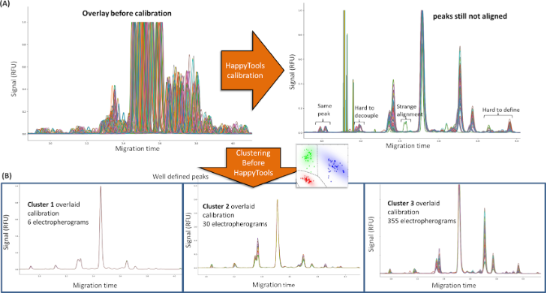
- , Faculty of Engineering, National University of Singapore (NUS), Singapore 117575 10.3762/bjoc.16.176 Abstract The accurate assessment of antibody glycosylation during bioprocessing requires the high-throughput generation of large amounts of glycomics data. This allows bioprocess engineers to identify
- critical process parameters that control the glycosylation critical quality attributes. The advances made in protocols for capillary electrophoresis-laser-induced fluorescence (CE-LIF) measurements of antibody N-glycans have increased the potential for generating large datasets of N-glycosylation values
- ; electropherogram; glycosylation; monoclonal antibodies; peak picking; process development; Introduction Glycosylation is important for the efficacy and function of a majority of the most dominant biologic drugs currently on the global market. In the case of antibody-based biotherapeutics, the absence of


How and why plants and human N-glycans are different: Insight from molecular dynamics into the “glycoblocks” architecture of complex carbohydrates
Beilstein J. Org. Chem. 2020, 16, 2046–2056, doi:10.3762/bjoc.16.171
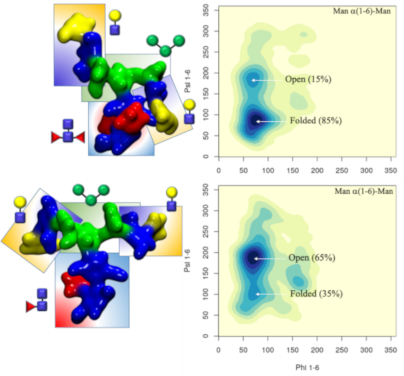
- Carl A. Fogarty Aoife M. Harbison Amy R. Dugdale Elisa Fadda Department of Chemistry and Hamilton Institute, Maynooth University, Maynooth, Kildare, Ireland 10.3762/bjoc.16.171 Abstract The N-glycosylation is one of the most abundant and diverse post-translational modifications of proteins
- flexible and highly dynamic at room temperature, thus their characterization through experimental structural biology methods is hardly straightforward even in cryogenic environments [6]. As an additive layer of difficulty, glycosylation is only indirectly dependent on the genome, which often results in a
- ][21][22][23]. More specifically, we investigate how core α(1-3)-linked fucose (Fuc) and β(1-2)-linked xylose (Xyl) affect the structure and dynamics of plants N-glycoforms [23] and of hybrid constructs with mammalian N-glycoforms [24]. At first glance plants protein N-glycosylation [23] is quite


Synthesis of monophosphorylated lipid A precursors using 2-naphthylmethyl ether as a protecting group
Beilstein J. Org. Chem. 2020, 16, 1955–1962, doi:10.3762/bjoc.16.162

- catalytic hydrogenolysis over Pd/C under 15 kg/cm2 of H2 to give the target lipid X monosaccharide 1 (as triethylammonium salt) in good yield. Having the glycosyl donor 20 and acceptor 18 at hand (Scheme 2), in order to prepare the disaccharide precursor, the glycosylation reaction was performed first
- , followed by deprotection, acylation, and phosphorylation reactions (Scheme 4). The triflic acid (TfOH)-mediated glycosylation of donor 20 and acceptor 18 in the presence of molecular sieves in CH2Cl2 at −20 °C gave disaccharide 24 [14] in excellent yield (β-anomer only). The N’-Troc protecting group (non
- , acylation, phosphorylation, and global deprotection. The glycosyl acceptor and donor for the synthesis of the disaccharide precursor could also be readily obtained starting from the same key building block. After glycosylation, the disaccharide lipid A precursor 2 was synthesized following a similar


Nonenzymatic synthesis of anomerically pure, mannosyl-based molecular probes for scramblase identification studies
Beilstein J. Org. Chem. 2020, 16, 1732–1739, doi:10.3762/bjoc.16.145
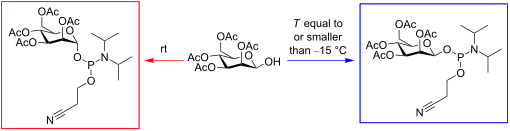
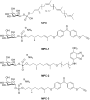
- glycosylation is described. Two short-chain glycolipid analogs that mimic the naturally occurring substrate mannosyl phosphoryl dolichol exhibit either photoreactive and clickable properties or allow the use of a fluorescence readout. Both probes consist of a hydrophilic mannose headgroup that is linked to a
- glycolipid analogs; scramblase; Introduction Mannosyl phosphoryl dolichol (MPD), an important, multifunctional glycolipid, is used as a mannose donor for protein N-glycosylation, O- and C-mannosylation, and glycosylphosphatidylinositol (GPI) anchoring in the luminal leaflet of the endoplasmic reticulum (ER
- Financial support by the Swiss National Science Foundation (SNSF) is gratefully acknowledged: This research was funded by the Sinergia Project: Molecular identification of lipid transporters for protein glycosylation, Grant CRSII5_170923.



Synthesis of the tetrasaccharide repeating unit of the O-specific polysaccharide of Azospirillum doebereinerae type strain GSF71T using linear and one-pot iterative glycosylations
Beilstein J. Org. Chem. 2020, 16, 1700–1705, doi:10.3762/bjoc.16.141
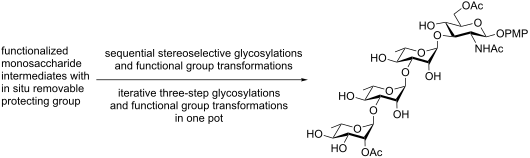
- the O-specific polysaccharide of Azospirillum doebereinerae type strain GSF71T in a very good yield adopting sequential glycosylation followed by removal of the p-methoxybenzyl (PMB) group in the same pot. Further, the synthetic strategy was modified by carrying out three stereoselective iterative
- glycosyl activator. Keywords: Azospirillum doebereinerae; glycosylation; HClO4-SiO2; O-polysaccharide; tetrasaccharide; Introduction The development of plant-growth-promoting agents has become an attractive area of research in the agricultural sciences to reduce the need for chemical fertilizers, which
- glycosylation in one pot was developed and is reported herein. Results and Discussion At the beginning, the retrosynthetic analysis suggested that a sequential glycosylation reaction using judiciously protected monosaccharide thioglycosides could be the best strategy for achieving the desired tetrasaccharide 1


Synthesis of Streptococcus pneumoniae serotype 9V oligosaccharide antigens
Beilstein J. Org. Chem. 2020, 16, 1693–1699, doi:10.3762/bjoc.16.140
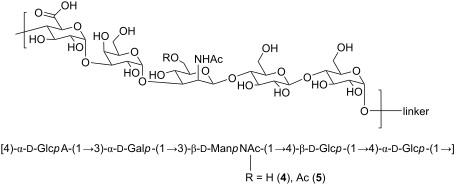
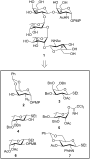
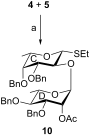
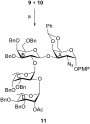
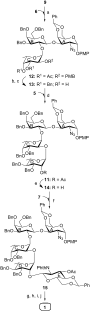
- -mannosidic linkage, have to be installed stereoselectively while taking provision to install the C-6 O-acetate in ManpNAc. The synthetic approach (Scheme 1) relies on a late stage [2 + 3] α-glycosylation between disaccharide 6 and trisaccharide 7 to obtain the fully protected pentasaccharide RU. The di- and
- the β-disaccharide 16 (Scheme 2). A ring-opening reaction followed by subsequent glycosylation of 19 with orthogonally protected thioglucoside 10 gave trisaccharide 21 in moderate yield. To improve the yield, the nucleophilicity of the disaccharide acceptor 19 (Scheme 2) was altered by replacing the
- benzoate esters in 16 by a benzyl ether leading to compound 17. The latter then was converted into the more reactive acceptor 20 via a ring-opening reaction. Glycosylation of 20 with thioglucoside 10 resulted in the desired trisaccharide 22 in almost twice the yield when compared to trisaccharide 21


Synthesis of new asparagine-based glycopeptides for future scanning tunneling microscopy investigations
Beilstein J. Org. Chem. 2020, 16, 888–894, doi:10.3762/bjoc.16.80

- pathogenesis [1][2][3][4]. Glycosylation is also considered to be one of the most important post-translational modification (PTM) since more than half of all human proteins are glycopeptides or glycoproteins [5]. Therefore, understanding how glycopeptides interact on an intra- and intermolecular level is


Convenient synthesis of the pentasaccharide repeating unit corresponding to the cell wall O-antigen of Escherichia albertii O4
Beilstein J. Org. Chem. 2020, 16, 106–110, doi:10.3762/bjoc.16.12
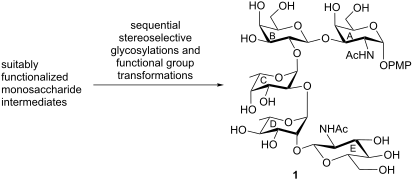
- protic acid glycosyl activator. The expected configuration at the glycosidic linkages was achieved using a reasonable selection of protecting groups in the manosaccharide intermediates. Keywords: Escherichia albertii O4; glycosylation; HClO4/SiO2; O-antigen; pentasaccharide; Introduction Diarrheal
- fragments with adequate purity. In this direction, the total synthesis of the pentasaccharide repeating unit corresponding to the cell wall O-antigenic polysaccharide of the E. albertii O4 strain using a sequential glycosylation strategy is presented herein (Figure 1). Results and Discussion The synthesis
- intermediates, it was decided to proceed through a step-economic block synthetic strategy to achieve the target pentasaccharide derivative. Accordingly, stereoselective glycosylation of a ᴅ-galactosamine derivative 2 with a ᴅ-galactose thioglycoside derivative 3 in the presence of a combination [26][27] of N


SnCl4-catalyzed solvent-free acetolysis of 2,7-anhydrosialic acid derivatives
Beilstein J. Org. Chem. 2019, 15, 2990–2999, doi:10.3762/bjoc.15.295
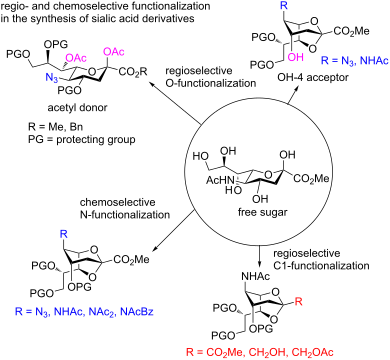
- distinguished these alcohols by selective protection of the OH-7 functionality as 2,7-anhydro-Neu5Ac, leaving position OH-4 free for glycosylation upon protection of the vicinal OH-8 and OH-9 substituents as benzylidene or acetonide rings [6]. The formation of the bicyclo[3.2.1] backbone of 2,7-anhydro-Neu5Ac
- compound 12. Due to the absence of a hydrogen bond, azido-protected glycal 13 could be used as acceptor for reactions at its OH-4 and OH-8 group [36][37]. Moreover, it was used as sialyl donor in α-selective glycosylation reactions [35]. Next, acetolysis of 2,7-anhydro derivative 6 was examined with SnCl4




Regioselectivity of glycosylation reactions of galactose acceptors: an experimental and theoretical study
Beilstein J. Org. Chem. 2019, 15, 2982–2989, doi:10.3762/bjoc.15.294

- analyzed the relative reactivity of the OH-3 and OH-4 groups of 2,6-diprotected methyl α- and β-galactopyranoside derivatives in glycosylation reactions. The glycosyl acceptors were efficiently prepared by simple methodologies, and glycosyl donors with different reactivities were assessed. High
- effort [1]. Therefore, a carefully designed plan is necessary before starting the synthesis of the desired target structure. Such a plan must include the choice of the glycosylation strategy for the formation of each glycosidic bond, as well as the design of derivatives with temporary protecting groups
- and one free hydroxy unit in order to achieve glycosylations with respect to the desired regiochemistry. The synthesis of such building blocks is usually the most time-consuming process of oligosaccharide synthesis [2][3]. The knowledge and control of glycosylation regioselectivity of building blocks


Automated glycan assembly of arabinomannan oligosaccharides from Mycobacterium tuberculosis
Beilstein J. Org. Chem. 2019, 15, 2936–2940, doi:10.3762/bjoc.15.288
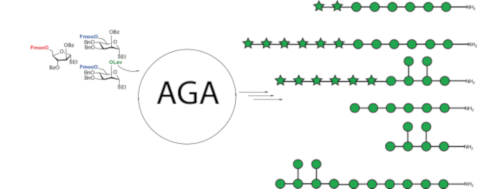
- after each glycosylation and further optimized reaction conditions allowed for the synthesis of a series of oligosaccharides, ranging from hexa- to branched dodecasaccharides. Keywords: arabinomannan; automated glycan assembly; capping; Introduction Bacterial infections caused by MTB killed 1.7
- linker as solid support [25]. A typical AGA cycle consisted of three modules. The acidic wash module prepared the resin for glycosylation by quenching any remaining base from a previous cycle. In the glycosylation module, the thioglycoside donor was coupled to the resin upon activation with NIS and TfOH
- glycosylation cycles using 6.5 equiv of BB 1 afforded compound 5 in 37% yield. Chromatographic analysis revealed compound 5 as the major product, along with pentamer and tetramer side products from incomplete glycosylation. To improve the glycosylation efficiency, a new glycosylation module employing higher


Chemical synthesis of the pentasaccharide repeating unit of the O-specific polysaccharide from Escherichia coli O132 in the form of its 2-aminoethyl glycoside
Beilstein J. Org. Chem. 2019, 15, 2563–2568, doi:10.3762/bjoc.15.249
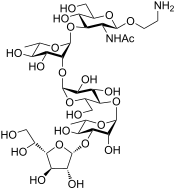
- + 2] strategy where the required monosaccharide building blocks are prepared from commercially available sugars through rational protecting group manipulation. The NIS-mediated activation of thioglycosides was used extensively for the glycosylation reactions throughout. Keywords: 2-aminoethyl
- ). Glycosylation of the known GlcNPhth acceptor 2 [12] and the rhamnosyl donor 3 [13] through the activation of thioglycoside using N-iodosuccinimide (NIS) in the presence of TMSOTf gave the Rha-(1→3)-GlcNPhth disaccharide 4 in 84% yield. The presence of a participating acetate group at the 2-position of the
- fluoride in THF [17] to give the 6-hydroxy compound 8 in 90% yield. It was then benzoylated using BzCl in pyridine [18] with a catalytic amount of DMAP to furnish the completely protected donor 9 in 90% yield. Glycosylation of donor 9 with disaccharide acceptor 5 through activation of the thioglycoside




Robust perfluorophenylboronic acid-catalyzed stereoselective synthesis of 2,3-unsaturated O-, C-, N- and S-linked glycosides
Beilstein J. Org. Chem. 2019, 15, 1275–1280, doi:10.3762/bjoc.15.125
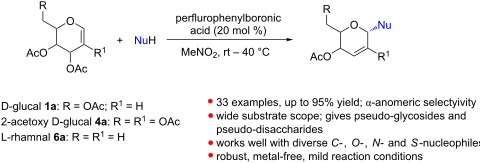
- activation of alcohols [24], epoxide opening [25][26], Friedel–Crafts alkylations [27], dehydrative glycosylation [28] and many other reactions [29][30][31]. The robustness and mildness of organoboronic acid catalysts in comparison to traditional strong Lewis and Brønsted acid catalysts inspired us to



Influence of per-O-sulfation upon the conformational behaviour of common furanosides
Beilstein J. Org. Chem. 2019, 15, 685–694, doi:10.3762/bjoc.15.63

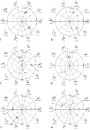
- pyranosides [10][11] and thus the effects of substitution in them are more complex. The conformational effects underlay the striking stereoselectivity in the glycosylation reaction by furanosyl donors [12]. Conformational analysis of furanosides includes both conformation of the furanoside ring and




Design and synthesis of multivalent α-1,2-trimannose-linked bioerodible microparticles for applications in immune response studies of Leishmania major infection
Beilstein J. Org. Chem. 2019, 15, 623–632, doi:10.3762/bjoc.15.58
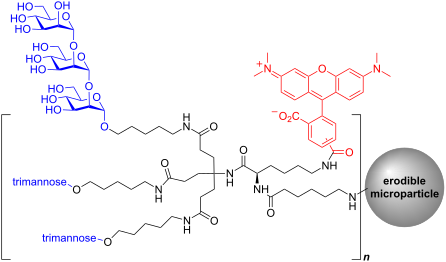
- ]. Biological analysis of the trimannose-coated latex beads was described previously [42] and used to compare the new construct. Synthesis of α-1,2-trimannose The synthesis of α-1,2-trimannose, required for both the glycodendrimer 2 and latex beads 1, was achieved through iterative glycosylation with known
- allow for purification by FSPE of the mannosyl intermediates and to facilitate future automated syntheses to produce α-1,2-trimannose in appreciable quantities similar to previous efforts (Scheme 1) [11][47][51]. To synthesize the oligosaccharide, activation of TCA donor 3 with TMSOTf and glycosylation
- of the CbzF-protected aminopentanol 7 afforded the monosaccharide 8 (Scheme 2). The 2-O-position was then deacylated, followed by iterative glycosylation/deacetylation with donor 3 to provide dimannoside acceptor 11. TCA-mannose donor 3 was initially used to cap the dimannoside 11. However


Synthesis of the aglycon of scorzodihydrostilbenes B and D
Beilstein J. Org. Chem. 2019, 15, 610–616, doi:10.3762/bjoc.15.56
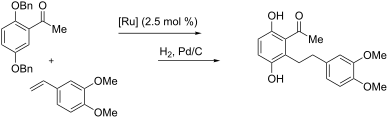
- product 10 was isolated in pure form by column chromatography, whereas the fraction containing the phenol 11 was still contaminated with hydroquinone 10 (Scheme 3). Finally, the glycosylation of the aglycon 9 was briefly studied using Helferich’s method [19]. It turned out that, upon treatment of 9 with β
- acid is assumed to be responsible for this regiochemical outcome. The 1H NMR spectrum of 12 clearly indicates – by the low-field shift of the phenolic hydrogen chelated with the carbonyl group – that glycosylation had not occurred at this position. Unfortunately, however, the α-anomer 12 formed
- exclusively, so that, after cleavage of the ester groups, epi-scorzodihydrostilbene D (13) was obtained as single stereoisomer (Scheme 4). Obviously, the conditions required in the glycosylation reaction – excess of the Lewis acid and elongated reaction time – resulted in the formation of the


Cyclopropene derivatives of aminosugars for metabolic glycoengineering
Beilstein J. Org. Chem. 2019, 15, 584–601, doi:10.3762/bjoc.15.54
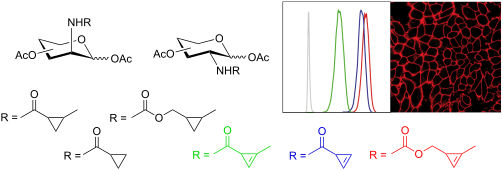
- high importance. Until now, the carbamate-linked methylcyclopropenes Ac4GlcNCyoc and Ac4GalNCyoc are the only cyclopropene derivatives that were examined in this context [25][26]. Ac4GlcNCyoc was used to visualize protein-specific glycosylation inside living cells [32]. However, this compound is
- alternative glycosylation pathways [36]. Since the elucidation of the exact background of our observation requires an in-depth analysis far beyond the scope of this article, we focus here on one of these aspects, i.e., the conversion of glucosamine into mannosamine derivatives resulting in a possible increase




Low-budget 3D-printed equipment for continuous flow reactions
Beilstein J. Org. Chem. 2019, 15, 558–566, doi:10.3762/bjoc.15.50
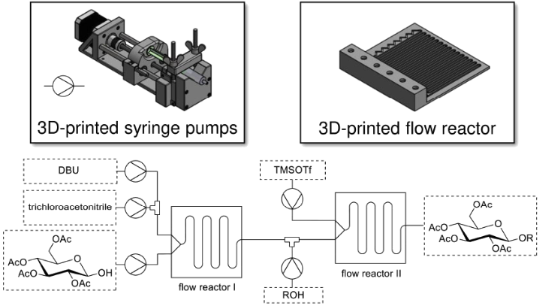
- this equipment we performed some multistep glycosylation reactions, where multiple 3D-printed flow reactors were used in series. Keywords: continuous flow; 3D printing; glycosylation; microreactor; multistep; Introduction The use of flow chemistry in comparison to batch chemistry shows great benefits
- ]. There are some examples of glycosylation reactions under flow conditions in the literature, which gave promising results so far [23][24][25][26]. Therefore, we used custom designed 3D-printed reactors to perform various glycosylation reactions under flow conditions also for demonstrating the
- applicability of our flow system for such reactions. For studying biological interactions of saccharides and glycoconjugates it is crucial to chemically synthesize such compounds since material isolated from natural sources is often insufficiently pure. In such syntheses, the glycosylation step is usually the


Convergent synthesis of the pentasaccharide repeating unit of the biofilms produced by Klebsiella pneumoniae
Beilstein J. Org. Chem. 2019, 15, 431–436, doi:10.3762/bjoc.15.37
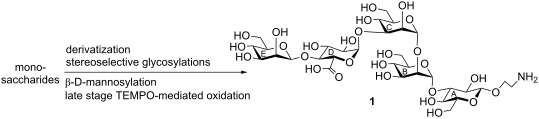
- unit of biofilms produced by Klebsiella pneumoniae, has been synthesized using a stereoselective [2 + 3] convergent glycosylation strategy. The β-D-mannosidic moiety has been synthesized using a D-mannose-derived thioglycoside by a two-step activation process. Late stage TEMPO-mediated oxidation of the
- pentasaccharide derivative using phase-transfer reaction conditions furnished the target compound in satisfactory yield. Keywords: beta-D-mannoside; biofilms; D-glucuronic acid; glycosylation; Klebsiella pneumoniae; pentasaccharide; polysaccharide; Introduction Klebsiella pneumoniae (K. pneumoniae) is a Gram
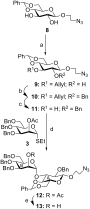
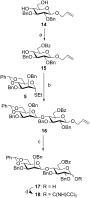
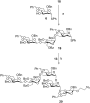
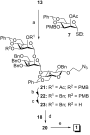
- 1). Initially it was planned to couple the disaccharide acceptor 13 with the trisaccharide thioglycoside donor 19 using a [3 + 2] convergent glycosylation strategy to achieve the pentasaccharide derivative 20. However, the desired product was obtained in poor yield, which did not allow upscaling of


Syntheses and chemical properties of β-nicotinamide riboside and its analogues and derivatives
Beilstein J. Org. Chem. 2019, 15, 401–430, doi:10.3762/bjoc.15.36
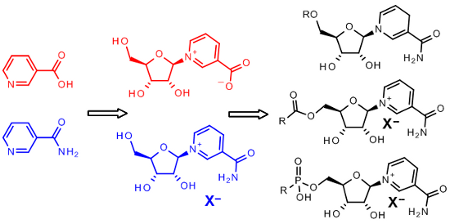
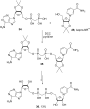
- modifications which have been undertaken on the nicotinoyl riboside scaffold. Keywords: anomers; glycosylation; isotopologues; isotopomeres; nicotinamide riboside; Review 1. Introduction 1-(β-D-Ribofuranosyl)nicotinamide (also referred to as nicotinamide riboside, NR+) is one of the multiple precursors of
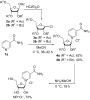
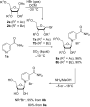
- applicability, while most interesting developments in terms of synthetic efficiency, improved stereoselectivity and overall yields relate to the first approach. This approach, the synthetic glycosylation conditions depend on the nature of the sugar component. These conditions differ whether 1-halo-2,3,5-tri-O
- -acyl- or 1,2,3,5-tetra-O-acyl-D-ribofuranose is used, as fully acylated ribofuranoses require the usage of Friedel–Crafts catalysts to be activated as glycosylation reagents. As it is shown in Figure 2, reactions between compounds A and B may result in two anomeric α- and β-forms of nicotinamide










Unexpected loss of stereoselectivity in glycosylation reactions during the synthesis of chondroitin sulfate oligosaccharides
Beilstein J. Org. Chem. 2019, 15, 137–144, doi:10.3762/bjoc.15.14
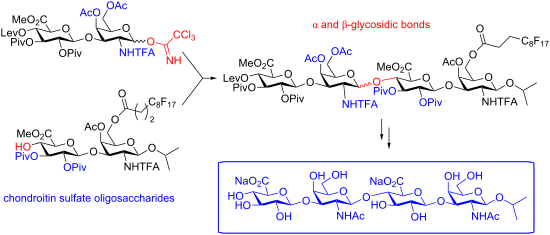
- and D-glucuronic acid (GlcA) acceptors. These results, together with those obtained from experiments employing model monosaccharide building blocks, highlight the impact of the glycosyl acceptor structure on the stereoselectivity of glycosylation reactions. Our study provides useful data about the
- substitution pattern of GlcA units for the efficient synthesis of CS oligomers. Keywords: carbohydrate chemistry; chondroitin sulfate; glycosylation; oligosaccharide synthesis; stereoselectivity; Introduction Chondroitin sulfate (CS) is a highly heterogeneous polysaccharide, constituted by the repetition of
- coupling between N-acetyl building blocks with the opposite sequence GalNAc-GlcA [16][17][18][19]. All of these routes involved the use of low reactive glucuronic acid moieties in glycosylation reactions. Very recently, a postglycosylation–oxidation strategy was applied to the synthesis of CS type E


Synthesis of α-D-GalpN3-(1-3)-D-GalpN3: α- and 3-O-selectivity using 3,4-diol acceptors
Beilstein J. Org. Chem. 2018, 14, 2805–2811, doi:10.3762/bjoc.14.258

- azido precursor has been studied and optimized in terms of steps, yields and selectivity. It has been found that glycosylation of the 3,4-diol acceptor is an advantage over the use of a 4-O-protected acceptor and that both regio- and anomeric selectivity is enhanced by bulky 6-O-protective groups. The
- acceptors and donors are made from common building blocks, limiting protective manipulations, and in this context, unavoidable side reactions. Keywords: diastereoselectivity; glycosylation; regioselectivity; Introduction The disaccharide α-D-GalpNAc-(1-3)-β-D-GalpNAc is a widespread motif in glycobiology
- finding important for oligosaccharide synthesis. Here we describe this regioselective glycosylation approach in detail. Results and Discussion In the initial strategy for synthesizing the disaccharide, the fully protected acceptor (1 or 2) was intended to be a key building block. However, an unexpected


Semi-synthesis and insecticidal activity of spinetoram J and its D-forosamine replacement analogues
Beilstein J. Org. Chem. 2018, 14, 2321–2330, doi:10.3762/bjoc.14.207
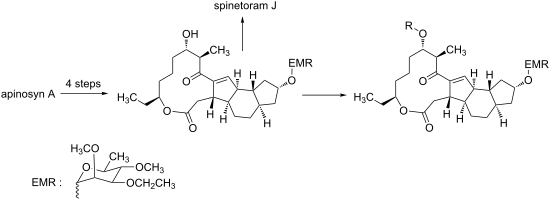
- as the glycosylation donor of C9–OH, but also the protecting group of C17–OH, greatly reducing the synthetic steps and costs. Macrolide compounds are a new kind of insecticides and fungicides which have also been widely applied in medicine [14][15]. Currently, research on structural modification of
- BF3·(C2H5)2O under Ar gas. Due to the high yields and few byproducts in the synthesis of glycoside donors, the donors could be used directly in the glycosylation without purification. Insecticidal activity The insecticidal activities of synthetic spinetoram J and its analogues were evaluated using




Synthesis of 1,4-imino-L-lyxitols modified at C-5 and their evaluation as inhibitors of GH38 α-mannosidases
Beilstein J. Org. Chem. 2018, 14, 2156–2162, doi:10.3762/bjoc.14.189
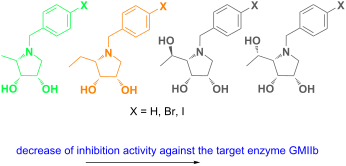
- swainsonine, interferes with the glycosylation pathway where it specifically inhibits GH38 glycoside hydrolases [23][24]. Up to date, swainsonine is the most potent Golgi mannosidase II (GMII) inhibitor. It is known that inhibition of the biosynthesis of complex N-glycans in the Golgi apparatus influences





