Search results
Search for "hydroxylation" in Full Text gives 129 result(s) in Beilstein Journal of Organic Chemistry.
4-Hydroxy-3-methyl-2(1H)-quinolone, originally discovered from a Brassicaceae plant, produced by a soil bacterium of the genus Burkholderia sp.: determination of a preferred tautomer and antioxidant activity
Beilstein J. Org. Chem. 2020, 16, 1489–1494, doi:10.3762/bjoc.16.124
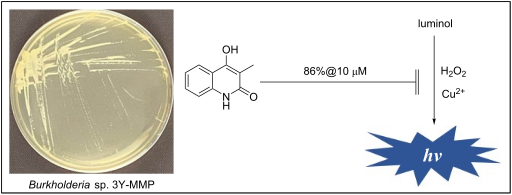
- correlations from the exchangeable proton to C4a and C3 supported this linkage as well as hydroxylation at the benzylic position. Finally, the chemical shift of C8a at 137.4 ppm was in favor of N-substitution, and comparison with the literature values from 4-methoxy-1,3-dimethyl-2(1H)-quinolone (6, δ 138.4


An overview on disulfide-catalyzed and -cocatalyzed photoreactions
Beilstein J. Org. Chem. 2020, 16, 1418–1435, doi:10.3762/bjoc.16.118
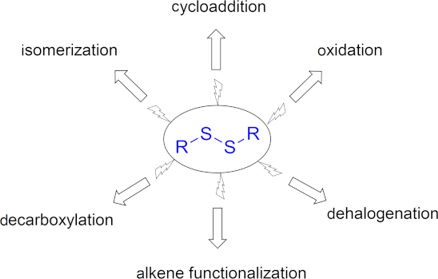
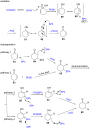
- of the aromatic S–S bond by visible light. In 2019, Meng and co-workers reported a visible light-mediated disulfide-catalyzed metal-free and base-free α-functionalization of 1,3-dicarbonyl compounds [17]. Under visible-light irradiation, the α-hydroxylation or α-hydroxymethylation of 1,3-dicarbonyl
- compounds, was efficiently implemented via this disulfide, which induced an aerobic oxidation. The hydroxylation and hydroxymethylation of a broad range of β-keto esters and β-keto amides that had electron-donating or -withdrawing groups on the phenyl ring gave good to excellent yields (42–98%, Scheme 10
- ). One exceptional decrease in the yield of the hydroxylation product (13–33%) occurred when β-keto esters with methoxy groups on the phenyl ring were used, but the hydroxymethylation yield was just undulated slightly. Other carbonyl compounds, 1,3-diones, and functionalized five-, six-, and seven








A cyclopeptide and three oligomycin-class polyketides produced by an underexplored actinomycete of the genus Pseudosporangium
Beilstein J. Org. Chem. 2020, 16, 1100–1110, doi:10.3762/bjoc.16.97
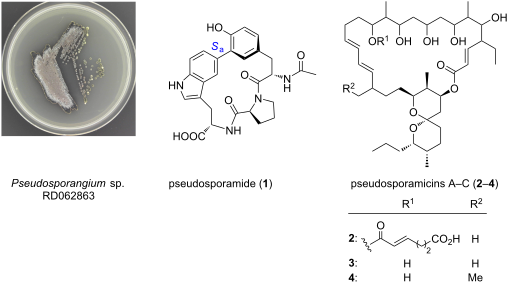
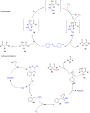
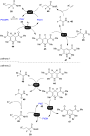
- -acetyl-ʟ-Tyr-ʟ-Pro-ʟ-Trp, was determined by a combination of spectroscopic analyses, chemical derivatization, ECD calculation, and DFT-based theoretical chemical shift calculation, revealing the presence of an (Sa)-axial chirality around the biaryl bond. Compounds 2–4 lacked hydroxylation on the side
- -2 which was correlated with another olefinic proton H-3 and a carbonyl carbon C-1 (δC 164.6) (Figure 6). This α,β-unsaturated carbonyl unit was extended to H-12 by sequential COSY correlations, providing a twelve-carbon chain from C-1 to C-12 with hydroxylation at the odd-numbered carbons (C-5, C-7
- appendage in compound 2 is unprecedented in natural products, only to see its (Z)-isomer in a siderophore of Mycobacterium avium [32]; the side chain on the spiroacetal rings in compounds 2–4 lack hydroxylation at C-31, which is the common modification shared with all oligomycin class antibiotics


Recent applications of porphyrins as photocatalysts in organic synthesis: batch and continuous flow approaches
Beilstein J. Org. Chem. 2020, 16, 917–955, doi:10.3762/bjoc.16.83
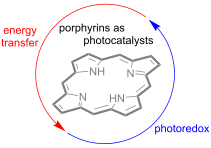
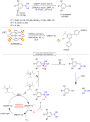
- hydroxylation of arylboronic acids by a reductive quenching using a MOF Sn(IV) porphyrin-containing photocatalyst (UNLPF-12) under visible light irradiation. The authors obtained a variety of phenolic products in 83–96% yields (Scheme 15) [40]. The key steps of the mechanism are both the generation of
- synthesis of a Zr-based MOF with meso-tetrakis(4-carboxyphenyl)porphyrin (TCPP) (MOF-525, Zr6(OH)4O4(C48N4O8H26)3) [42] and showed its photocatalytic efficiency for oxidative hydroxylation of arylboronic acids [43]. The phenol products were obtained in quantitative yields for all evaluated arylboronic acids
- oxidative hydroxylation of arylboronic acids using UNLPF-12 as heterogeneous photocatalyst. Photocatalytic oxidative hydroxylation of arylboronic acids using MOF-525 as heterogeneous photocatalyst. Preparation of the heterogeneous photocatalyst CNH. Photoinduced sulfonation of alkenes with sulfinic acid






Combining enyne metathesis with long-established organic transformations: a powerful strategy for the sustainable synthesis of bioactive molecules
Beilstein J. Org. Chem. 2020, 16, 738–755, doi:10.3762/bjoc.16.68
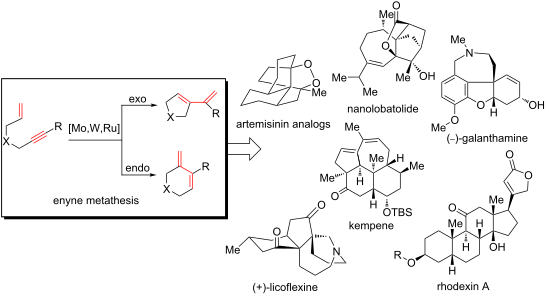
- , hydroxylation, etc. This point of view has allowed to master a concise access to the target products which require exceptional chemical and stereochemical complexity. The excellence of the Grubbs- and Schrock-type metathesis catalysts as selective and proficient promoters of enyne metathesis was emphasized. The




Recent developments in photoredox-catalyzed remote ortho and para C–H bond functionalizations
Beilstein J. Org. Chem. 2020, 16, 248–280, doi:10.3762/bjoc.16.26
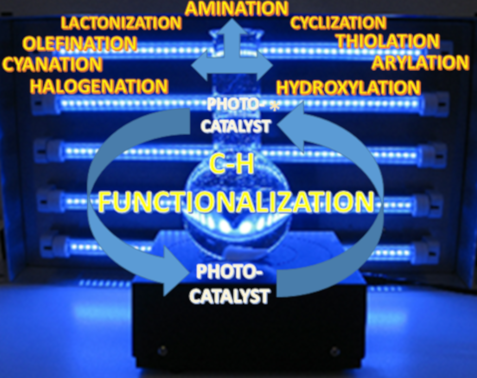
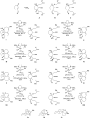
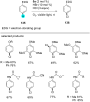
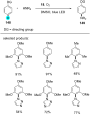
- catalysts was also reported, and this approach allowed for easy and fast transformations to take place. Herein, we cover all the reported strategies for aryl para C–H bond functionalizations by means of photoredox catalysis. Aryl C–H hydroxylation: synthesis of substituted phenols The synthesis of phenol
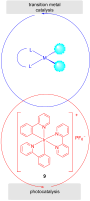
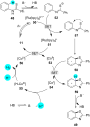
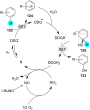
- hydroxylation of arenes (Scheme 18) [157]. They realized that the photoredox catalyst 8 possesses a great oxidizing ability (Ered vs SCE = 2.72 V) at ambient conditions. The mechanism of the reaction was studied by fluorescence quenching and transient absorption spectroscopy. They observed that the one-electron
- reduction potential of 1QuCN+* was higher than that of benzene (Eox vs SCE = 2.32 V), making the electron transfer from phenol to 1QuCN+* viable. The mechanistic pathway for the C–H hydroxylation of benzene derivatives is shown in Figure 19. On the other hand, Ohkubo et al. reported that substrates like












Light-controllable dithienylethene-modified cyclic peptides: photoswitching the in vivo toxicity in zebrafish embryos
Beilstein J. Org. Chem. 2020, 16, 39–49, doi:10.3762/bjoc.16.6
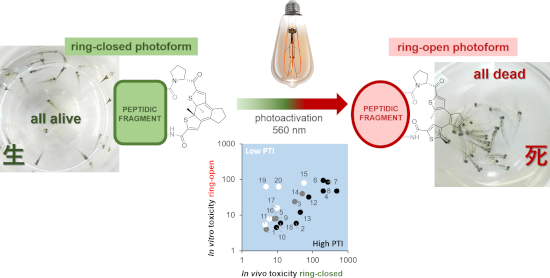
- side-chain hydroxylation modifications (series iii), with macrocycle ring-size variations (series iv), and with macrocycle homodimerization (series v). We systematically screened the ring-open and ring-closed photoforms of all 29 compounds in vitro, using a range of cellular toxicity assays (against


Construction of trisubstituted chromone skeletons carrying electron-withdrawing groups via PhIO-mediated dehydrogenation and its application to the synthesis of frutinone A
Beilstein J. Org. Chem. 2019, 15, 2958–2965, doi:10.3762/bjoc.15.291

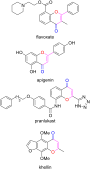
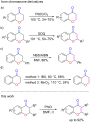
- ][76][77], converting alkynes and alkenes to ketones [78], oxidizing alcohols to aldehydes [79][80], as well as in the direct α-hydroxylation of ketones [81]. Furthermore, it could also be used to realize oxidative C–C [82], C–N [83], and C–O [84] bond formations. However, to the best of our knowledge



Bacterial terpene biosynthesis: challenges and opportunities for pathway engineering
Beilstein J. Org. Chem. 2019, 15, 2889–2906, doi:10.3762/bjoc.15.283
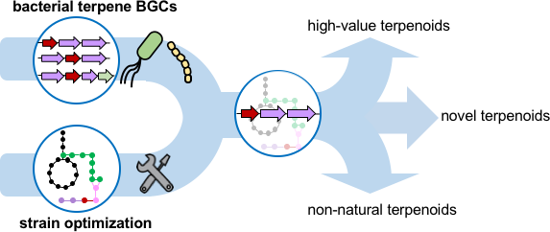
- Information File 1, Table S2). CYPs are heme-dependent iron proteins that catalyze a wide range of reactions [83][84]. The reactions typically involve substrate radical generation by the activated iron species and subsequent hydroxylation. Terpenes are mainly composed of nonactivated hydrocarbons that are
- , simply by rationally mutating the active-site residues. The majority of bacterial type II diterpene TCs produce bicyclic labdane, halimadane, or clerodane skeletons with different stereochemistry, levels of unsaturation, and hydroxylation patterns [124], which undergo further conversion with their
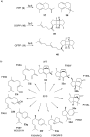
- examples of terpene modification by bacterial CYPs. a) Hydroxylation [89]. b) Carboxylation, hydroxylation, and ring contraction [41]. c) Ether formation [90]. d) Rearrangement [91]. Off-target effects observed during heterologous expression of terpenoid BGCs. Unexpected oxidation of 34b by an




Unexpected one-pot formation of the 1H-6a,8a-epiminotricyclopenta[a,c,e][8]annulene system from cyclopentanone, ammonia and dimethyl fumarate. Synthesis of highly strained polycyclic nitroxide and EPR study
Beilstein J. Org. Chem. 2019, 15, 2664–2670, doi:10.3762/bjoc.15.259

- dipole and dipolarophile (Figure 3). Nitroxide Oxidation of 1 with m-CPBA afforded the nitroxide 6 with 48% yield (Scheme 3). It is noteworthy that the oxidation of the amino group is accompanied by the stereospecific hydroxylation at position 4 of the 2,3,4,7-tetrahydroazepine ring. The structure
- assignment was based on the single-crystal X-ray analysis (Figure 4) and a possible mechanism for this hydroxylation is shown in Scheme 4. Oxidation of amines with peracids is known to proceed through oxoammonium cation formation [12]. The close proximity of this reactive group to the allyl hydrogen results


Nanangenines: drimane sesquiterpenoids as the dominant metabolite cohort of a novel Australian fungus, Aspergillus nanangensis
Beilstein J. Org. Chem. 2019, 15, 2631–2643, doi:10.3762/bjoc.15.256
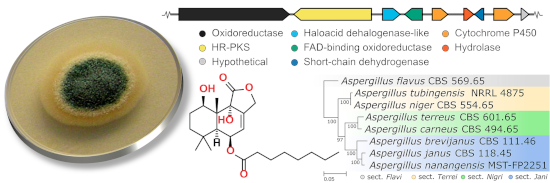
- strobilactone B, previously reported from A. ustus [29], with the only difference being hydroxylation at C-1 in 1, instead of at C-2. Therefore, the structure of 1 was assigned as shown in Figure 1. The absolute configuration of 1 was confirmed to be 1R,5S,6R,9R,13R by single crystal X-ray diffraction analysis
- FE257_006542 contains both class I (DDxxD/E) and class II (DxDD, QW) terpene synthases, we propose that FE257_006542 is responsible for both the cyclisation into drimanyl diphosphate and the hydrolysis of the diphosphate into drim-8-ene-11-ol. We propose the next step in the pathway is hydroxylation at C-6 or
- C-9, as hydroxylation at both sites is common to all of the (iso)nanangenines. The 9-hydroxylation also results in migration of the double bond on the decalin to Δ7,8. The two hydroxylations could be catalysed by the FAD-dependent oxidoreductase or one of the cytochrome P450 oxygenases. From this


Current understanding and biotechnological application of the bacterial diterpene synthase CotB2
Beilstein J. Org. Chem. 2019, 15, 2355–2368, doi:10.3762/bjoc.15.228
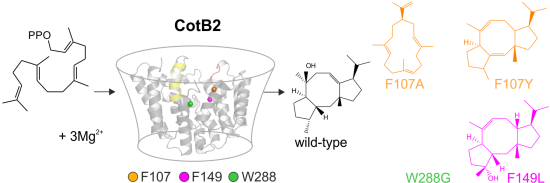
- lead to different migration of the double bound and different hydroxylation pattern (Table 2 and Scheme 1). An exchange to leucine drastically changes the product to cembrane A (7) and 3,7,18-dolabellatriene 12 (Table 2 and Scheme 1) [36]. The cation migrates via a 1,5 hydride shift, as shown by
- to gain cembrene C and second a hydroxylation at C14. Sarcophytol A (15), is a promising target as it possesses inhibitory activity against potent tumor promotors, like teleocidin [74]. Interestingly, sarcophytol A (15) was already inhibitory at equimolar amounts in contrast to other natural


α-Photooxygenation of chiral aldehydes with singlet oxygen
Beilstein J. Org. Chem. 2019, 15, 2076–2084, doi:10.3762/bjoc.15.205

- -hydroxylation of aldehydes [14][15]. Recently, we have reported that organocatalytic photooxygenation of aldehydes affords the desired diols (after in situ reduction) in decent yield with either (R)- or (S)-selectivity depending on a catalysts used [14]. In the presence of prolinamides the (R)-enantiomer



A golden opportunity: benzofuranone modifications of aurones and their influence on optical properties, toxicity, and potential as dyes
Beilstein J. Org. Chem. 2019, 15, 1781–1785, doi:10.3762/bjoc.15.171
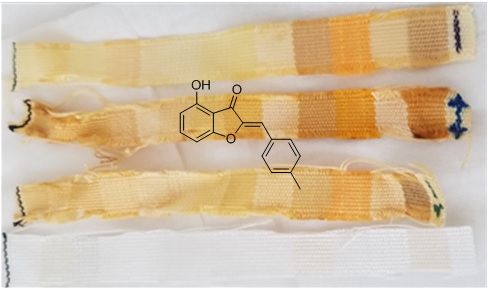
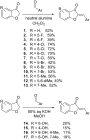
- important than the exact substituent (at least for the examples studied), with halogen or hydroxy at the 4-position are red-shifted by roughly 10 nm compared to the unsubstituted compound and any halogen or methyl at the 5-position likewise displays a similar shift. Only hydroxylation at the 6-position
- displays a significant blue shift by roughly 40 nm. With respect to toxicity, halogens were the least toxic substituents, displaying the lowest cytotoxicity when at the 6- or 7-positions. Hydroxylation or substitution at the 4-position invariably lead to higher cytotoxicity, though often times no worse




Fluorine-containing substituents: metabolism of the α,α-difluoroethyl thioether motif
Beilstein J. Org. Chem. 2019, 15, 1441–1447, doi:10.3762/bjoc.15.144

- mass spectrometry. Naphthalene 5 was fully converted. Again, initial sulfoxidation dominates, but the second oxidation of the sulfoxide to a sulfone appears to be a slower process, and is outcompeted by aryl hydroxylation reactions. The experiment was conducted three times under similar conditions, all
- significantly more rapid than the second oxidation to the sulfone. The first oxidation gave enantiomerically enriched sulfoxides (Ar–S(O)CF2CH3) in the 54–60% ee range. This could arise by the action of more than one P450 enzyme. There was no evidence of defluorination, or hydroxylation at the terminal -CH3


Alkylation of lithiated dimethyl tartrate acetonide with unactivated alkyl halides and application to an asymmetric synthesis of the 2,8-dioxabicyclo[3.2.1]octane core of squalestatins/zaragozic acids
Beilstein J. Org. Chem. 2019, 15, 1194–1202, doi:10.3762/bjoc.15.116
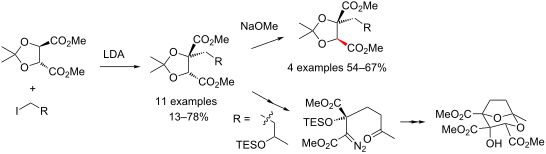
- hydroxylation temperature, then a reduced yield of 19b was observed (53%). Indirect hydroxylation of the propylated tartrate enolate was also attempted using CBr4 (at −78 °C) as a more readily available/convenient electrophile, which also gave the hydroxy acetonide 19b presumably by way of hydrolysis on work-up


Easy, efficient and versatile one-pot synthesis of Janus-type-substituted fullerenols
Beilstein J. Org. Chem. 2019, 15, 901–905, doi:10.3762/bjoc.15.87
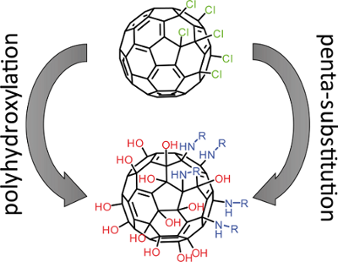
- fullerenes with solubility in water. Thus, one important class of fullerene derivatives are the hydroxylated and polyhydroxylated compounds, so called fullerenols (C60(OH)n) [14]. The degree of hydroxylation and with that the solubility of these compounds can be tuned by using different synthetic approaches


Selective benzylic C–H monooxygenation mediated by iodine oxides
Beilstein J. Org. Chem. 2019, 15, 602–609, doi:10.3762/bjoc.15.55

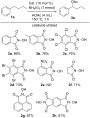
- catalytic NHPI and iodic acid mediated the hydroxylation or amidation of tertiary C–H bonds using either wet nitromethane or dry acetonitrile, respectively [54][55]. The substrate scope of the developed benzylic C–H monooxygenation reaction was examined via the oxidation of substrates containing benzylic C




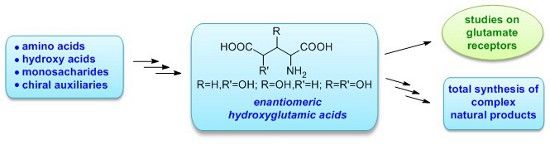
Synthesis of nonracemic hydroxyglutamic acids
Beilstein J. Org. Chem. 2019, 15, 236–255, doi:10.3762/bjoc.15.22
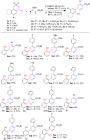
- electrophilic hydroxylation at C4 When the lithium enolate of dimethyl N-Cbz-L-glutamate 63 was treated with Davis oxaziridine, an inseparable 9:1 mixture of diastereoisomers was formed with (2S,4S)-64 predominating (Scheme 16) [74]. For sodium and potassium enolates diastereoselectivity of the hydroxylation
- [86][87][88] or a Diels–Alder reaction using acylnitroso compounds [89]. However, when compared with these multistep approaches hydroxylation of pyroglutamic acid derivatives seems to be the simplest option. Treatment of the lithium enolate of benzyl N-Boc-pyroglutamate (S)-86 with Davis oxaziridine
- produced (2S,4R)-87 (Scheme 22) [90][91][92]. HPLC investigation of the reaction mixture showed that (2S,4S)-87 was not formed [90]. Stereospecific hydroxylation occurred on the opposite side to the benzyloxycarbonyl group, i.e., only re-face of the enolate was attacked for steric reasons. It is worth


DABCO- and DBU-promoted one-pot reaction of N-sulfonyl ketimines with Morita–Baylis–Hillman carbonates: a sequential approach to (2-hydroxyaryl)nicotinate derivatives
Beilstein J. Org. Chem. 2018, 14, 2771–2778, doi:10.3762/bjoc.14.254

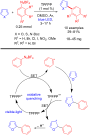
- the synthesis of (2-hydroxyaryl)pyridines from 2-arylpyridines via a direct C–H hydroxylation on the aryl ring using several expensive transition metal salts (e.g., Pd(II) [60][61][62][63], Rh(III) [64][65], Ru(II) [66]) as catalysts (Scheme 1a). However, the above methods have several drawbacks such



Targeting the Pseudomonas quinolone signal quorum sensing system for the discovery of novel anti-infective pathoblockers
Beilstein J. Org. Chem. 2018, 14, 2627–2645, doi:10.3762/bjoc.14.241
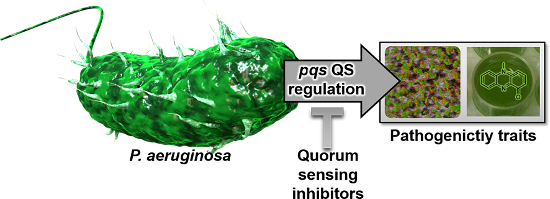
- , PQS is produced through hydroxylation of position 3 by the NADH-dependent flavin mono-oxygenase PqsH [32]. This biosynthetic cascade is also responsible for the generation of the pqs-related metabolites DHQ, 2-AA, and HQNO as well as other AQs having different lengths of the alkyl chain [29][30


The enzymes of microbial nicotine metabolism
Beilstein J. Org. Chem. 2018, 14, 2295–2307, doi:10.3762/bjoc.14.204
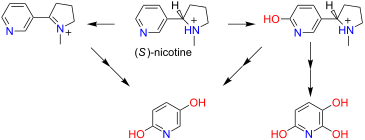
- deal of interest in identifying bacteria capable of degrading it. A number of microbial pathways have been identified for nicotine degradation. The first and best-understood is the pyridine pathway, best characterized for Arthrobacter nicotinovorans, in which the first reaction is hydroxylation of the
- . JS614; in this case the genes are chromosomal [6]. As shown in Scheme 1, the pathway begins with hydroxylation of the pyridyl ring of nicotine by the enzyme nicotine dehydrogenase to yield 6-hydroxynicotine [7]. Based on the gene sequence, this enzyme was identified as a member of the family of
- the enzyme. While the dominant form of nicotine found in tobacco is (S)-nicotine, the (R)-stereoisomer is also found at detectable levels [22]. Nicotine dehydrogenase is reported not to be stereospecific, in that it can catalyze the hydroxylation of (R)-nicotine to (R)-6-hydroxynicotine; thus, this





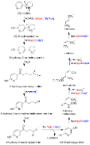
Cobalt-catalyzed peri-selective alkoxylation of 1-naphthylamine derivatives
Beilstein J. Org. Chem. 2018, 14, 2090–2097, doi:10.3762/bjoc.14.183
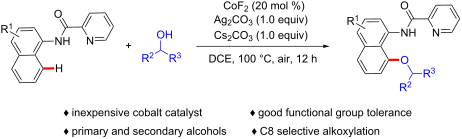
- –C or C–heteroatom bonds has attracted more attention [8][9][10][11][12][13]. In particular, the formation of C–O bonds is widely used in the syntheses of pharmaceuticals and functional materials [14][15][16][17]. The direct hydroxylation [18][19] and acetoxylation [20][21][22] have been developed




A survey of chiral hypervalent iodine reagents in asymmetric synthesis
Beilstein J. Org. Chem. 2018, 14, 1244–1262, doi:10.3762/bjoc.14.107
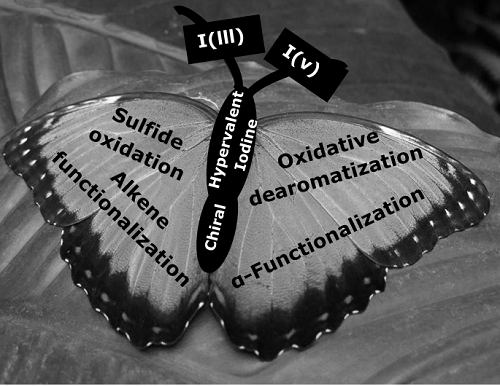
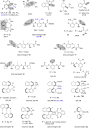
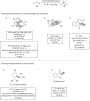
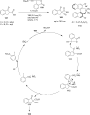
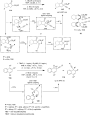
- used by Quideau et al. for the α-hydroxylation of phenolic derivatives via oxygenative dearomatization. Quideau et al. showed that iodobiarene 38 was oxidized in situ by m-CPBA to generate the I(III) reagent which is responsible for the hydroxylative naphthol dearomatization affording the product in



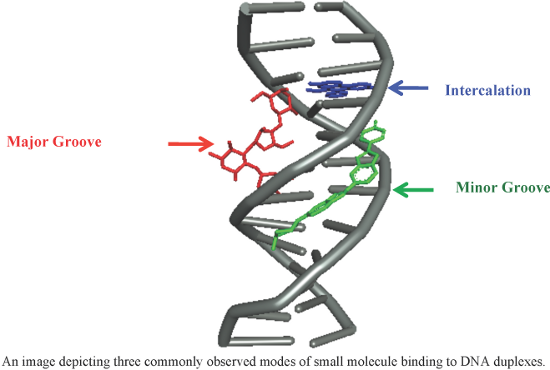
An overview of recent advances in duplex DNA recognition by small molecules
Beilstein J. Org. Chem. 2018, 14, 1051–1086, doi:10.3762/bjoc.14.93