Search results
Search for "parallel" in Full Text gives 483 result(s) in Beilstein Journal of Organic Chemistry. Showing first 200.
Catalysing (organo-)catalysis: Trends in the application of machine learning to enantioselective organocatalysis
Beilstein J. Org. Chem. 2024, 20, 2280–2304, doi:10.3762/bjoc.20.196
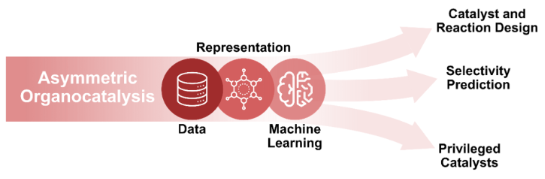
- also the structure for which the descriptors are considered. This can either be ensured by expert-knowledge of preselecting relevant structures, for example based on a known mechanism, or by considering information from the entire conformer ensemble. Parallel to the evolution in modelling steric




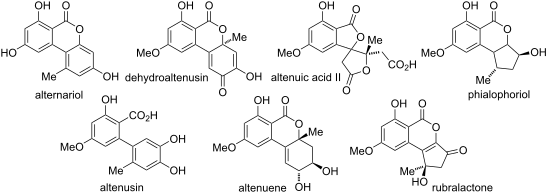
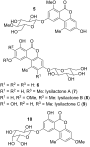
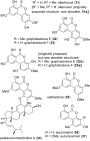
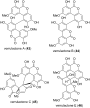
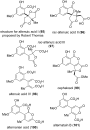
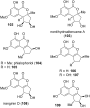
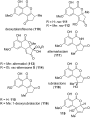
Natural resorcylic lactones derived from alternariol
Beilstein J. Org. Chem. 2024, 20, 2171–2207, doi:10.3762/bjoc.20.187










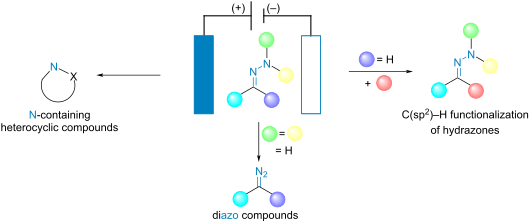
Harnessing the versatility of hydrazones through electrosynthetic oxidative transformations
Beilstein J. Org. Chem. 2024, 20, 1988–2004, doi:10.3762/bjoc.20.175
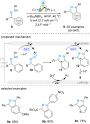
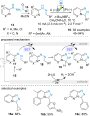
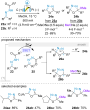
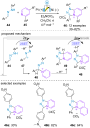
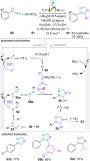
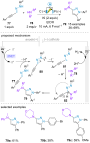
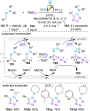
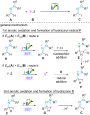
- ) [43]. In parallel, Sheng and Zhang et al. found that 2-(1,3,4-oxadiazol-2-yl)aniline derivatives 38 could be electrochemically synthesized from isatins 35 and acylhydrazine 36. The transformation was carried out in an undivided cell at high temperature in DMSO using potassium iodide as supporting
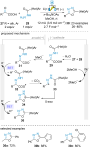
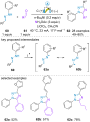
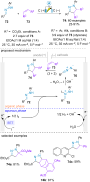
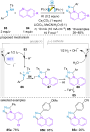
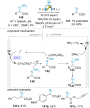
- electrolyte ammonium acetate and the alcoholic solvent acted as N and C1 sources, respectively. The authors proposed the mechanism depicted in Scheme 10. The deprotonation of hydrazone 52 afforded anion 54 which underwent SET anodic oxidation to form radical 55. In parallel, an elusive oxidation of alcohol
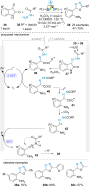
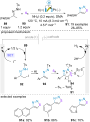
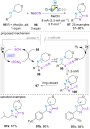
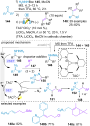
- oxidation of N-arylhydrazone by electrogenerated iodide radical (Scheme 11) [50]. In parallel, the group of Yuan achieved the electrosynthesis of 1,3,5-trisubstituted 1,2,4-triazoles 67 from arylhydrazines 64, aldehydes 65 and primary amines 66. Iodine-mediated electrooxidation of in situ-generated aldehyde








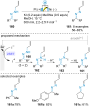
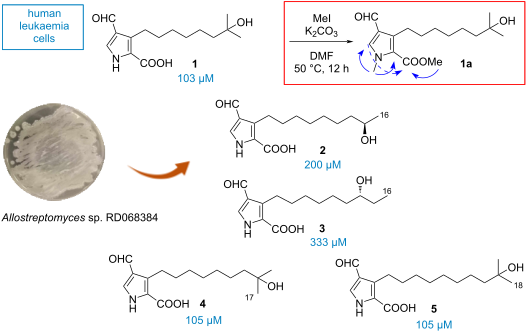
Allostreptopyrroles A–E, β-alkylpyrrole derivatives from an actinomycete Allostreptomyces sp. RD068384
Beilstein J. Org. Chem. 2024, 20, 1981–1987, doi:10.3762/bjoc.20.174
- and 3, their conformational ensembles, datasets of a structure and population of each conformer [25], were determined using a Spartan 24 parallel package conformational search tool (Wavefunction Inc, USA), followed by geometry optimization of the most weighted conformers (Boltzmann distribution weight


The Groebke–Blackburn–Bienaymé reaction in its maturity: innovation and improvements since its 21st birthday (2019–2023)
Beilstein J. Org. Chem. 2024, 20, 1839–1879, doi:10.3762/bjoc.20.162
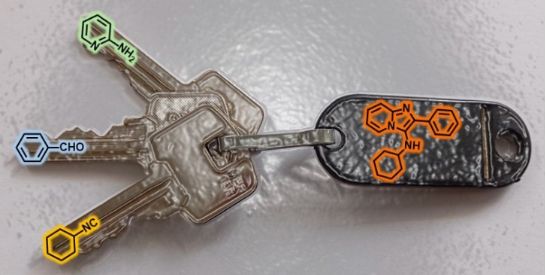
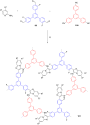
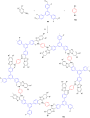
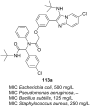
- allow the reaction to take place under the mildest possible conditions. This search goes in parallel with the urge to use increasingly diverse and complex building blocks, up to and including DNA conjugates, which would be degraded under the classical conditions developed by Groebke, Blackburn and






Chemo-enzymatic total synthesis: current approaches toward the integration of chemical and enzymatic transformations
Beilstein J. Org. Chem. 2024, 20, 1693–1712, doi:10.3762/bjoc.20.151
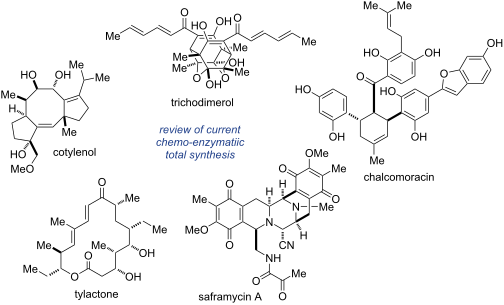
- stereoselective cyclization reactions. This review aims to provide an overview of these approaches and parallel comparisons with original biosynthetic pathways by highlighting five examples of chemo-enzymatic total syntheses of natural products reported since 2017. The examples are the synthesis of cotylenol (1
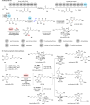
- aromatization provides chalcone 43. Prenylation of the resultant aromatic ring of 43, catalyzed by MaIDT (Morus alba isoliquiritigenin 3-dimethylallyltransferase), leads to morachalcone A (44) [50][51]. In parallel, benzofuran 46 was biosynthesized from 4-coumaroyl-CoA via thioester 45. Further prenylation of
- classification, along with parallel discussions of the original biosynthetic pathways, helps organize the current state of the art and offers a comprehensive overview of how synthetic methodologies leverage the natural biosynthetic pathways. The development and optimization of chemo-enzymatic synthetic processes




Generation of multimillion chemical space based on the parallel Groebke–Blackburn–Bienaymé reaction
Beilstein J. Org. Chem. 2024, 20, 1604–1613, doi:10.3762/bjoc.20.143

- . Kukhar Institute of Bioorganic Chemistry and Petrochemistry, Akademik Kukhar Street 1, Kyїv 02094, Ukraine 10.3762/bjoc.20.143 Abstract Parallel Groebke–Blackburn–Bienaymé reaction was evaluated as a source of multimillion chemically accessible chemical space. Two most popular classical protocols
- last two decades, the GBB reaction has been studied in more than 200 research papers [21] and a number of works (including the original publication by Blackburn and coauthors [20]) described its parallel synthesis version [24][25][26][27][28][29]. Recently, we have shown that other (pseudo-)three
- the corresponding library members were denoted as 4{i,j,k}. Results and Discussion Library synthesis Preliminary experiments on the parallel GBB reaction were performed with heterocyclic amines 1{1–430}, aldehydes 2{1–583}, and isonitriles 3{1–73} available from our stock (based on our previous in


A comparison of structure, bonding and non-covalent interactions of aryl halide and diarylhalonium halogen-bond donors
Beilstein J. Org. Chem. 2024, 20, 1428–1435, doi:10.3762/bjoc.20.125
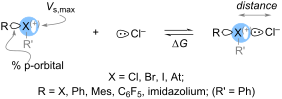
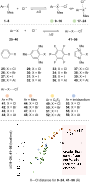
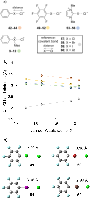
- Discussion This study evolved from a parallel exploration of reactions involving unsymmetrical phenyl(mesityl)halonium salts, i.e., Ph(Mes)X+. DFT analysis revealed similar structural trends to our previous work [21] when we expanded the halogens to include astatine (At). Due to its radioactivity and short
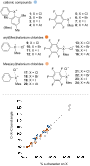
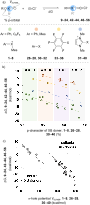
- points, in which XB donors with larger Vs,max values also had more exergonic associations, we actually observed two almost parallel clusters of data (Scheme 6c). In this case, neutral XB donors 26–28, and 30–36 had Vs,max values ≈5–50 kcal/mol and a slope of −0.24 (Scheme 6c, light grey dots), whereas




Challenge N- versus O-six-membered annulation: FeCl3-catalyzed synthesis of heterocyclic N,O-aminals
Beilstein J. Org. Chem. 2024, 20, 1412–1420, doi:10.3762/bjoc.20.123
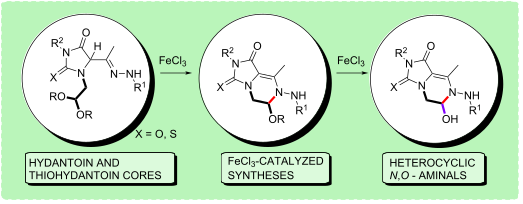
- , promoting, via hydrazone–enamine tautomerization [17][24][25], the nucleophilic addition which concludes with the construction of the heterocyclic N,O-aminal 5 through the intramolecular N–C bond formation. The FeCl3 can also interact with the newly formed N,O-aminals 5, giving rise to the second parallel




Introduction of peripheral nitrogen atoms to cyclo-meta-phenylenes
Beilstein J. Org. Chem. 2024, 20, 1207–1212, doi:10.3762/bjoc.20.103
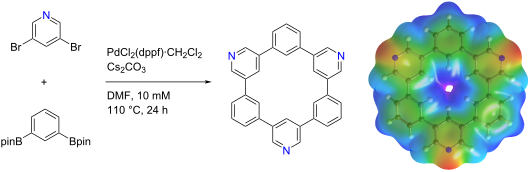
- corresponding ESP maps. A comparison of the ESP maps of 3a and hydrocarbon [6]CMP showed induction of biased densities by the nitrogen dopants. Similar biased densities were previously found to be critical in determining the packing structures of nitrogen-doped π-systems to make parallel-displaced



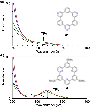
Cofactor-independent C–C bond cleavage reactions catalyzed by the AlpJ family of oxygenases in atypical angucycline biosynthesis
Beilstein J. Org. Chem. 2024, 20, 1198–1206, doi:10.3762/bjoc.20.102
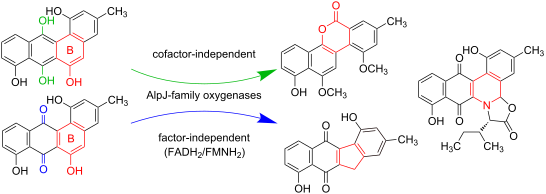
- as a cofactor [10][11][12][13]. The parallel behavior of Flu17 and AlpJ in the reaction with 8 provides additional support for the shared oxidative B-ring cleavage and contraction steps in the biosynthesis of fluostatins and kinamycins. Nevertheless, the mechanism by which a B-ring-contracted




Monitoring carbohydrate 3D structure quality with the Privateer database
Beilstein J. Org. Chem. 2024, 20, 931–939, doi:10.3762/bjoc.20.83
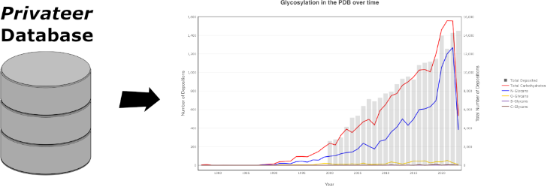
- validation report can be generated for each carbohydrate in the molecular model. This report is put out in JSON format for easy consumption by web-based database frontends. The initial report generation was completed in parallel over 64 CPU cores in around 5 h. After the initial surveys through PDB and PDB


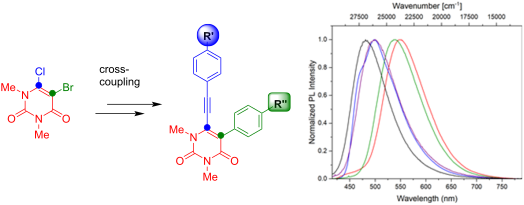
Synthesis and properties of 6-alkynyl-5-aryluracils
Beilstein J. Org. Chem. 2024, 20, 898–911, doi:10.3762/bjoc.20.80
- that the distance between the molecules within the unit cell is higher than the distance between the unit cells. In addition, the molecules are arranged parallel-displaced to each other, which is considered to be more stable than the sandwich arrangement [64][65][66][67][68]. Consequently, the distance
- between the layers varies periodically between 3.373 Å and 3.662 Å. This results in different interactions between the layers, as depicted in Figure 3. Furthermore, the layers are arranged in an anti-parallel face-to-face order to reduce the steric hindrance. Within the shorter distance layers (3.373 Å





Switchable molecular tweezers: design and applications
Beilstein J. Org. Chem. 2024, 20, 504–539, doi:10.3762/bjoc.20.45
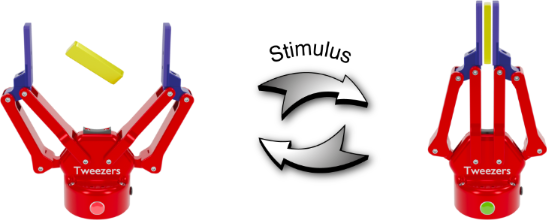
- a parallel direction, as the bulky -OMe groups are located outside the tweezer’s cavity to avoid steric hindrance with each other. When protonated, the pyridinium group acts as a hydrogen-bond donor for the two methoxy groups and triggers the rotation of the respective benzene rings along with the
- release of siRNA or miRNA encapsulated within them into the solution in vitro and in vivo [21]. The closed conformation of 2 with parallel alkyl chains acts as a building block of the bilayer membrane and is packed together with other lipids. When the surrounding medium becomes acidic, the tweezers adopt
- arms with planar Pt complexes are parallel and the distance between them allows for the intercalation of another terpy-Pt complex. The guest intercalation coupled with the induction of short-range Pt–Pt interactions was followed by UV–vis absorption and emission spectroscopies with characteristic MMLCT




Synthesis of 2,2-difluoro-1,3-diketone and 2,2-difluoro-1,3-ketoester derivatives using fluorine gas
Beilstein J. Org. Chem. 2024, 20, 460–469, doi:10.3762/bjoc.20.41
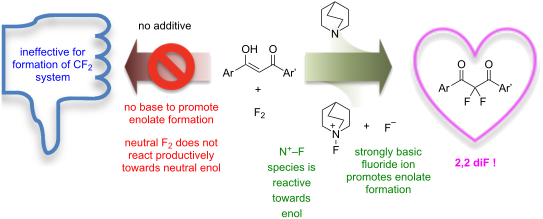
- anionic 1a–i-enolate species in parallel with N-fluoroammonium ion 6. Fluoride ions formed through the reactions between fluorine and quinuclidine or fluorine and enolate species, may deprotonate 1a–i-enol, to form enolates of 1a–i that are reactive towards both fluorine and N-fluoroammonium ion 6. The


Enhanced host–guest interaction between [10]cycloparaphenylene ([10]CPP) and [5]CPP by cationic charges
Beilstein J. Org. Chem. 2024, 20, 436–444, doi:10.3762/bjoc.20.38
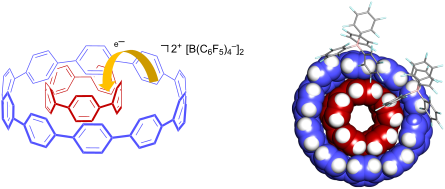
- transition corresponds to the CT band. The structure and stability of [10]CPP⊃[5]CPP2+ were estimated by DFT calculations at the ωB97-XD/6-31G* level of theory. Three isomeric structures were optimized, of which complex 1, with two CPPs aligned in parallel, is the most thermodynamically stable (Figure 5a
- ). Furthermore, the tilting of the complex in adjacent columnar structures with respect to the short axis is opposite to each other, as in a herringbone structure, and such columnar structures are parallel to each other through a columnar structure consisting of a host–guest complex in blue and its counterions
- . On the other hand, the complex in blue forms a 1D columnar structure with alternating counterions (Figure 7g), and each column is parallel to the others. Furthermore, the complex is tilted at approximately 30° relative to the long axis of the unit lattice. Conclusion [10]CPP encapsulates [5]CPP2+ in




Mechanisms for radical reactions initiating from N-hydroxyphthalimide esters
Beilstein J. Org. Chem. 2024, 20, 346–378, doi:10.3762/bjoc.20.35
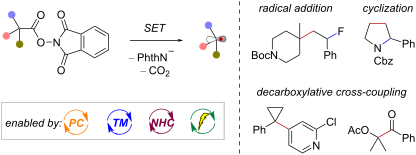
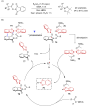
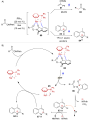
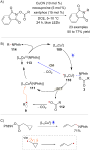
- conditions (Scheme 25A). The general catalytic cycle begins with oxidative addition of an organohalide into a Ni0 catalyst yielding NiII complex 125 (Scheme 25B). In parallel, the initial SET activation of RAE 10, leading to the formation of radical anion 11, takes place in the presence of a stoichiometric








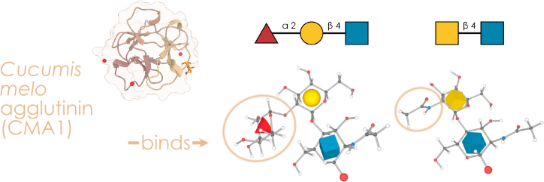
Elucidating the glycan-binding specificity and structure of Cucumis melo agglutinin, a new R-type lectin
Beilstein J. Org. Chem. 2024, 20, 306–320, doi:10.3762/bjoc.20.31
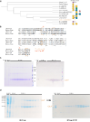
- ). In parallel, we also expressed CMA1 in a bacterial expression system, which allowed us to ascertain whether binding was influenced by lectin glycosylation. The full-length mature protein (6–264) and individual N- or C-terminal domains were expressed using a N-terminal fusion comprising DsbC and a

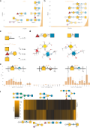


Synthesis of π-conjugated polycyclic compounds by late-stage extrusion of chalcogen fragments
Beilstein J. Org. Chem. 2024, 20, 287–305, doi:10.3762/bjoc.20.30
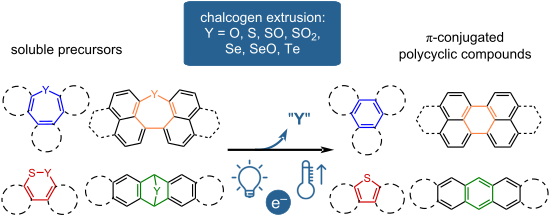
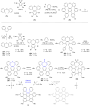
- pristine acene with a dienophile to transiently form a cycloadduct with increased solubility for processing purposes, and unmasking it afterwards via a retro-Diels–Alder reaction [16][17][18][19]. In parallel to retro-Diels–Alder reactions, another efficient strategy for the in situ aromatization of target




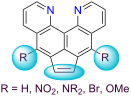
Substitution reactions in the acenaphthene analog of quino[7,8-h]quinoline and an unusual synthesis of the corresponding acenaphthylenes by tele-elimination
Beilstein J. Org. Chem. 2024, 20, 243–253, doi:10.3762/bjoc.20.24
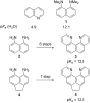
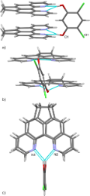
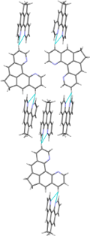
- in a 2:1 ratio leads to the formation of co-crystals, in which, as judged by the X-ray data, the supramolecular organization is again in action (Figure 4). Two molecules of the base are almost parallel to each other (the distance between the π-systems of two molecular planes is 3.551 Å with the
- -axis is shown). Selected images of the supramolecular organization of two molecules of base 5 held by 4,6-dichlororesorcinol in an almost parallel manner showing side view (а), view with the resorcinol molecule directed to the viewer (b), and view above the azaarene cycles showing their almost complete





Photochromic derivatives of indigo: historical overview of development, challenges and applications
Beilstein J. Org. Chem. 2024, 20, 228–242, doi:10.3762/bjoc.20.23
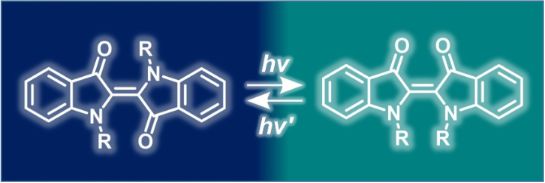
- melting point of indigo is bifurcated intra- and intermolecular hydrogen bonding [11], and face-to-face π–π stacking of parallel aromatic rings (Figure 2) [12]. Single crystal X-ray diffraction analysis showed that the indigo molecule is almost planar and exists in the E-conformation. The central C=C bond





Electron-beam-promoted fullerene dimerization in nanotubes: insights from DFT computations
Beilstein J. Org. Chem. 2024, 20, 92–100, doi:10.3762/bjoc.20.10
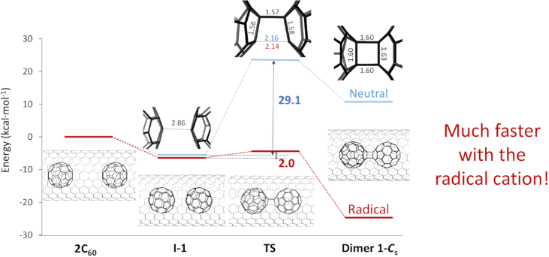
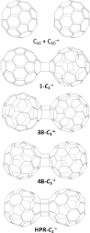
- slightly larger than 2 Å in all three cases. Finally, formation of dimer 1-Cs is exothermic for the radical cation profile, but moderately endothermic for the neutral dimer, as previously observed. As general trends, we find that the radical cation profiles are qualitatively parallel with some minimal




Preparing a liquid crystalline dispersion of carbon nanotubes with high aspect ratio
Beilstein J. Org. Chem. 2024, 20, 52–58, doi:10.3762/bjoc.20.7
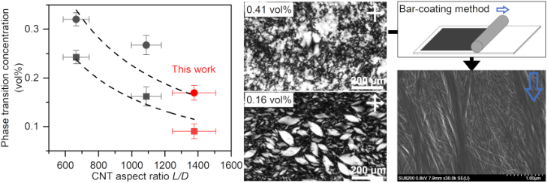
- ][30]. If the DWCNTs align parallel to the long axis of the spindle droplet, it is referred to as a homogenous tactoid. Conversely, if the DWCNTs align from one pole to another, it is called a bipolar tactoid. Figure 3 illustrates the aspect ratio of the tactoids (R/r) as a function of the tactoid
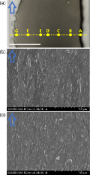
- effect [15][33][34]. As a result, the volume fraction of DWCNTs at the edge increased. Notably, the widths of bundled DWCNTs at the edge were larger than in the inner region (Figure 5b,c). The direction of the bundled DWCNTs near the film surface were parallel to the shear direction in both regions. Due
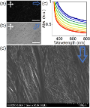
- polarizers (white double arrows). Scale bars are 400 µm. (c) Polarized optical absorption spectra with different angles ranging from 0° (red) to 90° (blue). The sear direction and polarizer are parallel at 0°. (d) SEM image of the DWCNT film. Blue outlined arrows indicate the shear direction of bar-coating


Charge carrier transport in perylene-based and pyrene-based columnar liquid crystals
Beilstein J. Org. Chem. 2023, 19, 1755–1765, doi:10.3762/bjoc.19.128
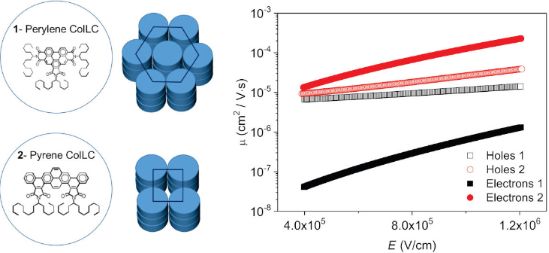
- the charge carrier mobility (parallel vs perpendicular to the columnar axis) of up to ten orders of magnitude [3][4][5][6][7]. In 1994, Adam and collaborators obtained a hole-mobility of up to 0.1 cm2 V−1 s−1 for a triphenylene-based columnar liquid crystal [8], motivating intense research activity to


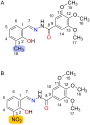
Effects of the aldehyde-derived ring substituent on the properties of two new bioinspired trimethoxybenzoylhydrazones: methyl vs nitro groups
Beilstein J. Org. Chem. 2023, 19, 1713–1727, doi:10.3762/bjoc.19.125
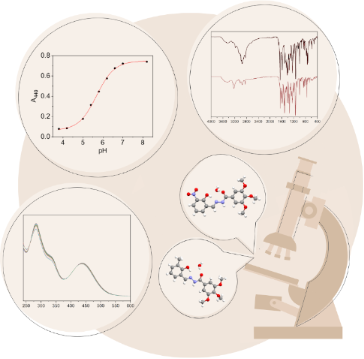
- antiparallel dimers (marked as *) sandwiched between two non-parallel molecules. The planes in hdz-NO2 present similar intermolecular interactions, but they grow as (101) planes. The columns also present the antiparallel dimers, but they are intercalated by antiparallel slipped molecules (Figure 2C). The
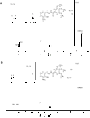
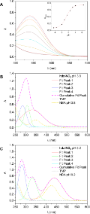
- spectrum of this precursor at pH 3.8 (dotted dark yellow curve). On the other hand, under similar arguments, the constituent at 284 nm is probably related to a TMP-based transition. In contrast, the intense component at 307 nm has no parallel in the spectra of precursors and was consequently attributed to