


Search results
Search for "phenol" in Full Text gives 367 result(s) in Beilstein Journal of Organic Chemistry. Showing first 200.
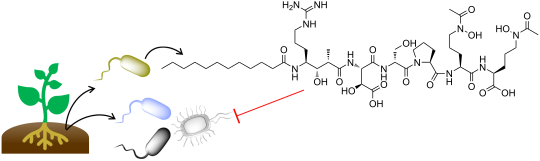
New variochelins from soil-isolated Variovorax sp. H002
Beilstein J. Org. Chem. 2024, 20, 692–700, doi:10.3762/bjoc.20.63
- for 1 h with 10 mg/mL lysozyme. After 10% SDS was added to the tube, the mixture was incubated at room temperature, 60 °C, and then 0 °C, for 5 min durations. AcOK (5 M) and phenol/CHCl3/isoamyl alcohol (25:24:1) were then added, and the resulting solution was gently mixed by inversion and centrifuged


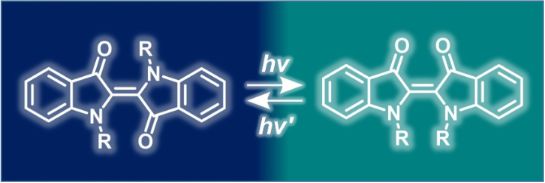
Photochromic derivatives of indigo: historical overview of development, challenges and applications
Beilstein J. Org. Chem. 2024, 20, 228–242, doi:10.3762/bjoc.20.23
- using heme-containing oxygenases (cytochrome P450 monooxygenases, styrene/indole monooxygenases, flavin-containing monooxygenases, Baeyer–Villiger monooxygenases, etc.) or non-heme iron oxygenases (naphthalene dioxygenases, multicomponent phenol hydroxylases) [5][6][7][8]. The synthetic approaches
- significant difference in the values of β-angles, which results in some differences in the densities [10]. The solubility of crystalline indigo is poor even in polar solvents such as aniline, nitrobenzene, phenol, phthalic anhydride, DMSO, and DMF upon heating. The reason for the low solubility and high





Tandem Hock and Friedel–Crafts reactions allowing an expedient synthesis of a cyclolignan-type scaffold
Beilstein J. Org. Chem. 2024, 20, 162–169, doi:10.3762/bjoc.20.15
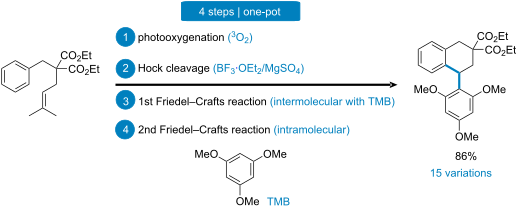
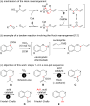
- C–C bond adjacent to the hydroperoxide group (Scheme 1a). The best-known application of this reaction is the cumene process, which allows the production of millions of tons of phenol each year [2]. The reaction has also been used in an industrial synthesis of artemisinin [3]. Allylic hydroperoxides





Using the phospha-Michael reaction for making phosphonium phenolate zwitterions
Beilstein J. Org. Chem. 2024, 20, 41–51, doi:10.3762/bjoc.20.6
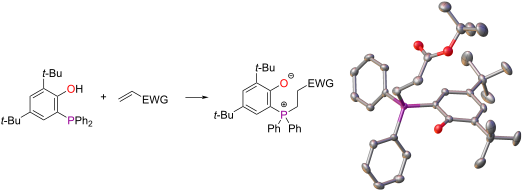
- University of Technology, Stremayrgasse 9, 8010 Graz, Austria 10.3762/bjoc.20.6 Abstract The reactions of 2,4-di-tert-butyl-6-(diphenylphosphino)phenol and various Michael acceptors (acrylonitrile, acrylamide, methyl vinyl ketone, several acrylates, methyl vinyl sulfone) yield the respective phosphonium
- stabilize the initially formed carbanion as the rate-determining step. A preorganization of the carbonyl bearing Michael acceptors allowed for reasonable fast direct proton transfer from the phenol in aprotic solvents. In contrast, acrylonitrile, not capable of forming a similar preorganization, is hardly
- with several Michael acceptors [34]. In this work we present the formation of stable zwitterions from the reaction of 2,4-di-tert-butyl-6-(diphenylphosphino)phenol (1) and a variety of different Michael acceptors and disclose kinetic investigations on the zwitterion formation with carbonyl and non


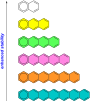
Biphenylene-containing polycyclic conjugated compounds
Beilstein J. Org. Chem. 2023, 19, 1895–1911, doi:10.3762/bjoc.19.141
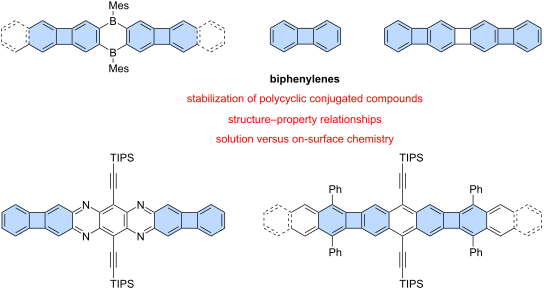
- and the phenol subsequently converted to a triflate. The Pd-catalyzed annulation approach can be conducted sequentially, facilitating the synthesis of polyaromatic hydrocarbons, particularly unsymmetrical ones (Scheme 10) [44]. In this way, compound 48 was synthesized through a two-step process



Effects of the aldehyde-derived ring substituent on the properties of two new bioinspired trimethoxybenzoylhydrazones: methyl vs nitro groups
Beilstein J. Org. Chem. 2023, 19, 1713–1727, doi:10.3762/bjoc.19.125
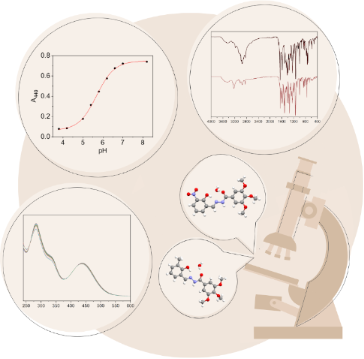
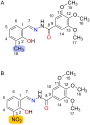
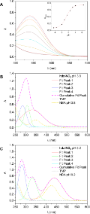
- physiological conditions since the presence of this substituent significantly affects the pKa of the phenol: an apparent value of 5.68 ± 0.02 was obtained. This also impacts the basicity of the azomethine nitrogen and, as a consequence, increases the hydrazone’s susceptibility to hydrolysis. Nevertheless, both
- ; phenol acidity; ring substituents; XRD; Introduction N-Acylhydrazones are a class of compounds that contain the hydrazonic functional group (–NH–N=C–) attached to an acyl group, which can be modified to generate a range of different structures with varying properties [1]. The versatility of this class
- display a role in neurodegeneration [38]. A comparative study between these two N-acylhydrazones is interesting, especially considering that they possess different substituents at the same position in the phenol ring: the electron-donating methyl group (hdz-CH3) and the electron-withdrawing nitro group





Synthesis of ether lipids: natural compounds and analogues
Beilstein J. Org. Chem. 2023, 19, 1299–1369, doi:10.3762/bjoc.19.96
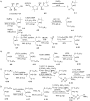
- - or 3-bromoanisole were also reported) with bromotetradecane in the presence of a copper salt (Figure 10). Then, the deprotection of the phenol function with BBr3 produced 10.2. The deprotonation of the phenol function with NaH in DMF and its reaction with solketal mesylate produced, after the




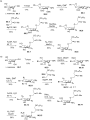
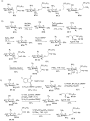


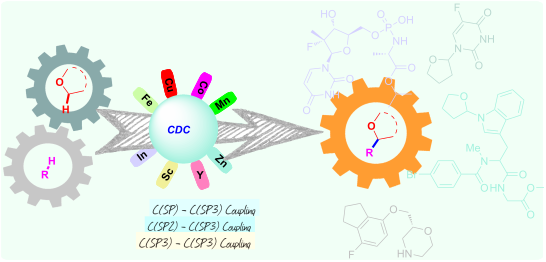
Non-noble metal-catalyzed cross-dehydrogenation coupling (CDC) involving ether α-C(sp3)–H to construct C–C bonds
Beilstein J. Org. Chem. 2023, 19, 1259–1288, doi:10.3762/bjoc.19.94
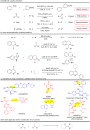
- achieve the CDC of THF and phenol C(sp2)–H (Scheme 12) [62]. The role of Pd may be through the formation of a Pd(II) phenolic acid salt from phenol and Pd(OAc)2 to improve the reactivity of phenol. Subsequently, a more complex C(sp2)–H component was employed as a coupling substrate to functionalize the










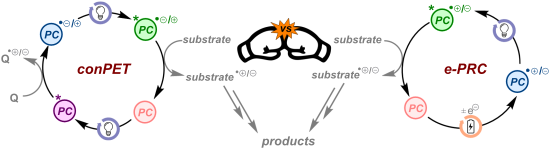
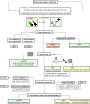
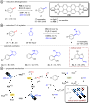
Photoredox catalysis harvesting multiple photon or electrochemical energies
Beilstein J. Org. Chem. 2023, 19, 1055–1145, doi:10.3762/bjoc.19.81


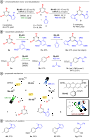


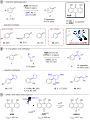
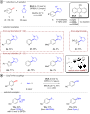
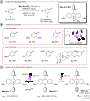






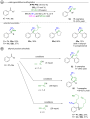
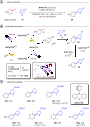


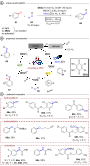

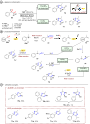
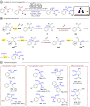


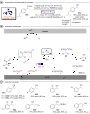


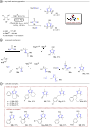
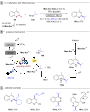








Aromatic C–H bond functionalization through organocatalyzed asymmetric intermolecular aza-Friedel–Crafts reaction: a recent update
Beilstein J. Org. Chem. 2023, 19, 956–981, doi:10.3762/bjoc.19.72

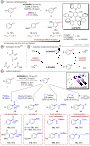
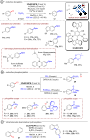
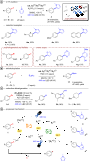
- reaction proceeding through aza-Friedel–Crafts reaction and lactonization steps. Main focus of this article was to demonstrate a racemic process between α-naphthol or phenol derivatives and in situ-generated N-acetyl ketimine from methyl 2-acetamidoacrylate (18) in the course of preparing 3-NHAc
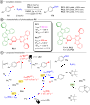
- substituent at the aforesaid position for which a much diminished enantioselectivity (44%) was obtained (Scheme 24) [54]. Pyrophosphoric acids In 2018, Ishihara and co-workers demonstrated a highly para-selective aza-Friedel–Crafts process using phenols and ortho-monosubstituted phenol analogues 104. As
- potential electrophiles, N-methoxycarbonyl-substituted aldimines 105 were explored to activate the para-carbon of the phenol derivatives catalyzed by the chiral pyrophosphoric acid Py1. The high regioselectivity was mainly caused by catalyst–substrate interactions via intermolecular H-bonding which could




Clauson–Kaas pyrrole synthesis using diverse catalysts: a transition from conventional to greener approach
Beilstein J. Org. Chem. 2023, 19, 928–955, doi:10.3762/bjoc.19.71
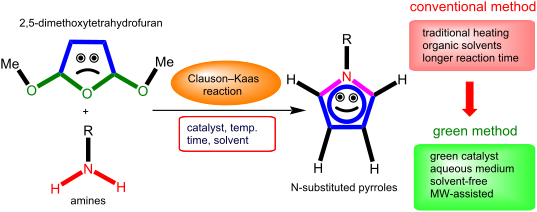
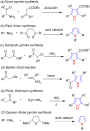
- subsequent removal of MeOH, dehydration and aromatization affords N-substituted pyrroles 21. In 2013, Chatzopoulou [63] and co-workers reported a high-yielding Clauson–Kaas pyrrolyl-phenol synthesis using nicotinamide, which is a cheap and nontoxic catalyst and a vitamin and enzyme cofactor. The authors




Intermediates and shunt products of massiliachelin biosynthesis in Massilia sp. NR 4-1
Beilstein J. Org. Chem. 2023, 19, 909–917, doi:10.3762/bjoc.19.69
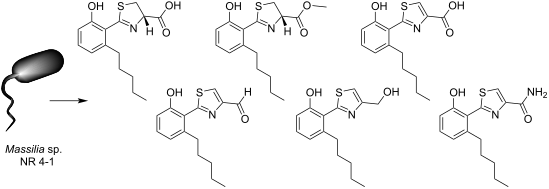
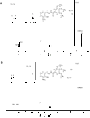
- correlation spectroscopy (COSY; Figure 3). The first spin system is part of a 2,3-substituted phenol moiety featuring proton signals at δH 7.15 (H-5), 6.70 (H-6) and 6.69 ppm (H-4; Table 1). Three aromatic carbon atoms could be assigned due to heteronuclear multiple bond correlation (HMBC) correlations from H
- position. An HMBC correlation from H-4 to the carbon atom at 32.7 ppm (C-7) allowed the linkage of the phenol moiety with an n-pentyl sidechain in meta position to the hydroxy group. The spin system of the latter includes proton resonances at δH 2.54 (H-7a), 2.62 (H-7b), 1.49 (H-8), 1.25 (H-9), 1.25 (H-10
- substituent at C-2 of the phenol moiety. The final carbon atom at 171.9 ppm (C-15) could be attributed to a carboxylic acid function with HMBC correlations from H-13 and H-14, thereby completing the determination of the planar structure of 1. To determine the configuration of 1, we measured its optical


Strategies in the synthesis of dibenzo[b,f]heteropines
Beilstein J. Org. Chem. 2023, 19, 700–718, doi:10.3762/bjoc.19.51
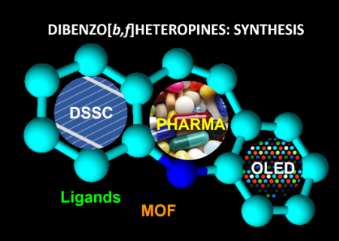
- -dihydrodibenzo[b,f]heteropines via intramolecular Wurtz reaction. Phenol deprotonation and intramolecular etherification in the synthesis of bauhinoxepine J. Palladium-catalysed N-arylation of dibenzo[b,f]azepine. Cu- and Ni-catalysed N-arylation. N-Alkylation of dibenzo[b,f]azepine (1a) and dihydrodibenzo[b,f


Transition-metal-catalyzed domino reactions of strained bicyclic alkenes
Beilstein J. Org. Chem. 2023, 19, 487–540, doi:10.3762/bjoc.19.38
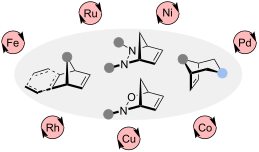
- alkene of the azabicycle producing 154. A C–N bond cleavage occurs creating π-allylrhodium 155. Subsequently, the phenol oxygen then adds to the π–allyl species in a cis fashion, furnishing 156 which is proposed to be the enantiodetermining step. The carbonyl–rhodium species 156 inserts into the alkene



















Combretastatins D series and analogues: from isolation, synthetic challenges and biological activities
Beilstein J. Org. Chem. 2023, 19, 399–427, doi:10.3762/bjoc.19.31
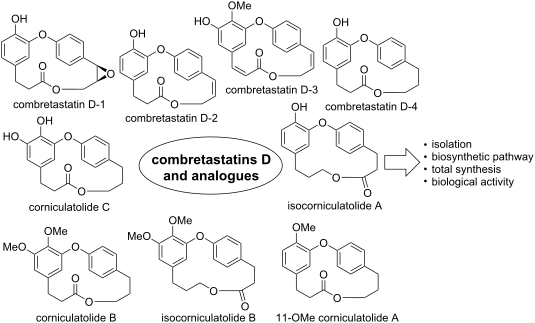
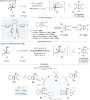
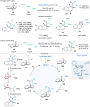
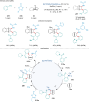
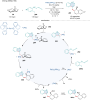
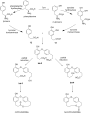
- ] between halide 37 and phenol 38 leading to the formation of diaryl ether 39, which was subjected to a regioselective iodination reaction to give compound 40. Conversion of the nitrile in compound 40 into the corresponding aldehyde 41 followed by Z-selective Still–Gennari olefination gave the cis α,β
- furnished the α,β-unsaturated ester 69. The subsequent catalytic hydrogenation led to the desired phenol 70 (Scheme 13) [44][45]. An Ullmann coupling reaction using compounds 66 and 70 gave the corresponding diaryl ether 71, which was submitted to an asymmetric dihydroxylation reaction using (DHQD)2PHAL to
- ether moiety. The best result was obtained when phenol 101 was subjected to anodic oxidation, leading to the formation of spiro-dimer 102 in 61% yield. Protection of the alcohol using TBSOTf followed by cyclic ether cleavage and re-aromatization gave compound 104. Subsequent dehalogenation followed by




Synthesis and reactivity of azole-based iodazinium salts
Beilstein J. Org. Chem. 2023, 19, 317–324, doi:10.3762/bjoc.19.27
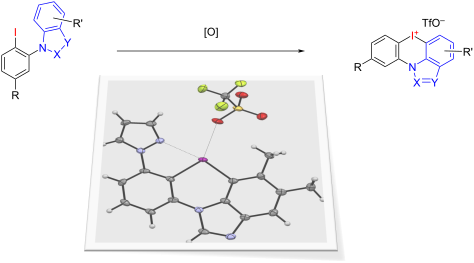
- highly versatile, and a wide range of applications is meanwhile established in organic synthesis [1][2][3][4][5]. They can be applied as mild oxidants [6][7][8], in phenol dearomatizations [9] or in α-oxygenation reactions [10]. In a complemental reactivity, diaryliodonium salts are potent electrophilic




Preparation of β-cyclodextrin/polysaccharide foams using saponin
Beilstein J. Org. Chem. 2023, 19, 78–88, doi:10.3762/bjoc.19.7
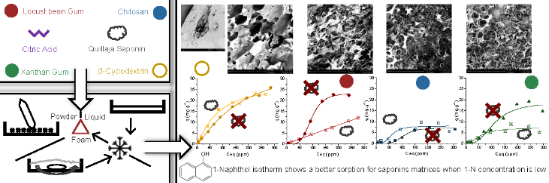
- (Quillaja saponaria; Sp. ‘quillay’, from Mapuche ‘küllay’) saponin (Sigma-Aldrich, sapogenin content ≥ 10%, India), phenol (99.5%; Panreac, Spain), m-cresol (99%; Sigma, Germany), 4-ethylphenol (99%, Sigma, China), vanillin (99%; Panreac, Spain) and eugenol (99%; Sigma, Germany) were used as received
- -cyclodextrin/polysaccharides (blue curves for chitosan, red for locust bean gum, green for xanthan gum) with saponin (yellow curves correspond to cyclodextrin matrices, without polysaccharide). Sorption of phenols (V, vanillin; Ph, phenol; m-c, m-cresol; 4eP, 4-ethylphenol; Eu, eugenol) in β-cyclodextrin




Combining the best of both worlds: radical-based divergent total synthesis
Beilstein J. Org. Chem. 2023, 19, 1–26, doi:10.3762/bjoc.19.1
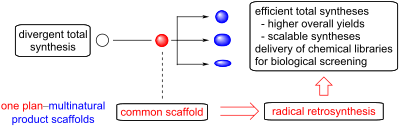
- to competitive oxidation of the C3 alcohol to the respective ketone. Increasing the equivalents of pyrone led to 83% of 54. On the other hand, employment of the same conditions to phenol 55 resulted only in the oxidation of the phenol. A more controlled delivery of electrons was realized by applying











A novel spirocyclic scaffold accessed via tandem Claisen rearrangement/intramolecular oxa-Michael addition
Beilstein J. Org. Chem. 2022, 18, 1649–1655, doi:10.3762/bjoc.18.177
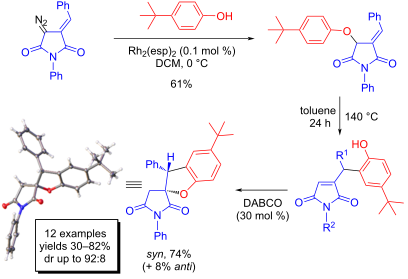
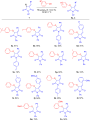
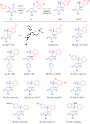
- Discussion The initial attempt to involve DAS 1b in the Rh2(esp)2-catalyzed insertion reaction with 4-(tert-butyl)phenol was successful. The initial adduct 5b was not purified and was heated at 140 °C in toluene to give compound 6b in 47% yield over two steps (Scheme 2). No further optimization of the
- synthesized as detailed in Scheme 3. The O–H insertion reaction worked well for electron-neutral or electron-rich phenols. The presence of chlorine substituents (such as 4-Cl or 2,4-diCl) in the phenol component drastically diminished the yield and led to the formation of the earlier reported DAS dimer [16



Simple synthesis of multi-halogenated alkenes from 2-bromo-2-chloro-1,1,1-trifluoroethane (halothane)
Beilstein J. Org. Chem. 2022, 18, 1567–1574, doi:10.3762/bjoc.18.167
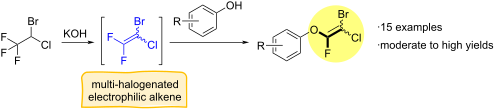
- involved a highly reactive difluoroethylene intermediate, which was produced by the reaction between halothane and KOH. Keywords: aryl 1-monofluorovinyl ether; electrophilic 1,1-difluoroethene; halothane; multi-halogenated alkene; phenol; Introduction 2-Bromo-2-chloro-1,1,1-trifluoroethane (halothane
- halothane as a halogen and carbon source. Results and Discussion First, we optimized the reaction conditions for the formation of aryl fluoroalkenyl ethers with phenol (3a) as a model substrate. On the basis of our previous work, we performed the reaction of halothane with 3a under the standard conditions
- experiments were carried out under argon atmosphere in flame-dried glassware using standard inert techniques for introducing reagents and solvents unless otherwise noted. Typical procedures for synthesis of multi-halogenated alkene Ground KOH (5.0 mmol) was added to a solution of phenol (1.0 mmol) in DME (5.0


Using UHPLC–MS profiling for the discovery of new sponge-derived metabolites and anthelmintic screening of the NatureBank bromotyrosine library
Beilstein J. Org. Chem. 2022, 18, 1544–1552, doi:10.3762/bjoc.18.164
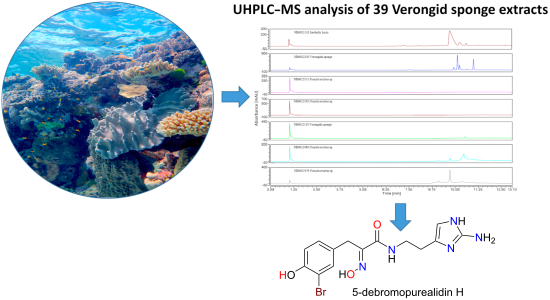
- correlation from the imidazole proton at δH 6.55 to the downfield carbon at δC 146.8 indicated a 2-amino substituted histamine moiety [19]. Finally, the unassigned exchangeable protons at δH 10.11 and 7.36, were assigned to phenol (4-OH) and amino groups (14-NH2), respectively, following comparison of NMR
- data with related previously reported purealidins [19]. While no HMBC correlations were identified for these exchangeable proton signals, the presence of a phenol was further supported by a bathochromic shift that was seen in the UV spectrum of 1 upon addition of base [20]. The bromine atom and phenol


One-pot synthesis of 2-arylated and 2-alkylated benzoxazoles and benzimidazoles based on triphenylbismuth dichloride-promoted desulfurization of thioamides
Beilstein J. Org. Chem. 2022, 18, 1479–1487, doi:10.3762/bjoc.18.155

- ][19][20][21]. Among them, triarylbismuth dichlorides (Ar3BiCl2) have been widely used as aryl group donors for the C- and O-arylation of phenol derivatives [22][23][24], N-arylation of pyridin-2-ones [25][26], α-arylation of α,β-unsaturated carbonyls [27][28], and tandem 1,3-bisarylation of


Mechanochemical synthesis of unsymmetrical salens for the preparation of Co–salen complexes and their evaluation as catalysts for the synthesis of α-aryloxy alcohols via asymmetric phenolic kinetic resolution of terminal epoxides
Beilstein J. Org. Chem. 2022, 18, 1416–1423, doi:10.3762/bjoc.18.147
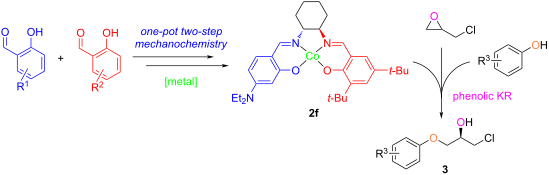
- -aryloxy alcohols were thereafter synthesized through the KR of epichlorohydrin with different phenols using chiral Co–salen catalyst 2f (Table 3). meta-Substituted methylphenol showed less reactivity and selectivity (Table 3, entry 2), while tert-butyl monosubstitution at the para-position on the phenol
- slightly increased in light of the yield and ee (Table 3, entry 3). Bulky phenol afforded no product (3e), which is in good agreement with the suggested Co–salen catalytic mechanism [6]. Phenols with both electron-donating and electron-withdrawing moieties participated in the asymmetric ring opening of


Lewis acid-catalyzed Pudovik reaction–phospha-Brook rearrangement sequence to access phosphoric esters
Beilstein J. Org. Chem. 2022, 18, 1188–1194, doi:10.3762/bjoc.18.123
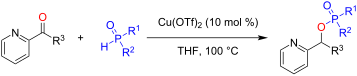
- ][6][7][8][9]. Therefore, many efficient methods have been developed in the past decades to synthesize different types of phosphoric esters [10][11][12][13][14][15][16][17][18]. Traditional methods for the construction of P−O bonds in phosphoric esters rely on the phosphorylation of alcohols or phenol




Electro-conversion of cumene into acetophenone using boron-doped diamond electrodes
Beilstein J. Org. Chem. 2022, 18, 1154–1158, doi:10.3762/bjoc.18.119

- hydroperoxide/dicumyl peroxide/phenol from cumene, acetophenone from ethylbenzene, and others. Generally, molecular oxygen has been utilized in the straightforward oxidation of aromatic alkyls. However, since molecular oxygen is highly stable, activation of the molecular oxygen itself is necessary, which





