Search results
Search for "protonation" in Full Text gives 477 result(s) in Beilstein Journal of Organic Chemistry. Showing first 200.
Advances in the use of metal-free tetrapyrrolic macrocycles as catalysts
Beilstein J. Org. Chem. 2024, 20, 3085–3112, doi:10.3762/bjoc.20.257
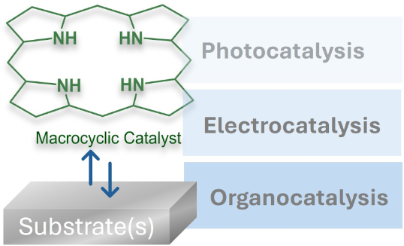
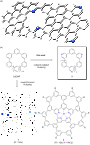
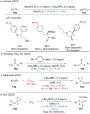
- [48]. Therefore, most of the work involving metal-free porphyrins is limited to investigations on N–H tautomerization and protonation–deprotonation studies [49][50][51][52]. However, there are several chemical tools to convert the planar geometry of porphyrins to nonplanar, such as functionalization
- at β- and meso-positions, N-alkylation, arylation or protonation, interruption of the conjugated system, reduction/oxidation of the macrocycle and/or strapping of the macrocycle via covalent linkage of the meso- or β-pyrrole positions [22][53][54][55][56][57]. These alternations can significantly
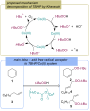
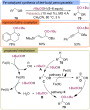
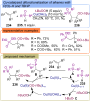
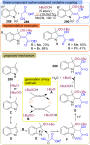
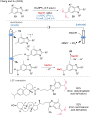
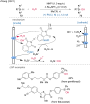
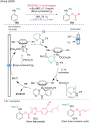
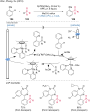
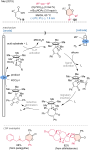
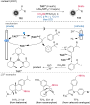
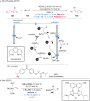
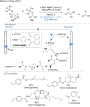
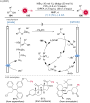
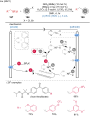
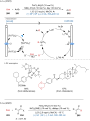
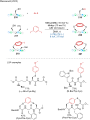
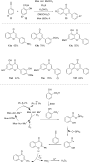
- porphyrin radical anion. Ultimately, protonation of intermediate E led to the final product. Formation of intermediates, such as enamine A and cation radical B, was confirmed using techniques like ESIMS, 1H NMR, and EPR, Stern–Volmer quenching experiments, respectively. All these mechanistic studies


Tunable full-color dual-state (solution and solid) emission of push–pull molecules containing the 1-pyrindane moiety
Beilstein J. Org. Chem. 2024, 20, 3016–3025, doi:10.3762/bjoc.20.251
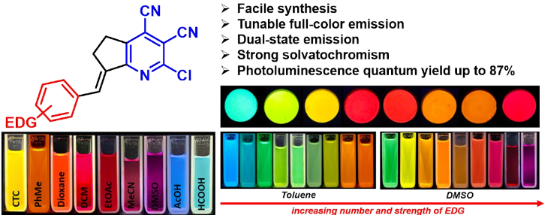
- dimethylamino group, were studied (Table 1 and Figure 3). It was found that in most solvents, compound 1i was characterized by a single pronounced absorption maximum in the range of 503–525 nm that red-shifted upon increasing the solvent polarity. In formic acid, due to the protonation of the dimethylamino
- group, a strong blue shift occurred down to 394 nm. The only exception was a solution of 1i in acetic acid, where two peaks were observed. Apparently, the weaker acetic acid caused just a partial protonation of the amino group, and the equilibrium shown in Scheme 2 was observed. This was evidenced by
- 511 nm), in the region of solvents with medium polarity. Protonation of the dimethylamino group was additionally confirmed by titration of pyrindane 1i in toluene using trifluoroacetic acid (see Figure S2, Supporting Information File 1). According to the data obtained, an increasing amount of acid


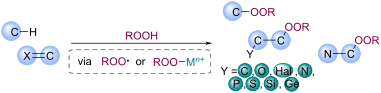
Advances in radical peroxidation with hydroperoxides
Beilstein J. Org. Chem. 2024, 20, 2959–3006, doi:10.3762/bjoc.20.249





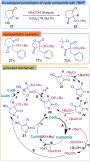


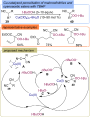


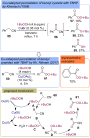
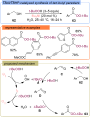

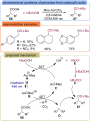
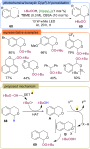
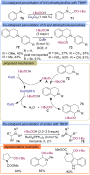
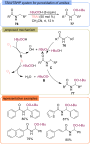






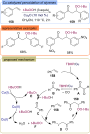


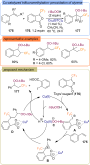
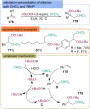

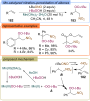










Synthesis of tricarbonylated propargylamine and conversion to 2,5-disubstituted oxazole-4-carboxylates
Beilstein J. Org. Chem. 2024, 20, 2827–2833, doi:10.3762/bjoc.20.238

- decarboxylation accompanied by aromatization of the oxazole ring occurred during this process. Thus, protonation occurs, leading to oxazole 5 when the reaction mixture is warmed in the presence of large amounts of proton sources such as acetic acid or deuterium oxide. Although Nagao et al. proposed another
- phenacyl group, yielding 9 without any detectable cyclization product (Scheme 4). This hydration process is thought to proceed via two paths. The reaction is initiated by the protonation of the ethynyl group to generate the vinyl cation intermediate 10. Product 9 is directly formed by the attack of a water


Mechanochemical difluoromethylations of ketones
Beilstein J. Org. Chem. 2024, 20, 2799–2805, doi:10.3762/bjoc.20.235
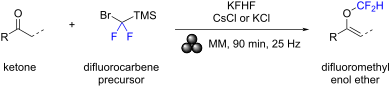
- with the generation of difluorocarbene from TMSCF2Br and KFHF. This is followed by a nucleophilic attack of the oxygen atom of ketone 1 on the difluorocarbene. Subsequently, a protonation–deprotonation sequence occurs, which can either be intermolecular, involving a molecule of HF, or intramolecular
- isolating the low-boiling non-polar products. Mechanistic studies suggested that in situ-generated difluorocarbene reacts with the ketone oxygen, followed by intermolecular protonation/deprotonation. Although the process has still synthetic limitations, also acyclic ketones can now be converted into


C–C Coupling in sterically demanding porphyrin environments
Beilstein J. Org. Chem. 2024, 20, 2784–2798, doi:10.3762/bjoc.20.234
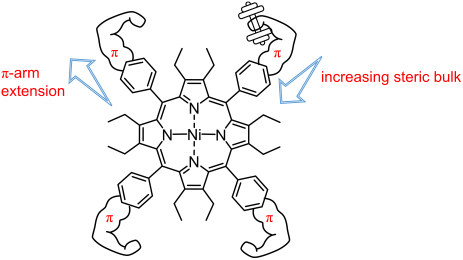
- alternatively by core protonation, whereby all four-core nitrogen atoms are protonated to produce the diacid [12][13]; these diacids can tilt the pyrrole rings 20–40° [14] from the mean-porphyrin plane. Norvaiša et al. showed that a saddle-shaped porphyrin as a dodecasubstituted diacid can bind anions via two


Synthesis of benzo[f]quinazoline-1,3(2H,4H)-diones
Beilstein J. Org. Chem. 2024, 20, 2708–2719, doi:10.3762/bjoc.20.228
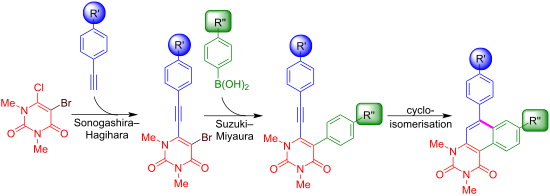
- when located at position 5 of the uracil ring, which might be due to the protonation of the amine under the employed reaction conditions, making the aryl ring less feasible for the SEAr reaction (Scheme 4b). The same effects may explain the cyclisation of 4f to 5f, while 4c is not converted to the




A review of recent advances in electrochemical and photoelectrochemical late-stage functionalization classified by anodic oxidation, cathodic reduction, and paired electrolysis
Beilstein J. Org. Chem. 2024, 20, 2500–2566, doi:10.3762/bjoc.20.214
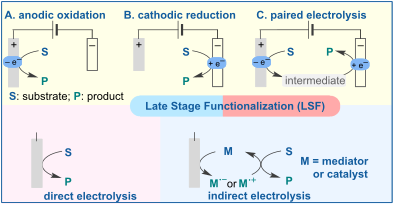
- corresponding 1,2,4-triazolium tetrafluoroborates under electrochemical conditions [29]. The reaction is conducted with a stoichiometric amount of HBF4, which converts the substrate to the corresponding cationic intermediate via a protonation, eliminating the need for an additional supporting electrolyte. The
- , due to the protonation of triticonazole, the participation of the protonated form in the overall reaction mechanism is also considered in pathway B (Scheme 21). Benzo[c][1,2]oxazines are useful scaffolds for the synthesis of natural products. In 2021, the Han group developed the electrochemical [4 + 2




























Facile preparation of fluorine-containing 2,3-epoxypropanoates and their epoxy ring-opening reactions with various nucleophiles
Beilstein J. Org. Chem. 2024, 20, 2421–2433, doi:10.3762/bjoc.20.206
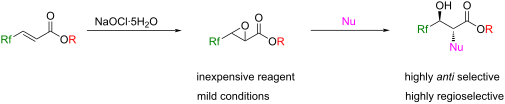
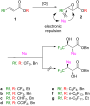
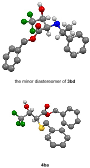
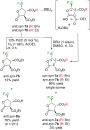
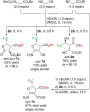
- from the initially formed anti,syn-7a and -7b, followed by the re-protonation by the sterically bulky [H·amine]+ from the less congested top side. These results prompted us to further investigate the ring opening of 2b by other nucleophiles with active hydrogen whose results are summarized in Scheme 5





Efficient one-step synthesis of diarylacetic acids by electrochemical direct carboxylation of diarylmethanol compounds in DMSO
Beilstein J. Org. Chem. 2024, 20, 2392–2400, doi:10.3762/bjoc.20.203
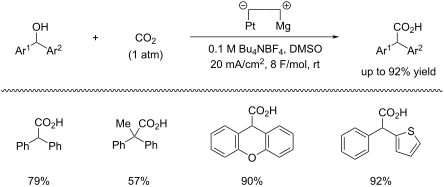
- 1, entry 7). After tuning of the electricity, electrochemical carboxylation of 1a under the reaction conditions shown in Table 1, entry 8 gave 2a in 79% isolated yield. In all cases, diphenylmethane, probably produced by protonation of the generated benzyl anion species, was detected as a byproduct


Asymmetric organocatalytic synthesis of chiral homoallylic amines
Beilstein J. Org. Chem. 2024, 20, 2349–2377, doi:10.3762/bjoc.20.201
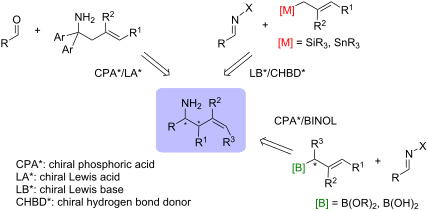
- active catalytic species in COBI-catalysed allylations, chemical equilibria in a solution containing catalyst 72, triflic acid, and aldimine 73 were investigated by low-temperature NMR spectroscopy (Scheme 15). Protonation of oxazaborolidine 70 with triflic acid resulted in an 8.3:1 mixture of 71 and 72








Selective hydrolysis of α-oxo ketene N,S-acetals in water: switchable aqueous synthesis of β-keto thioesters and β-keto amides
Beilstein J. Org. Chem. 2024, 20, 2225–2233, doi:10.3762/bjoc.20.190
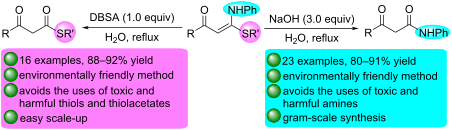
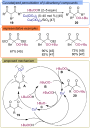
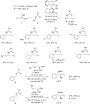
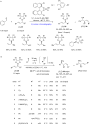
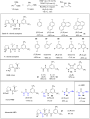
- above and on literature precedents [40][41], a plausible mechanistic pathway for the formation of 2 and 3 is shown in Scheme 5 (with the reaction of 1a as an example). In the presence of DBSA, the protonation of 1a results in the carbocation intermediate I. Then, the nucleophilic attack of H2O at the
- carbocation of I produces intermediate II, which converts into intermediate III through a deprotonation–protonation process. Finally, the elimination of PhNH2 from intermediate III occurs to afford the desired product 2a. In the presence of NaOH, the Michael addition between 1a and base initially occurs to

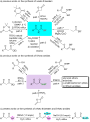


Factors influencing the performance of organocatalysts immobilised on solid supports: A review
Beilstein J. Org. Chem. 2024, 20, 2129–2142, doi:10.3762/bjoc.20.183
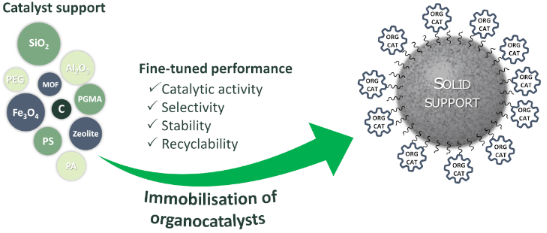
- by azodicarboxylates in a homogeneous phase, as noted by Takemoto [126], it was suggested that this interaction would be significantly impeded by the polymer backbone. Alternatively, it was proposed that this degradation could be due to protonation of the basic tertiary amine unit. It was found that


Understanding X-ray-induced isomerisation in photoswitchable surfactant assemblies
Beilstein J. Org. Chem. 2024, 20, 2005–2015, doi:10.3762/bjoc.20.176
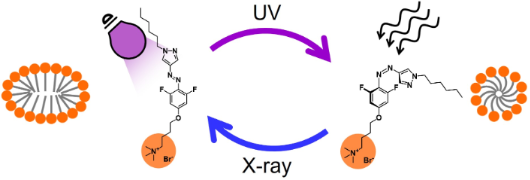
- process that generates a wide variety of primary species, including e−, HO•, H•, HO2•, H+, OH−, H2O2 and H2 [36]. For Azo photoswitches, the formation of H+ species, i.e., the acidification effect, can catalyse the Z–E isomerisation reaction. This is due to protonation of one of the nitrogen atoms in the



Novel oxidative routes to N-arylpyridoindazolium salts
Beilstein J. Org. Chem. 2024, 20, 1906–1913, doi:10.3762/bjoc.20.166
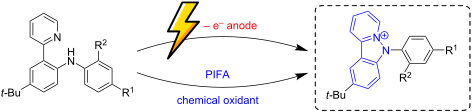
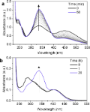
- diaryldihydrophenazine was increased (10%). Thus, protonation completely suppressed the intramolecular cyclization route. Heterocyclic salts S1–S3 were obtained as amorphous solids, soluble in polar solvents (acetonitrile, DMF, acetone) and chlorinated hydrocarbons (CHCl3, CH2Cl2). The structure of new N
- corresponding to the acidic protons in the spectra of the salts excluded protonation of the pyridyl or amino groups. The downfield shift of the signals of both the N-aryl ring (for 0.5–1 ppm) and the pyridyl moiety (for more than 1 ppm) confirmed the positive charge delocalization over both N atoms and the
- . Our experiments with the acid additives (see above) showed that protonation of the pyridyl group suppresses the pyridoindazolium salt formation. Voltammetry testing also showed that 2,6-lutidine addition facilitates oxidation of the amine (Figure 2); the peak potential was of 100 mV shifted toward


The Groebke–Blackburn–Bienaymé reaction in its maturity: innovation and improvements since its 21st birthday (2019–2023)
Beilstein J. Org. Chem. 2024, 20, 1839–1879, doi:10.3762/bjoc.20.162






Harnessing unprotected deactivated amines and arylglyoxals in the Ugi reaction for the synthesis of fused complex nitrogen heterocycles
Beilstein J. Org. Chem. 2024, 20, 1758–1766, doi:10.3762/bjoc.20.154
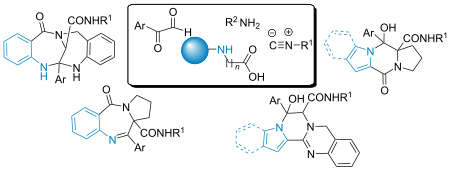
- benzodiazepinones, where the protonation would be exclusively controlled by the chiral amine in the synthesis of 6. Moreover, this proposed mechanism also explains the spontaneous cyclization in the absence of a base when 3-bromopropanamine was used (Scheme 8). Moreover, we envisaged the possibility of obtaining


Syntheses and medicinal chemistry of spiro heterocyclic steroids
Beilstein J. Org. Chem. 2024, 20, 1713–1745, doi:10.3762/bjoc.20.152
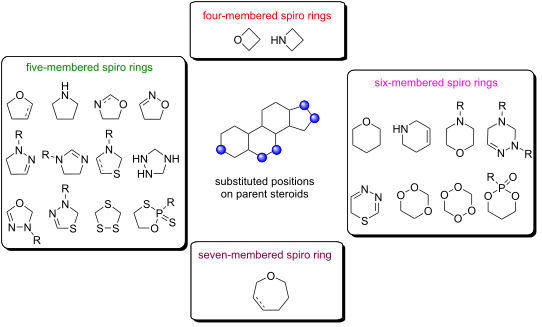
- nucleophilic and can lead to the formation of five- or six-membered rings, the authors proposed that the thione group of ii was tautomerized to an iminothiol, from which the sulfur atom attacked the most electrophilic site of the epoxide (which was activated by protonation), producing the spiro-1,3,4


Ring opening of photogenerated azetidinols as a strategy for the synthesis of aminodioxolanes
Beilstein J. Org. Chem. 2024, 20, 1671–1676, doi:10.3762/bjoc.20.148
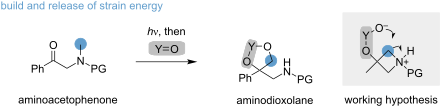
- promising starting point for pursuing this ring-opening attempt [41]. We hypothesized that this approach would allow the synthesis of 3-amino-1,2-diols, a motif commonly found in pharmaceuticals such as, e.g., β-blockers [42]. Our envisioned one-pot protocol features protonation of the azetidine from


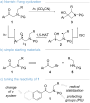

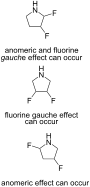
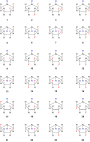
Regio- and stereochemical stability induced by anomeric and gauche effects in difluorinated pyrrolidines
Beilstein J. Org. Chem. 2024, 20, 1572–1579, doi:10.3762/bjoc.20.140
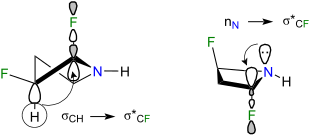
- interactions [4]. Protonation of 3-fluoropyrrolidine generates the 3-fluoropyrrolidinium cation, and this typically results in a highly favored conformation in both the gas phase and solution where the fluorine and nitrogen atoms are cis, mirroring the behavior observed in analagous 4- and 6-membered ring





Generation of alkyl and acyl radicals by visible-light photoredox catalysis: direct activation of C–O bonds in organic transformations
Beilstein J. Org. Chem. 2024, 20, 1348–1375, doi:10.3762/bjoc.20.119
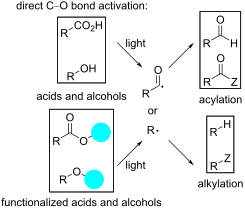
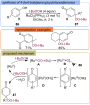
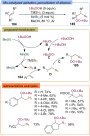
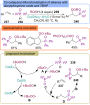
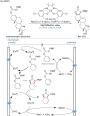
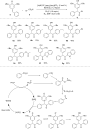
- , the addition of the benzoyl radical to azobenzene results in the generation of a nitrogen-centered radical. This radical is then subjected to reduction by the reduced photocatalyst, producing the nitrogen-centered anion intermediate. Ultimately, the protonation of this anion gives rise to the desired
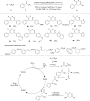
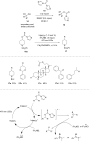
- breakdown of ethyl vinyl ether and trapping of ethanol, yielding radical 84. To regenerate the photocatalyst, PhSSPh functioned as an oxidant. After protonation upon the β-elimination step, PhS− contributed a hydrogen atom to both 83 and 84, alongside regeneration of the HAT catalyst. Lastly, the acetal






Transition-metal-catalyst-free electroreductive alkene hydroarylation with aryl halides under visible-light irradiation
Beilstein J. Org. Chem. 2024, 20, 1327–1333, doi:10.3762/bjoc.20.116
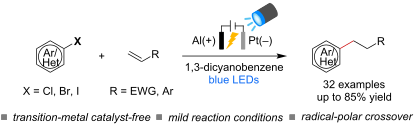
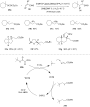
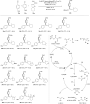
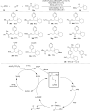
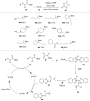
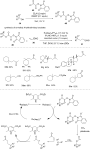
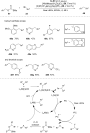
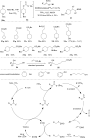
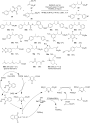
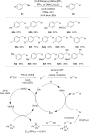
- alkene 2 to provide alkyl radical species B. Further single-electron reduction by 1,3-DCB•− or at the cathode followed by protonation of B provides hydroarylation product 3. Meanwhile, the sacrificial anode is oxidized to form Al cations. Although the exact role of visible-light irradiation in the


Computation-guided scaffold exploration of 2E,6E-1,10-trans/cis-eunicellanes
Beilstein J. Org. Chem. 2024, 20, 1320–1326, doi:10.3762/bjoc.20.115

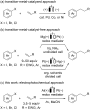
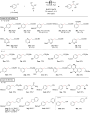
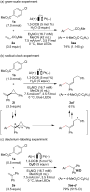
- intrinsic properties, which result in protonation-initiated cyclization, Cope rearrangement, and atropisomerism. Finally, we exploited the reactivity of the trans-eunicellane skeleton to generate a series of 6/6/6 gersemiane-type diterpenes via electrophilic cyclization. Keywords: atropisomer; Cope
- Ring fusion configuration does not affect protonation-induced cyclization Our initial observation that albireticulene (2) was unstable in chloroform, resulting in two tricyclic isomers gersemienes A (5) and B (6) [7], while benditerpetriene (1) was stable [5], led us to investigate the protonation
- -induced cyclization of the eunicellane skeleton (Figure 2). When 1 and 2 were individually subjected to acidic conditions (i.e., TFA in CHCl3), both cyclized into 6/6/6-tricyclic skeletons via a selective C2–C7 cyclization after protonation at C6 to give trans-BC ring systems (i.e., cis,trans-6/6/6 for 1


Mechanistic investigations of polyaza[7]helicene in photoredox and energy transfer catalysis
Beilstein J. Org. Chem. 2024, 20, 1236–1245, doi:10.3762/bjoc.20.106
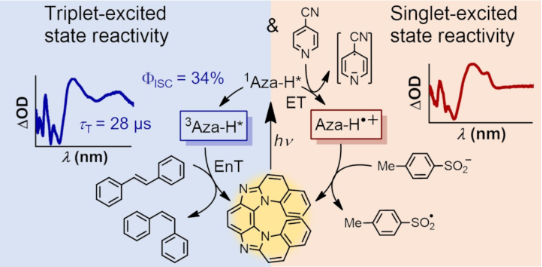
- protonation of Aza-H, both in its ground state and in the excited singlet state (see Figure S10 in Supporting Information File 1 and the corresponding section for details). Based on our studies in aqueous ethanol, Aza-H is a weak photobase but protonation is seen to be unimportant in neutral and alkaline




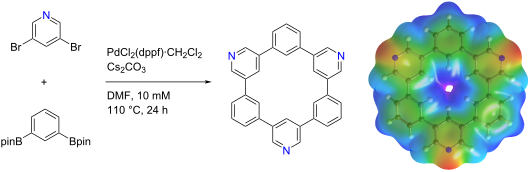
Introduction of peripheral nitrogen atoms to cyclo-meta-phenylenes
Beilstein J. Org. Chem. 2024, 20, 1207–1212, doi:10.3762/bjoc.20.103
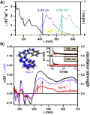
- -doped CMPs. Thus, when trifluoroacetic acid (TFA) was added to a solution of 3a in chloroform, bathochromic shifts in UV spectra were observed, indicating protonation-induced changes in the electronic properties [10]. Because of the weakly acidic nature of pyridinic nitrogen atoms, an excess amount of
- equivalent of TFA at 2 × 10⁵ [13], bathochromic shifts were also observed. However, unlike the case with 3a, gradual absorption shifts were not observed, and the absorption changed from 299 nm to 320 nm with an isosbestic point at 303 nm as shown in Figure 5b. This observation indicated that the protonation
- -induced change of UV spectra for 6 involved two equilibrating states, which most likely originated from single protonation at the centre of the CMP pore. On the other hand, the gradual absorption shifts observed with 3a might thus be ascribed to the presence of multiple protonated species involved in the