


Search results
Search for "pyrolysis" in Full Text gives 70 result(s) in Beilstein Journal of Organic Chemistry.
The preparation of new functionalized [2.2]paracyclophane derivatives with N-containing functional groups
- Henning Hopf,
- Swaminathan Vijay Narayanan and
- Peter G. Jones
Beilstein J. Org. Chem. 2015, 11, 437–445, doi:10.3762/bjoc.11.50
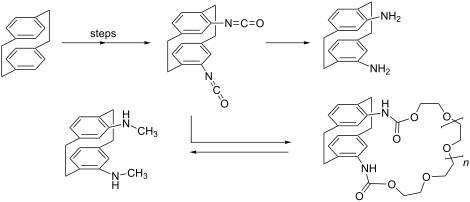
- benzene rings [11][12]. These paracyclophane derivatives are of interest as substrates for the preparation of highly and/or perfluorinated parylene derivatives, the polymer obtained by flash vacuum pyrolysis of the respective paracyclophane precursors. Among the highly alkyl-substituted [2.2

Graphical Abstract

Figure 1: A selection of highly substituted/functionalized [2.2]paracyclophanes.

Figure 2: A selection of [2.2]paracyclophanes carrying several nitrogen-containing substituents.

Scheme 1: The preparation of 4,12-diamino[2.2]paracyclophane (8).

Scheme 2: Preparation of cyclic and acyclic urethanes from 4,12-diisocyanato[2.2]paracyclophane (16).
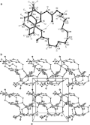
Figure 3: (a, above): The molecule of compound 18 in the crystal; ellipsoids represent 50% probability levels...

Scheme 3: LiAlH4-reduction of crownophane 18.
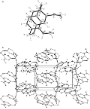
Figure 4: (a, above): The molecule of compound 22 in the crystal; ellipsoids represent 30% probability levels...

Scheme 4: The preparation of several derivatives of 4,16-dicarboxy[2.2]paracyclophane (25) carrying N-contain...

Figure 5: The molecule of compound 26 in the crystal; ellipsoids represent 50% probability levels. Only the a...
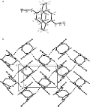
Figure 6: (a, above): The molecule of compound 28 in the crystal; ellipsoids represent 50% probability levels...
Come-back of phenanthridine and phenanthridinium derivatives in the 21st century
- Lidija-Marija Tumir,
- Marijana Radić Stojković and
- Ivo Piantanida
Beilstein J. Org. Chem. 2014, 10, 2930–2954, doi:10.3762/bjoc.10.312

- pyrolysis of the condensation product of benzaldehyde and aniline [6]. The reaction conditions were improved by Morgan and Walls, based on a reaction including a cyclization of phenanthridine by dehydrative ring-closure with phosphorus oxychloride in boiling nitrobenzene [7]. Over the 20th century this

Graphical Abstract

Scheme 1: The Grignard-based synthesis of 6-alkyl phenanthridine.

Scheme 2: Radical-mediated synthesis of 6-arylphenanthridine [14].

Scheme 3: A t-BuO• radical-assisted homolytic aromatic substitution mechanism proposed for the conversion of ...

Scheme 4: Synthesis of 5,6-unsubstituted phenanthridine starting from 2-iodobenzyl chloride and aniline [17].

Scheme 5: Phenanthridine synthesis initiated by UV-light irradiation photolysis of acetophenone O-ethoxycarbo...

Scheme 6: PhI(OAc)2-mediated oxidative cyclization of 2-isocyanobiphenyls with CF3SiMe3 [19,20].

Scheme 7: Targeting 6-perfluoroalkylphenanthridines [21,22].

Scheme 8: Easily accessible biphenyl isocyanides reacting under mild conditions (room temp., visible light ir...

Scheme 9: Microwave irradiation of Diels–Alder adduct followed by UV irradiation of dihydrophenanthridines yi...

Scheme 10: A representative palladium catalytic cycle.

Scheme 11: The common Pd-catalyst for the biphenyl conjugation results simultaneously in picolinamide-directed...

Scheme 12: Pd(0)-mediated cyclisation of imidoyl-selenides forming 6-arylphenanthridine derivatives [16]. The inse...

Scheme 13: Palladium-catalysed phenanthridine synthesis.

Scheme 14: Aerobic domino Suzuki coupling combined with Michael addition reaction in the presence of a Pd(OAc)2...

Scheme 15: Rhodium-catalysed alkyne [2 + 2 + 2] cycloaddition reactions [36].

Scheme 16: The O-acetyloximes derived from 2′-arylacetophenones underwent N–O bond cleavage and intramolecular ...

Scheme 17: C–H arylation with aryl chloride in the presence of a simple diol complex with KOt-Bu (top) [39]; for s...

Scheme 18: The subsequent aza-Claisen rearrangement, ring-closing enyne metathesis and Diels–Alder reaction – ...

Scheme 19: Phenanthridine central-ring cyclisation with simultaneous radical-driven phosphorylation [42].

Scheme 20: Three component reaction yielding the benzo[a]phenanthridine core in excellent yields [44].
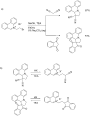
Scheme 21: a) Reaction of malononitrile and 1,3-indandione with BEP to form the cyclised DPP products; b) pH c...

Figure 1: Schematic presentation of the intercalative binding mode by the neighbour exclusion principle and i...

Figure 2: Urea and guanidine derivatives of EB with modified DNA interactions [57].

Figure 3: Structure of mono- (3) and bis-biguanide (4) derivative. Fluorescence (y-axis normalised to startin...

Scheme 22: Bis-phenanthridinium derivatives (5–7; inert aliphatic linkers, R = –(CH2)4– or –(CH2)6–): rigidity...

Figure 4: Series of amino acid–phenanthridine building blocks (general structure 10; R = H; Gly) and peptide-...

Figure 5: General structure of 45 bis-ethidium bromide analogues. Reproduced with permission from [69]. Copyright...

Scheme 23: Top: Recognition of poly(U) by 12 and ds-polyAH+ by 13; bottom: Recognition of poly(dA)–poly(dT) by ...

Figure 6: The bis-phenanthridinium–adenine derivative 15 (LEFT) showed selectivity towards complementary UMP;...

Figure 7: The neomycin–methidium conjugate targeting DNA:RNA hybrid structures [80].

Figure 8: Two-colour RNA intercalating probe for cell imaging applications: Left: Chemical structure of EB-fl...

Figure 9: The ethidium bromide nucleosides 17 (top) and 18 (bottom). DNA duplex set 1 and 2 (E = phenanthridi...

Figure 10: Left: various DNA duplexes; DNA1 and DNA2 used to study the impact on the adjacent basepair type on...

Figure 11: Structure of 4,9-DAP derivative 19; Rright: MIAPaCa-2 cells stained with 10 μM 19 after 60 and 120 ...

Figure 12: Examples of naturally occurring phenanthridine analogues.
Expedient synthesis of 1,6-anhydro-α-D-galactofuranose, a useful intermediate for glycobiological tools
- Luciana Baldoni and
- Carla Marino
Beilstein J. Org. Chem. 2014, 10, 1651–1656, doi:10.3762/bjoc.10.172
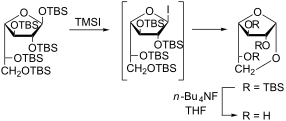
- starts from a galactofuranose (D-Galf) template conveniently derivatized. Pioneer procedures for the synthesis of 2 involved the pyrolysis of D-Gal under reduced pressure [11][12] and the acid treatment under heating [13], with the subsequent tedious separation from several byproducts, including the

Graphical Abstract

Figure 1: Possible 1,6-anydro derivatives for D-galactose.

Scheme 1: Reported synthesis of 1,6-anhydro-α-D-galactofuranose [16,17].

Figure 2: Examples of glycobiological tools synthesized from compound 5 [29-31].

Scheme 2: D-Galactofuranosylation by the glycosyl iodide method [32-35].

Scheme 3: Synthesis of 1,6-anhydro-α-D-galactofuranose from per-O-tert-butyldimethylsilyl-D-Galf.

Figure 3: Furanosic derivatives with free primary hydroxy group.
Site-selective covalent functionalization at interior carbon atoms and on the rim of circumtrindene, a C36H12 open geodesic polyarene
- Hee Yeon Cho,
- Ronald B. M. Ansems and
- Lawrence T. Scott
Beilstein J. Org. Chem. 2014, 10, 956–968, doi:10.3762/bjoc.10.94
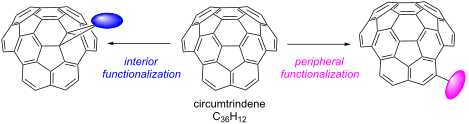
- the authors’, have been particularly successful in synthesizing geodesic polyarenes using flash vacuum pyrolysis (FVP) [6]. The FVP method involves slow sublimation of a starting material under vacuum, rapid passage of the gas-phase molecules through a hot zone, and subsequent capture of the products
- circumtrindene (6), one of the most highly-curved fullerene fragments known, comprising 60% of the C60 ball. Results and Discussion Synthesis and properties of circumtrindene (6) In 1996, our laboratory reported that the C36H12 bowl circumtrindene (6) could be obtained by flash vacuum pyrolysis of decacyclene

Graphical Abstract

Figure 1: Prototypical open and closed geodesic polyarenes.

Figure 2: Planar vs pyramidalized π-system.
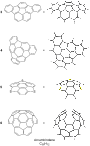
Figure 3: Selected examples of geodesic polyarenes synthesized by FVP.

Scheme 1: Covalent functionalization of fullerene C60 by the Bingel–Hirsch reaction and the Prato reaction.

Scheme 2: Fullerene-type chemistry at interior carbon atoms of corannulene (1) and diindenochrysene (10).

Figure 4: POAV angles of fullerene C60 (2), corannulene (1), and diindenochrysene (10).

Scheme 3: Synthesis of circumtrindene (6) by FVP.

Scheme 4: Synthetic route to 3,9,15-trichlorodecacyclene (12).

Figure 5: POAV angle and bond lengths of circumtrindene.

Scheme 5: Bingel–Hirsch reaction of circumtrindene (6).

Scheme 6: Proposed mechanism for the Bingel–Hirsch reaction of circumtrindene (6).

Scheme 7: Prato reaction of circumtrindene (6).

Figure 6: LUMO orbital map of circumtrindene (B3LYP/6-31G*). The darkest blue areas correspond to the regions...

Figure 7: Electrostatic potentials on the surfaces of circumtrindene (B3LPY/6-31G*).

Figure 8: Monoindeno- (25), diindeno- (26), and triindenocircumtrindene (27).

Figure 9: Two different types of rim carbon atoms on circumtrindene.

Scheme 8: Site-selective peripheral monobromination of circumtrindene.

Scheme 9: Suzuki coupling and ring-closing reactions toward indenocircumtrindene (25).

Scheme 10: Suzuki coupling to prepare compound 30.

Figure 10: Chemical shifts of ortho-methyl groups in 30 and 31.
Recent applications of the divinylcyclopropane–cycloheptadiene rearrangement in organic synthesis
- Sebastian Krüger and
- Tanja Gaich
Beilstein J. Org. Chem. 2014, 10, 163–193, doi:10.3762/bjoc.10.14
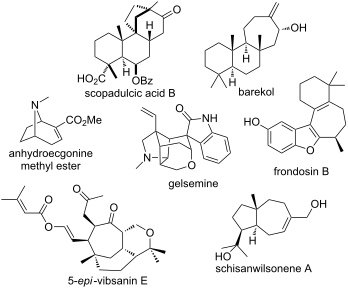
- detected in the human body after cocaine consumption. It can be degradatively accessed from cocaine through pyrolysis, cocaine congeners can be prepared via conjugate addition afterwards [113][114]. Boc-protected pyrrole 127 was subjected to rhodium-catalyzed cyclopropanation with vinyldiazo compound 128

Graphical Abstract

Scheme 1: Vogel’s first approach towards the divinylcyclopropane rearrangement [4] and characterization of cis-d...

Scheme 2: Transition states for the Cope rearrangement and the related DVCPR. Ts = transition state.

Scheme 3: Two possible mechanisms of trans-cis isomerizations of divinylcyclopropanes.

Scheme 4: Proposed biosynthesic pathway to ectocarpene (21), an inactive degradation product of a sexual pher...

Scheme 5: Proposed biosynthesis of occidenol (25) and related natural compounds.

Scheme 6: Gaich’s bioinspired system using the DVCPR to mimick the dimethylallyltryptophan synthase. DMAPP = ...

Scheme 7: Iguchi’s total synthesis of clavubicyclone, part 1.

Scheme 8: Iguchi’s total synthesis of clavubicyclone, part 2.

Scheme 9: Wender’s syntheses of the two pseudoguainanes confertin (50) and damsinic acid (51) and Pier’s appr...
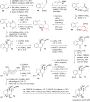
Scheme 10: Overman’s total synthesis of scopadulcic acid B.

Scheme 11: Davies’ total syntheses of tremulenolide A and tremulenediol A.

Scheme 12: Davies formal [4 + 3] cycloaddition approach towards the formal synthesis of frondosin B.

Scheme 13: Davies and Sarpongs formal [4 + 3]-cycloaddition approach towards barekoxide (106) and barekol (107...

Scheme 14: Davies formal [4 + 3]-cycloaddition approach to 5-epi-vibsanin E (115) containing an intermediate c...

Scheme 15: Echavarren’s total synthesis of schisanwilsonene A (126) featuring an impressive gold-catalzed casc...

Scheme 16: Davies early example of a formal [4 + 3]-cycloaddition in alkaloids synthesis.

Scheme 17: Fukuyama’s total synthesis of gelsemine, part 1.

Scheme 18: Fukuyama’s total synthesis of gelsemine, featuring a divinylcyclopropane rearrangement, part 2.

Scheme 19: Kende’s total synthesis of isostemofoline, using a formal [4 + 3]-cycloaddition, including an inter...

Scheme 20: Danishefsky’s total synthesis of gelsemine, part 1.

Scheme 21: Danishefsky’s total synthesis of gelsemine, part 2.

Scheme 22: Fukuyama’s total synthesis of gelsemoxonine.

Scheme 23: Wender’s synthetic access to the core skeleton of tiglianes, daphnanes and ingenanes.

Scheme 24: Davies’ approach towards the core skeleton of CP-263,114 (212).

Scheme 25: Wood’s approach towards actinophyllic acid.

Scheme 26: Takeda’s approach towards the skeleton of the cyanthins, utilitizing the divinylcyclopropane rearra...

Scheme 27: Donaldson’s organoiron route towards the guianolide skeleton.

Scheme 28: Stoltz’s tandem Wolff/DVCPR rearrangement.

Scheme 29: Stephenson’s tandem photocatalysis/arylvinylcyclopropane rearrangement.

Scheme 30: Padwa’s rhodium cascade involving a DVCPR.

Scheme 31: Matsubara’s version of a DVCPR.

Scheme 32: Toste’s tandem gold-catalyzed Claisen-rearrangement/DVCPR.

Scheme 33: Ruthenium- and gold-catalyzed versions of tandem reactions involving a DVCPR.

Scheme 34: Tungsten, platinum and gold catalysed cycloisomerizations leading to a DVCPR.

Scheme 35: Reisman’s total synthesis of salvileucalin B, featuring an (undesired) vinylcyclopropyl carbaldehyd...

Scheme 36: Studies on the divinylepoxide rearrangement.

Scheme 37: Studies on the vinylcyclopropanecarbonyl rearrangement.

Scheme 38: Nitrogen-substituted variants of the divinylcyclopropane rearrangement.
An overview of the synthetic routes to the best selling drugs containing 6-membered heterocycles
- Marcus Baumann and
- Ian R. Baxendale
Beilstein J. Org. Chem. 2013, 9, 2265–2319, doi:10.3762/bjoc.9.265
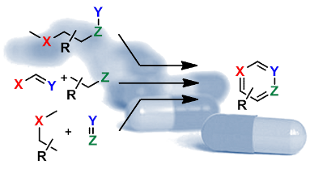
- sequence via the corresponding 2-pyrone (e.g. Scheme 9), which is converted to the 2-pyridone through an exchange with ammonia or an equivalent nitrogen source (NH4X; X = Cl, Br, I, OAc, OH). However, more conveniently the 2-pyrone precursor can be generated via the vacuum pyrolysis of coumalic acid (1.56

Graphical Abstract

Scheme 1: Scaled industrial processes for the synthesis of simple pyridines.

Scheme 2: Synthesis of nicotinic acid from 2-methyl-5-ethylpyridine (1.11).

Scheme 3: Synthesis of 3-picoline and nicotinic acid.

Scheme 4: Synthesis of 3-picoline from 2-methylglutarodinitrile 1.19.

Scheme 5: Picoline-based synthesis of clarinex (no yields reported).

Scheme 6: Mode of action of proton-pump inhibitors and structures of the API’s.

Scheme 7: Hantzsch-like route towards the pyridine rings in common proton pump inhibitors.

Figure 1: Structures of rosiglitazone (1.40) and pioglitazone (1.41).

Scheme 8: Synthesis of rosiglitazone.

Scheme 9: Syntheses of 2-pyridones.

Scheme 10: Synthesis and mechanism of 2-pyrone from malic acid.

Scheme 11: Polymer-assisted synthesis of rosiglitazone.

Scheme 12: Synthesis of pioglitazone.

Scheme 13: Meerwein arylation reaction towards pioglitazone.

Scheme 14: Route towards pioglitazone utilising tyrosine.

Scheme 15: Route towards pioglitazone via Darzens ester formation.

Scheme 16: Syntheses of the thiazolidinedione moiety.

Scheme 17: Synthesis of etoricoxib utilising Negishi and Stille cross-coupling reactions.

Scheme 18: Synthesis of etoricoxib via vinamidinium condensation.

Figure 2: Structures of nalidixic acid, levofloxacin and moxifloxacin.

Scheme 19: Synthesis of moxifloxacin.

Scheme 20: Synthesis of (S,S)-2,8-diazabicyclo[4.3.0]nonane 1.105.

Scheme 21: Synthesis of levofloxacin.

Scheme 22: Alternative approach to the levofloxacin core 1.125.

Figure 3: Structures of nifedipine, amlodipine and clevidipine.

Scheme 23: Mg3N2-mediated synthesis of nifedipine.

Scheme 24: Synthesis of rac-amlodipine as besylate salt.

Scheme 25: Aza Diels–Alder approach towards amlodipine.

Scheme 26: Routes towards clevidipine.

Figure 4: Examples of piperidine containing drugs.

Figure 5: Discovery of tiagabine based on early leads.

Scheme 27: Synthetic sequences to tiagabine.

Figure 6: Structures of solifenacin (2.57) and muscarine (2.58).

Scheme 28: Enantioselective synthesis of solifenacin.

Figure 7: Structures of DPP-4 inhibitors of the gliptin-type.

Scheme 29: Formation of inactive diketopiperazines from cis-rotameric precursors.

Figure 8: Co-crystal structure of carmegliptin bound in the human DPP-4 active site (PDB 3kwf).

Scheme 30: Improved route to carmegliptin.

Figure 9: Structures of lamivudine and zidovudine.

Scheme 31: Typical routes accessing uracil, thymine and cytosine.

Scheme 32: Coupling between pyrimidones and riboses via the Vorbrüggen nucleosidation.

Scheme 33: Synthesis of lamivudine.

Scheme 34: Synthesis of raltegravir.

Scheme 35: Mechanistic studies on the formation of 3.22.

Figure 10: Structures of selected pyrimidine containing drugs.

Scheme 36: General preparation of pyrimidines and dihydropyrimidones.

Scheme 37: Synthesis of imatinib.

Scheme 38: Flow synthesis of imatinib.

Scheme 39: Syntheses of erlotinib.

Scheme 40: Synthesis of erlotinib proceeding via Dimroth rearrangement.

Scheme 41: Synthesis of lapatinib.

Scheme 42: Synthesis of rosuvastatin.

Scheme 43: Alternative preparation of the key aldehyde towards rosuvastatin.

Figure 11: Structure comparison between nicotinic acetylcholine receptor agonists.

Scheme 44: Syntheses of varenicline and its key building block 4.5.

Scheme 45: Synthetic access to eszopiclone and brimonidine via quinoxaline intermediates.

Figure 12: Bortezomib bound in an active site of the yeast 20S proteasome ([114], pdb 2F16).

Scheme 46: Asymmetric synthesis of bortezomib.

Figure 13: Structures of some prominent piperazine containing drugs.

Figure 14: Structural comparison between the core of aplaviroc (4.35) and a type-1 β-turn (4.36).

Scheme 47: Examplary synthesis of an aplaviroc analogue via the Ugi-MCR.

Scheme 48: Syntheses of azelastine (5.1).

Figure 15: Structures of captopril, enalapril and cilazapril.

Scheme 49: Synthesis of cilazapril.

Figure 16: Structures of lamotrigine, ceftriaxone and azapropazone.

Scheme 50: Synthesis of lamotrigine.

Scheme 51: Alternative synthesis of lamotrigine (no yields reported).

Figure 17: Structural comparison between imiquimod and the related adenosine nucleoside.

Scheme 52: Conventional synthesis of imiquimod (no yields reported).

Scheme 53: Synthesis of imiquimod.

Scheme 54: Synthesis of imiquimod via tetrazole formation (not all yields reported).

Figure 18: Structures of various anti HIV-medications.

Scheme 55: Synthesis of abacavir.

Figure 19: Structures of diazepam compared to modern replacements.

Scheme 56: Synthesis of ocinaplon.

Scheme 57: Access to zaleplon and indiplon.

Scheme 58: Different routes towards the required N-methylpyrazole 6.65 of sildenafil.

Scheme 59: Polymer-supported reagents in the synthesis of key aminopyrazole 6.72.

Scheme 60: Early synthetic route to sildenafil.

Scheme 61: Convergent preparations of sildenafil.

Figure 20: Comparison of the structures of sildenafil, tadalafil and vardenafil.

Scheme 62: Short route to imidazotriazinones.

Scheme 63: Alternative route towards vardenafils core imidazotriazinone (6.95).

Scheme 64: Bayer’s approach to the vardenafil core.

Scheme 65: Large scale synthesis of vardenafil.

Scheme 66: Mode of action of temozolomide (6.105) as methylating agent.

Scheme 67: Different routes to temozolomide.

Scheme 68: Safer route towards temozolomide.

Figure 21: Some unreported heterocyclic scaffolds in top market drugs.
A practical synthesis of long-chain iso-fatty acids (iso-C12–C19) and related natural products
- Mark B. Richardson and
- Spencer J. Williams
Beilstein J. Org. Chem. 2013, 9, 1807–1812, doi:10.3762/bjoc.9.210

- the terminal alkene of methyl undecylenate (available as a pyrolysis product of ricinoleic acid) using isopropyl chloroformate and ethyldichloroaluminium [51], and the synthesis of the iso-C17 acid 6 from methyl ustilate (15,16-dihydroxypalmitate) [52]. Despite the interest in natural products

Graphical Abstract

Figure 1: Structures of iso-fatty acids.

Scheme 1: Synthesis of iso-C12 1, iso-C13 2, and iso-C14 3 fatty acids from methyl undecylenate (9). Reagents...

Scheme 2: Synthesis of iso-C15 4, iso-C16 5, and iso-C17 6 fatty acids from pentadecanolide (15). Reagents an...

Scheme 3: Synthesis of iso-C18 7 and iso-C19 8 fatty acids from hexadecanolide 23. Reagents and conditions: (...

Scheme 4: Synthesis of (A) 2-methyl- and 2-hydroxy-iso-fatty acids 30 and 32, and (B) the ketone 33. Reagents...
The preparation of several 1,2,3,4,5-functionalized cyclopentane derivatives
- André S. Kelch,
- Peter G. Jones,
- Ina Dix and
- Henning Hopf
Beilstein J. Org. Chem. 2013, 9, 1705–1712, doi:10.3762/bjoc.9.195
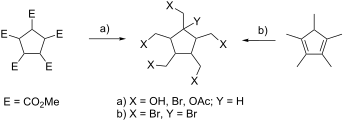
- are involved that employ β-elimination processes – be it of halides, aminoxide derivatives (Cope elimination), acetates (ester pyrolysis), etc. [2][3]. When starting with derivatives of type 6 it should be noted that these compounds can exist in the form of different diastereomers; for example – as
- be subjected to flash vacuum pyrolysis (Scheme 4). Whereas all our attempts to synthesize 20 failed (see Supporting Information File 1), the pentaester 21 was obtained under standard conditions from 16 by treatment with excess acetyl chloride in excellent yield; its spectroscopic data can be found in

Graphical Abstract

Scheme 1: The first members of the [n]radialene series and retrosynthesis for [5]radialene (3).

Scheme 2: Preparation of cis,cis,cis,cis-1,2,3,4,5-pentakis(hydroxymethyl)cyclopentane (16) according to Tolb...

Scheme 3: The preparation of derivatives of 16 better suited for nucleophilic substitution and elimination.

Figure 1: Structure of 19 in the crystal; ellipsoids represent 50% probability levels.

Scheme 4: Preparation of the pentaacetate 21 from 16.

Scheme 5: Preparation of the cycloheptadiene octaesters 24/25 according to Diels [11] and Le Goff [13], respectively,...

Figure 2: Structure of 24 in the crystal; ellipsoids represent 30% probability levels.

Figure 3: Structure of 26 in the crystal; ellipsoids represent 30% probability levels.

Scheme 6: Derivatives derived from the pentaester mixture 26/27.
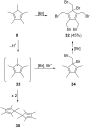
Scheme 7: Bromination of 1,2,3,4,5-pentamethylcyclopenta-1,3-diene (8).

Figure 4: Structure of 32 in the crystal; ellipsoids represent 50% probability levels.
Thermochemistry and photochemistry of spiroketals derived from indan-2-one: Stepwise processes versus coarctate fragmentations
- Götz Bucher,
- Gernot Heitmann and
- Rainer Herges
Beilstein J. Org. Chem. 2013, 9, 1668–1676, doi:10.3762/bjoc.9.191
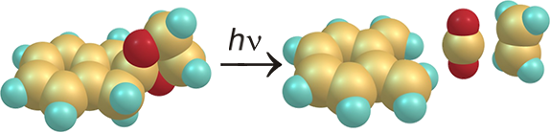
- we investigate the fragmentation reactions of cyclic ketals. Three ketals with different ring sizes derived from indan-2-one were decomposed by photolysis and pyrolysis. Particularly clean is the photolysis of the indan-2-one ketal 1, which gives o-quinodimethane, carbon dioxide and ethylene. The
- mechanism formally corresponds to a photochemically allowed coarctate fragmentation. Pyrolysis of the five-ring ketal yields a number of products. This is in agreement with the fact that coarctate fragmentation observed upon irradiation would be thermochemically forbidden, although this exclusion principle
- does not hold for chelotropic reactions. In contrast, fragmentation of the seven-ring ketal 3 is thermochemically allowed and photochemically forbidden. Upon pyrolysis of 3 several products were isolated that could be explained by a coarctate fragmentation. However, the reaction is less clean and

Graphical Abstract

Figure 1: Formal, topological approach to derive coarctate reactions from pericyclic reactions; p, q: number ...

Figure 2: Stereochemistry of coarctate reactions derived from a Hückel (top) and a Möbius band (bottom). The ...

Scheme 1: Coarctate fragmentation of the spiroozonide derived from methylenecyclopropane.

Scheme 2: Photochemically and thermally allowed coarctate fragmentations of spiroketals.

Scheme 3: Precursors used in this study.

Figure 3: Difference infrared spectrum, showing the changes in the IR spectrum after photolysis (λexc = 254 n...

Figure 4: Infrared spectrum obtained upon FVP of 1 at T = 1143 K and trapping the pyrolysate in solid argon a...

Figure 5: Infrared spectrum obtained upon FVP of 2 at T = 963 K and trapping the pyrolysate in solid argon at ...

Figure 6: Infrared spectrum obtained upon FVP of 3 at T = 1043 K and trapping the pyrolysate in solid argon a...

Scheme 4: Possible fragmentation pathways in the FVP of 1.

Scheme 5: Possible fragmentation pathways in the FVP of 2.

Scheme 6: Possible fragmentation pathways in the FVP of 3.
A Lewis acid-promoted Pinner reaction
- Dominik Pfaff,
- Gregor Nemecek and
- Joachim Podlech
Beilstein J. Org. Chem. 2013, 9, 1572–1577, doi:10.3762/bjoc.9.179

- with amines furnishes amidinium compounds and the reaction with alcohols gives rise to ortho esters. A less frequently used pyrolysis leads to carboxamides (Scheme 3) [3][4][5]. The harsh reaction conditions preclude a broad application of the Pinner reaction. The high toxicity and the laborious

Graphical Abstract

Scheme 1: Imidate hydrochloride synthesis discovered by Pinner and Klein [1,2].

Scheme 2: Mechanism of the Pinner reaction.

Scheme 3: Transformations of imidate hydrochlorides.

Scheme 4: Reaction used for optimizations.

Scheme 5: Plausible mechanism of the Lewis acid-promoted Pinner reaction.

Scheme 6: Synthesis of monaspilosin.

Scheme 7: Proposed mechanism of the trimethylsilyl triflate-promoted Ritter reaction.
4-Pyridylnitrene and 2-pyrazinylcarbene
- Curt Wentrup,
- Ales Reisinger and
- David Kvaskoff
Beilstein J. Org. Chem. 2013, 9, 754–760, doi:10.3762/bjoc.9.85
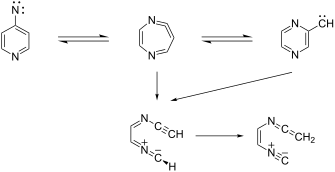
- . 1 mbar due to a shock wave induced by rapid distillation of the azide into the furnace under high vacuum, results in ring contraction to cyanocyclopentadiene 6 [12]. Similar pyrolysis of 4-azidopyridine results in ring contraction to a mixture of 2- and 3-cyanopyrroles 16 and 17. Because the ring
- pyrolysis tube. The exact mechanisms of ring contraction in arylnitrenes are under investigation, but in the case of 2-pyridylnitrene (Scheme 2) three routes to the cyanopyrroles have been described [10], as has their thermal interconversion [9][10]. The analogous, concerted ring contraction of
- 2076 cm−1 (Figure 1). Warming the neat diazo compound to ca. −30 °C causes ring closure to triazole 24. Compound 24 can be isolated in up to 20% yield in preparative pyrolysis of 23 [16]. Further FVT of either 23 or 24 at ≥450 °C/10−3 mbar results in the formation of approximately equal amounts of the

Graphical Abstract

Scheme 1: Phenylnitrene–2-pyridylcarbene rearrangement.
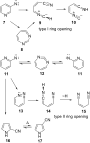
Scheme 2: Type I and type II ring opening and ring expansion in 3- and 2-pyridylnitrenes, respectively.

Scheme 3: FVT reactions of 4-azidopyridine (18), 2-(5-tetrazolyl)pyrazine (23) and triazolo[1,5-a]pyrazine (24...

Figure 1: Difference-IR spectrum of 2-diazomethylpyrazine (22) (positive peaks) in Ar matrix at 7 K, obtained...

Figure 2: Ar matrix IR-difference spectra showing the products of broadband UV photolysis of 4-azidopyridine (...
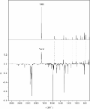
Figure 3: Top: calculated IR spectrum of 20 at the B3LYP/6-31G* level (wavenumbers scaled by 0.9613): ν’ (rel...

Figure 4: Bottom: IR spectrum from the matrix photolysis of azide 18 after the azide has been depleted comple...

Scheme 4: Photolysis reactions of azide 18 and triazole 24 in Ar matrix.
3-Pyridylnitrene, 2- and 4-pyrimidinylcarbenes, 3-quinolylnitrenes, and 4-quinazolinylcarbenes. Interconversion, ring expansion to diazacycloheptatetraenes, ring opening to nitrile ylides, and ring contraction to cyanopyrroles and cyanoindoles
- Curt Wentrup,
- Nguyen Mong Lan,
- Adelheid Lukosch,
- Pawel Bednarek and
- David Kvaskoff
Beilstein J. Org. Chem. 2013, 9, 743–753, doi:10.3762/bjoc.9.84
- triazoloquinazoline 53 undergo pyrolysis via the diazomethylquinazoline 54 (Scheme 13) [23]. Both afforded the 3-cyanoindole 48 in nearly quantitative yield (up to 98%) on FVT at 400–600 °C, but no traces of either indoloquinoline 50 or the 3-aminoquinoline 51 were detectable. The same was true when the thermolysis
- pyrolysis tube at 170 °C and pyrolysed at 600 °C/10−3 mbar in the course of 12 h. The resulting pyrolysate (120 mg) was identified as a 1:1 mixture of 2- and 3-cyanopyrroles 7 and 8 by comparison of the 1H NMR, IR and mass spectra with those of authentic materials. Yields were determined by GC as above [10

Graphical Abstract

Scheme 1: 4-Pyridylnitrene–2-pyrazinylcarbene interconversion.

Scheme 2: Ring expansion and ring contraction in 2-pyridylnitrene (4).

Scheme 3: Ring opening and ring expansion in 3-pyridylnitrene (10).

Scheme 4: Ring opening and ring contraction in 3-pyridylnitrene (10) and diazacycloheptatetraene 16.

Figure 1: Energy profile for the ring opening and ring contraction in 3-pyridylnitrene 10 and 1,6-diazacycloh...

Scheme 5: Potential direct ring contraction in 3-pyridylnitrene (10).

Scheme 6: Ring contraction by ring opening to nitrile ylide 11.

Scheme 7: Generation of pyrimidinyldiazomethanes and pyrimidinylcarbenes.

Scheme 8: Formation of cyanopyrroles by FVT of tetrazolylpyrimidines.

Scheme 9: Rearrangements of pyrimidinylcarbenes to cyanopyrroles via nitrile ylides 31 and 37.

Scheme 10: Rearrangements of phenyl(dimethylpyrimidinyl)carbene.

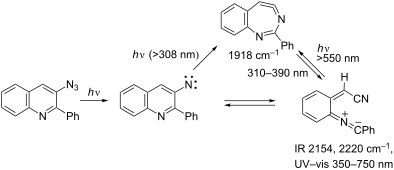
Scheme 11: Photolysis of 3-azido-2-phenylquinoline.
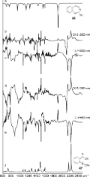
Figure 2: IR difference spectra from the photolysis of 3-azido-2-phenylquinoline (44) in Ar matrix. (a) Calcu...

Figure 3: UV–vis spectra from the sequential photolysis of 3-azido-2-phenylquinoline (44) in Ar matrix at 310...

Scheme 12: Preparative FVT of 3-azido-2-phenylquinoline.

Scheme 13: FVT of 2-phenyl-4-quinazolinylcarbene precursors.
Photoionisation of the tropyl radical
- Kathrin H. Fischer,
- Patrick Hemberger,
- Andras Bodi and
- Ingo Fischer
Beilstein J. Org. Chem. 2013, 9, 681–688, doi:10.3762/bjoc.9.77
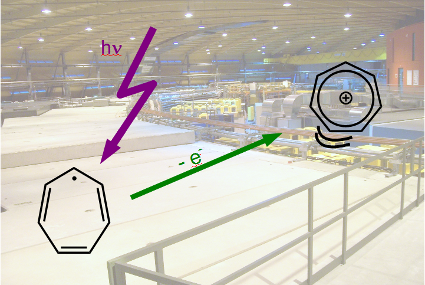
- study on the photoionisation of the cycloheptatrienyl (tropyl) radical, C7H7, using tunable vacuum ultraviolet synchrotron radiation. Tropyl is generated by flash pyrolysis from bitropyl. Ions and electrons are detected in coincidence, permitting us to record mass-selected photoelectron spectra. The
- efficient source for tropyl radicals generated by pyrolysis. Furthermore, the ground and excited states of the ion have been investigated computationally [9][17]. In the present study we extend the previous work using imaging photoelectron–photoion coincidence (iPEPICO) techniques in combination with VUV
- situ detection of radicals in flames by photoionisation [30]. The goal of the present experimental study was to elucidate the vibrational structure of the tropyl ion ground state with threshold photoelectron spectroscopic (TPES) techniques. Results and Discussion The performance of the pyrolysis source

Graphical Abstract

Figure 1: Structure of the tropyl radical 1, its cation 2 and the precursor bitropyl 3.
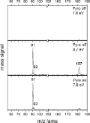
Figure 2: Mass spectra of bitropyl without pyrolysis at 7.8 and 8.7 eV (top and centre trace) and with pyroly...

Figure 3: Threshold photoelectron spectrum of tropyl (black line). The Franck–Condon simulation (red line) is...

Figure 4: TPE spectrum of tropyl (solid line) and cyclopentadienyl (m/z = 65, dashed line) in the 7–13 eV pho...

Figure 5: The shape of the C5H5+ peak in the mass spectrum changes with photon energy. While the peak is symm...
The chemistry of bisallenes
- Henning Hopf and
- Georgios Markopoulos
Beilstein J. Org. Chem. 2012, 8, 1936–1998, doi:10.3762/bjoc.8.225
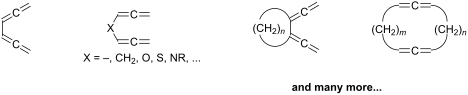
- pyrolysis reaction (see Section 5). How fast a very large structural variety can be generated from these basic patterns, becomes obvious if one realizes that, for example, in the aromatic systems 12, the allene units can be anchored also in meta- and/or para-position and condensed aromatic compounds or
- superior route to 88 consists of the thermal isomerization of hexakis(trimethylsilyl)benzene (89) [71][72]. Under flash vacuum pyrolysis conditions (400 °C, <0.01 Tor) 88 is produced from 89 as a mixture with several of its isomers (see below), but heating of the aromatic substrate at 200 °C for 10 h
- -shift to provide the diradical intermediate 90. In the next step the ring is split to furnish derivative 91, which, by another TMS-shift, isomerizes to the propargylallene 92. The sequence ends with still another TMS-relocation to provide the final product 88. Both, 91 and 92 are pyrolysis products

Graphical Abstract

Figure 1: Loschmidt’s structure proposal for benzene (1) (Scheme 181 from [3]) and the corresponding modern stru...

Figure 2: The first isolated bisallenes.

Figure 3: Carbon skeletons of selected bisallenes discussed in this review.

Scheme 1: The preparation of 1,2,4,5-hexatetraene (2).

Scheme 2: The preparation of a conjugated bisallene by the DMS-protocol.

Scheme 3: Preparation of the 3-deuterio- and 3,4-dideuterio derivatives of 24.

Scheme 4: A versatile method to prepare alkylated conjugated bisallenes and other allenes.

Scheme 5: A preparation of 3,4-dimethyl-1,2,4,5-hexatetraene (38).

Scheme 6: A (C6 + 0)-approach to 1,2,4,5-hexatetraene (2).

Scheme 7: The preparation of a fully alkylated bisallenes from a 2,4-hexadiyne-1,6-diol diacetate.

Scheme 8: The preparation of the first phenyl-substituted conjugated bisallenes 3 and 4.

Scheme 9: Selective hydrogenation of [5]cumulenes to conjugated bisallenes: another (C6 + 0)-route.

Scheme 10: Aryl-substituted conjugated bisallenes by a (C3 + C3)-approach.

Scheme 11: Hexaphenyl-1,2,4,5-hexatetraene (59) by a (C3 + C3)-approach.

Scheme 12: An allenation route to conjugated bisallenes.

Scheme 13: The preparation of 3,4-difunctionalized conjugated bisallenes.

Scheme 14: Problems during the preparation of sulfur-substituted conjugated bisallenes.

Scheme 15: The preparation of 3,4-dibromo bisallenes.

Scheme 16: Generation of allenolates by an oxy-Cope rearrangement.

Scheme 17: A linear trimerization of alkynes to conjugated bisallenes: a (C2 + C2 + C2)-protocol.

Scheme 18: Preparation of a TMS-substituted conjugated bisallene by a C3-dimerization route.

Scheme 19: A bis(trimethylsilyl)bisallene by a C3-coupling protocol.

Scheme 20: The rearrangement of highly substituted benzene derivatives into their conjugated bisallenic isomer...

Scheme 21: From fully substituted benzene derivatives to fully substituted bisallenes.

Scheme 22: From a bicyclopropenyl to a conjugated bisallene derivative.

Scheme 23: The conversion of a bismethylenecyclobutene into a conjugated bisallene.

Scheme 24: The preparation of monofunctionalized bisallenes.

Scheme 25: Preparation of bisallene diols and their cyclization to dihydrofurans.

Scheme 26: A 3,4-difunctionalized conjugated bisallene by a C3-coupling process.

Scheme 27: Preparation of a bisallenic diketone by a coupling reaction.

Scheme 28: Sulfur and selenium-substituted bisallenes by a [2.3]sigmatropic rearrangement.

Scheme 29: The biallenylation of azetidinones.

Scheme 30: The preparation of a fully ferrocenylated conjugated bisallene.

Scheme 31: The first isomerization of a 1,5-hexadiyne to a 1,2,4,5-hexatetraene.

Scheme 32: The preparation of alkynyl-substituted bisallenes by a C3-dimerization protocol.

Scheme 33: Preparation of another completely ferrocenylated bisallene.

Scheme 34: The cyclization of 1,5-hexadiyne (129) to 3,4-bismethylenecyclobutene (130) via 1,2,4,5-hexatetraen...
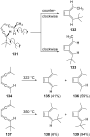
Scheme 35: Stereochemistry of the thermal cyclization of bisallenes to bismethylenecyclobutenes.

Scheme 36: Bisallene→bismethylenecyclobutene ring closures in the solid state.

Scheme 37: A bisallene cyclization/dimerization reaction.

Scheme 38: A selection of Diels–Alder additions of 1,2,4,5-hexatetraene with various double-bond dienophiles.

Scheme 39: The stereochemistry of the [2 + 4] cycloaddition to conjugated bisallenes.

Scheme 40: Preparation of azetidinone derivatives from conjugated bisallenes.

Scheme 41: Cycloaddition of heterodienophiles to a conjugated bisallene.

Scheme 42: Addition of triple-bond dienophiles to conjugated bisallenes.

Scheme 43: Sulfur dioxide addition to conjugated bisallenes.

Scheme 44: The addition of a germylene to a conjugated bisallene.

Scheme 45: Trapping of conjugated bisallenes with phosphinidenes.

Scheme 46: The cyclopropanantion of 1,2,4,5-hexatetraene (2).

Scheme 47: Photochemical reactions involving conjugated bisallenes.

Scheme 48: Base-catalyzed isomerizations of conjugated bisallenes.

Scheme 49: Ionic additions to a conjugated bisallene.

Scheme 50: Oxidation reactions of a conjugated bisallene.
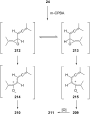
Scheme 51: The mechanism of oxidation of the bisallene 24.

Scheme 52: CuCl-catalyzed cyclization of 1,2,4,5-hexatetraene (2).

Scheme 53: The conversion of conjugated bisallenes into cyclopentenones.

Scheme 54: Oligomerization of a conjugated bisallene by nickel catalysts.
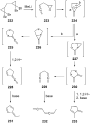
Scheme 55: Generation of 1,2,5,6-heptatetraene (229) as a reaction intermediate.

Scheme 56: The preparation of a stable derivative of 1,2,5,6-heptatetraene.

Scheme 57: A bisallene with a carbonyl group as a spacer element.

Scheme 58: The first preparation of 1,2,6,7-octatetraene (242).

Scheme 59: Preparation of 1,2,6,7-octatetraenes by (C4 + C4)-coupling of enynes.

Scheme 60: Preparation of 1,2,6,7-octatetraenes by (C4 + C4)-coupling of homoallenyl bromides.

Scheme 61: Preparation of 1,2,6,7-octatetraenes by alkylation of propargylic substrates.

Scheme 62: Preparation of two highly functionalized 1,2,6,7-octatetraenes.

Scheme 63: Preparation of several higher α,ω-bisallenes.

Scheme 64: Preparation of different alkyl derivatives of α,ω-bisallenes.

Scheme 65: The preparation of functionalized 1,2,7,8-nonatetraene derivatives.

Scheme 66: Preparation of functionalized α,ω-bisallenes.

Scheme 67: The preparation of an α,ω-bisallene by direct homologation of an α,ω-bisalkyne.

Scheme 68: The gas-phase pyrolysis of 4,4-dimethyl-1,2,5,6-heptatetraene (237).
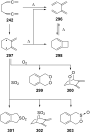
Scheme 69: Gas-phase pyrolysis of 1,2,6,7-octatetraene (242).

Scheme 70: The cyclopropanation of 1,2,6,7-octatetraene (242).

Scheme 71: Intramolecular cyclization of 1,2,6,7-octatetraene derivatives.

Scheme 72: The gas-phase pyrolysis of 1,2,7,8-nonatetraene (265) and 1,2,8,9-decatetraene (266).

Scheme 73: Rh-catalyzed cyclization of a functionalized 1,2,7,8-nonatetraene.

Scheme 74: A triple cyclization involving two different allenic substrates.

Scheme 75: Bicyclization of keto derivatives of 1,2,7,8-nonatetraene.

Scheme 76: The preparation of complex organic compounds from functionalized bisallenes.

Scheme 77: Cycloisomerization of an α,ω-bisallene containing a C9 tether.

Scheme 78: Organoborane polymers from α,ω-bisallenes.

Scheme 79: Preparation of trans- (337) and cis-1,2,4,6,7-octapentaene (341).

Scheme 80: The preparation of 4-methylene-1,2,5,6-heptatetraene (349).

Scheme 81: The preparation of acetylenic bisallenes.

Scheme 82: The preparation of derivatives of hydrocarbon 351.

Scheme 83: The construction of macrocyclic alleno-acetylenes.

Scheme 84: Preparation and reactions of 4,5-bismethylene-1,2,6,7-octatetraene (365).

Scheme 85: Preparation of 1,2-bis(propadienyl)benzene (370).

Scheme 86: The preparation of 1,4-bis(propadienyl)benzene (376).

Scheme 87: The preparation of aromatic and heteroaromatic bisallenes by metal-mediated coupling reactions.

Scheme 88: Double cyclization of an aromatic bisallene.

Scheme 89: Preparation of an allenic [15]paracyclophane by a ring-closing metathesis reaction of an aromatic α...

Scheme 90: Preparation of a macrocyclic ring system containing 1,4-bis(propadienyl)benzene units.

Scheme 91: Preparation of copolymers from 1,4-bis(propadienyl)benzene (376).

Scheme 92: A boration/copolymerization sequence of an aromatic bisallene and an aromatic bisacetylene.

Scheme 93: Formation of a layered aromatic bisallene.

Figure 4: The first members of the semicyclic bisallene series.

Scheme 94: Preparation of the first bis(vinylidene)cyclobutane derivative.
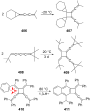
Scheme 95: Dimerization of strain-activated cumulenes to bis(vinylidene)cyclobutanes.

Scheme 96: Photodimerization of two fully substituted butatrienes in the solid state.

Scheme 97: Preparation of the two parent bis(vinylidene)cyclobutanes.

Scheme 98: The preparation of 1,3-bis(vinylidene)cyclopentane and its thermal isomerization.

Scheme 99: The preparation of the isomeric bis(vinylidene)cyclohexanes.

Scheme 100: Bi- and tricyclic conjugated bisallenes.
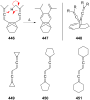
Scheme 101: A selection of polycyclic bisallenes.

Scheme 102: The first endocyclic bisallenes.

Figure 5: The stereochemistry of 1,2,6,7-cyclodecatetraene.

Scheme 103: The preparation of several endocyclic bisallenes.

Scheme 104: Synthesis of diastereomeric derivatives of 1,2,6,7-cyclodecatetraene.

Scheme 105: Preparation of a derivative of 1,2,8,9-cyclotetradecatetraene.

Scheme 106: The preparation of keto derivatives of cyclic bisallenes.

Scheme 107: The preparation of cyclic biscumulenic ring systems.

Scheme 108: Cyclic bisallenes in natural- and non-natural-product chemistry.

Scheme 109: The preparation of iron carbonyl complexes from cyclic bisallenes.

Figure 6: A selection of unknown exocyclic bisallenes that should have interesting chemical properties.

Scheme 110: The thermal isomerization of 1,2-diethynylcyclopropanes and -cyclobutanes.

Scheme 111: Intermediate generation of a cyclooctapentaene.

Scheme 112: Attempted preparation of a cyclodecahexaene.

Scheme 113: The thermal isomerization of 1,5,9-cyclododecatriyne (511) into [6]radialene (514).

Scheme 114: An isomerization involving a diketone derived from a conjugated bisallene.

Scheme 115: Typical reaction modes of heteroorganic bisallenes.

Scheme 116: Generation and thermal behavior of acyclic hetero-organic bisallenes.

Scheme 117: Generation of bis(propadienyl)thioether.

Scheme 118: The preparation of a bisallenic sulfone and its thermal isomerization.

Scheme 119: Bromination of the bisallenic sulfone 535.

Scheme 120: Metalation/hydrolysis of the bisallenic sulfone 535.

Scheme 121: Aromatic compounds from hetero bisallenes.

Scheme 122: Isomerization/cyclization of bispropargylic ethers.

Scheme 123: The preparation of novel aromatic systems by base-catalyzed isomerization of bispropargyl ethers.

Scheme 124: The isomerization of bisacetylenic thioethers to bicyclic thiophenes.

Scheme 125: Aromatization of macrocyclic bispropargylic sulfides.

Scheme 126: Preparation of ansa-compounds from macrocyclic bispropargyl thioethers.

Scheme 127: Alternate route for cyclization of a heterorganic bisallene.
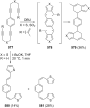
Scheme 128: Multiple isomerization/cyclization of “double” bispropargylic thioethers.

Scheme 129: Preparation of a bisallenyl disulfide and its subsequent bicyclization.

Scheme 130: Thermal cyclization of a bisallenyl thiosulfonate.

Scheme 131: Some reactions of heteroorganic bisallenes with two sulfur atoms.

Scheme 132: Further methods for the preparation of heteroorganic bisallenes.

Scheme 133: Cyclization reactions of heteroorganic bisallenes.

Scheme 134: Thermal cycloadditions of bisallenic tertiary amines.

Scheme 135: Cyclization of a bisallenic tertiary amine in the presence of a transition-metal catalyst.

Scheme 136: A Pauson–Khand reaction of a bisallenic ether.

Scheme 137: Formation of a 2:1adduct from two allenic substrates.

Scheme 138: A ring-forming silastannylation of a bisallenic tertiary amine.

Scheme 139: A three-component cyclization involving a heterorganic bisallene.

Scheme 140: Atom-economic construction of a complex organic framework from a heterorganic α,ω-bisallene.
An intramolecular inverse electron demand Diels–Alder approach to annulated α-carbolines
- Zhiyuan Ma,
- Feng Ni,
- Grace H. C. Woo,
- Sie-Mun Lo,
- Philip M. Roveto,
- Scott E. Schaus and
- John K. Snyder
Beilstein J. Org. Chem. 2012, 8, 829–840, doi:10.3762/bjoc.8.93
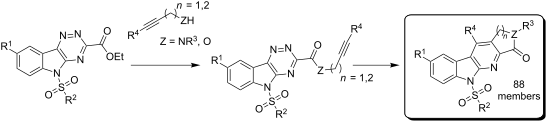
- the pyrolysis of proteins [10][11] as well as the pyrolysis of tryptophan [12]. Isoeudistomin U, isolated from the ascidian Lissoclinum fragile, was originally reported to have an α-carboline skeleton [13], but this assignment was later shown to be incorrect [14]. Given their isomeric relationship to

Graphical Abstract

Figure 1: Natural products with α-carboline subunits.

Scheme 1: Retrosynthetic inverse electron Diels–Alder approach to α-carbolines.

Scheme 2: Condensation of isatins with ethyl oxaloamidrazonate to form triazines.

Scheme 3: Amidation of triazine ester 8a.

Scheme 4: Microwave-promoted IEDDA reaction of isatin derived triazines.

Scheme 5: One-pot amidation/cycloaddition of triazine ester 8a.

Scheme 6: Amidation/cycloaddition forming α-carbolines 14.

Scheme 7: Intramolecular hydrogen bonding prevents IEDDA cycloaddition of 14b.

Scheme 8: Preparation of unprotected triazine 15, and its lack of reactivity in cycloadditions.

Scheme 9: Transesterification and subsequent cycloaddition of 17a.
Valence isomerization of cyclohepta-1,3,5-triene and its heteroelement analogues
- Helen Jansen,
- J. Chris Slootweg and
- Koop Lammertsma
Beilstein J. Org. Chem. 2011, 7, 1713–1721, doi:10.3762/bjoc.7.201
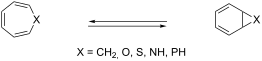
- -triene [14]. Besides the 1–2 interconversion, the C7H8 system is rich in rearrangements (Scheme 3). In 1957, Woods found that bicyclo[2.2.1]hepta-2,5-diene (12) converts to cycloheptatriene (1), which was postulated to proceed via diradical 11 and norcaradiene (2) [28]. Instead, pyrolysis of 1 yielded

Graphical Abstract

Scheme 1: Valence isomerization of cyclohepta-1,3,5-triene (1) and its heteroelement analogues.

Scheme 2: Conformational ring inversions.

Scheme 3: Rearrangements of the parent cycloheptatriene 1 and norcaradiene 2.

Figure 1: NICS(0) values of fluorinated heteropines.

Scheme 4: Reactivity of oxepine (3) and benzene oxide (4).

Figure 2: Stabilized thiepines 15–18.

Scheme 5: Valence isomerization of 1H-azepines.
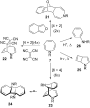
Scheme 6: Reactivity of 1H-azepine.

Figure 3: Benzannulated azepines 27 and 28.

Figure 4: Reported phosphepines 29–32.

Scheme 7: Phosphinidene generation from metal-complexed benzophosphepine 33.
Synthesis of fluoranthenes by hydroarylation of alkynes catalyzed by gold(I) or gallium trichloride
- Sergio Pascual,
- Christophe Bour,
- Paula de Mendoza and
- Antonio M. Echavarren
Beilstein J. Org. Chem. 2011, 7, 1520–1525, doi:10.3762/bjoc.7.178
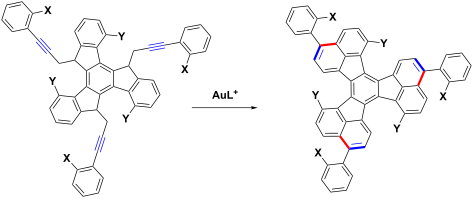
- have already been synthesized by palladium-catalyzed arylation reactions [53][54]. Strategically halogenated decacyclenes with a substitution pattern similar to that of 2 have been used for the synthesis of circumtrindene by flash vacuum pyrolysis [55]. Here we report the results on the synthesis of

Graphical Abstract

Scheme 1: Proposed metal catalyzed annulation for the synthesis of triaryldiacenaphtho[1,2-j:1',2'-l]fluorant...

Figure 1: Cationic gold complexes 5 and 6.

Scheme 2: Pd(OAc)2-catalyzed isomerization of 7a to form (E)-9-(3-phenylallylidene)-9H-fluorene (9).

Scheme 3: Gold(I)-catalyzed hydroarylation of 7k to give 1,10b-dihydrofluoranthene 9.

Scheme 4: Gold(I)-catalyzed triple hydroarylation of 1a,b to give 2a,b.
Advances in synthetic approach to and antifungal activity of triazoles
- Kumari Shalini,
- Nitin Kumar,
- Sushma Drabu and
- Pramod Kumar Sharma
Beilstein J. Org. Chem. 2011, 7, 668–677, doi:10.3762/bjoc.7.79

- nitrogen atoms. However, flash vacuum pyrolysis at 500 °C leads to loss of molecular nitrogen (N2) to produce aziridine. Certain triazoles are relatively easy to cleave by ring–chain tautomerism. Synthesis of triazoles Substituted 1,2,3-triazoles can be produced by the azide–alkyne Huisgen cycloaddition in

Graphical Abstract

Figure 1: Isomeric forms of triazole.

Scheme 1: Copper catalyzed azide–alkyne cycloaddition.

Scheme 2: Ruthenium catalyzed azide–alkyne cycloaddition.

Scheme 3: Copper-sulfate catalyzed azide–alkyne cycloaddition.

Scheme 4: Azide–dimethylbut-2-yne-dioate cycloaddition.

Figure 2: Triazole compound 3 with most potent antifugal activity against various strains [20].

Figure 3: Triazole compounds 4 and 5 showing antifungal activity against Candida albicans [31].

Figure 4: Triazole compound 6 with the highest activity against Aspergillus flavus, Aspergillus versicolor, A...

Figure 5: Triazole compound 7 exhibiting an MIC of 25 µg/mL against Aspergillus niger [33].
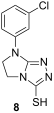
Figure 6: Triazole compound 8 showing the most significant activity against Aspergillus niger and Fusarium ox...
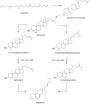
Figure 7: Ergosterol biosynthesis inhibitor pathway.

Figure 8: Fluconazole (9).

Figure 9: Itraconazole (10).

Figure 10: Voriconazole (11).

Figure 11: Posaconazole (12).

Figure 12: Ravuconazole (13).
Reciprocal polyhedra and the Euler relationship: cage hydrocarbons, CnHn and closo-boranes [BxHx]2−
- Michael J. McGlinchey and
- Henning Hopf
Beilstein J. Org. Chem. 2011, 7, 222–233, doi:10.3762/bjoc.7.30
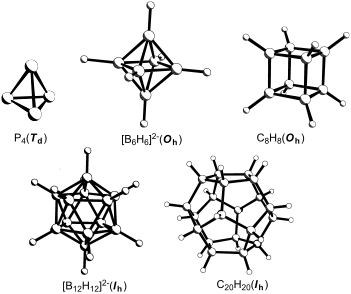
- achieved via preparative-scale flash vacuum pyrolysis [23]. The icosahedral point group possesses ten C3 axes and six C5 axes, and synthetic proposals have taken advantage of both types of symmetry elements. The former prompted Woodward [24] and Jacobson [25] independently from each other to suggest that

Graphical Abstract

Figure 1: Molecular analogues of the Platonic solids.

Figure 2: The structure of [Mo6Cl8]4+ demonstrates the reciprocal relationship between the cube and the octah...

Figure 3: The deltahedra corresponding to the structures of the closo-boranes [BxHx]2−.

Scheme 1: The first synthesis of a tetrahedrane 19 by Maier.

Scheme 2: The conversion of Dewar benzenes to [3]-prismanes.

Scheme 3: Synthesis of [3]prismane 9 by Katz.

Scheme 4: Synthesis of cubane 10 by Eaton.

Scheme 5: Synthesis of cubane 10 by Pettit.

Scheme 6: Failed routes to [5]-prismane 11.

Scheme 7: Synthesis of [5]prismane 11 by Eaton.

Scheme 8: Retrosynthetic analysis for several approaches to dodecahedrane 16.

Scheme 9: Paquette´s synthesis of dodecahedrane 16.

Scheme 10: Prinzbach´s synthesis of dodecahedrane 16.

Figure 4: The as yet unknown polyhedranes 12–15.
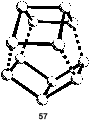
Figure 5: Coupling of two Dewar benzenes.

Scheme 11: A possible route to octahedrane 12.

Scheme 12: A possible route to nonahedrane 13.
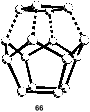
Figure 6: Capping [4]peristylane with a four-membered ring system.

Scheme 13: A possible route to decahedrane 14.

Figure 7: A possible route to undecahedrane 15 (left: side view; right: top view).

Scheme 14: Synthetic routes to trigonal prismatic hexasilanes 71a and hexagermanes 71b.

Scheme 15: Synthetic routes to octasila- and octagerma-cubanes.

Scheme 16: Synthesis of an octastannacubane and a decastannapentaprismane.

Scheme 17: Synthesis of a heterocubane.

Figure 8: D3d symmetric C8H8, a bis-truncated cubane.
Intramolecular hydroxycarbene C–H-insertion: The curious case of (o-methoxyphenyl)hydroxycarbene
- Dennis Gerbig,
- David Ley,
- Hans Peter Reisenauer and
- Peter R. Schreiner
Beilstein J. Org. Chem. 2010, 6, 1061–1069, doi:10.3762/bjoc.6.121
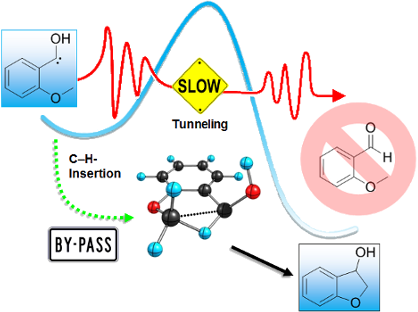
- experimentally by means of high vacuum flash pyrolysis (HVFP) and subsequent matrix isolation: (o-Methoxyphenyl)glyoxylic acid gives non-isolable (o-methoxyphenyl)hydroxycarbene upon pyrolysis at 600 °C, which rapidly inserts into the methyl C–H bond. The insertion product, 2,3-dihydrobenzofuran-3-ol, was
- , VII, VIII, and X elements [2][3][4][5][6][7][8][9][10][11][12] it was only very recently that free hydroxycarbenes were generated by high vacuum flash pyrolysis (HVFP) followed by immediate matrix isolation and thoroughly characterized by means of IR- and UV-spectroscopy [13][14][15]. Very
- dioxide from (o-methoxyphenyl)glyoxylic acid (6) by HVFP and subsequent condensation and isolation of the pyrolysis products in an excess of Ar (Scheme 3). However, neither 5 nor its tunneling product, o-anisaldehyde (7), could be detected: Comparison with an authentic spectrum of matrix-isolated 7 showed

Graphical Abstract

Scheme 1: Unimolecular reactivity of hydroxycarbenes under cryogenic conditions: [1,2]H-Tunneling of 1 and 3 (...

Scheme 2: A selection of heterocarbenes that undergo intramolecular C–H insertions.

Scheme 3: Attempted generation of 5 and d-5 as well as their corresponding insertion products.

Scheme 4: Proposed mechanism for the generation of 8 and 9. The [1,2]H-tunneling process apparently cannot co...

Figure 1: Unmodified matrix IR spectrum (Ar, 11 K) of the pyrolysis (600 °C) of 5. Traces of 9 are indicated ...

Figure 2: Unmodified matrix IR spectrum (Ar, 11 K) of the pyrolysis (600 °C) of d-5. Traces of 9 are indicate...

Scheme 5: Decay of the 2,3-dihydrobenzofuran-3-ol molecular radical cation (8+•).

Scheme 6: Attempted generation of 12 and the actual pyrolysis product 11.

Scheme 7: Unanticipated reaction of 6 upon heating in xylenes.

Scheme 8: Potential energy hypersurface of (o-methoxyphenyl)hydroxycarbene (5) (not drawn to scale; ZPVE incl...

Scheme 9: Acid-catalyzed generation of 7 by unreacted 6.



