Search results
Search for "HPLC" in Full Text gives 835 result(s) in Beilstein Journal of Organic Chemistry. Showing first 200.
Novel truxene-based dipyrromethanes (DPMs): synthesis, spectroscopic characterization and photophysical properties
Beilstein J. Org. Chem. 2024, 20, 2163–2170, doi:10.3762/bjoc.20.186
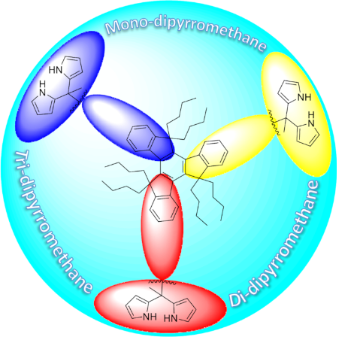
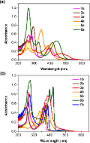
- TMS. UV–vis data were recorded on a PerkinElmer (Lambda 365) UV–vis spectrophotometer in HPLC grade CHCl3. Synthesis of 10,15-dihydro-5H-diindeno[1,2-a:1',2'-c]fluorene (9): The truxene scaffold 9 was prepared according to a literature report procedure [38]. l-Indanone (8, 6.8 g, 51.4 mmol) was added


Allostreptopyrroles A–E, β-alkylpyrrole derivatives from an actinomycete Allostreptomyces sp. RD068384
Beilstein J. Org. Chem. 2024, 20, 1981–1987, doi:10.3762/bjoc.20.174
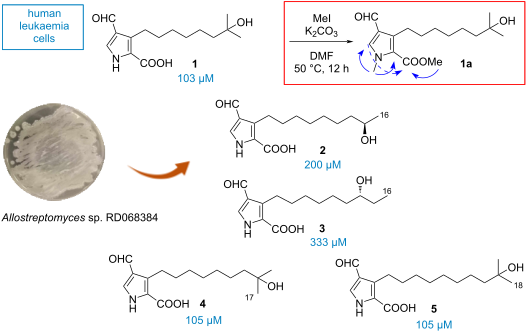
- fractionated on a silica gel column eluting with CHCl3/MeOH mixtures. Allostreptamide was obtained from the eluate with CHCl3/MeOH 2:1 [24]. HPLC-DAD analysis of a less polar fraction, eluted with CHCl3/MeOH 10:1, detected several peaks with characteristic UV absorptions, which were purified by ODS flash
- chromatography followed by ODS HPLC to yield compounds 1–5. Allostreptopyrrole A (1) was obtained as a greenish yellow amorphous solid. The molecular formula was determined to be C15H23NO4 based on a molecular ion peak at m/z 280.1550 [M − H]− (calcd for 280.1554) observed in a negative HRESITOF mass spectrum
- , 5:5, 6:4, 7:3, and 8:2, v/v). The third (4:6) and fourth fractions (5:5) contained the peaks of our target, which were combined (35 mg) and purified by ODS-HPLC (Cosmosil C18 AR-II, 10 × 250 mm, 4 mL/min, UV detection at 254 nm) eluted with 33% MeCN/0.1% HCO2H solution to yield 1 (1.2 mg, tR 10.1


Discovery of antimicrobial peptides clostrisin and cellulosin from Clostridium: insights into their structures, co-localized biosynthetic gene clusters, and antibiotic activity
Beilstein J. Org. Chem. 2024, 20, 1800–1816, doi:10.3762/bjoc.20.159
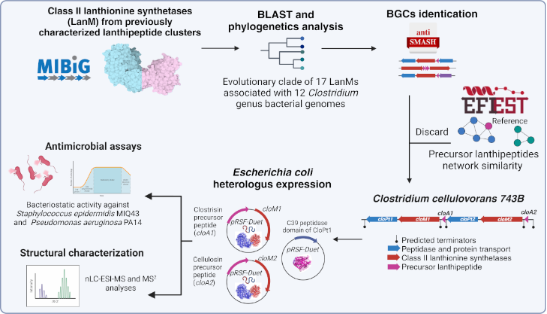
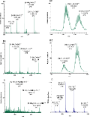
- purified samples of the C39 peptidase domain with purified CloA1 precursor peptide and CloA2 precursor peptide. The SDS-PAGE electrophoretic pattern confirmed the proteolytic reaction (Figure S7D, Supporting Information File 1). This was further confirmed through HPLC–MS–MS/MS analysis. Mass spectrometric
- ). The fraction containing the purest products underwent analysis via HPLC–MS–MS/MS experiments. Spectra of the cellulosin sample revealed a pattern of multicharged ions, with the most intense peak at an m/z of 1,140.64, consistent with the calculated average mass m/z associated with the CloA2 precursor
- with the CloA2 precursor, neither precursor underwent modifications, indicating a certain degree of peptide specificity in the biosynthetic enzymes of this gene super-cluster. HPLC–MS–MS/MS experiment on the CloM2-modified CloA2 tryptic fragment HPLC–MS–MS/MS experiments were performed on the CloM2




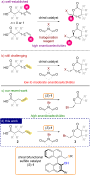
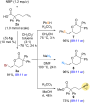
Chiral bifunctional sulfide-catalyzed enantioselective bromolactonizations of α- and β-substituted 5-hexenoic acids
Beilstein J. Org. Chem. 2024, 20, 1794–1799, doi:10.3762/bjoc.20.158
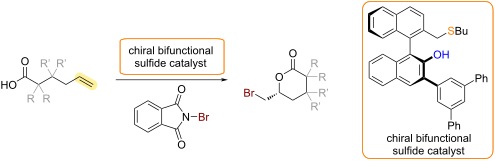
- and solvents. Substrate scope. Larger-scale synthesis and transformations of bromolactonization product 3a. Supporting Information Supporting Information File 20: Experimental procedures, characterization data, copies of NMR spectra, and copies of HPLC charts. Funding K.O. thanks the JSPS for a



Mining raw plant transcriptomic data for new cyclopeptide alkaloids
Beilstein J. Org. Chem. 2024, 20, 1548–1559, doi:10.3762/bjoc.20.138
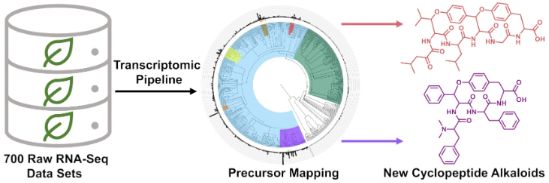
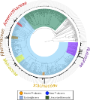
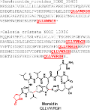
- additional purification step using an HPLC system (Agilent) with a C18 column (C18 250 × 4.6 mm Luna Omega 5 5 µm C18 100 Å) and gradient of 55–70% B was employed. Structure elucidation of ceanothine B Ceanothine B was analyzed by 1D and 2D NMR in methanol-d4 in 5 mm NMR tubes (Wilmad LabGlass). NMR





Primary amine-catalyzed enantioselective 1,4-Michael addition reaction of pyrazolin-5-ones to α,β-unsaturated ketones
Beilstein J. Org. Chem. 2024, 20, 1518–1526, doi:10.3762/bjoc.20.136
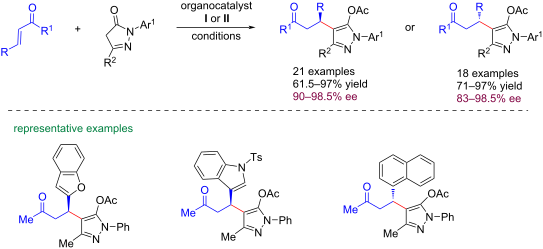
- CHCl3 for 4–14 h. Next, Ac2O (0.52 mmol, 50 µL) was added followed by DABCO (0.1 mmol, 11 mg) and the reaction mixture was further stirred for 2 h at 30–32 °C. aIsolated yield of 3 or ent-3 after column chromatography. bEnantiomeric excess (ee) was measured by HPLC analysis using a stationary phase
- measured by HPLC analysis using a stationary phase chiral column. Synthesis of 3aa on preparative scale. Proposed reaction mechanism. Optimization of reaction conditions.a Supporting Information Supporting Information File 2: Additional optimization studies, characterization data of compounds 3aa–na and
- ent-3aa-ent-3na, 1H, 13C NMR spectra of 3aa–na, 1H NMR of ent-3aa–ent-3na and their HPLC traces and single crystal data of ent-3ba. Acknowledgements The authors are thankful to Ms. Ketki Lele for her help in some preliminary experiments. Funding The authors thank the Department of Atomic Energy (DAE




Towards an asymmetric β-selective addition of azlactones to allenoates
Beilstein J. Org. Chem. 2024, 20, 1504–1509, doi:10.3762/bjoc.20.134
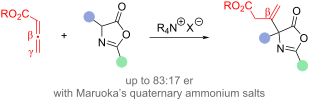
- reported in terms of frequency of absorption (cm−1). HPLC was performed using a Shimadzu Prominence system with a diode array detector with a CHIRALPAK AD-H, CHIRAL ART Amylose-SA, (250 × 4.6 mm, 5 µm) chiral stationary phase. Optical rotations were recorded on a Schmidt + Haensch Polarimeter Model UniPol
- ; HRESIMS m/z: [C22H21NO4 + H]+ calcd for 364.1543; found, 364.1554; HPLC: (Chiralpak SA, eluent: n-hexane/iPrOH = 100:2, 0.5 mL·min−1, 20 °C, λ = 254 nm) retention times: tmajor = 16.15 min, tminor = 17.00 min. General use of azlactones 1 to access more advanced α-AA derivatives (A), our recently reported
- to allenoate 3aa. Supporting Information Supporting Information File 20: Full experimental and analytical details and copies of NMR spectra and HPLC traces. Acknowledgements We are grateful to Prof. Dr. Himmelsbach (Institute of Analytical Chemistry, JKU Linz) for support with HRMS analysis


Synthesis of indano[60]fullerene thioketone and its application in organic solar cells
Beilstein J. Org. Chem. 2024, 20, 1270–1277, doi:10.3762/bjoc.20.109
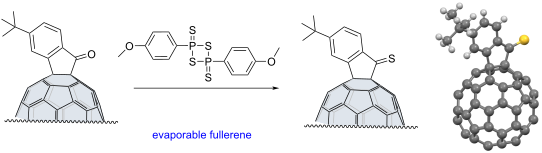
- amount of Lawesson's reagent was increased to 3 equiv (Table 1, entry 5), the signal of thioketone was observed for the first time by high-performance liquid chromatography (HPLC) and MALDI time-of-flight mass spectrometry. Subsequently, a conversion of 99% was achieved by further increasing the amount
- was analyzed by HPLC to check for thermal decomposition during vacuum deposition. The t-Bu-FIDS structure remained almost unchanged, but very small amounts of two decomposed products were found at retention times of 7.5 min and 12.5 min. The latter decomposed product is C60, judged from the retention
- future. Characterization data. (a) FTIR spectra of t-Bu-FIDO and t-Bu-FIDS. (b) UV–vis spectra of fullerene derivatives normalized at 270 nm. (c) Vacuum TGA curves of t-Bu-FIDO (black), t-Bu-FIDS (red), and C60 (blue). The measurements were conducted under 0.1 Pa. (d) HPLC analyses before deposition of t


Cofactor-independent C–C bond cleavage reactions catalyzed by the AlpJ family of oxygenases in atypical angucycline biosynthesis
Beilstein J. Org. Chem. 2024, 20, 1198–1206, doi:10.3762/bjoc.20.102
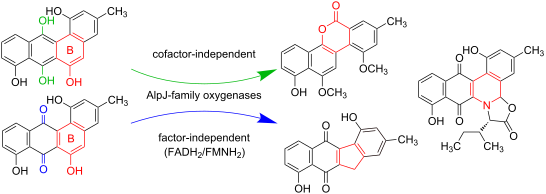
- associated prosthetic group was identified as FAD through HPLC analysis of the denatured AlpG supernatant (Figure S3, Supporting Information File 1). As anticipated, AlpG exhibited the capacity to convert 9 to 8 and 1 in the presence of NADPH and FAD (Figure 1, trace b). This result underscores 8 as a
- ]. In vitro enzymatic assay All reactions were performed in 50 mM Tris-HCl buffer at pH 8.0. For conversion of 9 by AlpG or JadH, the reaction mixtures (50 μL) consisting of 10 μM FAD, 125 μM NADPH, 100 μM 9, and 25 μM AlpG or JadH were incubated at 30 °C for 5 min and analyzed by HPLC directly. For
- conversion of 8 by AlpJ or Flu17, the reaction mixtures (50 μL) consisting of 200 μM 8 and 50 μM AlpJ or Flu17 were incubated at 30 °C for 5 min and analyzed by HPLC directly. For conversion of 8 by JadG, the reaction mixtures (500 μL) consisting of 200 μM 8, 50 mM ʟ-isoleucine, and 500 μM JadG were




Synthesis of 1,4-azaphosphinine nucleosides and evaluation as inhibitors of human cytidine deaminase and APOBEC3A
Beilstein J. Org. Chem. 2024, 20, 1088–1098, doi:10.3762/bjoc.20.96
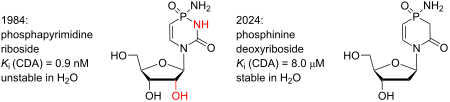
- the enzymatic assays and the synthesis of nucleosides and modified ODNs, assignment of 1H, 13C, 31P NMR and IR spectra and results of HRESIMS experiments for new compounds synthesised as well as RP-HPLC profiles and HRESIMS spectra of ODNs. Acknowledgements NMR and mass spectrometry facilities at


Structure–property relationships in dicyanopyrazinoquinoxalines and their hydrogen-bonding-capable dihydropyrazinoquinoxalinedione derivatives
Beilstein J. Org. Chem. 2024, 20, 1037–1052, doi:10.3762/bjoc.20.92
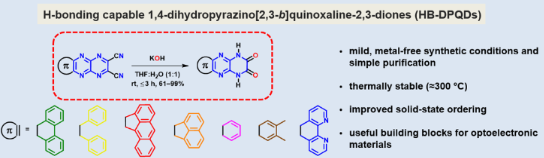
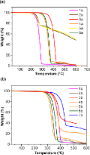
- 40 μM solutions of the DCPQs and DPQDs on a Cary 100 Bio spectrophotometer using 1 cm quartz cells. All solvents were HPLC grade (purchased from Fisher) and stored over 4 Å molecular sieves. The absorption intensity at λmax was then plotted against the concentration in all cases to confirm, by




Enantioselective synthesis of β-aryl-γ-lactam derivatives via Heck–Matsuda desymmetrization of N-protected 2,5-dihydro-1H-pyrroles
Beilstein J. Org. Chem. 2024, 20, 940–949, doi:10.3762/bjoc.20.84
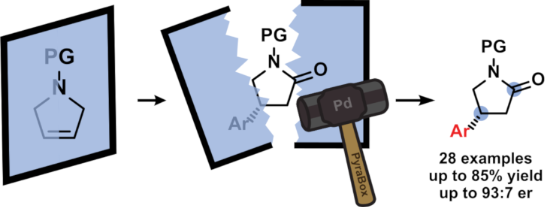
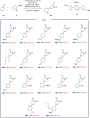
- two runs. Enantiomeric ratios (er) were determined by high-performance liquid chromatography (HPLC) analysis of the purified compounds. Heck–Matsuda reaction of N-tosyl-2,5-dihydro-1H-pyrrole (1b). Reaction conditions: 1) pyrroline 1b (0.30 mmol, 1.0 equiv), aryldiazonium salts 2 (0.60 mmol, 2.0 equiv
- chromatography (HPLC) analysis of the purified compounds. Heck–Matsuda reaction of the protected 2,5-dihydro-1H-pyrrole with Ns and 2-Ns groups (pyrrolines 1c, 1d). Reaction conditions: 1) pyrroline 1c or 1d (0.30 mmol, 1.0 equiv), aryldiazonium salts 2 (0.60 mmol, 2.0 equiv), Pd(TFA)2 (5 mol %), L1 (6 mol
- %), ZnCO3 (0.15 mmol, 0.5 equiv), MeOH (1.5 mL, 0.2 M), 40 °C, 4 h. 2) 1.0 mL Jones solution 2.5 M, 6 mL of acetone/water 3:1 (v/v), 1.5 h. Isolated yields were calculated from an average of two runs. Enantiomeric ratio (er) determined by high-performance liquid chromatography (HPLC) analysis of the




Direct synthesis of acyl fluorides from carboxylic acids using benzothiazolium reagents
Beilstein J. Org. Chem. 2024, 20, 921–930, doi:10.3762/bjoc.20.82
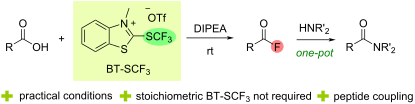
- observed (yield = 72%) with analysis by chiral HPLC revealing no erosion of the enantiomeric ratio (er = 99:1). At this stage, the suitability of BT-SCF3-mediated deoxyfluorination for the one-pot formation of peptide linkages between amino acids was investigated (Scheme 3). Treatment of N-Boc-valine under
- Campbell (Newcastle University) for assistance with chiral HPLC measurements. Funding This work is funded by the Friedrich Ebert Stiftung (scholarship to L.M.M.) and the School of Natural and Environmental Sciences at Newcastle University (studentship to A.H.). Financial support from Deutsche



Activity assays of NnlA homologs suggest the natural product N-nitroglycine is degraded by diverse bacteria
Beilstein J. Org. Chem. 2024, 20, 830–840, doi:10.3762/bjoc.20.75
- purchased from Fisher Scientific or VWR. Stock dithionite concentrations were determined by UV–vis absorbance at 318 nm (ε318 = 8000 M−1cm−1). Water used for all solutions was of 18.2 MΩ·cm resistivity from a Barnstead Nanopure (Thermo Fisher Scientific). Solvents for LC–MS experiments were of at least HPLC




Discovery and biosynthesis of bacterial drimane-type sesquiterpenoids from Streptomyces clavuligerus
Beilstein J. Org. Chem. 2024, 20, 815–822, doi:10.3762/bjoc.20.73
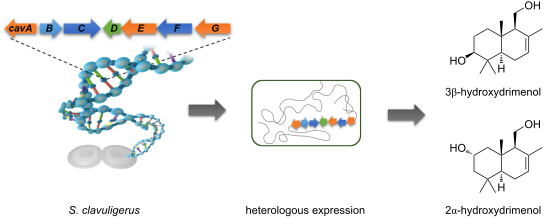
- ), 2α-hydroxydrimenol (3), and 3-ketodrimenol (4) (Figure 2a). HPLC analysis of metabolites from different culture media showed that YMS medium was more conducive to produce compound 3 (Figure 2b and Table S1 in Supporting Information File 1). The chemical structures of these isolated compounds were
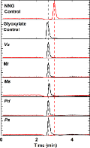
- DL10092 displayed a new peak in its HPLC profile compared to the control of wild-type E. coli BL21 (DE3) (see Figure S9 in Supporting Information File 1). The fermented product appeared as an alcohol, likely due to the activity of the endogenous hydrolase in E. coli. The retention time of the new peak was
- more closely, eight compounds were chosen for this study (Figure 4a). Due to the insolubility of CavA in E. coli, the study employed in vivo substrate screening. The S. avermitilis SUKA22 DL10089 was cultivated in XTM medium with the supplement of various substrates for five days. HPLC analysis


Synthesis and characterization of water-soluble C60–peptide conjugates
Beilstein J. Org. Chem. 2024, 20, 777–786, doi:10.3762/bjoc.20.71
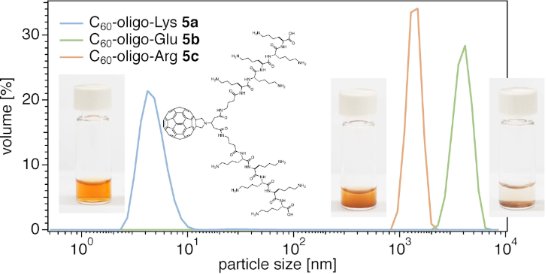
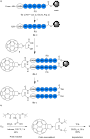
- resin (rink amide MBHA) relative to 3, provided a rather low yield (13%, isolated by HPLC), which was increased to 24% by changing the solid phase to 2-chlorotrityl chloride resin. By replacing the base with N,N-diisopropylethylamine (DIPEA), the yield was slightly increased to 28%, which became higher
- by reversed-phase HPLC. C60–oligo-Glu (5b), which was soluble only in basic aqueous solution, could not be isolated by HPLC, especially in the presence of an oligo-Glu impurity, and was purified only after spin filtration. C60–oligo-Arg (5c) was not soluble in any solvent and could not be further
- –oligo-Lys (5a), was purified by reversed-phase HPLC, while C60–oligo-Glu (5b) was purified by spin filtration. C60–oligo-Lys (5a) was obtained in a yield of 32% for the total peptide synthesis and characterized by HRESIMS. HRESIMS (m/z): [M + 3H]3+ calcd for C135H148N23O16, 782.3819; found, 782.3821




Chemoenzymatic synthesis of macrocyclic peptides and polyketides via thioesterase-catalyzed macrocyclization
Beilstein J. Org. Chem. 2024, 20, 721–733, doi:10.3762/bjoc.20.66
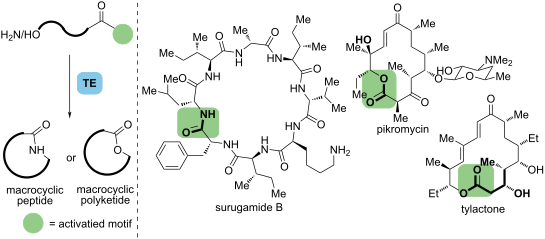
- limitations, such as possible Cα epimerization [45] during SNAC coupling and essential HPLC purification, which was generally difficult and time-consuming. Developing other different methods, exceptionally more straightforward approaches to access activated substrates, would solve this inevitable bottleneck


New variochelins from soil-isolated Variovorax sp. H002
Beilstein J. Org. Chem. 2024, 20, 692–700, doi:10.3762/bjoc.20.63
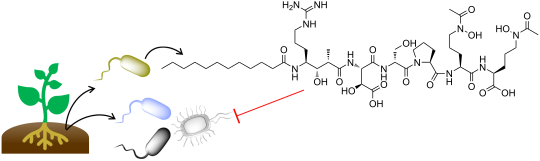
- standards (CD3OD: δH 3.31, δC 49.0). LC–MS experiments and ESI–TOF MS/MS analyses were performed with an amaZon SL-NPC (Bruker Daltonics) or LCMS-2020 (Shimadzu) spectrometer coupled with a Shimadzu HPLC system equipped with an LC-20AD intelligent pump. GC–MS experiments were performed with a Shimadzu
- chromatography, with methanol as the mobile phase. After monitoring the fractions by a CAS assay, the positive fractions were concentrated and purified by semi-preparative HPLC on a Cosmosil 5C18-MS-II column (10 mm ID × 250 mm, Nacalai Tesque), using a gradient system with MeCN/H2O (3:7 to 7:3) as the mobile
- into a Cosmosil 5C18-MS-II column (10 mm ID × 250 mm, Nacalai Tesque) attached to an HPLC with an autosampler, at a flow rate of 0.8 mL/min at 40 °C. Each analysis was performed using an aqueous acetonitrile mobile phase. Biological activities of variochelins Assays for all compounds were performed in


Regioselective quinazoline C2 modifications through the azide–tetrazole tautomeric equilibrium
Beilstein J. Org. Chem. 2024, 20, 675–683, doi:10.3762/bjoc.20.61
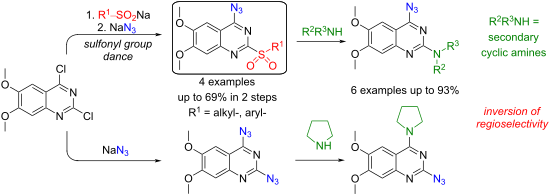
- anhydrous THF, MeCN, and dioxane, using such azide sources as NaN3, LiN3, and TMS-N3. Full conversion towards product 12a was observed by HPLC with NaN3 in anhydrous DMF. However, precipitation, direct, and reversed-phase column chromatography provided low yields (Scheme 5) due to the degradation of the
- . Filtration of this precipitate yielded the pure desired product 12a in 39% yield (Table 1, entry 2). Incremental additions of NaN3, coupled with HPLC analysis following each addition, facilitated the achievement of full conversion of the starting material after 0.7–0.8 equivalents of NaN3. This approach
- limited the formation of diazide 13 and significantly elevated the yield of the desired product to 69% over two steps. When other sufinates were employed, the product failed to precipitate, necessitating isolation through preparative HPLC. Quantitative nuclear magnetic resonance (qNMR) yields were


Enhanced reactivity of Li+@C60 toward thermal [2 + 2] cycloaddition by encapsulated Li+ Lewis acid
Beilstein J. Org. Chem. 2024, 20, 653–660, doi:10.3762/bjoc.20.58
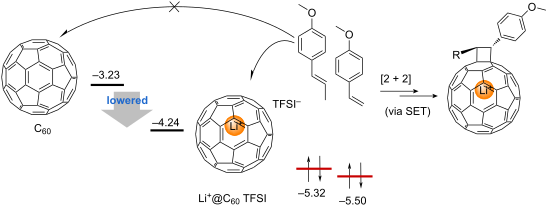
- reactant 4, which has a larger energy gap between its HOMO and LUMO of Li+@C60 (1.92 eV). All reactions were conducted in the dark to avoid photoinduced SET reactions (Scheme 2). First, the reactivity was assessed by monitoring the reaction progress using a previously developed electrolyte-added HPLC
- technique [25]. As expected, both substrates 1 and 2 reacted with Li+@C60 at room temperature and exhibited HPLC signals assignable to the desirable monoadducts 5a and 5b (Figure 2). It is noteworthy that the reaction of 2 proceeded faster than that of 1, although 2 has a lower HOMO level than 1. This is
- , photoirradiation triggered the elimination of the addends, reforming the starting Li+@C60 (Figure 3). No other insoluble or undetectable products by HPLC were identified during the study. On the other hand, the reactions of 3 and 4 with Li+@C60 did not proceed significantly even under higher temperature reaction




Isolation and structure determination of a new analog of polycavernosides from marine Okeania sp. cyanobacterium
Beilstein J. Org. Chem. 2024, 20, 645–652, doi:10.3762/bjoc.20.57
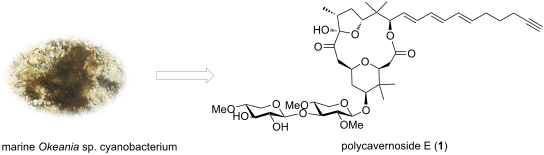
- hexane. The aqueous MeOH portion was purified by reversed-phase column chromatography (ODS silica gel, MeOH/H2O), automated flash chromatography (hexane/EtOAc), and repeated reversed-phase HPLC to give polycavernoside E (1, 0.5 mg as a colorless oil). The isolation of compound 1 was directed by its
- pump and a UV detector was used. HPLC analysis was conducted using a pump (model PU-2080, Jasco) and a UV detector (model UV-2075, Jasco). All chemicals and solvents used in this study were the best grade available and obtained from a commercial source (Nacalai Tesque). Collection and identification of
- AFCS [Ø 11 × 300 mm; flow rate 5 mL/min; detection at 254 nm; solvent gradient condition, hexane/EtOAc 28:72 → 7:93] to give a fraction that contained compound 1 (17.5 mg, tR = 32.0 min). The fraction that contained 1 was further purified by HPLC [Cosmosil 5C18-MS-II (Ø 20 mm × 250 mm); solvent MeOH


Production of non-natural 5-methylorsellinate-derived meroterpenoids in Aspergillus oryzae
Beilstein J. Org. Chem. 2024, 20, 638–644, doi:10.3762/bjoc.20.56
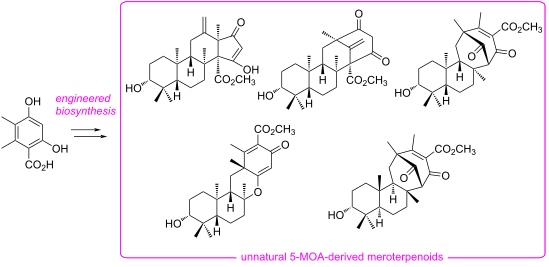
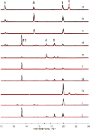
- earlier. We then analyzed the metabolites from the resulting transformants using high-performance liquid chromatography (HPLC), which revealed that all of the enzymes, except AdrI, accepted 1 and produced 5-MOA-derived meroterpenoids (Figure 2B, traces iii to vii). Since the transformation plasmid with
- : farnesyl pyrophosphate; FAD: flavin adenine dinucleotide; NADPH: nicotinamide adenine dinucleotide phosphate. (B) HPLC profiles of the metabolites from Aspergillus oryzae transformants. The chromatograms were extracted at 254 nm. (C) Structures of metabolites detected or isolated in this study. Note that



Chemical and biosynthetic potential of Penicillium shentong XL-F41
Beilstein J. Org. Chem. 2024, 20, 597–606, doi:10.3762/bjoc.20.52
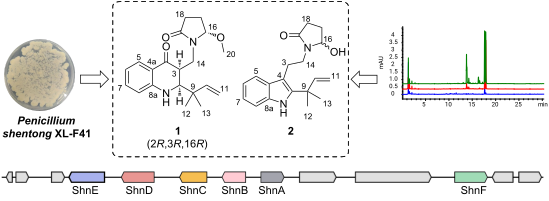
- , given the application of suitable activation techniques. Results and Discussion Compound isolation and structure elucidation To activate the silent BGCs in Penicillium shentong XL-F41, we conducted small-scale fermentations using various media. Analysis revealed that HPLC peaks, which correspond to
- extract was partitioned between EtOAc and H2O. The EtOAc fraction was chromatographed repeatedly over silica gel and reversed-phase high-performance liquid chromatography (RP-HPLC), resulting in the isolation of pure compounds 1–12 (Figure 2). According to literature reports of known compounds, some of
- , Yantai, China, available in 100–200 and 200–300 mesh sizes. Reversed-phase HPLC analyses were conducted on an Agilent 1260 instrument equipped with a DAD detector and an Agilent ZORBAX SB-C18 column (5 µm, 4.6 × 150 mm). The solvents used for HPLC were supplied by Yantai Huisente New Material Technology




Switchable molecular tweezers: design and applications
Beilstein J. Org. Chem. 2024, 20, 504–539, doi:10.3762/bjoc.20.45
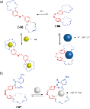
- enantiomers (P,P) and (M,M) were separated by chiral HPLC and displayed opposite circularly polarized luminescence (CPL) and electronic circular dichroism (ECD) properties. The addition of ZnCl2 switched the system from a compact conformation to an extended conformation, resulting in a modulation of the




A new analog of dihydroxybenzoic acid from Saccharopolyspora sp. KR21-0001
Beilstein J. Org. Chem. 2024, 20, 497–503, doi:10.3762/bjoc.20.44
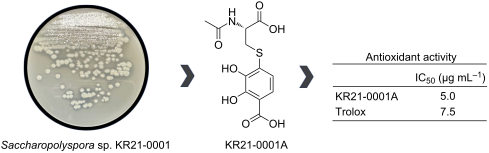
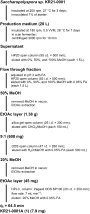
- preparative HPLC of the crude extract, 7.9 mg of 1 was obtained (Scheme 1). Table S1 (Supporting Information File 1) shows the physicochemical properties of 1, which is a yellow oil soluble in MeOH and DMSO. The UV absorption maximum of 1 was at 286 nm (ε = 10238 M−1·cm−1). The molecular formula of 1 was
- %, 40%, 50%, 60%, 80%, and 100%) with 0.05% FA. The 20% fraction was purified by HPLC (Shimadzu, Columbia, MD, U.S.A.) with an ODS column (Pegasil ODS SP100, 20 i.d. × 250 mm) at a flow rate of 7 mL·min−1 and eluted with 20% MeOH with 0.05% FA (Scheme 1). The fraction with a retention time of 64.5 min