


Search results
Search for "bioactivity" in Full Text gives 207 result(s) in Beilstein Journal of Organic Chemistry. Showing first 200.
An atom-economical addition of methyl azaarenes with aromatic aldehydes via benzylic C(sp3)–H bond functionalization under solvent- and catalyst-free conditions
Beilstein J. Org. Chem. 2020, 16, 3093–3103, doi:10.3762/bjoc.16.259
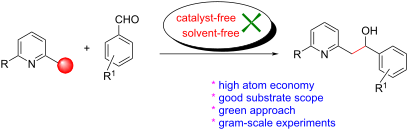
- diversity, these compounds constitute a motif in various natural alkaloid products, such as chimanine and those derived from lobelia, sedum, etc. These compounds act as anti-HIV and anti-asthma drugs [9][10][11]. Mainly, 2-substituted quinolines and their analogues exhibits magnificent bioactivity [12][13


Secondary metabolites of Bacillus subtilis impact the assembly of soil-derived semisynthetic bacterial communities
Beilstein J. Org. Chem. 2020, 16, 2983–2998, doi:10.3762/bjoc.16.248
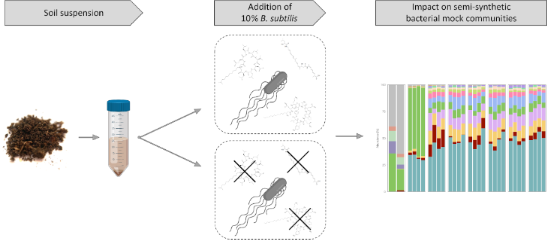
- surfactin bioactivity is specifically evoked by the surfactant activity triggering cell lysis due to penetration of the bacterial lipid bilayer membranes and the formation of ion-conducting channels [40][41][42]. The bioactivity of surfactin was shown against Listeria spp. and Legionella monocytogenes [43
- from both the NRP-deficient strain sfp and the surfactin-deficient strain srfAC had the lowest impact on the growth of L. fusiformis. In addition, the spent media of ∆ppsC and ∆pksL maintained the bioactivity at low concentrations, whereas the effect of WT was already strongly reduced at this level of
- peptides of B. subtilis P5_B1 have only a minor impact on the overall structure of soil-derived semisynthetic bacterial mock communities but suppress the genera Lysinibacillus and Viridibacillus significantly. Furthermore, it highlights the bioactivity of surfactin against L. fusiformis M5. Experimental


Access to highly substituted oxazoles by the reaction of α-azidochalcone with potassium thiocyanate
Beilstein J. Org. Chem. 2020, 16, 2108–2118, doi:10.3762/bjoc.16.178
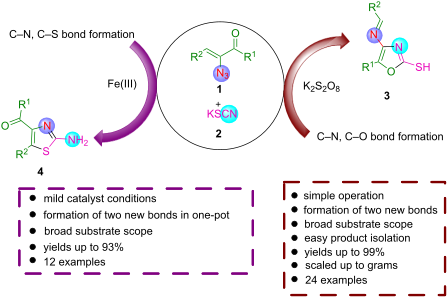
- with a highly substituted oxazole skeleton with a thiol group is expected to have potential synergetic bioactivity [70]. During the exploration of the reactivity of azidochalcones with thiocyanate in the presence of the oxidizing agent, 1i was chosen as the model α-azidochalcone to react with potassium






The biomimetic synthesis of balsaminone A and ellagic acid via oxidative dimerization
Beilstein J. Org. Chem. 2020, 16, 2026–2031, doi:10.3762/bjoc.16.169
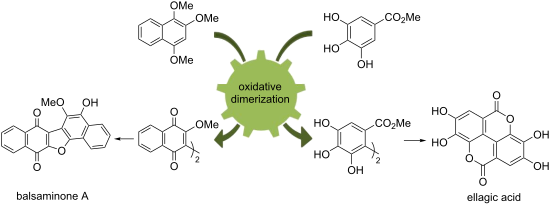
- dimerization to the dimeric polyphenolic acid 11, followed by intramolecular cyclization to yield ellagic acid (5, Scheme 2) [20]. Because of the bioactivity of both natural products, there have been previous investigations of the synthesis of balsaminone A (4) [21][22] and ellagic acid (5) [23]. In our


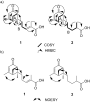
Three new O-isocrotonyl-3-hydroxybutyric acid congeners produced by a sea anemone-derived marine bacterium of the genus Vibrio
Beilstein J. Org. Chem. 2020, 16, 1869–1874, doi:10.3762/bjoc.16.154
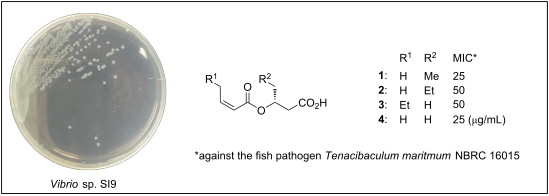
- describe the isolation, structure elucidation, including the absolute configuration, and bioactivity of 1–4. Results and Discussion The producing strain was cultured in a sea water-based medium and then extracted with n-BuOH. The extract was successively fractionated by silica gel chromatography using a


Antibacterial scalarane from Doriprismatica stellata nudibranchs (Gastropoda, Nudibranchia), egg ribbons, and their dietary sponge Spongia cf. agaricina (Demospongiae, Dictyoceratida)
Beilstein J. Org. Chem. 2020, 16, 1596–1605, doi:10.3762/bjoc.16.132
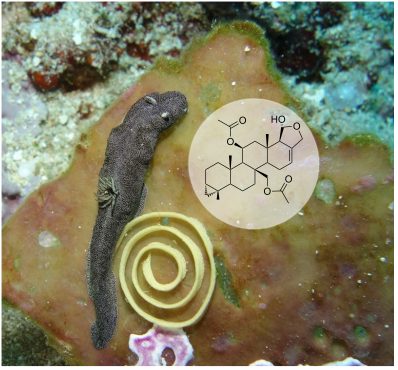
- accumulate 12-deacetoxy-4-demethyl-11,24-diacetoxy-3,4-methylenedeoxoscalarin from Spongia cf. agaricina, but to pass it on to the egg ribbons as well. This, in addition to its bioactivity, might suggest a biological role, either as protection against predation, fouling, or in the reproductive cycle, as



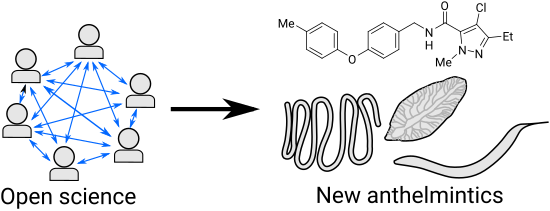
Anthelmintic drug discovery: target identification, screening methods and the role of open science
Beilstein J. Org. Chem. 2020, 16, 1203–1224, doi:10.3762/bjoc.16.105
- ) and PubChem (NIH). Both focus on characterising drug-like molecules and providing information to the public domain. The former is a manually curated database of bioactive molecules, which aims to bring together chemical, bioactivity and genomic data to aid the translation of genomic information into





Fabclavine diversity in Xenorhabdus bacteria
Beilstein J. Org. Chem. 2020, 16, 956–965, doi:10.3762/bjoc.16.84
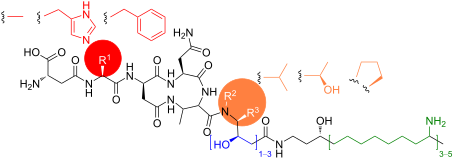
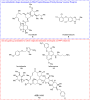
- for bioactive compounds are required, such as the bacterial genera Xenorhabdus or Photorhabdus. In these strains, fabclavines are widely distributed SMs with a broad-spectrum bioactivity. Fabclavines are hybrid SMs derived from nonribosomal peptide synthetases (NRPS), polyunsaturated fatty acid (PUFA
- . budapestensis and X. szentirmaii, and a 50 kb biosynthesis gene cluster (BGC) was identified to be responsible for their formation (Figure 1) [20]. These compounds were of special interest because of their broad-spectrum bioactivity against Gram-positive and -negative bacteria, fungi, and protozoa [20][21
- zeae [23][24]. They also exhibit broad-spectrum bioactivity, but their biosynthesis includes an additional processing step, executed by an acylpeptide hydrolase, which could not be detected in the fabclavine BGC [20][25]. To date, 10 full-length fabclavines could be identified, and the structure of


Combining enyne metathesis with long-established organic transformations: a powerful strategy for the sustainable synthesis of bioactive molecules
Beilstein J. Org. Chem. 2020, 16, 738–755, doi:10.3762/bjoc.16.68
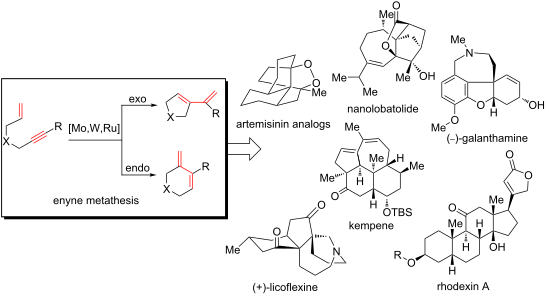
- other memory impairments, namely (−)-galanthamine (13), has attracted great interest for its structural complexity and specific bioactivity. The total synthesis of compound 13, described by Brown et al. [81], involved an enyne ring-closing metathesis and a Heck cross-coupling as the key reactions for




Opening up connectivity between documents, structures and bioactivity
Beilstein J. Org. Chem. 2020, 16, 596–606, doi:10.3762/bjoc.16.54
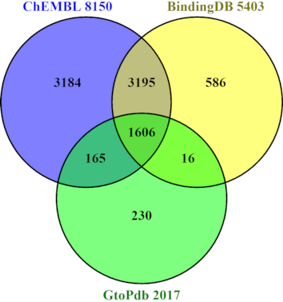
- “D“ where a bioactivity “A” with a quantitative result “R” (e.g., an IC50) is reported for chemical structure “C” that modulates (e.g., inhibits) a protein target “P”. A useful shorthand for this connectivity thus becomes DARCP. The problem at the core of this article is that the community has spent
- accelerate the progress and impact of medicinal chemistry. To achieve this the community needs to increase the outward flow of experimental results locked-up in millions of published PDFs into structured open databases that explicitly capture the connectivity between structures, documents and bioactivity
- connectivity is out of scope for this article. Bioactivity: This covers a wide spectrum of assay read-outs but with a focus on in vitro, in cellulo, in vivo and in clinico. Ideally this should also include low or inactive analogues which are crucial for SAR elucidation but documents are (understandably) biased



Aerobic synthesis of N-sulfonylamidines mediated by N-heterocyclic carbene copper(I) catalysts
Beilstein J. Org. Chem. 2020, 16, 482–491, doi:10.3762/bjoc.16.43

- : catalysis; copper; copper catalysis; N-heterocyclic carbene; solvent-free; sulfonylamidines; Introduction Amide derivatives represent a ubiquitous molecular construct in chemistry [1][2][3]. This structural motif favours rearrangements that lead to high reactivity and associated bioactivity [4][5]. Indeed


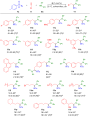


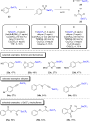
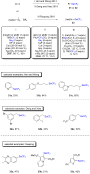
Copper-promoted/copper-catalyzed trifluoromethylselenolation reactions
Beilstein J. Org. Chem. 2020, 16, 305–316, doi:10.3762/bjoc.16.30

- that the physicochemical properties remained widely unchanged. However, further studies must be undertaken in order to gain knowledge on the bioactivity of this SeCF3-containing analog. In situ synthesis of trifluoromethylselenolated compounds using copper complexes One-pot procedures that rely on the



Two antibacterial and PPARα/γ-agonistic unsaturated keto fatty acids from a coral-associated actinomycete of the genus Micrococcus
Beilstein J. Org. Chem. 2020, 16, 297–304, doi:10.3762/bjoc.16.29
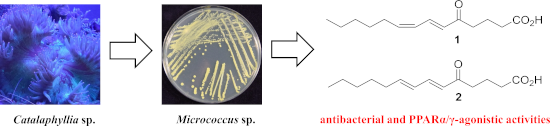
- [18]. Herein, we report the fermentation, isolation, structure determination, and bioactivity of two new keto fatty acids, (6E,8Z)-5-oxo-6,8-tetradecadienoic acid (1) and its (6E,8E)-isomer 2, from a coral-associated actinomycete Micrococcus sp. C5-9. Results and Discussion The producing strain C5-9


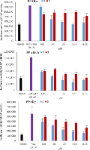
Potent hemithioindigo-based antimitotics photocontrol the microtubule cytoskeleton in cellulo
Beilstein J. Org. Chem. 2020, 16, 125–134, doi:10.3762/bjoc.16.14
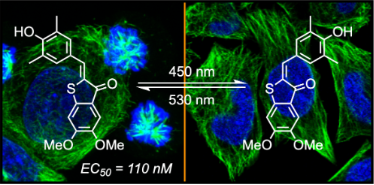
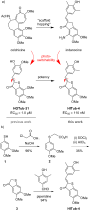
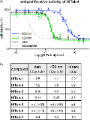
- molecular photoswitch that has only recently been applied as a photoswitchable pharmacophore for control over bioactivity in cellulo. Uniquely, in contrast to other photoswitches that have been applied to biology, the pseudosymmetric hemithioindigo scaffold has allowed the creation of both dark-active and
- cytoskeleton research. Additionally, as the hemithioindigo scaffold allows photoswitchable bioactivity for substituent patterns inaccessible to the majority of current photopharmaceuticals, wider adoption of the hemithioindigo scaffold may significantly expand the scope of cellular and in vivo targets
- cellulo [18]. We showed for the first time that the pseudosymmetry of hemithioindigos can be used to enable a priori design of HTI-based pharmacophores for a single binding site, with higher bioactivity as either the lit-form E- or the dark-form Z-isomer, just by changing substituent patterns, and





Reversible photoswitching of the DNA-binding properties of styrylquinolizinium derivatives through photochromic [2 + 2] cycloaddition and cycloreversion
Beilstein J. Org. Chem. 2020, 16, 111–124, doi:10.3762/bjoc.16.13
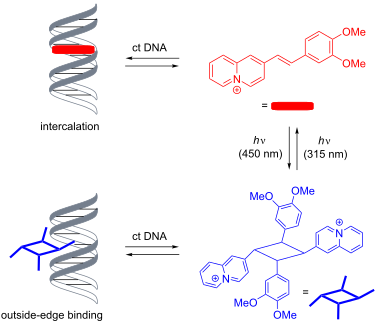
- biological activity on and off due to the reversibility of the photoreaction [15]. Indeed, the application of light to induce and control bioactivity of pharmaceuticals or bio(macro)molecules has been convincingly demonstrated in the emerging field of photopharmacology [16][17][18]. Consequently, several




Terpenes
Beilstein J. Org. Chem. 2019, 15, 2966–2967, doi:10.3762/bjoc.15.292
- pheromones, but also have a long standing history as fragrances used by humans. The oxidised derivatives may be of high interest because of their bioactivity, with some of the most important drugs used in medical applications being of terpenoid origin. Two of the most fanous examples include the diterpenoid
- elucidation, total synthesis, biosynthetic studies, bioactivity and functionalisation for mode of action studies, and other applications of terpenes, e.g. as fragrances. I thank all colleagues who have participated in this issue for their contributions and the whole Beilstein team for the professional support
α,ß-Didehydrosuberoylanilide hydroxamic acid (DDSAHA) as precursor and possible analogue of the anticancer drug SAHA
Beilstein J. Org. Chem. 2019, 15, 2524–2533, doi:10.3762/bjoc.15.245

- useful level of bioactivity, α,ß-didehydro SAHA derivatives remain to be explored, to the best of our knowledge. Herein, we disclose two alternative synthetic routes to SAHA and preliminary biological evaluation of some α,ß-didehydro derivatives of SAHA. Results and Discussion Our synthesis of SAHA and α


Combining the Ugi-azide multicomponent reaction and rhodium(III)-catalyzed annulation for the synthesis of tetrazole-isoquinolone/pyridone hybrids
Beilstein J. Org. Chem. 2019, 15, 2447–2457, doi:10.3762/bjoc.15.237

- incorporation of three different diversity-generating sites (Scheme 1A), a feature that has been exploited for the construction of libraries of tetrazole-based compounds with potential bioactivity [9][10][11][12][19]. A powerful approach for obtaining hybrid heterocyclic compounds including the tetrazole ring


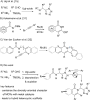
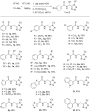
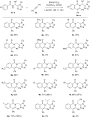


Targeted photoswitchable imaging of intracellular glutathione by a photochromic glycosheet sensor
Beilstein J. Org. Chem. 2019, 15, 2380–2389, doi:10.3762/bjoc.15.230
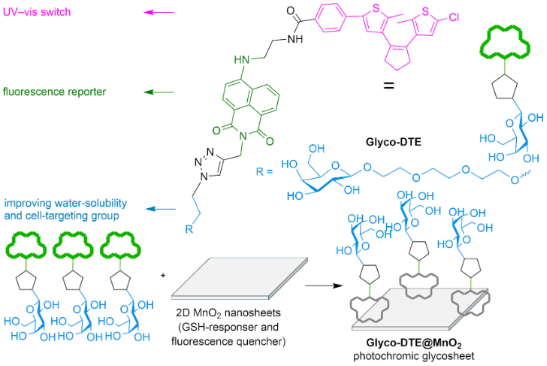
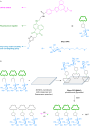
- as biosensing/imaging, bioactivity modulation, drug delivery, etc [23][24]. In our system, the Glyco-DTE@MnO2 hybrid sensor undergoes decomposition when encountering the overexpressed intracellular GSH in HepG2 cell lines, following the recovery of the photoswitchable fluorescence signal regulated by



Current understanding and biotechnological application of the bacterial diterpene synthase CotB2
Beilstein J. Org. Chem. 2019, 15, 2355–2368, doi:10.3762/bjoc.15.228
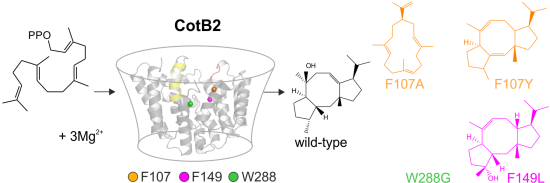
- available via the CotB2 mutants is the necessity of further decoration with functional groups, like hydroxylations or epoxidations, to induce the desired bioactivity (Scheme 3). Modification descriptions in the next chapters are composed according to the atom numbering in (Scheme 3). Lead structure for the


Synthesis of acremines A, B and F and studies on the bisacremines
Beilstein J. Org. Chem. 2019, 15, 2271–2276, doi:10.3762/bjoc.15.219

- ) exhibited no significant bioactivity, acremines A–D showed inhibition of P. viticola sporangia germination. In 2015, Wei and co-workers discovered bisacremines E–G, the most complex members of the acremine family, from the soil-derived strain A. persicinum SC0105 [4]. These natural products are presumed to


Isolation of fungi using the diffusion chamber device FIND technology
Beilstein J. Org. Chem. 2019, 15, 2191–2203, doi:10.3762/bjoc.15.216
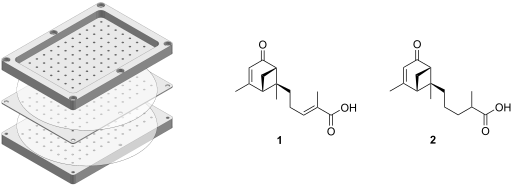
- obtained by four FIND experiments and identified by sequence comparison with the best BLASTn match within the NCBI GenBank database. Supporting Information Supporting Information File 184: Genomic sequences of isolated fungi, data on bioactivity and halotolerance, spectroscopic data of compounds 1 and 2


Azologization and repurposing of a hetero-stilbene-based kinase inhibitor: towards the design of photoswitchable sirtuin inhibitors
Beilstein J. Org. Chem. 2019, 15, 2170–2183, doi:10.3762/bjoc.15.214
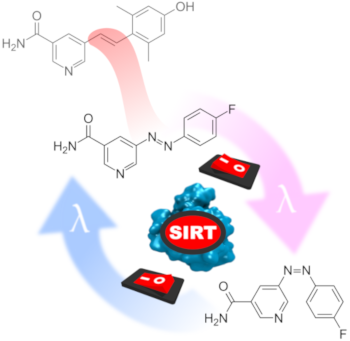
- bioactivity, allows the probing of pharmacologically relevant systems with spatiotemporal resolution. A hetero-stilbene lead resulting from the screening of a compound that was originally designed as kinase inhibitor served as a starting point for the design of photoswitchable sirtuin inhibitors. Because the


Isolation and characterisation of irinans, androstane-type withanolides from Physalis peruviana L.
Beilstein J. Org. Chem. 2019, 15, 2003–2012, doi:10.3762/bjoc.15.196
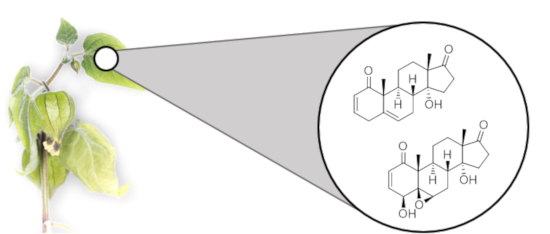
- importance of the lactone side chain for bioactivity. Conclusion We have discovered and characterised irinans A and B, two new withanolides from P. peruviana with truncated backbones. They resemble mammalian sex hormones of the androstane class. The relative stereochemistry was elucidated based on NOESY


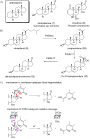

New sesquiterpenoids from the South China Sea soft corals Clavularia viridis and Lemnalia flava
Beilstein J. Org. Chem. 2019, 15, 695–702, doi:10.3762/bjoc.15.64
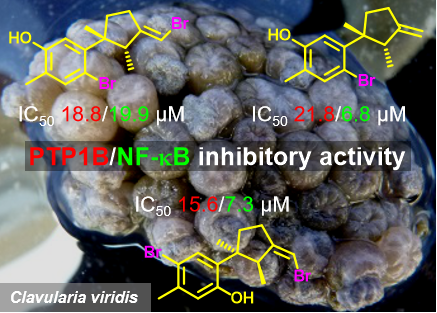
- investigation of two title animals led to the isolation of four new halogenated laurane-type sesquiterpenoids 1–4, one new aromadendrane-type sesquiterpenoid 6) together with three related known compounds 5, 7 and 8 (Figure 1). Herein, the isolation, structure elucidation and bioactivity evaluation of these





