Search results
Search for "desilylation" in Full Text gives 134 result(s) in Beilstein Journal of Organic Chemistry.
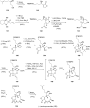
Muraymycin nucleoside-peptide antibiotics: uridine-derived natural products as lead structures for the development of novel antibacterial agents
Beilstein J. Org. Chem. 2016, 12, 769–795, doi:10.3762/bjoc.12.77
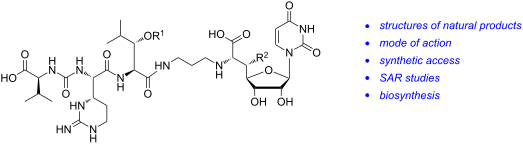
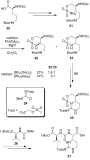
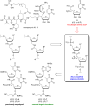
- give 61. A sequence of desilylation and oxidation furnished the acid 62. Peptide coupling with amine 63 and acidic deprotection then afforded the desired aldehyde 64, which already contained the muraymycin linker unit (Scheme 8) [107]. Together with the uridine core structure 50 and the urea dipeptide













Study on the synthesis of the cyclopenta[f]indole core of raputindole A
Beilstein J. Org. Chem. 2016, 12, 334–342, doi:10.3762/bjoc.12.36

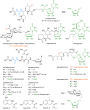
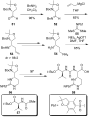
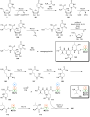
- included the second indole moiety of raputindole A (1). Boc protection of 6-iodoindole (2) [35], Sonogashira reaction of 3 with TMS-acetylene, and desilylation gave the N-protected alkynylindole 4 in excellent yield (Scheme 2). Boc-iodoindole 3 was also the precursor of the coupling partner, ketone 6
- Chancellor and coworkers [42], gave nitrophenol 11 in a reasonable yield (45%). The Batcho–Leimgruber protocol failed for nitrophenol 11 [43]. However, after O-benzylation of 11 to 12, Boc-indole 15 was obtained in the very good yield of 91%. Coupling with TMS-acetylene was followed by desilylation to obtain
- PMB group, because the oxidation potential of DMB ethers is lower and the cleavage was expected to be more facile [45]. Indole synthesis from DMB-protected 13 and subsequent Boc protection afforded 16 (58%). Alkynylation and desilylation of 16 to 19 and coupling of 19 with ketone 6 proceeded smoothly




Hydroquinone–pyrrole dyads with varied linkers
Beilstein J. Org. Chem. 2016, 12, 89–96, doi:10.3762/bjoc.12.10
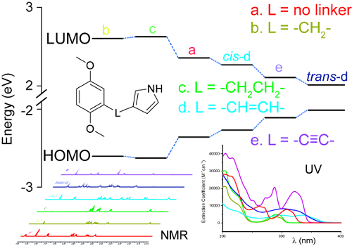
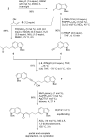
- parameters was investigated, involving the selection of base and solvent. However, none of the attempted conditions gave the desired product. Instead, desilylation of 3-iodo-1-(triisopropylsilyl)-1H-pyrrole was observed during the reaction, and some of the dimethoxystyrene could be recovered (for details
- expected to have different electronic properties. After desilylation, compound 3c was obtained in a combined total yield of 35% (sum of cis-3c and trans-3c) from the pyrrole-3-carbaldehyde. To obtain trans-4c selectively, a Wittig–Horner reaction was investigated, with dimethoxybenzyl bromide as starting
- 3-bromo-1-(triisopropylsilyl)-1H-pyrrole resulted in low yield (20%) and also homocoupling. Considering that desilylation of triisopropylsilyl protected pyrrole might occur at high temperature in DMF, an overnight reaction at room temperature was performed, resulting in a yield for 4d of 50%. In


Synthesis of Xenia diterpenoids and related metabolites isolated from marine organisms
Beilstein J. Org. Chem. 2015, 11, 2521–2539, doi:10.3762/bjoc.11.273
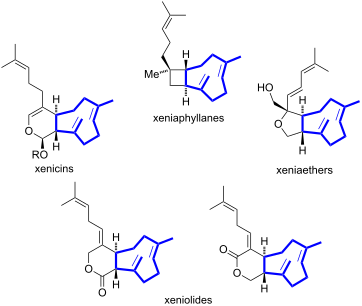
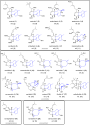
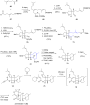
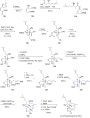
- alcohol was converted to the corresponding silyl ether. Next, alkylation of the metalated sulfone with allylic chloride 51 afforded alcohol 52 after desilylation. Subsequent desulfonylation with sodium amalgam and Jones oxidation of the primary alcohol furnished carboxylic acid 53. The corresponding
- product 63 in very good yield, however, as a mixture of lactol epimers (α/β ≈ 56:44). Silyl protection of the lactol and subsequent Tebbe olefination [42] of the ketone group installed the exocyclic double bond of the nine-membered carbocycle. Desilylation followed by oxidation with silver carbonate then
- acetylide to the carbonyl group of 69, followed by desilylation under basic conditions gave rise to (±)-ethynylcarbinol, which was separated by chiral HPLC. The desired diastereomer was then transformed to benzene sulfinate ester 70. A palladium-catalyzed [2,3]-sigmatropic rearrangement formed an isomeric







Synthesis of alpha-tetrasubstituted triazoles by copper-catalyzed silyl deprotection/azide cycloaddition
Beilstein J. Org. Chem. 2015, 11, 1425–1433, doi:10.3762/bjoc.11.154
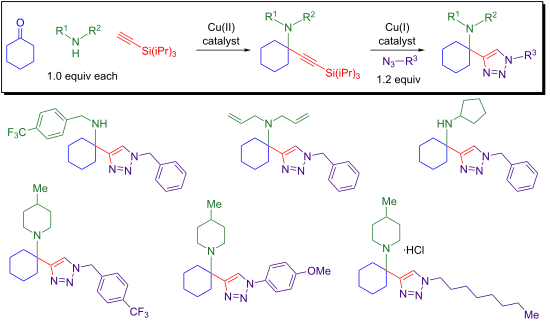
- in CuAAC reactions, copper(II) triflate is known to form protic acid in solution, which could cause proto-desilylation [36], but this is not observed. A broader range of green alcohol solvents [37] were assessed in the presence of the most active catalyst, in situ reduced Cu(OTf)2. Isopropanol was


Selected synthetic strategies to cyclophanes
Beilstein J. Org. Chem. 2015, 11, 1274–1331, doi:10.3762/bjoc.11.142
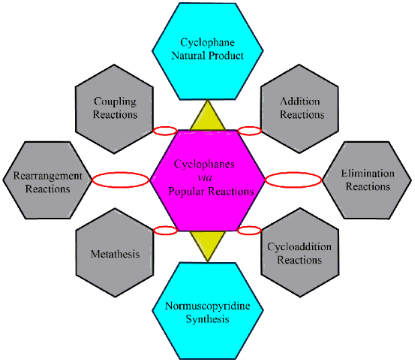
- 26, which was subsequently converted to the cyclophane 28 by a Mannich-type condensation reaction (40%) (Scheme 1). Michael addition: In 1999, Reißig and co-workers [85] have synthesized a functionalized cyclophane by a cascade reaction, which proceeds with desilylation, ring opening, proton transfer
- -diiodobenzene with an excess amount of triisopropylsilylbutadiyne (47) followed by complexation with Co2(CO)8 furnished a pale yellow diyne 48. Exchange of the ligand with bis(diphenylphosphino)methane (dppm) afforded a bridged complex which is stable to fluoride ions. Subsequent desilylation, followed by


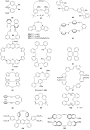


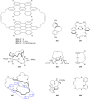


Interactions between tetrathiafulvalene units in dimeric structures – the influence of cyclic cores
Beilstein J. Org. Chem. 2015, 11, 930–948, doi:10.3762/bjoc.11.104
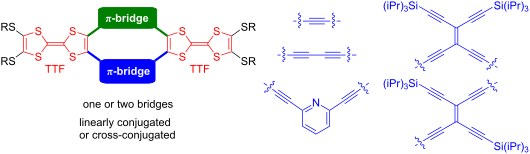
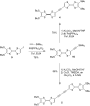
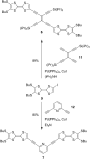
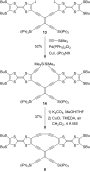
- desilylation was either subjected to a Sonogashira coupling with 9 to give 4 or to an oxidative Hay coupling to give 5 – using recently developed conditions where 4 Å molecular sieves were added to the reaction mixture to remove water [17]. Compounds 6 and 7 were prepared by treating 9 with either the trans






Discrete multiporphyrin pseudorotaxane assemblies from di- and tetravalent porphyrin building blocks
Beilstein J. Org. Chem. 2015, 11, 748–762, doi:10.3762/bjoc.11.85
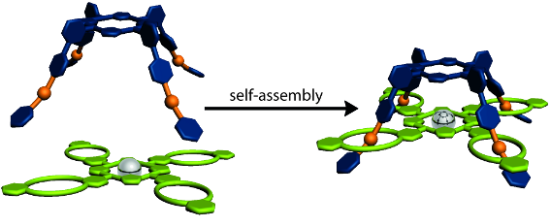
- benzylamine yielding amine 10, which was subsequently Boc-protected, then reacted with trimethylsilylacetylene in a Sonogashira cross-coupling followed by desilylation. Finally, the porphyrin cores 1 and 2 were combined with axle precursor 8 in another two and four-fold Sonogashira cross-coupling reaction





Electrochemical selenium- and iodonium-initiated cyclisation of hydroxy-functionalised 1,4-dienes
Beilstein J. Org. Chem. 2015, 11, 174–183, doi:10.3762/bjoc.11.18

- - and diasterioselective fashion and tolerate a range of functionalities. Experimental General procedure for the cobalt-catalysed 1,4-hydrovinylation of aryl-substituted buta-1,3-dienes with allyloxytrimethylsilane and subsequent desilylation with TBAF Cobalt dibromo(1,3-bis(diphenylphosphino)ethane) (5


Articulated rods – a novel class of molecular rods based on oligospiroketals (OSK)
Beilstein J. Org. Chem. 2015, 11, 74–84, doi:10.3762/bjoc.11.11

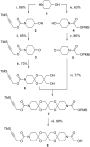
- desilylation (10). The subsequent CuAAC coupling between 9 and 10 turned out to be difficult. Whereas the reaction failed under standard conditions [18] we succeeded after numerous variations of the reaction conditions by applying the Cu/C catalyst [19] in a solvent mixture of DCM and MeOH in the presence of




NAA-modified DNA oligonucleotides with zwitterionic backbones: stereoselective synthesis of A–T phosphoramidite building blocks
Beilstein J. Org. Chem. 2015, 11, 50–60, doi:10.3762/bjoc.11.8
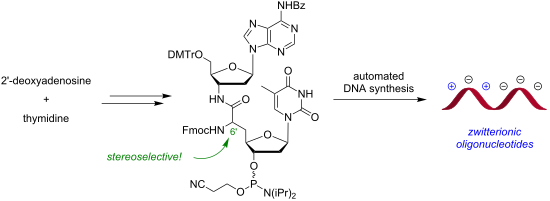
- with methanol), thus providing 3'-O-TBDMS-protected derivatives 15 and 16 in yields of 59% and 66%, respectively. This method turned out to be advantageous compared to 5'-O-desilylation mediated by TFA, which had provided satisfying results in the case of the corresponding uridine derivatives [48]. The
- %, respectively. For the subsequent desilylation reaction, several reaction conditions were tested, among them acidic silyl ether cleavage with hydrochloric acid in methanol or treatment with triethylamine trihydrofluoride (3HF•NEt3). However, the only successful method was the conversion of both epimers of 26



A carbohydrate approach for the formal total synthesis of (−)-aspergillide C
Beilstein J. Org. Chem. 2014, 10, 3122–3126, doi:10.3762/bjoc.10.329

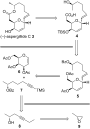
- deprotecting the acetyl groups (without affecting the benzoate functionality) by employing acetyl chloride in anhydrous methanol to afford diol 13 [33]. A two-fold silylation and selective mono desilylation afforded primary alcohol 14 which was converted to its corresponding nitrile via the triflate. The




Redox active dendronized polystyrenes equipped with peripheral triarylamines
Beilstein J. Org. Chem. 2014, 10, 3097–3103, doi:10.3762/bjoc.10.326
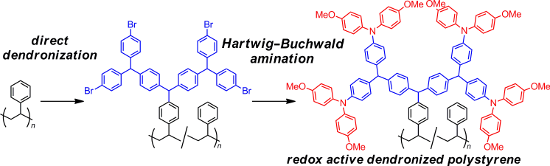
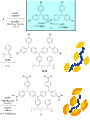
- consistent with the observation that dendrimer 10 prepared by desilylation of 5 followed by amination (see Supporting Information File 1 for preparative details) showed two reversible waves occurring at similar potentials (E1/2 = 0.81 and 1.10 V vs SCE) (Figure 5, blue line). A film of dendronized




Galactan synthesis in a single step via oligomerization of monosaccharides
Beilstein J. Org. Chem. 2014, 10, 2658–2663, doi:10.3762/bjoc.10.279
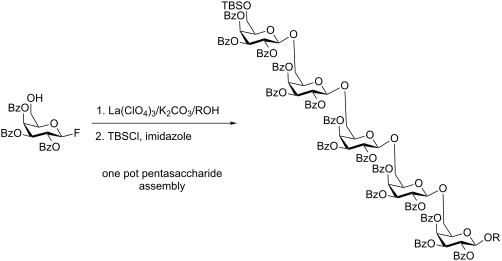
- observations suggest that desilylation is most likely the result of transient Brønsted acid formation during the reaction and not due to fluoride ion generation. In an attempt to tune silyl ether deprotection rates and promote formation of longer oligomers, we examined the glycosylation of a bulkier TBDPS


Synthesis and immunological evaluation of protein conjugates of Neisseria meningitidis X capsular polysaccharide fragments
Beilstein J. Org. Chem. 2014, 10, 2367–2376, doi:10.3762/bjoc.10.247
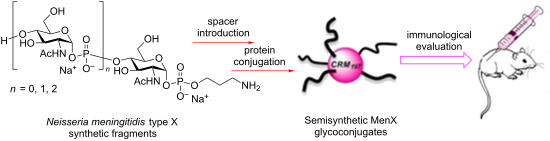
- ). On the other hand, the same reaction carried out on protected glycosyl phosphosaccharides afforded the corresponding acetamides in 25–35% yield [25]. Interestingly, when compound 5 was subjected to 1-O-desilylation with tetrabutylammonium fluoride in THF at –40 °C, we obtained exclusively the α
- for the high selectivity observed in the formation of compound 6 and, consequently, for the attainment of the pure α-H-phosphonate 7. Indeed, the desilylation of the 2-azido counterpart of intermediate 5 provided a mixture of anomers. On the other hand, the same reaction carried out on a 2-acetamido


Solution phase synthesis of short oligoribonucleotides on a precipitative tetrapodal support
Beilstein J. Org. Chem. 2014, 10, 2279–2285, doi:10.3762/bjoc.10.237
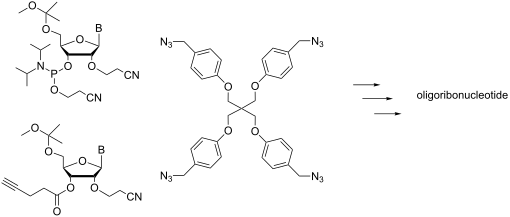
- -catalyzed acetalization with 2-methoxypropene in THF. The subsequent 3'-O desilylation of the fully protected nucleosides (3a–d) then required careful adjustment of conditions. Desilylation with NH4F in MeOH turned out to be successful in the sense that the 2'-O and 5'-O protecting groups remained intact


Synthesis of phosphoramidites of isoGNA, an isomer of glycerol nucleic acid
Beilstein J. Org. Chem. 2014, 10, 2131–2138, doi:10.3762/bjoc.10.220
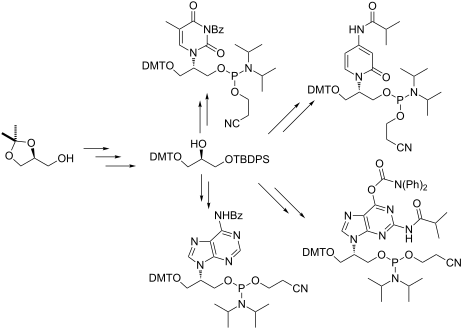
- by vanadium trichloride gave the desired product 9 cleanly in large-scale reactions [30]. The desilylation of intermediates 11, 20 and 26 was effected by the treatment of 1 M TBAF in THF at 0 °C to room temperature. In the case of guanine derivative 23, we observed that the use of the




Expedient synthesis of 1,6-anhydro-α-D-galactofuranose, a useful intermediate for glycobiological tools
Beilstein J. Org. Chem. 2014, 10, 1651–1656, doi:10.3762/bjoc.10.172
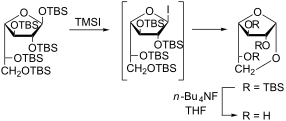
- three-step procedure for the synthesis of 1,6-anhydro-α-D-galactofuranose is described. The key step involves the formation of the galactofuranosyl iodide by treatment of per-O-TBS-D-Galf with TMSI, the selective 6-O-desilylation by an excess of TMSI, and the simultaneous nucleophilic attack of the 6
- , but in a lower yield due to the O-desilylation of another hydroxy group. The addition of BF3·OEt2 to recently formed 10 resulted in the formation of compound 12. Several factors favor the formation of the bicyclic system of compound 12, such as the galactose structure itself, the presence of a good
- conditions and compound 12 was obtained instead (Figure 3). The O-desilylation of 12 was performed by treatment with n-Bu4F as previously optimized [32][33][34], affording compound 2 in almost quantitative yield (Scheme 3). Conclusion In conclusion, we have described a new and concise procedure for the


Olefin cross metathesis based de novo synthesis of a partially protected L-amicetose and a fully protected L-cinerulose derivative
Beilstein J. Org. Chem. 2014, 10, 1023–1031, doi:10.3762/bjoc.10.102
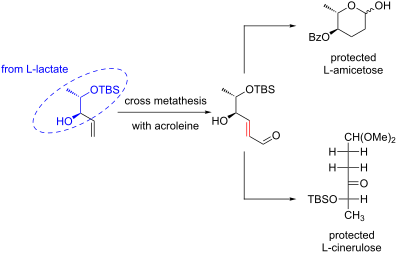
- -amicetose 7 [35]. To avoid the last step of the sequence, we envisaged a cross metathesis with acroleine, rather than methyl acrylate, to give enal 8 which should undergo spontaneous lactol formation after hydrogenation and desilylation. However, compared to cross metathesis reactions with methyl acrylate
- dealkoxylation of acetals [65] and for desilylation reactions of silyl ethers [66]. With in situ generated Pd/C (obtained from Pd(OAc)2 and charcoal according to Felpin’s protocol) [67] an improved selectivity was observed as the cleavage of the silyl groups could be suppressed. However, reductive dealkoxylation
- 83% combined yield (Table 3, entry 3). For the deprotection of 11 and 12 a desilylation initiated by TBAF, followed by acidic hydrolysis was investigated first. With isolated acetal 11, these conditions induced a scrambling of the benzoate and led to a mixture of the desired pyranose 16 and the


Asymmetric total synthesis of a putative sex pheromone component from the parasitoid wasp Trichogramma turkestanica
Beilstein J. Org. Chem. 2014, 10, 761–766, doi:10.3762/bjoc.10.71
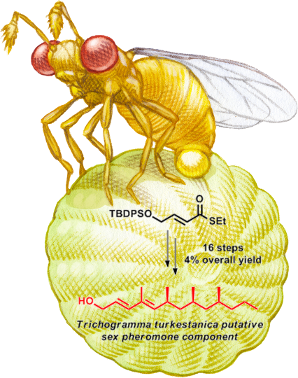
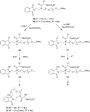
- 2) [24]. The use of 1.2 equiv of BF3·Et2O led to 9 in 84% isolated yield. Reduction of 9 with freshly prepared Raney nickel and subsequent desilylation afforded 10 over two steps in 73% yield. To introduce the desired E,E-diene present in 2 and 1, we realized that the procedure reported by
- components of Trichogramma turkestanica. Application of the iterative conjugate addition protocol for the preparation of 8. Deoxygenation and desilylation of 8. Vinylogous Horner–Wadsworth–Emmons olefination. Synthesis of α,β-unsaturated ester 15 using a Wittig reaction. Completion of the synthesis of the


Direct and indirect single electron transfer (SET)-photochemical approaches for the preparation of novel phthalimide and naphthalimide-based lariat-type crown ethers
Beilstein J. Org. Chem. 2014, 10, 514–527, doi:10.3762/bjoc.10.47

- . For example, Kubo and coworkers [47] showed that photoreactions of N-methyl-1,2- and 2,3-naphthalimides 8 and 12 with allylsilane 9 in MeCN can produce allylation products [48][49][50][51][52] that arise by a well-known sequence involving intermolecular SET, radical cation desilylation and radical
- delocalization arising by the orbital overlap, lowers the σC-Si bond dissociation energy and makes the silicon center more electropositive. Consequently, short-lived α-silyl cation radicals typically undergo fast, silophile-promoted desilylation to form the carbon centered free radicals 19 (Scheme 4). Based on
- the low oxidation potentials and known reactivity profile of cation radicals arising from α-trialkylsilyl substituted n-electron donors, it is feasible to design substrates that undergo sequential SET-desilylation processes to produce radicals or biradical intermediates in a highly regioselective and




Silver and gold-catalyzed multicomponent reactions
Beilstein J. Org. Chem. 2014, 10, 481–513, doi:10.3762/bjoc.10.46
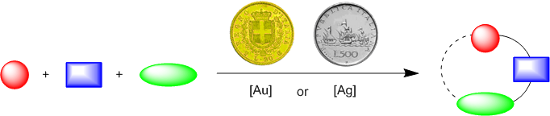
- bidentate chelation (Scheme 36). The substrate is bound anti to the bulky amino acid substituent (R) and reacts with the siloxyfuran via endo-type addition. Intramolecular silyl transfer, iPrOH mediated desilylation of the amide terminus, and protonation of the N–Ag bond delivers the final product and the


Deoxygenative gem-difluoroolefination of carbonyl compounds with (chlorodifluoromethyl)trimethylsilane and triphenylphosphine
Beilstein J. Org. Chem. 2014, 10, 344–351, doi:10.3762/bjoc.10.32
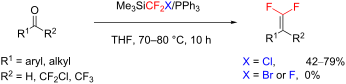
- occurs to give TMSCl with regeneration of PPh3; meanwhile, the trapping of :CF2 by PPh3 gives the ylide. In Path B, a phosphonium salt 10, which is formed via a single-electron transfer (SET) mechanism, undergoes a chloride ion-promoted desilylation reaction to afford Ph3P=CF2 [42][43]. However, we could


Total synthesis and cytotoxicity of the marine natural product malevamide D and a photoreactive analog
Beilstein J. Org. Chem. 2014, 10, 316–322, doi:10.3762/bjoc.10.29
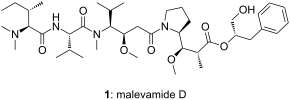
- both coupling partners 12 and 13 completely, by repeated evaporation of DCM solutions. Finally, a coupling yield of 68% was reached following the DEPC protocol. Desilylation (TBAF in THF/H2O) afforded 1 (HRESIMS found 755.49257, calcd. for C40H68NaN4O8 755.49294) in 12% yield after 10 steps from
- afforded building block 26. Coupling with Boc-protected dolaproine (27, DCC/DMAP/CSA) yielded ester 28 as a mixture of two diastereomers. After deprotection of the pyrrolidine, coupling with tripeptide 12 afforded O-silylated diazirinyl-substituted malevamide D (29, 68%). Desilylation (TBAF, THF/H2O 19:1




Recent applications of the divinylcyclopropane–cycloheptadiene rearrangement in organic synthesis
Beilstein J. Org. Chem. 2014, 10, 163–193, doi:10.3762/bjoc.10.14
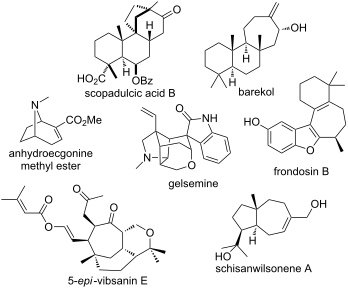
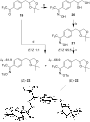
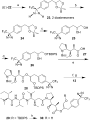
- diterpene 5-epi-vibsanin E (115), from the plant Viburnum awabuki (see Scheme 14) [104]. Starting from triene 108 cyclopropanation was achieved using vinyldiazo compound 101. The fomal [4 + 3]-cycloaddition proceeded through cis-divinylcyclopropane 109 to yield rearranged cycloheptadiene 110. Desilylation
- towards the total synthesis of salvileucalin B (292, see Scheme 35) isolated from the plant Salvia leucantha [213]. Starting from enantiopure trialkyne 282, desilylation was affected using TBAF, followed by ruthenium-catalyzed cycloisomerization [214] and cleavage of the chiral auxiliary to obtain