Search results
Search for "energy" in Full Text gives 1410 result(s) in Beilstein Journal of Organic Chemistry. Showing first 200.
Continuous-flow-enabled intensification in nitration processes: a review of technological developments and practical applications over the past decade
Beilstein J. Org. Chem. 2025, 21, 1678–1699, doi:10.3762/bjoc.21.132
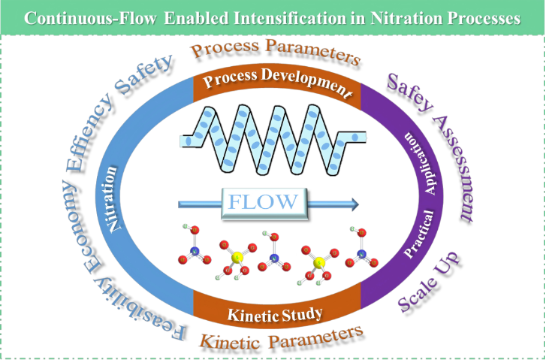
- Industrial & Energy Engineering Group Huanghe Construction Co., Ltd., 7 Yandong Xinlu, Lixia District, Jinan 250000, P. R. China China Construction Industrial & Energy Engineering Group Co., Ltd., Nanjing 210023, P. R. China 10.3762/bjoc.21.132 Abstract Flow chemistry technology has demonstrated significant
- /selectivity through optimized parameters (microwave energy, temperature, feed composition) [11]. Recent years have witnessed growing adoption of the continuous-flow technology in nitration processes across laboratory and industrial scales, driven by the reaction's classification as a highly hazardous chemical
- to achieve precise control of residence time, which is a key advantage of flow-chemistry technology. Conventional mixed-acid nitration systems utilize aqueous streams to rapidly deactivate nitration activity, necessitating simultaneous heat extraction to mitigate the substantial exothermic energy




Influence of the cation in hypophosphite-mediated catalyst-free reductive amination
Beilstein J. Org. Chem. 2025, 21, 1661–1670, doi:10.3762/bjoc.21.130

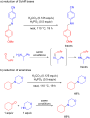
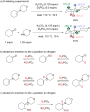
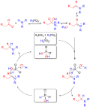
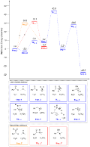
- confirmed by D-experiments. The whole sequence of transformations was finished by the reduction of the charged iminium cation with the hypophosphite anion forming N,N,N-dimethylbenzylammonium phosphite in exergonic manner with a total Gibbs free energy gain of −26.8 kcal/mol (Step_5). Noteworthy, the target


Photocatalysis and photochemistry in organic synthesis
Beilstein J. Org. Chem. 2025, 21, 1645–1647, doi:10.3762/bjoc.21.128
- in the presence of electron donors and acceptors. Furthermore, [Ru(bpy)3]Cl2 can engage in Förster and Dexter energy transfer processes, enabling the transfer of excited-state energy to molecules that do not themselves absorb visible light. This versatility is arguably the reason for the tremendous
- impact of [Ru(bpy)3]Cl2 on several research areas, including solar energy conversion [5], optosensing [6], photodynamic therapy [7][8] and bioimaging [9]. Scattered examples of [Ru(bpy)3]Cl2 being used as a photocatalyst for visible-light-driven organic synthesis appeared in the scientific literature as
- Review article discussing photocatalysts capable of harnessing low-energy red light to trigger chemical reactions [19]. In addition to photoredox catalysis, several mechanistic platforms that leverage light – such as the use of electron donor–acceptor complexes [20], proton-coupled electron transfer [21

On the aromaticity and photophysics of 1-arylbenzo[a]imidazo[5,1,2-cd]indolizines as bicolor fluorescent molecules for barium tagging in the study of double-beta decay of 136Xe
Beilstein J. Org. Chem. 2025, 21, 1627–1638, doi:10.3762/bjoc.21.126
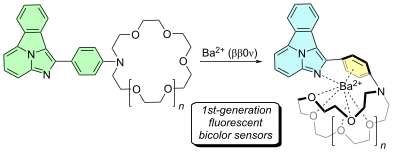
- annihilation, according to which the two emitted electrons would take more energy than in the ββ2ν process. In both processes, the initial nuclide must advance two steps beyond the periodic table. Among the possible candidates for double-beta decay, 136Xe is a suitable isotope. In the ββ2ν radioactive decay
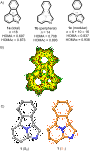
- of this tetracyclic system [11]. Since ground state aromaticity can be assessed by energetic [12], geometric [13] and magnetic [14][15] criteria, among others [16][17][18], we analyzed first the resonance energy of 1 with respect to the aromatic resonance energies of the ortho-phenyl and the bicyclic
- a stabilization energy of ca. 17 kcal/mol. In the alternative hyperhomodesmotic reaction B, defined as 5 + 6 → 7 + 1, the formal ten-electron Hückel aromaticity of the imidazo[1,2-a]pyridine moiety (in blue) was preserved while the phenyl component was decomposed. The computed stabilization energy





Transition-state aromaticity and its relationship with reactivity in pericyclic reactions
Beilstein J. Org. Chem. 2025, 21, 1613–1626, doi:10.3762/bjoc.21.125

- aromatic character in their transition states, this increased aromaticity does not necessarily correlate with lower activation barriers. State-of-the-art computational methods on reactivity, such as the combined activation strain model (ASM)–energy decomposition analysis (EDA) method, reveal that factors
- conclusion by Evans in 1939 [18] indicating that “...the lowering of the activation energy arises from the increased mobility which the π electrons of such reactions possess in the TS.” Indeed, it was found, both experimentally and computationally, that the concerted pathway (i.e., involving an aromatic TS
- consequence, the corresponding HOMO(diene)–LUMO(dienophile) energy gap becomes smaller, which, according to the frontier molecular orbital (FMO) theory, constitutes the origin of the observed acceleration (following the so-called LUMO-lowering concept in catalysis) [36][37][38][39]. This widely accepted


Thermodynamic equilibrium between locally excited and charge transfer states in perylene–phenothiazine dyads
Beilstein J. Org. Chem. 2025, 21, 1577–1586, doi:10.3762/bjoc.21.121
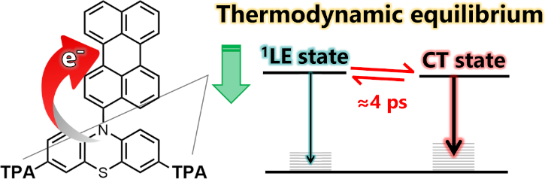
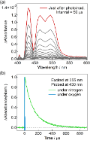
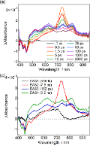
- the PTZ moiety and the photoinduced charge-transfer (CT) state. Femtosecond to microsecond transient absorption spectroscopy reveals that this equilibrium is facilitated not simply by enhanced donor ability, but presumably by excited-state planarization of the PTZ moiety, which lowers the energy of
- processes underlying a wide range of applications, including artificial photosynthesis, solar energy conversion, and photocatalysis [1][2][3]. In particular, the formation of long-lived charge-separated states is crucial for efficient energy conversion and advanced photofunctions driven by light. Among
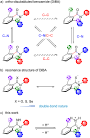
- local excited (LE) and charge-transfer (CT) states can be experimentally observed as dual fluorescence: a structured, higher-energy emission from the LE state and a broad, red-shifted emission from the CT state [8][9]. Classical systems such as 4-(N,N-dimethylamino)benzonitrile (DMABN) and pyrene-o




pH-Controlled isomerization kinetics of ortho-disubstituted benzamidines: E/Z isomerism and axial chirality
Beilstein J. Org. Chem. 2025, 21, 1568–1576, doi:10.3762/bjoc.21.120
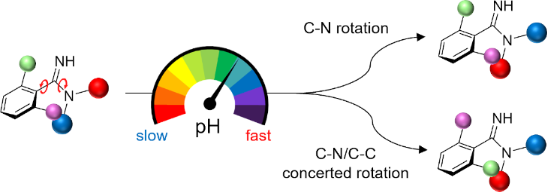
- chalcogen amide. It has been shown that a late periodic chalcogen amide has a lower energy π* orbital (C=S or C=Se), resulting in an increase in the contribution of the zwitterionic resonance structure [21][22][23]. Based on this consideration, an ortho-disubstituted benzamidine, which is generated by
- rotational barrier as in the parent chalcogen amides, regardless of whether it is in the molecular form or protonated state, and the protonation of the nitrogen atom increases the activation energy by 33–43 kJ·mol−1. To investigate how protonation affects the double-bond nature of the amidine moiety, we
- at 313 K (1.17 and 0.95 ppm), and they gradually fused as the temperature increased. The activation energy of E/Z isomerization was calculated to be 77 kJ·mol−1 from the observed coalescence temperature (Tc = 378 K). On the other hand, the two methyl signals of amidine 1 trifluoroacetate salt were



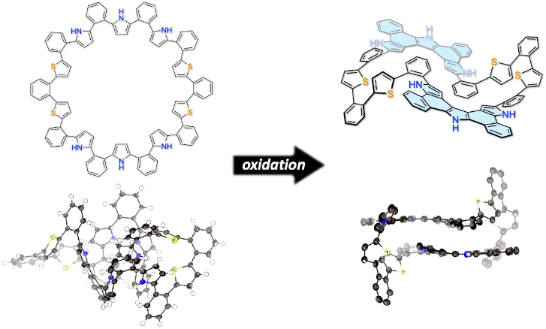
Synthesis of an aza[5]helicene-incorporated macrocyclic heteroarene via oxidation of an o-phenylene-pyrrole-thiophene icosamer
Beilstein J. Org. Chem. 2025, 21, 1561–1567, doi:10.3762/bjoc.21.119
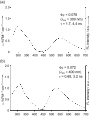
- structural relaxation in the excited state. The fluorescence quantum yield (ΦF) was determined as 0.078 (λex = 300 nm), and the fluorescence lifetime (τ) using biexponential decay model fitting as 1.7 and 4.4 ns. The partially fused structure of 5 exhibited a well-defined lowest-energy absorption band peaked
- at 399 nm (Figure 5b). A broad emission was observed at 528 nm, resulting in a relatively large Stokes shift of 6100 cm−1, which can be attributed to the structural relaxation in the excited state, as inferred by the observed broad 1H NMR spectrum at room temperature. Due to the thermal energy loss


Facile synthesis of hydantoin/1,2,4-oxadiazoline spiro-compounds via 1,3-dipolar cycloaddition of nitrile oxides to 5-iminohydantoins
Beilstein J. Org. Chem. 2025, 21, 1552–1560, doi:10.3762/bjoc.21.118

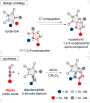
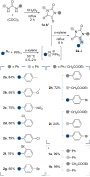
- this case, the strong electron-withdrawing properties of the carboxyethyl group in CEFNO can significantly inhibit the reaction with 2f, lowering the energy of the HOMOdipole involved in the interaction. Instead, the reaction can proceed towards dipole dimerization [37], which is generally much easier



General method for the synthesis of enaminones via photocatalysis
Beilstein J. Org. Chem. 2025, 21, 1535–1543, doi:10.3762/bjoc.21.116
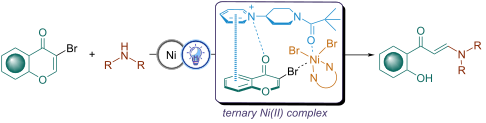
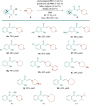
- ]. Thus, the use of visible light as an energy source provides more efficient chemical transformations and minimize the use of harmful reagents, the generation of waste and the consumption of energy, fulfilling several principles of Green Chemistry and promoting greener opportunities for organic synthesis
- . Simultaneously, acridinium photocatalyst PC1 absorbed energy and transitioned from the ground state to excited state under visible-light irradiation. This excited state PC1* is quenched by the amine, generating the amine radical cation and PC1 radical via a single-electron transfer (SET) process. Then, the C−Br




Azobenzene protonation as a tool for temperature sensing
Beilstein J. Org. Chem. 2025, 21, 1528–1534, doi:10.3762/bjoc.21.115
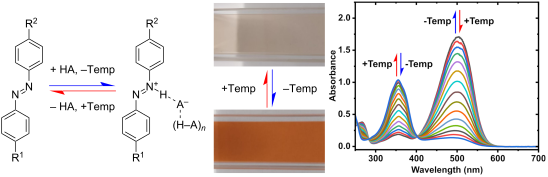
- emerged as staple building blocks in smart materials, from light-responsive norbornadienes in molecular solar thermal energy storage [2] to pH-sensitive spiropyrans in cell imaging [3], and redox-active viologens in memory junctions [4]. Among the different molecular switches azobenzenes stand out due to
- their widespread use in biomedicine [5][6], energy storage [7][8], soft robotics [9][10], and sensing [11]. The key factors for their success are the efficient photochemical isomerization, causing large spatial, spectral, and electronic changes, as well as the relative ease of modification of the
- heavy metal detection [16][19] and humidity sensing [20]. The color changes can be either reversible or irreversible, depending on the mechanism of operation. Spectral tuning also enables switching with low-energy light, eliminating the need for potentially harmful UV irradiation [21]. Utilizing


Highly distinguishable isomeric states of a tripodal arylazopyrazole derivative on graphite through electron/hole-induced switching at ambient conditions
Beilstein J. Org. Chem. 2025, 21, 1496–1507, doi:10.3762/bjoc.21.112
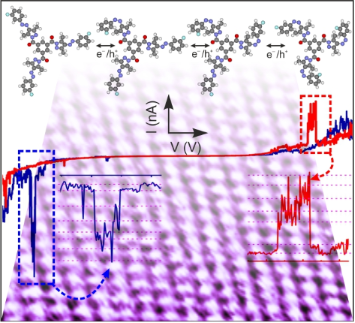
- , Sector 81, SAS Nagar, Knowledge City, Manauli, Punjab, India 10.3762/bjoc.21.112 Abstract Manipulating the energy barrier and extending the half-life of nonequilibrium states in photochromic switches presents viable solutions for applying them in molecular electronics. Typically, the half-life of the Z
- imparted quantitative and reversible photoswitching [20][21]. The long-term photoswitching stability and tunable half-lifes of Z isomers of azopyrazole-based switches [20][21][22] have made their way to several applications in thermal energy storage [23], photoswitchable inhibitor [24], photoswitchable
- hydrogelator [25], photoregulation of DNA nanosystems [26], in controlling surface wettability [27], and in solar energy conversion [28]. Considering these advantages, we synthesized C3 symmetric tripodal azopyrazole-based derivatives having a trimesoyl core and aroylazole connections as a solid-state



Photoredox-catalyzed arylation of isonitriles by diaryliodonium salts towards benzamides
Beilstein J. Org. Chem. 2025, 21, 1480–1488, doi:10.3762/bjoc.21.110
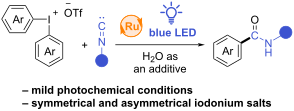
- differs from the ones with electron-rich aryls with 0.36 eV gap between (4-NO2C6H4)2I+ and (4-OMeC6H4)2I+ iodonium cations. If unsymmetric iodonium cations are considered where one of the aryls is phenyl and the other is a 4-substituted phenyl the bond-dissociation energy is 4.0 kcal/mol lower in case of


Microwave-enhanced additive-free C–H amination of benzoxazoles catalysed by supported copper
Beilstein J. Org. Chem. 2025, 21, 1462–1476, doi:10.3762/bjoc.21.108
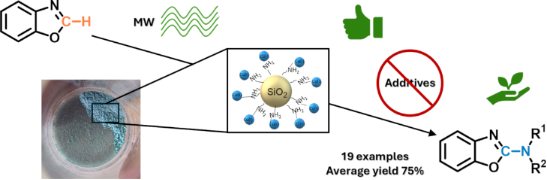
- reported in numerous green protocols, offer significant advantages over the use of conventional heating. The goal was to utilise selective, volumetric dielectric heating to save time and energy, enable selective catalysis and generally achieve higher selectivity and yields [53][55][56]. Building on the



Wittig reaction of cyclobisbiphenylenecarbonyl
Beilstein J. Org. Chem. 2025, 21, 1454–1461, doi:10.3762/bjoc.21.107
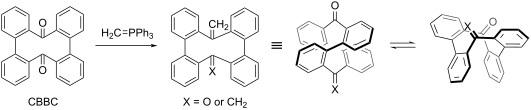
- stable figure-eight conformation A to a metastable bathtub conformation B with a small energy difference of approximately 2 kcal mol–1 [21]. In this paper, we discuss the effect of the transformation of the carbonyl groups on the conformational change of the figure-eight structure. We thus intentionally
- of 1.5 kcal mol−1 and 3.2 cal K−1 mol−1, respectively (Figure S26 in Supporting Information File 1). These physical parameters give a free energy ΔG298 of 0.55 kcal mol−1, indicating approximately a 2:5 ratio of figure-eight and bathtub conformations at room temperature. Mono-olefin 3 exhibited



Tautomerism and switching in 7-hydroxy-8-(azophenyl)quinoline and similar compounds
Beilstein J. Org. Chem. 2025, 21, 1404–1421, doi:10.3762/bjoc.21.105
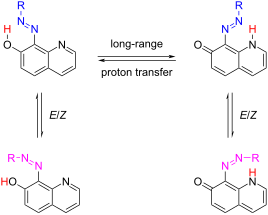
- ][44][45] and systems for energy storage [46][47]. The phototautomerism of azodyes refers to the reversible isomerization process that occurs upon exposure to light, leading to exchange of a proton [48][49]. The obtained tautomeric forms have different optical and chemical properties, which make these
- , populating both KE and KK, which undergo ground-state PT to E and K, respectively. Therefore, it is crucial to have the intermediate keto tautomers KE and KK higher in energy in the ground state, comparing to the paired terminal E and K, respectively, in order to provide efficient switching. The additional
- part is flexible, the excitation of E can lead to E/Z isomerization, which competes with the initial excited-state PT process, reducing its efficiency [52]. The theoretical data, collected in Table 1, can shed light on the potential energy landscape in the ground state for the studied compounds




High-pressure activation for the solvent- and catalyst-free syntheses of heterocycles, pharmaceuticals and esters
Beilstein J. Org. Chem. 2025, 21, 1374–1387, doi:10.3762/bjoc.21.102
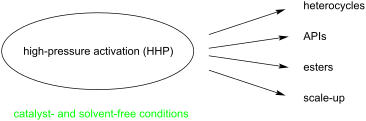
- generation. Using water as pressure transmitting fluid, the reaction vessel is immersed in water minimizing fire hazard during the reactions. Finally, most procedures can be carried out at ambient temperature, improving safety and energy efficiency. Energy efficiency is also supported by the nature of the
- reactions; although pressurizing the system requires energy, once the system is pressurized it does not need energy to maintain it. This can result in remarkable energy saving especially in long reactions. In order to aid the understanding of this technique a schematic design of a high hydrostatic pressure
- many reactions to proceed at ambient temperature, resulting in convenient, safe, and energy-efficient protocols; and finally, (iv) HHP instruments allow broadly tuneable procedures that include modifying pressure, temperature, reaction time, or pressure cycles to ensure easy process optimization. Based


Oxetanes: formation, reactivity and total syntheses of natural products
Beilstein J. Org. Chem. 2025, 21, 1324–1373, doi:10.3762/bjoc.21.101
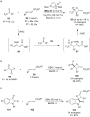
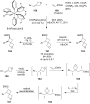
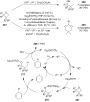
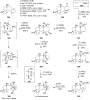
- by the same research group [65][66], the Ir catalyst initially interacts through hydrogen bonds with the quinolone substrate 84, and then upon irradiation, energy transfer occurs to the unbound ketone which enantioselectively reacts with the bound quinolone. Unfortunately, investigations of the
- still runs smoothly, if the aryl is substituted for cyclohexyl. The proposed mechanism, supported by control experiments, deuterium exchange studies and energy calculations, consists of the following steps: conjugate addition of the carbene to the allenoate, regioselective addition of the resulting
- epimerisation to obtain diastereoenriched spirocycles, utilising t-BuOK/t-BuOH for the anti-diastereomer 163 and LDA/PivOH at −78 °C for the syn-diastereomer 162 (dr >10:1 in both protocols). Mechanistic and computational studies suggested the following series of steps: excitation of 159 via energy transfer










Recent advances in amidyl radical-mediated photocatalytic direct intermolecular hydrogen atom transfer
Beilstein J. Org. Chem. 2025, 21, 1306–1323, doi:10.3762/bjoc.21.100
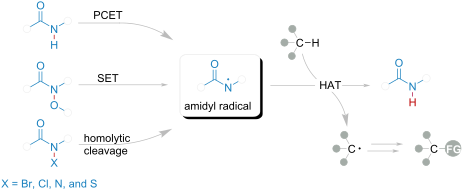
- molecules. On the other hand, C–H bonds exhibit low reactivity due to their relatively high bond dissociation energy (BDE) (Figure 1a). Therefore, the direct functionalization of C–H bonds is extremely challenging [1][2][3][4][5]. In recent decades, transition-metal-catalyzed C–H bond functionalization
- activation energy modulation during transition state formation. Specifically, donor/acceptor electronic configurations in the substrate could either stabilize or destabilize the transient hybrid state, thereby thermodynamically governing the energy barrier for intermolecular HAT progression. When the partial






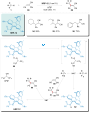
Recent advances and future challenges in the bottom-up synthesis of azulene-embedded nanographenes
Beilstein J. Org. Chem. 2025, 21, 1272–1305, doi:10.3762/bjoc.21.99
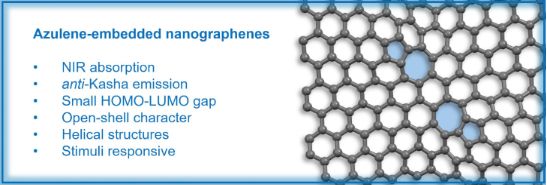
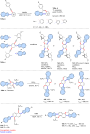
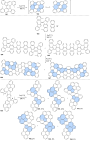
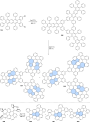
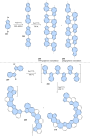
- ], medicine [3], sensing [4] and energy storage [5]. Typically, bulk graphene is obtained using a top-down approach, where graphite is exfoliated using chemical or mechanical methods [6][7]. However, this method does not provide precise control over the structure of graphene and graphenoid materials, which is
- , resulting in a significant dipole moment of 1.08 D [18]. Due to its unique non-alternant topology, azulene exhibits a smaller energy gap compared to that of isomeric naphthalene and unusual emission from the S2 state (anti-Kasha’s emission), as a consequence of its non-mirror related highest occupied
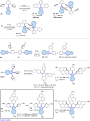
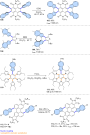
- is why, in many cases, the aromaticity of the azulene moiety is discussed, particularly through the analysis of the most used variations of NICS (nucleus-independent chemical shifts) parameters [30]. Additionally, whenever possible, information on the wavelength of the lowest-energy optical






Recent advances in oxidative radical difunctionalization of N-arylacrylamides enabled by carbon radical reagents
Beilstein J. Org. Chem. 2025, 21, 1207–1271, doi:10.3762/bjoc.21.98
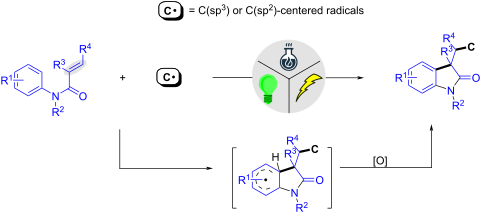
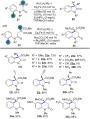
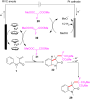
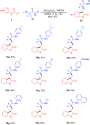
- energy (327 kJ/mol) and is less reactive compared to alkyl bromides or iodides. Previous methodologies predominantly relied on alkyl bromides and iodides due to their lower bond dissociation energies. By leveraging the excited-state reactivity of Pd(0) complexes under blue LED irradiation, this method














Optimized synthesis of aroyl-S,N-ketene acetals by omission of solubilizing alcohol cosolvents
Beilstein J. Org. Chem. 2025, 21, 1201–1206, doi:10.3762/bjoc.21.97
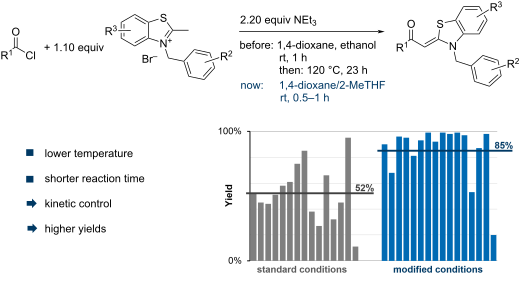
- protocol, not only does the synthesis need less energy, it can also be carried out more sustainably, making it "greener." Conclusion Changing the solvent system from 1,4-dioxane/ethanol to 1,4-dioxane and reacting the aroyl chlorides and 2-methyl-N-benzylbenzothiazolium salts at room temp for 0.5–1 h gives


Selective monoformylation of naphthalene-fused propellanes for methylene-alternating copolymers
Beilstein J. Org. Chem. 2025, 21, 1183–1191, doi:10.3762/bjoc.21.95
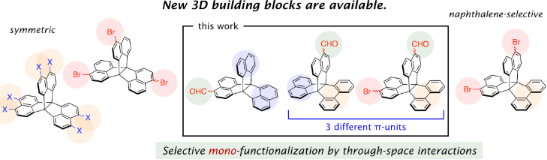
- (HOMOs) was similarly delocalized to multiple naphthalene units, the energy for [3.3.3] (−7.23 eV) was higher than that of [4.3.3] (−7.32 eV). Upon formylation, the HOMO energies of [3.3.3] and [4.3.3] were stabilized to −7.44 eV and −7.55 eV by 0.21 eV and 0.23 eV, respectively. These values correlated


Enhancing chemical synthesis planning: automated quantum mechanics-based regioselectivity prediction for C–H activation with directing groups
Beilstein J. Org. Chem. 2025, 21, 1171–1182, doi:10.3762/bjoc.21.94
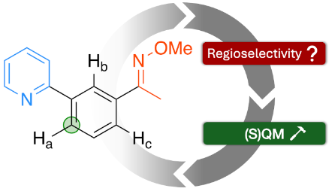
- structure on the potential energy surface is located, which can be done straightforwardly using standard optimization algorithms. While the use of intermediate energies provides a computationally efficient alternative to explicit transition state searches, it rests on the assumption that there is a
- directing groups are extracted from 150 molecules, taken from Chen et al. [4], for which reaction sites are known from experiments. For each directing group, the energy of the palladacycle intermediate with H-abstraction at a specific site is calculated using B3LYP-D3/LACVP** (6-31G**, except on heavy atoms
- where effective core potential was used) in CH2Cl2, and compiled into a hierarchical list for the determination of the reaction site with the lowest energy. Using the hierarchy, the regioselectivity of C–H activations could be rationalized for the 150 molecules with remarkable accuracy. While this


A multicomponent reaction-initiated synthesis of imidazopyridine-fused isoquinolinones
Beilstein J. Org. Chem. 2025, 21, 1161–1169, doi:10.3762/bjoc.21.92
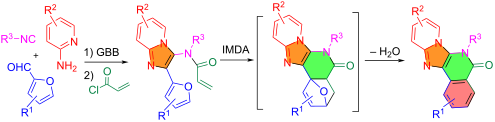
- formation of 8a,h,l,m,n and 8r (68–85%), R3 = phenyl resulted in 8b,g and 8q in 78–82% yields, R3 = isopropyl and cyclopentene gave 8c,f,p and 8d in greater than 70% yields, and R3 = 2-morpholinoethyl gave 8e,i and 8s in 60–76% yields. The energy status for the transformation of compound 6a to 8a was
- calculated using the Gaussian 16 software (Figure 3) [21]. The N-acylated compound 6a has a baseline relative energy of 0 kJ/mol, while the transition state of the Diels–Alder (TS-DA) reaction presents the highest energy barrier at 1.221 kJ/mol. The DA adduct shows a little lower energy at 1.001 kJ/mol
- , indicating a smooth transition from the transition state to the product. The final dehydrative ring-opening gives products by decreasing the energy to 0.978 kJ/mol. Computational analysis indicates that the IMDA step has a high energy barrier which needs a catalyst, while the dehydrative re-aromatization