Search results
Search for "kinetics" in Full Text gives 382 result(s) in Beilstein Journal of Organic Chemistry. Showing first 200.
Total synthesis of insect sex pheromones: recent improvements based on iron-mediated cross-coupling chemistry
Beilstein J. Org. Chem. 2023, 19, 158–166, doi:10.3762/bjoc.19.15
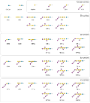
- benefits from the leaving group ligation at the latest stages of the cross coupling. This is particularly interesting since it can hamper the usual decomposition of the iron catalyst, which tends to afford unreactive reduced aggregates at the end of the catalytic transformation, when the coupling kinetics


Insight into oral amphiphilic cyclodextrin nanoparticles for colorectal cancer: comprehensive mathematical model of drug release kinetic studies and antitumoral efficacy in 3D spheroid colon tumors
Beilstein J. Org. Chem. 2023, 19, 139–157, doi:10.3762/bjoc.19.14
- cancer; camptothecin; 3D spheroid; cyclodextrin; oral nanoparticle; release kinetics; Introduction Cancer is still one of the most common, highly variable and fatal diseases worldwide. Therefore, studies are continuing to develop effective/innovative and more flexible treatments for various types of
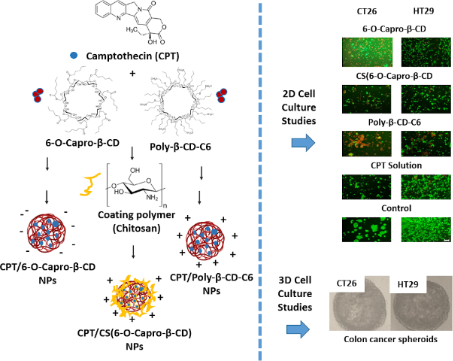
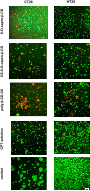
- over 48 hours in order to clearly elucidate the release kinetics (Figure 1). An in vitro release study was carried out at 0–2 hours in simulated gastric fluid (SGF), 2–5 hours in simulated intestinal fluid (SIF), then in simulated colonic fluid (SCoF) settings till the completion of the experiment in
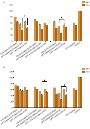
- assessments of this topic [9]. Release kinetics study The in vitro release profiles of CPT-loaded amphiphilic cyclodextrin nanoparticles were fitted with a variety of kinetic models, and the release mechanisms, which are illuminating markers for novel drug delivery systems, were mathematically investigated




Preparation of β-cyclodextrin/polysaccharide foams using saponin
Beilstein J. Org. Chem. 2023, 19, 78–88, doi:10.3762/bjoc.19.7
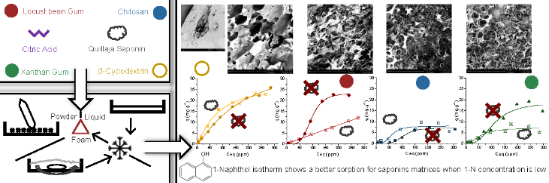
- coronavirus vaccine chitosan–saponin coatings have been developed to study its immunogenic potential [32]. A complexation between saponin and cyclodextrins (native or derivative) is possible [33], and the resulting release kinetics is appropriate for the creation of new saponin-based drugs [34]. Their



Cyclodextrin-based Schiff base pro-fragrances: Synthesis and release studies
Beilstein J. Org. Chem. 2022, 18, 1346–1354, doi:10.3762/bjoc.18.140
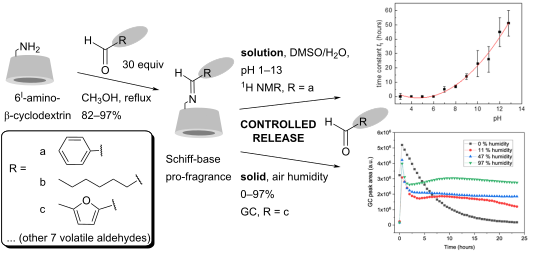
- ; imine; kinetics; pro-fragrance; Schiff base; Introduction The fragrance and flavor industry is one of the most intensively developing sectors of the chemical industry. Encapsulation techniques are widely used in both food and cosmetic industries to control the delivery of the encapsulated guest
- example of flavor compounds. The imine bond was chosen for its relative stability; on the other hand, it can be readily hydrolyzed forming the starting non-volatile amine and releasing the aldehyde. The kinetics of the aldehyde release was studied by 1H NMR techniques in buffers with different pH values
Make or break: the thermodynamic equilibrium of polyphosphate kinase-catalysed reactions
Beilstein J. Org. Chem. 2022, 18, 1278–1288, doi:10.3762/bjoc.18.134
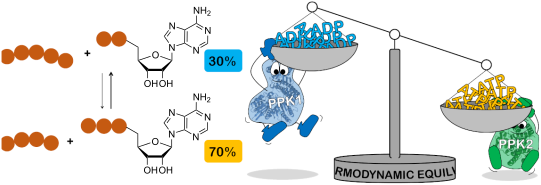
- substrate/product ratio is an important parameter for kinetics and for the reaction equilibrium, as it defines how much conversion will be achieved [25]. For acetate kinase a conversion of at least 90% using stoichiometric amounts of ADP and acetylphosphate was reported [26]. The reaction of pyruvate kinase
- is generally reached very quickly. This effect is experimentally observed – it is shown in the literature that kinetics should be expressed based on the thermodynamic activity of the enzyme [56]. The enzyme activity coefficients were not taken into account in the present work, which does not allow
- drawing conclusions from the concentration-based kinetics presented in Figure 6 and the activity-based consideration of the equilibrium constants yielding the results in Figure 5. Nevertheless, the experimentally observed difference in velocity agrees with the described kinetic “preference” of PPK2 for


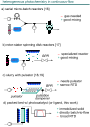
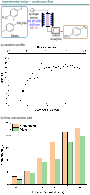
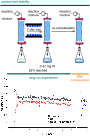
Heterogeneous metallaphotoredox catalysis in a continuous-flow packed-bed reactor
Beilstein J. Org. Chem. 2022, 18, 1123–1130, doi:10.3762/bjoc.18.115
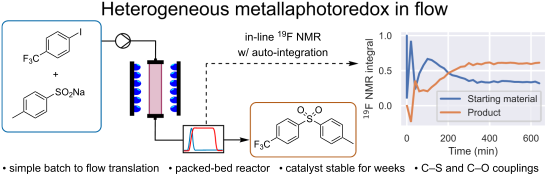
- efficiency of the nickel cycle in metallaphotoredox reactions. It is therefore not surprising that a larger acceleration of the reaction kinetics in flow versus batch was observed for the C–O coupling as opposed to the C–S coupling. Conclusion In summary, we developed a packed-bed reactor for





Automated grindstone chemistry: a simple and facile way for PEG-assisted stoichiometry-controlled halogenation of phenols and anilines using N-halosuccinimides
Beilstein J. Org. Chem. 2022, 18, 999–1008, doi:10.3762/bjoc.18.100
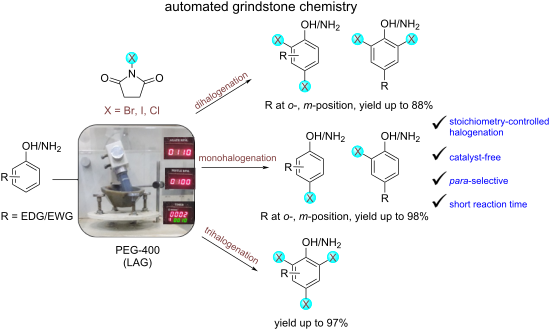
- of mechanochemistry, Toda et al.’s “grindstone chemistry” [48] has also been proved as a useful technique for various organic transformations [49]. It is generally carried out by hand-grinding which is not only a labor-intensive process but also raises some concerns on the reaction kinetics
- through p-position leading to the formation of the thermodynamically stable halo derivative via a σ-complex formation. The high concentration of substrates and reagents in the close proximity in this solvent-less process and grinding force could be the other reasons for the fast reaction kinetics. The
- observed in the case of salicylic acids or anthranilic acids leading to 2,4,6-trihalo derivatives when 3 equiv of NXS were used. PEG-400 plays a key role for faster reaction kinetics and to afford better regioselectivity. Almost exclusive p-selectivity was observed for the aromatic substrates with free




Palladium-catalyzed solid-state borylation of aryl halides using mechanochemistry
Beilstein J. Org. Chem. 2022, 18, 855–862, doi:10.3762/bjoc.18.86
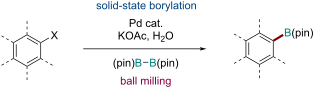
- faster reaction kinetics than those under conventional solution-based conditions because of the high concentration; further, the experimental operations can be carried out in air. Considering these achievements, including our recent success in solid-state cross-coupling chemistry, we envisioned that this




Structural basis for endoperoxide-forming oxygenases
Beilstein J. Org. Chem. 2022, 18, 707–721, doi:10.3762/bjoc.18.71
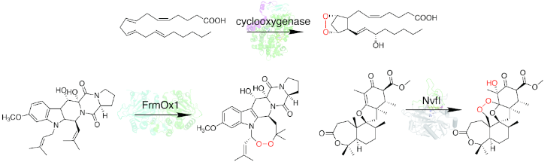
- showed similar reaction kinetics and verruculogen productivity to those of wild type FtmOx1. Interestingly, the Y68F variant generated an unidentified product, which was recently determined to be 26-hydroxyverruculogen [75]. Based on these observations, they proposed an alternative reaction mechanism. In


Inductive heating and flow chemistry – a perfect synergy of emerging enabling technologies
Beilstein J. Org. Chem. 2022, 18, 688–706, doi:10.3762/bjoc.18.70
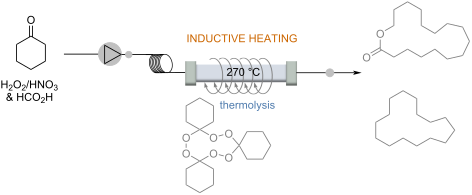
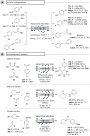
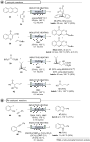
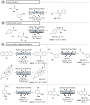
- further catalyzes this reaction, complete conversions with low carbon formation could be obtained at low flow rates. At higher flow rates, reaction kinetics was the limiting factor. Later, it was found that by doping the alloy with small amounts of copper, almost complete conversion (95%) could be


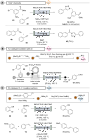


Shift of the reaction equilibrium at high pressure in the continuous synthesis of neuraminic acid
Beilstein J. Org. Chem. 2022, 18, 567–579, doi:10.3762/bjoc.18.59
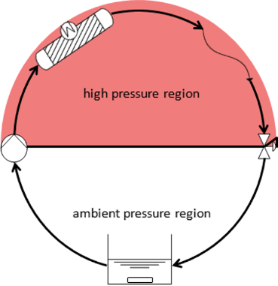
- recycling steps, and were characterized regarding the reaction kinetics (initial rate) and scalability (different lab scales) in a batch reactor. The reaction kinetics were studied in a continuous flow reactor. A high-pressure circular reactor (up to 130 MPa) was applied for the investigation of changes in
- under investigation [9][10][11]. For this study, the enzymatic synthesis was chosen for its simple reaction sequence (Figure 1) and high selectivity. Different research groups already described the reaction kinetics of the epimerase and aldolase at ambient pressure [5][8]. In this study, the rate
- kinetics [16][17][18], in enantiomeric excess [19], in stability [20], or in the position of the equilibrium [17][21]. State of the art for high-pressure research is the use of pressurized batch reactors [22][23]. Since continuous production and suitable reactors are receiving more attention [24], and some


Substituent effect on TADF properties of 2-modified 4,6-bis(3,6-di-tert-butyl-9-carbazolyl)-5-methylpyrimidines
Beilstein J. Org. Chem. 2022, 18, 497–507, doi:10.3762/bjoc.18.52
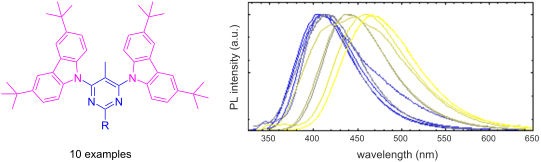
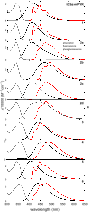
- and ΦDF values were estimated according to [50]. Time-integrated fluorescence, phosphorescence spectra as well as fluorescence decay kinetics were recorded with a time-gated intensified iCCD camera iStar DH340T (Andor) with a spectrograph SR-303i (Shamrock) coupled with nanosecond YAG:Nd3+ laser NT


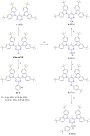


Iridium-catalyzed hydroacylation reactions of C1-substituted oxabenzonorbornadienes with salicylaldehyde: an experimental and computational study
Beilstein J. Org. Chem. 2022, 18, 251–261, doi:10.3762/bjoc.18.30
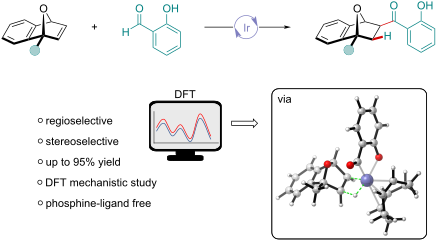
- under the experimental reaction conditions. As such, we theorize the origin of regioselectivity for the title reaction is the reductive elimination step. Based on the relative kinetics, we predict the point of selectivity must occur before the irreversible C–C forming step. Comparing the two competing


Mechanistic studies of the solvolysis of alkanesulfonyl and arenesulfonyl halides
Beilstein J. Org. Chem. 2022, 18, 120–132, doi:10.3762/bjoc.18.13
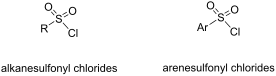
- molecule, makes what was already a rather controversial area of reaction kinetics even more complicated and controversial. The reader wanting more detail is referred to the above mentioned comprehensive review entitled “Solvolysis Revisited” [31]. 2. Application of simple and extended forms of the Grunwald


Peptide stapling by late-stage Suzuki–Miyaura cross-coupling
Beilstein J. Org. Chem. 2022, 18, 1–12, doi:10.3762/bjoc.18.1
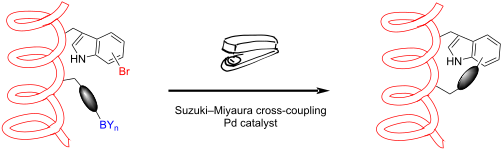
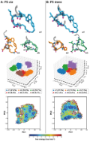
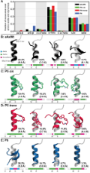
- accurate values would be obtained with methods better adapted for kinetics, such as Markov models (for a general overview see reference [94]). Yet, such low barriers are not sufficient to trap the SMC peptide in conformations that can be separated experimentally at ambient conditions [95] and the analysis


DABCO-promoted photocatalytic C–H functionalization of aldehydes
Beilstein J. Org. Chem. 2021, 17, 2959–2967, doi:10.3762/bjoc.17.205
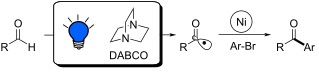
- not be appropriate for this reaction. However, our results clearly show that DABCO is a perfectly fit for the job. This apparent contradiction can be more easily understood by recalling that a BDE analysis is essentially thermodynamic, but is connected to the kinetics of the reaction step by means of




A photochemical C=C cleavage process: toward access to backbone N-formyl peptides
Beilstein J. Org. Chem. 2021, 17, 2932–2938, doi:10.3762/bjoc.17.202
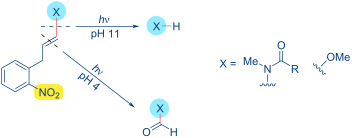
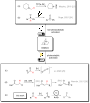
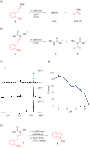
- irradiation, the product 11 was isolated in 28% yield, the modest yield reflecting the instability in water and on silica of this compound. The purified N-formyl 11 was then dissolved in buffer (pH 8), and its hydrolysis to amide 12 was assessed (Figure 4, inset). We observed clean first-order kinetics to
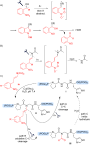
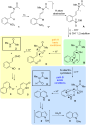
- 1 in acetone. Preparation and hydrolysis kinetics (inset) of N-formyl product 11. Dashed line: first-order decay fit used in calculating the rate constant. Proposed mechanism for the formation of aldehyde 3 and N-formyl product 8. Supporting Information Supporting Information File 280: Experimental



Effect of a twin-emitter design strategy on a previously reported thermally activated delayed fluorescence organic light-emitting diode
Beilstein J. Org. Chem. 2021, 17, 2894–2905, doi:10.3762/bjoc.17.197
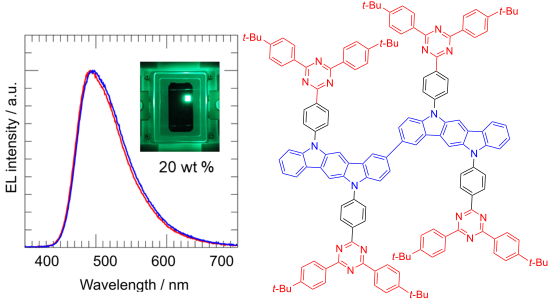
- measurement (Supporting Information File 1, Figure S5b,c) showed multiexponential decay kinetics and lifetimes with an average τp of 8.6 ns [τ1 = 3.5 ns (37.5%), τ2 = 11.6 ns (62.5%)] and an average τd of 156.1 µs [τ1 = 27.98 µs (39.5%), τ2 = 239.7 µs (60.5%)], respectively. The average prompt fluorescence


Halides as versatile anions in asymmetric anion-binding organocatalysis
Beilstein J. Org. Chem. 2021, 17, 2270–2286, doi:10.3762/bjoc.17.145
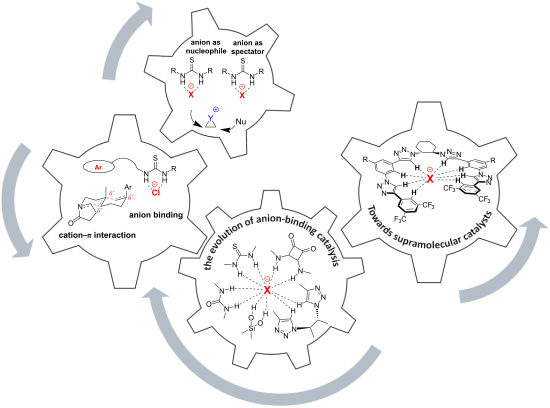
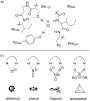
- species. However, the cationic counterpart can have important effects on the kinetics of the systems. This hypothesis has evidently been identified in enzymatic reactions [68]. Mechanistic studies have shown that in such processes, cationic species are stabilized through various attractive interactions



On the application of 3d metals for C–H activation toward bioactive compounds: The key step for the synthesis of silver bullets
Beilstein J. Org. Chem. 2021, 17, 1849–1938, doi:10.3762/bjoc.17.126
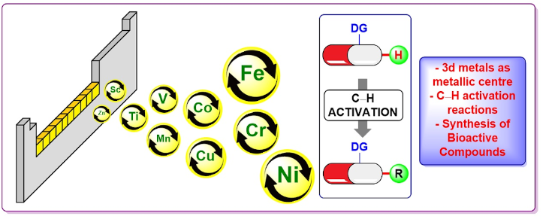
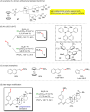
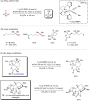
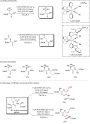
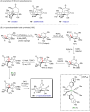
- , which via a gold catalysis can be triggered to release the drug on specific sites of the target cell in a controlled manner (Scheme 15A) [123]. A proposed catalytic cycle based on kinetic isotopic effect and kinetics data is illustrated in Scheme 15D. At the beginning of the reaction, intermediate III


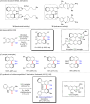

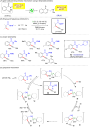


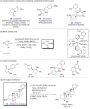


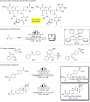









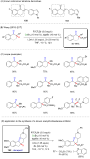
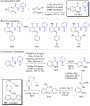
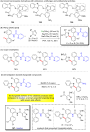
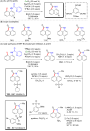
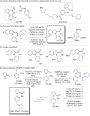
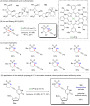


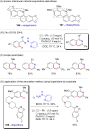
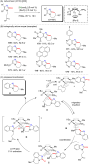










Chemical approaches to discover the full potential of peptide nucleic acids in biomedical applications
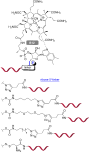
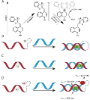
Beilstein J. Org. Chem. 2021, 17, 1641–1688, doi:10.3762/bjoc.17.116









A comprehensive review of flow chemistry techniques tailored to the flavours and fragrances industries
Beilstein J. Org. Chem. 2021, 17, 1181–1312, doi:10.3762/bjoc.17.90
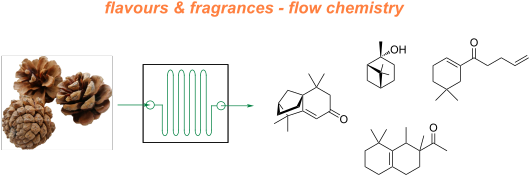
- close to optimal as possible. Certain drawbacks to using a flow-approach must also however be acknowledged. Problems may arise due to quenching requirements, the necessity for solvent switching, concentration limitations, compensating for different encountered reaction kinetics over multiple steps when
- reactor is, in certain instances, indicated to give rise to superior reaction kinetics [79]. It is also easy to create staged temperature gradients to compensate for changes in reaction kinetics based upon concentration or complicating effects such as product derived auto-catalysis. The use of immobilised
- intensification. The implicit high pressure self-contained environment created by a pumped flow system allows for superior reaction kinetics often achieved by elevating the working temperature of the system. This capability also opens up the opportunity for the integration of volatile and gaseous reagents into










Beyond ribose and phosphate: Selected nucleic acid modifications for structure–function investigations and therapeutic applications
Beilstein J. Org. Chem. 2021, 17, 908–931, doi:10.3762/bjoc.17.76
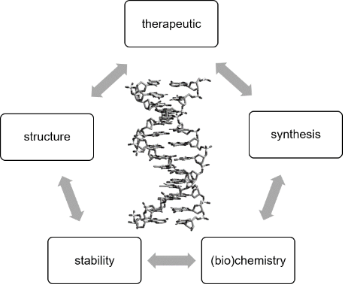
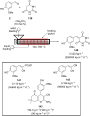
- kinetics and higher solubility in organic solvents, useful for automated synthesis, such as the Beaucage reagent [86]. Conveniently, during deprotection of the support-bound oligonucleotide, aminolysis removes the β-thiobenzoylethyl group from the backbone to generate the free PS2-modified oligonucleotide




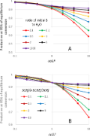
Kinetics of enzyme-catalysed desymmetrisation of prochiral substrates: product enantiomeric excess is not always constant
Beilstein J. Org. Chem. 2021, 17, 873–884, doi:10.3762/bjoc.17.73
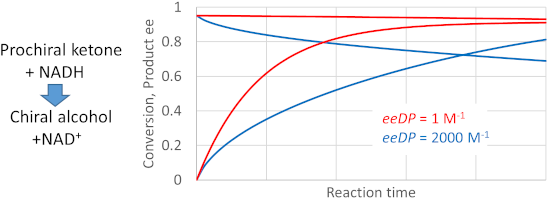
- Peter J. Halling WestCHEM, Dept Pure & Applied Chemistry, University of Strathclyde, Glasgow G1 1XL, Scotland, UK 10.3762/bjoc.17.73 Abstract The kinetics of enzymatic desymmetrisation were analysed for the most common kinetic mechanisms: ternary complex ordered (prochiral ketone reduction); ping
- enantioselective enzymes in the resolution of a racemate. As such resolution reactions proceed, there are progressive changes in the enantiomeric excesses (ee), that of the product falling while that of the residual starting material increases. In a classic study of the kinetics of resolution, Chen and Sih [1
- kinetics of such reactions are straightforward, they have received little study. Smith et al. [32] and more recently, Yamane [33] have studied the kinetics of example reactions, but without progress data for the ee. Kroutil et al. [34] derived a model for consecutive reactions, but the desymmetrisation



Simulating the enzymes of ganglioside biosynthesis with Glycologue
Beilstein J. Org. Chem. 2021, 17, 739–748, doi:10.3762/bjoc.17.64
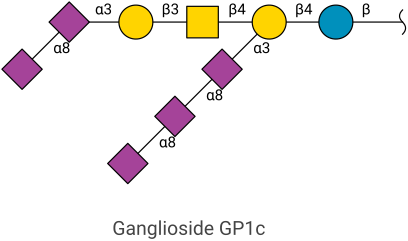
- includes cellular transport and recycling. A limitation of the model is that it considers only absolute changes to enzyme activity, in which an activity is either off or on, which a kinetic model based on differential-equation-based rate laws [44][45][46][47][48] or stochastic kinetics [49][50] would
- will also influence the kinetics [48][51]. Future extensions to this work will consider the effects of acetylation of sialic acid residues, since this modification reduces the negative charge of the carbohydrate, thus altering binding affinity, while an increased incidence of 9-O-acetylated GD3 is