


Search results
Search for "morpholine" in Full Text gives 115 result(s) in Beilstein Journal of Organic Chemistry.
Microwave-assisted synthesis of (aminomethylene)bisphosphine oxides and (aminomethylene)bisphosphonates by a three-component condensation
Beilstein J. Org. Chem. 2016, 12, 1493–1502, doi:10.3762/bjoc.12.146
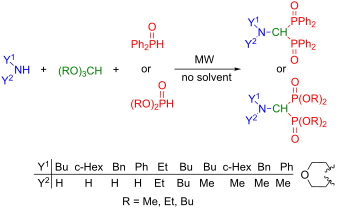
- column chromatography, the new amino-methylenebisphosphine oxides 1a–d were obtained in yields of 72–82% (Table 1, entries 1–4). The condensation of simple secondary amines (diethyl-, dibutyl-, N-butylmethyl-, N-cyclohexylmethyl-, N-benzylmethylamine, N-methylaniline and morpholine) was also investigated



Antibacterial structure–activity relationship studies of several tricyclic sulfur-containing flavonoids
Beilstein J. Org. Chem. 2016, 12, 1065–1071, doi:10.3762/bjoc.12.100

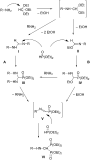
- , synthesized by reacting morpholine with halogenated benzaldehydes [21][22], are collected in Table 1. The individual substitution patterns and yields for flavonoids 4a–m and 5a–m are presented in Table 2. The reaction between brominated and iodinated phenacyl carbodithioates 2a–f and halogenated aminals 3a–e


Opportunities and challenges for direct C–H functionalization of piperazines
Beilstein J. Org. Chem. 2016, 12, 702–715, doi:10.3762/bjoc.12.70
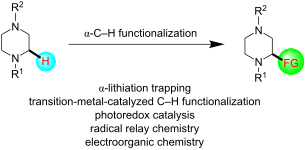
- -amine radical followed by trapping with acrylate, to functionalize the α-position of amines [68]. The strategy works for morpholine and piperazine substrates, but the yields for the latter are generally low, ranging from 12% to 41% (Figure 17). Anodic oxidation strategy Another uncommon way to perform α





Effective in silico prediction of new oxazolidinone antibiotics: force field simulations of the antibiotic–ribosome complex supervised by experiment and electronic structure methods
Beilstein J. Org. Chem. 2016, 12, 415–428, doi:10.3762/bjoc.12.45

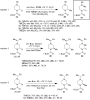
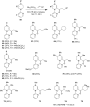
- throughout) is present in all conformers. 3) The equilibrium H-bond length of 1.70 Å and the calculated relaxed force constant [40] of 0.31 N/cm point to a strong interaction [41], which is decisive for the recognition process. According to experimental results [11], the morpholine ring is not directly
- involved in the molecular recognition process. Our simulation could reproduce this high flexibility of the morpholine moiety, too (see Figure 6). Turning to the conformational changes in the receptor, they seem to be localized at the nucleobases G2540 and U2620 as well at the CCA-N-Phe unit. The
- flexibility of the U2620 (U2585 in Escherichia coli) moiety has already been discussed elsewhere [20]. Nevertheless, due to our simulation, there is no hydrogen bond between this nucleobase and the morpholine ring. The absence of a second hydrogen bond in our simulations (which is indeed observed for


Carbon–carbon bond cleavage for Cu-mediated aromatic trifluoromethylations and pentafluoroethylations
Beilstein J. Org. Chem. 2015, 11, 2661–2670, doi:10.3762/bjoc.11.286
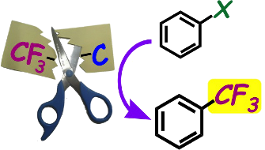
- ] (Scheme 15). Hemiaminal derivative 1 is readily prepared from commercially available CF3CH(OH)(OEt), which is a fluoral equivalent, and morpholine [52]. The substrate scope of the catalytic trifluoromethylation is shown in Scheme 16. Nitro, cyano, and ester groups in iodoarenes were tolerable under the




Continuous formation of N-chloro-N,N-dialkylamine solutions in well-mixed meso-scale flow reactors
Beilstein J. Org. Chem. 2015, 11, 2408–2417, doi:10.3762/bjoc.11.262
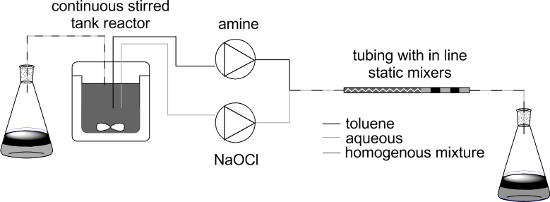
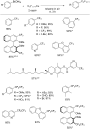
- NaOCl (aq) into a 1 M morpholine (aq) at a rate of 1 g/min. The calorimeter jacket temperature was set at −15 °C, and power compensation used to maintain the reactor at 5 °C. 20 mL of the NaOCl solution were added to 20 mmol of morpholine over 20 min, and after subtracting the feed solution temperature
- phase with KD [organic]/[aqueous] = 28.8, causing the reaction to be limited by the mass transfer rate. For example mixing in the T-piece alone gives 11% conversion with N-benzylmethanamine, but 46% with 1,4-morpholine; also 65% conversion is seen with 0.8 min of intense mixing of N-benzylmethanamine
- with NaOCl, whilst 68% is seen with 1,4-morpholine mixed for half this time, because it partitions more favourably into the aqueous phase with KD = 0.01. Substrates The formation of a range of N-chloro-N,N-dialkylamines was investigated. Some were found to react relatively slowly, partly for the mass


Beyond catalyst deactivation: cross-metathesis involving olefins containing N-heteroaromatics
Beilstein J. Org. Chem. 2015, 11, 2223–2241, doi:10.3762/bjoc.11.241
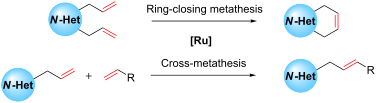
- by focusing on amine-mediated degradation of GII and they highlighted various plausible decomposition pathways depending on the nature of the amine [45]. At first, the reaction between GII and various amines such as n-butylamine (a), pyrrolidine (b), morpholine (c) and DBU (d) were examined by 1H NMR
- NMR experiments [45]. The steric hindrance of the amine appeared to be a critical parameter. The non-bulky primary amine n-butylamine (a) induced a fast decomposition of the methylidene 2 (Table 1, entry 1) whereas secondary amines such as pyrrolidine (b) and morpholine (c) are less detrimental to the
- , the addition of amino additives such as pyridine, morpholine, Et3N or DBU was shown to be detrimental to the G-HII-catalyzed dimerization of styrene (Table 2). Moderate to poor yields in stilbene 7’ were obtained and the value of the yields was correlated with the pKa of the couple ammonium/amine. An


[2.2]Paracyclophane derivatives containing tetrathiafulvalene moieties
Beilstein J. Org. Chem. 2015, 11, 1917–1921, doi:10.3762/bjoc.11.207
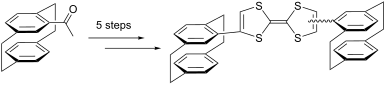
- (3b) and morpholinium morpholine-4-carbodithioate (3c), respectively. These compounds were obtained as colorless crystals in 80% isolated yields. The structures of dithiocarbamates 4a–c were inferred from their analytical and spectral data; thus the 1H NMR spectra include the expected signals for the


Azobenzene-based inhibitors of human carbonic anhydrase II
Beilstein J. Org. Chem. 2015, 11, 1129–1135, doi:10.3762/bjoc.11.127
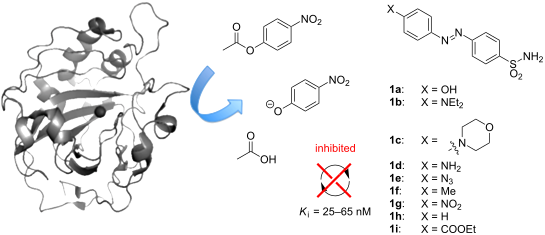
- 1c offers the second-lowest affinity (Ki = 55.4 nM), which seems counter-intuitive, as the only difference with respect to 1b is the connection of the ethyl chains by an oxygen atom to a morpholine ring. This does not only affect the binding properties, but also the π–π* band, which is 46 nm blue
- wavelength versus the IC50 (Figure 4c and d, respectively), no clear correlation can be found. In both cases morpholine 1c, azide 1e, methyl 1f and unsubstituted azobenzene sulfonamide 1h lie in the same region (50 µM), while all other inhibitors (hydroxy 1a, alkyl amine 1b, amine 1d, nitro 1h and ethyl


Novel stereocontrolled syntheses of tashiromine and epitashiromine
Beilstein J. Org. Chem. 2015, 11, 596–603, doi:10.3762/bjoc.11.66

- intramolecular cyclization of a chiral alkenylated pyrrolidinone, followed by hydroxylation [32], or by the intramolecular ring closure of chiral pyrrolidine diesters followed by ester and oxo group reduction [33], while the syntheses of (+)-epitashiromine starts from a chiral morpholine derivative, with nitrone
- (Z-Cl) afforded protected amino ester (±)-3 in 78% yield. In agreement with our earlier observations [40][41][42] C–C double bond functionalization of the cyclooctene β-amino ester via dihydroxylation with N-methyl morpholine N-oxide (NMO) in the presence of OsO4 afforded the corresponding all-cis


Metal-free one-pot synthesis of 2-substituted and 2,3-disubstituted morpholines from aziridines
Beilstein J. Org. Chem. 2015, 11, 524–529, doi:10.3762/bjoc.11.59

- : ammonium persulfate; aziridine; metal free; morpholine; Introduction Morpholines are common structural cores of a broad range of biological and pharmacological natural or synthetically important organic molecules [1]. In particular, a number of 2-substituted and 2,3-disubstituted morpholines are
- clinically available drugs (Figure 1). For example, the trans-2,3-disubstituted morpholine, phendimetrazine (bontril), is a clinically available appetite suppressant [2], the 2-substituted morpholine, reboxetine, is a clinically active, efficacious, and well-tolerated antidepressant drug [3][4][5], and the
- cis-2,3-disubstituted morpholine, aprepitant, is approved for the use in the prevention of chemotherapy-induced nausea and vomiting [6]. In addition to pharmacological properties, morpholines are also used in organic synthesis as bases, catalysts, and chiral auxiliaries [7][8][9][10][11][12][13]. Thus


Synthesis and biological evaluation of a novel MUC1 glycopeptide conjugate vaccine candidate comprising a 4’-deoxy-4’-fluoro-Thomsen–Friedenreich epitope
Beilstein J. Org. Chem. 2015, 11, 155–161, doi:10.3762/bjoc.11.15
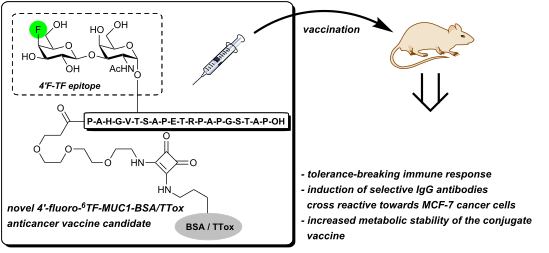
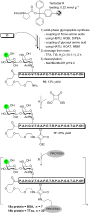
- , 12 was dissolved in an aqueous 2-(N-morpholine)ethanesulfonic acid (MES buffer) at pH 4.5 (enzyme activity optimum) and incubated with the enzyme in the presence of solubilizing 2,6-di-O-methyl-ß-cyclodextrin at 25 °C [51]. By virtue of analytical HPLC (UV detection based on Fmoc) and mass




Regio- and stereoselective synthesis of new diaminocyclopentanols
Beilstein J. Org. Chem. 2014, 10, 2513–2520, doi:10.3762/bjoc.10.262

- [29]. The treatment of the corresponding acetates 4 with mesyl chloride and subsequent transesterification of mesylated substrates 5 resulted in the formation of 6a,b. Epoxides 3 and 6 were identified by 1H NMR data [28]. Morpholine (7a), 2-methyl-1H-imidazole (7b), N-acetylpiperazine (7c) and 9H
- experiments was performed under solvent-free conditions at 100 °C. In case of morpholine (7a), the best catalytic effect was observed with LiClO4 [36] and Zn(ClO4)2·6H2O [37] affording 56 and 76% yield of 8a after isolation and purification, therefore the absence of the solvent seems crucial for the reaction
- displayed poor regioselectivity. In fact, a mixture of the separable regioisomers 9a–d and 10a–d were obtained, where the major products 9a–d were formed due to the attack of the nucleophile at the C1-oxirane carbon atom. In case of aliphatic cyclic amines (morpholine (7a) and N-acetylpiperazine (7c)), the


Application of cyclic phosphonamide reagents in the total synthesis of natural products and biologically active molecules
Beilstein J. Org. Chem. 2014, 10, 1848–1877, doi:10.3762/bjoc.10.195
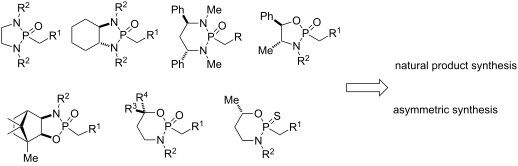
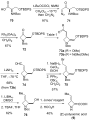
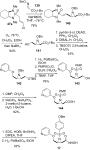
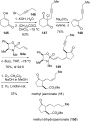
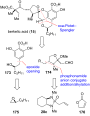
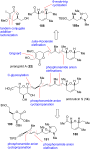
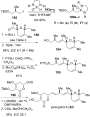
- , which was then opened by morpholine to afford amide 167. The primary alcohol was then oxidized to the aldehyde under Swern conditions and submitted to a diastereoselective Strecker synthesis to install the amino acid moiety. Thus, condensation of the aldehyde with (R)-α-phenylglycinol followed by












Multicomponent reactions in nucleoside chemistry
Beilstein J. Org. Chem. 2014, 10, 1706–1732, doi:10.3762/bjoc.10.179
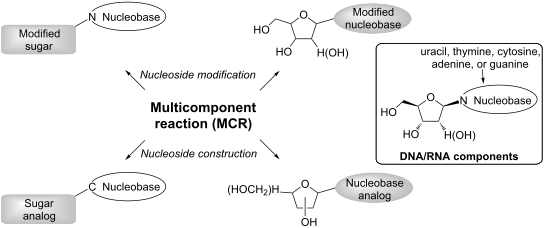
- involving taurine, formaldehyde and 2',3'-O-isopropylideneuridine [61]. Watanabe et al. described the synthesis of 7-(morpholinomethyl)tubercidin 5 by heating tubercidin, 37% aq formaldehyde and morpholine at 90 °C overnight (Scheme 3) [62]. Compound 5 was converted into the natural nucleoside toyocamycin
- 38) [112]. The palladium-catalyzed reactions of 5-iodopyrimidines, various acyclic or cyclic dienes, and amines were optimized by Larock et al. [113]. Thus, coupling of 5-iodo-2'-deoxyuridine (94a) or 3',5'-di-O-acetyl-5-iodo-2'-deoxyuridine (94b) with 1,2-, 1,3- or 1,ω-dienes 95, and morpholine
- secondary amines. In some cases, protection of the hydroxy groups in 94a was also necessary. The reactions between 3',5'-di-O-acetyl-5-iodo-2'-deoxyuridine (94b), long-chain 1,ω-dienes (e.g., deca-1,9-diene or tetradeca-1,13-diene) and morpholine afforded products as mixtures of regioisomers resulting from


Chemistry of polyhalogenated nitrobutadienes, 14: Efficient synthesis of functionalized (Z)-2-allylidenethiazolidin-4-ones
Beilstein J. Org. Chem. 2014, 10, 1638–1644, doi:10.3762/bjoc.10.170

- addition to the anilines described above (Scheme 2), we applied 1-naphthylamine as a bulkier aromatic representative and morpholine as a secondary, more basic aliphatic amine. Conversion of 3 and 5 with morpholine and 1-naphthylamine afforded the open chain products 20 and 21 in 93% and 80% yield


Solid-phase-supported synthesis of morpholinoglycine oligonucleotide mimics
Beilstein J. Org. Chem. 2014, 10, 1151–1158, doi:10.3762/bjoc.10.115
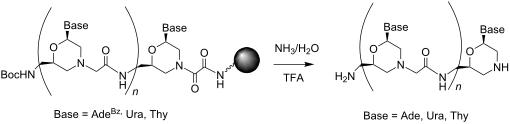
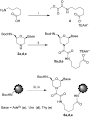
- -containing residue to the morpholine nitrogen in monomers 5a,d,e resulted in the appearance of duplicate signals of the nucleobases and morpholine protons in the NMR spectra (see Experimental) similar to morpholinooxalyl nucleosides [8]. After completion of the loading, the unreacted amino groups were capped
- and physicochemical data of intermediate compounds. 2-Aminomethyl-4-trityl-6-(thymin-1-yl)morpholine (3e): Thymine containing monomer 3e was synthesized similarly to uracil analogue 3d [8] starting from the corresponding 2-hydromethyl derivative (2.16 g, 4.24 mmol). Yield 1.05 g, (2.20 mmol, 52%). Rf
- . Physicochemical characteristics for intermediate compounds see in Supporting Information File 1. General procedure for the synthesis of Boc-protected 2-aminomethylmorpholino monomers 5a,d,e 2-[N-(tert-Butyloxycarbonyl)aminomethyl]-6-(N6-benzoyladenin-9-yl)morpholine (2a), 2-[N-(tert-butyloxycarbonyl)aminomethyl



Secondary amine-initiated three-component synthesis of 3,4-dihydropyrimidinones and thiones involving alkynes, aldehydes and thiourea/urea
Beilstein J. Org. Chem. 2014, 10, 287–292, doi:10.3762/bjoc.10.25
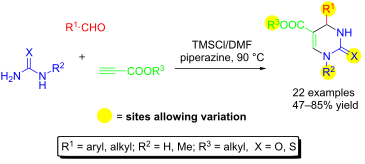
- respectively employing TMSCl, morpholine and mixed TMSCl/morpholine as catalysts have been conducted. It was found that the target product could be formed only when both morpholine and TMSCl were present (Table 1, entries 1–3). Extended experiments using different amounts and types of amine catalysts


Four-component reaction of cyclic amines, 2-aminobenzothiazole, aromatic aldehydes and acetylenedicarboxylate
Beilstein J. Org. Chem. 2013, 9, 2934–2939, doi:10.3762/bjoc.9.330
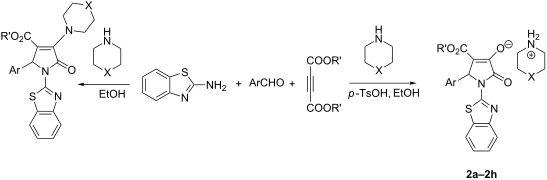
- spiro compounds by using the in situ generated Huisgen 1,4-dipoles [17][18][19][20][21][22][23][24]. During these research works, we noticed that even through the cyclic secondary amines such as pyrrolidine, piperidine and morpholine also reacted with electron-deficient alkynes to give the Huisgen 1,4
- amine morpholine still gave a very low yield of the desired 3-morpholinyl-2-pyrrolidinone 1n (Table 1, entry 14). It is known that pyrrolidine (pKb = 2.73) and piperidine (pKb = 2.88) have near similar basicity, while morpholine has a relative weak basicity (pKb = 5.64). At present, the exact reason for
- the different reactivity of piperidine, pyrrolidine and morpholine in this reaction is not very clear. The structures of the prepared 2-pyrrolidinones 1a–1n were fully characterized by 1H and 13C NMR, HRMS, IR spectra, and were further confirmed by single crystal structure determination of compound 1f


Diastereoselectivity in the Staudinger reaction of pentafluorosulfanylaldimines and ketimines
Beilstein J. Org. Chem. 2013, 9, 2675–2680, doi:10.3762/bjoc.9.303

- at δ 65.5 ppm in contrast to those of 5b that appeared at δ 59.5 ppm. The tendency for the enamine resonances to appear downfield of imine resonances was confirmed by the preparation of the morpholine enamine of 1a for which the equatorial fluorine resonance is also shifted downfield [46]. As


Recent advances in transition metal-catalyzed Csp2-monofluoro-, difluoro-, perfluoromethylation and trifluoromethylthiolation
Beilstein J. Org. Chem. 2013, 9, 2476–2536, doi:10.3762/bjoc.9.287
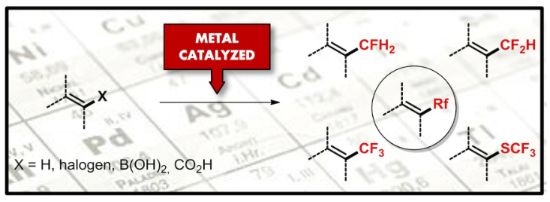
- fluoral and morpholine, following the procedure described by B. R. Langlois et al. [77] Moderate to good yields were observed when the reaction was carried out in diglyme with cesium fluoride as a base (Table 14). More recently, compounds derived from trifluoroacetic acid appeared to be a cheap and


Triol-promoted activation of C–F bonds: Amination of benzylic fluorides under highly concentrated conditions mediated by 1,1,1-tris(hydroxymethyl)propane
Beilstein J. Org. Chem. 2013, 9, 2451–2456, doi:10.3762/bjoc.9.283
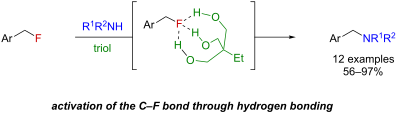
- 4-phenylbenzyl fluoride (1) [24] as the substrate and morpholine (3 equiv) as the nucleophile at 60 °C for 24 h. Commercially available 1,1,1-tris(hydroxymethyl)propane (2) was selected as the triol and was used in a slight excess (1.1 equiv) [25] relative to the substrate. Solvent screening was
- all could be observed without the activating agent. It is important to mention for this entry that even if morpholine is the only liquid component at room temperature, a homogeneous solution is generated around 60 °C by the fusion of 1,1,1-tris(hydroxymethyl)propane (melting point 56–58 °C). Starting
- effected a full conversion. It was also possible to reduce the amount of morpholine used from 3 equiv (Table 2, entry 3) to 2 equiv (Table 2, entry 5) without any impact on the conversion. However, lower amounts (Table 2, entries 6 and 7) resulted in decreased conversions. While a reasonable explanation


Synthesis, characterization and luminescence studies of gold(I)–NHC amide complexes
Beilstein J. Org. Chem. 2013, 9, 2216–2223, doi:10.3762/bjoc.9.260
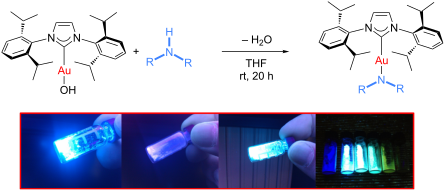
- straightforward methodology for the synthesis of gold(I)–amide complexes. Results and Discussion Synthesis and characterization of gold(I)–amide complexes We began our studies by exposing hydroxide 1 to a series of alkyl- and arylamines. While no reaction was observed with either morpholine or isopropylamine, the


The first example of the Fischer–Hepp type rearrangement in pyrimidines
Beilstein J. Org. Chem. 2013, 9, 1819–1825, doi:10.3762/bjoc.9.212

- be explained by the stronger activation of the pyrimidine ring by the tertiary amine moiety (morpholine is a better activator than methyl, methylthio or acetamido groups). The prepared requisite N-nitrosated compounds 2 easily undergo the subsequent nucleophilic substitution reaction with amines. The
- morpholine in DMF, and the subsequent quenching of the reaction mixture with 50% (v/v) sulfuric acid gave the desired N-benzyl-4,6-dimorpholino-5-nitrosopyrimidin-2-amine (8) in 92% yield (Scheme 6). In conclusion, the ability of N-substituted-6-chloropyrimidin-4-amines to undergo a N-nitrosation reaction


Re2O7-catalyzed reaction of hemiacetals and aldehydes with O-, S-, and C-nucleophiles
Beilstein J. Org. Chem. 2013, 9, 1526–1532, doi:10.3762/bjoc.9.174
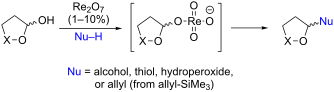
- poor results with N-nucleophiles led us to reinvestigate a proven reaction in the presence of amines. The previously successful condensation of 4a with phenethyl alcohol (see Table 2) failed completely in the presence of added morpholine or pyridine (not shown). Allylation of hemiacetals Re2O7 has been





