


Search results
Search for "potassium" in Full Text gives 648 result(s) in Beilstein Journal of Organic Chemistry. Showing first 200.
Synthesis of π-conjugated polycyclic compounds by late-stage extrusion of chalcogen fragments
- Aissam Okba,
- Pablo Simón Marqués,
- Kyohei Matsuo,
- Naoki Aratani,
- Hiroko Yamada,
- Gwénaël Rapenne and
- Claire Kammerer
Beilstein J. Org. Chem. 2024, 20, 287–305, doi:10.3762/bjoc.20.30
- derivative 21 was synthesized in six steps in 14% overall yield from 3-bromothiophene (17, Scheme 7). In the first step, the sulfur atom embedded in the final thiepine ring was introduced via a palladium-catalyzed S-arylation of 3-bromothiophene in the presence of potassium thioacetate, to afford the

Graphical Abstract

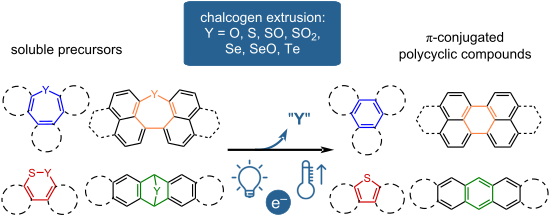
Scheme 1: “Precursor approach” for the synthesis of π-conjugated polycyclic compounds, with the thermally- or...

Scheme 2: Valence isomerization of chalcogen heteropines and subsequent cheletropic extrusion in the case of ...

Scheme 3: Early example of phenanthrene synthesis via a chemically-induced S-extrusion (and concomitant decar...

Scheme 4: Top: Conversion of dinaphthothiepine bisimides 3a,b and their sulfoxide analogues 4a,b into PBIs 6a,...

Figure 1: Top view (a) and side view (b) of the X-ray crystal structure of thiepine 3b showing its bent confo...

Scheme 5: Modular synthetic route towards dinaphthothiepines 3a–f and the corresponding S-oxides 4a–d, incorp...

Scheme 6: Top: Conversion of dithienobenzothiepine monomeric units into dithienonaphthalenes, upon S-extrusio...

Scheme 7: Synthesis of S-doped extended triphenylene derivative 22 from 3-bromothiophene (17) with the therma...
Scheme 8: Top: Synthesis of thermally-stable O-doped HBC 26a. Bottom: Synthesis of S- and Se-based soluble pr...

Scheme 9: Synthesis of dinaphthooxepine bisimide 33 and conversion into PBI 6f by O-extrusion triggered by el...

Figure 2: Cyclic voltammogram of dinaphthooxepine 33, evidencing the irreversibility of the reduction process...

Scheme 10: Top: Early example of 6-membered ring contraction with concomitant S-extrusion leading to dinaphtho...

Scheme 11: Examples of S-extrusion from annelated 1,2-dithiins under photoactivation (top) or thermal activati...

Scheme 12: Synthesis of dibenzo[1,4]dithiapentalene upon photoextrusion of SO2 [78].

Scheme 13: Extrusion of SO in naphthotrithiin-2-oxides for the synthesis of 2,5-dihydrothiophene 1-oxides [79].

Scheme 14: SO-extrusion as a key step in the synthesis of fullerenes (C60 and C70) encapsulating H2 molecules [80,82]....

Scheme 15: Synthesis of diepoxytetracene precursor 56 and its on-surface conversion into tetracene upon O-extr...

Scheme 16: Soluble precursors of hexacene, decacene and dodecacene incorporating 1,4-epoxides in their hydroca...

Scheme 17: Synthesis of tetraepoxide 59 as soluble precursor of decacene [85].

Figure 3: Constant-height STM measurement of decacene on Au(111) using a CO-functionalized tip (sample voltag...
Substitution reactions in the acenaphthene analog of quino[7,8-h]quinoline and an unusual synthesis of the corresponding acenaphthylenes by tele-elimination
- Ekaterina V. Kolupaeva,
- Narek A. Dzhangiryan,
- Alexander F. Pozharskii,
- Oleg P. Demidov and
- Valery A. Ozeryanskii
Beilstein J. Org. Chem. 2024, 20, 243–253, doi:10.3762/bjoc.20.24
- with a potassium hydroxide solution, and the oxidation product was isolated by chromatography. Nitroacenaphthylene 13 can also be obtained similarly (Scheme 5). Thus, although nitro groups usually hinder the dehydrogenation of acenaphthenes, in our case, the opposite trend is observed. We believe that

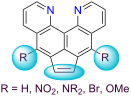
Graphical Abstract
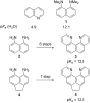
Scheme 1: Comparison of basicity (in water scale) and synthetic availability of quinoline-type azaarenes and ...

Figure 1: Suggested amination products 6 and two resonance forms of dianion 7.

Figure 2: Targeted dipyridoacenaphthylene 8.

Scheme 2: Formation of complex 9 and its slow hydrolytic degradation into protic salt 5·HCl.

Figure 3: Molecular and crystal structure of salt 5·HCl·2H2O is strongly dominated by severe H-bonding (blue ...
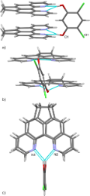
Figure 4: Selected images of the supramolecular organization of two molecules of base 5 held by 4,6-dichloror...
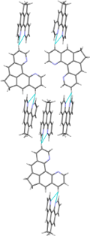
Figure 5: Fragment of the crystal packing of neutral dipyridoacenaphthene 5 showing self-association via mult...

Scheme 3: Dinitration of compound 5 and the initially assumed admixture 11.

Scheme 4: Mononitration of compound 5.

Figure 6: Structure of dinitroacenaphthylene 12.

Scheme 5: Dehydrogenation of compounds 10 and 11.

Scheme 6: Nucleophilic methoxylation of compounds 10(12).

Figure 7: Basicity of key compounds in acetonitrile.

Scheme 7: Electrophilic bromination of compound 5.

Scheme 8: tele-Elimination upon interaction of dibromide 15 with pyrrolidine.

Scheme 9: Interaction of dibromide 15 with anionic bases.
Chiral phosphoric acid-catalyzed transfer hydrogenation of 3,3-difluoro-3H-indoles
- Yumei Wang,
- Guangzhu Wang,
- Yanping Zhu and
- Kaiwu Dong
Beilstein J. Org. Chem. 2024, 20, 205–211, doi:10.3762/bjoc.20.20
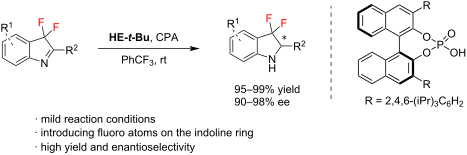
- increase drug activity by affecting drug receptor interactions [1]. Therefore, replacing hydrogen with one or more fluoro atoms has beneficial effects on therapeutic efficacy and pharmacological activity [2]. For example, flindokalner is a potassium channel opener (Figure 1) [3]. JAB-3068 is a promising

Graphical Abstract

Figure 1: Structures of bioactive fluorinated indole derivatives.

Scheme 1: Synthesis of chiral indolines via asymmetric reduction.

Scheme 2: Substrate scope of 3,3-difluoro-3H-indoles.

Scheme 3: Experiment at 2 mmol scale.
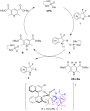
Figure 2: Proposed mechanism for the transfer hydrogenation reaction.
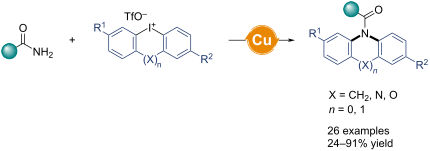
Synthesis of N-acyl carbazoles, phenoxazines and acridines from cyclic diaryliodonium salts
- Nils Clamor,
- Mattis Damrath,
- Thomas J. Kuczmera,
- Daniel Duvinage and
- Boris J. Nachtsheim
Beilstein J. Org. Chem. 2024, 20, 12–16, doi:10.3762/bjoc.20.2
- (I) source resulted in a complete collapse of reactivity. In a further experiment, we investigated the influence of iodide on the reaction to confirm whether or not diiodobiphenyl plays a role as an intermediate. The addition of potassium iodide leads to only diiodobiphenyl as the product. To confirm

Graphical Abstract
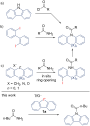
Scheme 1: Examples for direct syntheses of N-acyl heteroaromatic compounds.
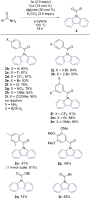
Scheme 2: Scope of amides. aIsolated yields, 200 µmol scale, all reactions carried out in p-xylene, with 1.00...
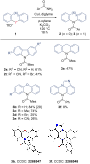
Scheme 3: Scope of iodanes. aIsolated yields, 200 µmol scale, all reactions carried out in p-xylene, with 1.0...
Aldiminium and 1,2,3-triazolium dithiocarboxylate zwitterions derived from cyclic (alkyl)(amino) and mesoionic carbenes
- Nedra Touj,
- François Mazars,
- Guillermo Zaragoza and
- Lionel Delaude
Beilstein J. Org. Chem. 2023, 19, 1947–1956, doi:10.3762/bjoc.19.145
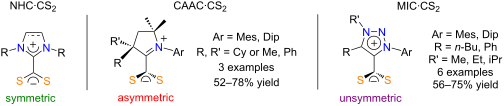
- NHC·CS2 zwitterions relies on the deprotonation of an azolium salt with a strong base, typically potassium tert-butoxide or potassium bis(trimethylsilyl)amide (also known as potassium hexamethyldisilazide, KHMDS) followed by the addition of carbon disulfide either in one pot or after the isolation of the
- equiv) in THF at 0 °C. The potassium iodide byproduct was filtered off and carbon disulfide (3.3 equiv) was added to the carbene solution leading to an immediate color change. After 30 min at room temperature, the solvent was evaporated under vacuum. The residue was washed with petroleum ether and dried
- acetonitrile (Scheme 4). However, all our attempts to purify compounds 6c–f by recrystallization or column chromatography remained unsuccessful. Several studies have shown that metal alkoxides, such as potassium tert-butoxide (pKa = 22), were basic enough to deprotonate 1,2,3-triazolium salts (pKa ≈ 22–23

Graphical Abstract

Figure 1: Various types of stable singlet carbenes and their acronyms.

Figure 2: Various types of NHC·CS2 zwitterions and their coordination modes.

Scheme 1: Synthesis of CAAC·CS2 zwitterion 2 from its free carbene parent 1.

Scheme 2: Synthesis of CAAC·CS2 zwitterions 4a–c with KN(SiMe3)2.

Scheme 3: Synthesis of 1,2,3-triazolium iodides 5a–f.

Scheme 4: Synthesis of MIC·CS2 zwitterions 6a and 6b with KN(SiMe3)2.

Scheme 5: Synthesis of MIC·CS2 zwitterions 6c–f with NaOt-Bu.
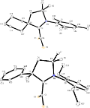
Figure 3: ORTEP representations of zwitterions 4a (CAAC-Mes-Cy·CS2, top) and 4c (CAAC-Die-MePh·CS2, bottom) w...
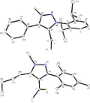
Figure 4: ORTEP representations of zwitterions 6b (MIC-Dip-Ph-Me·CS2, top) and 6e (MIC-Mes-Bu-Me·CS2, bottom)...
Aromatic systems with two and three pyridine-2,6-dicarbazolyl-3,5-dicarbonitrile fragments as electron-transporting organic semiconductors exhibiting long-lived emissions
- Karolis Leitonas,
- Brigita Vigante,
- Dmytro Volyniuk,
- Audrius Bucinskas,
- Pavels Dimitrijevs,
- Sindija Lapcinska,
- Pavel Arsenyan and
- Juozas Vidas Grazulevicius
Beilstein J. Org. Chem. 2023, 19, 1867–1880, doi:10.3762/bjoc.19.139
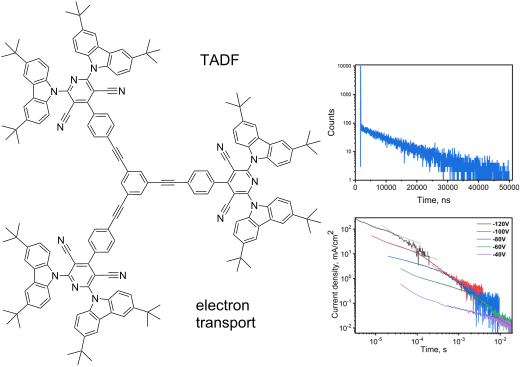
- copper(I) iodide in DMF/DIPEA solution at 55 °C with subsequent desilylation with potassium carbonate. Finally, butadiyne 6 was prepared by a homocoupling reaction of 5 with 80% yield. Derivatives containing two dicyanopyridyl moieties, 7 and 8, were prepared starting with a Sonogashira coupling of
- , 129.64, 127.20, 125.71, 124.18, 116.57, 114.00, 112.34, 103.64, 99.21, 98.30, 34.90, 31.81; MS–ESI+ (m/z): 856 ([M + H]+, 100). Next, potassium carbonate (69 mg, 0.5 mmol, 1 equiv) was added to a solution of 2,6-bis-(3,6-di-tert-butyl-9H-carbazol-9-yl)-4-(4-(trimethylsilylethynyl)phenyl)pyridine-3,5

Graphical Abstract

Figure 1: Chemical structures of pyridine-3,5-dicarbonitrile-based TADF emitters.

Scheme 1: Synthesis of dicyanocarbazole 6. Reaction conditions: a) cyanoacetamide, piperidine, methanol, 40 °...

Scheme 2: Synthesis of dicyanocarbazoles 7–9. Reaction conditions: a) corresponding ethynyl arene, Pd(Ph3P)4 ...

Figure 2: Absorption (a, b) and PL (c, d) spectra of dilute toluene, THF, and chloroform solutions (10−5 M) a...

Figure 3: PL spectra (a) and PL decay curves (b) of air-equilibrated (as prepared) and deoxygenated toluene s...

Figure 4: Non-normalized (a) and normalized (b) PL spectra and PL decay curves (c) of the film of a 10 wt % m...

Figure 5: TGA (a) and DSC 2nd heating (b) curves of compounds 6–9.

Figure 6: CV curves of compounds 6–9.

Figure 7: Photoelectron emission spectra of the vacuum-deposited films of compounds 6–9 on glass substrates c...

Figure 8: The current transients (a) for electrons recorded at the different voltages for the vacuum-deposite...
A novel recyclable organocatalyst for the gram-scale enantioselective synthesis of (S)-baclofen
- Gyula Dargó,
- Dóra Erdélyi,
- Balázs Molnár,
- Péter Kisszékelyi,
- Zsófia Garádi and
- József Kupai
Beilstein J. Org. Chem. 2023, 19, 1811–1824, doi:10.3762/bjoc.19.133
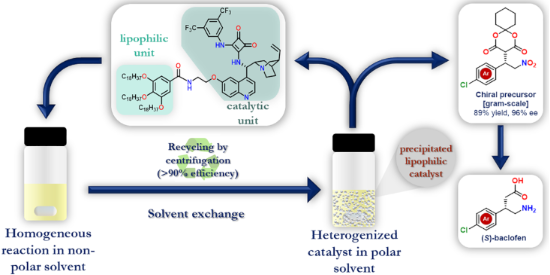
- -tris(octadecyloxy)benzoate (9) Methyl gallate (8, 15 g, 0.082 mol) was dissolved in DMF (150 mL), and 1-bromooctadecane (87.3 g, 0.262 mol) and potassium carbonate (67.5 g, 0.489 mol) were added. To the resulting reaction mixture, further DMF (150 mL) was added. After stirring for 16 hours at 80 °C

Graphical Abstract

Figure 1: Application of cinchona squaramide 1 and recyclable, lipophilic cinchona squaramide organocatalysts ...

Scheme 1: Synthesis of demethylated cinchona squaramide organocatalyst and the incorporation of the flexible ...

Scheme 2: Synthesis of the lipophilic tag from methyl gallate (8) and attachment to the cinchona squaramide.

Figure 2: Classification of the tested non-polar solvents according to the GSK’s solvent sustainability guide ...

Figure 3: Recycling of the lipophilic organocatalyst in the stereoselective Michael addition by replacing the...

Scheme 3: A new, stereoselective synthetic route for baclofen.

Scheme 4: Gram-scale synthesis of (S)-baclofen hydrochloride.
Trifluoromethylated hydrazones and acylhydrazones as potent nitrogen-containing fluorinated building blocks
- Zhang Dongxu
Beilstein J. Org. Chem. 2023, 19, 1741–1754, doi:10.3762/bjoc.19.127
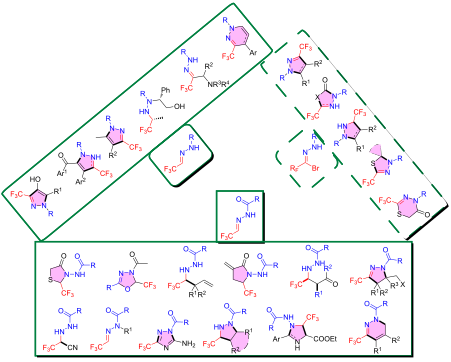
- trifluoroacetonitrile imine, are highly versatile in that they react with olefins, acetylenes, dimethyl fumarate, dimethyl maleate, β-diketones, β-keto esters, bicyclic olefins, and potassium isothiocyanate and isocyanate affording the corresponding trifluoromethyl-containing compounds, generally with good yields [51

Graphical Abstract

Scheme 1: Synthesis of trifluoromethylpyrazoles from trifluoroacetaldehyde hydrazones.

Scheme 2: Synthesis of polysubstituted pyrazolidines and pyrazolines.

Scheme 3: Asymmetric synthesis of 3-trifluoromethyl-1,4-dihydropyridazines reported by Rueping et al. [39].

Scheme 4: Synthesis of 3-trifluoromethyl-1,4-dihydropyridazine with Brønsted acid-assisted Lewis base catalys...

Scheme 5: Synthesis of CF3-pyrazoles and CF3-1,6-dihydropyridazines.

Scheme 6: Asymmetric reactions of trifluoromethylimines with organometallic reagents.

Scheme 7: Mannich-type reaction of trifluoroacetaldehyde hydrazones.

Scheme 8: Synthesis of trifluoromethylated hydrazonoyl halides.

Scheme 9: Early work of trifluoromethylated hydrazonoyl halides.

Scheme 10: [3 + 2]/[3 + 3] Cycloadditions of trifluoromethylated hydrazonoyl halides.

Scheme 11: Substrate scope for [3 + 2] cycloadditions with trifluoroacetonitrile imines reported by Jasiński’s...

Scheme 12: Synthesis of trifluoromethylated 1,2,4-triazole and 1,2,4-triazine derivatives.

Scheme 13: [3 + 2] Cycloadditions of difluoromethylated hydrazonoyl halides.

Scheme 14: Preparation and early applications of trifluoromethylated acylhydrazones.

Scheme 15: 1,2-Nucleophilic addition reactions of trifluoromethylated acylhydrazones.

Scheme 16: Cascade oxidation/cyclization reactions of trifluoromethylated homoallylic acylhydrazines.

Scheme 17: Synthesis of trifluoromethylated cyanohydrazines and 3-trifluoromethyl-1,2,4-triazolines.

Scheme 18: N-Arylation and N-alkylation of trifluoromethyl acylhydrazones.

Scheme 19: [3 + 2]-Cycladditions of trifluoromethyl acylhydrazones.
Effects of the aldehyde-derived ring substituent on the properties of two new bioinspired trimethoxybenzoylhydrazones: methyl vs nitro groups
- Dayanne Martins,
- Roberta Lamosa,
- Talis Uelisson da Silva,
- Carolina B. P. Ligiero,
- Sérgio de Paula Machado,
- Daphne S. Cukierman and
- Nicolás A. Rey
Beilstein J. Org. Chem. 2023, 19, 1713–1727, doi:10.3762/bjoc.19.125
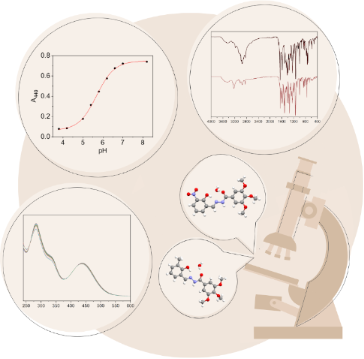
- of the solid samples in spectroscopic grade potassium bromide (KBr). Thermogravimetric analyses were performed using a Pyris 1 TGA thermoanalyzer (Perkin-Elmer), at 10 °C min−1 heating rate, under nitrogen flow (20 mL min−1), from 25 to 350 °C. Melting points were determined in triplicate using a

Graphical Abstract
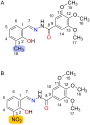
Scheme 1: Structure of (A) 3-methylsalicylaldehyde 3,4,5-trimethoxybenzoyl hydrazone (hdz-CH3) and (B) 3-nitr...

Figure 1: ORTEP representation of the new N-acylhydrazones synthesized in the present work, drawn with therma...

Figure 2: (A) Superposition of molecular structures and stacked motifs of (B) hdz-CH3 and (C) hdz-NO2.

Figure 3: Overlap of the experimental (carbon atoms colored in gray) and theoretical structures (calculated w...

Figure 4: Mid-infrared spectra of the compounds. Experimental conditions: KBr pellets, room temperature. Calc...
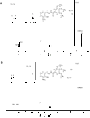
Figure 5: 1H NMR (400 MHz) spectra of (A) hdz-CH3 and (B) hdz-NO2 in DMSO-d6 at 25 °C.

Figure 6: Electronic absorption spectra in a selected wavelength region for a solution of hdz-CH3 in 10% DMSO...
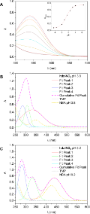
Figure 7: Electronic absorption spectra of hdz-NO2 in selected wavelength regions. Experimental conditions: l...

Scheme 2: General scheme for the synthesis of the studied hydrazones.
Tying a knot between crown ethers and porphyrins
- Maksym Matviyishyn and
- Bartosz Szyszko
Beilstein J. Org. Chem. 2023, 19, 1630–1650, doi:10.3762/bjoc.19.120
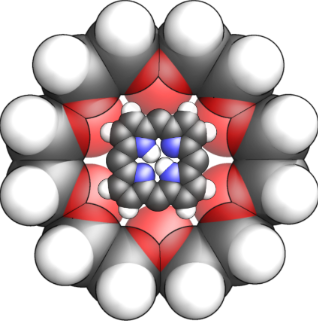
- appreciable effects. Furthermore, zinc(II) porphyrins 1-Zn and TriCP-Zn bound potassium cations forming dimeric assemblies 2, as demonstrated by the absorption and 1H NMR spectra. Although DCP-Zn and MCP-Zn were also capable of forming dimers, the highest stability and the largest level of attraction between
- the two monomers were expected for tetra-crowned 1-Zn, where four potassium cations cooperatively clasp each monomer together. In such a case, K+ cations would ideally hover between the macrocyclic pockets of the crown ether moieties of each 1-Zn monomer. Incorporation of other metals, e.g., Cu(II
- synthesis of these compounds involved the condensation of a meso-disubstituted dipyrromethane with diamines incorporating the crown ether/azacrown segment in the presence of boron trifluoride diethyl etherate as a catalyst [66]. The treatment of compound 16 with potassium hydride yielded 16-K2, a suitable

Graphical Abstract

Figure 1: Porphyrin and crown ether.

Figure 2: Timeline demonstrating the contributions into the crown ether–porphyrin chemistry.

Figure 3: Tetra-crowned porphyrin 1 and dimer 2 formed upon K+ binding.

Figure 4: meso-Crowned 25-oxasmaragdyrins 3a–c and their boron(III) complexes (3a–c)-BF2.

Scheme 1: CsF ion-pair binding of 4. The molecular structure of 4-CsF is shown on the right [101].

Figure 5: CsF ion pair binding by 5. The molecular structure of 5-CsF is shown on the right [102].

Scheme 2: Ion-pair binding by 6. The molecular structure of (6-CsCl)2 is shown on the right [103].

Scheme 3: Hydrated fluoride binding by 7 [104].
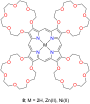
Figure 6: β-Crowned porphyrin 8.
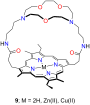
Figure 7: Crown ether-capped porphyrins 9.

Figure 8: The capped porphyrin 10 and complex [10-PQ](PF6)2.
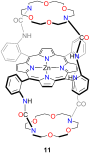
Figure 9: The double-capped porphyrin 11.

Figure 10: Selected examples of iminoporphyrinoids [58,122].

Scheme 4: The synthesis of 13.

Scheme 5: Tripyrrane-based crown ether-embedding porphyrinoid 15.

Figure 11: Macrocycles 16–19 and their coordination compounds.

Scheme 6: The flexibility of 16-Co [66].

Figure 12: Hexagonal wheel composed of six 16-Co(III) monomers [66].

Scheme 7: The synthesis of 16-V [67].

Figure 13: The molecular structure of dimers [16-Mn]2 [67].
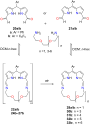
Scheme 8: Synthesis of crownphyrins 28–33. Compounds 23a/b and 29a/b were obtained from 4,7,10-trioxa-1,13-tr...

Figure 14: The molecular structures of 22a, 34a·(HCl)2, and 29b [69].

Figure 15: Molecular structures of 22a-Pb and (29b)2-Zn [69].

Scheme 9: Reactivity of 29a/b.
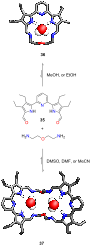
Scheme 10: Synthesis of 36 and 37 [131].

Scheme 11: Synthesis of 40–45.

Figure 16: Potential applications of porphyrin-crown ether hybrids.
Radical chemistry in polymer science: an overview and recent advances
- Zixiao Wang,
- Feichen Cui,
- Yang Sui and
- Jiajun Yan
Beilstein J. Org. Chem. 2023, 19, 1580–1603, doi:10.3762/bjoc.19.116
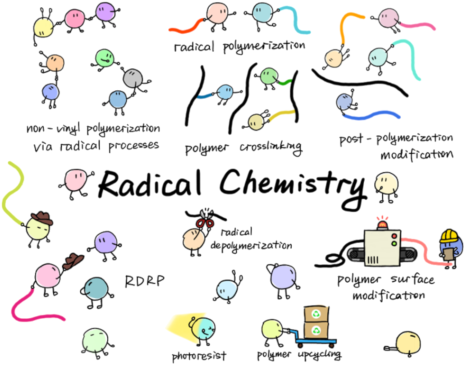
- of surfactants, which are also called emulsifiers within the first few minutes [26]. Emulsifiers such as sodium lauryl sulfate, sodium or potassium salts of fatty acids (soaps), salts of alkylbenzene sulfonates, and O-polyoxyethyleneated long-chain alcohols are used to change the two incompatible

Graphical Abstract

Scheme 1: Oxidation of catechol and subsequent cross-linking. Scheme 1 redrawn from [3].
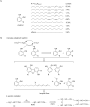
Scheme 2: (A) Structure of typical urushiol in Chinese lacquer, and (B) schematic process of laccase-catalyze...
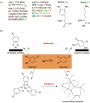
Scheme 3: A) Primary amino acid sequence of mfp-1, mfp-3, and mfp-5 (Y: DOPA, K: lysine). B) Scheme showing e...

Scheme 4: Activation–deactivation equilibrium in nitroxide-mediated polymerizations. Bicomponent initiating s...

Scheme 5: Mechanism of a transition metal complex-mediated ATRP. Scheme 5 redrawn from [14].

Scheme 6: Mechanism of RAFT polymerization. Scheme 6 redrawn from [68].

Scheme 7: Degenerative transfer (a) and reversible termination (b) mechanism of OMRP. Scheme 7 redrawn from [70].

Scheme 8: Simplified mechanism of a RITP. Scheme 8 redrawn from [21].

Scheme 9: (A) Structures of π-conjugated conductive polymers. (B) Examples of conductive polymer synthesis vi...

Scheme 10: Possible regiochemical couplings in PATs. Scheme 10 redrawn from [79].

Scheme 11: General thiol-ene photopolymerization process. Scheme 11 redrawn from [81].

Scheme 12: (a) Three generations of Grubbs catalysts. (b) Proposed mechanism for photo-ROMP via a reductive qu...

Scheme 13: Pyrylium and thiopyrylium salts studied by Boydston et al. Scheme 13 redrawn from [91].

Scheme 14: A general illustration of post-polymerization modification by thiol–ene chemistry.

Scheme 15: Introduction of functionalities by nitroxide radical coupling of HO-TEMPO derivatives.

Scheme 16: Chemical reaction process scheme of DCP-induced crosslinking of LDPE. Scheme 16 redrawn from [126].

Scheme 17: A probable mechanism of radical-induced hydrosilylation.

Scheme 18: Polymer surface modification by homolytic dediazonation of diazonium salts.

Scheme 19: Photoinduced polymer surface modification or surface grafting using benzophenone.

Scheme 20: Depolymerization mechanism of common photoresists. (a) A possible mechanism of radiation decomposit...

Scheme 21: Proposed mechanisms of photooxidative depolymerization of polystyrene. (a) Scheme 21a was reprinted with perm...
Cyclodextrins permeabilize DPPC liposome membranes: a focus on cholesterol content, cyclodextrin type, and concentration
- Ghenwa Nasr,
- Hélène Greige-Gerges,
- Sophie Fourmentin,
- Abdelhamid Elaissari and
- Nathalie Khreich
Beilstein J. Org. Chem. 2023, 19, 1570–1579, doi:10.3762/bjoc.19.115
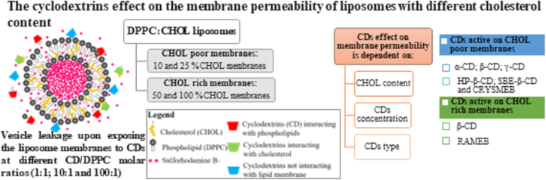
- . Triton X-100, sodium chloride (NaCl), and Sephadex G25 gel were purchased from Sigma-Aldrich, Belgium. Ammonium molybdate, hydrogen peroxide, potassium dihydrogen phosphate, sodium sulfite, sodium bisulfite, chloroform, and methanol were purchased from Sigma-Aldrich, Germany. Cholesterol and

Graphical Abstract

Figure 1: The chemical structure of the native CDs, their three-dimensional structure, and their dimensions (n...
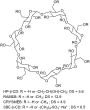
Figure 2: Structures of β-CD derivatives and their degrees of substitution (DS).
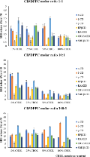
Figure 3: The instantaneous effect of CDs on the various liposome membranes at different CD/DPPC molar ratios...
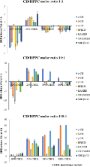
Figure 4: The permeabilizing effect of CDs on the various liposome membranes at different CD/DPPC molar ratio...
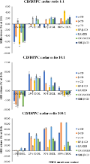
Figure 5: The permeabilizing effect of CDs on the various liposome membranes at different CD/DPPC molar ratio...
N-Sulfenylsuccinimide/phthalimide: an alternative sulfenylating reagent in organic transformations
- Fatemeh Doraghi,
- Seyedeh Pegah Aledavoud,
- Mehdi Ghanbarlou,
- Bagher Larijani and
- Mohammad Mahdavi
Beilstein J. Org. Chem. 2023, 19, 1471–1502, doi:10.3762/bjoc.19.106
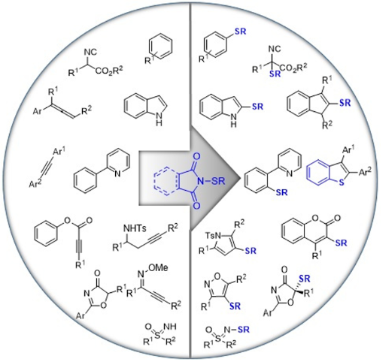
- preparation of thioesters, acyl disulfides, ketones, and amides starting from N-thiohydroxy succinimide esters (NTSEs) 1’’’, which can serve as the acylthiolating and acylating source (Scheme 32) [65]. First, they synthesized a series of N-thiohydroxy succinimide esters by treating potassium thiolates with N

Graphical Abstract

Scheme 1: Sulfur-containing bioactive molecules.

Scheme 2: Scandium-catalyzed synthesis of thiosulfonates.

Scheme 3: Palladium-catalyzed aryl(alkyl)thiolation of unactivated arenes.

Scheme 4: Catalytic cycle for Pd-catalyzed aryl(alkyl)thiolation of unactivated arenes.

Scheme 5: Iron- or boron-catalyzed C–H arylthiation of substituted phenols.

Scheme 6: Iron-catalyzed azidoalkylthiation of alkenes.

Scheme 7: Plausible mechanism for iron-catalyzed azidoalkylthiation of alkenes.

Scheme 8: BF3·Et2O‑mediated electrophilic cyclization of aryl alkynoates.

Scheme 9: Tentative mechanism for BF3·Et2O‑mediated electrophilic cyclization of aryl alkynoates.

Scheme 10: Construction of 6-substituted benzo[b]thiophenes.

Scheme 11: Plausible mechanism for construction of 6-substituted benzo[b]thiophenes.

Scheme 12: AlCl3‑catalyzed cyclization of N‑arylpropynamides with N‑sulfanylsuccinimides.

Scheme 13: Synthetic utility of AlCl3‑catalyzed cyclization of N‑arylpropynamides with N‑sulfanylsuccinimides.

Scheme 14: Sulfenoamination of alkenes with sulfonamides and N-sulfanylsuccinimides.

Scheme 15: Lewis acid/Brønsted acid controlled Pd-catalyzed functionalization of aryl C(sp2)–H bonds.

Scheme 16: Possible mechanism for Lewis acid/Brønsted acid controlled Pd-catalyzed functionalization of aryl C...

Scheme 17: FeCl3-catalyzed carbosulfenylation of unactivated alkenes.

Scheme 18: Copper-catalyzed electrophilic thiolation of organozinc halides.

Scheme 19: h-BN@Copper(II) nanomaterial catalyzed cross-coupling reaction of sulfoximines and N‑(arylthio)succ...

Scheme 20: AlCl3‑mediated cyclization and sulfenylation of 2‑alkyn-1-one O‑methyloximes.

Scheme 21: Lewis acid-promoted 2-substituted cyclopropane 1,1-dicarboxylates with sulfonamides and N-(arylthio...

Scheme 22: Lewis acid-mediated cyclization of β,γ-unsaturated oximes and hydrazones with N-(arylthio/seleno)su...

Scheme 23: Credible pathway for Lewis acid-mediated cyclization of β,γ-unsaturated oximes with N-(arylthio)suc...

Scheme 24: Synthesis of 4-chalcogenyl pyrazoles via chalcogenation/cyclization of α,β-alkynic hydrazones.

Scheme 25: Controllable synthesis of 3-thiolated pyrroles and pyrrolines.

Scheme 26: Possible mechanism for controllable synthesis of 3-thiolated pyrroles and pyrrolines.

Scheme 27: Co-catalyzed C2-sulfenylation and C2,C3-disulfenylation of indole derivatives.

Scheme 28: Plausible catalytic cycle for Co-catalyzed C2-sulfenylation and C2,C3-disulfenylation of indoles.

Scheme 29: C–H thioarylation of electron-rich arenes by iron(III) triflimide catalysis.

Scheme 30: Difunctionalization of alkynyl bromides with thiosulfonates and N-arylthio succinimides.·

Scheme 31: Suggested mechanism for difunctionalization of alkynyl bromides with thiosulfonates and N-arylthio ...

Scheme 32: Synthesis of thioesters, acyl disulfides, ketones, and amides by N-thiohydroxy succinimide esters.

Scheme 33: Proposed mechanism for metal-catalyzed selective acylation and acylthiolation.

Scheme 34: AlCl3-catalyzed synthesis of 3,4-bisthiolated pyrroles.

Scheme 35: α-Sulfenylation of aldehydes and ketones.

Scheme 36: Acid-catalyzed sulfetherification of unsaturated alcohols.

Scheme 37: Enantioselective sulfenylation of β-keto phosphonates.

Scheme 38: Organocatalyzed sulfenylation of 3‑substituted oxindoles.

Scheme 39: Sulfenylation and chlorination of β-ketoesters.

Scheme 40: Intramolecular sulfenoamination of olefins.

Scheme 41: Plausible mechanism for intramolecular sulfenoamination of olefins.

Scheme 42: α-Sulfenylation of 5H-oxazol-4-ones.

Scheme 43: Metal-free C–H sulfenylation of electron-rich arenes.

Scheme 44: TFA-promoted C–H sulfenylation indoles.
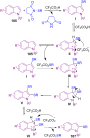
Scheme 45: Proposed mechanism for TFA-promoted C–H sulfenylation indoles.

Scheme 46: Organocatalyzed sulfenylation and selenenylation of 3-pyrrolyloxindoles.

Scheme 47: Organocatalyzed sulfenylation of S-based nucleophiles.

Scheme 48: Conjugate Lewis base Brønsted acid-catalyzed sulfenylation of N-heterocycles.

Scheme 49: Mechanism for activation of N-sulfanylsuccinimide by conjugate Lewis base Brønsted acid catalyst.

Scheme 50: Sulfenylation of deconjugated butyrolactams.

Scheme 51: Intramolecular sulfenofunctionalization of alkenes with phenols.

Scheme 52: Organocatalytic 1,3-difunctionalizations of Morita–Baylis–Hillman carbonates.

Scheme 53: Organocatalytic sulfenylation of β‑naphthols.

Scheme 54: Acid-promoted oxychalcogenation of o‑vinylanilides with N‑(arylthio/arylseleno)succinimides.

Scheme 55: Lewis base/Brønsted acid dual-catalytic C–H sulfenylation of aryls.

Scheme 56: Lewis base-catalyzed sulfenoamidation of alkenes.

Scheme 57: Cyclization of allylic amide using a Brønsted acid and tetrabutylammonium chloride.

Scheme 58: Catalytic electrophilic thiocarbocyclization of allenes with N-thiosuccinimides.

Scheme 59: Suggested mechanism for electrophilic thiocarbocyclization of allenes with N-thiosuccinimides.

Scheme 60: Chiral chalcogenide-catalyzed enantioselective hydrothiolation of alkenes.

Scheme 61: Proposed mechanism for chalcogenide-catalyzed enantioselective hydrothiolation of alkenes.

Scheme 62: Organocatalytic sulfenylation for synthesis a diheteroatom-bearing tetrasubstituted carbon centre.

Scheme 63: Thiolative cyclization of yne-ynamides.

Scheme 64: Synthesis of alkynyl and acyl disulfides from reaction of thiols with N-alkynylthio phthalimides.

Scheme 65: Oxysulfenylation of alkenes with 1-(arylthio)pyrrolidine-2,5-diones and alcohols.

Scheme 66: Arylthiolation of arylamines with (arylthio)-pyrrolidine-2,5-diones.

Scheme 67: Catalyst-free isothiocyanatoalkylthiation of styrenes.

Scheme 68: Sulfenylation of (E)-β-chlorovinyl ketones toward 3,4-dimercaptofurans.

Scheme 69: HCl-promoted intermolecular 1, 2-thiofunctionalization of aromatic alkenes.

Scheme 70: Possible mechanism for HCl-promoted 1,2-thiofunctionalization of aromatic alkenes.

Scheme 71: Coupling reaction of diazo compounds with N-sulfenylsuccinimides.

Scheme 72: Multicomponent reactions of disulfides with isocyanides and other nucleophiles.

Scheme 73: α-Sulfenylation and β-sulfenylation of α,β-unsaturated carbonyl compounds.
Application of N-heterocyclic carbene–Cu(I) complexes as catalysts in organic synthesis: a review
- Nosheen Beig,
- Varsha Goyal and
- Raj K. Bansal
Beilstein J. Org. Chem. 2023, 19, 1408–1442, doi:10.3762/bjoc.19.102
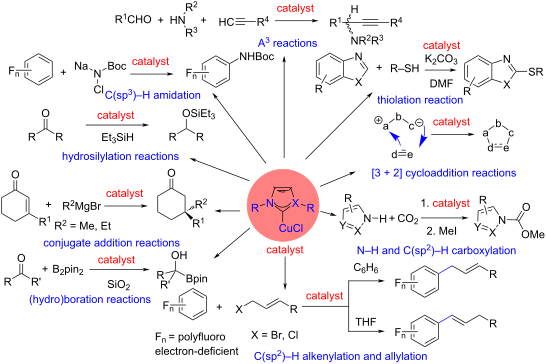
- be prepared following the above method. Instead, these complexes were best prepared by reacting free NHC with the metal salt (Scheme 7) [15]. In 2011, Sarkar and co-workers [22] also used potassium tert-butoxide to obtain NHC–Cu(I) complexes 16 of general composition [(NHC)Cu(µ-I)2Cu(NHC)] from

Graphical Abstract

Scheme 1: In situ generation of imidazolylidene carbene.

Scheme 2: Hg(II) complex of NHC.

Scheme 3: Isolable and bottlable carbene reported by Arduengo [3].

Scheme 4: First air-stable carbene synthesized by Arduengo in 1992 [5].

Figure 1: General structure of an NHC.

Figure 2: Stabilization of an NHC by donation of the lone pair electrons into the vacant p-orbital (LUMO) at ...

Figure 3: Abnormal NHC reported by Bertrand [8,9].

Figure 4: Cu(d) orbital to σ*C-N(NHC) interactions in NHC–CuX complexes computed at the B3LYP/def2-SVP level ...
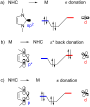
Figure 5: Molecular orbital contributions to the NHC–metal bond.

Scheme 5: Synthesis of NHC–Cu(I) complexes by deprotonation of NHC precursors with a base.

Scheme 6: Synthesis of [NHC–CuX] complexes.

Scheme 7: Synthesis of [(ICy)CuX] and [(It-Bu)CuX] complexes.

Scheme 8: Synthesis of iodido-bridged copper–NHC complexes by deprotonation of benzimidazolium salts reported...

Scheme 9: Synthesis of copper complexes by deprotonation of triazolium salts.

Scheme 10: Synthesis of thiazolylidene–Cu(I) complex by deprotonation with KOt-Bu.

Scheme 11: Preparation of NHC–Cu(I) complexes.

Scheme 12: Synthesis of methylmalonic acid-derived anionic [(26a,b)CuCl]Li(THF)2 and zwitterionic (28) heterol...

Scheme 13: Synthesis of diaminocarbene and diamidocarbene (DAC)–Cu(I) complexes.

Scheme 14: Synthesis of the cationic (NHC)2Cu(I) complex 39 from benzimidazolium salts 38 with tetrakis(aceton...

Scheme 15: Synthesis of NHC and ADC (acyclic diamino carbenes) Cu(I) hexamethyldisilazide complexes reported b...

Scheme 16: Synthesis of NHC–copper(I) complexes using an acetylacetonate-functionalized imidazolium zwitterion...

Scheme 17: Synthesis of NHC–Cu(I) complexes through deprotonation of azolium salts with Cu2O.

Scheme 18: Synthesis of NHC–CuBr complex through deprotonation with Cu2O reported by Kolychev [31].

Scheme 19: Synthesis of chiral NHC–CuBr complexes from phenoxyimine-imidazolium salts reported by Douthwaite a...

Scheme 20: Preparation of linear neutral NHC–CuCl complexes through the use of Cu2O. For abbreviations, please...

Scheme 21: Synthesis of abnormal-NHC–copper(I) complexes by Bertrand, Cazin and co-workers [35].

Scheme 22: Microwave-assisted synthesis of thiazolylidene/benzothiazolylidene–CuBr complexes by Bansal and co-...

Scheme 23: Synthesis of NHC–CuX complexes through transmetallation.

Scheme 24: Preparation of six- or seven-membered NHC–Cu(I) complexes through transmetalation from Ag(I) comple...

Scheme 25: Synthesis of 1,2,3-triazolylidene–CuCl complexes through transmetallation of Ag(I) complexes genera...

Scheme 26: Synthesis of NHC–copper complexes having both Cu(I) and Cu(II) units through transmetalation report...

Scheme 27: Synthesis of new [(IPr(CH2)3Si(OiPr)3)CuX] complexes and anchoring on MCM-41.

Scheme 28: Synthesis of bis(trimethylsilyl)phosphide–Cu(I)–NHC complexes through ligand displacement.

Scheme 29: Synthesis of silyl- and stannyl [(NHC)Cu−ER3] complexes.

Scheme 30: Synthesis of amido-, phenolato-, thiophenolato–Cu(NHC) complexes.

Scheme 31: Synthesis of first isolable NHC–Cu–difluoromethyl complexes reported by Sanford et al. [44].

Scheme 32: Synthesis of NHC–Cu(I)–bifluoride complexes reported by Riant, Leyssens and co-workers [45].

Scheme 33: Conjugate addition of Et2Zn to enones catalyzed by an NHC–Cu(I) complex reported by Woodward in 200...

Scheme 34: Hydrosilylation of a carbonyl group.

Scheme 35: NHC–Cu(I)-catalyzed hydrosilylation of ketones reported by Nolan et al. [48,49].

Scheme 36: Application of chiral NHC–CuCl complex 104 for the enantioselective hydrosilylation of ketones.

Scheme 37: Hydrosilylation reactions catalyzed by NHC–Cu(Ot-Bu) complexes.

Scheme 38: NHC–CuCl catalyzed carbonylative silylation of alkyl halides.

Scheme 39: Nucleophilic conjugate addition to an activated C=C bond.

Figure 6: Molecular electrostatic potential maps (MESP) of two NHC–CuX complexes computed at the B3LYP/def2-S...

Scheme 40: Conjugate addition of Grignard reagents to 3-alkyl-substituted cyclohexenones catalyzed by a chiral...

Scheme 41: NHC–copper complex-catalyzed conjugate addition of Grignard reagent to 3-substituted hexenone repor...

Scheme 42: Conjugate addition or organoaluminum reagents to β-substituted cyclic enones.

Scheme 43: Conjugate addition of boronates to acyclic α,β-unsaturated carboxylic esters, ketones, and thioeste...

Scheme 44: NHC–Cu(I)-catalyzed hydroboration of an allene reported by Hoveyda [63].

Scheme 45: Conjugate addition of Et2Zn to cyclohexenone catalyzed by NHC–Cu(I) complex derived from benzimidaz...

Scheme 46: Asymmetric conjugate addition of diethylzinc to 3-nonen-2-one catalyzed by NHC–Cu complexes derived...

Scheme 47: General scheme of a [3 + 2] cycloaddition reaction.

Scheme 48: [3 + 2] Cycloaddition of azides with alkynes catalyzed by NHC–Cu(I) complexes reported by Diez-Gonz...

Scheme 49: Application of NHC–CuCl/N-donor combination to catalyze the [3 + 2] cycloaddition of benzyl azide w...

Scheme 50: [3 + 2] Cycloaddition of azides with acetylenes catalyzed by bis(NHC)–Cu complex 131 and mixed NHC–...
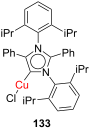
Figure 7: NHC–CuCl complex 133 as catalyst for the [3 + 2] cycloaddition of alkynes with azides at room tempe...

Scheme 51: [3 + 2] Cycloaddition of a bulky azide with an alkynylpyridine using [(NHC)Cu(μ-I)2Cu(NHC)] copper ...

Scheme 52: [3 + 2] Cycloaddition of benzyl azide with phenylacetylene under homogeneous and heterogeneous cata...

Scheme 53: [3 + 2] Cycloaddition of benzyl azide with acetylenes catalyzed by bisthiazolylidene dicopper(I) co...
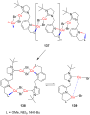
Figure 8: Copper (I)–NHC linear coordination polymer 137 and its conversion into tetranuclear (138) and dinuc...

Scheme 54: An A3 reaction.

Scheme 55: Synthesis of SiO2-immobilized NHC–Cu(I) catalyst 141 and its application in the A3-coupling reactio...

Scheme 56: Preparation of dual-purpose Ru@SiO2–[(NHC)CuCl] catalyst system 142 developed by Bordet, Leitner an...

Scheme 57: Application of the catalyst system Ru@SiO2–[Cu(NHC)] 142 to the one-pot tandem A3 reaction and hydr...

Scheme 58: A3 reaction of phenylacetylene with secondary amines and aldehydes catalyzed by benzothiazolylidene...

Figure 9: Kohn–Sham HOMOs of phenylacetylene and NHC–Cu(I)–phenylacetylene complex computed at the B3LYP/def2...

Figure 10: Energies of the FMOs of phenylacetylene, iminium ion, and NHC–Cu(I)–phenylacetylene complex compute...

Scheme 59: NHC–Cu(I) catalyzed diboration of ketones 147 by reacting with bis(pinacolato)diboron (148) reporte...

Scheme 60: Protoboration of terminal allenes catalyzed by NHC–Cu(I) complexes reported by Hoveyda and co-worke...

Scheme 61: NHC–CuCl-catalyzed borylation of α-alkoxyallenes to give 2-boryl-1,3-butadienes.

Scheme 62: Regioselective hydroborylation of propargylic alcohols and ethers catalyzed by NHC–CuCl complexes 1...

Scheme 63: NHC–CuOt-Bu-catalyzed semihydrogenation and hydroborylation of alkynes.

Scheme 64: Enantioselective NHC–Cu(I)-catalyzed hydroborations of 1,1-disubstituted aryl olefins reported by H...

Scheme 65: Enantioselective NHC–Cu(I)-catalyzed hydroboration of exocyclic 1,1-disubstituted alkenes reported ...

Scheme 66: Markovnikov-selective NHC–CuOH-catalyzed hydroboration of alkenes and alkynes reported by Jones et ...
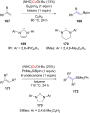
Scheme 67: Dehydrogenative borylation and silylation of styrenes catalyzed by NHC–CuOt-Bu complexes developed ...

Scheme 68: N–H/C(sp2)–H carboxylation catalyzed by NHC–CuOH complexes.

Scheme 69: C–H Carboxylation of benzoxazole and benzothiazole derivatives with CO2 using a 1,2,3-triazol-5-yli...

Scheme 70: Use of Cu(I) complex derived from diethylene glycol-functionalized imidazo[1,5,a] pyridin-3-ylidene...

Scheme 71: Allylation and alkenylation of polyfluoroarenes and heteroarenes catalyzed by NHC–Cu(I) complexes r...

Scheme 72: Enantioselective C(sp2)–H allylation of (benz)oxazoles and benzothiazoles with γ,γ-disubstituted pr...

Scheme 73: C(sp2)–H arylation of arenes catalyzed by dual NHC–Cu/NHC–Pd catalytic system.

Scheme 74: C(sp2)–H Amidation of (hetero)arenes with N-chlorocarbamates/N-chloro-N-sodiocarbamates catalyzed b...

Scheme 75: NHC–CuI catalyzed thiolation of benzothiazoles and benzoxazoles.
Consecutive four-component synthesis of trisubstituted 3-iodoindoles by an alkynylation–cyclization–iodination–alkylation sequence
- Nadia Ledermann,
- Alae-Eddine Moubsit and
- Thomas J. J. Müller
Beilstein J. Org. Chem. 2023, 19, 1379–1385, doi:10.3762/bjoc.19.99
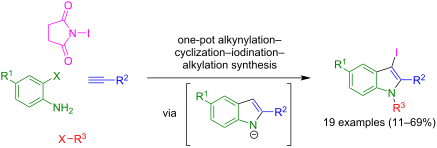
- , 122 mg, 1.20 mmol), DBU (457 mg, 3.00 mmol), and DMSO (1.50 mL) were added under nitrogen. The reaction mixture was heated at 100 °C (oil bath) for 2 h. After cooling to room temperature, potassium tert-butoxide (505 mg, 4.50 mmol) and DMSO (1.50 mL) were added to the reaction mixture and heated to
- . The reaction mixture was heated at 100 °C until complete conversion of the starting material (via TLC control). Potassium tert-butoxide (505 mg, 4.50 mmol) and 1.50 mL DMSO were then added and the reaction mixture was stirred for an additional 15 min. After cooling the reaction mixture to room

Graphical Abstract

Scheme 1: Consecutive alkynylation–cyclization–alkylation three-component synthesis and conception of a conse...
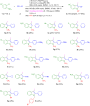
Scheme 2: Consecutive alkynylation–cyclization–iodination–alkylation four-component synthesis of trisubstitut...

Scheme 3: Consecutive double alkynylation–cyclization–iodination–alkylation pseudo-five-component synthesis o...

Scheme 4: Suzuki coupling of 3-iodoindole 5a with arylboronic acids 7 to give 1,2,3-trisubstituted indoles 8.

Figure 1: A: Absorption and emission spectra of 1-methyl-2-phenyl-3-(p-tolyl)-1H-indole (8b), recorded in dic...
Synthesis of ether lipids: natural compounds and analogues
- Marco Antônio G. B. Gomes,
- Alicia Bauduin,
- Chloé Le Roux,
- Romain Fouinneteau,
- Wilfried Berthe,
- Mathieu Berchel,
- Hélène Couthon and
- Paul-Alain Jaffrès
Beilstein J. Org. Chem. 2023, 19, 1299–1369, doi:10.3762/bjoc.19.96
- chromatography. Because 4.6 was obtained in better yields and in only 3 steps, the epimerization of 4.6 to 4.10 was also reported (Figure 4B). This epimerization is achieved in three-step sequence that starts with the double tosylation of 4.6 to produce 4.11. Then, the SN2 reaction with potassium acetate in DMSO
- the epoxide. The lithium salts were removed by washing with potassium sodium tartrate (Seignette’s salt). Then, at low temperature an excess of 2-chloro-1,3,2-dioxaphospholane (5.3, 3.8 equiv) in the presence of diisopropylethylamine (DIPEA) reacted with the primary alcohol to produce, after an
- from racemic solketal which is deprotonated with potassium [74], NaH [75], NaNH2 [76] or KH and by using different solvents including benzene [74], toluene [76][77], THF [78], or DMF [75][79] and then alkylated with bromoalkyl [75][76] or mesylate lipid alcohol [74]. The same protocols (NaH, toluene or

Graphical Abstract

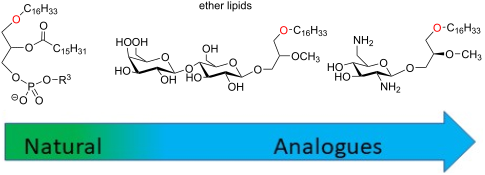
Figure 1: Chemical structure of some natural ether lipids (ELs).

Figure 2: Synthesis of lyso-PAF and PAF from 1-O-alkylglycerol [64].

Figure 3: Synthesis of lyso-PAF from 1,3-benzylideneglycerol 3.1 [69].
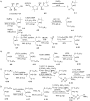
Figure 4: A) Synthesis of the two enantiomers of octadecylglycerol (4.6 and 4.10) from ᴅ-mannitol (4.1); B) s...

Figure 5: Four-step synthesis of PAF 5.6 from (S)-glycidol [73].

Figure 6: Synthesis of 1-O-alkylglycerol A) from solketal, B) from ᴅ- or ʟ-tartaric acid and the intermediate ...

Figure 7: Synthesis of EL building blocks starting from substituted glycidol 7.1a–c [82].

Figure 8: Synthesis of PAF 8.5 by using phosphoramidite 8.2 [86].

Figure 9: Synthesis of oleyl-PAF 9.7 from ʟ-serine [88].

Figure 10: Synthesis of racemic analogues of lyso-PAF 10.8 and PAF 10.9 featuring a phenyl group between the g...

Figure 11: Synthesis of racemic deoxy-lyso-PAF 11.7 and deoxy-PAF 11.8 [91].

Figure 12: Synthesis of racemic thio-PAF 12.8 [93].

Figure 13: Racemic synthesis of 13.6 to illustrate the modification of the glycerol backbone by adding a methy...

Figure 14: Racemic synthesis of 14.5 as an illustration of the introduction of methyl substituents on the glyc...

Figure 15: Synthesis of functionalized sn-2-acyl chains of PC-EL; A) Steglich esterification or acylation reac...

Figure 16: Synthesis of racemic mc-PAF (16.3), a carbamate analogue of PAF [102].

Figure 17: A) Synthesis of (R)-17.2 and (S)-17.6 starting from (S)-solketal (17.1); B) synthesis of N3-PAF (17...

Figure 18: Modification of the phosphocholine polar head to produce PAF analogues [81].

Figure 19: Racemic PAF analogues 19.3 and 19.5 characterized by the absence of the phosphate group [107].

Figure 20: Synthesis of PIP3-PAF (20.7) [108].

Figure 21: Large-scale synthesis of C18-edelfosine (21.8) [116].

Figure 22: Synthesis of C16-edelfosine (22.10) starting from isopropylidene-ʟ-glyceric acid methyl ester (22.1...

Figure 23: Phosphocholine moiety installation by the use of chlorophosphite 23.2 as key reagent [119].

Figure 24: Synthesis of rac-1-alkyl-2-O-methylglycerol (AMG) [120].

Figure 25: Synthesis of stereocontrolled 1-alkyl-2-O-methyl glycerol 25.9 (AMG) from dimethyl ᴅ-tartrate [81].

Figure 26: A) Racemic synthesis of thioether 26.4 [129,130], B) structure of sulfone analogue 26.5 [129].

Figure 27: Stereocontrolled synthesis of C18-edelfosine thioether analogue 27.8 [118].

Figure 28: Synthesis of thioether 28.4 that include a thiophosphate function [134].

Figure 29: Synthesis of ammonium thioether 29.4 and 29.6 [135].

Figure 30: Synthesis of the N-methylamino analogue of edelfosine 30.6 (BN52211) [138].

Figure 31: Synthesis of 1-desoxy analogues of edelfosine; A) with a saturated alkyl chain; B) synthesis of the...

Figure 32: Stereocontrolled synthesis of edelfosine analogue (S)-32.8 featuring a C18:1 lipid chain [142].

Figure 33: Synthesis of edelfosine analogues with modulation of the lipid chain; A) illustration with the synt...

Figure 34: Synthesis of phospholipid featuring a carbamate function to link the lipid chain to the glycerol un...

Figure 35: Synthesis of sesquiterpene conjugates of phospho glycero ether lipids [148].

Figure 36: Racemic synthesis of methyl-substituted glycerol analogues 36.7 and 36.10: A) synthesis of diether ...

Figure 37: Racemic synthesis of ilmofosine (37.6) [155,156].

Figure 38: A) Stereoselective synthesis of 38.5 via a stereoselective hydroboration reaction; B) synthesis of ...

Figure 39: Racemic synthesis of SRI62-834 (39.6) featuring a spiro-tetrahydrofurane heterocycle in position 2 ...

Figure 40: Racemic synthesis of edelfosine analogue 40.5 featuring an imidazole moiety in sn-2 position [160].

Figure 41: Racemic synthesis of fluorine-functionalized EL: A) Synthesis of 41.6 and B) synthesis of 41.8 [161-163].

Figure 42: A) Synthesis of the β-keto-ester 42.6 that also features a decyl linker between the phosphate and t...

Figure 43: Synthesis of phosphonate-based ether lipids; A) edelfosine phosphonate analogue 43.7 and B) thioeth...

Figure 44: Enantioselective synthesis of phosphonates 44.3 and 44.4 [171].

Figure 45: Racemic synthesis of phosphinate-based ether lipid 45.10 [172].

Figure 46: Racemic synthesis of edelfosine arsonium analogue 46.5 [173].

Figure 47: Synthesis of edelfosine dimethylammonium analogue 47.2 [118].

Figure 48: Synthesis of rac-C18-edelfosine methylammonium analogue 48.4 [176].

Figure 49: A) Synthesis of edelfosine N-methylpyrrolidinium analogue 49.2 or N-methylmorpholinium analogue 49.3...

Figure 50: A) Synthesis of edelfosine’s analogue 50.4 with a PE polar group; B) illustration of a pyridinium d...

Figure 51: A) Synthesis of 51.4 featuring a thiazolium cationic moiety; B) synthesis of thiazolium-based EL 51...

Figure 52: Synthesis of cationic ether lipids 52.3, 52.4 and 52.6 [135,183].

Figure 53: Synthesis of cationic carbamate ether lipid 53.5 [184].

Figure 54: Synthesis of cationic sulfonamide 54.5 [185].

Figure 55: Chemical structure of ONO-6240 (55.1) and SRI-63-119 (55.2).

Figure 56: Synthesis of non-ionic ether lipids 56.2–56.9 [188].

Figure 57: Synthesis of ether lipid conjugated to foscarnet 57.6 [189].

Figure 58: A) Synthesis of ether lipid conjugated to arabinofuranosylcytosine; B) synthesis of AZT conjugated ...

Figure 59: Synthesis of quercetin conjugate to edelfosine [191].

Figure 60: Synthesis of 60.8 (Glc-PAF) [194].

Figure 61: A) Synthesis of amino ether lipid 61.7 functionalized with a rhamnose unit and its amide analogue 6...

Figure 62: A) Synthesis of glucose ether lipid 62.4; B) structure of ether lipid 62.5 possessing a maltose uni...

Figure 63: A) Synthesis of glucuronic methyl ester 63.8; B) structure of cellobiose 63.9 and maltose 63.10 ana...

Figure 64: A) Synthesis of maltosyl glycerolipid 64.7; B) structure of lactose analogue 64.8 prepared followin...

Figure 65: A) Asymmetric synthesis of the aglycone moiety starting from allyl 4-methoxyphenyl ether; B) glycos...

Figure 66: A) Synthesis of ohmline possessing a lactose moiety. B) Structure of other glyco glycero lipids pre...

Figure 67: A) Synthesis of lactose-glycerol ether lipid 67.5; B) analogues possessing a maltose (67.6) or meli...

Figure 68: Synthesis of digalactosyl EL 68.6, A) by using trityl, benzyl and acetyl protecting groups, B) by u...

Figure 69: A) Synthesis of α-ohmline; B) structure of disaccharide ether lipids prepared by using similar meth...

Figure 70: Synthesis of lactose ether lipid 70.3 and its analogue 70.6 featuring a carbamate function as linke...

Figure 71: Synthesis of rhamnopyranoside diether 71.4 [196].

Figure 72: Synthesis of 1-O-hexadecyl-2-O-methyl-3-S-(α-ᴅ-1'-thioglucopyranosyl)-sn-glycerol (72.5) [225].

Figure 73: A) Preparation of lipid intermediate 73.4; B) synthesis of 2-desoxy-C-glycoside 73.10 [226].

Figure 74: Synthesis of galactose-pyridinium salt 74.3 [228].

Figure 75: Synthesis of myo-inositol derivative Ino-C2-PAF (75.10) [230].

Figure 76: A) Synthesis of myo-inositol phosphate building block 76.7; B) synthesis of myo-inositolphosphate d...

Figure 77: A) Synthesis of phosphatidyl-3-desoxy-inositol 77.4; B) synthesis of phosphono-3-desoxyinositol 77.9...

Figure 78: A) Structure of diether phosphatidyl-myo-inositol-3,4-diphosphate 78.1; B) synthesis of phosphatidy...

Figure 79: A) Synthesis of diether-phosphatidyl derivative 79.4 featuring a hydroxymethyl group in place of a ...

Figure 80: Synthesis of Glc-amine-PAF [78].

Figure 81: Synthesis of glucosamine ether lipid 81.4 and its analogues functionalized in position 3 of the ami...

Figure 82: Synthesis of fully deprotected aminoglucoside ether lipid 82.5 [246].

Figure 83: Synthesis of C-aminoglycoside 83.12 using Ramberg–Bäcklund rearrangement as a key step [250].

Figure 84: A) List of the most important glyco lipids and amino glyco lipids included in the study of Arthur a...

Figure 85: Synthesis of mannosamine ether lipid 85.6 [254].
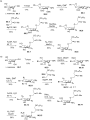
Figure 86: A) Synthesis of glucosamine ether lipids with a non-natural ʟ-glucosamine moiety; B) synthesis of e...
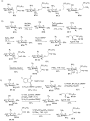
Figure 87: A) Structure of the most efficient anticancer agents 87.1–87.4 featuring a diamino glyco ether lipi...

Figure 88: A) Synthesis of diamino glyco ether lipid 87.4; B) synthesis of bis-glycosylated ether lipid 88.10 [256]....

Figure 89: Synthesis of triamino ether lipid 89.4 [260].

Figure 90: Synthesis of chlorambucil conjugate 90.7 [261].

Figure 91: Three main methods for the preparation of glycerol ether lipid 91.3; A) from solketal and via a tri...

Figure 92: Four different methods for the installation of the phosphocholine polar head group; A) method using...

Figure 93: Illustration of two methods for the installation of saccharides or aminosaccharides; A) O-glycosyla...
Photoredox catalysis harvesting multiple photon or electrochemical energies
- Mattia Lepori,
- Simon Schmid and
- Joshua P. Barham
Beilstein J. Org. Chem. 2023, 19, 1055–1145, doi:10.3762/bjoc.19.81
- direct application of commercially available potassium (poly)sulfide (K2Sx) with H2O, the top-down generation from elemental sulfur (S8) with sodium tert-butoxide (NaOt-Bu), and the bottom-up generation from lithium sulfide (Li2S) or triisopropylsilanethiol (iPr3SiSH) were all suitable methods of

Graphical Abstract

Figure 1: Oxidative and reductive activations of organic compounds harvesting photoredox catalysis.

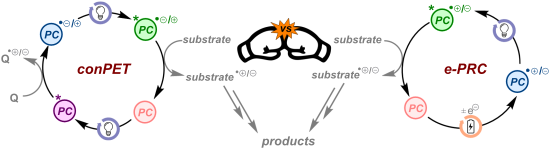
Figure 2: General catalytic cycles of radical ion conPET (left) and radical ion e-PRC (right).
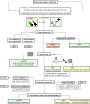
Figure 3: “Beginner’s guide”: comparison between advantages, capacities, and prospectives of conPET and PEC.
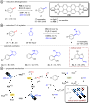
Figure 4: A) conPET reductive dehalogenation of aryl halides with PDI. B) Reductive C–H arylation with pyrrol...
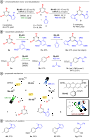
Figure 5: A) Chromoselective mono- and disubstitution or polybrominated pyrimidines with pyrroles. B) Sequent...

Figure 6: A) Synthesis of pyrrolo[1,2-a]quinolines. B) Synthesis of ullazines.

Figure 7: A) Reductive phosphorylation of aryl halides via conPET. B) Selected examples from the substrate sc...
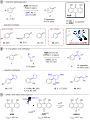
Figure 8: A) Reductive dehalogenation of aryl halides via conPET and selected examples from the substrate sco...
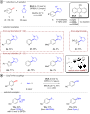
Figure 9: A) Reductive C–H arylation of aryl halides via conPET (top) and selected examples from the substrat...
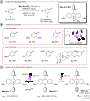
Figure 10: A) Reductive hydrodehalogenation of aryl halides with Mes-Acr-BF4. B) Selected examples from the su...
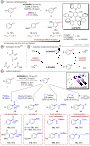
Figure 11: A) Reductive hydrodechlorination of aryl chlorides with 4-DPAIPN. B) Proposed formation of CO2•−. C...
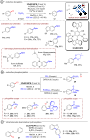
Figure 12: A) Reductive conPET borylation with 3CzEPAIPN (top) and selected examples from the substrate scope ...

Figure 13: Scale-up of conPET phosphorylation with 3CzEPAIPN.
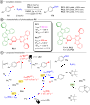
Figure 14: A) Borylation of 1d. B) Characteristics and structure of PC1 with green and red parts showing the l...
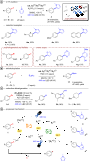
Figure 15: A) Reductive C–H arylation scope with polysulfide conPET (top) and selected examples from the subst...

Figure 16: Scale-up of A) C–H arylation and B) dehaloborylation with polysulfide photocatalysis in continuous-...

Figure 17: A) Formation of [Ir1]0 and [Ir2]0 upon PET between [Ir1]+ and Et3N. B) Mechanism of multi-photon ta...

Figure 18: A) Reductive hydrodehalogenation of aryl halides via multi-photon tandem photocatalysis. B) Selecte...

Figure 19: A) Carbonylative amidation of aryl halides in continuous flow. B) Selected examples from the substr...
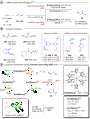
Figure 20: A) General scheme for reductive (RQ) and oxidative quenching (OQ) protocols using [FeIII(btz)3](PF6)...
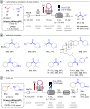
Figure 21: A) Carbonylative amidation of alkyl iodides with [IrIII(ppy)2(dtbbpy)]PF6. B) Selected examples fro...
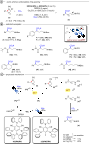
Figure 22: A) Carboxylative C–N bond cleavage in cyclic amines. B) Selected examples from the substrate scope....
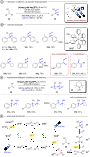
Figure 23: A) Formal reduction of alkenes to alkanes via transfer hydrogenation. B) Selected examples from the...
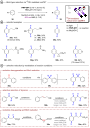
Figure 24: A) Birch-type reduction of benzenes with PMP-BPI. B) Selected examples from the substrate scope (sc...

Figure 25: Proposed mechanism of the OH− mediated conPET Birch-type reduction of benzene via generation of sol...

Figure 26: Reductive detosylation of N-tosylated amides with Mes-Acr-BF4. B) Selected examples from the substr...
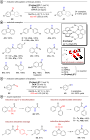
Figure 27: A) Reductive detosylation of N-tosyl amides by dual PRC. B) Selected examples from the substrate sc...

Figure 28: A) Mechanism of the dual PRC based on PET between [Cu(dap)2]+ and DCA. B) Mechanism of the dual PRC...
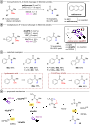
Figure 29: A) N–O bond cleavage in Weinreb amides with anthracene. B) N–O bond cleavage in Weinreb amides rely...
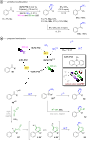
Figure 30: A) Pentafluorosulfanylation and fluoride elimination. B) Mechanism of the pentafluorosulfanylation ...
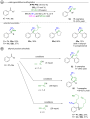
Figure 31: A) α-Alkoxypentafluorosulfanylation (top) and selected examples from the substrate scope (bottom). ...
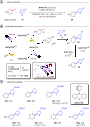
Figure 32: A) Oxidative amination of arenes with azoles catalyzed by N-Ph PTZ. B) Selected examples from the s...

Figure 33: A) C(sp3)–H bond activation by HAT via chloride oxidation by *N-Ph PTZ•+. B) Proposed mechanism for...

Figure 34: A) Recycling e-PRC C–H azolation of electron-rich arenes with pyrazoles using Mes-Acr+ as a photoca...

Figure 35: A) Radical ion e-PRC direct oxidation of unactivated arenes using TAC+ as an electro-activated phot...

Figure 36: A) Radical ion e-PRC direct oxidation of unactivated arenes using TPA as an electro-activated photo...

Figure 37: Proposed mechanism (top) and mode of preassembly (bottom).

Figure 38: A) Possible preassemblies of reactive (left) vs unreactive (right) arenes. B) Calculated spin densi...
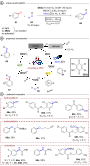
Figure 39: A) Recycling e-PRC C(sp2 )–H acetoxylation of arenes using DDQ as a photocatalyst. B) Proposed cata...

Figure 40: Gram scale hydroxylation of benzene in a recirculated flow setup.
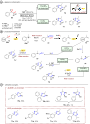
Figure 41: A) Radical ion e-PRC vicinal diamination of alkylarenes using TAC+ as an electro-activated photocat...
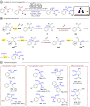
Figure 42: A) Sequential oxygenation of multiple adjacent C–H bonds under radical ion e-PRC using TAC+ as an e...

Figure 43: A) Enantioselective recycling e-PRC cyanation of benzylic C–H bonds using ADQS as photocatalyst. B)...

Figure 44: Proposed tandem mechanism by Xu and co-workers.
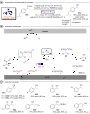
Figure 45: A) Enantioselective recycling e-PRC decarboxylative cyanation using Cu(acac)2, Ce(OTf)3 and a box l...

Figure 46: A) Enantioselective recycling e-PRC benzylic cyanation using Cu(MeCN)4BF4, box ligand and anthraqui...

Figure 47: A) Radical ion e-PRC acetoxyhydroxylation of aryl olefins using TAC+ as an electro-activated photoc...

Figure 48: Selected examples from the substrate scope.

Figure 49: Photoelectrochemical acetoxyhydroxylation in a recirculated flow setup.
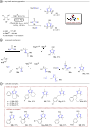
Figure 50: A) Radical ion e-PRC aminooxygenation of aryl olefins using TAC+ as an electro-activated photocatal...
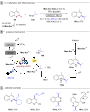
Figure 51: A) Recycling e-PRC C–H alkylation of heteroarenes with organic trifluoroborates using Mes-Acr+ as p...

Figure 52: A) Recycling e-PRC decarboxylative C–H alkylation of heteroarenes using CeCl3·7H2O as catalyst. B) ...

Figure 53: A) Recycling e-PRC decarboxylative C–H alkylation of heteroarenes using Fe(NH4)2(SO4)2·6H2O as cata...
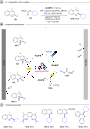
Figure 54: A) Recycling e-PRC C–H alkylation of heteroarenes with alkyl oxalates and 4CzIPN as photocatalyst. ...
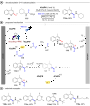
Figure 55: A) Recycling e-PRC decarboxylative C–H carbamoylation of heteroarenes using 4CzIPN as photocatalyst...
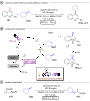
Figure 56: A) Photoelectrochemical HAT-mediated hydrocarbon activation via the chlorine radical. B) Proposed m...

Figure 57: A) Selected examples from the substrate scope. B) Gram and decagram scale semi-continuous flow PEC ...

Figure 58: A) Photoelectrochemical HAT-mediated dehydrogenative coupling of benzothiazoles with aliphatic C–H ...

Figure 59: A) Photoelectrochemical HAT activation of ethers using electro-activated TAC+ as photocatalyst. B) ...

Figure 60: Selected examples from the substrate scope.
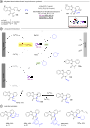
Figure 61: A) Photoelectrochemical HAT-mediated synthesis of alkylated benzimidazo-fused isoquinolinones using...

Figure 62: A) Decoupled photoelectrochemical cerium-catalyzed oxydichlorination of alkynes using CeCl3 as cata...

Figure 63: Proposed decoupled photoelectrochemical mechanism.

Figure 64: A) Decoupled photoelectrochemical ring-opening bromination of tertiary cycloalkanols using MgBr2 as...

Figure 65: A) Recycling e-PRC ring-opening functionalization of cycloalkanols using CeCl3 as catalyst. B) Prop...

Figure 66: Selected examples from the substrate scope of the PEC ring-opening functionalization.
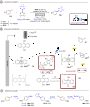
Figure 67: A) Radical ion e-PRC reduction of chloro- and bromoarenes using DCA as catalyst and various accepto...
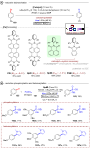
Figure 68: A) Screening of different phthalimide derivatives as catalyst for the e-PRC reduction of aryl halid...

Figure 69: Screening of different organic catalysts for the e-PRC reduction of trialkylanilium salts.

Figure 70: A) e-PRC reduction of phosphonated phenols and anilinium salts. B) Selected examples from the subst...

Figure 71: A) ConPET and e-PRC reduction of 4-bromobenzonitrile using a naphthalene diimide (NDI) precatalyst ...

Figure 72: A) Radical ion e-PRC reduction of phosphinated aliphatic alcohols with n-BuO-NpMI as catalyst. B) C...

Figure 73: Selected examples from the substrate scope.

Figure 74: A) Recycling e-PRC reductive dimerization of benzylic chlorides using a [Cu2] catalyst. B) Proposed...

Figure 75: A) Decoupled photoelectrochemical C–H alkylation of heteroarenes through deamination of Katritzky s...

Figure 76: Proposed mechanism by Chen and co-workers.
Synthesis of imidazo[4,5-e][1,3]thiazino[2,3-c][1,2,4]triazines via a base-induced rearrangement of functionalized imidazo[4,5-e]thiazolo[2,3-c][1,2,4]triazines
- Dmitry B. Vinogradov,
- Alexei N. Izmest’ev,
- Angelina N. Kravchenko,
- Yuri A. Strelenko and
- Galina A. Gazieva
Beilstein J. Org. Chem. 2023, 19, 1047–1054, doi:10.3762/bjoc.19.80
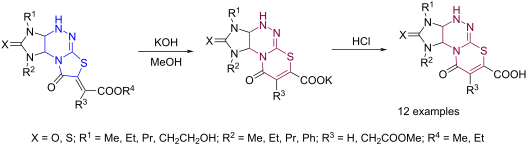
- varied. Increasing the amount of KOH and reaction time led to an increase in the yield of the potassium salts 3a,b even at room temperature. It was found that stirring esters 1a–i in methanol in the presence of 2.5 equivalents of an aqueous solution of KOH provided selective formation of imidazo[4,5-e
- ][1,3]thiazino[2,3-c][1,2,4]triazines 3a–i as a result of ester group hydrolysis and thiazolidine ring expansion to the corresponding thiazine (Scheme 3). The potassium salts 3a,b were isolated in 81 and 63% yield, respectively. Compounds 3c–i were used in further transformations without isolation. 1H
- -triazines 2a-d,j of linear structure under similar conditions (Scheme 5). The isolated yield of the potassium salt 3b (65%) corresponded to the yield of the product obtained from the isomeric structure 1b of the angular type (63%), while the yield of compound 3a (67%) in the analogous reaction was inferior

Graphical Abstract
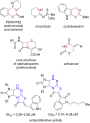
Figure 1: Examples of natural and synthetic bioactive 1,3-thiazine and imidazothiazolotriazine derivatives wi...

Scheme 1: Base-induced transformations and rearrangements of functionalized imidazo[4,5-e]thiazolo[3,2-b]-1,2...

Scheme 2: Alkaline hydrolysis of esters 1a,b. aDetermined by 1H NMR spectroscopy; bisolated yields.

Scheme 3: Synthesis of potassium imidazo[4,5-e][1,3]thiazino[2,3-c][1,2,4]triazine-7-carboxylates.

Scheme 4: Plausible rearrangement mechanism of imidazo[4,5-e]thiazolo[2,3-c][1,2,4]triazine 1d into imidazo[4...

Figure 2: 1H NMR spectra of the starting compound 1d (a) and the reaction mixture after 1.5 (b) and 4 (c) hou...

Scheme 5: Synthetic approaches to imidazo[4,5-e][1,3]thiazino[2,3-c][1,2,4]triazines 3a–d,j.

Scheme 6: Synthesis of imidazo[4,5-e][1,3]thiazino[2,3-c][1,2,4]triazine-7-carboxylic acids 5a–j.

Scheme 7: Synthesis of imidazo[4,5-e][1,3]thiazino[2,3-c][1,2,4]triazine-7-carboxylic acids 5k,m.

Scheme 8: Plausible path for the formation of products 9.

Figure 3: 1H NMR spectra of compounds 4a and 5a in DMSO-d6 in the region of 4.3–9.0 ppm.

Figure 4: 13C NMR GATED spectra of compounds 4a and 5a in DMSO-d6 in the region of 156.0–168.0 ppm.

Figure 5: General view of 5a in the crystal in thermal ellipsoid representation (p = 80%).
Synthesis of aliphatic nitriles from cyclobutanone oxime mediated by sulfuryl fluoride (SO2F2)
- Xian-Lin Chen and
- Hua-Li Qin
Beilstein J. Org. Chem. 2023, 19, 901–908, doi:10.3762/bjoc.19.68
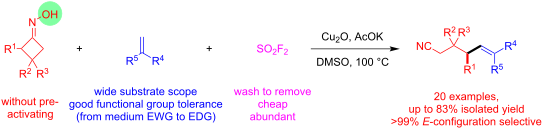
- cyclobutanone oximes. Substrate scope of δ-olefin-containing aliphatic nitriles. Reaction conditions: A mixture of cyclobutanone oxime derivative 1 (3.0 mmol, 3.0 equiv), alkene 2 (1.0 mmol, 1.0 equiv), Cu2O (1.0 mmol, 1.0 equiv) and potassium acetate (10.0 mmol, 10.0 equiv) in extra dry dioxane or DMSO (0.1 M

Graphical Abstract

Scheme 1: Representative nitrile-containing functional materials, drug carriers, and medicines.

Scheme 2: Activating protocol of cyclobutanone oximes.

Scheme 3: Substrate scope of δ-olefin-containing aliphatic nitriles. Reaction conditions: A mixture of cyclob...

Scheme 4: Competition between two reactions caused by the reduction of base equivalent.

Scheme 5: Mechanistic investigations.

Scheme 6: A proposed plausible mechanism.
Pyridine C(sp2)–H bond functionalization under transition-metal and rare earth metal catalysis
- Haritha Sindhe,
- Malladi Mounika Reddy,
- Karthikeyan Rajkumar,
- Akshay Kamble,
- Amardeep Singh,
- Anand Kumar and
- Satyasheel Sharma
Beilstein J. Org. Chem. 2023, 19, 820–863, doi:10.3762/bjoc.19.62
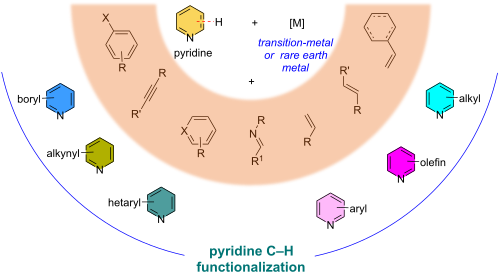
- , and potassium pivalate (KOPiv) as base, linear C–H-alkylated products 40 were obtained from both acrylates and acrylamides in moderate to high yields (Scheme 9, reaction conditions a). However, when K3PO4 was employed as the base under otherwise identical conditions, the authors observed a switch in
- intact under the reaction conditions without any further oxidation. Different oxidants resulted in different products such as the monoarylated product 118 formed in the presence of TBHP as oxidant and the benzylated product 119 was obtained when potassium persulfate was used. Interestingly, aza-fluorene
- N-oxide 119b. In 2016, Wei and co-workers [93] reported the arylation of pyridine N-oxides 9 employing potassium (hetero)aryltrifluoroborates 126 as coupling partner using palladium acetate and TBAI (Scheme 24). Electron-withdrawing and donating groups on the pyridine N-oxide 9 resulted in the

Graphical Abstract

Figure 1: Representative examples of bioactive natural products and FDA-approved drugs containing a pyridine ...

Scheme 1: Classical and traditional methods for the synthesis of functionalized pyridines.

Scheme 2: Rare earth metal (Ln)-catalyzed pyridine C–H alkylation.

Scheme 3: Pd-catalyzed C–H alkylation of pyridine N-oxide.

Scheme 4: CuI-catalyzed C–H alkylation of N-iminopyridinium ylides with tosylhydrazones (A) and a plausible r...
Scheme 5: Zirconium complex-catalyzed pyridine C–H alkylation.

Scheme 6: Rare earth metal-catalyzed pyridine C–H alkylation with nonpolar unsaturated substrates.

Scheme 7: Heterobimetallic Rh–Al complex-catalyzed ortho-C–H monoalkylation of pyridines.

Scheme 8: Mono(phosphinoamido)-rare earth complex-catalyzed pyridine C–H alkylation.

Scheme 9: Rhodium-catalyzed pyridine C–H alkylation with acrylates and acrylamides.

Scheme 10: Ni–Al bimetallic system-catalyzed pyridine C–H alkylation.

Scheme 11: Iridium-catalyzed pyridine C–H alkylation.
Scheme 12: para-C(sp2)–H Alkylation of pyridines with alkenes.

Scheme 13: Enantioselective pyridine C–H alkylation.

Scheme 14: Pd-catalyzed C2-olefination of pyridines.

Scheme 15: Ru-catalyzed C-6 (C-2)-propenylation of 2-arylated pyridines.
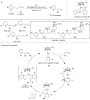
Scheme 16: C–H addition of allenes to pyridines catalyzed by half-sandwich Sc metal complex.

Scheme 17: Pd-catalyzed stereodivergent synthesis of alkenylated pyridines.

Scheme 18: Pd-catalyzed ligand-promoted selective C3-olefination of pyridines.

Scheme 19: Mono-N-protected amino acids in Pd-catalyzed C3-alkenylation of pyridines.

Scheme 20: Amide-directed and rhodium-catalyzed C3-alkenylation of pyridines.

Scheme 21: Bimetallic Ni–Al-catalyzed para-selective alkenylation of pyridine.

Scheme 22: Arylboronic ester-assisted pyridine direct C–H arylation.
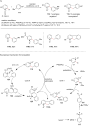
Scheme 23: Pd-catalyzed C–H arylation/benzylation with toluene.

Scheme 24: Pd-catalyzed pyridine C–H arylation with potassium aryl- and heteroaryltrifluoroborates.

Scheme 25: Transient activator strategy in pyridine C–H biarylation.
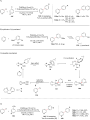
Scheme 26: Ligand-promoted C3-arylation of pyridine.

Scheme 27: Pd-catalyzed arylation of nicotinic and isonicotinic acids.

Scheme 28: Iron-catalyzed and imine-directed C–H arylation of pyridines.

Scheme 29: Pd–(bipy-6-OH) cooperative system-mediated direct pyridine C3-arylation.

Scheme 30: Pd-catalyzed pyridine N-oxide C–H arylation with heteroarylcarboxylic acids.

Scheme 31: Pd-catalyzed C–H cross-coupling of pyridine N-oxides with five-membered heterocycles.

Scheme 32: Cu-catalyzed dehydrative biaryl coupling of azine(pyridine) N-oxides and oxazoles.

Scheme 33: Rh(III)-catalyzed cross dehydrogenative C3-heteroarylation of pyridines.

Scheme 34: Pd-catalyzed C3-selective arylation of pyridines.
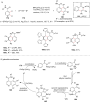
Scheme 35: Rhodium-catalyzed oxidative C–H annulation of pyridines to quinolines.
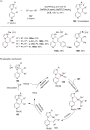
Scheme 36: Rhodium-catalyzed and NHC-directed C–H annulation of pyridine.

Scheme 37: Ni/NHC-catalyzed regio- and enantioselective C–H cyclization of pyridines.

Scheme 38: Rare earth metal-catalyzed intramolecular C–H cyclization of pyridine to azaindolines.

Scheme 39: Rh-catalyzed alkenylation of bipyridine with terminal silylacetylenes.

Scheme 40: Rollover cyclometallation in Rh-catalyzed pyridine C–H functionalization.

Scheme 41: Rollover pathway in Rh-catalyzed C–H functionalization of N,N,N-tridentate chelating compounds.

Scheme 42: Pd-catalyzed rollover pathway in bipyridine-6-carboxamides C–H arylation.
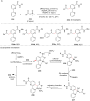
Scheme 43: Rh-catalyzed C3-acylmethylation of bipyridine-6-carboxamides with sulfoxonium ylides.

Scheme 44: Rh-catalyzed C–H functionalization of bipyridines with alkynes.

Scheme 45: Rh-catalyzed C–H acylmethylation and annulation of bipyridine with sulfoxonium ylides.

Scheme 46: Iridium-catalyzed C4-borylation of pyridines.

Scheme 47: C3-Borylation of pyridines.

Scheme 48: Pd-catalyzed regioselective synthesis of silylated dihydropyridines.
Sulfate radical anion-induced benzylic oxidation of N-(arylsulfonyl)benzylamines to N-arylsulfonylimines
- Joydev K. Laha,
- Pankaj Gupta and
- Amitava Hazra
Beilstein J. Org. Chem. 2023, 19, 771–777, doi:10.3762/bjoc.19.57
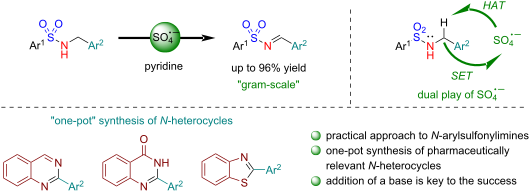
- deliver N-arylsulfonylimines under mild reaction conditions is highly desirable. Previously, we reported a tandem oxidative intramolecular cyclization of N-aryl(benzyl)amines, having an internal nucleophile substituted at the ortho-position in the aniline ring, to nitrogen heterocycles using potassium

Graphical Abstract

Scheme 1: Various synthetic approaches to N-arylsulfonylimines.

Scheme 2: Substrate scope for the synthesis of N-arylsulfonylimines. Reaction conditions: 1a (0.25 mmol), K2S2...

Scheme 3: Tandem “one-pot” synthesis of N-heterocycles. Reaction conditions: 1a (0.25 mmol), K2S2O8 (0.5 mmol...

Scheme 4: Control experiment with TEMPO.

Scheme 5: Plausible mechanism for the K2S2O8-induced oxidation of N-(arylsulfonyl)benzylamines.

Scheme 6: Plausible mechanism for one-pot synthesis of N-heterocycles.
Palladium-catalyzed enantioselective three-component synthesis of α-arylglycine derivatives from glyoxylic acid, sulfonamides and aryltrifluoroborates
- Bastian Jakob,
- Nico Schneider,
- Luca Gengenbach and
- Georg Manolikakes
Beilstein J. Org. Chem. 2023, 19, 719–726, doi:10.3762/bjoc.19.52
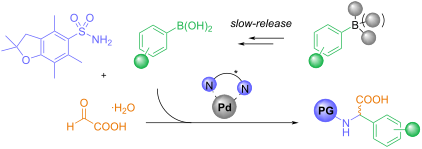
- . Among different boronic acid derivatives, we identified aryltrifluoroborates as most promising candidates for the slow generation of the corresponding arylboronic acids under our slightly acid reaction conditions [24]. Therefore, we performed two initial control experiments. The reaction of potassium
- conditions for the use of potassium aryltrifluoroborate salts (Table 1). A quick survey of different solvents showed that the reaction proceeds efficiently only in nitromethane (Table 1, entry 1). Reactions in other common solvents, such as ethyl acetate, acetonitrile, tetrahydrofuran or dichloromethane led

Graphical Abstract

Figure 1: Biologically active molecules containing α-arylglycine motifs (highlighted in green and blue).
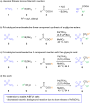
Scheme 1: The Petasis reaction – fundamental reactivities and recent developments.
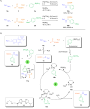
Scheme 2: Observations from previous studies and mechanistic rationale.

Scheme 3: Initial experiments.

Scheme 4: Reaction scope – aryltrifluoroborates (yields and enantiomeric ratios in parentheses refer to our p...

Scheme 5: Synthesis of both enantiomers of arylglycine building block 18.
Strategies in the synthesis of dibenzo[b,f]heteropines
- David I. H. Maier,
- Barend C. B. Bezuidenhoudt and
- Charlene Marais
Beilstein J. Org. Chem. 2023, 19, 700–718, doi:10.3762/bjoc.19.51
- . Knell et al. [40][41] reported a comparison of several catalysts, which included potassium-promoted iron, cobalt and manganese oxide catalysts, for the synthesis of 1a. Industrially, 1a is produced by the vapour phase dehydration of 2a over an iron/potassium/chromium catalyst system (Scheme 4) [42]. 2
- bromides and electron-withdrawing groups. The authors found that the addition of potassium iodide, and thus in situ palladium-catalysed halogen exchange, improved the yield of dibenzo[b,f]azepine 110. Unsymmetrical derivatives of 110 containing -CO2Me, -CF3, -NO2 and -CN substituents were synthesised in

Graphical Abstract

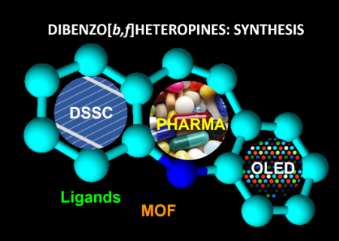
Figure 1: Dibenzo[b,f]azepine (1a), -oxepine (1b) and -thiepine (1c) as examples of dibenzo[b,f]heteropines (1...

Figure 2: Selected pharmaceuticals with the dibenzo[b,f]azepine skeleton.

Figure 3: Examples of 10,11-dihydrodibenzo[b,f]azepine-based ligands.

Figure 4: The dibenzo[b,f]azepine moiety in dyes with properties suitable for the use in organic light emitti...

Figure 5: Selective bioactive natural products (13–18) containing the dibenzo[b,f]oxepine scaffold and Novart...

Scheme 1: Retrosynthetic approach to 5H-dibenzo[b,f]azepine (1a) from nitrotoluene (22).

Scheme 2: Oxidative coupling of o-nitrotoluene (22) and reduction of 2,2'-dinitrobibenzyl (21) to form 2,2'-d...

Scheme 3: Synthesis of 10,11-dihydro-5H-dibenzo[b,f]azepine (2a) via amine condensation.

Scheme 4: Catalytic reduction of 10,11-dihydro-5H-dibenzo[b,f]azepine (2a).

Scheme 5: The Wagner–Meerwein rearrangement of acridin-9-ylmethanol (23) into 5H-dibenzo[b,f]azepine (1a).

Scheme 6: Oxidative ring expansion of 2-(9-xanthenyl)malonates 24.

Scheme 7: Ring expansion via C–H functionalisation.

Scheme 8: The synthesis of fluorinated 5H-dibenzo[b,f]azepine 38 from isatin (32).

Scheme 9: The synthesis of substituted dibenzo[b,f]azepines 43 from indoles 39.

Scheme 10: Retrosynthetic pathways to dibenzo[b,f]azepines via Buchwald–Hartwig amination.

Scheme 11: Synthesis of dibenzo[b,f]oxepine 54 and -azepine 55 derivatives via (i) Heck reaction and (ii) Buch...

Scheme 12: Double Buchwald–Hartwig amination and thioetherification in the synthesis of tricyclic azepines 60 ...

Scheme 13: Double Buchwald–Hartwig amination towards substituted dibenzoazepines 62.

Scheme 14: Double Buchwald–Hartwig amination towards 10,11-dihydro-5H-dibenzo[b,f]azepine derivatives 71.

Scheme 15: One-pot Suzuki coupling–Buchwald–Hartwig amination.

Scheme 16: One-pot Rh/Pd-catalysed synthesis of dihydropyridobenzazepines.

Scheme 17: A retrosynthetic pathway to dibenzo[b,f]azepines via Mizoroki–Heck reaction.

Scheme 18: One-pot domino Pd-catalyzed Mizoroki–Heck–Buchwald–Hartwig synthesis of dibenzo[b,f]azepines.

Scheme 19: Dibenzo[b,f]thiapine and -oxepine synthesis via SNAr (thio)etherification, Wittig methylenation and...

Scheme 20: A retrosynthetic pathway to dibenzo[b,f]oxepines via Ullmann coupling.

Scheme 21: Ullmann-type coupling in dibenzo[b,f]oxepine synthesis.

Scheme 22: Wittig reaction and Ullmann coupling as key steps in dihydrobenz[b,f]oxepine synthesis.

Scheme 23: Pd-catalysed dibenzo[b,f]azepine synthesis via norbornene azepine intermediate 109.

Scheme 24: A simple representation of olefin metathesis resulting in transalkylidenation.

Scheme 25: Ring-closing metathesis as key step in the synthesis of dibenzo[b,f]heteropines.

Scheme 26: Alkyne–aldehyde metathesis in the synthesis of dibenzo[b,f]heteropines.

Scheme 27: Hydroarylation of 9-(2-alkynylphenyl)-9H-carbazole derivatives.

Scheme 28: Oxidative coupling of bisphonium ylide intermediate to give pacharin (13).

Scheme 29: Preparation of 10,11-dihydrodibenzo[b,f]heteropines via intramolecular Wurtz reaction.

Scheme 30: Phenol deprotonation and intramolecular etherification in the synthesis of bauhinoxepine J.

Figure 6: Functionalisation of dibenzo[b,f]azepine.

Scheme 31: Palladium-catalysed N-arylation of dibenzo[b,f]azepine.

Scheme 32: Cu- and Ni-catalysed N-arylation.

Scheme 33: N-Alkylation of dibenzo[b,f]azepine (1a) and dihydrodibenzo[b,f]azepine (2a).

Scheme 34: Preparation of methoxyiminosilbene.

Scheme 35: Synthesis of oxcarbazepine (153) from methoxy iminostilbene 151.

Scheme 36: Ring functionalisation of dihydrodibenzo[b,f]azepine.
Enolates ambushed – asymmetric tandem conjugate addition and subsequent enolate trapping with conventional and less traditional electrophiles
- Péter Kisszékelyi and
- Radovan Šebesta
Beilstein J. Org. Chem. 2023, 19, 593–634, doi:10.3762/bjoc.19.44
- , transformation to potassium trifluoroborate salt, hydrolysis, C–C cross-coupling, base-mediated elimination, radical C–B cleavage) [72]. Therefore, enantioenriched boronates are commonly applied intermediates in organometallic, medicinal, and other fields of chemistry. At the same time, some organoboronic acid

Graphical Abstract

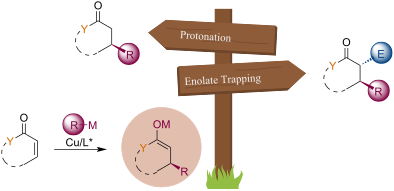
Scheme 1: General scheme depicting tandem reactions based on an asymmetric conjugate addition followed by an ...

Scheme 2: Cu-catalyzed tandem conjugate addition of R2Zn/aldol reaction with chiral acetals.

Scheme 3: Cu-catalyzed asymmetric desymmetrization of cyclopentene-1,3-diones using a tandem conjugate additi...

Scheme 4: Stereocontrolled assembly of dialkylzincs, cyclic enones, and sulfinylimines utilizing a Cu-catalyz...

Scheme 5: Cu-catalyzed tandem conjugate addition/Mannich reaction (A). Access to chiral isoindolinones and tr...

Scheme 6: Cu-catalyzed tandem conjugate addition/nitro-Mannich reaction (A) with syn–anti or syn–syn selectiv...

Figure 1: Various chiral ligands utilized for the tandem conjugate addition/Michael reaction sequences.
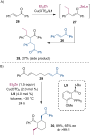
Scheme 7: Cu-catalyzed tandem conjugate addition/Michael reaction: side-product formation with chalcone (A) a...

Scheme 8: Zn enolate trapping using allyl iodides (A), Stork–Jung vinylsilane reagents (B), and allyl bromide...

Scheme 9: Cu-catalyzed tandem conjugate addition/acylation through Li R2Zn enolate (A). A four-component coup...

Scheme 10: Selected examples for the Cu-catalyzed tandem conjugate addition/trifluoromethylthiolation sequence....

Scheme 11: Zn enolates trapped by vinyloxiranes: synthesis of allylic alcohols.

Scheme 12: Stereoselective cyclopropanation of Mg enolates formed by ACA of Grignard reagents to chlorocrotona...

Scheme 13: Domino aldol reactions of Mg enolates formed from coumarin and chromone.

Scheme 14: Oxidative coupling of ACA-produced Mg enolates.

Scheme 15: Tandem ACA of Grignard reagents to enones and Mannich reaction.

Scheme 16: Diastereodivergent Mannich reaction of Mg enolates with differently N-protected imines.

Scheme 17: Tandem Grignard–ACA–Mannich using Taddol-based phosphine-phosphite ligands.

Scheme 18: Tandem reaction of Mg enolates with aminomethylating reagents.

Scheme 19: Tandem reaction composed of Grignard ACA to alkynyl enones.

Scheme 20: Rh/Cu-catalyzed tandem reaction of diazo enoates leading to cyclobutanes.

Scheme 21: Tandem Grignard-ACA of cyclopentenones and alkylation of enolates.

Scheme 22: Tandem ACA of Grignard reagents followed by enolate trapping reaction with onium compounds.

Scheme 23: Mg enolates generated from unsaturated lactones in reaction with activated alkenes.

Scheme 24: Lewis acid mediated ACA to amides and SN2 cyclization of a Br-appended enolate.

Scheme 25: Trapping reactions of aza-enolates with Michael acceptors.

Scheme 26: Si enolates generated by TMSOTf-mediated ACA of Grignard reagents and enolate trapping reaction wit...

Scheme 27: Trapping reactions of enolates generated from alkenyl heterocycles (A) and carboxylic acids (B) wit...

Scheme 28: Reactions of heterocyclic Mg enolates with onium compounds.

Scheme 29: Synthetic transformations of cycloheptatrienyl and benzodithiolyl substituents.

Scheme 30: Aminomethylation of Al enolates generated by ACA of trialkylaluminum reagents.

Scheme 31: Trapping reactions of enolates with activated alkenes.

Scheme 32: Alkynylation of racemic aluminum or magnesium enolates.

Scheme 33: Trapping reactions of Zr enolates generated by Cu-ACA of organozirconium reagents.

Scheme 34: Chloromethylation of Zr enolates using the Vilsmeier–Haack reagent.

Scheme 35: Tandem conjugate borylation with subsequent protonation or enolate trapping by an electrophile.

Scheme 36: Tandem conjugate borylation/aldol reaction of cyclohexenones.

Scheme 37: Selected examples for the tandem asymmetric borylation/intramolecular aldol reaction; synthesis of ...

Scheme 38: Cu-catalyzed tandem methylborylation of α,β-unsaturated phosphine oxide in the presence of (R,Sp)-J...

Scheme 39: Cu-catalyzed tandem transannular conjugated borylation/aldol cyclization of macrocycles containing ...

Scheme 40: Stereoselective tandem conjugate borylation/Mannich cyclization: selected examples (A) and a multi-...

Scheme 41: Some examples of Cu-catalyzed asymmetric tandem borylation/aldol cyclization (A). Application to di...

Scheme 42: Atropisomeric P,N-ligands used in tandem conjugate borylation/aldol cyclization sequence.

Scheme 43: Selected examples for the enantioselective Cu-catalyzed borylation/intramolecular Michael addition ...

Scheme 44: Selected examples for the preparation of enantioenriched spiroindanes using a Cu-catalyzed tandem c...
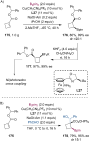
Scheme 45: Enantioselective conjugate borylation of cyclobutene-1-carboxylic acid diphenylmethyl ester 175 wit...
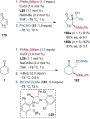
Scheme 46: Cu-catalyzed enantioselective tandem conjugate silylation of α,β-unsaturated ketones with subsequen...

Scheme 47: Cu-catalyzed enantioselective tandem conjugate silylation of α,β-unsaturated ketones with subsequen...
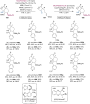
Scheme 48: Cu-catalyzed tandem conjugate silylation/aldol condensation. The diastereoselectivity is controlled...

Scheme 49: Chiral Ru-catalyzed three-component coupling reaction.

Scheme 50: Rh-Phebox complex-catalyzed reductive cyclization and subsequent reaction with Michael acceptors th...
Scheme 51: Rh-catalyzed tandem asymmetric conjugate alkynylation/aldol reaction (A) and subsequent spiro-cycli...

Scheme 52: Rh-bod complex-catalyzed tandem asymmetric conjugate arylation/intramolecular aldol addition (A). S...

Scheme 53: Co-catalyzed C–H-bond activation/asymmetric conjugate addition/aldol reaction.

Scheme 54: (Diisopinocampheyl)borane-promoted 1,4-hydroboration of α,β-unsaturated morpholine carboxamides and...

Figure 2: Some examples of total syntheses that have been recently reviewed.

Scheme 55: Stereoselective synthesis of antimalarial prodrug (+)-artemisinin utilizing a tandem conjugate addi...

Scheme 56: Amphilectane and serrulatane diterpenoids: preparation of chiral starting material via asymmetric t...

Scheme 57: Various asymmetric syntheses of pleuromutilin and related compounds based on a tandem conjugate add...
Scheme 58: Total synthesis of glaucocalyxin A utilizing a tandem conjugate addition/acylation reaction sequenc...
Scheme 59: Installation of the exocyclic double bond using a tandem conjugate addition/aminomethylation sequen...
Scheme 60: Synthesis of the taxol core using a tandem conjugate addition/enolate trapping sequence with Vilsme...
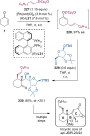
Scheme 61: Synthesis of the tricyclic core of 12-epi-JBIR-23/24 utilizing a Rh-catalyzed asymmetric conjugate ...
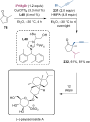
Scheme 62: Total synthesis of (−)-peyssonoside A utilizing a Cu-catalyzed enantioselective tandem conjugate ad...
Combretastatins D series and analogues: from isolation, synthetic challenges and biological activities
- Jorge de Lima Neto and
- Paulo Henrique Menezes
Beilstein J. Org. Chem. 2023, 19, 399–427, doi:10.3762/bjoc.19.31
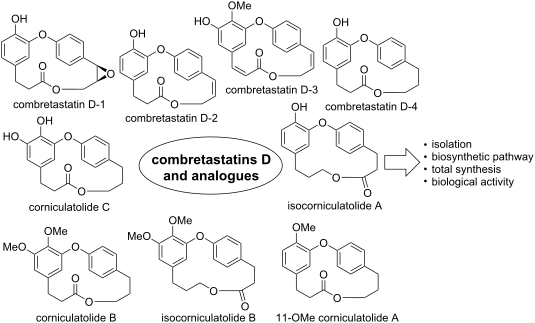
- potassium carbonate or methylcopper in pyridine led to compound 116 in only 10% yield. The cleavage of the benzyl ether proved to be complicated, as TFA also opened the lactone at the ester group (Scheme 24) [55]. In an attempt to circumvent these problems, the authors chose to use isovanillin (80) as

Graphical Abstract

Figure 1: Structures of some members of the combretastatin D series, corniculatolides, and isocorniculatolide...

Scheme 1: Biosynthetic pathway proposed by Pettit and co-workers.
Scheme 2: Biosynthetic pathway towards corniculatolides or isocorniculatolides proposed by Ponnapalli and co-...

Scheme 3: Retrosynthetic approaches.

Scheme 4: Attempt of total synthesis of 2 by Boger and co-workers employing the Mitsunobu approach [27].

Scheme 5: Total synthesis of combretastatin D-2 (2) reported by Boger and co-workers employing an intramolecu...

Scheme 6: Formal synthesis of combretastatin D-2 (2) by Deshpande and co-workers using the Mitsunobu conditio...

Scheme 7: Total synthesis of combretastatin D-2 (2) by Rychnovsky and Hwang [36].

Scheme 8: Divergent synthesis of (±)-1 form combretastatin D-2 (2) by Rychnovsky and Hwang [36].

Scheme 9: Enantioselective synthesis of 1 by Rychnovsky and Hwang employing Jacobsen catalyst [41].

Scheme 10: Synthesis of fragment 57 by Couladouros and co-workers [43,45].

Scheme 11: Formal synthesis of compound 2 by Couladouros and co-workers [43,45].

Scheme 12: Synthesis of fragment 66 by Couladouros and co-workers [44,45].

Scheme 13: Synthesis of fragment 70 by Couladouros and co-workers [44,45].

Scheme 14: Synthesis of fragment 77 by Couladouros and co-workers [44,45].

Scheme 15: Synthesis of combretastatins 1 and 2 by Couladouros and co-workers [44,45].

Scheme 16: Formal synthesis of compound 2 by Gangakhedkar and co-workers [48].

Scheme 17: Synthesis of fragment 14 by Cousin and co-workers [50].

Scheme 18: Synthesis of fragment 91 by Cousin and co-workers [50].

Scheme 19: Formal synthesis of compound 2 by Cousin and co-workers [50].

Scheme 20: Synthesis of 2 diolide by Cousin and co-workers [50].

Scheme 21: Synthesis of combretastatin D-4 (4) by Nishiyama and co-workers [54].

Scheme 22: Synthesis of fragment 112 by Pettit and co-workers [55].

Scheme 23: Synthesis of fragment 114 by Pettit and co-workers [55].

Scheme 24: Attempt to the synthesis of compound 2 by Pettit and co-workers [55].

Scheme 25: Synthesis of combretastatin-D2 (2) starting from isovanilin (80) by Pettit and co-workers [55].

Scheme 26: Attempted synthesis of combretastatin-D2 (2) derivatives through an SNAr approach [55].

Scheme 27: Synthesis of combretastatin D-4 (4) by Pettit and co-workers [55].

Scheme 28: Synthesis of combretastatin D-2 (2) by Harras and co-workers [57].

Scheme 29: Synthesis of combretastatin D-4 (4) by Harras and co-workers [57].

Scheme 30: Formal synthesis of combretastatin D-1 (1) by Harras and co-workers [57].

Scheme 31: Synthesis of 11-O-methylcorniculatolide A (5) by Raut and co-workers [69].

Scheme 32: Synthesis of isocorniculatolide A (7) and O-methylated isocorniculatolide A 8 by Raut and co-worker...

Scheme 33: Synthesis of isocorniculatolide B (10) and hydroxyisocorniculatolide B 175 by Kim and co-workers [71].

Scheme 34: Synthesis of compound 9, 178, and 11 by Kim and co-workers [71].

Scheme 35: Synthesis of combretastatin D-2 prodrug salts [55].

Figure 2: ED50 values of the combretastatin D family against murine P388 lymphocytic leukemia cell line (appr...

Figure 3: IC50 of compounds against α-glucosidase [19].



