Search results
Search for "silicon" in Full Text gives 203 result(s) in Beilstein Journal of Organic Chemistry. Showing first 200.
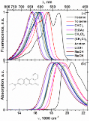
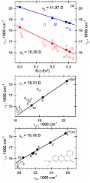
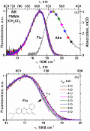
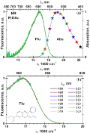
Probing of local polarity in poly(methyl methacrylate) with the charge transfer transition in Nile red
Beilstein J. Org. Chem. 2019, 15, 2552–2562, doi:10.3762/bjoc.15.248
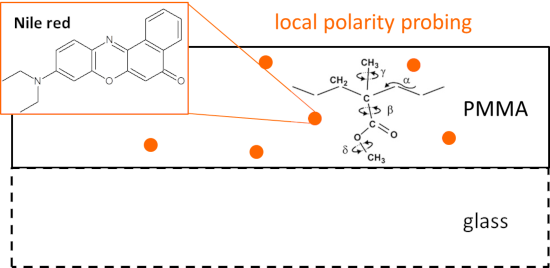
- solvents were checked for the lack of fluorescence when excited with 450–600 nm. Polymer films with or without NR were prepared by spin-casting of 3 wt % polymer solutions in 1,2-dichloroethane, dichloromethane or chloroform on silicon wafers (for ellipsometry) and on 20 × 20 × 0.15 mm3 Metzler glass



Chiral terpene auxiliaries V: Synthesis of new chiral γ-hydroxyphosphine oxides derived from α-pinene
Beilstein J. Org. Chem. 2019, 15, 2493–2499, doi:10.3762/bjoc.15.242

- phosphine with poly(methylhydrosiloxane) in the presence of titanium(IV) isopropoxide (Scheme 4). The work-up of the reaction mixture with 25% HF allowed to remove silicon and titanium impurities and purification of 23 by column chromatography on silica gel yielded the product in 62%. 4


Synthesis of a dihalogenated pyridinyl silicon rhodamine for mitochondrial imaging by a halogen dance rearrangement
Beilstein J. Org. Chem. 2019, 15, 2333–2343, doi:10.3762/bjoc.15.226
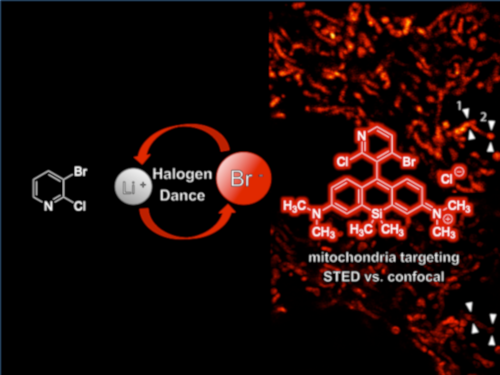
- .15.226 Abstract Background: Since their first synthesis, silicon xanthenes and the subsequently developed silicon rhodamines (SiR) gained a lot of attention as attractive fluorescence dyes offering a broad field of application. We aimed for the synthesis of a fluorinable pyridinyl silicon rhodamine for
- ; mitochondrial probe; near-infrared (NIR) dyes; one-pot reaction; silicon rhodamines; Introduction Since their first synthesis by Fu and co-workers in 2008 [1], silicon xanthenes and the subsequently developed silicon rhodamines (SiR) have drawn a lot of attention as attractive fluorescence dyes offering a
- features with their optical properties and control the latter by rational dye design [15][24][25][26]. These investigations led to new silicon rhodamine dyes with enhanced and fine-tuned properties (quantum yield, lifetime, brightness, absorption and emission maxima). A recent review compared the



Halide metathesis in overdrive: mechanochemical synthesis of a heterometallic group 1 allyl complex
Beilstein J. Org. Chem. 2019, 15, 1856–1863, doi:10.3762/bjoc.15.181
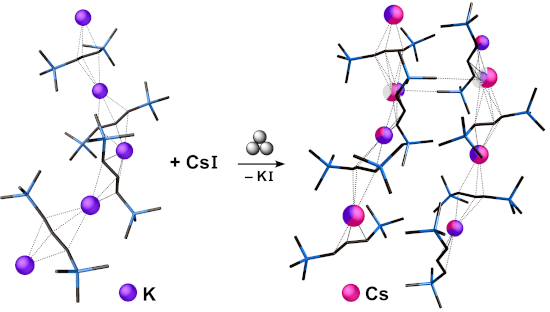
- distance of K+ to Me3SiH, chosen to represent somewhat more accurately the type of interactions occurring in [KCsA'2], is slightly shorter (3.14 Å) and stronger (30 kJ mol–1), probably a result of the lower electronegativity of silicon compared to carbon and the correspondingly more negative methyl groups


The cyclopropylcarbinyl route to γ-silyl carbocations
Beilstein J. Org. Chem. 2019, 15, 1769–1780, doi:10.3762/bjoc.15.170
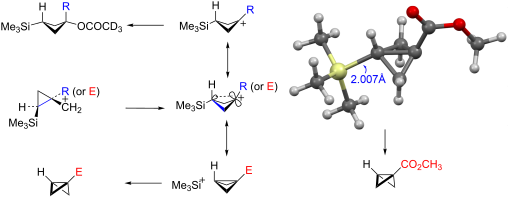
- ; rearrangement; silicon; Introduction Carbocations, positively charged trivalent carbon compounds and reactive intermediates, have continued to fascinate chemists since the early discoveries of tropylium [1][2] and trityl [3][4][5][6][7] salts. Many of the giants of organic chemistry during the last century
- incorporated into this paper is the trimethylsilyl-substituted carbocation [36][37][38][39][40][41][42][43][44]. We have been interested in long-range interactions of silicon with both carbene [45][46][47][48] and carbocation centers [49][50]. Along these lines, γ-trimethylsilyl cations of general type 11 have
- of the cation. These features suggest more facile nucleophilic attack should occur at silicon, favoring bicyclobutane formation. Also included in Table 3 are calculated bond lengths in the phosphoryl-substituted cation 74d, which also shows a very long Si–C bond. Preferred trimethylsilyl elimination


Functional panchromatic BODIPY dyes with near-infrared absorption: design, synthesis, characterization and use in dye-sensitized solar cells
Beilstein J. Org. Chem. 2019, 15, 1758–1768, doi:10.3762/bjoc.15.169
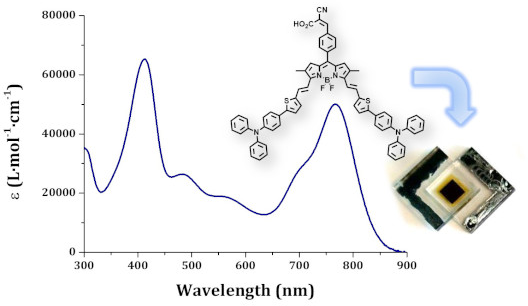
- , a set of DSSCs were fabricated following a procedure reported previously [4]. The J(V) characteristics of the devices were recorded in dark and upon irradiation with a mask. For the measurements a solar simulator with AM 1.5G filter was used after calibration with a Silicon cell at 1000 W m−2. For a




Selenophene-containing heterotriacenes by a C–Se coupling/cyclization reaction
Beilstein J. Org. Chem. 2019, 15, 1379–1393, doi:10.3762/bjoc.15.138

- parent system, diselenolo[3,2-b:2’,3’-d]selenophene (DSS), is still unknown. Cheng et al. published a synthesis of various heterotriacenes including two selenophenes bridged with other elements such as silicon, germanium, nitrogen, and carbon [26]. Very recently, Wang et al. released selenophene-based


Synthesis of polydicyclopentadiene using the Cp2TiCl2/Et2AlCl catalytic system and thin-layer oxidation of the polymer in air
Beilstein J. Org. Chem. 2019, 15, 733–745, doi:10.3762/bjoc.15.69
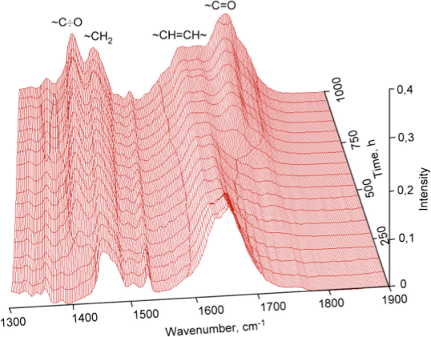
- by a spectrophotometer Thermo Scientific Evolution 201 using a wavelength range from 200 to 900 nm. Infrared spectra of the polymer were registered applying an FTIR spectrometer Simeks FT-801 in the range from 500 to 4000 cm−1. A silicon plate with a diameter of 8 mm was applied to support the
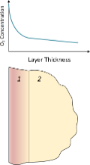
- (thin layer on silicon) with respect to intensities of adsorption bands at 1410 and 700 cm−1. The distribution of oxygen concentration in the polymer layer: 1 – a layer of oxidized cross-linked polymer; 2 – a layer of non-oxidized polymer. Dependence of the ratio of adsorption bands at 1700 and 700 cm−1
- on the exposure time of the layer in air at ambient temperature. Infrared spectra (a) of products of cationic polymerization of DCPD, stabilized with an antioxidant, after 24 hours (curve 1) and 1030 hours (curve 2) after synthesis (thin layer on silicon wafer) and (b) the correlation of intensity




Synthesis of C3-symmetric star-shaped molecules containing α-amino acids and dipeptides via Negishi coupling as a key step
Beilstein J. Org. Chem. 2019, 15, 371–377, doi:10.3762/bjoc.15.33
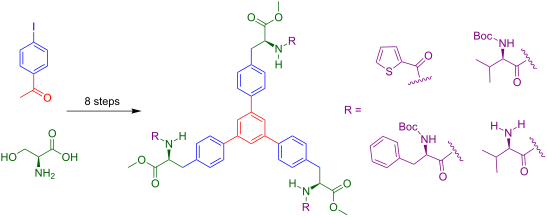
- treated with silicon tetrachloride and ethanol (SiCl4/EtOH) at room temperature for 6 h to produce the iodonated trimerized product 9 in 71% yield (Scheme 2) [45][46]. Then, the organozinc reagent 7 was coupled with triiodo derivative 9 in the presence of tetrakis(triphenylphosphane)palladium(0) (Pd(PPh3


Application of olefin metathesis in the synthesis of functionalized polyhedral oligomeric silsesquioxanes (POSS) and POSS-containing polymeric materials
Beilstein J. Org. Chem. 2019, 15, 310–332, doi:10.3762/bjoc.15.28
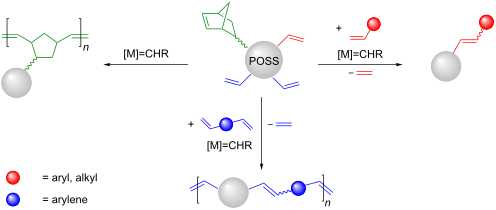
- the properties and applications of the resulting materials. Vinylsilanes show a specific reactivity towards alkylidene ruthenium complexes because of a strong effect of the silyl group on the properties of the double bond. In general, the substituents at the silicon atom determine the regioselectivity
- of the process to a certain degree. The reactivity of vinylsilanes with different substituents at silicon towards alkylidene ruthenium complexes is illustrated in Scheme 1 [7]. According to Scheme 1a, as a result of the reaction of trialkoxy-, tris(trimethylsiloxy)-, trichloro- or dichloromethyl
- mild conditions, hydrogenolysis of the benzyl ester group to the carboxylic acid and hydrogenation of the C=C double bonds at the silicon atoms (Scheme 7). The ability of the obtained derivatives, in particular the carboxylic acids, to generate nanostructured materials through self-organization




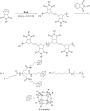


Silanediol versus chlorosilanol: hydrolyses and hydrogen-bonding catalyses with fenchole-based silanes
Beilstein J. Org. Chem. 2019, 15, 167–186, doi:10.3762/bjoc.15.17
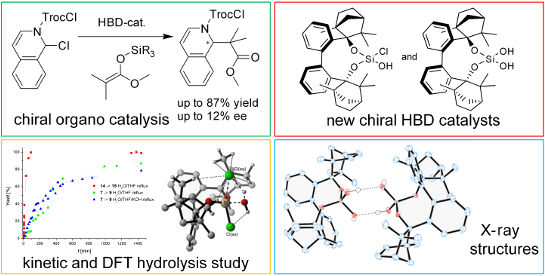
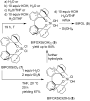
- phenyl groups at the silicon atom are converted by acids (e.g., TFA or TfOH) and following aqueous work-up into silanediols [2][4][7][8][9][10][11]. Another route employs dichlorosilanes, which hydrolyze directly with nucleophiles (e.g., water [12][13][14][15][16][17] or hydroxide [18][19][20][21][22
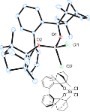
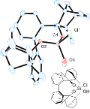
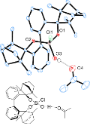
- Nucleophilic substitution at silicon is already discussed with SN2 mechanism, following a backside attack opposite of the leaving group, as well as a front side attack near the leaving group [62][63][64][65][66][67][68]. A backside attack at the silicon in dichlorosilane 7 and monochlorosilanol 8 is blocked by
- the backbone, making a consideration of the mechanism not necessary. A mechanism with a pentacoordination at the silicon is assumed for the hydrolyses of BIFOXSiCl2 (7) to BIFOXSiCl(OH) (8) as intermediate and BIFOXSI(OH)2 (9) as product [65][66][67]. Two pathways (front attack mechanism (front) or








Dispersion-mediated steering of organic adsorbates on a precovered silicon surface
Beilstein J. Org. Chem. 2018, 14, 2715–2721, doi:10.3762/bjoc.14.249
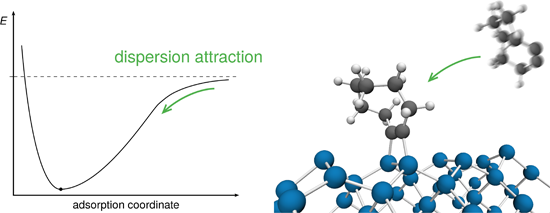
- theory; dispersion; organic/inorganic interfaces; Introduction The creation of organic/inorganic interfaces is one of the main endeavours in enhancing the application range of modern electronic devices for silicon-based technology [1][2]. One way to achieve this is covalent attachment of bifunctional
- organic molecules on bare silicon surfaces and subsequent reaction with a second molecule with both reactions being chemoselective (layer-by-layer, LbL, approach) [3][4][5]. To achieve an interface structure with predictable properties, it is important that the molecules used for the first layer show well
- minimization without symmetry constraints leads to a structure with a local C2 rotational axis resulting in symmetry-equivalent molecules 1 and 1′. Energies and Gibbs energies of adsorption were previously found to support the notion of strong covalent bonding for the [2 + 2] cycloaddition of 1 on the silicon


Design and synthesis of C3-symmetric molecules bearing propellane moieties via cyclotrimerization and a ring-closing metathesis sequence
Beilstein J. Org. Chem. 2018, 14, 2537–2544, doi:10.3762/bjoc.14.230
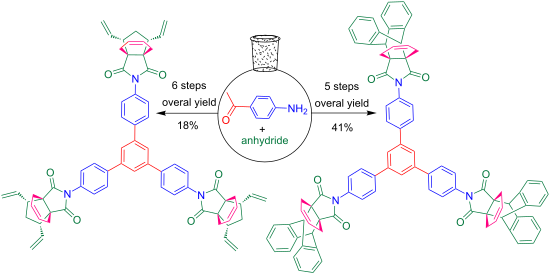
- (9) in the presence of triethylamine (Et3N) in toluene at 140 °C to obtain the acetophenone derivative 10 in excellent yield (92%) [43]. Later, the acetophenone derivative 10 was subjected to trimerization reaction under ethanol/silicon tetrachloride (EtOH/SiCl4) conditions to deliver the trimerized
- ), silicon tetrachloride (SiCl4, 0.61 mL, 5.36 mmol) was added dropwise at 0 °C and the reaction mixture was stirred for 10–15 min at the same temperature. Later, the reaction mixture was stirred at room temperature for 20 h. After completion of the reaction (TLC monitoring), the reaction mixture was


Quinolines from the cyclocondensation of isatoic anhydride with ethyl acetoacetate: preparation of ethyl 4-hydroxy-2-methylquinoline-3-carboxylate and derivatives
Beilstein J. Org. Chem. 2018, 14, 2529–2536, doi:10.3762/bjoc.14.229

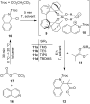
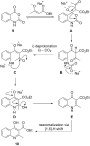
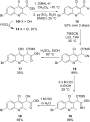
- alkoxide G that undergoes a [1,4]-shift of the silicon group with concomitant ejection of cyanide anion to form acyl cyanide H [33]. As the reaction is run in the presence of ethanol, nucleophilic acyl substitution of cyanide H for the ethoxy group furnishes the ethyl ester 21 in one pot. We were therefore




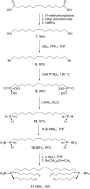
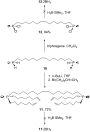
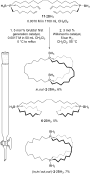
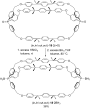
Non-metal-templated approaches to bis(borane) derivatives of macrocyclic dibridgehead diphosphines via alkene metathesis
Beilstein J. Org. Chem. 2018, 14, 2354–2365, doi:10.3762/bjoc.14.211
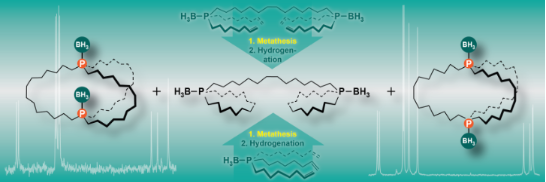
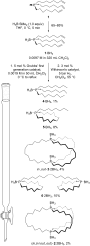
- somewhat higher overall yields, as analyzed elsewhere [1][2][3][4]. Setaka has developed a similar chemistry in which the phosphorus atoms are replaced by silicon and the metal fragment by p-phenylene (p-C6H4) or related aromatic moieties [14][15][16][17][18][19]. These types of compounds are viewed as






Tetrathiafulvalene – a redox-switchable building block to control motion in mechanically interlocked molecules
Beilstein J. Org. Chem. 2018, 14, 2163–2185, doi:10.3762/bjoc.14.190
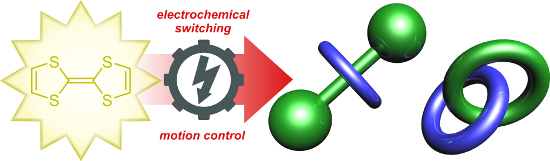
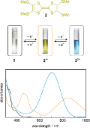
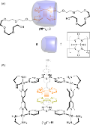
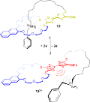
- electrically operated without the need of chemical additives, if conducting solid supports are used. This also opens pathways towards the integration of switchable AMMs into the world of silicon-based chips and electronic circuits. A landmark in the field of molecular-scale electronic devices is the rotaxane











Natural and redesigned wasp venom peptides with selective antitumoral activity
Beilstein J. Org. Chem. 2018, 14, 1693–1703, doi:10.3762/bjoc.14.144
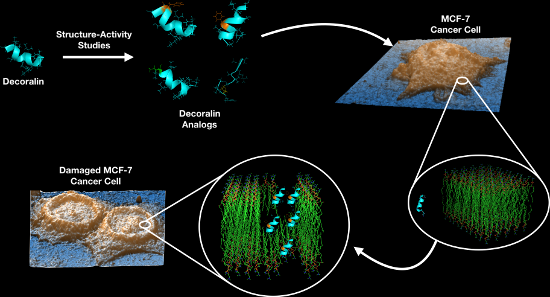
- when compared to other analogs and was used here as a treated control) was performed using an Agilent Technologies 5500 AFM/SPM microscope that was in contact mode and a Nanosensors™ PPP-CONT probe (NanoSensors; PPP-Cont-20, PointProbe-Plus Silicon-SPM-Sensor). The material properties and dimensions of


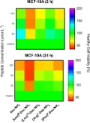


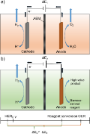
Cobalt–metalloid alloys for electrochemical oxidation of 5-hydroxymethylfurfural as an alternative anode reaction in lieu of oxygen evolution during water splitting
Beilstein J. Org. Chem. 2018, 14, 1436–1445, doi:10.3762/bjoc.14.121
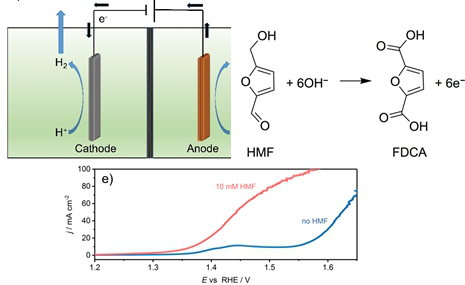
- Te), could likewise lead to an enhanced electrocatalysis for reactions other than the OER and the HER. To this end, alloys of cobalt with boron, silicon, phosphorus, arsenic and tellurium were screened for their electrocatalytic activity for HMF oxidation. A detailed synthetic procedure to afford



Hypervalent iodine-guided electrophilic substitution: para-selective substitution across aryl iodonium compounds with benzyl groups
Beilstein J. Org. Chem. 2018, 14, 1039–1045, doi:10.3762/bjoc.14.91
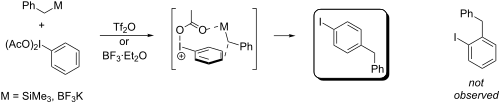
- mechanism could be occurring with metalloid groups such as silicon and boron. Hypervalent iodine reagents such as Zefirov’s reagent, cyclic iodonium reagents, iodosobenzene/BF3, and PhI(OAc)2/BF3 or triflate-based activators were tested. A desirable facet of the reported reaction is that iodine(I) is


Cross-coupling of dissimilar ketone enolates via enolonium species to afford non-symmetrical 1,4-diketones
Beilstein J. Org. Chem. 2018, 14, 992–997, doi:10.3762/bjoc.14.84
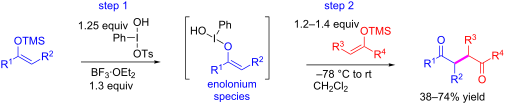
- [11] and Wirth [6][7][12] both circumvented the selectivity and reactivity problem by making use of a temporary silicon connection strategy to render the reaction intramolecular. In both cases, the two ketone enolates were coupled successively to dimethyldichlorosilane. Thomson achieved the cross



Continuous multistep synthesis of 2-(azidomethyl)oxazoles
Beilstein J. Org. Chem. 2018, 14, 506–514, doi:10.3762/bjoc.14.36
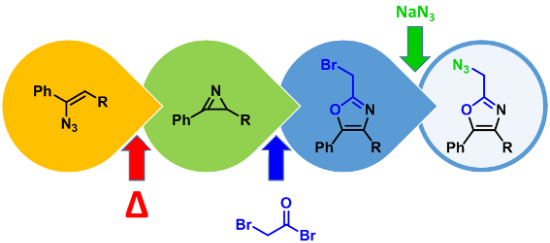
- in a silicon bath at 150 °C. The vinyl azide solution in acetone was introduced into the reactor by a syringe pump (Syrris) with variable flow rates (Table 4) to obtain different residence times. The system was pressurized using a back-pressure regulator (BPR, Upchurch) at 17 bar (250 psi). The



Syn-selective silicon Mukaiyama-type aldol reactions of (pentafluoro-λ6-sulfanyl)acetic acid esters with aldehydes
Beilstein J. Org. Chem. 2018, 14, 373–380, doi:10.3762/bjoc.14.25

- . The selectivity of these reactions depends on the geometry of the intermediate enolates. Here, we have reacted octyl pentafluoro-λ6-sulfanylacetate with substituted benzaldehydes and acetaldehyde under the conditions of the silicon-mediated Mukaiyama aldol reaction. The transformations proceeded with
- rearrangement [31]. Under slightly modified conditions, this type of rearrangement was also successful for SF5-substituted acetic esters of cinnamyl alcohols [32]. Herein we describe our results [33] of highly syn-diastereoselective silicon Mukaiyama-type aldol reactions of SF5-acetic acid esters with different
- addition products. Thus, the minor products of the silicon Mukaiyama aldol reactions are the anti-isomers 3. On the other hand, the vicinal coupling constants of the major products were found between 8.5 Hz for the p-nitro derivative 2a to about 9.4 Hz for derivatives 2b–e with less electron-withdrawing


Recent advances on organic blue thermally activated delayed fluorescence (TADF) emitters for organic light-emitting diodes (OLEDs)
Beilstein J. Org. Chem. 2018, 14, 282–308, doi:10.3762/bjoc.14.18
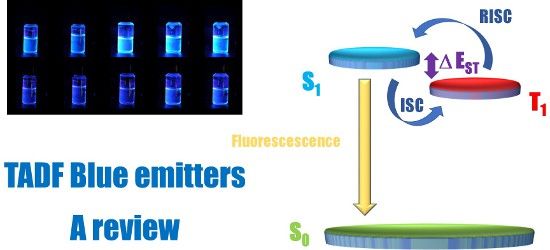
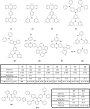
- with the azasiline donor, OLEDs displaying the unprecedented EQE of 22.3% were obtained [46]. As specificity, azasiline is a 6-membered heterocycle comprising a silicon atom introduced instead of a carbon atom to enlarge the HOMO–LUMO gap and lower the HOMO level. Due to the sp3 hybridization of the
- silicon atom, two phenyl rings can be introduced on the silicon-bridged structure providing bulkiness and rigidity to the donor. Intermolecular interactions are thus efficiently prevented and the conformation disorder drastically reduced. When used as electron donor in T1, a ΔEST of 0.14 eV was determined




Fluorogenic PNA probes
Beilstein J. Org. Chem. 2018, 14, 253–281, doi:10.3762/bjoc.14.17
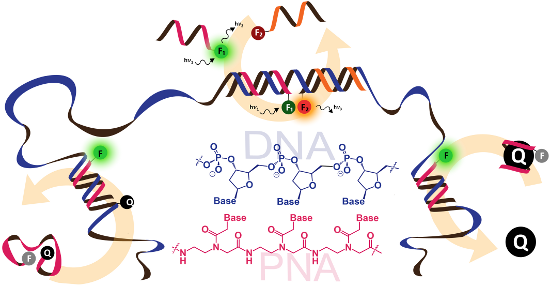
- following standard surface-hybridization protocols. The use of the solid support assay format also allows detection of DNA directly from the fluorescence signal of the CPP bound to the solid support without requiring labeling on the PNA probe [126]. Polystyrene microbeads self-assembled on patterned silicon




Syntheses, structures, and stabilities of aliphatic and aromatic fluorous iodine(I) and iodine(III) compounds: the role of iodine Lewis basicity
Beilstein J. Org. Chem. 2017, 13, 2486–2501, doi:10.3762/bjoc.13.246
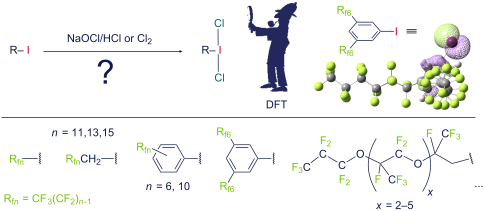
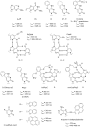
- species have never been described in the literature. Silicon has been used as a locus for branching, as exemplified by a variety of highly fluorophilic compounds of the formula (RfnCH2CH2)3SiZ (see XI in Scheme 7, Z = 4-C6H5X [53][54]). However, these feature silicon–carbon and sp3 carbon–hydrogen bonds