


Search results
Search for "DMF" in Full Text gives 1101 result(s) in Beilstein Journal of Organic Chemistry. Showing first 200.
Mild and efficient synthesis and base-promoted rearrangement of novel isoxazolo[4,5-b]pyridines
Beilstein J. Org. Chem. 2024, 20, 1069–1075, doi:10.3762/bjoc.20.94
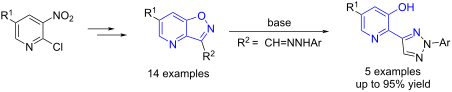
- method, however, the cyclization occurred under drastic conditions (NaH, DMF, 130 °C) as it was reported in patent literature [23]. We assumed that a similar synthetic route (nitrosation/SNAr) would be applicable for the synthesis of isoxazolo[4,5-b]pyridine derivatives bearing other EWG in position 3
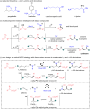
- with DMF-DMA afforded enamines 6 which, upon nitrosation, were converted into oximes 7a–c in moderate yields (Scheme 3). When compounds 7 were treated with K2CO3 3-hydroxypyridine-2-carbonitriles 8 were obtained as sole products (Scheme 4). Apparently, a cyclization of oximes 7 to 3-formylisoxazolo[4,5
- mixture was treated with K2CO3 in DMF at 60 °C, compound 13a was isolated in 92% yield (from 7a) (Table 1, entry 1). Such rearrangement has been reported previously for the benzo[d]isoxazole series [30], however, it has not been observed for isoxazolo[4,5-b]pyridine derivatives. It was found that the


Structure–property relationships in dicyanopyrazinoquinoxalines and their hydrogen-bonding-capable dihydropyrazinoquinoxalinedione derivatives
Beilstein J. Org. Chem. 2024, 20, 1037–1052, doi:10.3762/bjoc.20.92
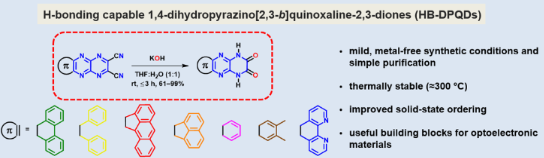
- reactions (over 10-gram scale) using diaminomaleonitrile (15) as a starting material in accordance with the procedure in the literature (Scheme 1) [27]. The first step is the acylation with oxalyl chloride to yield 14 followed by a reaction with SOCl2 in the presence of cat. DMF to obtain dichloropyrazine
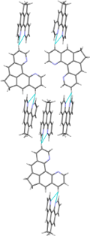
- 12 under standard boiling acetic acid conditions, as reported in Scheme 1. The crude product could be collected via vacuum filtration, followed by additional purification via recrystallization from boiling DMF to afford golden crystals of 4a in moderate yields. In order to access 5a and 6a, a
- modified procedure from the literature was implemented [28]. To synthesize 6a, the condensation was performed with 9,10-phenanthrenequinone, building block 12 in the presence of glacial CH3COOH, trifluoracetic acid, and 1,4-dioxane at reflux. Then, recrystallization from DMF and sublimation under ambient




Novel analogues of a nonnucleoside SARS-CoV-2 RdRp inhibitor as potential antivirotics
Beilstein J. Org. Chem. 2024, 20, 1029–1036, doi:10.3762/bjoc.20.91
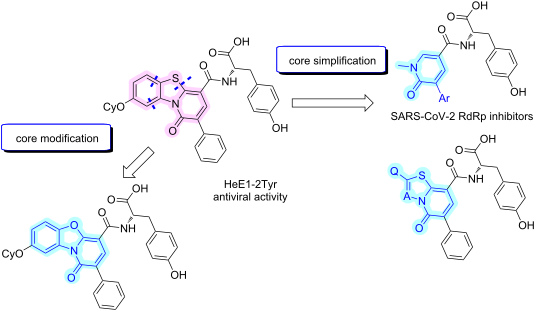
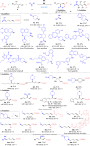
- , DCM, rt, overnight, b) BnBr, NaH, DMF, 0 °C to rt, 1 h, c) (R = Et) diethyl carbonate, LiHMDS, THF, −78 to 0 °C, 1 h, d) (R = allyl) allyl chloroformate, LiHMDS, THF, −78 to 0 °C, 1 h, e) POCl3, DMF, 90 °C, 30 min, f) (BnCO)2O, 100 °C, 1.5 h, g) methanesulfonic acid, DCM, 0 °C to rt, 4 h, h) CyOH
- , PPh3, DIAD, 1,4-dioxane, 50 °C, overnight, i) (R = Et) NaOH, H2O, EtOH, 75 °C, 3 h, j) (R = allyl) Et3SiH, PPh3, Pd(OAc)2, ACN, rt, k) H–ʟ-Tyr–OMe, HOBt, EDCI, TEA, DCM, DMF, rt, 12 h, l) LiOH⋅H2O, H2O, 1,4-dioxane, rt, 45 min. Cy = cyclohexyl. Synthetic pathway to pyridone derivatives 3a–c of HeE1
- -2Tyr (1). Reagents and conditions: a) MeI, K2CO3, DMF, rt, 2.5 h, b) LiOH⋅H2O, H2O, 1,4-dioxane, rt, 15 min, c) H–ʟ-Tyr–OMe, HOBt, EDCI, TEA, DCM, DMF, rt, 12 h, d) ArB(OH)2, Pd(dppf)Cl2⋅CH2Cl2, Cs2CO3, DMF, H2O, 80 °C, overnight. Synthetic pathway to thiazolopyridone derivatives 4a,b of HeE1-2Tyr (1


Carbonylative synthesis and functionalization of indoles
Beilstein J. Org. Chem. 2024, 20, 973–1000, doi:10.3762/bjoc.20.87
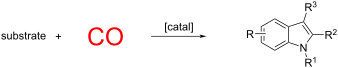
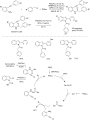
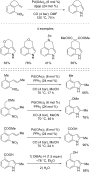
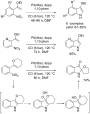
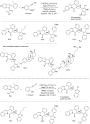
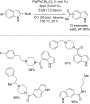
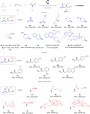
- protocol the use of a Lewis base such as SnCl2 was not required and the reaction took place under milder conditions using Pd(OAc)2 as catalyst and PPh3 as ligand. The reaction was performed at 70 °C for 15–48 hours, under 4 bar of CO in a DMF/MeOH 2:1 mixture giving the indole derivatives without obvious
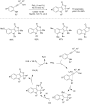
- second case the reactions were catalyzed by 6 mol % of Pd(OAc)2 and carried out under 4 bar of CO. The fused indoles were obtained when adding 24 mol % of dppp (1,3-bis(diphenylphosphino)propane) at 120 °C for 70 hours in DMF. Instead, in the other case, PPh3 was used as ligand at 70 °C for 17–46 hours
- by the oxidation of the catalyst. The reaction proceeded with dppp and 1,10-phenantroline (12 mol % each) under 6 bar of CO at 80 °C in DMF for 22–96 hours depending on the substrate. After the required reaction time, seven carbazolones were isolated with good yields of up to 89% (Scheme 12). In 2005












Innovative synthesis of drug-like molecules using tetrazole as core building blocks
Beilstein J. Org. Chem. 2024, 20, 950–958, doi:10.3762/bjoc.20.85
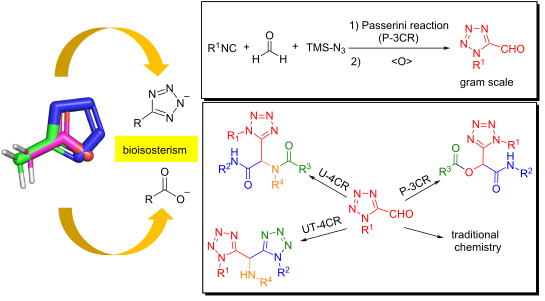
- . Trimethylsilyl azide is considered as a safe replacement of metal azides. We started the solvent optimization with MeOH and H2O as solvent system at room temperature, however, it did not yield any product even after 3 days (Table 1, entry 1). The use of DMF to improve the solubility of the paraformaldehyde solid




Direct synthesis of acyl fluorides from carboxylic acids using benzothiazolium reagents
Beilstein J. Org. Chem. 2024, 20, 921–930, doi:10.3762/bjoc.20.82
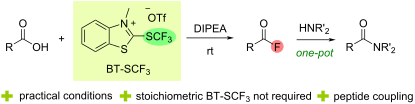
- the efficiency of the reaction, whereas a 19F NMR yield of only 11% was achieved in DMF (Table 1, entries 10–12). Increasing the reaction concentration to 0.2 M in DCM led to a reduction in the 19F NMR yield of 2a to 74% (Table 1, entry 13). Finally, optimisation of the reaction time revealed the


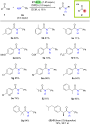

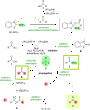
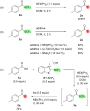
One-pot Ugi-azide and Heck reactions for the synthesis of heterocyclic systems containing tetrazole and 1,2,3,4-tetrahydroisoquinoline
Beilstein J. Org. Chem. 2024, 20, 912–920, doi:10.3762/bjoc.20.81
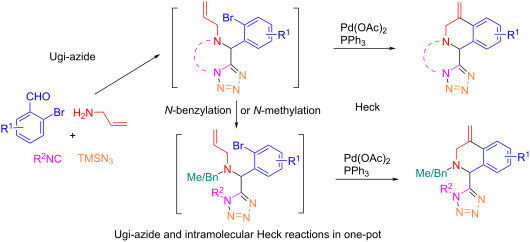
- first examined by using 10 mol % Pd(OAc)2, 20 mol % PPh3, 2 equiv of Et3N in CH3CN or DMF at 105 °C for 24 h under N2 atmosphere. However, the reactions failed under these conditions (Table 1, entries 1 and 2). When K2CO3 was used as a base to replace Et3N, the reactions in either CH3CN or DMF for 3 h
- , and Cs2CO3 (Table 1, entries 12–14). Investigating other Pd catalysts, suche as PdCl2 and Pd(dba)2 also gave low yields (Table 1, entries 15 and 16). Since CH3CN is a more favorable solvent than DMF in green chemistry consideration [52][53], the optimal reaction conditions for the Heck reaction were


Three-component N-alkenylation of azoles with alkynes and iodine(III) electrophile: synthesis of multisubstituted N-vinylazoles
Beilstein J. Org. Chem. 2024, 20, 891–897, doi:10.3762/bjoc.20.79
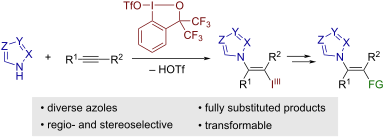
- , DMF/H2O, 60 °C, 18 h. (b) Pd(OAc)2, PPh3, CuI, phenylacetylene, Et3N, 50 °C, 5 h. (c) CuI, neocuproine, 4-MeOC6H4SH, NaOt-Bu, toluene, 110 °C, 13 h. (d) CuI, ʟ-proline, DMF, 80 °C, 14 h. (e) CuI, imidazole, Cs2CO3, DMF, 120 °C, 15 h. (f) 3-Methoxy-2-(trimethylsilyl)phenyl triflate, CsF, MeCN, rt, 18 h



Ortho-ester-substituted diaryliodonium salts enabled regioselective arylocyclization of naphthols toward 3,4-benzocoumarins
Beilstein J. Org. Chem. 2024, 20, 841–851, doi:10.3762/bjoc.20.76
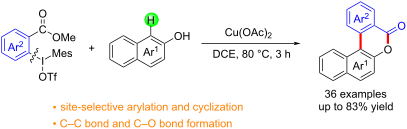
- solvents including dimethyl sulfoxide (DMSO), N,N-dimethylformamide (DMF), toluene, acetic acid (AcOH) and water (Table 1, entries 9–13) were carried out. However, polar solvents such as AcOH and H2O were proved to be unsuitable for this reaction. For catalysts, we found that Cu(OAc)2 gave the best results


Synthesis and characterization of water-soluble C60–peptide conjugates
Beilstein J. Org. Chem. 2024, 20, 777–786, doi:10.3762/bjoc.20.71
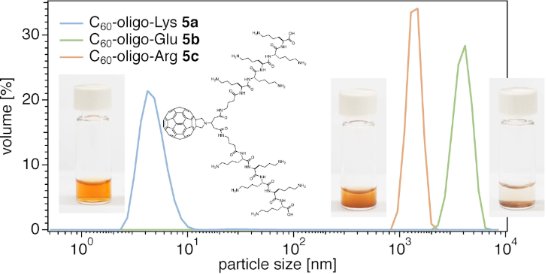
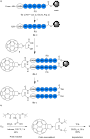
- NMM (8 equiv) in DMF. Each Fmoc deprotection step of the peptide N-terminus was conducted by the repeated treatment of the peptide on resin with 20% piperidine in DMF (2 × 10 min). After each coupling reaction, the resin was washed with DMF. Synthesis of C60–peptide conjugates 5a–c The synthetic
- , ii) HBTU, DIPEA, in DMF, rt, overnight, and iii) trifluoroacetic acid (TFA)/triisopropylsilane (TIPS)/H2O, rt, 1.5–2 h. AA and PG stand for amino acid and protecting group, respectively. All AAs in 1a–c, 2a–c, and 4a–c were protected. Structure of C60–oligo-Lys (5a), C60–oligo-Glu (5b), and C60–oligo




Synthesis of new representatives of A3B-type carboranylporphyrins based on meso-tetra(pentafluorophenyl)porphyrin transformations
Beilstein J. Org. Chem. 2024, 20, 767–776, doi:10.3762/bjoc.20.70
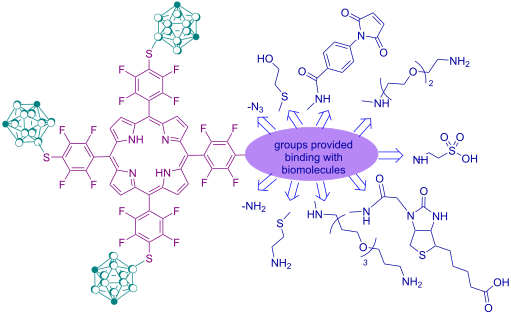
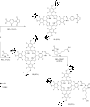
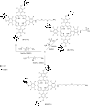
- ][17][18][19][20][21][22][23][24][25][26][27]. In order to prepare boronated PSs of A3B-type the employed synthetic strategy included the preparation of monoazido-substituted tris(pentafluorophenyl)porphyrin 2 by the reaction of porphyrin 1 with sodium azide (molar ratio 1:1.9) in DMF at ambient
- efficient in PDT and BNCT applications. The reaction of porphyrin 3 with 9-mercapto-m-carborane (4) readily proceeded in DMF in the presence of anhydrous NaOAc under argon atmosphere to give porphyrin derivative 5 in 89% yield (Scheme 2) containing three carborane polyhedra bound to the



SOMOphilic alkyne vs radical-polar crossover approaches: The full story of the azido-alkynylation of alkenes
Beilstein J. Org. Chem. 2024, 20, 701–713, doi:10.3762/bjoc.20.64
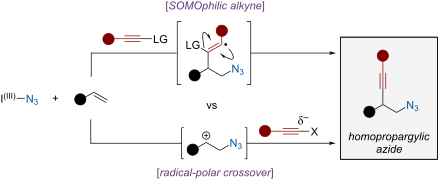
- transformation before [41][42][44], in our case only 9% of the desired product was obtained (Table 3, entry 2). A large quantity of product resulting from a Ritter-type reaction between acetonitrile and the carbocation intermediate could be observed by NMR [55]. Other highly polar solvents such as DMF and DMSO


Evaluation of the enantioselectivity of new chiral ligands based on imidazolidin-4-one derivatives
Beilstein J. Org. Chem. 2024, 20, 684–691, doi:10.3762/bjoc.20.62
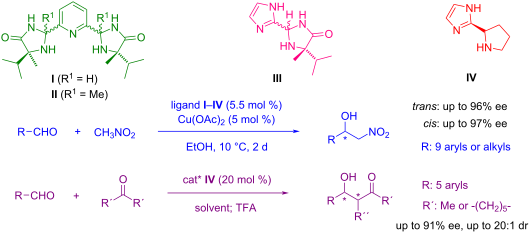
- . Thus, early attempts at the aldol reaction of 4-nitrobenzaldehyde with cyclohexanone were performed to evaluate the reaction parameters, i.e., solvent, reaction temperature, and amount of acidic additive (Table 5). Hence, using DMF at −25 °C were the most convenient conditions regarding diastereo- and


Regioselective quinazoline C2 modifications through the azide–tetrazole tautomeric equilibrium
Beilstein J. Org. Chem. 2024, 20, 675–683, doi:10.3762/bjoc.20.61
- reactivity in the SNAr reactions in comparison to polar solvents such as DMSO and DMF. This is explained by solvent hydrogen bond acidity and basicity descriptors α and β, for example, α(DMSO) = 0, β(DMSO) = 0.88, α(MeOH) = 0.43, β(MeOH) = 0.47. The rate constant of the SNAr process escalates with an
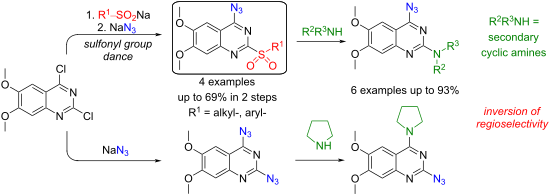
- preparation of 2-chloro-4-sulfonylquinazolines 8 (Scheme 3). The starting material 7 underwent SNAr reactions with sodium sulfinates and the C4-substituted products 8a,b were isolated [24]. The complete conversion was achieved in DMF or DMSO. In the case of sodium dodecylsulfinate, the reaction stopped at 70
- anhydrous THF, MeCN, and dioxane, using such azide sources as NaN3, LiN3, and TMS-N3. Full conversion towards product 12a was observed by HPLC with NaN3 in anhydrous DMF. However, precipitation, direct, and reversed-phase column chromatography provided low yields (Scheme 5) due to the degradation of the


Palladium-catalyzed three-component radical-polar crossover carboamination of 1,3-dienes or allenes with diazo esters and amines
Beilstein J. Org. Chem. 2024, 20, 661–671, doi:10.3762/bjoc.20.59
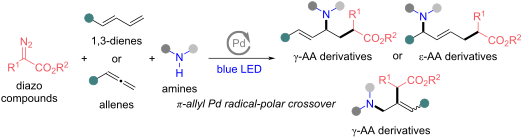
- started our studies with the palladium-catalyzed MCR of ethyl diazoacetate (1a), 1,3-butadiene (2a), and 1-phenylpiperazine (3a) in the presence of 5 mol % Pd(OAc)2 and 10 mol % Xantphos as ligand. To our delight, after irradiation with blue LED light in dimethylformamide (DMF) for 12 h at room
- strategy with diazo esters to access unsaturated γ- and ε-AA derivatives. Substrate scope of diazo compounds, 1,3-dienes and amines. aReactions (1/2/3/Pd(OAc)2/Xantphos = 0.3:0.4:0.2:0.01:0.02 mmol) were irradiated with blue LED light (467 nm) in 2.0 mL DMF at rt for 12 h under argon. Isolated yields
- ) were irradiated with blue LED light (467 nm) in 2.0 mL DMF at rt for 12 h under argon. Isolated yields. bAmine hydrochloride and Et3N (1.5 equiv) were used. cDiazo compound (0.4 mmol) was used. For more experimental details, see Supporting Information Information File 1. Mechanistic experiments. a



Synthesis and biological profile of 2,3-dihydro[1,3]thiazolo[4,5-b]pyridines, a novel class of acyl-ACP thioesterase inhibitors
Beilstein J. Org. Chem. 2024, 20, 540–551, doi:10.3762/bjoc.20.46
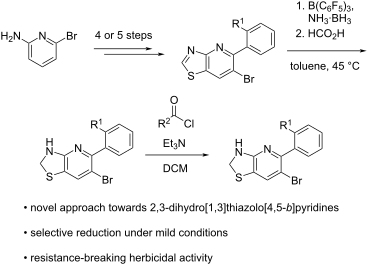
- ) 7.92 (s, 1H), 7.44–7.33 (m, 2H), 7.25–7.20 (m, 1H), 7.17–7.12 (m, 1H), 5.07–4.98 (br s, 2H, NH2). To a stirred solution of 3,5-dibromo-6-(2-fluorophenyl)pyridin-2-ylamine (10b, 17.62 g, 50.93 mmol, 1.0 equiv) in DMF (120 mL) at room temperature was added potassium O-ethyl dithiocarbonate (18.52 g


Development of a chemical scaffold for inhibiting nonribosomal peptide synthetases in live bacterial cells
Beilstein J. Org. Chem. 2024, 20, 445–451, doi:10.3762/bjoc.20.39
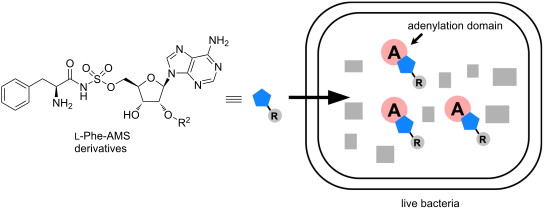
- , TBAI, R–X (a: MeI, b: BnBr, c: BrCH2CCH3, d: BrCH2CN, e: Br(CH2)4N3), DMF, rt, 45% (10a), 59% (10b), 45% (10c), 21% (10d), and 45% (10e); (b) TBSCl, imidazole, DMAP, DMF, rt, 83% (11a), 78% (11b), 57% (11c), 62% (11d), and 65% (11e); (c) 25% TFA in THF aq, 0 °C, 77% (12a), 77% (12b), 50% (12c), 96
- % (12d), and 75% (12e); (d) NaH, NH2SO2Cl, DME, 0 °C to rt, 86% (13a), 81% (13b), 92% (13c), 78% (13d), and 62% (13e); (e) Boc-ʟ-Phe-OSu, Cs2CO3, DMF, rt.; (f) 80% aqueous TFA, rt, two steps 95% (4), 94% (5), 56% (6), 88% (7), 58% (8), 69% (9); (g) methyl-Peg4-NHS ester, Cs2CO3, DMF, rt. Kd values for


Mono or double Pd-catalyzed C–H bond functionalization for the annulative π-extension of 1,8-dibromonaphthalene: a one pot access to fluoranthene derivatives
Beilstein J. Org. Chem. 2024, 20, 427–435, doi:10.3762/bjoc.20.37
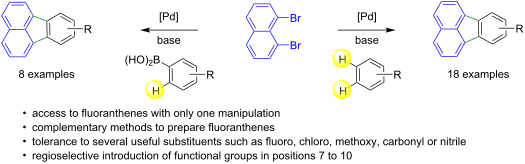
- ligands was examined. Slightly better yields of 1 were obtained using the diphosphine ligands dppe, dppb or dppf associated with Pd(OAc)2, and the preformed catalyst PdCl(C3H5)(dppb) gave 1 in 74% yield (Table 1, entries 7–10) [26]. The influence of a variety of solvents was also examined. DMF and NMP


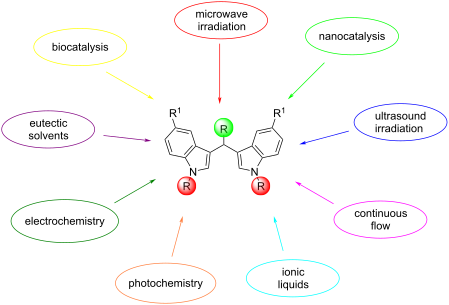
Green and sustainable approaches for the Friedel–Crafts reaction between aldehydes and indoles
Beilstein J. Org. Chem. 2024, 20, 379–426, doi:10.3762/bjoc.20.36




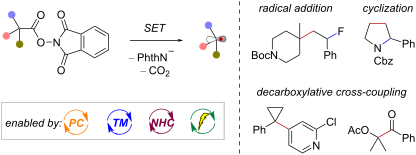
Mechanisms for radical reactions initiating from N-hydroxyphthalimide esters
Beilstein J. Org. Chem. 2024, 20, 346–378, doi:10.3762/bjoc.20.35
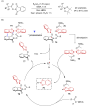
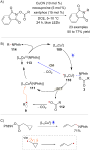
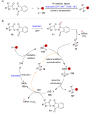
- ester 98 and Cs2CO3 in DMF resulted in the generation of the excited charge transfer complex 99. Subsequent SET mediated by the thiol catalyst followed by fragmentation afforded α-amino radical 100, which was then oxidized by the resulting thiol-radical species, regenerating the thiol catalyst while
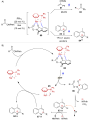
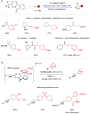
- radical recombination between C(sp3) radical 152 and the corresponding iodine-centered radical which provides iodination product 153 (Scheme 31B). It is worth noting that the iodination product is formed exclusively when using acetone as the solvent (see compound 154 in scheme C) whereas in DMF a








Facile approach to N,O,S-heteropentacycles via condensation of sterically crowded 3H-phenoxazin-3-one with ortho-substituted anilines
Beilstein J. Org. Chem. 2024, 20, 336–345, doi:10.3762/bjoc.20.34
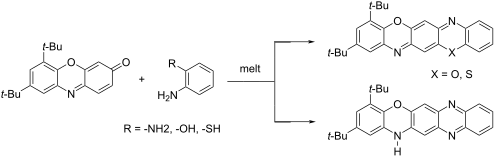
- condensation of 3H-phenoxazin-3-one (1) with various o-aminophenols (in refluxing DMF for 8–10 h), upon formation of the corresponding imine intermediate, affords benzo[5,6][1,4]oxazino[2,3-b]phenoxazines derivatives 10a,b (triphenodioxazines). As shown in the present work, this reaction can also be performed


Substitution reactions in the acenaphthene analog of quino[7,8-h]quinoline and an unusual synthesis of the corresponding acenaphthylenes by tele-elimination
Beilstein J. Org. Chem. 2024, 20, 243–253, doi:10.3762/bjoc.20.24
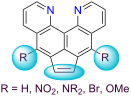
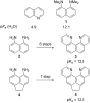
- , dipyridoacenaphthene 5 is not brominated by molecular bromine in chloroform or acetic acid. The action of the NBS–DMF system, previously proposed for the electrophilic bromination of alkylaromatic compounds [26], leaves substrate 5 unchanged at room temperature, and when heated to 75 °C for several days causes its





Photochromic derivatives of indigo: historical overview of development, challenges and applications
Beilstein J. Org. Chem. 2024, 20, 228–242, doi:10.3762/bjoc.20.23
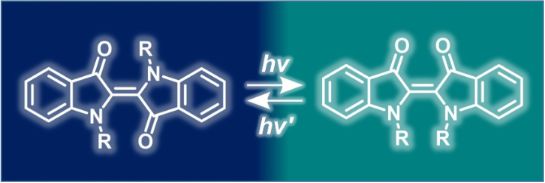
- significant difference in the values of β-angles, which results in some differences in the densities [10]. The solubility of crystalline indigo is poor even in polar solvents such as aniline, nitrobenzene, phenol, phthalic anhydride, DMSO, and DMF upon heating. The reason for the low solubility and high
- , it was already known that the intermolecular hydrogen bonding with solvent molecules may hinder the photoisomerization of indigo derivatives [46]. Nagasawa and co-workers found that the photoisomerization of 9a was inhibited by polar DMF due to formation of weak hydrogen bonds with formyl groups
- . However, even in low-polar ethyl acetate, Z-9a was not detected suggesting that the E–Z photoisomerization was slow and low efficient and could be easily hindered by rapid nonradiative de-excitation due to weak hydrogen bonding with the solvent. Notably, DMF was more effective than methanol in blocking





Optimizations of lipid II synthesis: an essential glycolipid precursor in bacterial cell wall synthesis and a validated antibiotic target
Beilstein J. Org. Chem. 2024, 20, 220–227, doi:10.3762/bjoc.20.22
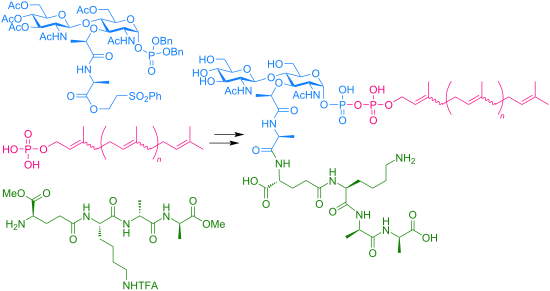
- mixture underwent a cross-coupling reaction with prenyl monophosphates [46] in DMF/THF over a four-day period, yielding fully protected versions of lipid II and its analogues. Subsequent global deprotection reactions, using aqueous NaOH, led to the formation of lipid II (11), with an overall yield of 16


Metal-catalyzed coupling/carbonylative cyclizations for accessing dibenzodiazepinones: an expedient route to clozapine and other drugs
Beilstein J. Org. Chem. 2024, 20, 193–204, doi:10.3762/bjoc.20.19
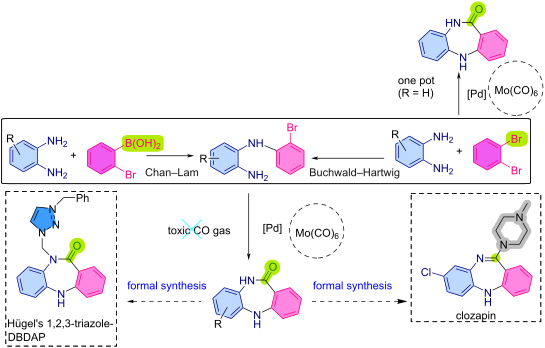
- out in the presence of o-phenylenediamine (1a) and 1,2-dibromobenzene (2) as model reactants using Pd(OAc)2 in combination with t-BuXPhos (2-di-tert-butylphosphino-2',4',6'-triisopropyl-1,1'-biphenyl) (5 mol %), and Et3N (2.5 equiv) as base in DMF. In this case, DMF served as the CO surrogate, as it
- was disclosed that DMF, the reaction solvent, could act as a potential carbon monoxide surrogate under certain circumstances, notably, in metal-catalyzed aminocarbonylation procedures [19][20]. Unfortunately, no DBDAP was obtained and we only observed the formation of intermediate 3a in 25% yield
- -phenylenediamine (1a) with 1,2-dibromobenzene (2) in the presence of 5 mol % of PdCl2(CH3CN)2 and 5 mol % of t-BuXPhos, with Et3N (2.5 equiv) and Mo(CO)6 in DMF at 150 °C, surprisingly this afforded the 5H-dibenzo[b,e][1,4]diazepin-11-ol (5), the tautomer of DBDAP (4a) in 53% (Scheme 2). We attempted to convert





