


Search results
Search for "Wittig reaction" in Full Text gives 133 result(s) in Beilstein Journal of Organic Chemistry.
Multigramme synthesis and asymmetric dihydroxylation of a 4-fluorobut-2E-enoate
Beilstein J. Org. Chem. 2013, 9, 2660–2668, doi:10.3762/bjoc.9.301
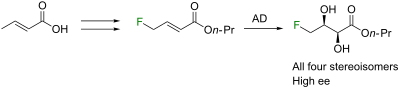
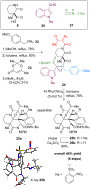
- literature (Scheme 3); silver mediated fluorination of butenoyl bromide 15 is known [14] delivering 16 in moderate yield but via a slow and expensive reaction. Wittig reaction, following in situ reduction of ethyl fluoroacetate (17) has been reported [15], while Purrington [16] prepared 19 by direct
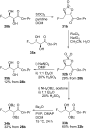
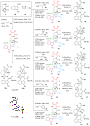
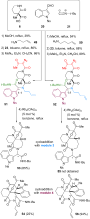
- -chromophoric syn-diol products. Educt elaboration was achieved via cyclic sulfate methodology, leading to the stereocomplementary anti-diols, and via acetal protection, ester reduction and one-pot oxidation/Wittig reaction, re-connecting this study to the published route to 6-deoxy-6-fluorohexoses




Garner’s aldehyde as a versatile intermediate in the synthesis of enantiopure natural products
Beilstein J. Org. Chem. 2013, 9, 2641–2659, doi:10.3762/bjoc.9.300
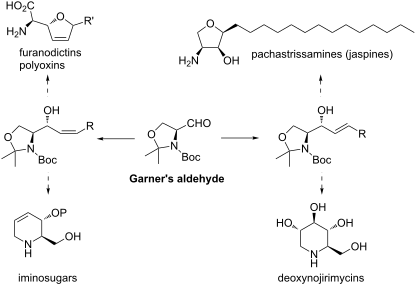
- , e.g., triphenylphospine oxide. As with the Wittig reaction, the HWE reaction can also promote the epimerization of the α-proton (pKa of triethoxyphosphonoacetate in DMSO is 18.6) [109]. We have experienced this tendency especially with α-amino ketophosphonates [110], but there is also evidence that





One-pot sequential synthesis of isocyanates and urea derivatives via a microwave-assisted Staudinger–aza-Wittig reaction
Beilstein J. Org. Chem. 2013, 9, 2378–2386, doi:10.3762/bjoc.9.274

- halides and primary or secondary amines has been developed. The synthetic pathway combines nucleophilic substitutions and a Staudinger–aza-Wittig reaction in the presence of polymer-bound diphenylphosphine under 14 bar of CO2 pressure and has been performed in a one-pot two-step process. The protocol has
- : isocyanates; microwave-assisted reaction; one-pot reaction; tandem Staudinger–aza-Wittig reaction; urea derivatives; Introduction The industrial and commercial impact of isocyanates (R–NCO) is steadily growing. In particular, the polyurethane output has undergone yearly increases of 5% over the last decade
- volatile, solid and supported reagents. In summary, we herein report an optimized protocol for a MW-assisted Staudinger–aza-Wittig reaction with polymer-bound diphenylphosphine (PS-PPh2) in a CO2 atmosphere. The study also aimed to prepare a series of symmetric and asymmetric alkyl/aryl urea derivatives in


The chemistry of isoindole natural products
Beilstein J. Org. Chem. 2013, 9, 2048–2078, doi:10.3762/bjoc.9.243
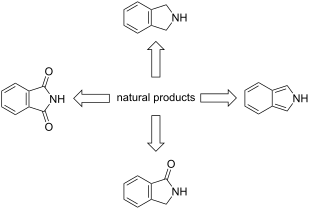
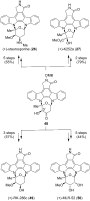
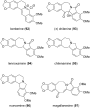
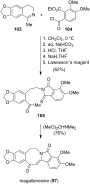
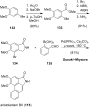
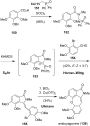
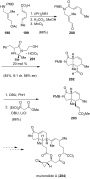
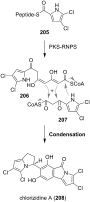
- intramolecular addition–elimination reaction. In the presence of the aldehyde 154, 153 underwent a Horner–Wittig reaction to generate 155 as a 1:2.3 mixture of E- and Z-isomers. Treatment of 155 with boron trichloride not only liberated the phenol but also isomerized the E-double bond to the Z-isomer. Finally, a
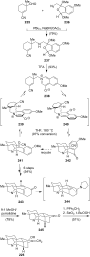
- starting materials, via a Staudinger–aza-Wittig reaction gave amine 237 as a mixture of four diastereoisomers. Conversion into 4-oxido-isoquinolinium betaine 238 could be achieved by an acid-catalyzed methanol extrusion and isomerization. Betaine 238 served as the substrate for the following 1,3-aza
















Amyloid-β probes: Review of structure–activity and brain-kinetics relationships
Beilstein J. Org. Chem. 2013, 9, 1012–1044, doi:10.3762/bjoc.9.116
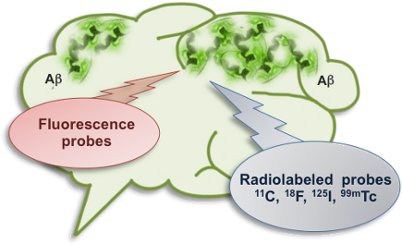
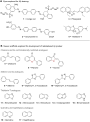
- ]. Benzofurans Replacement of the nitrogen of the benzoxazole backbone with carbon affords the benzofuran backbone of compounds 121–126 (Figure 4), which has also been successfully employed for radioimaging of Aβ plaques. The [11C]-labeled benzofuran 121 was prepared via Wittig reaction between the
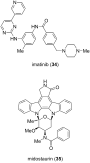
- group in place of the N,N-dimethylaminopyridine group, was prepared using a Wittig reaction between the triphenylphosphonium salt of 2-hydroxy-5-methoxybenzyl alcohol (127) and 4-dimethylaminobenzoyl chloride (35), followed by O-demethylation and installation of the [18F]-labeled linker (Scheme 9C










Direct alkenylation of indolin-2-ones by 6-aryl-4-methylthio-2H-pyran-2-one-3-carbonitriles: a novel approach
Beilstein J. Org. Chem. 2013, 9, 809–817, doi:10.3762/bjoc.9.92

- group as well as by Wittig reaction [23][24]. The growing importance of 3-alkenylindolin-2-ones has resulted in the design of numerous new synthetic routes. Recently, metal-catalyzed carbonylative annulation of alkynyl-arylamines has been employed for the synthesis of this class of compounds [25][26][27




Facile synthesis of benzothiadiazine 1,1-dioxides, a precursor of RSV inhibitors, by tandem amidation/intramolecular aza-Wittig reaction
Beilstein J. Org. Chem. 2013, 9, 503–509, doi:10.3762/bjoc.9.54

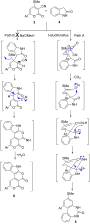
- -dioxides through an intramolecular aza-Wittig reaction. The reaction was found to be general through the synthesis of a number of benzothiadiazine 1,1-dioxides. Acid-catalyzed hydrolysis of 3-ethoxy-1,2,4-benzothiadiazine 1,1-dioxides furnished the 2-substituted benzothiadiazine-3-one 1,1-dioxides in good
- yields and high purity, which is the core moiety of RSV inhibitors. Keywords: benzothiadiazine-3-one 1,1-dioxide; 3-ethoxy-1,2,4-benzothiadiazine 1,1-dioxide; intramolecular aza-Wittig reaction; sultam; Introduction Sultams have gained popularity in the scientific community especially among synthetic
- derivatives have been reported [25][26][27][28][29][30][31][32], the development of a simpler method for the synthesis of the 1,2,4-benzothiadiazine 1,1-dioxide moiety is still desirable because of their biological significance. The aza-Wittig reaction is employed for the construction of C=N, N=N and S=N


A new synthetic protocol for coumarin amino acid
Beilstein J. Org. Chem. 2013, 9, 254–259, doi:10.3762/bjoc.9.30
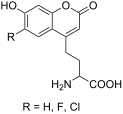
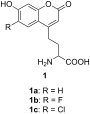
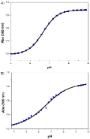
- will further improve the fluorescent property of the coumarin amino acids, or add new chemical handles to the coumarin ring for some specific investigations. The Horner–Wadsworth–Emmons reaction was applied to install the terminal alkene at the 4-position. Compared with the Wittig reaction, the Horner
- –Wadsworth–Emmons reaction has a significant advantage: The resulting phosphate byproduct can be readily separated, whereas the byproduct triphenylphosphine oxide generated in the Wittig reaction is difficult to remove [17]. The effect of the base used in the Horner–Wadsworth–Emmons reaction on the reaction



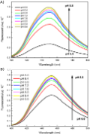
Alkenes from β-lithiooxyphosphonium ylides generated by trapping α-lithiated terminal epoxides with triphenylphosphine
Beilstein J. Org. Chem. 2012, 8, 1896–1900, doi:10.3762/bjoc.8.219

- with high regio- and stereocontrol (Scheme 1) [1][2][3][4][5][6][7][8][9]. These ylide intermediates can be generated by initiating a Wittig reaction between an aldehyde 1 and a phosphorane 2 at low temperature in the presence of lithium salts, which promote ring opening of the initially formed


A Wittig-olefination–Claisen-rearrangement approach to the 3-methylquinoline-4-carbaldehyde synthesis
Beilstein J. Org. Chem. 2012, 8, 1725–1729, doi:10.3762/bjoc.8.197

- important 3-methylquinoline-4-carbaldehydes 6a–h from o-nitrobenzaldehydes 1a–h employing a Wittig-olefination–Claisen-rearrangement protocol. The Wittig reaction of o-nitrobenzaldehydes with crotyloxymethylene triphenylphosphorane afforded crotyl vinyl ethers 2a–h, which on heating under reflux in xylene
- % yield. General procedure for the Claisen rearrangement The crotyl vinyl ethers 2a–h (17 mmol) obtained from the Wittig reaction were dissolved in anhydrous xylene (35 mL) and the solution was heated under reflux for 5–7 h (TLC, ethyl acetate/petroleum ether 1:9). Then, the solvent was removed under


Cyclization of ortho-hydroxycinnamates to coumarins under mild conditions: A nucleophilic organocatalysis approach
Beilstein J. Org. Chem. 2012, 8, 1630–1636, doi:10.3762/bjoc.8.186
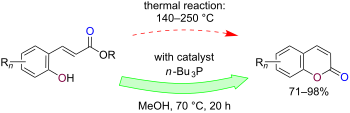
- use of tri-n-butylphosphane (20 mol %) as a nucleophilic organocatalyst in MeOH solution allows cyclization to take place under much milder conditions (60–70 °C). Several coumarins were prepared, starting from ortho-hydroxyarylaldehydes, by Wittig reaction with Ph3P=CHCO2Me to (E)-methyl ortho


Parallel and four-step synthesis of natural-product-inspired scaffolds through modular assembly and divergent cyclization
Beilstein J. Org. Chem. 2012, 8, 930–940, doi:10.3762/bjoc.8.105
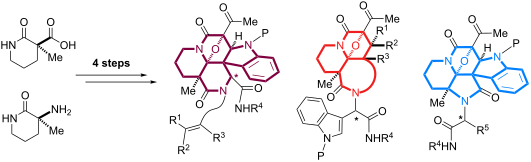
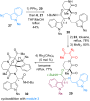
- and 4 (Scheme 2), as reported previously [22]. Due to the instability of the corresponding amine building block bearing the indole unit, azide 27 was employed as a precursor. Staudinger/aza-Wittig reaction [43] of 27 and 20 and subsequent condensation with 6 and 21 afforded the peptidyl product 28


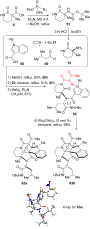
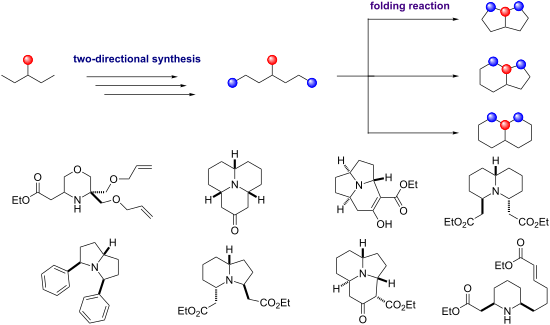
Two-directional synthesis as a tool for diversity-oriented synthesis: Synthesis of alkaloid scaffolds
Beilstein J. Org. Chem. 2012, 8, 850–860, doi:10.3762/bjoc.8.95
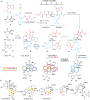
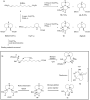
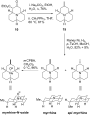
- EtOH and H2O under reflux to achieve ester saponification, which was followed by decarboxylation, proceeding smoothly to give the corresponding ketone in 76% yield. The ketone was then transformed to the exocyclic alkene 15 in 61% yield by Wittig reaction with the appropriate phosphonium salt. The




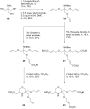
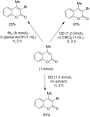
Dioxane dibromide mediated bromination of substituted coumarins under solvent-free conditions
Beilstein J. Org. Chem. 2012, 8, 323–329, doi:10.3762/bjoc.8.35

- [8], Et4N+Br− in the presence of hypervalent iodine reagents [9], and NBS in tetrabutylammonium bromide under molten salt conditions [10]. There is a recent report of the preparation of 3-bromocoumarins from acyclic precursors through bromination of a Wittig reagent with NBS followed by tandem Wittig
- reaction and cyclization [11]. Many of them involve high temperature, long reaction time, toxic, exotic and costly reagents, sometimes in excess to stoichiometric requirement, and organic solvents during and after the reactions. Thus, there is always an urgency to put ardent efforts towards the development




Synthesis of fused tricyclic amines unsubstituted at the ring-junction positions by a cascade condensation, cyclization, cycloaddition then decarbonylation strategy
Beilstein J. Org. Chem. 2012, 8, 107–111, doi:10.3762/bjoc.8.11
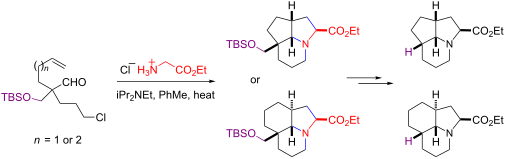
- chemistry for the construction of the core ring system found in alkaloid natural products. Wittig reaction with aldehyde 16 should be possible to provide the core ring system found in the alkaloids meloscine and scandine [26][27][28][29][30]. However, we chose to investigate a shorter reaction sequence
- without the need for protecting groups and to carry out the Wittig reaction at an earlier stage, as shown in Scheme 6. Olefination of aldehyde 6 with the anion formed from methyltriphenylphosphonium bromide gave alkene 17, which was reduced with DIBAL-H to give aldehyde 18. Heating this aldehyde with


Photochemical and thermal intramolecular 1,3-dipolar cycloaddition reactions of new o-stilbene-methylene-3-sydnones and their synthesis
Beilstein J. Org. Chem. 2011, 7, 1663–1670, doi:10.3762/bjoc.7.196
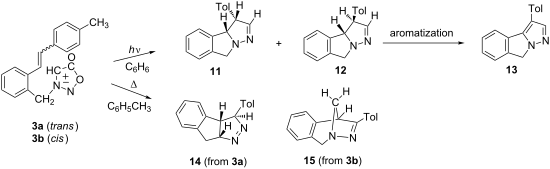
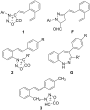
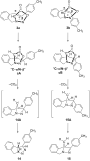
- -cyanotoluene (see Supporting Information File 1 for full experimental data). Bromination of o-cyanotoluene afforded 2-(bromomethyl)benzonitrile (4) [24], which was transformed to triphenylphosphonium salt 5 [25] followed by Wittig reaction with 4-methylbenzaldehyde to 2-(4-methylstyryl)benzonitrile (6a,b) [26




The application of a monolithic triphenylphosphine reagent for conducting Appel reactions in flow microreactors
Beilstein J. Org. Chem. 2011, 7, 1648–1655, doi:10.3762/bjoc.7.194
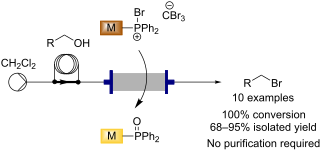
- interest in using monolithic supports to facilitate key chemical transformations [20][21][22][23][24][25][26][27][28][29][30][31]. We recently reported on the development of a new monolithic triphenylphosphine reagent and its use in the Staudinger aza-Wittig reaction in flow [32][33]. Here we discuss the


A new phenylethyl alkyl amide from the Ambrostoma quadriimpressum Motschulsky
Beilstein J. Org. Chem. 2011, 7, 1342–1346, doi:10.3762/bjoc.7.158

- according to the synthetic plan shown in Scheme 5. Oxidation of the alcohol 12 with PCC afforded the corresponding aldehyde 16, followed by a Wittig reaction with salt 15 in the presence of two equiv LDA, which afforded the adduct 17 as an (E/Z)-mixture in 72% yield. The E/Z isomers of 17 were not separated


Toward an integrated route to the vernonia allenes and related sesquiterpenoids
Beilstein J. Org. Chem. 2011, 7, 937–943, doi:10.3762/bjoc.7.104
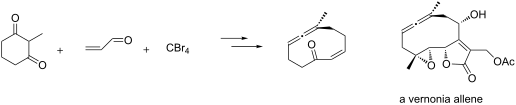
- the direct formation of 21 via bromomethyltriphenylphosphonium bromide (Scheme 4). This reaction was inefficient and gave both the (E)- and (Z)-bromoolefins as well as dibromoolefin 20. Bromo group scrambling under basic Wittig reaction conditions is known [63], and the usual procedure for Wittig


Construction of cyclic enones via gold-catalyzed oxygen transfer reactions
Beilstein J. Org. Chem. 2011, 7, 606–614, doi:10.3762/bjoc.7.71
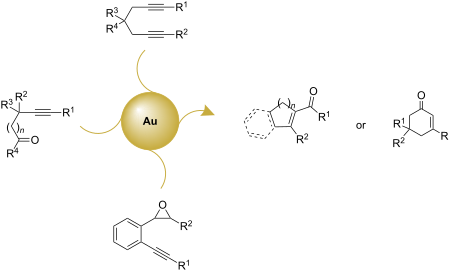
- oxygen transfer from a carbonyl group to a carbon–carbon triple bond, the so-called alkyne–carbonyl metathesis. This methodology has sparked the attention of the synthetic community, because it could serve as an efficient and atom-economic alternative to the Wittig reaction by the formation of a new




Application of the diastereoselective photodeconjugation of α,β-unsaturated esters to the synthesis of gymnastatin H
Beilstein J. Org. Chem. 2011, 7, 151–155, doi:10.3762/bjoc.7.21
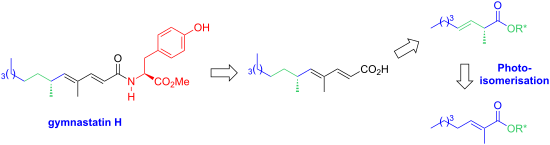
- configuration of the C-6 centre of the target molecule was controlled. Keywords: amide; diastereoselective protonation; dienol; isomerisation; Wittig reaction; Introduction The photodeconjugation of α,β-unsaturated esters 1 – which bear at least one hydrogen atom on γ-position – allows a straightforward


Enantioselective synthesis of tricyclic amino acid derivatives based on a rigid 4-azatricyclo[5.2.1.02,6]decane skeleton
Beilstein J. Org. Chem. 2009, 5, No. 81, doi:10.3762/bjoc.5.81

- oxidation of the alkene rac-13 (Scheme 3), which was available from the ketone rac-9 either by Wittig reaction or by a Tebbe-type olefination [31] using Mg, TiCl4, and CH2Cl2. Hydroboration/oxidation of rac-13 occurred highly diastereoselectively on the exo-side providing the desired endo-alcohol rac-14, as
- , and thus proximity-facilitated tandem hydride transfer/cyclization sequence [33]. Since the yields of rac-15 from the alkene rac-13 were low, we turned our attention to an alternative approach via the enol ether 18, which was available from 9 as a 1:1 mixture of E/Z-isomers by Wittig reaction with




Ring strain and total syntheses of modified macrocycles of the isoplagiochin type
Beilstein J. Org. Chem. 2009, 5, No. 71, doi:10.3762/bjoc.5.71
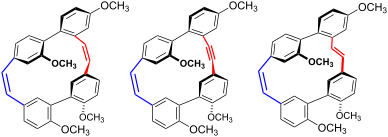
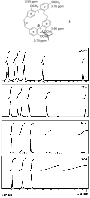
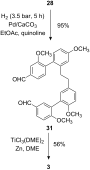
- boronic acid 22 with the bromoarene 16 under carefully optimized conditions followed by acidic workup afforded the hydroxyaldehyde 27 as precursor for cyclization (Scheme 6). A cyclization protocol for the intramolecular Wittig reaction, well established [15][20] for the synthesis of the tetramethyl ether




Green oxidations: Titanium dioxide induced tandem oxidation coupling reactions
Beilstein J. Org. Chem. 2009, 5, No. 24, doi:10.3762/bjoc.5.24

- to extend the methodology, a preliminary investigation into a titanium dioxide mediated tandem Wittig reaction was attempted in which the intermediate aldehyde is trapped by a stabilised phosphorane. Unfortunately, NMR spectroscopic analysis revealed a multitude of peaks, none of which were


An expedient synthesis of 5-n-alkylresorcinols and novel 5-n-alkylresorcinol haptens
Beilstein J. Org. Chem. 2009, 5, No. 22, doi:10.3762/bjoc.5.22

- Helsinki, Finland 10.3762/bjoc.5.22 Abstract The first synthesis of bioactive long alkyl chain 5-n-alkylresorcinols, present in whole grain products, by a novel modification of the Wittig reaction is described. All the main long chain 5-n-alkylresorcinols present in rye and wheat, including C23 and C25
- way for the immunochemical detection techniques of alkylresorcinols. Keywords: 5-n-alkylresorcinols; haptens; microwave assisted synthesis; Wittig reaction; Introduction 5-Alk(en)ylresorcinols and related compounds are phenolic lipids present in several families of plants (e.g. Gramineae
- reduced AR, the lack of stereochemical control was of no consequence. Following the Wittig reaction, catalytic hydrogenation and demethylation gave AR and AR haptens in ca. 40% overall yield. The Wittig product 7b was a practical starting material for the C23 hapten (2d), for which commercial alkanal or





