


Search results
Search for "acid catalyst" in Full Text gives 138 result(s) in Beilstein Journal of Organic Chemistry.
The hydrolysis of geminal ethers: a kinetic appraisal of orthoesters and ketals
Beilstein J. Org. Chem. 2016, 12, 1467–1475, doi:10.3762/bjoc.12.143
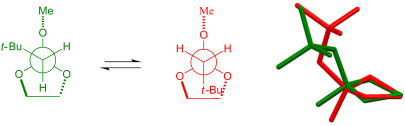
- catalyst concentration, i.e., kobs = kH+ [H+]. Nevertheless, we have used the same acid catalyst concentration ([H+] = 2 × 10⁻⁴ M) as previous workers [18] except in the case of particularly slow reactions where [H+] was increased to 5 × 10⁻⁴ M to ensure completion within a reasonable time. Acyclic
- . Adjustments to the acid catalyst concentration were made on an iterative basis in order to ensure the kinetic runs were complete within reasonable time-scales. Freshly distilled 2 (33 µL, 0.3 mmol) and 6 (38 µL, 0.3 mmol) were added to anhydrous CD3CN (1200 µL), and the resulting solution was divided equally


Cupreines and cupreidines: an established class of bifunctional cinchona organocatalysts
Beilstein J. Org. Chem. 2016, 12, 429–443, doi:10.3762/bjoc.12.46
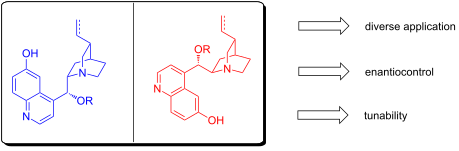
- the flexible cinchona framework, which has a knock-on effect on the catalytic outcome. Interestingly, the chiral nature of the binol phosphoric acid catalyst (S)-49 in the anti-selective process was not thought to be hugely influential upon the stereochemical outcome. Indeed replacing it with diphenyl


Self and directed assembly: people and molecules
Beilstein J. Org. Chem. 2016, 12, 391–405, doi:10.3762/bjoc.12.42
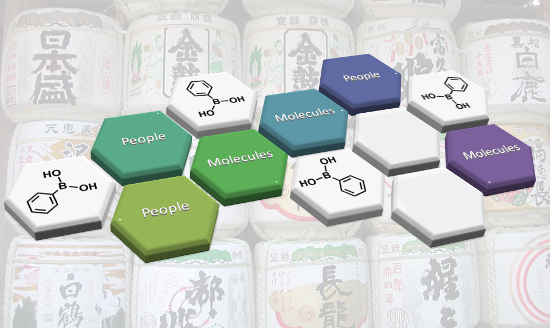
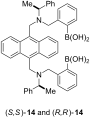
- using boron as a chiral catalyst was a good idea. We quickly came up with a research plan over a beer or two (Figure 13). Then on our return to the UK we quickly put these ideas into practice with the investigation of a “chiral boron reagent” formed between binol and trimethoxy borate for the Lewis acid
- catalyst of diastereoselective aza-Diels–Alder reactions [68] (Figure 14). While, the structure of the “chiral boron reagent” still remains unknown during our investigation of analogues we discovered a very interesting three-component self-assembly. Chiral binol, a chiral amine and 2-formylbenzeneboronic






Latent ruthenium–indenylidene catalysts bearing a N-heterocyclic carbene and a bidentate picolinate ligand
Beilstein J. Org. Chem. 2015, 11, 1541–1546, doi:10.3762/bjoc.11.169
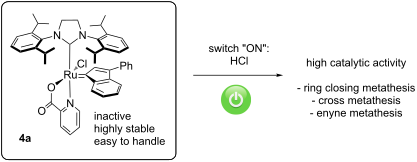
- /catalyst ratios were investigated, and 150 equiv of TFA afforded the best catalytic performance in terms of initiation rate and conversion. In fact, both a decrease (100 equiv) and an increase (200 equiv) of this acid/catalyst ratio led to a significant deterioration of the kinetic profile. Subsequently
- handle and to operate (Figure 2). Consistent with its stability in solution, the latent catalyst 4a appeared totally inactive at room temperature (<1% conversion after 24 h at 297 K), while catalytic activity was observed in the RCM of diethyl diallylmalonate (DEDAM) after addition of TFA. Several acid


The synthesis of active pharmaceutical ingredients (APIs) using continuous flow chemistry
Beilstein J. Org. Chem. 2015, 11, 1194–1219, doi:10.3762/bjoc.11.134
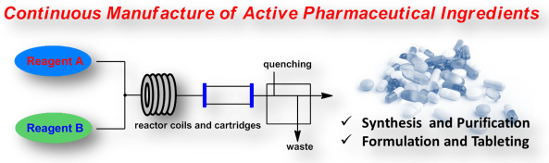
- order to avoid downstream incompatibilities. The initial step was a Friedel–Crafts acylation of isobutylbenzene (10) with propionic acid (11) in the presence of excess triflic acid (12). The transformation was found to work very effectively and the acid catalyst was also tolerated in the subsequent 1,2


Properties of PTFE tape as a semipermeable membrane in fluorous reactions
Beilstein J. Org. Chem. 2015, 11, 980–993, doi:10.3762/bjoc.11.110

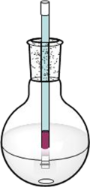
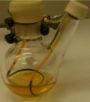
- hypothesis, we carried out a reaction of bromine with benzene. In the absence of a catalyst there is only a very slow reaction. However, in the presence of a Lewis acid catalyst there is a fast bromination reaction. Since iron reacts with bromine to produce iron(III) bromide, a stirring bar may conceivably




![[Graphic 1]](/bjoc/content/inline/1860-5397-11-110-i3.png?max-width=637&scale=1.18182) ), in the presence of a n...
), in the presence of a n...
The unexpected influence of aryl substituents in N-aryl-3-oxobutanamides on the behavior of their multicomponent reactions with 5-amino-3-methylisoxazole and salicylaldehyde
Beilstein J. Org. Chem. 2014, 10, 3019–3030, doi:10.3762/bjoc.10.320
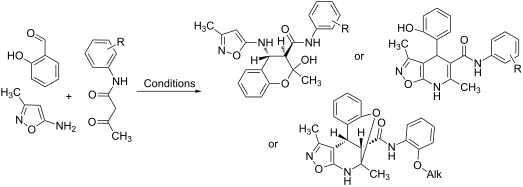
- of 8 and 3a under ultrasonication at room temperature gave the corresponding final product essentially after the same reaction time. The Lewis acid catalyst activates the carbonyl group in salicylaldehyde (2), which is subsequently able to interact with the 4-CH nucleophilic center of the


Regio- and stereoselective synthesis of new diaminocyclopentanols
Beilstein J. Org. Chem. 2014, 10, 2513–2520, doi:10.3762/bjoc.10.262

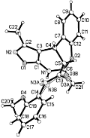
- aminolysis of epoxides 6a,b afforded mainly C1 adducts 13a,b arising from trans-diaxal opening of the epoxide ring. Using a Lewis acid catalyst, epoxides 6a,b were transformed into diaminocyclopentanols 14a,b via an alternative pathway involving the formation of aziridinium intermediate 17. Keywords


Facile synthesis of 1H-imidazo[1,2-b]pyrazoles via a sequential one-pot synthetic approach
Beilstein J. Org. Chem. 2014, 10, 2338–2344, doi:10.3762/bjoc.10.243
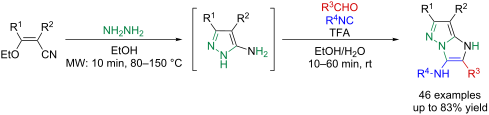
- of either a Brønsted or a Lewis acid catalyst (Table 1, entry 1). However, the use of Lewis acids, such as indium(III) salts or TMSCl, improved the reaction rate, with yields up to 67% (Table 1, entries 2–4). The GBB-3CR catalysed by Brønsted acids, including PTSA or HClO4, led to similar yields as


Solution phase synthesis of short oligoribonucleotides on a precipitative tetrapodal support
Beilstein J. Org. Chem. 2014, 10, 2279–2285, doi:10.3762/bjoc.10.237
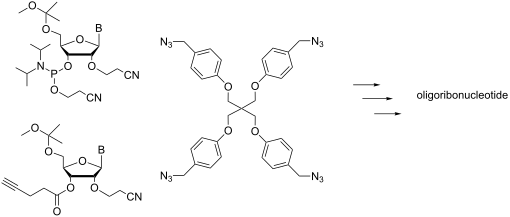
- precipitate obtained was dissolved in a 5:2 mixture of DCM and MeOH (35 mL) and 5 mL of a 0.125 mol L−1 HCl in MeOH solution were added. After 15 min, pyridine was added to neutralize the acid catalyst. The solution was concentrated to oil and cold MeOH (50 mL) was added. The white precipitate obtained


Expedient synthesis of 1,6-anhydro-α-D-galactofuranose, a useful intermediate for glycobiological tools
Beilstein J. Org. Chem. 2014, 10, 1651–1656, doi:10.3762/bjoc.10.172
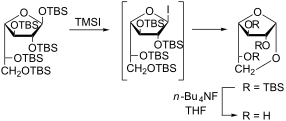
- pyranosic analogue 1. Compound 2 was thus obtained in very low yield. More recently, 2 was obtained in 32% yield by heating with a resin as an acid catalyst. Despite the greater smoothness of the method, byproducts were also formed, rendering the purification difficult [14]. Compound 2 obtained by these


Atherton–Todd reaction: mechanism, scope and applications
Beilstein J. Org. Chem. 2014, 10, 1166–1196, doi:10.3762/bjoc.10.117

- reaction of methanol on the chlorophosphate intermediate. Because the AT reaction is not efficient to produce alkylphosphate from alkylalcohol, an alternative is the usage of chlorophosphate in the presence of a Lewis acid catalyst. For this purpose, Ti(t-BuO)4 was identified as an effective catalyst [52




Continuous flow nitration in miniaturized devices
Beilstein J. Org. Chem. 2014, 10, 405–424, doi:10.3762/bjoc.10.38
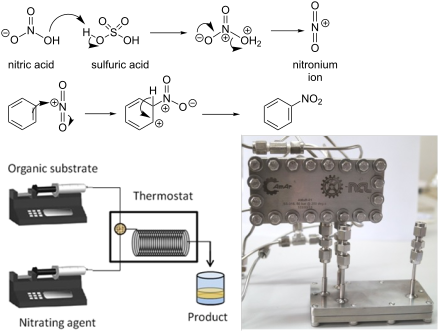
- mechanism for the electrophilic nitration involves the sequence of reactions depicted below [12]: In the first step, the presence of a strong acid catalyst HA protonates HNO3 thereby releasing the reactive species NO2+ and water in the second step. Both of these steps are rapid and reversible. The third
- be overlooked without focusing entirely on using the “micro reactor” concept. 3.1.4 Nitration with solid acid catalysts. The continuous flow vapour phase nitration using a solid acid catalyst has also been explored [26]. It is known that the solid acid catalysts, i.e., ZSM and other zeolite catalysts
- microreactor, concentrated nitric acid reacted very rapidly in the absence of any sulfuric acid or a solid acid catalyst. Nitric acid and toluene were brought into contact by using a SS316L T-mixer (1.58 mm inner diameter) at room temperature. The immiscible reactants were passed through a tubular microreactor


Boron-substituted 1,3-dienes and heterodienes as key elements in multicomponent processes
Beilstein J. Org. Chem. 2014, 10, 237–250, doi:10.3762/bjoc.10.19

- solvent [31]. The use of a stoichiometric amount of EtAlCl2 as Lewis acid catalyst allowed a lowering of the reaction temperature, a shortening of the reaction time and good stereocontrol (Scheme 2) [32]. Alternatively, the simple heating of a mixture of a 1-bora-1,3-diene, a dienophile and an aldehyde
- 1,3-diene in a tandem cycloaddition [4 + 2]/allylboration sequence. Lewis acid catalyst in the tandem cycloaddition [4 + 2]/allylboration sequence. Synthesis of an advanced precursor of clerodin. Intramolecular Diels–Alder/allylboration sequence. Diastereoselective Diels–Alder reaction with N


Recent advances in transition metal-catalyzed Csp2-monofluoro-, difluoro-, perfluoromethylation and trifluoromethylthiolation
Beilstein J. Org. Chem. 2013, 9, 2476–2536, doi:10.3762/bjoc.9.287
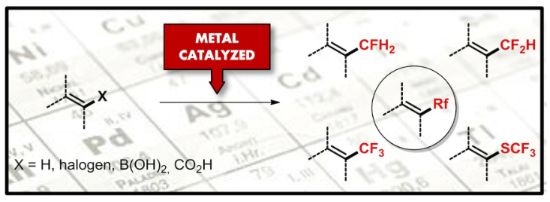
- introduction of a CF3 moiety [61]. Togni’s reagent was used as the electrophilic source of CF3 and reacted with 4 equivalents of the (E)-vinylcarboxylic acid in the presence of a Lewis acid catalyst (CuF2·2H2O). Moderate to good yields were obtained for the transformation, but a slight erosion of the


Silica sulfuric acid: a reusable solid catalyst for one pot synthesis of densely substituted pyrrole-fused isocoumarins under solvent-free conditions
Beilstein J. Org. Chem. 2013, 9, 2344–2353, doi:10.3762/bjoc.9.269
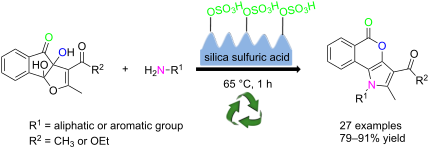
- ] and in syntheses of heterocycles [35]. Since we are actively involved in the synthesis of biologically important heterocycles [36][37][38][39][40][41][42], we wish to report herein a green methodology for the construction of pyrrole-fused isocoumarins, which uses SSA as a solid-supported acid catalyst
- temperature was lower and the yields of the products were higher, the yields were still only moderate. This encouraged us to execute the optimization study in presence of a solid acid catalyst under solvent-free conditions. This is one important facet of green chemistry: the eradication of solvents in
- reaction mixture to 100 °C (Table 1, entries 9 and 10). Unfortunately, the reactions on silica gel and MSA failed to give the desired product 8a. In the search of a suitable solid acid catalyst we employed silica sulfuric acid (SSA) at 100 °C. However, the reaction mixture got charred after 0.5 h and a


Synthesis and characterization of novel bioactive 1,2,4-oxadiazole natural product analogs bearing the N-phenylmaleimide and N-phenylsuccinimide moieties
Beilstein J. Org. Chem. 2013, 9, 2202–2215, doi:10.3762/bjoc.9.259
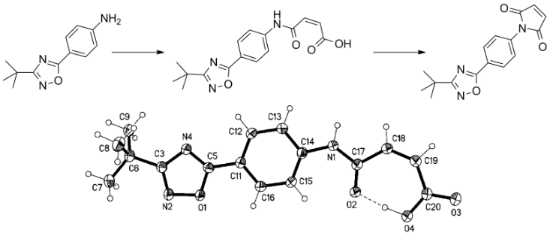
- as a yellow solid. b. To a mixture of 0.116 g (1 mmol) of tert-butylamidoxime in 5 mL of solvent (acetonitrile or DMF) under an inert atmosphere was added 0.15 g (1 mmol) of 4-nitrobenzonitrile. To this reaction mixture was added 0.3 mmol of acid catalyst 1 (57.0 mg PTSA, 70.8 mg MSA or 28.8 mg MeSA



One-step synthesis of pyridines and dihydropyridines in a continuous flow microwave reactor
Beilstein J. Org. Chem. 2013, 9, 1957–1968, doi:10.3762/bjoc.9.232
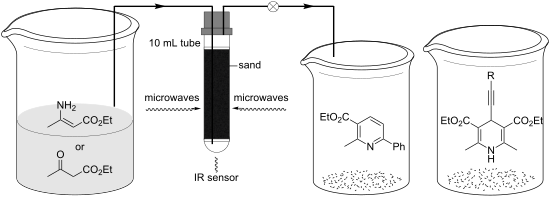
- material. In the Bohlmann–Rahtz reaction, the use of a Brønsted acid catalyst allows Michael addition and cyclodehydration to be carried out in a single step without isolation of intermediates to give the corresponding trisubstituted pyridine as a single regioisomer in good yield. Furthermore, 3
- continuous flow reactor examined the cyclodehydration of Bohlmann–Rahtz aminodienone intermediates in the presence of a Brønsted acid catalyst [44][45]. This relatively simple cyclization reaction was utilized previously as we had already established its facility under microwave irradiation and so it
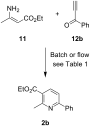
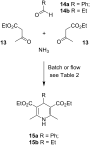
- = Ph) [51], in the presence of acetic acid as a Brønsted acid catalyst for transfer to flow processing. A range of conditions were investigated (Table 1) and, in each case, 1H NMR spectroscopic analysis of the crude reaction mixture revealed if unreacted starting materials were present. Microwave




Gold(I)-catalysed one-pot synthesis of chromans using allylic alcohols and phenols
Beilstein J. Org. Chem. 2013, 9, 1797–1806, doi:10.3762/bjoc.9.209
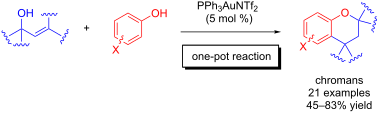
- , entries 8–10). Firstly, no reaction is observed in the absence of a catalyst (Table 1, entry 8). The Brønsted acid catalyst HNTf2 does form chroman 8, but in a poorer isolated yield (21%, Table 1, entry 9) and the silver salt [76] AgNTf2 as a catalyst does not provide any 8, yielding only 9 and 10 (Table


Gallium-containing polymer brush film as efficient supported Lewis acid catalyst in a glass microreactor
Beilstein J. Org. Chem. 2013, 9, 1698–1704, doi:10.3762/bjoc.9.194
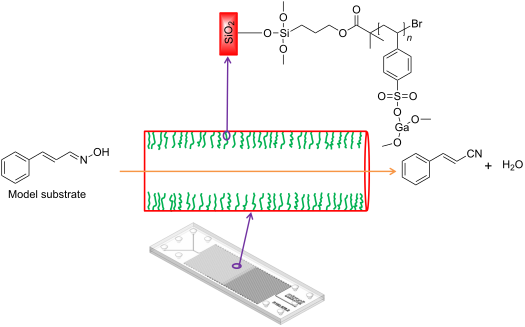
- Polystyrene sulfonate polymer brushes, grown on the interior of the microchannels in a microreactor, have been used for the anchoring of gallium as a Lewis acid catalyst. Initially, gallium-containing polymer brushes were grown on a flat silicon oxide surface and were characterized by FTIR, ellipsometry, and
- walls using polymer brushes. As a part of this program, herein, we report the anchoring of gallium as a Lewis acid catalyst making use of polystyrene sulfonate (PSS) polymer brushes. The choice for gallium was inspired by the successful application of solid supported gallium triflate to catalyze the
- the best of our knowledge, we described the first example of the application of polystyrene sulfonate-based polymer brushes to anchor gallium as a Lewis acid catalyst onto the microchannel interior of a microreactor and proved its catalytic activity for the dehydration of oximes to the corresponding


An aniline dication-like transition state in the Bamberger rearrangement
Beilstein J. Org. Chem. 2013, 9, 1073–1082, doi:10.3762/bjoc.9.119
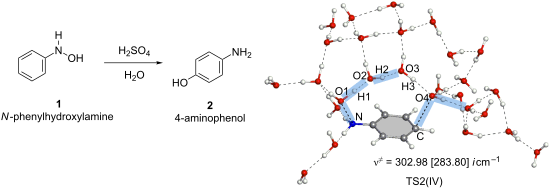
- water from Ar–N+H2OH is rate determining and a diprotonated species, Ar–N+H2OH2+, contributes significantly to the observed reaction rate at the acid-catalyst concentration [H2SO4] > 0.50 mol/L. The activation energy of the rearrangement in Scheme 1 was measured to be 24.8 kcal/mol. The SN1 mechanism


Synthesis of meso-substituted dihydro-1,3-oxazinoporphyrins
Beilstein J. Org. Chem. 2013, 9, 496–502, doi:10.3762/bjoc.9.53

- -triphenylporphyrin using SnCl2 under acidic conditions [41][42]. Firstly, meso-(4-aminophenyl)porphyrin 1 was reacted with salicylaldehyde or 5-chlorosalicylaldehyde in the presence of La(OTf)3 as a Lewis acid catalyst in toluene under reflux to afford the corresponding iminoporphyrins 2 and 3, which on reduction by


The Amadori rearrangement as glycoconjugation method: Synthesis of non-natural C-glycosyl type glycoconjugates
Beilstein J. Org. Chem. 2012, 8, 1619–1629, doi:10.3762/bjoc.8.185

- 1 and a suitable amine under acid catalysis (Scheme 1). The reaction is known to be very sensitive to the nature of the carbohydrate substrate, the acid catalyst, and the amino component, as well as to the temperature and duration. Additionally, some challenges accompany the reaction limiting its


Discovery of practical production processes for arylsulfur pentafluorides and their higher homologues, bis- and tris(sulfur pentafluorides): Beginning of a new era of “super-trifluoromethyl” arene chemistry and its industry
Beilstein J. Org. Chem. 2012, 8, 461–471, doi:10.3762/bjoc.8.53

- to be thermal isomerization of trans-2a to cis-2a with an acid catalyst, suggesting that the cis-isomer is more thermodynamically stable than the trans-isomer. With ZnF2/SbCl5 the cis-isomer was barely detected (run 11, Table 3). The ratio of trans-2a:cis-2a:PhSF5 was 385:0:100 after 10 min; 63:trace


Efficient, highly diastereoselective MS 4 Å-promoted one-pot, three-component synthesis of 2,6-disubstituted-4-tosyloxytetrahydropyrans via Prins cyclization
Beilstein J. Org. Chem. 2012, 8, 177–185, doi:10.3762/bjoc.8.19
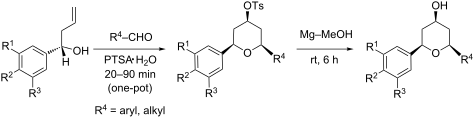
- -tosyloxytetrahydropyrans was performed. The synthesis features an optimized Prins cyclization in which an aromatic homoallylic alcohol, an aromatic/aliphatic aldehyde, and p-toluenesulfonic acid (catalyst and reagent) are reacted in the presence of molecular sieves (MS) 4 Å at reflux in dichloromethane to afford excellent
- and unsymmetrical tetrahydropyrans can be synthesized. p-Toluenesulfonic acid (PTSA) is reported as a versatile Brønsted acid catalyst in various organic transformations [32][33][34]. Previously, PTSA has been used as a catalyst in Prins cyclizations but the product yields were low even under extended
- conclusion, we have reported a simple and efficient one-pot three-component synthesis of highly diastereoselective and functionalized 2,6-disubstituted-4-tosyloxytetrahydropyrans via Prins cyclization. An aromatic homoallylic alcohol, an aromatic/aliphatic aldehyde, and p-toluenesulfonic acid (catalyst and





