Search results
Search for "chemical structures" in Full Text gives 262 result(s) in Beilstein Journal of Organic Chemistry. Showing first 200.
Selective recognition of ATP by multivalent nano-assemblies of bisimidazolium amphiphiles through “turn-on” fluorescence response
Beilstein J. Org. Chem. 2020, 16, 2728–2738, doi:10.3762/bjoc.16.223
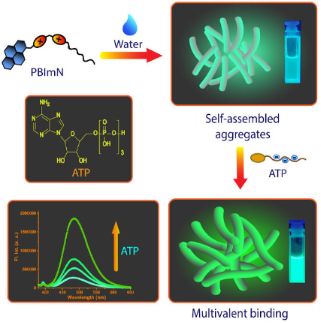
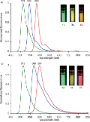
- FESEM instrument. Morphologies of ATP-added PBImNs samples were recorded after addition of ATP to the PBImNs solutions followed by drying the drop casted solutions of ATP-added PBImNs on glass cover slips in a similar way. Chemical structures of (a) PBImN (N = 4, 10, 12 and 14) and (b) ATP, ADP and AMP


Computational tools for drawing, building and displaying carbohydrates: a visual guide
Beilstein J. Org. Chem. 2020, 16, 2448–2468, doi:10.3762/bjoc.16.199
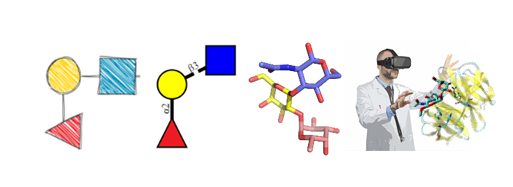
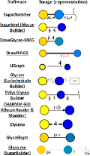
- CarbBank databases. Hence, KegDraw can be an option for the freely available tool for drawing and querying chemical structures. However, there are similar tools already available for glycan drawing with more advanced and acceptable notations. Glycan builders Sweet II. Sweet [58] is a web-based program for
- nomenclatures available to describe each monosaccharide, representing and encoding a glycan structure into a file is required for communication among scientists as well as for data processing. As a consequence, glycobiologists have proposed different graphical representations, with symbols or chemical
- structures replacing monosaccharides. The description of carbohydrate structures using standard symbolic nomenclature enables easy understanding and communication within the scientific community. Research groups working on carbohydrates have developed schematic depictions with symbols [3] and expansions with









Synthetic approaches to bowl-shaped π-conjugated sumanene and its congeners
Beilstein J. Org. Chem. 2020, 16, 2212–2259, doi:10.3762/bjoc.16.186
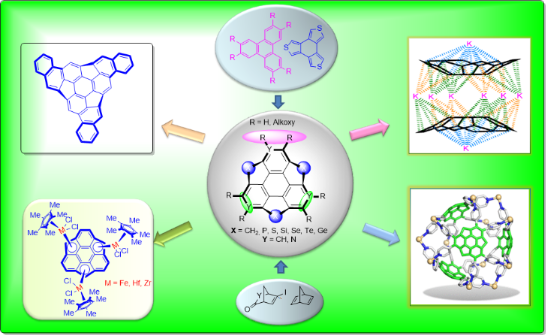
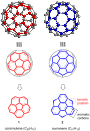
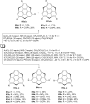
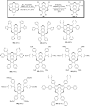
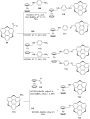
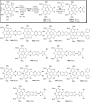
- article which covers almost all the unsuccessful as well as successful efforts towards the synthesis of sumanene and its congeners. The ball-and-stick representation, bowl fragments and the chemical structures of corannulene (1) and sumanene (2) are displayed in the Figure 1. 2 Synthesis of sumanene and











Synthesis of monophosphorylated lipid A precursors using 2-naphthylmethyl ether as a protecting group
Beilstein J. Org. Chem. 2020, 16, 1955–1962, doi:10.3762/bjoc.16.162

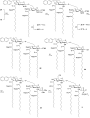
- the 4′-OH group. This work is currently underway in our lab. Chemical structures of hexa-acylated Escherichia coli lipid A, monophosphorylated lipid X (the reducing monosaccharide lipid A precursor), and disaccharide lipid A precursor (“disaccharide lipid X”). Enantioselective synthesis of Nap


Nonenzymatic synthesis of anomerically pure, mannosyl-based molecular probes for scramblase identification studies
Beilstein J. Org. Chem. 2020, 16, 1732–1739, doi:10.3762/bjoc.16.145
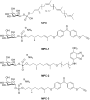
- , 74.06, 71.46, 71.38, 70.92, 67.64, 62.81, 62.76, 61.80, 56.17, 37.90, 37.83, 36.75, 29.30, 25.11, 19.68, 14.16; 31P NMR (121 MHz, DMSO-d6, δ) −2.86. Chemical structures of MPD and the three structural analogs MPC-1, MPC-2, and MPC-3. The molecular probes MPC-1 and MPC-3 are photoclickable derivatives
- , whereas the probe MPC-2 bears a fluorescent tag. Chemical structures of commercially available (S)-citronellol (Cit), 4,4′-dihydroxybenzophenone (BZP), ᴅ-mannose (Man), and 1,12-dodecanediol (Dod), the main starting materials in the synthesis of MPC-1 and MPC-2. The synthetic route leading to compounds



Synthesis of the tetrasaccharide repeating unit of the O-specific polysaccharide of Azospirillum doebereinerae type strain GSF71T using linear and one-pot iterative glycosylations
Beilstein J. Org. Chem. 2020, 16, 1700–1705, doi:10.3762/bjoc.16.141
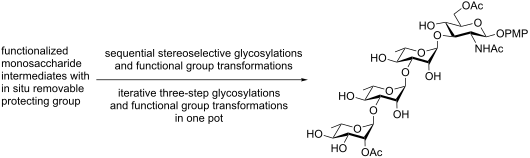
- strategies could provide access to large quantities of the oligosaccharides with defined chemical structures and free from biological impurities. Among the nineteen species of Azospirillum, Azospirillum doebereinerae was isolated from the rhizosphere of the biomass producing plant, Miscanthus giganteus [20


Models of necessity
Beilstein J. Org. Chem. 2020, 16, 1649–1661, doi:10.3762/bjoc.16.137

- chemists represent chemical structures as two-dimensional sketches made up of atoms and bonds, simplifying the complex three-dimensional molecules comprising nuclei and electrons of the quantum mechanical description, is the everyday language of chemistry. This language uses models, particularly of bonding
- , that are not contained in the quantum mechanical description of chemical systems, but has been used to derive machine-readable formats for storing and manipulating chemical structures in digital computers. This language is fuzzy and varies from chemist to chemist but has been astonishingly successful
- and perhaps contributes with its fuzziness to the success of chemistry. It is this creative imagination of chemical structures that has been fundamental to the cognition of chemistry and has allowed thought experiments to take place. Within the everyday language, the model nature of these concepts is


Activated carbon as catalyst support: precursors, preparation, modification and characterization
Beilstein J. Org. Chem. 2020, 16, 1188–1202, doi:10.3762/bjoc.16.104
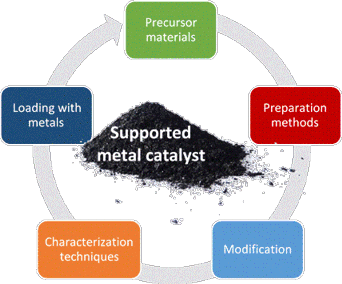
- ]. Fourier transmission infrared spectroscopy (FTIR): Activated carbon consists mainly of carbon atoms, besides different heteroatoms such as oxygen, hydrogen, nitrogen and sulfur. Thus, different functional groups govern the surface of the activated carbons and FTIR provides information on these chemical
- structures [65]. The spectra are usually recorded between 4000 cm−1 and 400 cm−1. The most characteristic bands of functional groups on the surface of the activated carbons are ≈3500, 1700, 1610, 1420 and 1140 cm−1 which indicate free or intermolecular bonded OH groups, carbonyl (C=O) stretching vibrations


Development of fluorinated benzils and bisbenzils as room-temperature phosphorescent molecules
Beilstein J. Org. Chem. 2020, 16, 1154–1162, doi:10.3762/bjoc.16.102
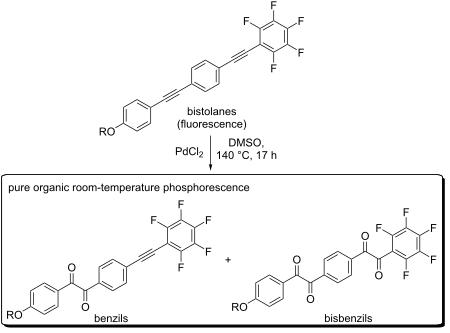
- assist the development of environmentally benign, pure organic phosphorescent materials. (A) Transition-metal-containing and (B) pure organic phosphorescent materials reported thus far (bpy: 2,2'-bipyridine, ppy: 2-phenylpyridine, OEP: octaethylporphyrin). (A) Chemical structures of fluorescent bistolane



Synthesis and properties of quinazoline-based versatile exciplex-forming compounds
Beilstein J. Org. Chem. 2020, 16, 1142–1153, doi:10.3762/bjoc.16.101
- an electron acceptor in donor–acceptor systems [14]. The target compounds were obtained by nucleophilic substitution reaction of the intermediate quinazoline derivative Q1 with the corresponding donor compounds. The chemical structures were characterized by 1H NMR, 13C NMR, ATRIR spectroscopy and
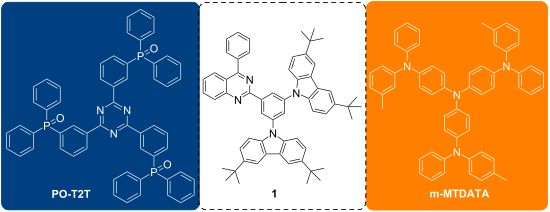
- thin films of compounds 1–3 (λexc = 350 nm and PL decay curves (b) of thin films of derivatives 1–3 recorded at different emission wavelengths. Electron and hole NTOs of compounds 1–3 in the S1 excited state (vacuum). Chemical structures of exciplex-forming materials used, and visualization of white


Aryl-substituted acridanes as hosts for TADF-based OLEDs
Beilstein J. Org. Chem. 2020, 16, 989–1000, doi:10.3762/bjoc.16.88
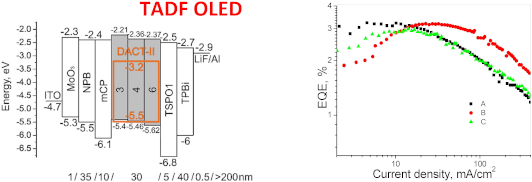
- presence of a palladium catalyst, with yields ranging from 27 to 50%. The chemical structures of 3–6 were confirmed by 1H and 13C NMR spectroscopy, elemental analysis and mass spectrometry. Transparent thin films of these compounds could be prepared by vacuum evaporation or by spin coating from solutions


Recent applications of porphyrins as photocatalysts in organic synthesis: batch and continuous flow approaches
Beilstein J. Org. Chem. 2020, 16, 917–955, doi:10.3762/bjoc.16.83
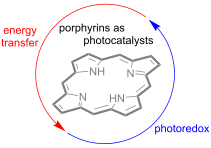
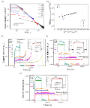
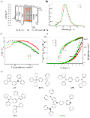
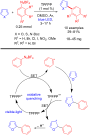
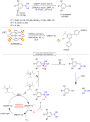
- electron and energy transfer. Chemical structures of the porphyrinoids and their absorption spectra: in bold are highlighted the 18 π aromatic system. Adapted from [7]. Photophysical and photochemical processes (Por = porphyrin). Adapted from [12][18]. Main dual photocatalysts and their oxidative/reductive






One-pot synthesis of dicyclopenta-fused peropyrene via a fourfold alkyne annulation
Beilstein J. Org. Chem. 2020, 16, 791–797, doi:10.3762/bjoc.16.72
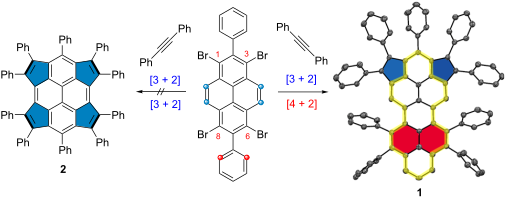
- solution (10−5 M). Inset: photograph of a CH2Cl2 solution of 1. (b) Cyclic voltammogram of 1 (0.1 M n-Bu4NPF6 in DCM) at a scan rate of 50 mV s−1. Molecular orbitals of peropyrene derivative 6 and the dicyclopenta-fused peropyrene 1. Chemical structures of dicyclopenta-fused pyrene derivatives i–iii


Design and synthesis of diazine-based panobinostat analogues for HDAC8 inhibition
Beilstein J. Org. Chem. 2020, 16, 628–637, doi:10.3762/bjoc.16.59
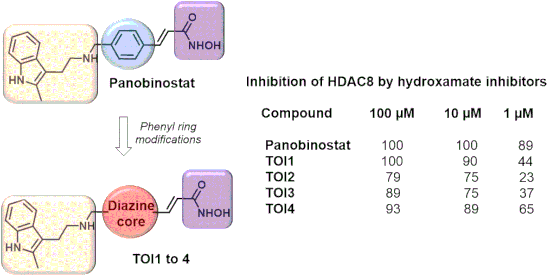
- considering conformers at pH 7 to simulate the physiological conditions where the pH is 7.4. Results were analyzed in both Sybyl-X and UCSF Chimera. Chemical structures of the target diazine-based surrogates for the central core of panobinostat. Docking pose for panobinostat and panobinostat derivatives in




Direct borylation of terrylene and quaterrylene
Beilstein J. Org. Chem. 2020, 16, 621–627, doi:10.3762/bjoc.16.58
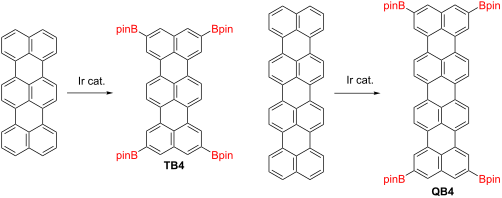
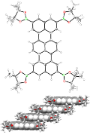
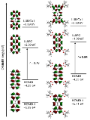
- ppm; HRMS (Spiral MALDI) m/z: [M]+ calcd for C66H56, 848.4377; found, 848.4377; UV–vis (toluene): λmax (ε [104 M−1 cm−1]) = 493 (1.8), 528 (4.9) and 572 (8.6) nm; fluorescence (toluene): λmax (λex = 489 nm) = 583, 629 and 682 nm. Chemical structures of a) oligorylene-bisimides, b) oligorylenes, c) bay






Opening up connectivity between documents, structures and bioactivity
Beilstein J. Org. Chem. 2020, 16, 596–606, doi:10.3762/bjoc.16.54
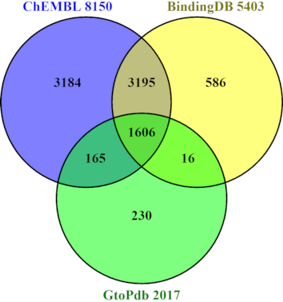
- . However, we will need to await the technical applicability in respect to DARCP capture to see if this opens up connectivity. Keywords: activity data; databases; drug discovery; chemical structures; protein targets; Introduction This article assesses a key aspect of data sharing that has the potential to
- . Connectivity: This term is used for an explicit link (e.g., a URL) between a published document and the chemical structures specified therein. Implicit is not only manual navigation (e.g., link-clicking) but also that such connectivity can be made machine-readable and thus computationally interrogated at large



Regioselectively α- and β-alkynylated BODIPY dyes via gold(I)-catalyzed direct C–H functionalization and their photophysical properties
Beilstein J. Org. Chem. 2020, 16, 587–595, doi:10.3762/bjoc.16.53
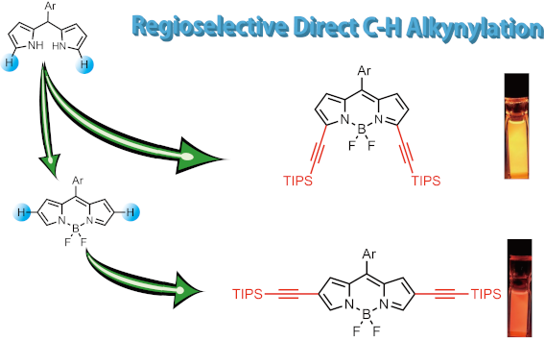
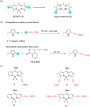
- novel functional fluorescent materials. (a) Chemical structures of BODIPY (1) and dipyrromethane (2). (b) C–C bond forming alkynylations of pyrrole and its derivatives by Sonogashira coupling and electrophilic alkynylation. (c) Peripheral alkynylated BODIPY derivatives (3–6) prepared in this work. TIPS



Two antibacterial and PPARα/γ-agonistic unsaturated keto fatty acids from a coral-associated actinomycete of the genus Micrococcus
Beilstein J. Org. Chem. 2020, 16, 297–304, doi:10.3762/bjoc.16.29
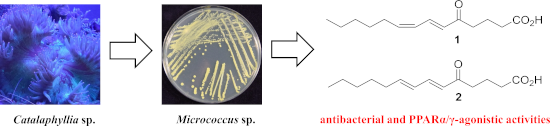
- ), were isolated from the culture broth of an actinomycete of the genus Micrococcus, which was associated with a stony coral, Catalaphyllia sp. Their chemical structures were elucidated by spectroscopic analysis including NMR and MS, with special assistance of spin system simulation studies for the


Synthesis and herbicidal activities of aryloxyacetic acid derivatives as HPPD inhibitors
Beilstein J. Org. Chem. 2020, 16, 233–247, doi:10.3762/bjoc.16.25
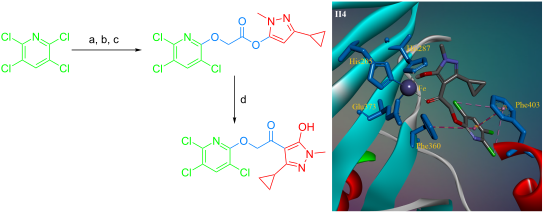
- Supporting Information File 1. The chemical structures of all title compounds were confirmed by 1H and 13C NMR spectroscopic analyses and HRMS spectrometric analyses. X-ray diffraction Single crystals of compounds I18 and III4 were cultivated for structure validation. Compound I18 was recrystallized from a
- experiments were conducted at the rate of 150 g ai/ha. After 15 days, the final results of crop safety were evaluated with two duplicates per experiment (Table 3). Chemical structures of the commercial HPPD inhibitors. The design strategy of aryloxyacetic acid derivatives as HPPD inhibitors and simulate the
- chloroacetate, K2CO3, CH3CN, 65 °C; (d) K2CO3, H2O, 65 °C; (e) aqueous HCl solution (10%), rt; (f) substituted 1,3-cyclohexanediones, EDCI, DMAP, DCM, rt; (g) substituted 1,3-dimethyl-1H-pyrazol-5-ol, EDCI, DMAP, DCM, rt; (h) Et3N, acetone cyanohydrin, DCM, rt. Chemical structures of title compound I and their




Potent hemithioindigo-based antimitotics photocontrol the microtubule cytoskeleton in cellulo
Beilstein J. Org. Chem. 2020, 16, 125–134, doi:10.3762/bjoc.16.14
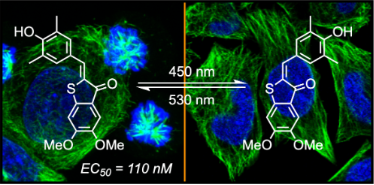
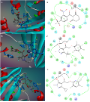
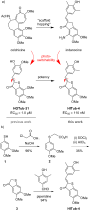
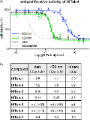
- , and high-yielding synthesis of HITub-4. Chemical structures of HITubs. Key variations with respect to HITub-4 are highlighted in dashed boxes. Photocharacterisation of HITub-4. a) Photochemical and thermal isomerisation. b) UV–vis spectra after saturating illumination at λ = 450, 505, and 530 nm





The interaction between cucurbit[8]uril and baicalein and the effect on baicalein properties
Beilstein J. Org. Chem. 2020, 16, 71–77, doi:10.3762/bjoc.16.9
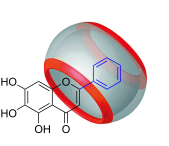
- shown that the release rates of the BALE–Q[8] complex is slower than that of BALE in artificial intestinal juice, but it is faster than BALE in artificial gastric juice. Our results provide a new approach and theoretical basis for the development and utilization of baicalein. Chemical structures of


Pigmentosins from Gibellula sp. as antibiofilm agents and a new glycosylated asperfuran from Cordyceps javanica
Beilstein J. Org. Chem. 2019, 15, 2968–2981, doi:10.3762/bjoc.15.293
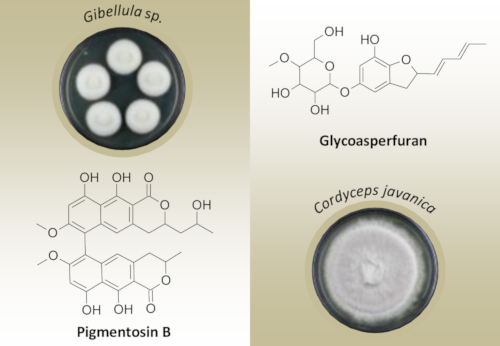
- isolation of three new compounds (2, 3, and 6), together with three known metabolites (1, 4, and 5), as well as species-specific patterns of secondary metabolite production in Gibellula sp. and C. javanica. Their chemical structures were elucidated based on the interpretation of their NMR and HRMS data
- were applied. Chemical structures of the isolated compounds 1–6. Experimental and TDDFT-calculated ECD spectra of compounds 1 (A), 2 (B), and 3 (C) in MeOH. A) Selected COSY (bold bonds) and HMBC (red arrows) correlations for compounds 2 and 3. B) Partial view of the Mosher ester of pigmentosin B (2
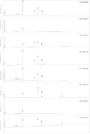
- ), showing the shielding effect of the phenyl group of MTPA on the methyl (C-13′), C-3′, and C-4′ positions of 2. The ΔδSR values are shown. Chemical structures of selected, literature-known compounds that are related to this study. HPLC–UV–vis profiles (200–600 nm) generated from the culture filtrate


Chemical synthesis of tripeptide thioesters for the biotechnological incorporation into the myxobacterial secondary metabolite argyrin via mutasynthesis
Beilstein J. Org. Chem. 2019, 15, 2922–2929, doi:10.3762/bjoc.15.286
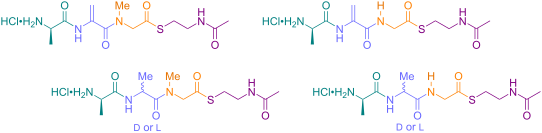
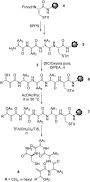
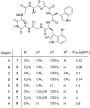
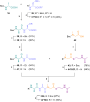
- ′-ethylcarbodiimide hydrochloride, IBCF: isobutyl chloroformate, NMM: N-methylmorpholine, PyBOP: (benzotriazol-1-yloxy)tripyrrolidinophosphonium hexafluorophosphate, SNAc: SCH2CH2NAc, TFFH: fluoro-N,N,N′,N′-tetramethylformamidinium hexafluorophosphate. Chemical structures of naturally occurring argyrins with potent



Skeletocutins M–Q: biologically active compounds from the fruiting bodies of the basidiomycete Skeletocutis sp. collected in Africa
Beilstein J. Org. Chem. 2019, 15, 2782–2789, doi:10.3762/bjoc.15.270

- control, respectively. HPLC–UV chromatogram of the extract from fruiting bodies of Skeletocutis sp. (detection wavelength λ = 190–600 nm). Chemical structures of compounds 1–6. Inhibition Leu-AMC hydrolysis. a) c (ʟ-Leu-AMC) = 100 µM. b) c (ʟ-Leu-AMC) = 50 µM. 1H and 13C NMR data for 1 (in acetone-d6) and


Synthesis of novel sulfide-based cyclic peptidomimetic analogues to solonamides
Beilstein J. Org. Chem. 2019, 15, 2544–2551, doi:10.3762/bjoc.15.247

- ) circuit Agr (accessory gene regulator) [8][9][10][11]. Four native thiolactonic cyclopeptides, named autoinducing peptides (AIPs, Figure 1), were found to be the chemical signals for the QS circuit Agr. Their chemical structures are remarkably alike to solonamides, and the synthesis of new molecules
- sulfhydryl group to the electrophilic MBH residue. Spectral characterization of the chemical structures of the solonamide analogues 9 The compounds were characterized by one- and two-dimensional NMR spectroscopy, infrared spectroscopy (IR) and mass spectrometry. The high-resolution MS/MS analysis allowed the