


Search results
Search for "conjugation" in Full Text gives 446 result(s) in Beilstein Journal of Organic Chemistry. Showing first 200.
α-Ketol and α-iminol rearrangements in synthetic organic and biosynthetic reactions
Beilstein J. Org. Chem. 2021, 17, 2570–2584, doi:10.3762/bjoc.17.172
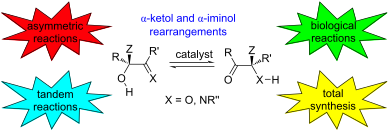
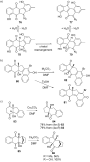
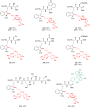
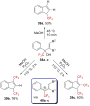
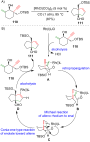
- example of the use of conjugation to drive an α-ketol rearrangement. This study elegantly illustrates the synthetic power of α-ketol rearrangements, whose suprafacial migration ensured that the α-ketol moiety present in the target product 31 was installed with correct stereochemistry. Taking inspiration
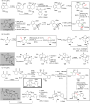
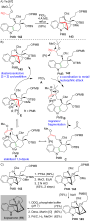
- reduction in conjugation. Another example of a tandem α-ketol rearrangement was used in the total synthesis of delitschiapyrone A (49), a cytotoxic natural product with previously demonstrated efficacy against several cancer cell lines. The final steps of the synthesis include a Diels–Alder reaction between




Silica gel and microwave-promoted synthesis of dihydropyrrolizines and tetrahydroindolizines from enaminones
Beilstein J. Org. Chem. 2021, 17, 2543–2552, doi:10.3762/bjoc.17.170
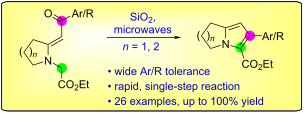
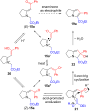
- prior to acid-promoted cyclization cannot be ruled out, since conjugation in the push–pull system should weaken the C=C bond and lower its rotational barrier [20]. Similar enaminone isomerizations have been detected even at room temperature [48]. If thermal isomerization indeed takes place, then one

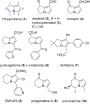




Synthesis and investigation on optical and electrochemical properties of 2,4-diaryl-9-chloro-5,6,7,8-tetrahydroacridines
Beilstein J. Org. Chem. 2021, 17, 2450–2461, doi:10.3762/bjoc.17.162

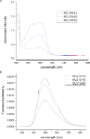
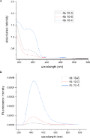
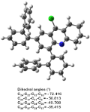
- 3,5-dibromoanthranilic acid (1) [61] with cyclohexanone in POCl3 through an adapted reported procedure [62] (Scheme 1). With precursor 2 in hand, we intended to expand the π-conjugation of the tetrahydroacridine core by adding diversely substituted aryl groups using the Suzuki–Miyaura cross-coupling






Post-functionalization of drug-loaded nanoparticles prepared by polymerization-induced self-assembly (PISA) with mitochondria targeting ligands
Beilstein J. Org. Chem. 2021, 17, 2302–2314, doi:10.3762/bjoc.17.148
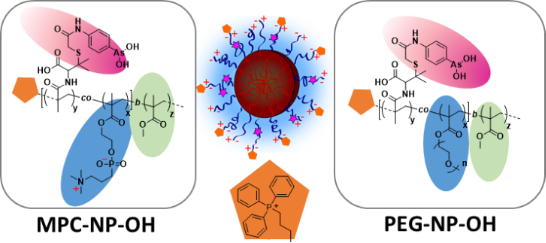
- at the start of the reaction and after 45 min tuned to 8.3 to allow maximum conjugation efficiency. After removing excess TPP-COOH and coupling reagents via dialysis in Milli-Q water, the particles were adjusted to 4 mg mL−1 and analysed using DLS experiments and TEM microscopy (Figure 1). The
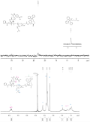
- same conditions as described above. The conjugation product was analysed using 1H and 31P NMR spectroscopy. The 31P NMR spectrum (Figure 2a) shows a peak at 23.07 ppm which belongs to the phosphorus of the triphenylphosphonium moiety. Furthermore, the additional peaks in the region between 7.5–8.2 ppm
- modification. The integration for the peak at the region (g, h and i) increased by 0.26 in number, suggesting that approximately one TPP group per chain was attached. The model reaction using PP3 revealed that the conjugation of TPP-COOH to the polymer proceeded in a quantitative manner and can be used as a






Chemical syntheses and salient features of azulene-containing homo- and copolymers
Beilstein J. Org. Chem. 2021, 17, 2164–2185, doi:10.3762/bjoc.17.139
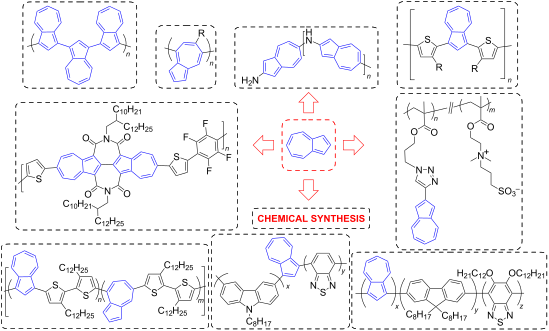
- -polyazulene 5 (417 nm) compared to azulene (1, 341 nm) supporting the presence of extended conjugation prevailing in the polymer. The absorption and EPR spectral patterns of 1,3-polyazulene 5 recorded in TFA and H2SO4 were contrasting to each other inferring the varied degree of protonation caused by these
- stability as well. The absorption maxima displayed by polymer 18 (409 nm) in dichloromethane solution was comparable to the above-discussed 1,3-polyazulene 5 (404 nm), however, the long alkyl substituents present at the 6-position of 19 and 20 were disrupting the effective π-conjugation along the polymer
- the polymer backbone. The iminium zwitterion resonance structure (Figure 2) can contribute in extending the conjugation along the backbone of poly[2(6)-aminoazulene] 31 and this property of 31 makes it very different from the well-known polyaniline. The absorption peak positions of the protonated





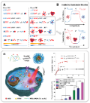
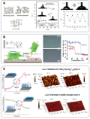
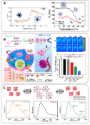
Constrained thermoresponsive polymers – new insights into fundamentals and applications
Beilstein J. Org. Chem. 2021, 17, 2123–2163, doi:10.3762/bjoc.17.138


Cationic oligonucleotide derivatives and conjugates: A favorable approach for enhanced DNA and RNA targeting oligonucleotides
Beilstein J. Org. Chem. 2021, 17, 1828–1848, doi:10.3762/bjoc.17.125
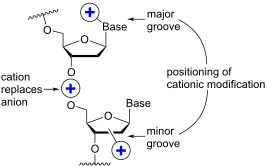
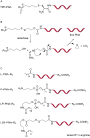
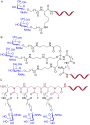
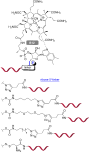
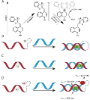
- strategy that has been employed to optimize the delivery profile of ASOs, is the functionalization of ASOs with cationic amine groups, either by direct conjugation onto the sugar, nucleobase or internucleotide linkage. The introduction of these positively charged groups has improved properties like
- improved liver targeting [22][23] and ASO–glucagon-like peptide-1 (GLP1) conjugation for improved delivery to pancreatic β-cells [24]. Previously, Menzi et al. reviewed the impact of cationic modifications and conjugations for ONs and siRNAs biophysical and biological activities until 2015 [25]. In this
- review, we focus on important monomeric cationic modifications for ASOs, including locked nucleic acid (LNA) monomers, and their synthesis. Such modifications have been achieved either by direct conjugation to the nucleobase, the sugar or the backbone of nucleotide monomers of such ASOs. In addition, a


Sustainable manganese catalysis for late-stage C–H functionalization of bioactive structural motifs
Beilstein J. Org. Chem. 2021, 17, 1733–1751, doi:10.3762/bjoc.17.122

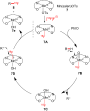
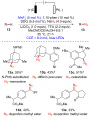
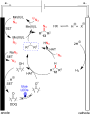
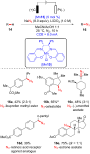
- -economical approach to several tryptophan-containing peptides with significant potential for drug discovery and medicinal chemistry. Positional selectivity was observed at the C2 position due to the presence of the pyrimidine directing group. Interestingly, alkynylative conjugation of tryptophan to a steroid
- peptide–carbohydrate conjugation was achieved using tryptophan-containing peptides 29 and sugar-containing allyl carbonates 30 in chemo- and site-selective manners using a pyridyl directing group. The optimized reaction conditions entailed the use of dimanganese decacarbonyl as the catalyst and sodium









Chemical approaches to discover the full potential of peptide nucleic acids in biomedical applications
Beilstein J. Org. Chem. 2021, 17, 1641–1688, doi:10.3762/bjoc.17.116
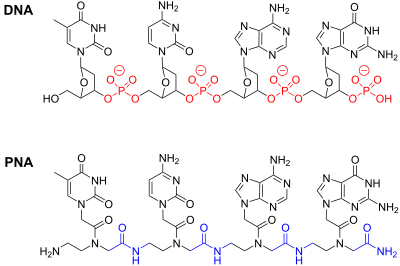
- phosphono-PNAs retained the stability against nucleases. In another study, conjugation with glutamine phosphonate or lysine bis-phosphonate amino acid derivatives introduced up to twelve negative charges (phosphonate moieties) into PNAs [91]. The negative charges allowed cationic lipid-mediated delivery of
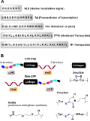
- ][159][160]. Looking forward, conjugation of PNA with various delivery enhancing compounds, most notably cell-penetrating peptides (CPP) that deliver the conjugates mainly through endocytosis (Figure 11) has become one of the most promising approaches to improving cellular uptake of PNA [161][162
- covalent conjugation of PNA to delivery enhancing compounds. Cell-penetrating peptides derived from natural proteins: The initial success of PNA delivery involved PNA conjugates taken up by receptor-mediated endocytosis. Pardridge and co-workers successfully demonstrated in vivo delivery and blood-brain









2,4-Bis(arylethynyl)-9-chloro-5,6,7,8-tetrahydroacridines: synthesis and photophysical properties
Beilstein J. Org. Chem. 2021, 17, 1629–1640, doi:10.3762/bjoc.17.115
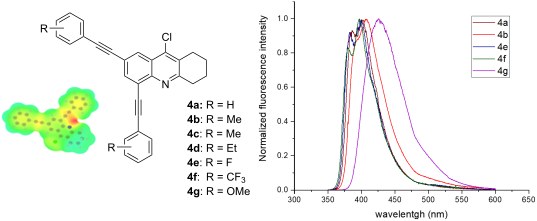
- catalysis. With this precursor in hand, we intended to expand the π-conjugation by introducing two arylethynyl groups by Sonogashira reactions [66][67][68][69]. For the optimization, we studied the reaction of 2 with phenylacetylene (3a) and we obtained the desired product 4a in up to 72% as best yield
- )-9-chloro-5,6,7,8-tetrahydroacridine derivatives via a double Sonogashira cross-coupling method. The arylethynyl groups expand the π-conjugation of the tetrahydroacridine core. The substituents located at the aryl group influenced the photophysical properties of the prepared molecules. In particular


Recent advances in the application of isoindigo derivatives in materials chemistry
Beilstein J. Org. Chem. 2021, 17, 1533–1564, doi:10.3762/bjoc.17.111
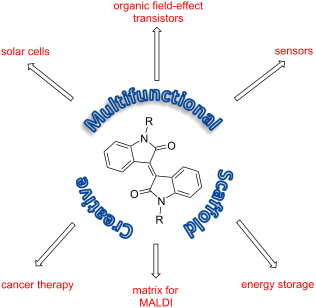
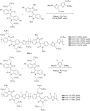
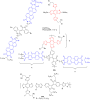
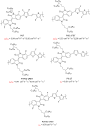
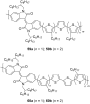
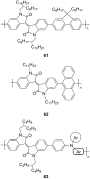
- , to date, the volume of publications on the study of the biological activity of isoindigo derivatives has been steadily decreasing. At the same time, the unique properties of the isoindigo structure (planarity, stability, a high degree of conjugation, and electron deficiency) began to attract more and
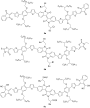
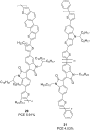
- characterized by a high short-circuit current (JSC = 13.92 mA/cm2), with a 5-fold better PCE value (Table 3). Expansion of the conjugation chain by introducing additional electron-enriched condensed heterocyclic fragments (see compounds 20 and 21) makes it possible to achieve a PCE of almost 6% (Scheme 13) [31
- of 1:4 showed an efficiency of 7.69% with a D1 content of 15% relative to the D2 weight. It should be especially noted that the efficiency of the cell without isoindigo D1 was 6.91%. To increase the degree of conjugation in the structure of polymeric isoindigo, an introduction of additional aromatic














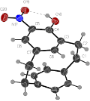
Breaking paracyclophane: the unexpected formation of non-symmetric disubstituted nitro[2.2]metaparacyclophanes
Beilstein J. Org. Chem. 2021, 17, 1518–1526, doi:10.3762/bjoc.17.109
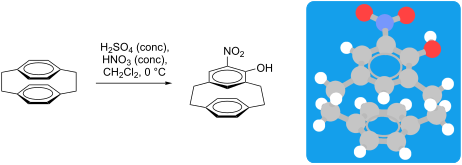
- materials, and as the basis of the study of through-space conjugation [2][8][9][10][11][12][13][14][15][16]. There are fewer studies of [2.2]metacyclophane (2) and its derivatives. This is probably related to a lack availability as well as the reduced interaction between the aromatic rings [17]. But the odd




Design, synthesis and photophysical properties of novel star-shaped truxene-based heterocycles utilizing ring-closing metathesis, Clauson–Kaas, Van Leusen and Ullmann-type reactions as key tools
Beilstein J. Org. Chem. 2021, 17, 1374–1384, doi:10.3762/bjoc.17.96
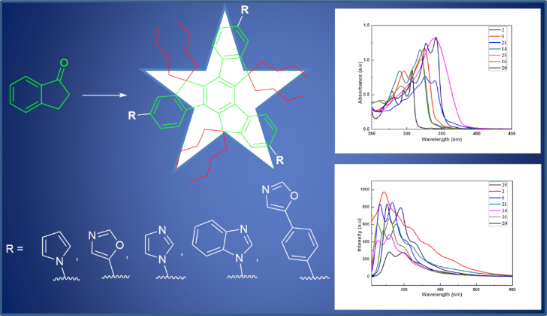
- be considered as a 1,3,5‐triphenylbenzene derivative enjoying with three methylene units clipped in such a manner that all the four benzene rings are in conjugation with coplanar arrangement, resulting strong π–π stacking in addition to the strong electron‐donating ability which in turns provide a
- corresponding desired truxene-based oxazole derivatives (Scheme 6). Additionally, to enhance the conjugation which in turn would undoubtedly tune the properties of the truxene-based heterocyclic systems, we also design and synthesized the benzene-bridged oxazole derivative 25 in three steps (Scheme 7). As can
- possessing red-shift absorption maxima as compared to the parent compound 2, may be due to increased conjugation in these truxene systems with the incorporation of three heterocyclic units in each case (Figure 1). Moreover, the absorption spectrum of compound 16 exhibited slightly red-shifted maxima at ca


Synthesis of 10-O-aryl-substituted berberine derivatives by Chan–Evans–Lam coupling and investigation of their DNA-binding properties
Beilstein J. Org. Chem. 2021, 17, 991–1000, doi:10.3762/bjoc.17.81
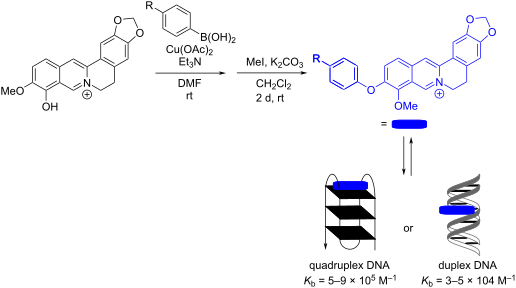
- , specifically because of the decreased electron density at the 9-oxyanion by linear conjugation with the quaternary nitrogen atom [39]. Nevertheless, the reactivity of intermediate 6 is still relatively low, as indicated by the low yields of the Cu2+-catalyzed coupling reaction, thus resembling the parent


Beyond ribose and phosphate: Selected nucleic acid modifications for structure–function investigations and therapeutic applications
Beilstein J. Org. Chem. 2021, 17, 908–931, doi:10.3762/bjoc.17.76
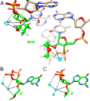
- hydrogen atom to orient towards anions (chloride) in the vicinity and the 3'-nitrogen lone pair engages in a lp → σ* anomeric effect with the antibonding orbital from the adjacent P–O5' bond (Figure 2A). This conjugation is surmised to cause considerably increased rigidity of the phosphoramidate sugar




Enhanced target cell specificity and uptake of lipid nanoparticles using RNA aptamers and peptides
Beilstein J. Org. Chem. 2021, 17, 891–907, doi:10.3762/bjoc.17.75
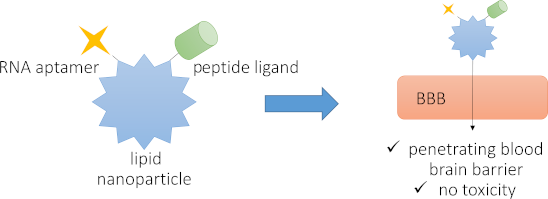
- -HAIYPRH-NH2 Tat: H-YGRKKRRQRRR-NH2 Modified Tat: dipalmitoyl-Dap-YGRKKRRQRRR-NH2 Peptide conjugation with a lipid reagent The peptides were N-terminally modified on solid support by coupling of Fmoc-Dap(Fmoc)-OH, followed by the coupling of palmitic acid to afford the complete peptide–lipid conjugates



Synthesis of dibenzosuberenone-based novel polycyclic π-conjugated dihydropyridazines, pyridazines and pyrroles
Beilstein J. Org. Chem. 2021, 17, 719–729, doi:10.3762/bjoc.17.61
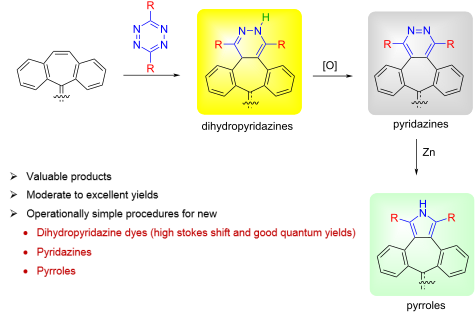
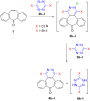
- corresponding ketone 10bc. Eventually, pyrrole derivative 10bc, having a carbonyl group, was obtained by these reactions (Scheme 7). In order to increase the conjugation of dibenzosuberenone 1 for the photophysical aspect, the p-quinone methide derivative of dibenzosuberenone 11 was synthesized according to the
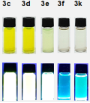
- fluorescent dyes 3a,b in detail. In the present study, the effects of functional groups with different conjugations on maximum absorbance (λmax, abs) and emission (λmax, ems), and wavelengths of dihydropyridazines 3c–f and 3k were investigated. Compounds 3c,d, with high conjugation, show the highest
- absorption and emission maxima values and compounds 3f and 3k, with low conjugation, show the lowest absorption and emission maxima values (Figure 3, Figure 4, and Figure 5). All these molecules (3c–f and 3k) have Stokes shifts greater than 100 nm. The fluorescence quantum yields of 3c–f and 3k were




[2 + 1] Cycloaddition reactions of fullerene C60 based on diazo compounds
Beilstein J. Org. Chem. 2021, 17, 630–670, doi:10.3762/bjoc.17.55
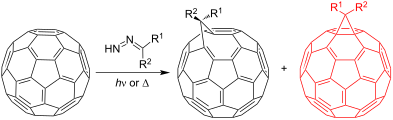
- ideal partner for drug lipophilization by conjugation [37]. Highly efficient fullerene conjugates with chemotherapeutic agents have been synthesized and patented; moreover, the biological activity profile is often preserved, but in some cases it can also change since a molecular structure with a
- synthesized (Scheme 10) [83]. As an alternative, a more efficient direct route for synthesizing fullerenylpeptides 23 [83] and 24 [88] by prolonged thermolysis of various diazoamides in the presence of C60 was developed (Scheme 11). For conjugation, some scientists successfully used mono- and
CF3-substituted carbocations: underexploited intermediates with great potential in modern synthetic chemistry
Beilstein J. Org. Chem. 2021, 17, 343–378, doi:10.3762/bjoc.17.32
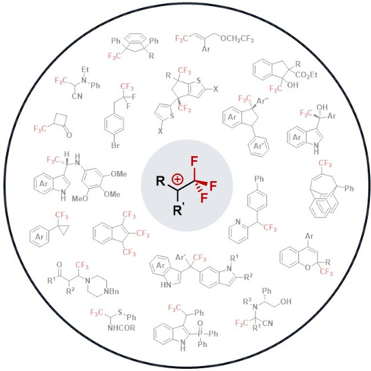
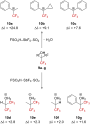
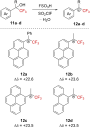
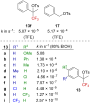
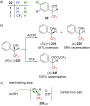
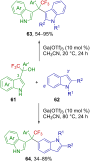
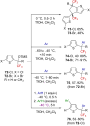
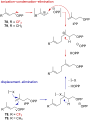
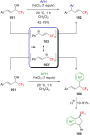
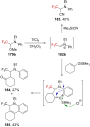
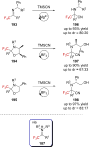
- Pauling electronegativity, the fluorine atoms, when directly linked to a carbenium ion, can be engaged in significant resonance electron donation (Scheme 2) [34]. While stabilizing the positively charged carbon center via lone pair conjugation, the electron density at the fluorine atom decreases, and this
































19F NMR as a tool in chemical biology
Beilstein J. Org. Chem. 2021, 17, 293–318, doi:10.3762/bjoc.17.28
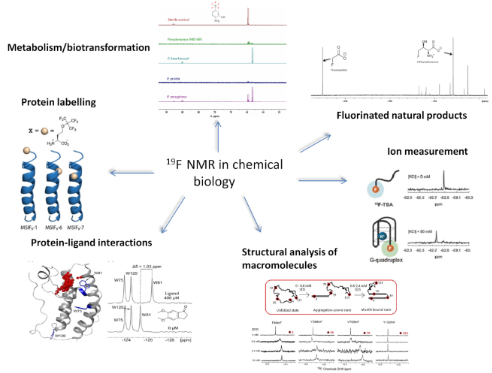
- -phase peptide synthesis (SPPS) methods (15 and 16, Figure 1). A second well-established methodology for the 19F isotopic labelling of protein and peptides involves the post-translational chemical conjugation of an 19F probe to specific amino acids present within the protein, typically cysteine and
- receptor (β2AR) [29]. In this work conjugation of the CF3 group to an aromatic ring was shown to give rise to substantially improved 19F NMR chemical shift sensitivities over the more traditional thiol-specific trifluoromethyl tags (Figure 3b) [28]. In addition to chemical modification, novel methodologies


The preparation and properties of 1,1-difluorocyclopropane derivatives
Beilstein J. Org. Chem. 2021, 17, 245–272, doi:10.3762/bjoc.17.25
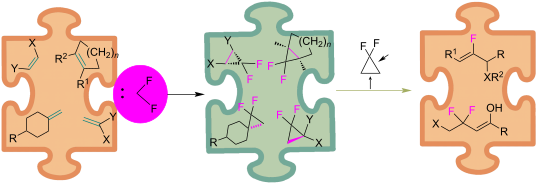
- disrotation at C2 and C3 during stereomutation in 1,1-difluorocyclopropanes [85]. An important feature in the fluorinated system was the stabilization of the intermediate 2,2-difluorotrimethylene radicals due to the conjugation of the radical centers with the σ*-orbital of C–F bond, which can be represented




Exploring the possibility of using fluorine-involved non-conjugated electron-withdrawing groups for thermally activated delayed fluorescence emitters by TD-DFT calculation
Beilstein J. Org. Chem. 2021, 17, 210–223, doi:10.3762/bjoc.17.21
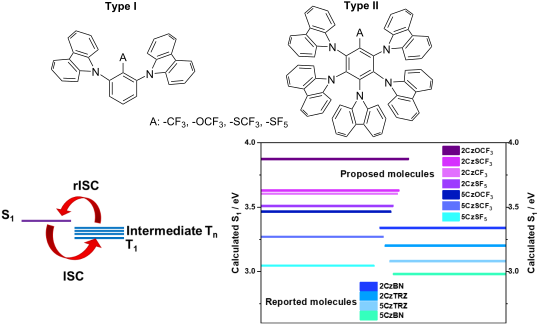
- small group of structurally related N-heterocycles such as carbazole [5], dimethylacridine [13], phenoxazine [17], and phenothiazine [18]. Prior studies have shown that placing the donor groups ortho to the acceptor can lead to more limited conjugation between the two, resulting in emitters with
- , and 2CzBP of −1.70 eV, −1.63 eV, and −1.67 eV, respectively, are much deeper those of the fluorine-containing emitters in Figure 3, which is a reflection of the greater conjugation length present in compounds with an extended π-accepting framework. The corresponding ΔEg of 2CzBN (4.19 eV), 2CzTRZ


Pentannulation of N-heterocycles by a tandem gold-catalyzed [3,3]-rearrangement/Nazarov reaction of propargyl ester derivatives: a computational study on the crucial role of the nitrogen atom
Beilstein J. Org. Chem. 2020, 16, 3059–3068, doi:10.3762/bjoc.16.255
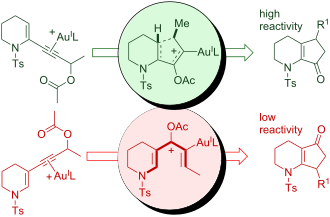
- positive charge of the allyl system by conjugation, affecting the following cyclization reaction. Meanwhile, the 2-substitued analogue VII does not present a conjugated system, and the total allyl charge cannot be stabilized, maintaining a positive value (+0.115). As a result, VII seems to be much more
- conjugation. However, according to the energy profile, this observation does not have a reflection in the deprotonation step, which seems to be affected partially by the steric hindrance around the two hydrogen atoms, being clearly higher in Ha (a 2.2 kcal⋅mol−1 higher activation energy of TS10 than for TS8
- believe that the higher thermodynamic stability of XV (4.4 kcal⋅mol−1 lower than for XII), which is due to the conjugation of the nitrogen atom and the diene system, accounts for the preferential formation and the consequent formation of 15. It cannot be overlooked that the formation of the intermediates


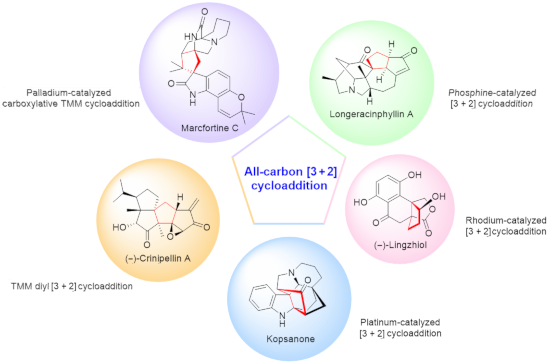
All-carbon [3 + 2] cycloaddition in natural product synthesis
Beilstein J. Org. Chem. 2020, 16, 3015–3031, doi:10.3762/bjoc.16.251
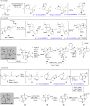
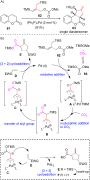
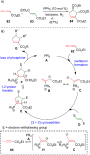
- take place. The use of noncyclic analogues did not give the cycloaddition product. It is suggested that the restricted rotational freedom of 151 and the related enforced conjugation of the sulfur lone pair may block certain undesired cation reactions. Cycloaddition product 154 was subjected to the







UV resonance Raman spectroscopy of the supramolecular ligand guanidiniocarbonyl indole (GCI) with 244 nm laser excitation
Beilstein J. Org. Chem. 2020, 16, 2911–2919, doi:10.3762/bjoc.16.240
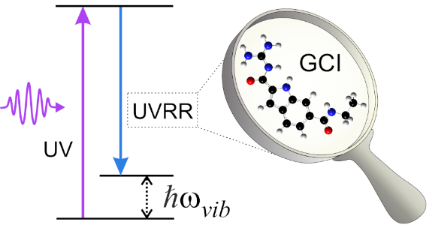
- the GCI chromophore. The red-shift in the spectral positions of the GCI peaks with respect to those of the GCP peaks is due to the extended conjugation induced by the indole ring of GCI. We chose 266 nm and 244 nm as laser excitation wavelengths for UVRR spectroscopy. The 266 nm excitation was chosen





