


Search results
Search for "desilylation" in Full Text gives 134 result(s) in Beilstein Journal of Organic Chemistry.
Synthesis of the B-seco limonoid core scaffold
Beilstein J. Org. Chem. 2014, 10, 194–208, doi:10.3762/bjoc.10.15
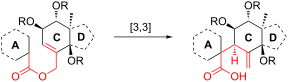
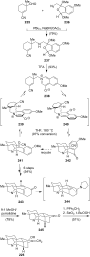
- alcohol 18 and Mitsunobu reaction installed the required stereochemistry at C14. The free C14 hydroxy group was masked with protecting groups (MOM and TIPS) of different size and chemical nature to examine the face-selectivity of the [3,3]-sigmatropic rearrangement. After selective desilylation, alcohols
- aqueous CH2Cl2 to release triol 36, which was masked with different protecting groups (MOM, TBS, Piv). After desilylation, the liberated alcohols 40, 41 and 42 could be esterified with various cyclic and acyclic model A rings to give the targeted rearrangement precursors A (Scheme 6, Table 2). The
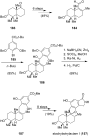
- , desilylation, oxidation and esterification (Scheme 14). Attempts to rearrange 93 under the optimized conditions were again unsuccessful. As expected, elimination of the OMOM group during the reaction was not detected due to the unfavoured orientation of the hydrogen and the leaving group. Subsequent acidic




Synthesis of five- and six-membered cyclic organic peroxides: Key transformations into peroxide ring-retaining products
Beilstein J. Org. Chem. 2014, 10, 34–114, doi:10.3762/bjoc.10.6
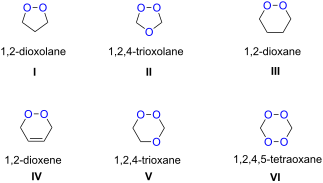
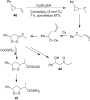
- obtained as the by-product (Scheme 15, Table 6) [249]. The desilylation of the initially formed silicon peroxide followed by cyclization of the hydroperoxide accompanied by the attack on the electrophilic center is another example of the use of the Isayama–Mukaiyama reaction for the synthesis of cyclic
- peroxides. In some cases, the reaction with 1,5-dienes 46a–d produces, along with 1,2-dioxanes 51 (desilylation products of the corresponding 1,2-dioxanes 48), 1,2-dioxolanes (52b,d) as a result of cyclization of the corresponding peroxysilyl epoxides 49. In these reactions, unsaturated triethylsilyl
- activated double bond or a carbon atom of a keto or ester group). The desilylation of tert-butyldimethylsilylperoxy ketones 131a,b with HF followed by cyclization and subsequent reaction with monomethylethylene glycol afforded dioxolanes 132a,b in 75 and 88% yield, respectively. The intermediate












Total synthesis of the endogenous inflammation resolving lipid resolvin D2 using a common lynchpin
Beilstein J. Org. Chem. 2013, 9, 2762–2766, doi:10.3762/bjoc.9.310
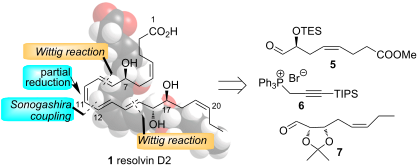
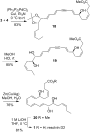
- . Desilylation of 11 followed by hydrozirconation and iodination gave the vinyl iodide 4 and Sonogashira coupling between this compound and enyne 3 provided alkyne 18. Acetonide deprotection, partial reduction and ester hydrolysis then gave resolvin D2 (1). Keywords: catalysis; eicosanoid; natural product
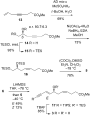
- bis-TES ether 15 and partial reduction of the alkyne using P2-Ni as catalyst [30] afforded the alkene 16. Desilylation of the primary TES group in 16 and concomitant oxidation to aldehyde 5 was achieved under Swern conditions as reported by Spur [31]. Deprotonation of salt 6 with LiHMDS followed by


Bidirectional cross metathesis and ring-closing metathesis/ring opening of a C2-symmetric building block: a strategy for the synthesis of decanolide natural products
Beilstein J. Org. Chem. 2013, 9, 2544–2555, doi:10.3762/bjoc.9.289
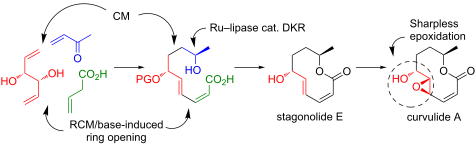
- the electron-deficient double bond, using polymethylhydrosiloxane (PMHS) [40] as a reducing agent and a BDP–Cu hydride catalyst. This variant of Stryker’s reagent [41] has more recently been described by Lipshutz et al. [42] and was found to furnish ketone 13 in 74% yield. Desilylation of 13 could be
- 19:1, it was converted to 26 via Mitsunobu inversion [55] with acetic acid as the nucleophile. The synthesis of stagonolide E commenced with the desilylation of 26 and Steglich esterification of the resulting allyl alcohol 27. One-flask reaction of 28 with catalyst B, followed by treatment with NaH






Towards stereochemical control: A short formal enantioselective total synthesis of pumiliotoxins 251D and 237A
Beilstein J. Org. Chem. 2013, 9, 2358–2366, doi:10.3762/bjoc.9.271
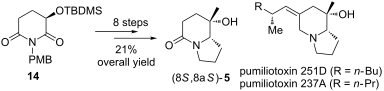
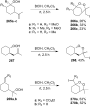
- of (R)-3-(tert-butyldimethylsilyloxy)glutarimide 14. After O-desilylation and Dess–Martin oxidation, the resulting keto-lactam 10 was subjected to a highly trans-stereoselective addition of the methylmagnesium iodide to give carbinol 11 as sole diastereomer. An efficient ring closure procedure


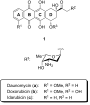
Flexible synthesis of anthracycline aglycone mimics via domino carbopalladation reactions
Beilstein J. Org. Chem. 2013, 9, 2194–2201, doi:10.3762/bjoc.9.258
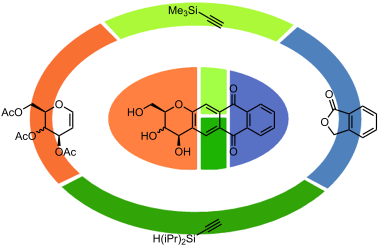
- ether should be removed by using hydrolysis and fluoride-mediated desilylation, respectively. It was assumed that the multiple carbopalladation/cyclization sequence should give access to the fourfold-annulated ring system 13 in a single step. However, we knew that the domino process works much better in
- more promising candidates. But none of these domino products 13b–13f provided better results in a Tamao–Fleming reaction. When oxidizing reaction conditions were applied to silane 13b, only desilylation of the cyclic silyl ether occurred. Interestingly, benzylsilane 13c afforded the globally



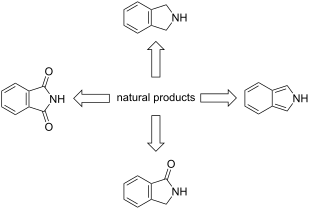
The chemistry of isoindole natural products
Beilstein J. Org. Chem. 2013, 9, 2048–2078, doi:10.3762/bjoc.9.243
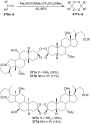
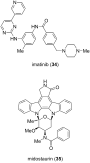
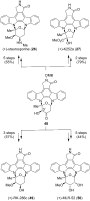
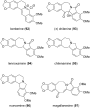
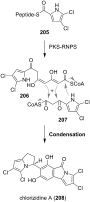
- olefination. Installation of the phosphonate and desilylation gave 76, which, after oxidation, reacted in the presence of sodium 2,2,2-trifluoroethanol (NaOTFE) in 2,2,2-trifluoroethanol (TFE) via an intramolecular Horner–Wadsworth–Emmons reaction to 77. Cytochalasin L-696,474 (78) was obtained from 77 via
















An approach towards azafuranomycin analogs by gold-catalyzed cycloisomerization of allenes: synthesis of (αS,2R)-(2,5-dihydro-1H-pyrrol-2-yl)glycine
Beilstein J. Org. Chem. 2013, 9, 1936–1942, doi:10.3762/bjoc.9.229
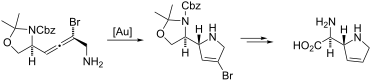
- -catalyzed cycloisomerization proceeded uneventfully (Scheme 3). Desilylation of allenes 6a and 6b with tetrabutylammonium fluoride trihydrate afforded the α-hydroxyallenes 7a/b in high yield, and these were converted into the aminoallenes 8a/b under standard Mitsunobu conditions (DEAD, PPh3, phthalimide
- ; then hydrazine monohydrate) [38][39][62]. Unfortunately, fluoride-mediated desilylation of allene 6c caused complete epimerization of the allenic chirality axis. Therefore, the silylallene was not used in further studies. The results of the gold-catalyzed cycloisomerization of the allenes 7 and 8 to
- . Fortunately, the correct stereoisomer was enriched at the stage of the dihydropyrrole 18 due to several purification steps. Desilylation of 15 with tetrabutylammonium fluoride trihydrate (94% yield) and conversion of 16 into the α-aminoallene 17 under Mitsunobu conditions (45% yield) [38][39][62] set the


Synthesis of skeletally diverse alkaloid-like molecules: exploitation of metathesis substrates assembled from triplets of building blocks
Beilstein J. Org. Chem. 2013, 9, 775–785, doi:10.3762/bjoc.9.88
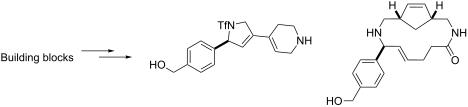
- with methyl chloroformate and DMAP. The allylic carbonate 15 underwent efficient asymmetric allylic amination [20] with o-nitrophenylsulfonamide as the nucleophile to give the allylic sulfonamide 17 in 66% yield; in addition, the linear product 16 was also obtained in 7% yield. Desilylation of 17 (→ 18
- (Table 4) were obtained after removal of the fluorous tag by desilylation. Conclusion Metathesis is an extremely powerful reaction for diversity-oriented synthesis. It was demonstrated that metathesis substrates could be assembled efficiently from triplets of building blocks. Thereafter, metathesis


Asymmetric synthesis of a highly functionalized bicyclo[3.2.2]nonene derivative
Beilstein J. Org. Chem. 2013, 9, 655–663, doi:10.3762/bjoc.9.74
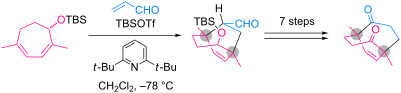
- -membered 25 was induced by treatment with NaNO2 in acetic acid [28][29], resulting in the formation of eight-membered 27 through the intermediary of 26. Finally, the desilylation of 27 with TBAF and the subsequent oxidation of the resultant hydroxy group delivered the symmetric diketone 1 in optically


Efficient synthesis of phenylene-ethynylene rods and their use as rigid spacers in divalent inhibitors
Beilstein J. Org. Chem. 2013, 9, 215–222, doi:10.3762/bjoc.9.25

- , because partial silyl migration to the free hydroxy groups was observed while attempting mono-desilylation. Synthesis of three-unit spacers To obtain the three-unit spacer, the odd strategy (Figure 4) was applied starting with compound F. In order to make F, the silyl protecting groups of both 4 and 6
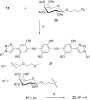
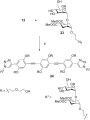
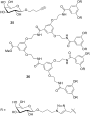
- their affinity for the target proteins, but can create solubility problems. Desilylation of 13 (TBAF, THF, Scheme 7) followed by in situ CuAAC with the pseudo-disaccharide 23 led to the divalent ligand 24, which was found to be fully soluble in water, at least up to millimolar concentrations. Compound
- of this nature. It was also shown that the three-unit spacer 13 could be used in a one-pot desilylation and CuAAC reaction to give 24, which was found to be fully soluble in water, despite the more lipophilic nature of the active ligand. This finding paves the way for the synthesis and evaluation of


















Determination of the relative configuration of tropinone and granatanone aldols by using TBDMS ethers
Beilstein J. Org. Chem. 2012, 8, 1877–1883, doi:10.3762/bjoc.8.216

- obtain the free aldols in the endo forms by TBDMS deprotection. Under the typical desilylation conditions (1 M TBAF in THF) no formation of aldols, but rather products of their decomposition were detected in the resulting complex reaction mixtures. The presence of a relatively acidic pseudoaxial hydrogen


Exploring chemical diversity via a modular reaction pairing strategy
Beilstein J. Org. Chem. 2012, 8, 1293–1302, doi:10.3762/bjoc.8.147
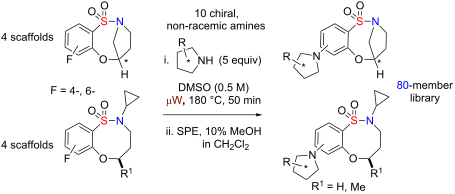
- -difluorobenzenesulfonyl chloride were sulfonylated with cyclopropyl amine followed by Mitsunobu alkylation with 3-silyloxybutan-1-ol and subsequent one-pot desilylation intramolecular SNAr alkoxylation (Scheme 2). Each of the scaffolds 1–8 was prepared on a 2.5 g scale. With scaffolds 1–8 in hand, efforts were focused on


On the proposed structures and stereocontrolled synthesis of the cephalosporolides
Beilstein J. Org. Chem. 2012, 8, 1287–1292, doi:10.3762/bjoc.8.146
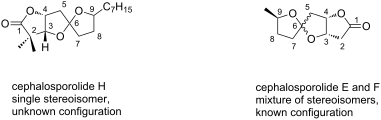
- completed the synthesis of 1, the reported structure of cephalosporolide H. The opposite spiroketal isomer 1a was prepared from 6 by palladium-catalyzed cycloisomerization (steric control), desilylation and TEMPO oxidation. In neither case did the characterization data match that of the natural material
- alkyne 5 with (S)-1,2 epoxynonane. Gold-catalyzed cycloisomerization (with desilylation) provided spiroketal diols 10a and 10b in a 32:68 ratio and in 89% total yield. Major spiroketal 10b could be converted to 10a in 15:1 dr by zinc-catalyzed isomerization. Both isomers (10a and 10b) were independently
- silyl ether 19 with the (R)-propylene oxide produced the internal alkyne 20 (Scheme 5). Gold(I) chloride in MeOH induced the spiroketalization of alkyne 20 with concomitant cleavage of the PMP acetal and partial cleavage of the TBS ether. After completion of the desilylation with TBAF, a mixture of 5,5


Synthesis of fused tricyclic amines unsubstituted at the ring-junction positions by a cascade condensation, cyclization, cycloaddition then decarbonylation strategy
Beilstein J. Org. Chem. 2012, 8, 107–111, doi:10.3762/bjoc.8.11
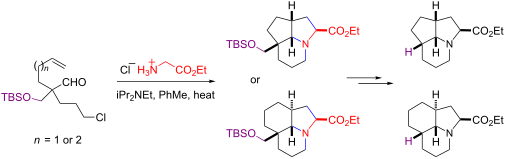
- provide a method to prepare fused tricyclic products with all ring-junction protons, we carried out the transformations shown in Scheme 8. Desilylation of 20 and 21 gave the alcohols 24 and 27, respectively. Swern oxidation then gave the aldehydes 25 and 28. Finally, using Wilkinson’s catalyst, we were


Pseudo five-component synthesis of 2,5-di(hetero)arylthiophenes via a one-pot Sonogashira–Glaser cyclization sequence
Beilstein J. Org. Chem. 2011, 7, 1499–1503, doi:10.3762/bjoc.7.174
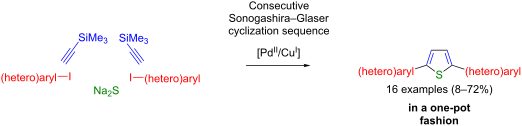
- yields, resulting in an increased formation of byproducts already during the desilylation and the oxidative coupling step (as monitored by TLC). A lower reaction temperature resulted in a prolonged reaction time under microwave conditions to achieve complete conversion (Table 1, entry 5), whereas


Directed aromatic functionalization in natural-product synthesis: Fredericamycin A, nothapodytine B, and topopyrones B and D
Beilstein J. Org. Chem. 2011, 7, 1475–1485, doi:10.3762/bjoc.7.171
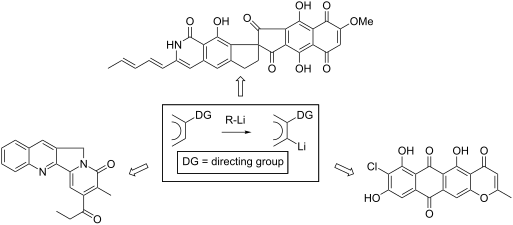
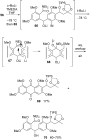
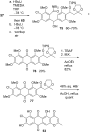
- , desilylation of 69 (TBAF) furnished an alcohol that, contrary to the parent 69 or other TIPS-protected synthetic intermediates, exhibited no atropisomerism (single compound by 1H and 13C NMR). Oxidation (IBX) and treatment of the emerging ketone 74 with 48% aqueous HBr in AcOH under reflux afforded synthetic







Amines as key building blocks in Pd-assisted multicomponent processes
Beilstein J. Org. Chem. 2011, 7, 1387–1406, doi:10.3762/bjoc.7.163
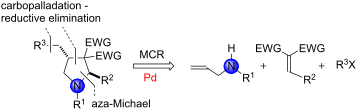
- precursor 49 in situ through a Pd/Cu mediated coupling reaction between (trimethylsilyl)acetylene (TMSA) with an aryl iodide, followed by a desilylation reaction. The subsequent addition of the third partner, an o-iodoanilide derivative, allowed a Pd/Cu tandem C–C/C–N-bond-forming reaction. The main
- . Synthesis of indoles through a sequential C–C coupling/desilylation–coupling/cyclization reaction. Synthesis of indoles by a site selective Pd/C catalyzed cross-coupling approach. Synthesis of isoindolin-1-one derivatives through a sequential Sonogashira coupling/carbonylation/hydroamination reaction


A practical two-step procedure for the preparation of enantiopure pyridines: Multicomponent reactions of alkoxyallenes, nitriles and carboxylic acids followed by a cyclocondensation reaction
Beilstein J. Org. Chem. 2011, 7, 962–975, doi:10.3762/bjoc.7.108

- provide dihydropyridine 6. Elimination of trimethylsilanol and subsequent O-desilylation affords the 4-hydroxypyridine 7 (Scheme 1). The desired β-ketoenamides 4 are either accessible by acylation of enaminoketones or by a multicomponent reaction of lithiated alkoxyallenes, nitriles and carboxylic acids
- , whereas the pyridinol tautomer is favored when a hydrogen bond-donor is present. Compound 37 exists exclusively as pyridone tautomer, but after desilylation the resulting product, with a free hydroxy group in the side chain, strongly prefers the pyridinol tautomer. It seems reasonable to assume that the
- 22 could be O-methylated in good yield with methyl iodide in THF, the same conditions converted 30 into 55 in a disappointing 30% yield. Desilylation of 53 and 55 with HF in pyridine gave the desired deprotected pyridine derivatives 54 and 56 in high yields. This type of enantiopure hydroxymethyl


High chemoselectivity in the phenol synthesis
Beilstein J. Org. Chem. 2011, 7, 794–801, doi:10.3762/bjoc.7.90
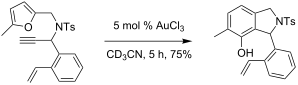
- structure of 28a. Catalysts 34, 35 and 36. 1H NMR spectra of the separated diastereoisomers of the substrates for catalysis 28 (left) and of the products 37 (right, the small signals are due to the deprotected compounds 38). Structure of the desilylation product 38. Mechanism of the furan–yne reaction


Gold-catalyzed alkylation of silyl enol ethers with ortho-alkynylbenzoic acid esters
Beilstein J. Org. Chem. 2011, 7, 648–652, doi:10.3762/bjoc.7.76
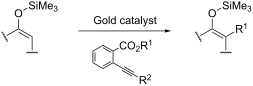
- formation of 3a. It is well known that concerted pericyclic ene-type reaction of silyl enol ethers with electrophiles, such as aldehydes or ketones, gives functionalized silyl enol ethers without desilylation [22][23][24][25][26][27][28][29][30][31][32][33][34][35][36]. To the best of our knowledge, however


Gold-catalyzed regioselective oxidation of terminal allenes: formation of α-methanesulfonyloxy methyl ketones
Beilstein J. Org. Chem. 2011, 7, 596–600, doi:10.3762/bjoc.7.69
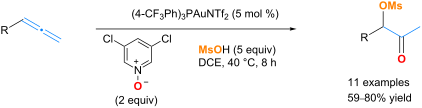
- example, allenes derived by replacing the acetoxy group of 1b with a free OH or an OTBS group did not lead to the desired products. Presumably, the nucleophilic OH group in the substrate, or one generated via acidic desilylation, interfered with the reaction. This reasoning was supported by the isolation


A gold-catalyzed alkyne-diol cycloisomerization for the synthesis of oxygenated 5,5-spiroketals
Beilstein J. Org. Chem. 2011, 7, 570–577, doi:10.3762/bjoc.7.66
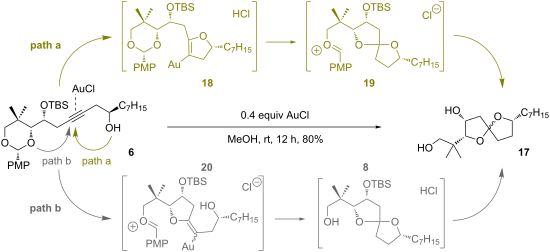
- reaction time was intentionally extended to ensure complete desilylation. A second mechanistic alternative, path b, cannot be ruled out at this time. Path b involves gold-activation of the alkyne followed by 5-exo-dig nucleophilic attack of the acetal oxygen. Methanolysis of the acetal and spirocyclization


Synthesis of 5-(2-methoxy-1-naphthyl)- and 5-[2-(methoxymethyl)-1-naphthyl]-11H-benzo[b]fluorene as 2,2'-disubstituted 1,1'-binaphthyls via benzannulated enyne–allenes
Beilstein J. Org. Chem. 2011, 7, 496–502, doi:10.3762/bjoc.7.58
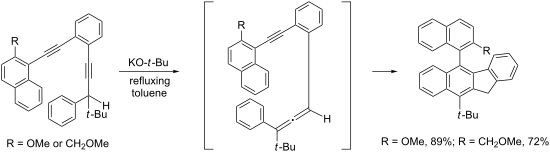
- with iodine [7]. 1-Ethynyl-2-iodo-benzene (15) [30] was prepared in quantitative yield by desilylation of 1-iodo-2-[2-(trimethylsilyl)ethynyl]benzene with sodium hydroxide in methanol. 1-Ethynyl-2-(methoxymethyl)benzene (4b) [31] and dimethyl (1-diazo-2-oxopropyl)phosphonate [32] were prepared





