


Search results
Search for "high pressure" in Full Text gives 132 result(s) in Beilstein Journal of Organic Chemistry.
Simple and rapid hydrogenation of p-nitrophenol with aqueous formic acid in catalytic flow reactors
Beilstein J. Org. Chem. 2013, 9, 1156–1163, doi:10.3762/bjoc.9.129
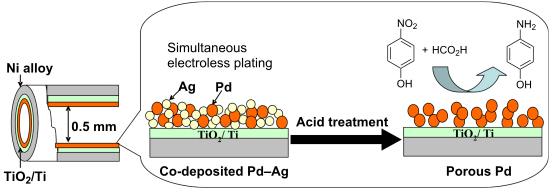
- catalyzed with core–shell Au–Pd NPs and Au NPs [23][24][25][26]. Formic acid is another attractive H2 source because it is safe, easy to handle, and requires no high-pressure equipment. Formic acid and formate have been used as effective H2 donors in the catalytic transfer hydrogenation of aromatic nitro


Spectroscopic characterization of photoaccumulated radical anions: a litmus test to evaluate the efficiency of photoinduced electron transfer (PET) processes
Beilstein J. Org. Chem. 2013, 9, 800–808, doi:10.3762/bjoc.9.91
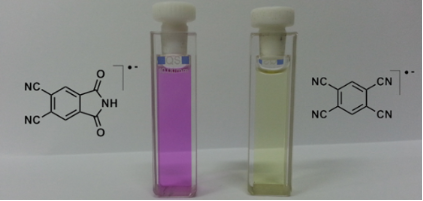
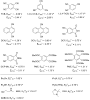
- deoxygenated solutions, except where otherwise noted. The examined solutions were irradiated on an optical bench equipped with a 150 W high-pressure mercury lamp, (λIRR = 313 nm). The electrochemical properties of TCB [8][9], DCN [8][9], DCA [8][9], DCP [10], DCP-ME [10], ME [45], PME [28], Et3N [60], iPr3N




4-Pyridylnitrene and 2-pyrazinylcarbene
Beilstein J. Org. Chem. 2013, 9, 754–760, doi:10.3762/bjoc.9.85
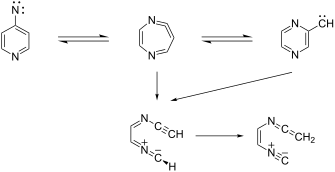
- Hg lamp (254 nm) or a 1000 W high pressure Hg/Xe lamp equipped with a monochromator and appropriate filters. A water filter was used to remove infrared radiation. Materials 4-Azidopyridine (18) was prepared from 4-bromopyridine and NaN3 in 10% ethanol under reflux for 8 h by adaptation of a
- codeposited with Ar at 25 K. After cooling to 7 K, the spectrum was recorded (Figure S2, Supporting Information File 1): IR (Ar, 7 K) 813, 1271, 1303, 1586, 2100, 2119, 2145, 2280 cm−1. The azide matrix was irradiated with broadband UV light from the high-pressure Xe/Hg lamp, at 290 nm using the monochromator


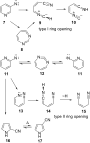


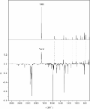


3-Pyridylnitrene, 2- and 4-pyrimidinylcarbenes, 3-quinolylnitrenes, and 4-quinazolinylcarbenes. Interconversion, ring expansion to diazacycloheptatetraenes, ring opening to nitrile ylides, and ring contraction to cyanopyrroles and cyanoindoles
Beilstein J. Org. Chem. 2013, 9, 743–753, doi:10.3762/bjoc.9.84
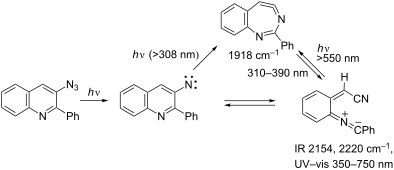
- . Photolyses were done through quartz by using a 75 W low pressure Hg lamp (254 nm) or a 1000 W high pressure Hg/Xe lamp equipped with a monochromator and appropriate filters. A water filter was used to remove infrared radiation, and a 7.5% NiSO4 or a NiSO4/CuSO4 solution (7.5 and 2.5%, respectively) to remove


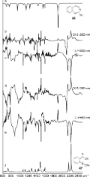


High-spin intermediates of the photolysis of 2,4,6-triazido-3-chloro-5-fluoropyridine
Beilstein J. Org. Chem. 2013, 9, 733–742, doi:10.3762/bjoc.9.83
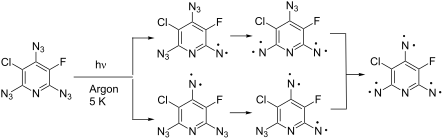
- were irradiated with a high-pressure mercury lamp, by using a filter passing the light at λ = 260–320 nm, and spectra were recorded at various irradiation times. The computer simulations of EPR spectra were performed by using the EasySpin program package (version 4.0.0) [38]. The simulations were




Spin state switching in iron coordination compounds
Beilstein J. Org. Chem. 2013, 9, 342–391, doi:10.3762/bjoc.9.39
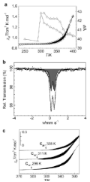
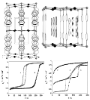
- pressure is neglected in this picture. As a consequence, the zero-point energy difference ΔE0HL increases by the work term pΔV0HL, which in turn decreases the activation energy ΔW0HL and finally favors the LS state. Extensive high-pressure experiments on SCO compounds by using diamond anvil cells have been


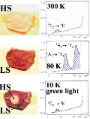
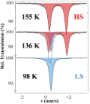


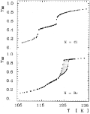

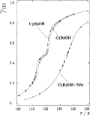


![[Graphic 1]](/bjoc/content/inline/1860-5397-9-39-i3.png?max-width=637&scale=1.18182) ) modes versus the anion volu...
) modes versus the anion volu...






Cyclodextrin-based nanosponges as drug carriers
Beilstein J. Org. Chem. 2012, 8, 2091–2099, doi:10.3762/bjoc.8.235
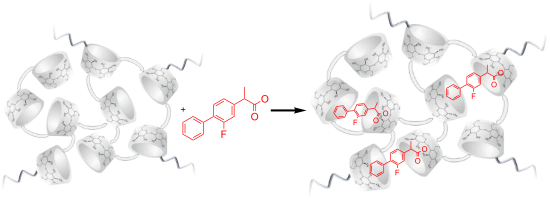
- (acrylamidoacetic acid) or a short polyamido-amine chain deriving from 2,2-bis(acrylamidoacetic acid) and 2-methylpiperazine, respectively. These swellable nanosponges were shown to be sensitive to the pH of the surrounding media. PAA-NS were reduced in nanosuspensions by using the high-pressure-homoginisation


Flow photochemistry: Old light through new windows
Beilstein J. Org. Chem. 2012, 8, 2025–2052, doi:10.3762/bjoc.8.229
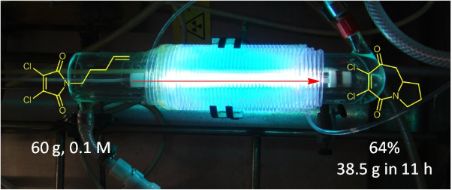
- . Comparison with a batch reactor showed that the batch reactor gave much higher conversion [50][69]. Subsequent work has shown that the conversion of this reaction in a microflow reactor can be improved through the use of high-power, high-pressure Hg lamps [28]. Microflow photochemistry has been applied to


Biocatalytic hydroxylation of n-butane with in situ cofactor regeneration at low temperature and under normal pressure
Beilstein J. Org. Chem. 2012, 8, 186–191, doi:10.3762/bjoc.8.20
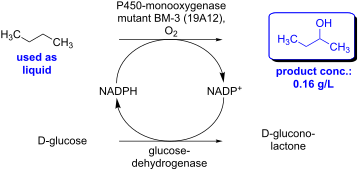
- n-alkanes, which proceeds in the presence of a P450-monooxygenase advantageously at temperatures significantly below room temperature, is described. In addition, an enzymatic hydroxylation of the “liquid gas” n-butane with in situ cofactor regeneration, which does not require high-pressure
- Arnold using a P450-monooxygenase BM-3 mutant [8]. Recently, Reetz et al. reported a remarkable improvement when using a perfluoro carboxylic acid as an additive, thereby accelerating the hydroxylation as catalyzed by a P450-monooxygenase BM-3 mutant in combination with high pressure (10 bar) at 25 °C [9
- as a cheap cosubstrate for in situ cofactor regeneration. Independently, in our work we focused on a biocatalytic hydroxylation of n-butane, which also proceeds with this type of in situ cofactor regeneration but does not require high-pressure conditions. In particular, we were interested in a


Efficient and selective chemical transformations under flow conditions: The combination of supported catalysts and supercritical fluids
Beilstein J. Org. Chem. 2011, 7, 1347–1359, doi:10.3762/bjoc.7.159
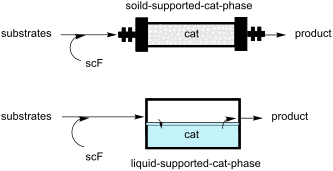
- homogeneous scFs media can be altered by changing these parameters [26][27]. Selected examples of phase equilibrium-controlled chemical reaction kinetics in high pressure CO2 have been reviewed elsewhere [28]. Nevertheless, examples exploiting the great potential of the combined use of immobilized catalysts


Triple-channel microreactor for biphasic gas–liquid reactions: Photosensitized oxygenations
Beilstein J. Org. Chem. 2011, 7, 1158–1163, doi:10.3762/bjoc.7.134
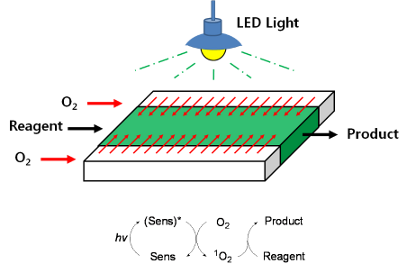
- -volume ratio. Therefore, vigorous stirring, ultrasonic agitation, high pressure or supercritical conditions are typically applied to enhance mass transfer in batch reactors for gas–liquid biphasic reactions. Recently, we reported a dual-channel microreactor that dramatically improved the reaction rate of


Scaling up of continuous-flow, microwave-assisted, organic reactions by varying the size of Pd-functionalized catalytic monoliths
Beilstein J. Org. Chem. 2011, 7, 1150–1157, doi:10.3762/bjoc.7.133
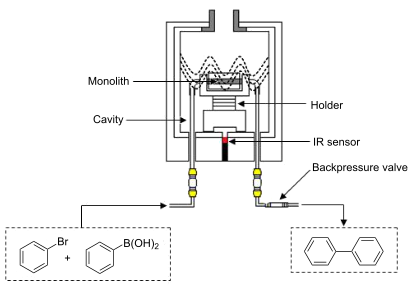
- ][5][6][7]. Much of this work has focused on continuous-flow microreactor methodology for laboratory based organic synthesis, and has featured the development of inorganic and organic polymer based functionalized monolithic reactors that can operate at elevated temperatures and under high pressure [8


Asymmetric Au-catalyzed cycloisomerization of 1,6-enynes: An entry to bicyclo[4.1.0]heptene
Beilstein J. Org. Chem. 2011, 7, 1021–1029, doi:10.3762/bjoc.7.116
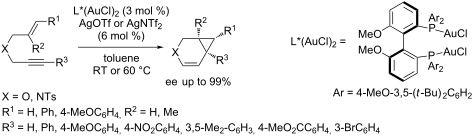
- were recorded on a Bruker AV 300 instrument. All signals were expressed as ppm (δ) and internally referenced to residual proton solvent signals. Coupling constants (J) are reported in Hz and refer to apparent peak multiplicities. Enantiomeric excesses were determined by high pressure liquid


Continuous flow hydrogenation using polysilane-supported palladium/alumina hybrid catalysts
Beilstein J. Org. Chem. 2011, 7, 735–739, doi:10.3762/bjoc.7.83
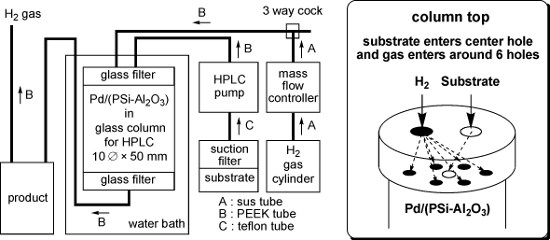
- several problems associated with conducting heterogeneous catalytic hydrogenation in a batch system. These include the necessity for filtration of hydrogen-saturated pyrophoric catalysts from flammable solvents, the possible requirement to use hydrogen gas under high pressure, difficulties in the re-use


Intraannular photoreactions in pseudo-geminally substituted [2.2]paracyclophanes
Beilstein J. Org. Chem. 2011, 7, 658–667, doi:10.3762/bjoc.7.78

- the freeze, pump, and thaw technique. Irradiations were conducted with a high-pressure mercury lamp (150 W) or a halogen torch lamp (1 kW) using water cooling reactor. Synthesis: (1,3-Dioxolan-2-ylmethyl)triphenylphosphonium bromide was prepared according to [24]; 4,15-diformyl[2.2]paracyclophane (9


Unusual behavior in the reactivity of 5-substituted-1H-tetrazoles in a resistively heated microreactor
Beilstein J. Org. Chem. 2011, 7, 503–517, doi:10.3762/bjoc.7.59
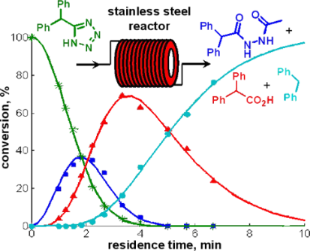
- order to conduct highly exothermic reactions safely [1][2][3][4][5][6][7][8][9]. More recently, following the concepts of “Process Intensification” and “Novel Process Windows” [10][11][12], flow chemistry executed in high-temperature and/or high-pressure regimes have become increasingly popular [13
- , followed by translation to high-temperature/high-pressure scalable continuous flow processes (“microwave-to-flow” paradigm) [26][27][28]. A recent example involves the synthesis of 5-substituted-1H-tetrazoles via an azide–nitrile cycloaddition pathway, using sodium azide (NaN3) as an inexpensive azide
- -temperature batch conditions obtained in sealed Pyrex glass reaction vessel (using either conventional or microwave heating) [25] to a continuous flow format. The microreactor system used for these studies was a high-temperature, high-pressure microtubular flow unit that can be used for processing homogeneous


Formation of macrocyclic lactones in the Paternò–Büchi dimerization reaction
Beilstein J. Org. Chem. 2011, 7, 265–269, doi:10.3762/bjoc.7.35
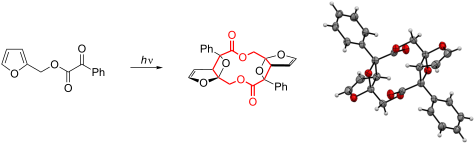
- irradiated in degassed benzene with a high-pressure Hg lamp with a Pyrex filter (Scheme 3). Interestingly, the Paternò–Büchi dimer product 2a (R = Ph), which possesses Ci symmetry, was obtained as the major product and contains the biologically important macrocyclic lactone structure [30][31][32][33]. The
- Fisher Scientific LTD Orbitrap XL spectrometers, respectively, at the Natural Science Center for Basic Research and Development (N-BARD), Hiroshima University. The furan derivatives 1a–c (129 mg, 0.561 mmol) were dissolved in benzene (7.0 ml) and the degassed reaction mixture was irradiated with a high
- -pressure Hg lamp (300 W, hν > 290 nm) with a Pyrex filter. After 13 h, the solvent was removed in vacuo and dimethyl fumarate added as an internal standard. 1H NMR (500 MHz, CDCl3) was measured to determine the ratio of products. After the photoreaction, the residue was purified by repeated column


Heavy atom effects in the Paternò–Büchi reaction of pyrimidine derivatives with 4,4’-disubstituted benzophenones
Beilstein J. Org. Chem. 2011, 7, 113–118, doi:10.3762/bjoc.7.16
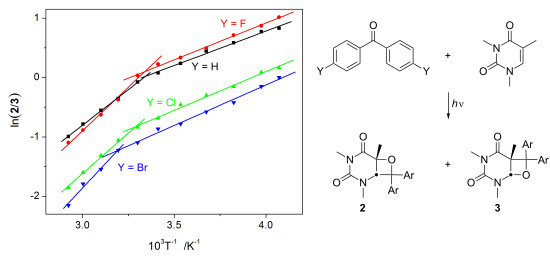
- performed in acetonitrile-d3. A solution of the reactants was placed in a Pyrex NMR tube (transmitted light > 290 nm), purged with high purity N2 for 10 min and then irradiated with a 125 W high-pressure Hg lamp at 10 °C. The sample tubes were placed on a merry-go-round equipment moving around the Hg lamp


Miniemulsion polymerization as a versatile tool for the synthesis of functionalized polymers
Beilstein J. Org. Chem. 2010, 6, 1132–1148, doi:10.3762/bjoc.6.130
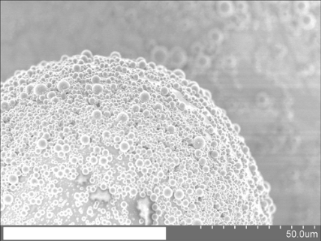
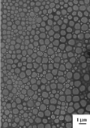
- polymerization. Therefore it is difficult to know if the experiment represented a “true” miniemulsion polymerization process. A similar process was employed but with homogenization of catalyst/hexadecane/toluene, which was performed with either ultrasonication or high-pressure homogenizer in order to obtain a





Intramolecular hydroxycarbene C–H-insertion: The curious case of (o-methoxyphenyl)hydroxycarbene
Beilstein J. Org. Chem. 2010, 6, 1061–1069, doi:10.3762/bjoc.6.121
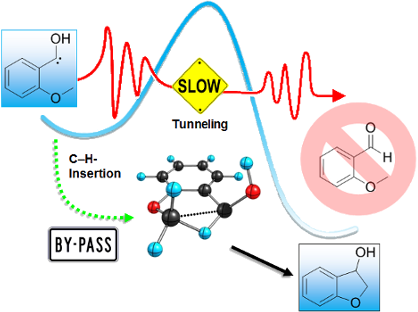
- maximum of 5 lies at 591 nm [21][22]. To rule out the existence of a persistent, non-tunneling carbene, irradiation experiments were conducted: Subsequent irradiation with a high-pressure Hg-lamp at λ = 577 nm, 546 nm, and 313 nm did not lead either to the appearance of new or the disappearance of
- approximately 50 mm. A high-pressure mercury lamp (HBO 200, Osram) with a monochromator (Bausch & Lomb) was used for irradiation. Experiments with deuterated acid were conducted accordingly. (o-Methoxyphenyl)glyoxylic acid (6) [25]. To a solution of 3.00 g (20.0 mmol) o-methoxyacetophenone in absolute pyridine


Functionalized copolyimide membranes for the separation of gaseous and liquid mixtures
Beilstein J. Org. Chem. 2010, 6, 789–800, doi:10.3762/bjoc.6.86
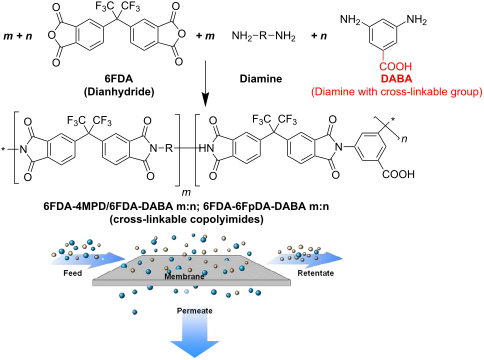
- of olefins/paraffins, e.g. propylene/propane, aromatic/aliphatic separation e.g. benzene/cyclohexane as well as high pressure gas separations, e.g. CO2/CH4 mixtures. In addition, opportunities for implementing the membrane units in conventional separation processes are discussed. Keywords: aromatics
- generally carried out if the quantity and quality are too low. Another very interesting application is the treatment of natural gas in offshore deposits. So far a huge number of gas resources are known worldwide, which cannot be exploited because of the high CO2 content and the high pressure of the mixture
- derivatives in current use. Conclusion It has been shown for the separation of high-pressure mixtures of CO2/CH4 as well as propylene/propane mixtures that the prepared cross-linked copolyimide membranes are much more plasticization resistant than non cross-linkable polyimide membranes used as reference


Shelf-stable electrophilic trifluoromethylating reagents: A brief historical perspective
Beilstein J. Org. Chem. 2010, 6, No. 65, doi:10.3762/bjoc.6.65
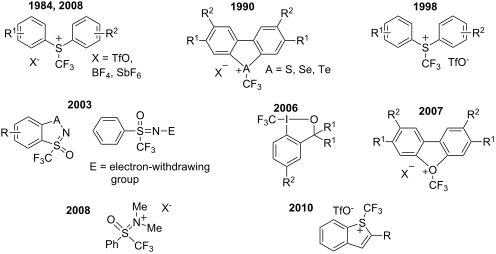
- derivatives from −70 °C. Decomposition of the salts is rapid at –30 °C. However, reaction with O- and N-centered nucleophiles was possible with in situ generated trifluoromethyloxonium salts obtained by irradiation of 19 with a high-pressure mercury lamp at low temperature in dichloromethane; other


Synthesis, characterization and photoinduced curing of polysulfones with (meth)acrylate functionalities
Beilstein J. Org. Chem. 2010, 6, No. 56, doi:10.3762/bjoc.6.56
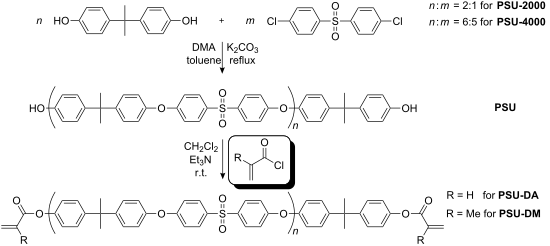
- instrument. Photocalorimetry (Photo-DSC) The photo-differential scanning calorimetry (Photo-DSC) measurements were carried out by means of a modified Perkin-Elmer Diamond DSC equipped with a high pressure mercury arc lamp (320–500 nm). A uniform UV light intensity was delivered across the DSC cell to the




Ring opening metathesis polymerization-derived block copolymers bearing chelating ligands: synthesis, metal immobilization and use in hydroformylation under micellar conditions
Beilstein J. Org. Chem. 2010, 6, No. 28, doi:10.3762/bjoc.6.28
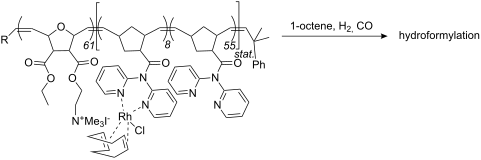
- and λ2 = 343.600 nm, respectively. A 1000 ppm Rh standard (1N HNO3, Merck, Germany) was used to prepare standards of 0, 0.100, 1.00 and 10.00 ppm. General procedure for hydroformylation: The reaction was carried out in a 300 mL Parr high-pressure reactor. The reactor was evacuated, flushed with argon


Flow through reactors for organic chemistry: directly electrically heated tubular mini reactors as an enabling technology for organic synthesis
Beilstein J. Org. Chem. 2009, 5, No. 70, doi:10.3762/bjoc.5.70
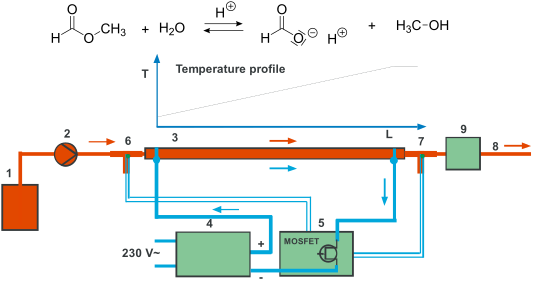
- well-controlled electromagnetic field generation. Cheap thermocouples cannot be used as sensors for temperature measurement and control. Temperature sensors cannot always be fixed directly into the reaction mixture because of limited chemical or mechanical stability. Operation under high pressure is
- [16]. The reactor outlet temperature was regulated taking a thermocouple (7) as a measure. This thermocouple is located in the middle of the liquid stream leaving the reactor. Thereby the temperature of the liquid is adjusted, not the wall temperature of the reactor. To allow operation at high
- pressure inside the tube the outlet was attached with a capillary to introduce a pressure drop. Conversion was measured with a detector (9) connected directly behind the capillary before the reactor outlet (8). All electric connections within the heater supply lines were made of 10 mm2 flexible insulated





