


Search results
Search for "isopropyl" in Full Text gives 267 result(s) in Beilstein Journal of Organic Chemistry. Showing first 200.
Exploring the scope of DBU-promoted amidations of 7-methoxycarbonylpterin
Beilstein J. Org. Chem. 2020, 16, 509–514, doi:10.3762/bjoc.16.46

- amines to be adequately reassessed on their ease of amidation (Table 2). It was found that the reaction was most affected by an α-substitution on the amine (Table 2; products 11–13). This is in agreement with known Taft parameters which show steric effects are more pronounced for an isopropyl group


Synthesis of a dihalogenated pyridinyl silicon rhodamine for mitochondrial imaging by a halogen dance rearrangement
Beilstein J. Org. Chem. 2019, 15, 2333–2343, doi:10.3762/bjoc.15.226
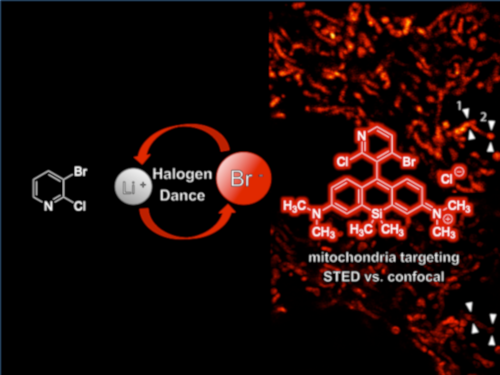
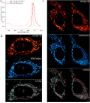
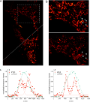
- of the ester group in 2’-position, an isopropyl ester derivative; another one might be the effects of the fluorine atoms and the ester group on the HOMO energy level of the benzene moiety. Since our group is interested in PET-active near-infrared (NIR) dyes for bimodal medical imaging (PET/optical



Characterization of two new degradation products of atorvastatin calcium formed upon treatment with strong acids
Beilstein J. Org. Chem. 2019, 15, 2085–2091, doi:10.3762/bjoc.15.206
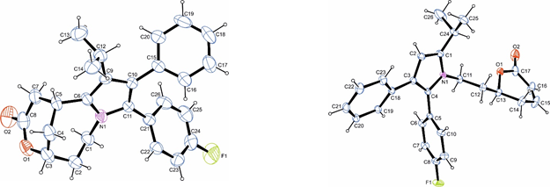
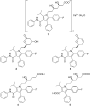
- /dehydration process in the side chain), treatment with conc. aqueous hydrochloric acid gave a complex, bridged molecule under C–C-bond formation of the lactone moiety with the pyrrole, migration of the isopropyl group and loss of the carboxanilide residue. The novel degradation products were characterized by
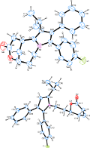
- isopropyl residue, originally located at C-2 of the pyrrole, is shifted to C-3, rendering the annulated, tetrasubstituted pyrrole 6. The structure of 6 was confirmed by X-ray crystal structure analysis. However, most likely cleavage of the carboxanilide moiety (compare formation of 7 from atorvastatin with
- , which is formed via initial acid-mediated electrophilic attack of the unsaturated lactone at C-2 of the pyrrole ring. The resulting carbenium ion should be stabilized as shown in Scheme 3 (B ↔ B’). Subsequent shift of the isopropyl group from C-2 to C-3 then would give carbenium(-iminium) ion C, which




Bipolenins K–N: New sesquiterpenoids from the fungal plant pathogen Bipolaris sorokiniana
Beilstein J. Org. Chem. 2019, 15, 2020–2028, doi:10.3762/bjoc.15.198
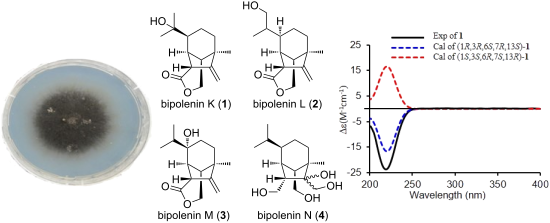
- ) showed 15 distinct carbon signals, while 13C and 1H NMR data (Table 1) indicated an isopropyl unit (δC 28.3, 29.2 and 73.1; δH 1.20 and 1.24), one tertiary methyl (δC 20.1; δH 1.25), a disubstituted olefin (δC 105.7 and 155.2; δH 5.12 and 4.89) and four methines (δC 39.6, 51.1, 51.6 and 54.0; δH 1.73


A review of the total syntheses of triptolide
Beilstein J. Org. Chem. 2019, 15, 1984–1995, doi:10.3762/bjoc.15.194
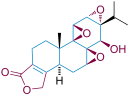
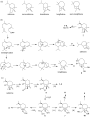
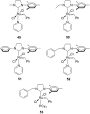
- -phenylethylamine (49) to generate key tricyclic intermediates 51 and 52, a Pd(II)-catalyzed carbonylation–lactonization reaction of 9 to construct the butenolide (D-ring), and a Friedel–Crafts isopropylation to install the C-13 isopropyl group. Still, the construction of the C-5 trans junction A-/B-ring was
- 18.5% overall yield. Importantly, by late-stage installation of the C-13 isopropyl group, this synthesis also provided a useful approach for the synthesis of other structurally relevant derivatives of triptolide such as C-15 and C-16 modified derivatives of triptolide. In 1980, van Tamelen and co
- form the A- and D-ring. The second one involves the reaction of the bicyclic intermediate 13 and 2-isopropyl-1,4-benzoquinone (14) to form the B- and C-ring. Finally, a regio- and stereoselective reduction, methylation and dehydration procedure and a selenylation, oxidation and elimination procedure


Analysis of sesquiterpene hydrocarbons in grape berry exocarp (Vitis vinifera L.) using in vivo-labeling and comprehensive two-dimensional gas chromatography–mass spectrometry (GC×GC–MS)
Beilstein J. Org. Chem. 2019, 15, 1945–1961, doi:10.3762/bjoc.15.190
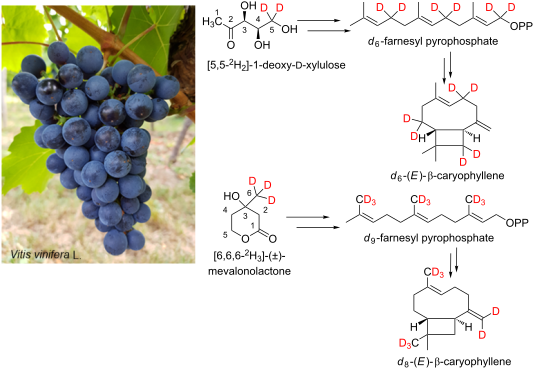
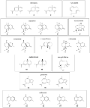
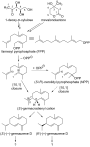
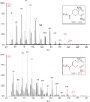
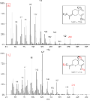
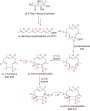
- )-(+)-germacrene D, that includes two consecutive 1,2-hydride shifts [33]. In all terpenes in Scheme 3, TOF–EIMS measurements showed that a deuterium atom is located in the isopropyl group. This can be explained by the assumption that in Vitis vinifera L. all sesquiterpenes are formed via the (S)-germacradienyl
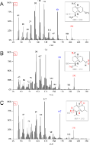
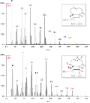
- ). The signal with m/z = 161 [M]+ corresponds to the fragment after abstraction of the isopropyl group (marked blue). Feeding experiments using d2-DOX showed that according to the biosynthesis pathway demonstrated in Scheme 3, a maximum of 6 deuterium atoms are incorporated into α-cubebene. The presence
- isopropyl group leads to the fragment with m/z = 166. At this point it becomes obvious why it can be assumed that the tricyclic sesquiterpene hydrocarbon α-cubebene is synthesized via (S)-(−)-germacrene D and not via (R)-(+)-germacrene D. Assuming the biosynthesis of α-cubebene takes place via (R











Inherent atomic mobility changes in carbocation intermediates during the sesterterpene cyclization cascade
Beilstein J. Org. Chem. 2019, 15, 1890–1897, doi:10.3762/bjoc.15.184

- the counterclockwise rotation of the isopropyl moiety is necessary for 1,5-hydrogen shift to occur (TS_2-3a in quiannulatene biosynthesis and TS_2-3 in sesterfisherol biosynthesis) [19]. Phase II: conformational changes and hydrogen shifts In phase II, different trends of inherent mobility are seen


Application of chiral 2-isoxazoline for the synthesis of syn-1,3-diol analogs
Beilstein J. Org. Chem. 2019, 15, 1840–1847, doi:10.3762/bjoc.15.179
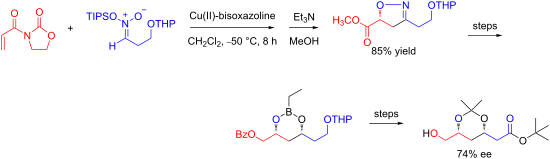
- triisopropylsilyl nitronate. Then, the catalytic asymmetric cycloaddition gave the 2-isoxazolidine cycloadduct 1 in a high yield. In the light of our previous ligand screening results [49], two bisoxazolines with an isopropyl (ligand B) or tert-butyl group (ligand A) were tested. Optimization of the conditions


Complexation of 2,6-helic[6]arene and its derivatives with 1,1′-dimethyl-4,4′-bipyridinium salts and protonated 4,4'-bipyridinium salts: an acid–base controllable complexation
Beilstein J. Org. Chem. 2019, 15, 1795–1804, doi:10.3762/bjoc.15.173
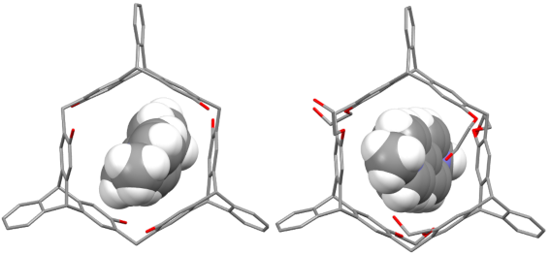
- complex H1·G1 was obtained by vapor diffusion of isopropyl ether into acetone. As shown in Figure 4, G1 was encapsulated in the cavity of H1 to form a 1:1 complex, in which G1 is distorted by the dihedral angle between the pyridinium rings of 33.19°. There exist multiple CH···π interactions between the
- diffusion of isopropyl ether into a chloroform/acetone 1:1 (v/v) solution of the 1:1 mixture of H3 and G1, we only obtained a single crystal of H3 instead of the host–guest complex. The steric hindrance of the n-butoxy groups in H3 (Supporting Information File 1, Figure S90) might lead to weak complexation
- of H3 with the tested guests in solution. However, we obtained a single crystal of complex H5·G1 by vapor diffusion of isopropyl ether into an acetone solution. As shown in Figure 5, we found that G1 was encapsulated in the cavity of H5 to form a 1:1 complex, and the complex molecules are stacked


N-(1-Phenylethyl)aziridine-2-carboxylate esters in the synthesis of biologically relevant compounds
Beilstein J. Org. Chem. 2019, 15, 1722–1757, doi:10.3762/bjoc.15.168

- [16][18][19], isopropyl 5c [16] and tert-butyl 5d [16][20] as well as for 4-methoxyphenyl ester 5e [21]. However, the corresponding (−)-menthyl esters (2R,1'R)-5f and (2S,1'R)-5f were separated by solvent-driven selective crystallization at low-temperature from ethanol and hexane, respectively. The


An azobenzene container showing a definite folding – synthesis and structural investigation
Beilstein J. Org. Chem. 2019, 15, 1534–1544, doi:10.3762/bjoc.15.156
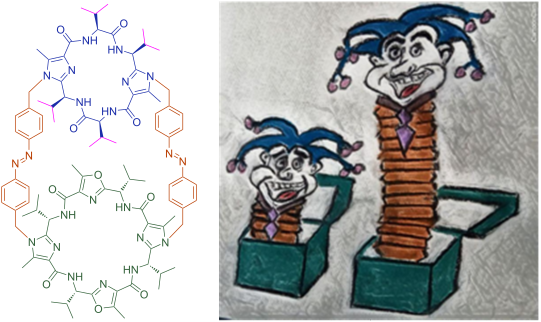
- reduction of the distance between the two isopropyl groups. As further example the chiral foldable container 5 should be mentioned [49]. Here, two imidazole-containing macrocycles are linked to each other by two azobenzene units (Figure 2). Irradiation with UV light causes two consecutive trans→cis
- , whereas platform 3a possesses two oxazole rings. Overall, both macrocycles feature four amino acid side chains (isopropyl groups), whereby all of them are of the same configuration (S). Therefore, they are presented on one face of the macrocycle in a convergent manner. Platform 3a was synthesized in a few
- macrocycles: In the elongated trans,trans-isomer this distance shows a value of 14.1 Å, in the more compact cis,cis-isomer the distance amounts to 11.3 Å. The replace of the isopropyl groups by recognition units and the enlargement of the two linkers, which makes a shielding of a guest from the environment


Formation of an unexpected 3,3-diphenyl-3H-indazole through a facile intramolecular [2 + 3] cycloaddition of the diazo intermediate
Beilstein J. Org. Chem. 2019, 15, 1347–1354, doi:10.3762/bjoc.15.134
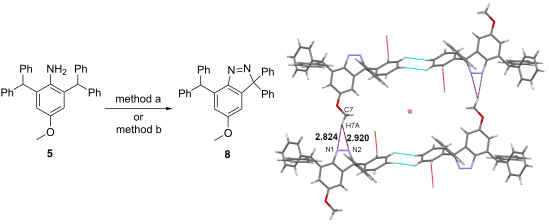
- -arylsulfonyl fluoride 3 was 95% intact in rat plasma after 120 min at 37 °C [5]. This indicated that the combination of electron-donating effects and steric hindrance of isopropyl groups provide greater stability to a sulfur–fluorine bond than groups that can only provide the steric hindrance in the molecule




Enantioselective Diels–Alder reaction of anthracene by chiral tritylium catalysis
Beilstein J. Org. Chem. 2019, 15, 1304–1312, doi:10.3762/bjoc.15.129
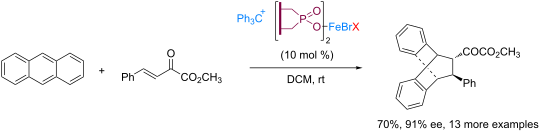
- α-ketoesters 4 was subjected to the reaction with anthracene (3a) to give the desired cycloadducts 5a–n in moderate to good yields and with up to 93% ee. The bulkier isopropyl ketoester resulted in a lower yield and enantioselectivity (Table 2, entry 3 vs 1 and 2). Variations on the aromatic group


An efficient synthesis of the guaiane sesquiterpene (−)-isoguaiene by domino metathesis
Beilstein J. Org. Chem. 2019, 15, 858–862, doi:10.3762/bjoc.15.83
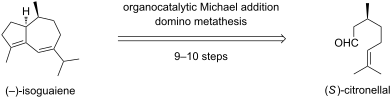
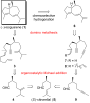
- ylide 21 [8] followed by alkyne generation [23] with butyllithium in a one-pot process, trienyne 3 was obtained as a 1.6:1 mixture of E and Z olefin isomers. Due to the presence of the isopropyl group at the disubstituted alkene [24] of 3, 30 mol % of the second generation Grubbs catalyst 22 were




An improved synthesis of adefovir and related analogues
Beilstein J. Org. Chem. 2019, 15, 801–810, doi:10.3762/bjoc.15.77
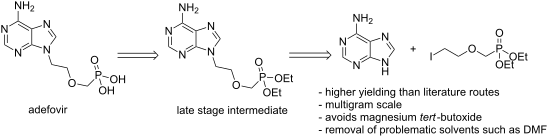
- wondered if alkylation of adenine with advanced intermediate 14 might represent a facile route to 6 (Figure 3). Holý and co-workers have previously utilised a similar alkyl chloride reagent to access adefovir analogues, but found that recourse to an isopropyl ester intermediate was necessary as the


Hoveyda–Grubbs catalysts with an N→Ru coordinate bond in a six-membered ring. Synthesis of stable, industrially scalable, highly efficient ruthenium metathesis catalysts and 2-vinylbenzylamine ligands as their precursors
Beilstein J. Org. Chem. 2019, 15, 769–779, doi:10.3762/bjoc.15.73
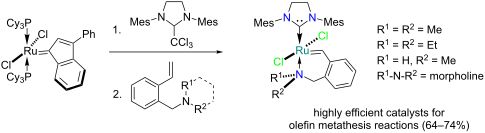
- pyridine group (Figure 1) recently released to the market. It has been experimentally established that the catalysts with an O-isopropyl group in their structure usually show the best combination of stability and activity. However, the oxygen atom having only one site for modification (i.e., the alkyl


Tuning the stability of alkoxyisopropyl protection groups
Beilstein J. Org. Chem. 2019, 15, 746–751, doi:10.3762/bjoc.15.70

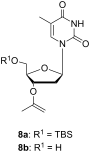
- reported were 10 minutes in an acetate buffer at pH 4.18 and approximately 4 minutes at pH 3.22. These values are close to an order of magnitude longer than what we determined for MIP 4a, and two orders of magnitude longer than those of the cyclohexyl and isopropyl analogs 4c, 4d (Table 1). It must be
- , d: R = isopropyl, e: R = CH2CF3. Proposed acetal hydrolysis pathways. Half-lives of 5’-acetal (4a–e) and 3’-acetal-protected (7a,c–e) 2’-deoxythymidines, and 2’-deoxy-3’-O-propen-2-ylthymidine (8b) in acetate (pH 4.94), citrate (pH 5.61) and phosphate (pH 6.82) buffers at 25.0 °C. The ionic strength



Selective benzylic C–H monooxygenation mediated by iodine oxides
Beilstein J. Org. Chem. 2019, 15, 602–609, doi:10.3762/bjoc.15.55

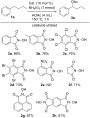
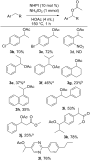
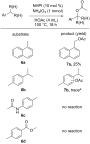
- decatungstate [58]. Substrates containing tertiary C–H bonds, such as 1-isopropyl-4-methylbenzene (6b), were essentially unreactive under the developed conditions, returning starting alkyl arene with only a trace of acetoxylated product 7b (see Supporting Information File 1, Figure S11) [59]. Previous work on




LCST phase behavior of benzo-21-crown-7 with different alkyl chains
Beilstein J. Org. Chem. 2019, 15, 437–444, doi:10.3762/bjoc.15.38
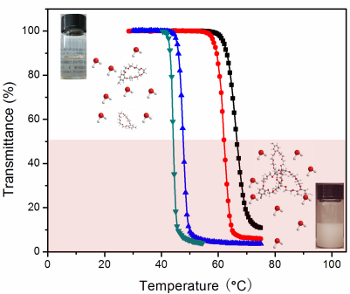
- mg/mL (44.2 °C). It is demonstrated that, the longer the alkyl chain is the lower Tcloud becomes. We also found that the presence of a propyl substituent (3a) and an isopropyl group (3b) results in a quite different critical transition temperature, with Tcloud at 62.1 °C and 41.5 °C, respectively


Sigmatropic rearrangements of cyclopropenylcarbinol derivatives. Access to diversely substituted alkylidenecyclopropanes
Beilstein J. Org. Chem. 2019, 15, 333–350, doi:10.3762/bjoc.15.29
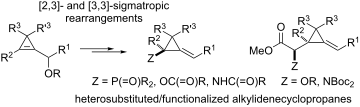
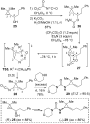
- that observed for 7a/7’a. Other substituents were tolerated on the phosphorus atom including an isopropyl or a cyclohexyl group and the corresponding phosphine oxides 7h/7’h and 7i/7’i were isolated in good yields. Increasing the steric hindrance around the phosphorus atom resulted in a higher
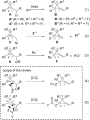
- diastereoselectivity. However, the sigmatropic rearrangement of the highly hindered di(tert-butyl)phosphinite 6j and tetra(isopropyl) phosphorodiamidite 6k did not occur (Scheme 7) [37]. The mechanism proposed by Rubin et al. involves a reversible addition of the Lewis base (DBU) on the cyclopropene double bond at C2





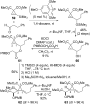


A novel and efficient synthesis of phenanthrene derivatives via palladium/norbornadiene-catalyzed domino one-pot reaction
Beilstein J. Org. Chem. 2019, 15, 291–298, doi:10.3762/bjoc.15.26
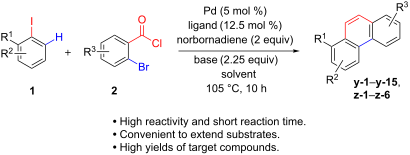
- . Therefore, it is speculated that the intrinsic electronic properties of aryl iodides makes no difference in this process. The reaction of methoxy-, 2-ethyl-, 2-isopropyl, and 2-phenyliodobenzenes in this procedure afforded the desired products in excellent yields (y-3, y-5, y-6 and y-4), while 1




Unexpected loss of stereoselectivity in glycosylation reactions during the synthesis of chondroitin sulfate oligosaccharides
Beilstein J. Org. Chem. 2019, 15, 137–144, doi:10.3762/bjoc.15.14
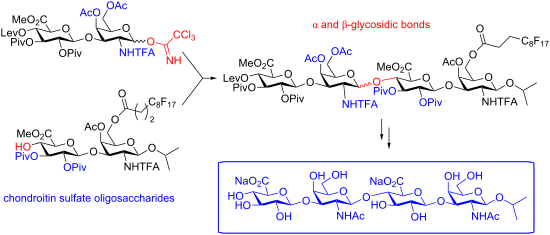
- biosynthesis of this polymer. The presence of aromatic rings, such as the 4-methoxyphenyl group at the anomeric position, should be avoided because these groups can significantly modify the binding mode between the CS and the enzymes. For this reason, we introduced an isopropyl group in β-position of the
- anomeric center of the glycosyl acceptor. We hypothesized that the isopropyl moiety would not affect the CS–enzyme interaction. Trichloroacetimidate 12 was obtained by oxidative removal of the 4-methoxyphenyl group with CAN at 0 ºC and further treatment with trichloroacetonitrile and catalytic amounts of
- DBU. The glycosylation reaction with 2-propanol using TMSOTf as Lewis acid at 0 ºC cleanly provided the β-isopropyl glycoside 13 in 65% yield. Interestingly, no α-anomer was detected in the reaction mixture. Finally, cleavage of the levulinyl group using hydrazine monohydrate in pyridine/acetic acid


Ruthenium-based olefin metathesis catalysts with monodentate unsymmetrical NHC ligands
Beilstein J. Org. Chem. 2018, 14, 3122–3149, doi:10.3762/bjoc.14.292
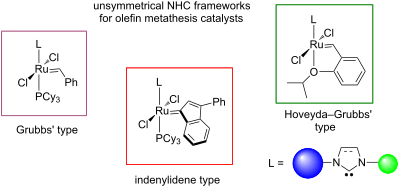
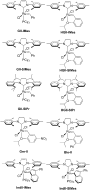
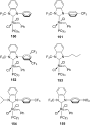
- . Catalyst 154 containing an N-isopropyl group (Figure 29), which is considered to be sterically equivalent to the N-trifluoromethyl group, disclosed a substantially lower selectivity in both alternating copolymerization and ethenolysis reaction, underlining that the electronic effect determined by the



















Mn-mediated sequential three-component domino Knoevenagel/cyclization/Michael addition/oxidative cyclization reaction towards annulated imidazo[1,2-a]pyridines
Beilstein J. Org. Chem. 2018, 14, 3078–3087, doi:10.3762/bjoc.14.287
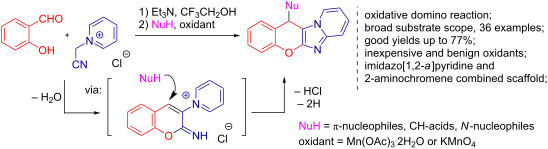
- molecules 8–10, in 60%, 53% and 49% yields, respectively. Such well-known π-nucleophiles as phenols could be used for the reaction, though 3-methoxyphenol and 3,5-dimethoxyphenol gave inseparable mixtures of regioisomers 11a and 11b (NMR, LCMS). The reactions with p-isopropyl- and p-tert-butylphenols gave





The activity of indenylidene derivatives in olefin metathesis catalysts
Beilstein J. Org. Chem. 2018, 14, 2956–2963, doi:10.3762/bjoc.14.275
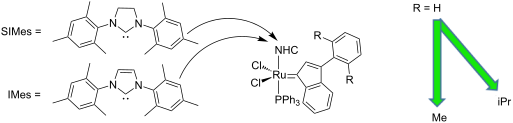
- with ortho-methyl and isopropyl groups at both ortho positions of their phenyl ring. DFT results highlight the more sterically demanding indenylidenes have to undergo a more exothermic first phosphine dissociation step. Overall, the study emphasises advantages of increased steric hindrance in promoting
- or isopropyl groups at the ortho positions of the phenyl substituent, compared to the unsubstituted 1 and 2. Comparing IMes vs SIMes, the activation is about 1 kcal/mol more favoured for the unsaturated system [42][43]. The absolute difference of 1 kcal/mol is maintained throughout the mechanism
- , however, we must point out that the opening of the metallacycle requires only 0.6 kcal/mol for the SIMes system versus 1.7 kcal/mol for the unsaturated system. The methyl and isopropyl-substituted indenylidene moieties reveal a different performance between the SIMes and the IMes congeners. When the





