Search results
Search for "metal complexes" in Full Text gives 276 result(s) in Beilstein Journal of Organic Chemistry. Showing first 200.
1,2,3-Triazolium macrocycles in supramolecular chemistry
Beilstein J. Org. Chem. 2019, 15, 2142–2155, doi:10.3762/bjoc.15.211
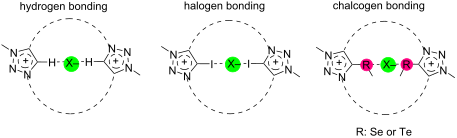
- mechanically interlocked molecules and molecular machines. We will not concern ourselves in this review with the applications of metal complexes based on N-heterocyclic carbene coordination chemistry, derived of triazoliums or with applications as ionic liquids [26][27][28]. 2. Anion recognition Due to the


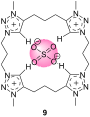


Naphthalene diimides with improved solubility for visible light photoredox catalysis
Beilstein J. Org. Chem. 2019, 15, 2043–2051, doi:10.3762/bjoc.15.201
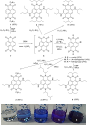
- photoredox catalytic behavior, transition metal complexes have disadvantages, including high costs due to limited availability, toxicity [22][23] and polluting properties [24]. This thwarts the principally “green” concept of photoredox catalysis. In order to avoid transition metals and enhance the



Halide metathesis in overdrive: mechanochemical synthesis of a heterometallic group 1 allyl complex
Beilstein J. Org. Chem. 2019, 15, 1856–1863, doi:10.3762/bjoc.15.181
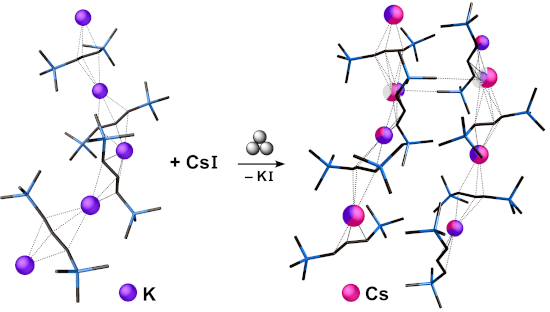
- which alkali metal complexes are known, including those of Li [15], Na [16], K [17][18], and Cs [18]. These have been formed via traditional solvent-based routes, by deprotonation of the substituted propene precursor with a metal alkyl or hydride (Equation 2) or with the metal itself (Equation 3) [18


Recent advances on the transition-metal-catalyzed synthesis of imidazopyridines: an updated coverage
Beilstein J. Org. Chem. 2019, 15, 1612–1704, doi:10.3762/bjoc.15.165
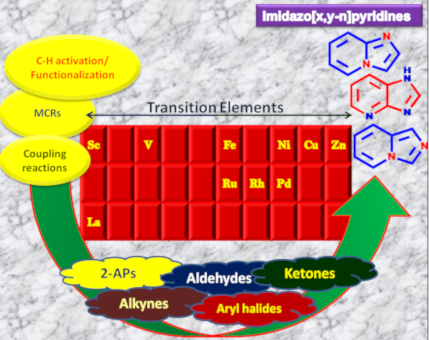
- (Scheme 8). Heterogenization of organic catalysts on Fe3O4 NPs has attracted much attention as these catalysts can be recovered by an external magnetic field and reused in subsequent reactions. Some metal complexes of 2,2-biimidazole (H2Biim) found to be effective catalysts in many organic transformations


2,3-Dibutoxynaphthalene-based tetralactam macrocycles for recognizing precious metal chloride complexes
Beilstein J. Org. Chem. 2019, 15, 1460–1467, doi:10.3762/bjoc.15.146
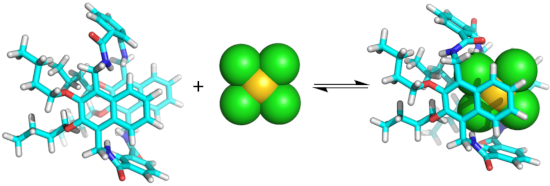
- macrocycle, which make it conformationally adaptive to maximize the binding affinities. In addition, the macrocycle shows fluorescent quenching when adding the chloride metal complexes in its solution and may be used as a fluorescent sensor for the detection of these coordination complexes. Keywords: host


Introduction of an isoxazoline unit to the β-position of porphyrin via regioselective 1,3-dipolar cycloaddition reaction
Beilstein J. Org. Chem. 2019, 15, 1434–1440, doi:10.3762/bjoc.15.143
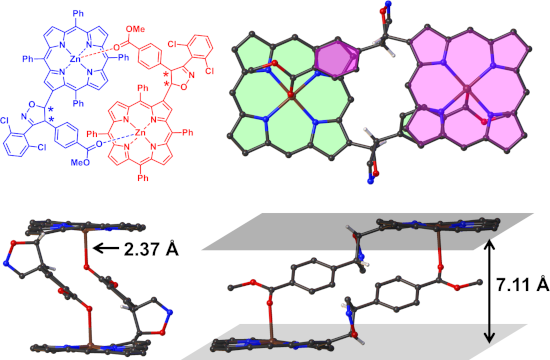
- ; isoxazoline; macrocycles; nitrile oxide; porphyrin; Introduction In nature, porphyrin-type compounds play a prominent role in life [1]. It is well known that certain vital functions, like O2 transport, photosynthesis etc. depend on the action of porphyrin–metal complexes [2][3][4][5]. Inspired by the natural


Complexation of a guanidinium-modified calixarene with diverse dyes and investigation of the corresponding photophysical response
Beilstein J. Org. Chem. 2019, 15, 1394–1406, doi:10.3762/bjoc.15.139
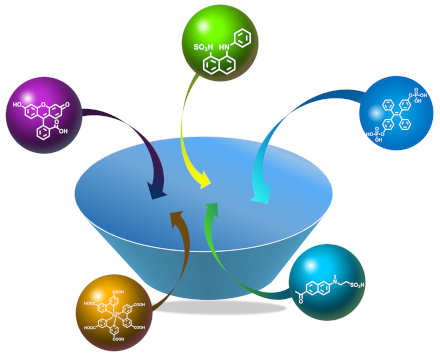
- representative candidate of luminescent transition-metal complexes. We determined the association constants of the GC5A–dye complexes by fluorescence titration and discuss the complexation-induced photophysical changes. In addition, a comparison of the complexation behavior of GC5A with that of other macrocycles
- charge-transfer dyes. P-TPE was included in the study as a classical aggregation-induced emission (AIE) dye and TPS as a representative of a two-photon fluorescent probe. Ru(dcbpy)3 was involved as a member of luminescent transition-metal complexes. Of our special interest in the present study is to
- , higher spacial resolution and reduced photodamage of tissue [59]. The complexation of GC5A with the luminescent transition-metal complex Luminescent transition-metal complexes, especially those with ruthenium (Ru), are of great importance owing to their well-documented chemical stability, abundant




Host–guest interactions between p-sulfonatocalix[4]arene and p-sulfonatothiacalix[4]arene and group IA, IIA and f-block metal cations: a DFT/SMD study
Beilstein J. Org. Chem. 2019, 15, 1321–1330, doi:10.3762/bjoc.15.131
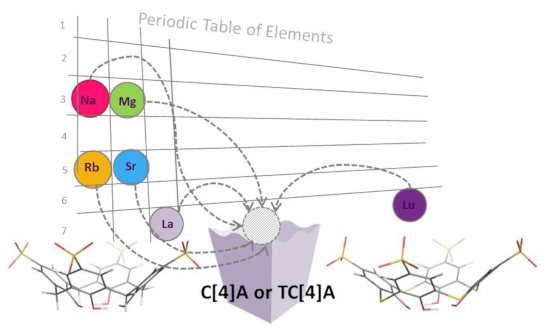
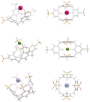
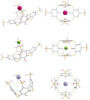
- − structure and replacing the metal. The optimized structures of the resultant C[4]A-based metal complexes with group IA, IIA and f-block metal cations are shown in Figure 2 and Figure 3 in two projections. The initial shape of the “empty” calixarenes (truncated square pyramid or popcorn box frustum) becomes





Synthesis of non-racemic 4-nitro-2-sulfonylbutan-1-ones via Ni(II)-catalyzed asymmetric Michael reaction of β-ketosulfones
Beilstein J. Org. Chem. 2019, 15, 1289–1297, doi:10.3762/bjoc.15.127
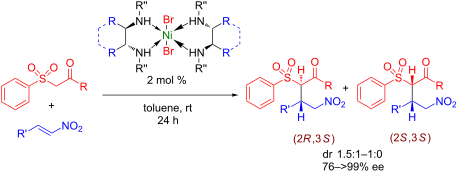
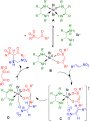
- transition metal complexes. The preparation of hydroxy sulfones from β-ketosulfones in the presence of Ru [19][20], Ir [21] and Rh [22] complexes was described. Chiral sulfones were also obtained by hydrogenation of the C=C bond with α,β-unsaturated sulfones in the presence of Ir(I) complexes with P,N
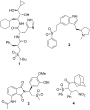
- ketosulfones with nitroalkenes in the presence of organocatalysts shows high enantioselectivity, however, leads to a mixture of diastereomers. For the catalytic activation of β-ketosulfones by metal complexes chiral Lewis acids may be considered as an alternative way to carry out the asymmetric Michael
- the absolute configuration as compared to the analogous adamantyl derivative, which will be discussed below. It should be noted that low diastereoselectivity was previously observed in the asymmetric addition of various Michael donors to nitroalkenes in the presence of both metal complexes [47] and




Design of a double-decker coordination cage revisited to make new cages and exemplify ligand isomerism
Beilstein J. Org. Chem. 2019, 15, 1129–1140, doi:10.3762/bjoc.15.109
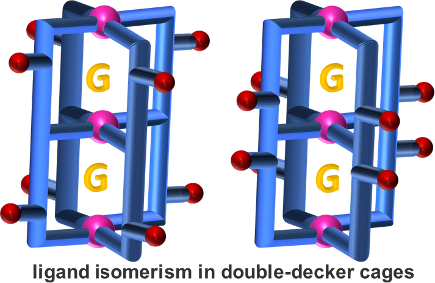
- positional isomer or regioisomer of L2) in order to exemplify ligand isomerism. Ligand isomerism includes metal complexes (at least two) having the same molecular formula but are composed of different positional isomers (regioisomers) of the ligand. Positional isomers (regioisomers) of a non-chelating ligand
- complexes of L1 versus L2: ligand isomerism phenomenon As discussed in the introduction section “The definition of ligand isomerism includes metal complexes (at least two) having the same molecular formula but are composed of different structural isomers of the ligand.” The complexes prepared in this work


Precious metal-free molecular machines for solar thermal energy storage
Beilstein J. Org. Chem. 2019, 15, 1096–1106, doi:10.3762/bjoc.15.106
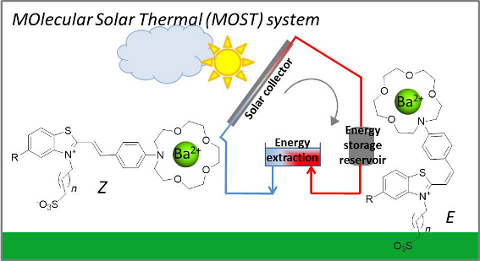
- constants of metal complexes were determined and are in good agreement with the literature data for reference dyes. The temporal evolution of trans-to-cis isomerization was observed in a real-time regime. The dyes demonstrated a low intrinsic fluorescence of their Ba2+ complexes and high yield of E/Z




Mechanochemistry of supramolecules
Beilstein J. Org. Chem. 2019, 15, 881–900, doi:10.3762/bjoc.15.86
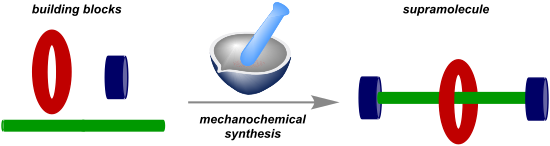
- ]. Subsequently, compound 2 underwent substitution with α,α’-dibromo-o-xylene to create the nickel(II) complex 3 [54]. In 2014, James and co-workers reported a one-pot two-step mechanochemical synthesis of metal complexes 7 (Figure 3). First, the salen-type ligand 6 was synthesized from o-hydroxybenzaldehyde (4


Coordination chemistry and photoswitching of dinuclear macrocyclic cadmium-, nickel-, and zinc complexes containing azobenzene carboxylato co-ligands
Beilstein J. Org. Chem. 2019, 15, 840–851, doi:10.3762/bjoc.15.81
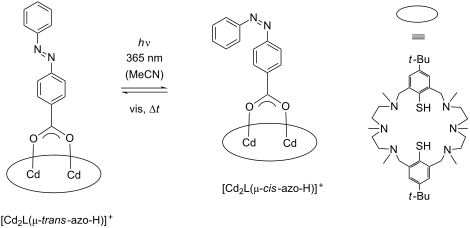
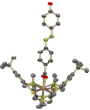
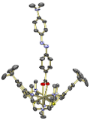
- , SQUID magnetometry and X-ray crystallography is reported herein. Preliminary results concerning the photoisomerization of compound 1 are reported as well. Results and Discussion Synthesis of ligands and metal complexes Scheme 1 shows the synthetic procedures. The yellow-orange colored zinc complexes (3
- of metal complexes”) is gratefully acknowledged.





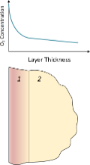
Synthesis of polydicyclopentadiene using the Cp2TiCl2/Et2AlCl catalytic system and thin-layer oxidation of the polymer in air
Beilstein J. Org. Chem. 2019, 15, 733–745, doi:10.3762/bjoc.15.69
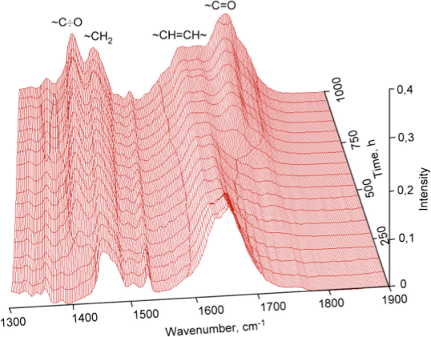
- interaction of organometallic transition metal complexes with organic aluminum compounds. The formation of such unstable bis(cyclopentadienyl)titanium dichloride complexes with a Ti=CHR fragment is possible as well in this case. The obtained complex is polarized in such a way that the metal has a positive




Selective benzylic C–H monooxygenation mediated by iodine oxides
Beilstein J. Org. Chem. 2019, 15, 602–609, doi:10.3762/bjoc.15.55

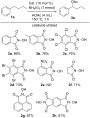
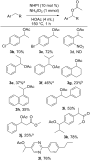
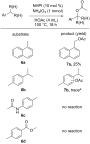
- dyes and transition metal complexes, hypohalous acids, and persulfate anions [12][34][35][36][37][38][39][40]. An important class of catalyzed benzylic C–H to C–O transformations are those catalyzed by N-oxyl radicals. Specifically, N-oxyl radical catalysts based upon the N-hydroxyphthalimide (NHPI




Microwave-assisted synthesis of N,N-bis(phosphinoylmethyl)amines and N,N,N-tris(phosphinoylmethyl)amines bearing different substituents on the phosphorus atoms
Beilstein J. Org. Chem. 2019, 15, 469–473, doi:10.3762/bjoc.15.40
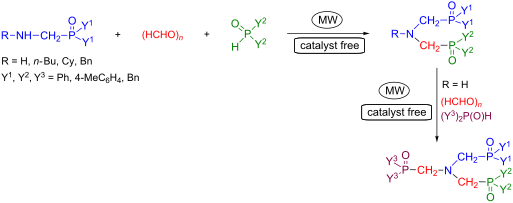
- )amines; Introduction α-Aminophosphine oxides are of considerable importance as potential precursors of α-aminophosphine ligands [1]. α-Aminophosphines play an important role in the synthesis of P(III)-transition metal complexes [2], which are often applied catalysts in homogeneous catalytic reactions [2


Aqueous olefin metathesis: recent developments and applications
Beilstein J. Org. Chem. 2019, 15, 445–468, doi:10.3762/bjoc.15.39
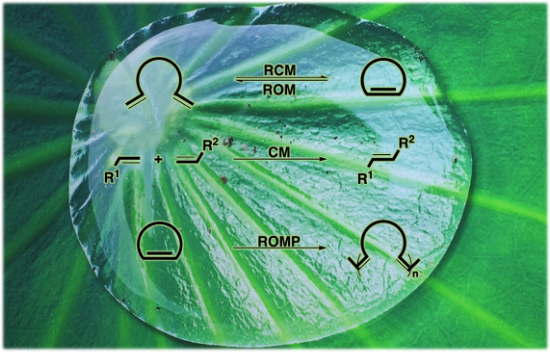
- multiple tedious steps, primarily because metal complexes’ impurities in the final product may cause isomerization or decomposition of the products and may be toxic. The latter is a very critical issue for the pharmaceutical industry, as the amount of ruthenium in APIs (active pharmaceutical ingredients




Reusable and highly enantioselective water-soluble Ru(II)-Amm-Pheox catalyst for intramolecular cyclopropanation of diazo compounds
Beilstein J. Org. Chem. 2019, 15, 357–363, doi:10.3762/bjoc.15.31
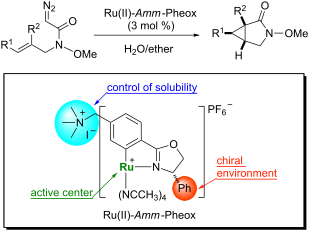
- diazoamide; Ru(II)-Pheox; water-soluble catalyst; Weinreb amide; Introduction Water-soluble transition metal complexes have been attracting increasing interest for catalytic applications because of their many advantages such as simple product separation, low cost, safety, and environmentally friendly


Gold-catalyzed ethylene cyclopropanation
Beilstein J. Org. Chem. 2019, 15, 67–71, doi:10.3762/bjoc.15.7
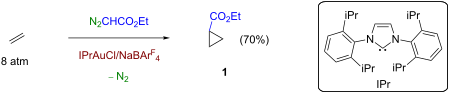
- = tetrakis(3,5-bis(trifluoromethyl)phenyl)borate) catalyzes the ethylene cyclopropanation with ethyl diazoacetate as the carbene precursor, under mild conditions, with moderate yields (ca. 70%, EDA-based). Results and Discussion Diazo compounds N2=CRR’ usually react with metal complexes of groups 8–11 with


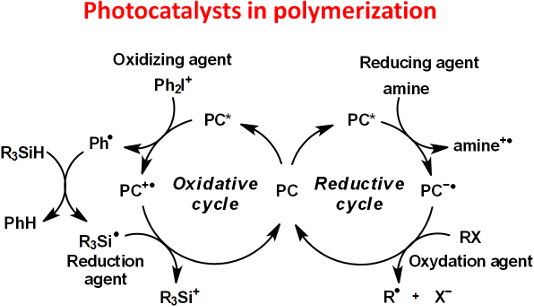
Organometallic vs organic photoredox catalysts for photocuring reactions in the visible region
Beilstein J. Org. Chem. 2018, 14, 3025–3046, doi:10.3762/bjoc.14.282
- Figure 3. Absorption band observable are very intense. 1.3.5 Metal to ligand charge transfer (MLCT): The MLCT transition is a second type of charge transfer observed with metal complexes. More particularly, it is observed for complexes whose ligands have relatively high-energy lone pairs or in case of
- photoredox catalysts The first photoredox catalysts to emerge were the metal-based complexes. Indeed, metal complexes, also named coordination compounds, have been recognized in the photochemistry field since the second half of the last century [33][34][35]. However, these compounds are still the subject of
- of the ligand is essential for good properties. 2.1.3 The latest generation of metal-based catalysts: Emergence of the TADF complexes: Metal complexes are still at the origin of numerous researches as photoredox catalysts, these researches being notably motivated by their remarkable long-lived



Reactions of 3-(p-substituted-phenyl)-5-chloromethyl-1,2,4-oxadiazoles with KCN leading to acetonitriles and alkanes via a non-reductive decyanation pathway
Beilstein J. Org. Chem. 2018, 14, 3011–3017, doi:10.3762/bjoc.14.280
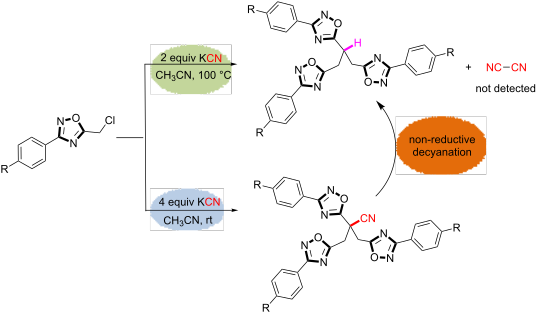
- ], transition metal complexes [25], and alkali metals in a variety of solvents [26]. Generally, they require mostly an inert atmosphere as well as harsh reaction conditions. These facts constitute challenges to the development of mild reaction conditions in the reduction of nitrilated compounds. In the light of




The influence of the cationic carbenes on the initiation kinetics of ruthenium-based metathesis catalysts; a DFT study
Beilstein J. Org. Chem. 2018, 14, 2872–2880, doi:10.3762/bjoc.14.266
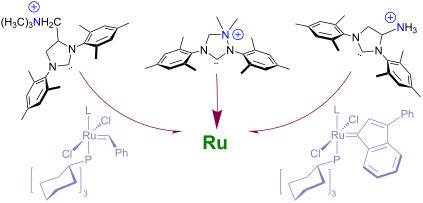
- either anionic or cationic carbenes [15][16][17][18]. Cationic ligands with a positive charge close to the coordinating atom are relatively rare, as their coordination ability of transition metals, bearing also a formal positive charge, is weakened. Nevertheless, stable metal complexes with cationic
- recently and examples of their transition metal complexes are scarce. In 2013 Ganter described a cationic NHC with a fused pyridinium moiety and the formal +1 charge just one bond away from the imidazole core [27]. In 2017 César synthesized a cationic imidazolylidene NHC with an ammonium tag attached
- interesting phenomenon, despite its very limited impact on their propensity to form transition metal complexes (Scheme 2) [50]. Many works have been devoted to the study of carbene dimerization and present evidence that mechanism of monomer–dimer equilibrium depends on the balance between the electronic and


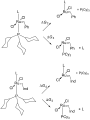
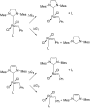

Olefin metathesis catalysts embedded in β-barrel proteins: creating artificial metalloproteins for olefin metathesis
Beilstein J. Org. Chem. 2018, 14, 2861–2871, doi:10.3762/bjoc.14.265
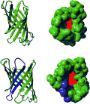
- [50]. Further mutations within the cavity of NB provide a hydrophobic cavity. Several studies reported on the utilization of NB as scaffold for incorporated metal complexes, including the work of Hayashi et al. capitalizing on the polymerization of phenylacetylene [50][51], the Diels–Alder reaction


Copolymerization of epoxides with cyclic anhydrides catalyzed by dinuclear cobalt complexes
Beilstein J. Org. Chem. 2018, 14, 2779–2788, doi:10.3762/bjoc.14.255
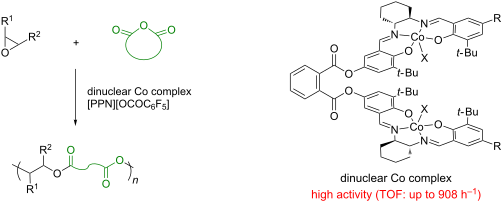
- developed based on well-defined metal complexes such as metalloporphyrins and metal–salen complexes [15][16][17][18][19][20][21]. In parallel to the development of catalysts, new polyester materials also were prepared by employing unprecedented monomers or by the combination with other polymerization
- -workers reported that the dinuclear chromium–salan complex showed a much higher catalytic activity than the corresponding mononuclear chromium–salan complex in the copolymerization of epoxides with maleic anhydride (MA) [31]. Following this report, some dinuclear metal complexes have been reported to
- catalytic activity than the corresponding mononuclear cobalt–salen complex. These results indicate that the design based on di- or multinuclear metal complexes is a promising strategy for the development of highly active catalysts. Our future studies will focus on the optimization of linker structures as


DABCO- and DBU-promoted one-pot reaction of N-sulfonyl ketimines with Morita–Baylis–Hillman carbonates: a sequential approach to (2-hydroxyaryl)nicotinate derivatives
Beilstein J. Org. Chem. 2018, 14, 2771–2778, doi:10.3762/bjoc.14.254

- products [4], medicines [5], chelating agents in transition metal complexes [6][7], and material science [8][9]. Pyridine derivatives such as vitamins B6, B3 (niacin), and nicotinamide adenine dinucleotide (NAD) play a significant role in the metabolism process of living organisms. Consequently, many