


Search results
Search for "reactive intermediates" in Full Text gives 134 result(s) in Beilstein Journal of Organic Chemistry.
Damage of polyesters by the atmospheric free radical oxidant NO3•: a product study involving model systems
Beilstein J. Org. Chem. 2013, 9, 1907–1916, doi:10.3762/bjoc.9.225

- environmental conditions, however, NO3• is not an isolated reactant, but is always accompanied by other radicals and non-radical oxidants, such as NO2•, O3, and O2, respectively, which principally could become involved in these reactions through trapping of reactive intermediates. Thus, in order to explore the
- pathway yields the nitromethylene compound 15, which is formed via benzyl radical 7. Although we have not studied the nature of the reactive intermediates formed in these reactions, it is difficult to rationalize formation of the ring-substituted products 12–14 through a mechanism that involves benzylic


Controlled synthesis of poly(3-hexylthiophene) in continuous flow
Beilstein J. Org. Chem. 2013, 9, 1492–1500, doi:10.3762/bjoc.9.170
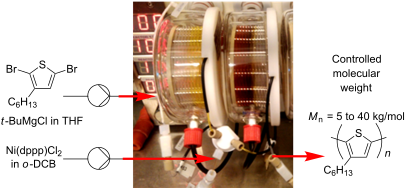
- mixing of reagents, boosting reaction rates, and safe handling of reactive intermediates. Using a commercial continuous-flow tube reactor [19], we have already demonstrated multigram synthesis of fullerene derivatives by cycloaddition reactions [11] as well as rapid conjugated-polymer synthesis using



Isolation and X-ray characterization of palladium–N complexes in the guanylation of aromatic amines. Mechanistic implications
Beilstein J. Org. Chem. 2013, 9, 1455–1462, doi:10.3762/bjoc.9.165
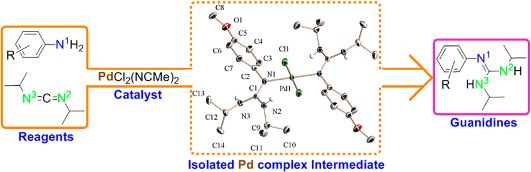
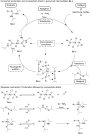
- catalysis; palladium complexes; reactive intermediates; Introduction N-Arylguanidines are important compounds with interesting biological activities [1][2] such as fungicides [3] and also in supramolecular chemistry as complementary partners of carboxylate and nitro groups [4][5][6][7]. Some of these


True and masked three-coordinate T-shaped platinum(II) intermediates
Beilstein J. Org. Chem. 2013, 9, 1352–1382, doi:10.3762/bjoc.9.153
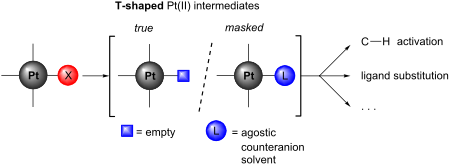
- . Moreover, recent experimental and theoretical reports are analyzed, which suggest the involvement of such intermediates in reaction mechanisms, particularly C–H bond-activation processes. Keywords: C–H bond activation; intermediate; platinum(II); reactive intermediates; three-coordinate; T-shaped; Review





An aniline dication-like transition state in the Bamberger rearrangement
Beilstein J. Org. Chem. 2013, 9, 1073–1082, doi:10.3762/bjoc.9.119
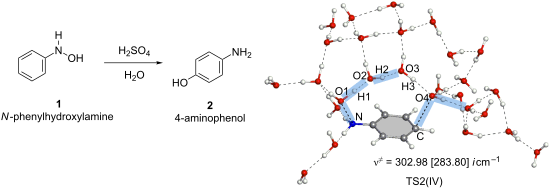
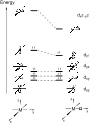
- activation energy similar to the experimental one was obtained. A new mechanism of the rearrangement including the aniline dication-like transition state was proposed. Keywords: Bamberger rearrangement; DFT calculations; N-phenylhydroxylamine; proton transfer; reactive intermediates; transition states


Spectroscopic characterization of photoaccumulated radical anions: a litmus test to evaluate the efficiency of photoinduced electron transfer (PET) processes
Beilstein J. Org. Chem. 2013, 9, 800–808, doi:10.3762/bjoc.9.91
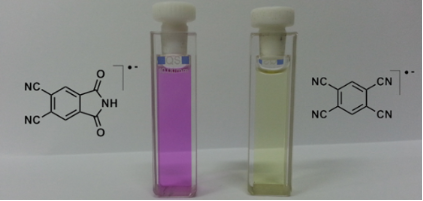
- intermediates. Keywords: aromatic nitriles; persistent radical anion; photochemical activation; photoinduced electron transfer (PET); photooxidant; reactive intermediates; Introduction Redox reactions between organic molecules have a limited scope because of the rarely matched redox potential. On the other




Utilizing the σ-complex stability for quantifying reactivity in nucleophilic substitution of aromatic fluorides
Beilstein J. Org. Chem. 2013, 9, 791–799, doi:10.3762/bjoc.9.90
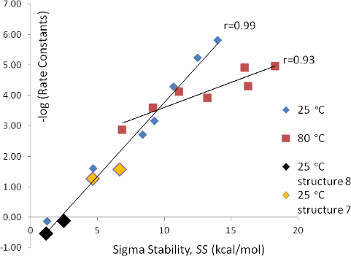
- structure of the σ-complex resembles the rate-limiting transition state and that this provides a rationale for the observed correlations between the SS and the reaction rate. Keywords: computational; DFT; nucleophilic aromatic substitution; reactivity; substrate selectivity; reactive intermediates


4-Pyridylnitrene and 2-pyrazinylcarbene
Beilstein J. Org. Chem. 2013, 9, 754–760, doi:10.3762/bjoc.9.85
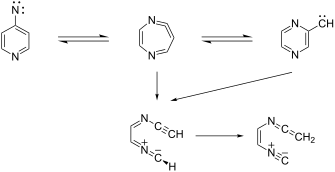
- -diazacyclohepta-1,2,4,6-tetraene (20). Further photolysis causes ring opening to the ketenimine 27. Keywords: carbene–nitrene interconversion; diazepines; flash vacuum thermolysis; matrix photochemistry; nitrile ylides; reactive intermediates; Introduction The carbene–nitrene interconversion exemplified with


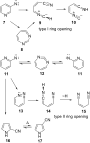




3-Pyridylnitrene, 2- and 4-pyrimidinylcarbenes, 3-quinolylnitrenes, and 4-quinazolinylcarbenes. Interconversion, ring expansion to diazacycloheptatetraenes, ring opening to nitrile ylides, and ring contraction to cyanopyrroles and cyanoindoles
Beilstein J. Org. Chem. 2013, 9, 743–753, doi:10.3762/bjoc.9.84
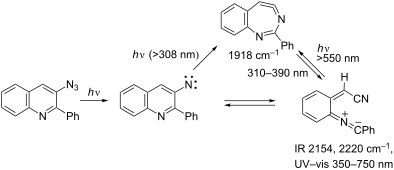
- either the nitrenes or the diazacycloheptatetraenes to nitrile ylides. Keywords: carbene-nitrene interconversion; diazepines; flash vacuum thermolysis; matrix photochemistry; nitrile ylides; reactive intermediates; Introduction A multitude of rearrangements of heterocyclic nitrenes have been described


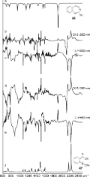


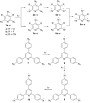
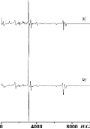
High-spin intermediates of the photolysis of 2,4,6-triazido-3-chloro-5-fluoropyridine
Beilstein J. Org. Chem. 2013, 9, 733–742, doi:10.3762/bjoc.9.83
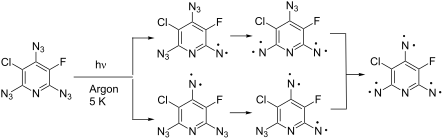
- spectroscopy; high-spin states; matrix isolation; nitrenes; photolysis; reactive intermediates; Introduction High-spin nitrenes are highly reactive intermediates formed during photolysis or thermolysis of aromatic polyazides. Both these processes are widely used in modern science and technology [1][2][3][4][5




Photoionisation of the tropyl radical
Beilstein J. Org. Chem. 2013, 9, 681–688, doi:10.3762/bjoc.9.77
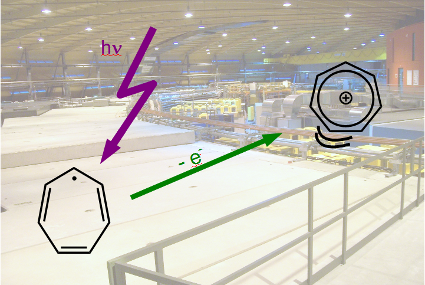
- are reassigned to the C–C stretch mode ν16+ and to a combination of ν16+ with the ring breathing mode ν2+. Above 10.55 eV dissociative photoionisation of tropyl is observed, leading to the formation of C5H5+ and C2H2. Keywords: dissociative photoionisation; gas phase; reactive intermediates
- ; synchrotron radiation; threshold photoelectron spectroscopy; Introduction Organic radicals are known to be ubiquitous reactive intermediates in chemistry, biology and material science [1]. Studies on isolated radicals conducted in our group [2] yield their intrinsic properties, which are essential for
- synchrotron radiation [18][19][20]. Coincidence spectroscopy correlates the electron signal with the mass signal and thus permits recording of mass-selected photoelectron spectra. This is particularly advantageous in experiments on reactive intermediates where a clean sample generation cannot always be




Kinetics and mechanism of the anilinolysis of aryl phenyl isothiocyanophosphates in acetonitrile
Beilstein J. Org. Chem. 2013, 9, 615–620, doi:10.3762/bjoc.9.68
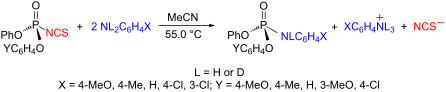
- . Keywords: anilinolysis; cross-interaction constant; deuterium kinetic isotope effects; phosphoryl transfer reaction; reactive intermediates; Y-aryl phenyl isothiocyanophosphates; Introduction The nucleophilic substitution reactions of tetracoordinate phosphorus have been studied extensively


New reactive intermediates in organic chemistry
Beilstein J. Org. Chem. 2013, 9, 613–614, doi:10.3762/bjoc.9.67
- Gotz Bucher WestCHEM, School of Chemistry, University of Glasgow, Joseph-Black-Building, University Avenue, Glasgow G12 8QQ, United Kingdom 10.3762/bjoc.9.67 Keywords: reactive intermediates; Physical organic chemistry (POC) and reactive intermediate chemistry (RIC) belong to the core subjects
- Engineering and Physical Sciences Research Council of the UK (EPSRC) funded two Centres for Physical Organic Chemistry, one in Cardiff, and one in Glasgow, and launched two calls for research proposals in POC. Research into reactive intermediates has historically been part of the work involved in product
- , product studies can even yield accurate values for the kinetics of intermolecular quenching reactions of reactive intermediates. More recent techniques to characterise reactive intermediates include matrix isolation spectroscopy, where a reactive intermediate is generated in a cryogenic noble-gas matrix
A computational study of base-catalyzed reactions of cyclic 1,2-diones: cyclobutane-1,2-dione
Beilstein J. Org. Chem. 2013, 9, 594–601, doi:10.3762/bjoc.9.64
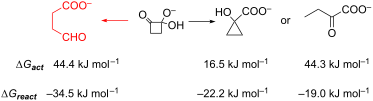
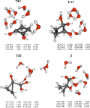
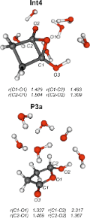
- . On the other hand, some other stable as well as highly reactive intermediates and/or transition states were obtained (see below). Generally, in nucleophilic addition reactions to carbonyl compounds in aqueous solution, water not only acts as a solvent but frequently actively participates in the





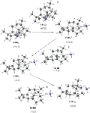
Caryolene-forming carbocation rearrangements
Beilstein J. Org. Chem. 2013, 9, 323–331, doi:10.3762/bjoc.9.37
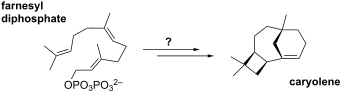
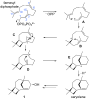
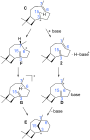
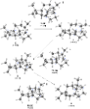
- a hydrogen-bridged minimum. Both mechanisms are predicted to involve concerted suprafacial/suprafacial [2 + 2] cycloadditions, whose asynchronicity allows them to avoid the constraints of orbital symmetry. Keywords: carbocation; cycloaddition; density functional theory; mechanism; reactive
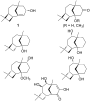
- intermediates; terpene; Introduction The cytotoxic sesquiterpenol caryol-1(11)-en-10-ol (1, Figure 1) was isolated by Barrow et al. in 1988 during an investigation of antiviral/antitumor compounds from New Zealand marine invertebrates [2]. Similar sesquiterpenoids were also found in Campanella fungi





Inter- and intramolecular enantioselective carbolithiation reactions
Beilstein J. Org. Chem. 2013, 9, 313–322, doi:10.3762/bjoc.9.36

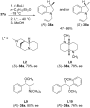
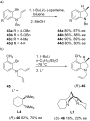
- concept to avoid the epimerization of reactive intermediates, which has allowed them to carry out the enantioselective version of the above procedure. Thus, the use of a flow microreactor system has allowed the enantioselective carbolithiation of conjugated enynes, followed by the reaction with
- intermediates that can be converted into various types of chiral ferrocene derivatives through diastereoselective ortho-lithiation [21]. Some years ago, the concept of flash chemistry was proposed, involving fast chemical synthesis by using flow microreactors, which enabled the use of highly reactive
- intermediates before they decompose [22][23][24][25]. Thus, Yoshida [26] demonstrated that the addition of aryllithiums, generated by halogen–lithium exchange, to conjugated enynes bearing an appropriate directing group occurs with complete regioselectivity and in good yields. More recently, they applied this





Presence or absence of a novel charge-transfer complex in the base-catalyzed hydrolysis of N-ethylbenzamide or ethyl benzoate
Beilstein J. Org. Chem. 2013, 9, 185–196, doi:10.3762/bjoc.9.22
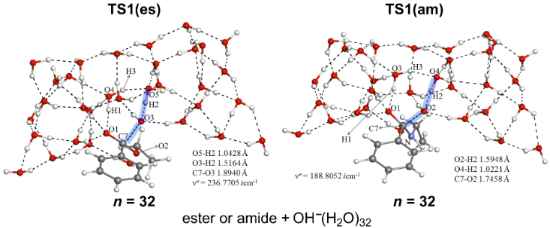
- minimal model of TS1 was proposed and was found to be insensitive to n. Keywords: basic hydrolyses; DFT calculations; ethyl benzoate; N-ethylbenzamide; reactive intermediates; transition states; Introduction Basic hydrolyses of esters and amides have been extensively studied experimentally [1]. Use of




The chemistry of bisallenes
Beilstein J. Org. Chem. 2012, 8, 1936–1998, doi:10.3762/bjoc.8.225
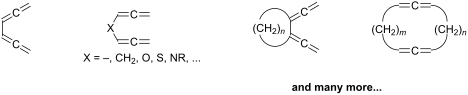
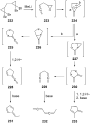
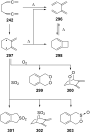
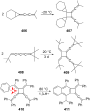
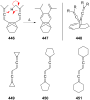
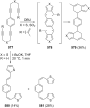
- bisallenes 4.2.3 Exocyclic bisallenes Bisallenes as reactive intermediates Bisallenes with heteroatoms in their tethers (heteroorganic bisallenes) 6.1 Thermally induced reactions of heteroorganic bisallenes 6.2 Transition metal-induced reactions of heteroorganic bisallenes Conclusion Acknowledgements
















Photoreactions of cyclic sulfite esters: Evidence for diradical intermediates
Beilstein J. Org. Chem. 2012, 8, 1208–1212, doi:10.3762/bjoc.8.134

- studies have revealed information on reactive intermediates, solvent effects, and stereochemical outcomes, while synthetic work has pointed to novel approaches for preparing various molecules. For example, deazetation reactions in solvents of increasing viscosity were employed to determine whether the


Highly selective synthesis of (E)-alkenyl-(pentafluorosulfanyl)benzenes through Horner–Wadsworth–Emmons reaction
Beilstein J. Org. Chem. 2012, 8, 1185–1190, doi:10.3762/bjoc.8.131
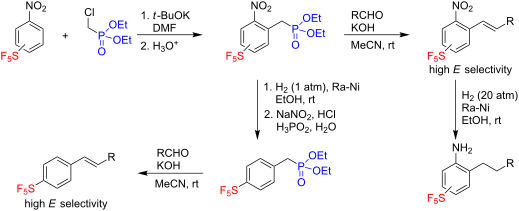
- . In contrast to most of the reactions with 3, phosphonate 4 gave exclusively E-isomers of 6 (Table 3). This improved selectivity can be explained by relative differences in the stabilities and reactivities of carbanions derived from phosphonates and reactive intermediates. In reactions of phosphoryl
- )-(pentafluorosulfanyl)anilines, and the formation of (E)-1-alkenyl-4-(pentafluorosulfanyl)benzenes was demonstrated from diethyl 4-(pentafluorosulfanyl)benzylphosphonates. Proposed synthesis of alkenyl-(pentafluorosulfanyl)benzenes. Reactive intermediates involved in HWE reactions to alkenes 5 and 6. Diazotization


Synthesis of functionalized macrocyclic derivatives of trioxabicyclo[3.3.0]nonadiene
Beilstein J. Org. Chem. 2012, 8, 738–743, doi:10.3762/bjoc.8.83

- with the bisdioxine unit has also been achieved recently [6]. Some of these materials exhibit pronounced complexation of metal ions, such as Cs+, Hg2+, Cu2+, Ag+, and Au3+ [5][6][7]. It may also be possible to stabilize reactive intermediates and unusual functional groups in the concave interiors of


Aryl nitrile oxide cycloaddition reactions in the presence of pinacol boronic acid ester
Beilstein J. Org. Chem. 2012, 8, 606–612, doi:10.3762/bjoc.8.67
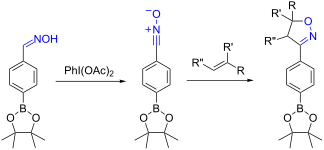
- other 1,3-disubstituted compounds, through N–O bond cleavage [20]. Nitrile oxides are reactive intermediates that are usually generated in situ and react immediately with the dipolarophile. There have been many methods reported for the generation of nitrile oxides, but the most common one for alkyl


Intramolecular carbenoid ylide forming reactions of 2-diazo-3-keto-4-phthalimidocarboxylic esters derived from methionine and cysteine
Beilstein J. Org. Chem. 2012, 8, 433–440, doi:10.3762/bjoc.8.49
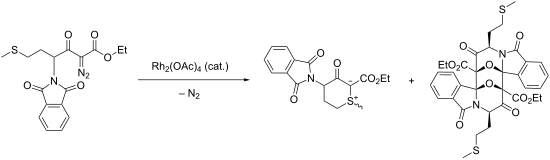
- . It is therefore interesting to gather information about the chemoselectivity of these reactive intermediates. For intramolecular reactions, the ring size of the products can make an additional contribution to the observed chemoselectivity. In this study, we have addressed the competition between two


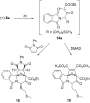

Asymmetric synthesis of quaternary aryl amino acid derivatives via a three-component aryne coupling reaction
Beilstein J. Org. Chem. 2011, 7, 1570–1576, doi:10.3762/bjoc.7.185
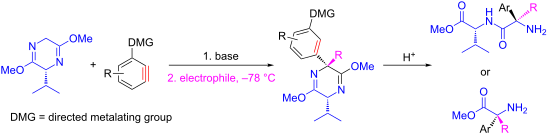
- Arynes are exceptionally versatile reactive intermediates in organic synthesis. Not only are they able to participate in cycloaddition reactions, they also readily undergo addition reactions with nucleophiles, and the resultant aryl anions may be protonated or undergo alternative transformations [1][2][3




Recent developments in gold-catalyzed cycloaddition reactions
Beilstein J. Org. Chem. 2011, 7, 1075–1094, doi:10.3762/bjoc.7.124
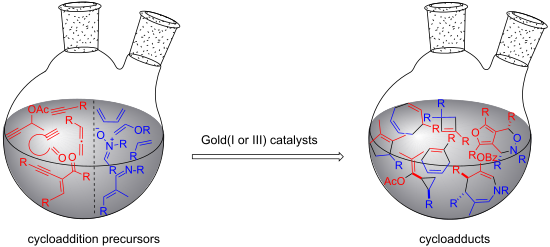
- intermediates that undergo subsequent intermolecular annulations with diverse partners. For example, in 2008, L. Zhang and coworkers demonstrated that a series of 1-(1-alkynyl)cyclopropyl ketones 8, previously used by Schmalz for the synthesis of furans [44], can be used as precursors of reactive intermediates
- = Me, R3 = H, X = C(CO2Me)2). These examples clearly demonstrate the possibility of modulating the electronic properties of reactive intermediates generated upon activation of allenes with Au(I) complexes, and thereby influence the reaction outcome. The development of intermolecular variants of gold





