


Search results
Search for "conjugation" in Full Text gives 446 result(s) in Beilstein Journal of Organic Chemistry. Showing first 200.
Changed reactivity of secondary hydroxy groups in C8-modified adenosine – lessons learned from silylation
Beilstein J. Org. Chem. 2020, 16, 2854–2861, doi:10.3762/bjoc.16.234

- conjugation of the desired moiety. A C8-alkynyl-modified adenosine derivative was synthesized, reviving an old synthetic pathway for iodination of purine nucleobases. Silylation of the C8-alkynyl-modified adenosine revealed unexpected selectivity of the two secondary sugar hydroxy groups, with the 3'-O-isomer
- for 5’- or 3’-terminal attachment of a desired functionality, nucleoside derivatives that, upon site-specific incorporation at a pre-determined position of RNA, can be used for post-synthetic conjugation, are required. A number of chemistries are available to specifically attach a molecular entity to
- is desired, in order to introduce two or even more functionalities in a specific manner. For example, in earlier work we have used amine-NHS coupling reactions in combination with CuAAC to prepare double labeled RNA molecules for FRET analysis [19]. The conjugation of, sometimes rather large


On the mass spectrometric fragmentations of the bacterial sesterterpenes sestermobaraenes A–C
Beilstein J. Org. Chem. 2020, 16, 2807–2819, doi:10.3762/bjoc.16.231
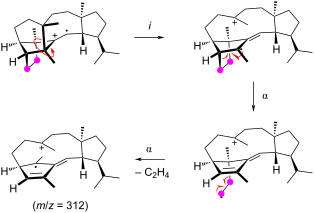
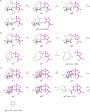
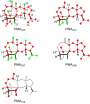
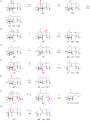
- radical cation 1•+ is obtained from which the methyl group C23 can directly be lost by an α-cleavage leading to fragment a1+ (Scheme 1A). However, the radical centred at the bridgehead carbon C11 is orthogonal to, or in other words, not in conjugation with the radical cation at C12–13. Therefore, an




Enzyme-instructed morphological transition of the supramolecular assemblies of branched peptides
Beilstein J. Org. Chem. 2020, 16, 2709–2718, doi:10.3762/bjoc.16.221

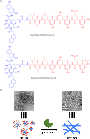
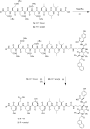
- assemblies of the peptides. The conjugation of Asp–Glu–Asp–Asp–Asp–Leu–Leu–Ile–Gly (DEDDDLLIG) sequences to the ε-amine of the lysine residue of a tetrapeptide Nap–ᴅ-Phe–ᴅ-Phe–ᴅ-Lys–ᴅ-Tyr (Nap-ffky) [9] produces the branched peptide 1, which forms micelles (Figure 1). When proteinase K catalyzed the
- allows the conjugation of the cleavable side chain, and tyrosine provides additional aromatic–aromatic interactions, as shown in a recent cryo-EM structure (PDB: 6X5I) [41]. Based on the above rationale, the DEDDDLLIG sequences attach to the ε-amine of the lysine residue of the tetrapeptide Nap-ffky to





Vicinal difluorination as a C=C surrogate: an analog of piperine with enhanced solubility, photostability, and acetylcholinesterase inhibitory activity
Beilstein J. Org. Chem. 2020, 16, 2663–2670, doi:10.3762/bjoc.16.216
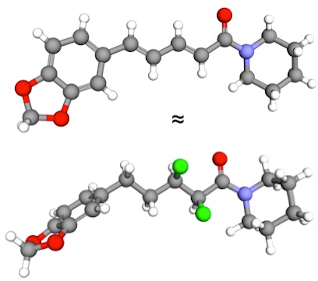
- product by 1H NMR spectroscopy revealed a multitude of new signals in the alkenyl region. In contrast, the analog 2 lacks conjugation in the central portion of the molecule and was therefore expected to be more stable to UV light. Indeed, the exposure of 2 to sunlight in an identical manner to that


Synthesis and characterization of S,N-heterotetracenes
Beilstein J. Org. Chem. 2020, 16, 2636–2644, doi:10.3762/bjoc.16.214

- species [29], whereas Sarkar et al. undertook quantum chemical investigations on the photovoltaic performance revealing an odd-even relation of the charge separation [30]. Furthermore, they calculated the single molecule transport behavior of various S,N-heteroacenes with different conjugation length


Synthesis of novel fluorinated building blocks via halofluorination and related reactions
Beilstein J. Org. Chem. 2020, 16, 2562–2575, doi:10.3762/bjoc.16.208
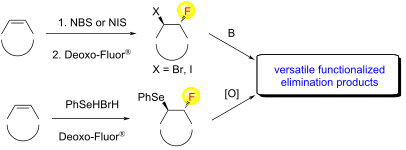
- (rac)-33 formed primarily (Scheme 22). A possible driving force of this reaction is the extended conjugation. Interestingly, the treatment of a mixture of (rac)-31 with H2O2/CF3COOH resulted in single allylic fluoride, (rac)-35 (Scheme 23). Unfortunately, the determination of the stereochemistry via
- fluorides via oxidation succeeded only in an acidic environment. Presumably, the presence of ester groups enabled the base-promoted E1cB elimination, driven by the extension of the conjugation. Further studies of other functionalized cyclic olefin substrates possessing varied architectural structures, and


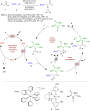
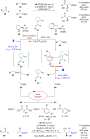
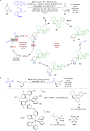
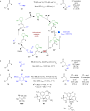
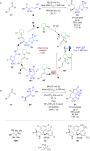
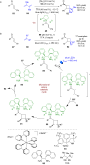
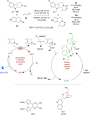
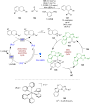
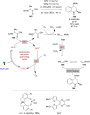
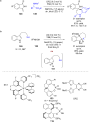
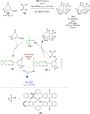
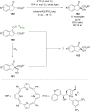
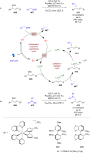
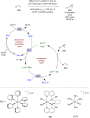
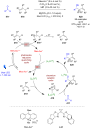
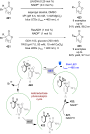
Recent developments in enantioselective photocatalysis
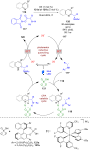
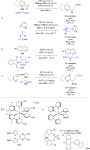
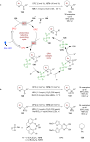
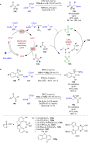
Beilstein J. Org. Chem. 2020, 16, 2363–2441, doi:10.3762/bjoc.16.197








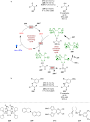


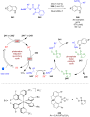
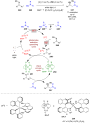
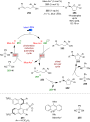
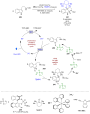
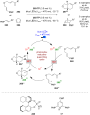
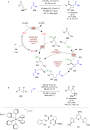
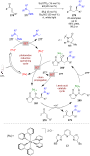








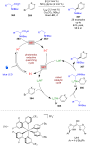

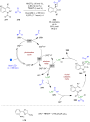

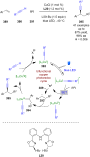
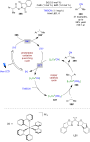


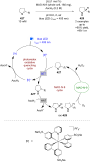

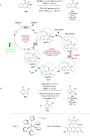
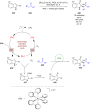


Formation of an exceptionally stable ketene during phototransformations of bicyclo[2.2.2]oct-5-en-2-ones having mixed chromophores
Beilstein J. Org. Chem. 2020, 16, 2297–2303, doi:10.3762/bjoc.16.190

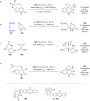
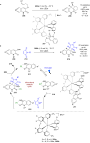
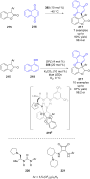
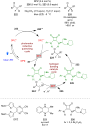
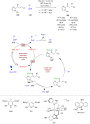
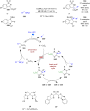
- enones like D to minimize this route. Interestingly such rigid systems may either be considered as α,β- or β,γ-enone with δ-keto conjugation. However, in one of our previous works [16], we have established that the system should be considered as α,β-enone with δ-keto homoconjugation. Simple β,γ-enone


Styryl-based new organic chromophores bearing free amino and azomethine groups: synthesis, photophysical, NLO, and thermal properties
Beilstein J. Org. Chem. 2020, 16, 2282–2296, doi:10.3762/bjoc.16.189

- electron-accepting group coupled with various donors connected via a π-conjugation bridge [31][32][33]. Such dyes offer good NLO characteristics when compared to Disperse Red 1 as well as remarkable thermal stabilities with dissociation temperatures up to 300 °C [31][32]. Schiff bases containing an
- corresponding Schiff base derivatives 8–12. However, the Schiff bases 8–12 had higher maximum absorption and emission wavelength values than the dyes 3–7 because of the extended conjugation system present in the Schiff bases. The observation of an intense red shift might be related to a significant contribution
- organic NLO chromophore is related to the presence of donor (D) and acceptor (A) groups linked through a π-conjugation path and is characterized by a large first-order hyperpolarizability value (β). However, a small energy gap between the HOMO and the LUMO (Egap) is an important indicator for high NLO


The B & B approach: Ball-milling conjugation of dextran with phenylboronic acid (PBA)-functionalized BODIPY
Beilstein J. Org. Chem. 2020, 16, 2272–2281, doi:10.3762/bjoc.16.188
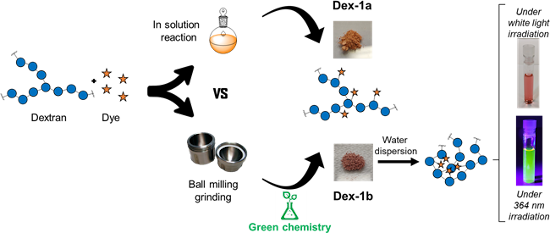
- , Poland 10.3762/bjoc.16.188 Abstract Mechanochemistry is an emerging and reliable alternative to conventional solution (batch) synthesis of complex molecules under green and solvent-free conditions. In this regard, we report here on the conjugation of a dextran polysaccharide with a fluorescent probe, a
- the mechanochemical approach (the B & B, ball milling for boronic acid conjugation) as bioconjugation strategy for the labeling of biocompatible carbohydrates. Fluorescent labeling is of key importance to follow up the fate of molecules and (nano)materials inside cells and in the human body. In this
- properties of BODIPY and the biocompatibility of dextran. The BODIPY dextran nanoparticles were characterized regarding their size, morphology, polarity, and toxicity in vitro. We demonstrate the feasibility of mechanochemistry for boronic ester formation [23] to a glycan polymer as a route of conjugation


Tools for generating and analyzing glycan microarray data
Beilstein J. Org. Chem. 2020, 16, 2260–2271, doi:10.3762/bjoc.16.187
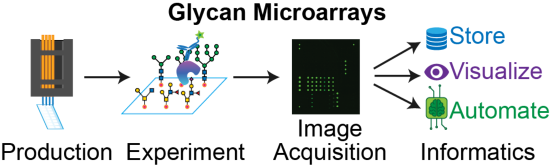
- response [13][22][23]. An overview of a typical glycan microarray experiment is provided in Figure 1. The protocol involves the chemical covalent conjugation or noncovalent attachment of glycans (usually 20 up to ≈700 glycans) in multiple replicates and often at varying concentrations to a slide surface


Synthetic approaches to bowl-shaped π-conjugated sumanene and its congeners
Beilstein J. Org. Chem. 2020, 16, 2212–2259, doi:10.3762/bjoc.16.186
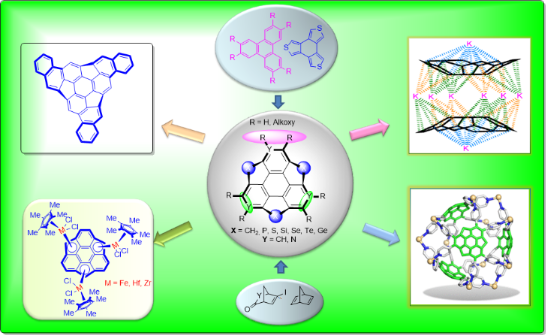
- mono-substituted sumanene derivatives 49b–d in a stereoselective manner as can be inspected from Scheme 10 [41][42]. In another event, Amaya, Ito, Katoh and Hirao reported a vital building block 53 to extend the π-conjugation bidirectionally through regioselective functionalization (Scheme 11) [43]. To











Azo-dimethylaminopyridine-functionalized Ni(II)-porphyrin as a photoswitchable nucleophilic catalyst
Beilstein J. Org. Chem. 2020, 16, 2119–2126, doi:10.3762/bjoc.16.179
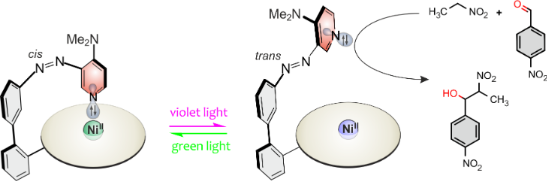
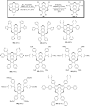
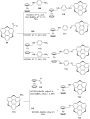
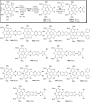
- effect of the electron poor porphyrin should be weak. There are eight bonds between the porphyrin β-position and the pyridine ring including one meta-phenyl connection attenuating the through-bond conjugation. A closer look at the kinetic data in Table 1 (sample I, II, and VII) might give an explanation


Synthesis of 3(2)-phosphonylated thiazolo[3,2-a]oxopyrimidines
Beilstein J. Org. Chem. 2020, 16, 1947–1954, doi:10.3762/bjoc.16.161

- -trifluoromethyl-2-thiouracil (1e) enhances the acidity of the N3H hydrogen by direct conjugation to the carbonyl moiety. As a result, 2-thiouracil 1e acts as an ambident nucleophile. Thus, the attack of the carbon atom attached to the chlorine by the N3 nitrogen atom is accompanied by the elimination of hydrogen


Et3N/DMSO-supported one-pot synthesis of highly fluorescent β-carboline-linked benzothiophenones via sulfur insertion and estimation of the photophysical properties
Beilstein J. Org. Chem. 2020, 16, 1740–1753, doi:10.3762/bjoc.16.146

- substituents at C1 (R4), compound 4eA with aromatic substituent exhibited better fluorescence due to extended conjugation. The effect of R2 substituent in these derivatives (4bA, 4dA, 4fA and 4gA) was also investigated and it was found that N-alkylation improved the photophysical properties along with higher


Synthesis of Streptococcus pneumoniae serotype 9V oligosaccharide antigens
Beilstein J. Org. Chem. 2020, 16, 1693–1699, doi:10.3762/bjoc.16.140
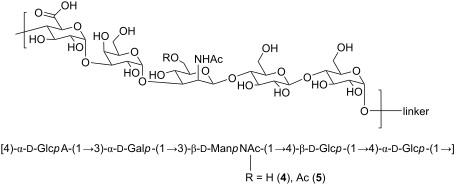
- acetate loss during isolation, purification, or protein conjugation leads to structurally altered CPS. Vaccines based on synthetic carbohydrate antigens [11][12][13][14][15] such as the first commercially available semisynthetic glycoconjugate vaccine Quimi Hib® against H. influenzae [16] and Shigella


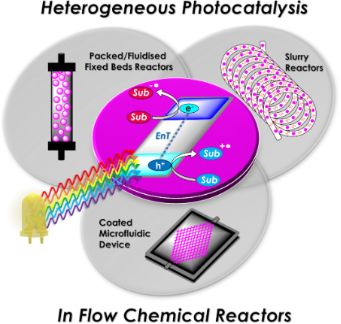
Heterogeneous photocatalysis in flow chemical reactors
Beilstein J. Org. Chem. 2020, 16, 1495–1549, doi:10.3762/bjoc.16.125
- sustainable photovoltaics [102], flexible electronics [103], improved organic light emitting diodes (OLEDs) [104], organic field effect transistors (OFETs) [105][106], and more recently, photocatalysts [3][5][10][15]. These materials have semiconducting properties due to extended conjugation producing a
- conjugation and polarisation of the surrounding medium, which is enhanced by low εr(ω) values [115][116][117][118]. The charge is transported in organic materials by “hopping” between the quantum states. The amorphous nature of most polymers produces a low symmetry and anisotropy for the charge transport
- the polymer chain, whereas the FSO-F and FSO-FS polymers had ridged planar chains that facilitated the charge transfer [129]. The FSO-FS dibenzothiophene unit had an extended conjugation onto the sulphur atom in the excited state, which improved the charge delocalisation [129]. This demonstrated that














One-step route to tricyclic fused 1,2,3,4-tetrahydroisoquinoline systems via the Castagnoli–Cushman protocol
Beilstein J. Org. Chem. 2020, 16, 1456–1464, doi:10.3762/bjoc.16.121
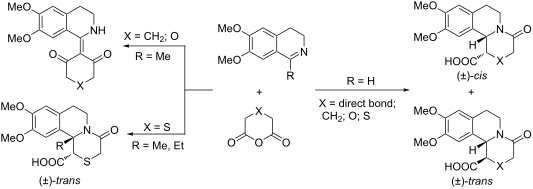
- and the exocyclic C–C double bond. The geometry of the nitrogen atom is also planar most likely because of conjugation with the exocyclic C–C double bond and the C=O groups. The nitrogen planarity is probably also caused by a hydrogen bond between the NH group and the neighboring carbonyl oxygen atom


Oxime radicals: generation, properties and application in organic synthesis
Beilstein J. Org. Chem. 2020, 16, 1234–1276, doi:10.3762/bjoc.16.107
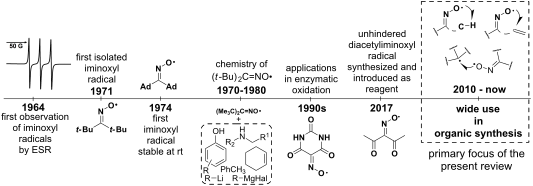
- the case of arylalkyl and diaryl oximes – conjugation of the radical center with π-systems of aryl rings is not observed [47][49][50][67]. It is known that the angular structure is characteristic for the CNO fragment of oxime radicals, and in the case of different substituents at the carbon atom, two
- should also be noted that there is no noticeable decrease in the O–H BDE in diaryl oximes compared to dialkyl oximes (some examples are shown in Figure 4 [71]), which is consistent with the idea that an unpaired electron is delocalized by the conjugation with a lone pair of the nitrogen atom, but not by
- the conjugation with the π-system of the molecule. Figure 4 also shows examples of the calculated values of the O–H BDE of non-oxime compounds with a NOH fragment [71]. The O–H bond in oximes is stronger than in hydroxylamines with a similar structure, except for hydroxylamines with strong electron




Synthesis and properties of quinazoline-based versatile exciplex-forming compounds
Beilstein J. Org. Chem. 2020, 16, 1142–1153, doi:10.3762/bjoc.16.101
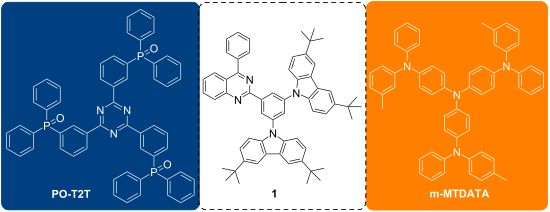
- angle values were estimated between the bonded aromatic unit and the respective substituents. All compounds showed large twisting angles that indicated HOMO and LUMO separation and a controlled conjugation distance. In the optimized ground-state geometries, the acceptor and the phenyl units are plane
- they characterize the electron-withdrawing abilities of the quinazoline moiety present in all compounds. The energy bandgap values estimated from CV measurements indicated a more extended π-electron conjugation system for compound 1 compared to compounds 2 and 3. These results correlated well with the


A simple and easy to perform synthetic route to functionalized thienyl bicyclo[3.2.1]octadienes
Beilstein J. Org. Chem. 2020, 16, 1092–1099, doi:10.3762/bjoc.16.96
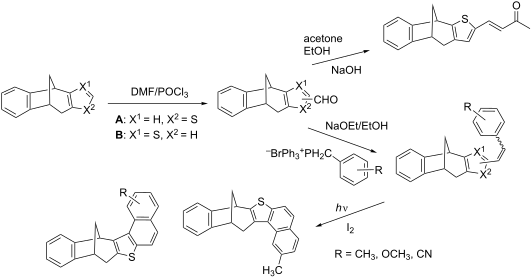
- [3.2.1]octadiene compound with an extended conjugation. Keywords: bicyclo[3.2.1]octadiene; photocyclization; thiophene; Vilsmeier–Haack reaction; Wittig reaction; Introduction The bicyclo[3.2.1]octane skeleton has become the subject of intensive research in recent years [1][2][3]. Its presence in
- the bicyclo[3.2.1]octadiene aldehyde 1 and acetone was conducted (Scheme 4). After purification of the reaction mixture the product 12 was obtained. The aim of this experiment was to obtain a system with an extended conjugation of the heteroaromatic moiety under mild conditions, while leaving the
- bicyclic skeleton preserved. The UV spectrum of the aldol product 12, in comparison to the starting aldehyde 1, showed the expected red shift, under the prolonged conjugation in product 12 (Figure 10). Contrary to the results obtained on the styryl analogs 3–7, the preliminary irradiation experiments of


Synthesis of novel multifunctional carbazole-based molecules and their thermal, electrochemical and optical properties
Beilstein J. Org. Chem. 2020, 16, 1066–1074, doi:10.3762/bjoc.16.93
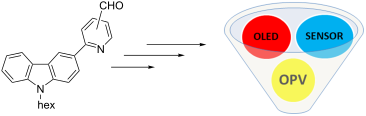
- . The ICT band of 7b at 373 nm was more intense than the ICT band of 7a at 378 nm. This observation confirms that conjugation enhances ICT band intensity [42]. In 7b, the formyl group is at the para position to the carbazole ring, thus giving rise to conjugation. In 7a, however, the formyl group is at
- transport properties with positive solvatochromism. Whilst 7a showed very low emission intensity, 7b showed very high emission intensity. It is noted that the conjugation in compound 7b encompasses the N atom of the carbazole ring and the formyl functionality (viz. the donor/acceptor units of the ICT
- component), whereas the link by conjugation between the same functionalities in 7a is missing. The resulting stronger ICT component in 7b explains the big difference in photophysical properties. Experimental All reagents were standard reagent grade and purchased from Sigma-Aldrich, Merck and Alfa Aesar


Aryl-substituted acridanes as hosts for TADF-based OLEDs
Beilstein J. Org. Chem. 2020, 16, 989–1000, doi:10.3762/bjoc.16.88
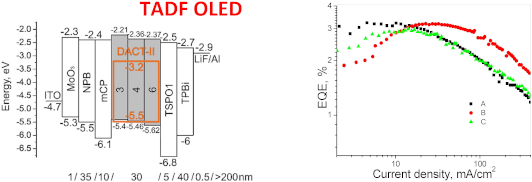
- explained by the dihedral angle between the acridanyl and naphthyl moieties, that is the largest one among all the studied compounds, leading to a reduction of π-conjugation. This observation explains the distinct ICT character of the luminescence of compound 4. The dihedral angles in the molecules of 3 and


Synthesis and properties of tetrathiafulvalenes bearing 6-aryl-1,4-dithiafulvenes
Beilstein J. Org. Chem. 2020, 16, 974–981, doi:10.3762/bjoc.16.86
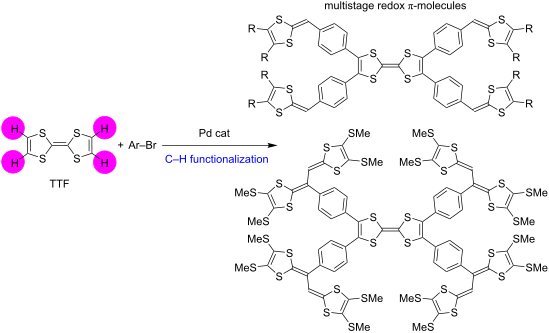
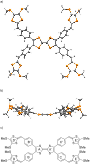
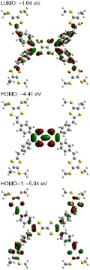
- systems; electrochemical properties; extended π-conjugation; digital simulation analysis; tetrathiafulvalene; Introduction Tetrathiafulvalenes (TTFs) with extended π-conjugation have attracted attention as possible components of functional materials, such as molecular conductors, field-effect transistors




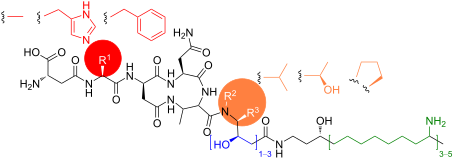
Fabclavine diversity in Xenorhabdus bacteria
Beilstein J. Org. Chem. 2020, 16, 956–965, doi:10.3762/bjoc.16.84
- via conjugation, with Escherichia coli as a donor strain, followed by homologous recombination as described previously [14][22]. This led to a formal ‘knock out’ of the BGC and no production of the respective natural product without induction, whereas induced mutants showed mostly an overproduction of





