Search results
Search for "molecular structure" in Full Text gives 394 result(s) in Beilstein Journal of Organic Chemistry. Showing first 200.
Aryl-substituted acridanes as hosts for TADF-based OLEDs
Beilstein J. Org. Chem. 2020, 16, 989–1000, doi:10.3762/bjoc.16.88
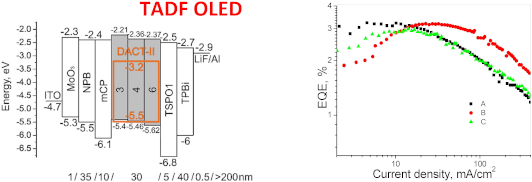
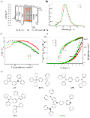
- devices [1]. Nowadays, organic compounds exhibiting thermally activated delayed fluorescence (TADF) are widely used as emitters for OLEDs [2]. The great interest in TADF emitters is mainly explained by their heavy-atoms-free molecular structure and 100% theoretical limit of internal quantum efficiency


Efficient synthesis of piperazinyl amides of 18β-glycyrrhetinic acid
Beilstein J. Org. Chem. 2020, 16, 798–808, doi:10.3762/bjoc.16.73
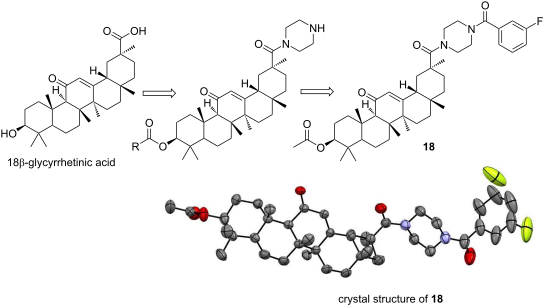
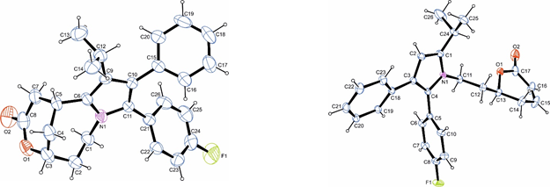
- -glycyrrhetinic acid derivative 18. The molecular structure of compound 18 in the crystalline state is shown in Figure 3. In this crystal structure, there is an orientational disorder of the m-fluorophenyl moiety due to the rotation of a single bond. Details for the crystal structure determinations are given in


One-pot synthesis of dicyclopenta-fused peropyrene via a fourfold alkyne annulation
Beilstein J. Org. Chem. 2020, 16, 791–797, doi:10.3762/bjoc.16.72
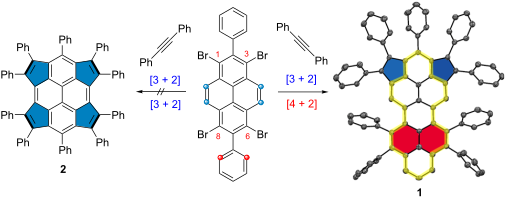
- 1 were obtained by slow evaporation from a carbon disulfide solution, allowing us to disclose the molecular structure by X-ray crystallography (Figure 2a). As shown in Figure 2a, the crystal structure of 1 clearly displayed a nonplanar conformation, resulting from steric repulsion between the phenyl


Reaction of indoles with aromatic fluoromethyl ketones: an efficient synthesis of trifluoromethyl(indolyl)phenylmethanols using K2CO3/n-Bu4PBr in water
Beilstein J. Org. Chem. 2020, 16, 778–790, doi:10.3762/bjoc.16.71
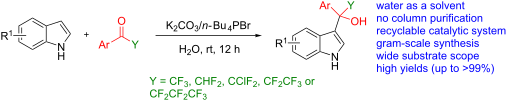
- reaction with ketones.a Substrate scope of the reaction with indoles.a Supporting Information Materials and methods and detailed synthetic procedures and spectroscopic data of all compounds. Figure S1: ORTEP-type plot of the molecular structure of 3a, Figures S2–S25: NMR spectra, Tables S1–S3: Crystal


Towards triptycene functionalization and triptycene-linked porphyrin arrays
Beilstein J. Org. Chem. 2020, 16, 763–777, doi:10.3762/bjoc.16.70

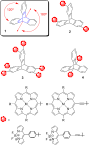
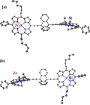
- charge from The Cambridge Crystallographic Data Centre via http://www.ccdc.cam.ac.uk/data_request/cif. Triptycene as a scaffold and selected porphyrin and BODIPY arrays. Single crystal X-ray structure of triptycene 5. (a) Molecular structure of 5 in the crystal with hydrogen atoms and minor disorder





Efficient synthesis of dipeptide analogues of α-fluorinated β-aminophosphonates
Beilstein J. Org. Chem. 2020, 16, 756–762, doi:10.3762/bjoc.16.69
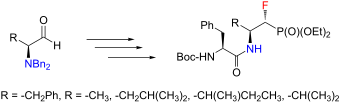
- 60:40 → 50:50). Chemical structure of PyFluor, PBSF and SulfoxFluor. Chemical structure bases. Molecular structure of compound (1R,2S)-14c (ORTEP image). Synthesis of 5. Synthesis of 11. Synthesis of 13 and 14. Synthesis of 15. aConditions are given in the Experimental section. Optimization of


Synthesis of triphenylene-fused phosphole oxides via C–H functionalizations
Beilstein J. Org. Chem. 2020, 16, 524–529, doi:10.3762/bjoc.16.48
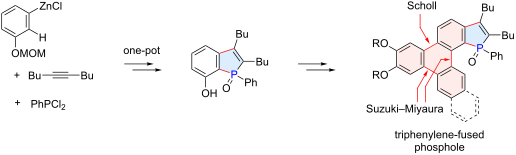
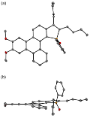
- cyclization under the same conditions to give the corresponding product 8c albeit in a somewhat lower yield of 40%. The triphenylene-fused phosphole oxide 8a was recrystallized from CH2Cl2, and the molecular structure was unambiguously confirmed by single crystal X-ray analysis (Figure 2) [31]. As can be seen



Ultrasonic-assisted unusual four-component synthesis of 7-azolylamino-4,5,6,7-tetrahydroazolo[1,5-a]pyrimidines
Beilstein J. Org. Chem. 2020, 16, 281–289, doi:10.3762/bjoc.16.27
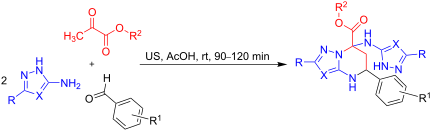
- ]pyrimidines via a cascade of elementary stages that is unusual for such transformations. Thus, we extended the molecular diversity of the compounds obtained by introducing an additional azolyl substituent to the pyrimidine ring. Alternative structures A and B for the tetrahydroazolopyrimidines 4. Molecular
- structure of ethyl 5-(4-bromophenyl)-3-cyano-7-((4-cyano-1H-pyrazol-5-yl)amino)-4,5,6,7-tetrahydropyrazolo[1,5-a]pyrimidine-7-carboxylate (4g) obtained from X-ray diffraction data. Chains of 4g molecules in the crystal phase. Synthesis of tetrahydroazolopyrimidine derivatives. Various multicomponent


Synthesis, liquid crystalline behaviour and structure–property relationships of 1,3-bis(5-substituted-1,3,4-oxadiazol-2-yl)benzenes
Beilstein J. Org. Chem. 2020, 16, 149–158, doi:10.3762/bjoc.16.17
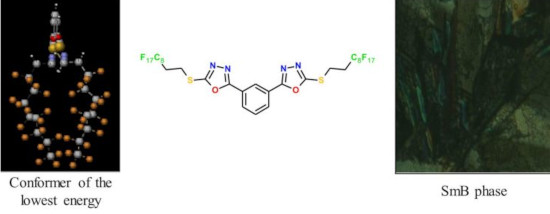
- ]. The introduction of fluorine atoms in the molecular structure presents a successful strategy to control the liquid crystal proprieties. The element Fluorine presents the highest electronegativity, the lowest polarizability and a small radius. When bonded to carbon, it forms the strongest single bond




Bacterial terpene biosynthesis: challenges and opportunities for pathway engineering
Beilstein J. Org. Chem. 2019, 15, 2889–2906, doi:10.3762/bjoc.15.283
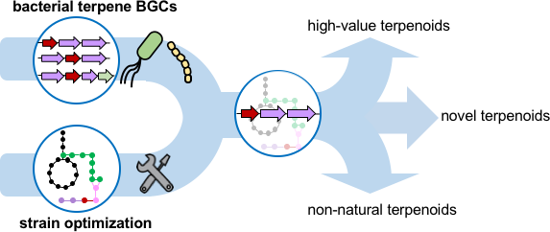
- potential with molecular structure is severely restricted. The canonical terpene biosynthetic pathway uses a single enzyme to form a cyclized hydrocarbon backbone followed by modifications with a suite of tailoring enzymes that can generate dozens of different products from a single backbone. This




Influence of the cis/trans configuration on the supramolecular aggregation of aryltriazoles
Beilstein J. Org. Chem. 2019, 15, 2881–2888, doi:10.3762/bjoc.15.282
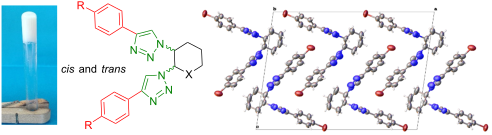
- /H2O, 1:2, v/v, middle right), 12 (DMSO, bottom left), and 14 (DMSO/H2O, 9:1, v/v, bottom right). ORTEP representation of the molecular structure of compound 12 (trans configuration) obtained from X-ray diffraction data. Crystal packing of compound 12 (trans configuration) in DMSO. Crystal packing of







Preparation of anthracene-based tetraperimidine hexafluorophosphate and selective recognition of chromium(III) ions
Beilstein J. Org. Chem. 2019, 15, 2847–2855, doi:10.3762/bjoc.15.278
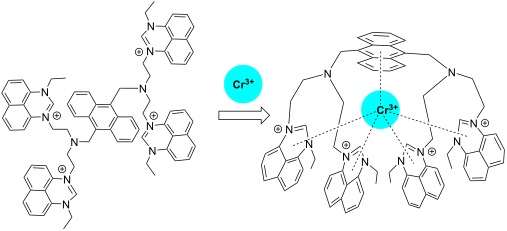
- tertiary amine, did not shift discernibly during 1H NMR titration; (2) if the tertiary amine groups coordinated to one Cr3+ ion each, a 1:2 binding mode would have been determined for 3⋅Cr3+; and (3) from the molecular structure of 3, due to the distance, it is spatially impossible that one Cr3+ ion is
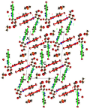
- ]. SHELXS was used to solve the structure of 3 [57]. Other crystallographic data are shown in Supporting Information File 1, Table S1. View of the molecular structure of the cationic moiety of 3 in the crystal. Selected bond angles and lengths are N(2)–C(3)–N(1): 125.2(3)°; N(5)–C(18)–N(4): 124.3(4)°; C(3


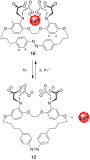
Photoreversible stretching of a BAPTA chelator marshalling Ca2+-binding in aqueous media
Beilstein J. Org. Chem. 2019, 15, 2801–2811, doi:10.3762/bjoc.15.273
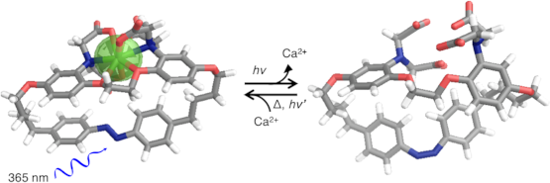
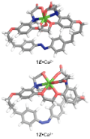
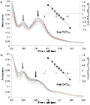
- the absorption at a certain wavelength. The x-intercept gives the log Kd. Molecular modelling: The molecular structure of 1E·Ca2+ and 1Z·Ca2+ were built with AMPAC 10.1. A geometry optimization was performed by energy minimization using the PM6 method; solvation was not considered. Synthetic





Emission solvatochromic, solid-state and aggregation-induced emissive α-pyrones and emission-tuneable 1H-pyridines by Michael addition–cyclocondensation sequences
Beilstein J. Org. Chem. 2019, 15, 2684–2703, doi:10.3762/bjoc.15.262
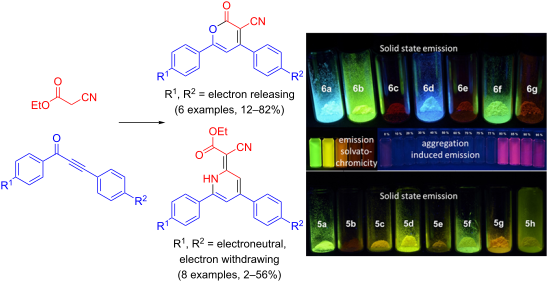
- ]): 557 (6000); quantum yield (CH2Cl2) Φf = < 0.01; Anal. calcd for C25H22N2O4 (414.2): C, 72.45; H, 5.35; N, 6.76; found: C, 71.97; H, 5.45; N, 6.52. Molecular structure of 1H-pyridine 5a (50% thermal ellipsoids), showing the intramolecular N–H···O bond as dashed orange line. H-bond details N1–H 0.90(2




AgNTf2-catalyzed formal [3 + 2] cycloaddition of ynamides with unprotected isoxazol-5-amines: efficient access to functionalized 5-amino-1H-pyrrole-3-carboxamide derivatives
Beilstein J. Org. Chem. 2019, 15, 2623–2630, doi:10.3762/bjoc.15.255

- %) in DCE (2.0 mL) at 80 °C, unless otherwise noted. Isolated yields are provided. Scope with regard to the 5-aminoisoxazole 8 (see Figure 2). aReaction conditions: 2.0 equiv of 8e, 100 °C. Molecular structure in the solid state of compound 10ad. Two modes of reactions of alkynes by silver catalysis


Probing of local polarity in poly(methyl methacrylate) with the charge transfer transition in Nile red
Beilstein J. Org. Chem. 2019, 15, 2552–2562, doi:10.3762/bjoc.15.248
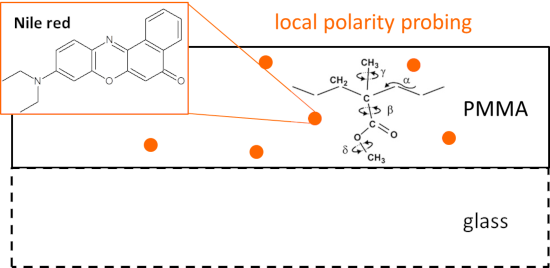
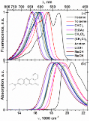
- ., USA) according to published protocols [2][3]. Molecular structure of Nile red (NR). Fluorescence (a) and absorption (b) spectra of NR in solvents of different polarity at 25 °C. The solvent marks are hexane for n-hexane, CHCl3 for chloroform, EtOAc for ethyl acetate, CH2Cl2 for dichloromethane, (CH2Cl



Formation of alkyne-bridged ferrocenophanes using ring-closing alkyne metathesis on 1,1’-diacetylenic ferrocenes
Beilstein J. Org. Chem. 2019, 15, 2534–2543, doi:10.3762/bjoc.15.246

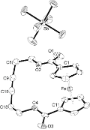
- 1b crystallises in the monoclinic space group P21/c. The asymmetric unit for the molecular structure of 1b shows only half a molecule with the other half being generated through an inversion centre located on the iron atom. For both structures, the iron-centroid (Fe–Ct) distances of 1.6947(12) Å (Fe
- cyclopentadienyl rings should disclose alternate positions as well, however, the central position of Fe’ prevents such observation. Nevertheless, it should be taken into account that the discussed structural parameters for 1a should not be viewed representative for the molecular structure of 1a as a result of the
- . Crystallisation from a saturated solution of DCM layered with hexanes finally yielded 96% of the ferrocenium compound 4 as blue needles, which were suitable for X-ray diffraction analysis (Scheme 2). An ORTEP diagram of the molecular structure of 4 can be seen in Figure 8. The oxidized ferrocenophane 4




Photochromic diarylethene ligands featuring 2-(imidazol-2-yl)pyridine coordination site and their iron(II) complexes
Beilstein J. Org. Chem. 2019, 15, 2428–2437, doi:10.3762/bjoc.15.235
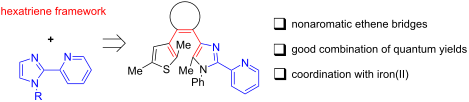
- successfully applied for the synthesis of a new family of photochromic ligands. The structures of the synthesized diarylethene-based ligands 3, 4, 6, and 7 were confirmed by 1H and 13C NMR spectroscopy and mass spectrometry. The molecular structure of 6 was additionally confirmed by X-ray crystallography. In
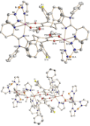
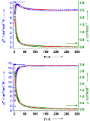
- irradiation (313 nm, toluene, c = 3.4 × 10⁻⁵ M). Inset: fatigue resistance upon multiple subsequent irradiation with UV (365 nm) and visible light (green LED) in acetonitrile. Molecular structure of complexes 8 (top) and 9 (bottom) at 100 K. The H atoms are omitted for clarity; the thermal ellipsoids are


Effect of ring size on photoisomerization properties of stiff stilbene macrocycles
Beilstein J. Org. Chem. 2019, 15, 2408–2418, doi:10.3762/bjoc.15.233
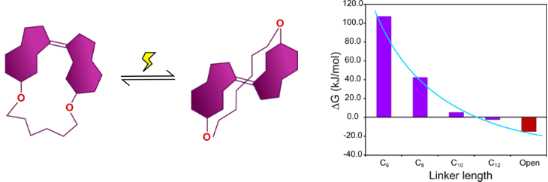
- ]. For example, each CH2 signal is generated by four CH2 protons which are chemically equivalent in the averaged chemical structure (≈ the 2D molecular structure) but not in individual conformers. They cannot be distinguished on the NMR timescale. Therefore, the calculated distances rave, being averages




In water multicomponent synthesis of low-molecular-mass 4,7-dihydrotetrazolo[1,5-a]pyrimidines
Beilstein J. Org. Chem. 2019, 15, 2390–2397, doi:10.3762/bjoc.15.231
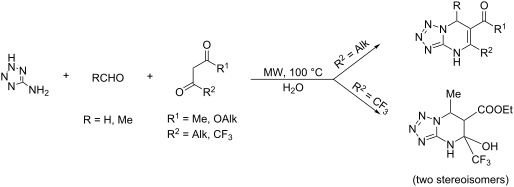
- ); EIMS (70 eV, m/z (%)): 295 (15) [M+], 294 (100), 277 (12), 276 (60), 180 (25); Anal. calcd for С9Н12F3N5O3 (295.23): C, 36.62; H, 4.10; F, 19.31; N, 23.72%; found: C, 36.53; H, 4.21; F, 19.20; N, 23.84%. Molecular structure of 9a according to X-ray data. Displacement ellipsoids are shown at the 50


Excited state dynamics for visible-light sensitization of a photochromic benzil-subsituted phenoxyl-imidazolyl radical complex
Beilstein J. Org. Chem. 2019, 15, 2369–2379, doi:10.3762/bjoc.15.229
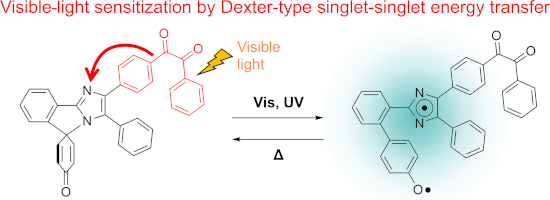
- photoswitch molecules, the phenoxyl-imidazolyl radical complex (PIC) is a recently developed thermally reversible photochromic molecule whose thermal back reaction can be tuned from tens of nanoseconds to tens of seconds by rational design of the molecular structure. While the wide range of tunability of the



Characterization of two new degradation products of atorvastatin calcium formed upon treatment with strong acids
Beilstein J. Org. Chem. 2019, 15, 2085–2091, doi:10.3762/bjoc.15.206
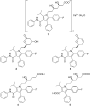
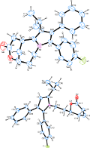
- treatment with acids: lactone 2, dehydrated lactone 3, α,β-unsaturated carboxylic acid 4, and carboxylic acid 5 (resulting from postulated anilide hydrolysis). Top: Molecular structure of artefact 6. Shown here is the molecular structure of one of three independent molecules in 6 drawn at the 50% ellipsoid
- probability level. Bottom: Molecular structure of artefact 7 (drawn at the 50% ellipsoid probability level). Separation of atorvastatin (1; retention time: 5.8 min) from the four decomposition products 2 (retention time: 9.2 min), 3 (retention time: 15.6 min), 6 (retention time: 21.4 min) and 7 (retention




Synthesis of benzo[d]imidazo[2,1-b]benzoselenoazoles: Cs2CO3-mediated cyclization of 1-(2-bromoaryl)benzimidazoles with selenium
Beilstein J. Org. Chem. 2019, 15, 2029–2035, doi:10.3762/bjoc.15.199
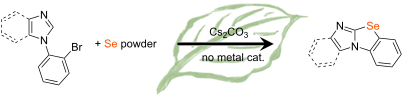
- group having bromine to generate the tetracyclic target molecule. Conclusion Benzo[d]imidazo[2,1-b]benzoselenoazoles were prepared via Cs2CO3-mediated tandem cyclization followed by reaction of 1-(2-bromoaryl)benzimidazoles with Se powder without a transition metal catalyst. The molecular structure of


Synthesis and anion binding properties of phthalimide-containing corona[6]arenes
Beilstein J. Org. Chem. 2019, 15, 1976–1983, doi:10.3762/bjoc.15.193
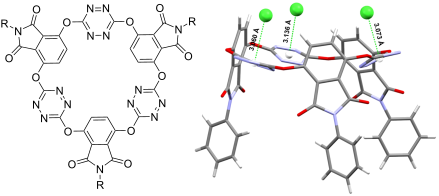
- , 1325, 1228, 1113, 1066. HRMS-APCI: [M − H]− calcd for C63H41N21O15F9, 1502.2953; found, 1502.2972; anal. calcd for C63H42F9N21O15·H2O: C, 49.71; H, 2.91; N, 19.32. found: C, 49.42; H, 3.04; N, 19.01. X-ray molecular structure of 3a (CCDC 1913907) with side (left) and top (right) views. All solvent


Identification of optimal fluorescent probes for G-quadruplex nucleic acids through systematic exploration of mono- and distyryl dye libraries
Beilstein J. Org. Chem. 2019, 15, 1872–1889, doi:10.3762/bjoc.15.183
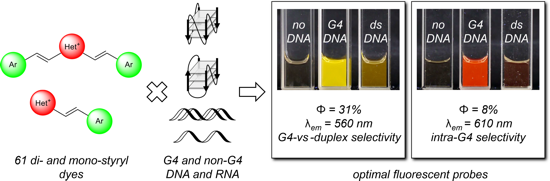
- common feature of mono- and distyryl dyes, including long-known mono-styryl dyes used as mitochondrial probes or protein stains. However, the magnitude of the G4-induced “light-up” effect varies drastically, as a function of both the molecular structure of the dyes and the nature or topology of G4
- to the molecular structure of dyes, it may be concluded that lipophilic substituents (1c, 1d, 1ð, 1y, 1Þ) and/or π-expanded heterocyclic cores (9a, 10a, 12a, 14p) promote the dye aggregation, but the nature of the resulting aggregate (H vs J) is unpredictable. Conversely, small or hydrophilic
- solvents (MeOH, DMSO) and in aqueous buffer, as assessed by visual inspection of the respective solutions. In non-aggregating conditions, the influence of the molecular structure of the dyes on their absorption bands can be clearly observed. Thus, when Ar contains poor electron-donating substituents (1g–1j