Search results
Search for "photophysical" in Full Text gives 270 result(s) in Beilstein Journal of Organic Chemistry. Showing first 200.
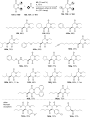
Aldehydes as powerful initiators for photochemical transformations
Beilstein J. Org. Chem. 2020, 16, 833–857, doi:10.3762/bjoc.16.76
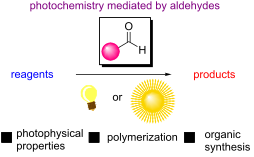
- ) aldehydes have as photoinitiators. The photophysical properties and photoreactivity of benzaldehyde are initially provided, followed by applications of aldehydes as initiators for polymerization reactions. Finally, the applications to date regarding aldehydes as photoinitiators in organic synthesis are
- are useful photocatalysts, the corresponding aldehydes are not so widely utilized to promote chemical reactions. In this review, our goal was to summarize the photophysical properties of aromatic aldehydes, highlight the use of aldehydes as photoinitiators in polymerization reactions, and provide all
- examples where aldehydes were employed as photoinitiators in organic synthesis. Review Photophysical properties of carbonyl compounds The interest in the interaction of aldehydes with light to promote reactions can be traced many years back. In 1966, Davies and co-worker studied the energy transfer from






One-pot synthesis of dicyclopenta-fused peropyrene via a fourfold alkyne annulation
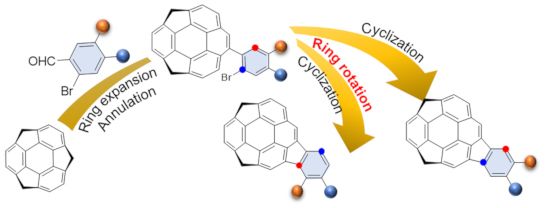
Beilstein J. Org. Chem. 2020, 16, 791–797, doi:10.3762/bjoc.16.72
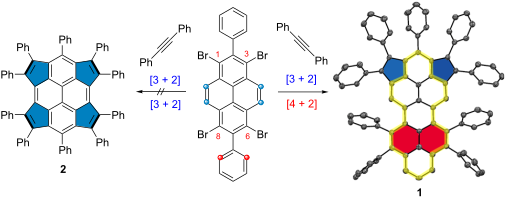
- pentagons could be realized [11][12][13][14][15][16][17]. Among them, the cyclopenta-fused pyrenes are an important class of CP-PAHs owing to their unique physical and photophysical properties, such as high electron affinities and anomalous fluorescence [17][18][19][20]. However, the reported synthetic


Towards triptycene functionalization and triptycene-linked porphyrin arrays
Beilstein J. Org. Chem. 2020, 16, 763–777, doi:10.3762/bjoc.16.70

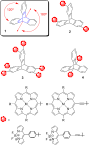
- and electrochemical properties of the porphyrins by increasing the size of the aromatic π-system [16]. In contrast, our approach described herein deviates significantly from previous studies by examining how isolating the individual porphyrin units affects the overall photophysical properties of the
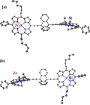
- properties of triptycene complexes The photophysical properties of the five new triptycene-liked porphyrin/BODIPY compounds 7, 9, 14, 16 and 18 were investigated in preliminary studies for their suitability as model compounds for electron transfer in the context of artificial photosynthesis. Similar Soret





Synthesis of C70-fragment buckybowls bearing alkoxy substituents
Beilstein J. Org. Chem. 2020, 16, 681–690, doi:10.3762/bjoc.16.66
- hydrogen bonds (C37∙∙∙O1, C11∙∙∙O2, C40∙∙∙O4) (Figure 5c). Photophysical properties of the dialkoxides were investigated by UV–vis and emission spectroscopies (Figure 6). UV–vis spectra of 5a and 5b well reflected the electric property of 1, showing two strong bands observed at around 280–300 nm and 330


Direct borylation of terrylene and quaterrylene
Beilstein J. Org. Chem. 2020, 16, 621–627, doi:10.3762/bjoc.16.58
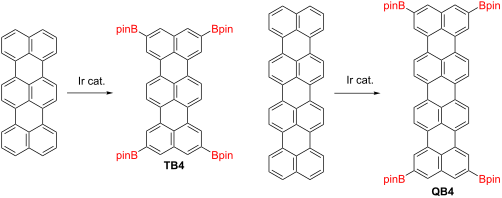
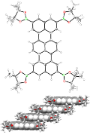
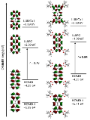
- photophysical properties of TB4 are also unchanged by the substituents because the carbon atoms at 2,5,10,13-positions have less coefficients on its HOMO and LUMO, estimated by theoretical calculations. Finally, the same borylation reaction was applied for quaterrylene, resulting in the formation of soluble






Regioselectively α- and β-alkynylated BODIPY dyes via gold(I)-catalyzed direct C–H functionalization and their photophysical properties
Beilstein J. Org. Chem. 2020, 16, 587–595, doi:10.3762/bjoc.16.53
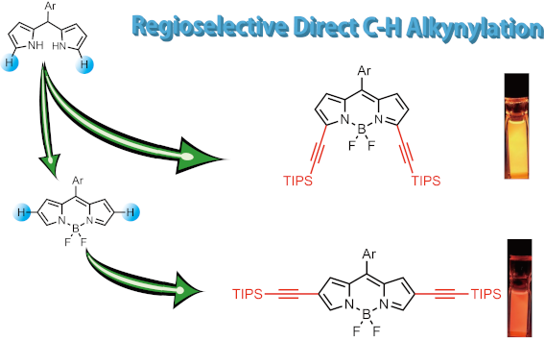
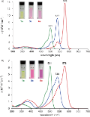
- . Depending on the position of the ethynyl substituent in the BODIPY skeleton, the photophysical properties of the resulting α- and β-substituted BODIPYs are notably altered. The lowest S0–S1 transition absorbance and fluorescence bands are both bathochromically shifted as the number of substituents increases
- , while the emission quantum yields of the β-ethynylated derivatives are significantly lower than those of α-ethynylated ones. The current method should be useful for fine-tuning of the photophysical properties of BODIPY dyes as well as for constructing BODIPY-based building cores for functional π
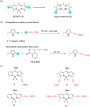
- afford α-monoethynyl and α,α'-diethynyl-substituted BODIPYs 3 and 4, respectively. The resulting ethynylated BODIPY isomers demonstrated site-dependent photophysical properties. Results and Discussion Synthesis and characterization To prepare the α,α'-diethynyl BODIPY 4a, 5-mesityldipyrromethane 2 was



Copper-catalyzed remote C–H arylation of polycyclic aromatic hydrocarbons (PAHs)
Beilstein J. Org. Chem. 2020, 16, 530–536, doi:10.3762/bjoc.16.49
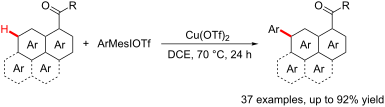
- fluorescence, and have been widely applied in many scientific areas including chemistry, biomedicine and materials science [1][2][3][4][5][6]. The arylation reaction of PAHs is an important strategy to further extend the π-conjugation length, which can effectively adjust the photophysical properties of
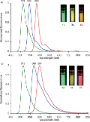
- the C8–Cu bond delivers Cu(I), meantime, the OTf anion takes away the proton from the C7-position, affording the desired product 3 or 4. Subsequently, the photophysical properties of the arylation products 4k, 4n and 4o were investigated (Figure 1). Their absorption bands cover from 300 nm to 400 nm




Photophysics and photochemistry of NIR absorbers derived from cyanines: key to new technologies based on chemistry 4.0
Beilstein J. Org. Chem. 2020, 16, 415–444, doi:10.3762/bjoc.16.40
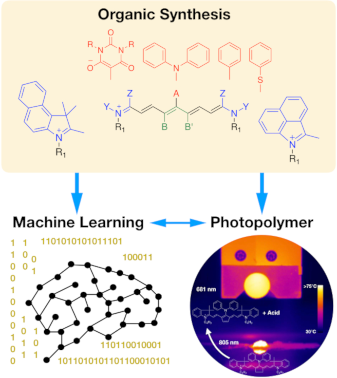
- ]. Although some photophysical studies disclose the absorption and emission properties [13][59][60][61][62], comparison of available data may lead sometimes to contradictory conclusions. This article first summarizes possibilities for synthesis of different patterns of cyanines exhibiting indolenine and
- benzindolenine moiety at the ends of the methine chain while the cyanine pattern also changed at the center of the molecule. A summary of determined and almost published photophysical and electrochemical data should complement available data available [3][13][14][59][60][61][62] to provide a brief idea regarding
- excited state possesses several competitive reaction pathways for deactivation. This is a photochemical reaction such as photoinduced electron transfer serving as source to generate reactive intermediates such as initiating radicals or conjugate acid [5]. Photophysical events of S1 occurring after one


Six-fold C–H borylation of hexa-peri-hexabenzocoronene
Beilstein J. Org. Chem. 2020, 16, 391–397, doi:10.3762/bjoc.16.37
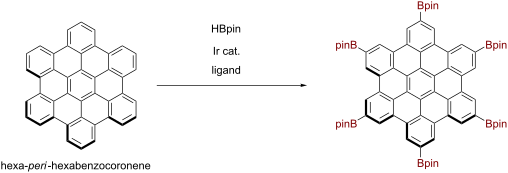
- ≤ 55.862°), 2594 unique (Rint = 0.0529). Goodness-of-fit on F2: 1.093. R1 = 0.0733, wR2 = 0.2041 (I > 2σ(I)) and R1 = 0.1252, wR2 = 0.2378 (all data). Photophysical measurements UV–vis absorption spectra were recorded on a Shimadzu UV-3510 spectrometer with a resolution of 0.5 nm. The emission spectrum was
- 50% probability; all hydrogen atoms and solvent molecules (pentane) are omitted for clarity; gray: carbon; olive green: boron; red: oxygen. (b) Side view of 1. (c) Packing mode of 1. Photophysical properties of 1. (a) UV–vis absorption (solid lines) spectra, fluorescence (dotted line) spectrum


Synthesis and circularly polarized luminescence properties of BINOL-derived bisbenzofuro[2,3-b:3’,2’-e]pyridines (BBZFPys)
Beilstein J. Org. Chem. 2020, 16, 325–336, doi:10.3762/bjoc.16.32
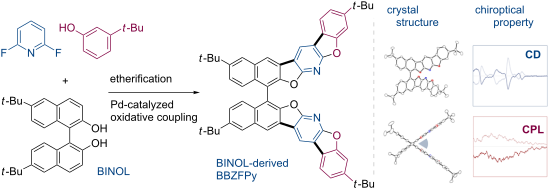
- ; palladium; Introduction Densely-fused (hetero)aromatic compounds have been a key motif in a wide range of manufactured functional molecules, as they exhibit fundamentally useful electrochemical and photophysical properties. Considerable effort has therefore taken into the development of efficient methods


Recent developments in photoredox-catalyzed remote ortho and para C–H bond functionalizations
Beilstein J. Org. Chem. 2020, 16, 248–280, doi:10.3762/bjoc.16.26
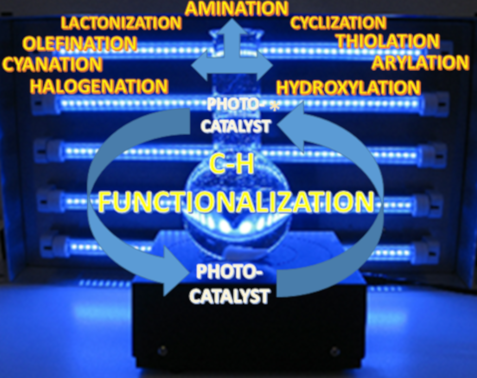
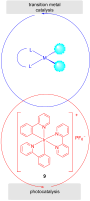
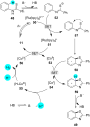
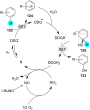
- into chemical energy via the generation of reactive intermediates through electron transfer reactions. A photochemical reaction is directed by the photophysical properties of an electronically excited molecule. The first vibrational equilibrated singlet excited state is S1, and it depends on both












Reversible photoswitching of the DNA-binding properties of styrylquinolizinium derivatives through photochromic [2 + 2] cycloaddition and cycloreversion
Beilstein J. Org. Chem. 2020, 16, 111–124, doi:10.3762/bjoc.16.13
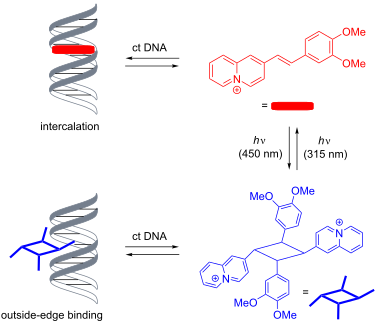
- the alkene protons (3JH–H = 16 Hz) [70]. Absorption and emission properties The photophysical properties of the styrylquinolizinium derivatives 3a and 3c have already been reported [69], while the ones of 3b and 3d were determined in this work (Table 1 and Figure 1). In acetonitrile, the derivatives




Starazo triple switches – synthesis of unsymmetrical 1,3,5-tris(arylazo)benzenes
Beilstein J. Org. Chem. 2020, 16, 22–31, doi:10.3762/bjoc.16.4
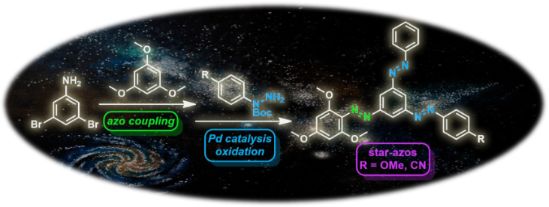
- 20% was achieved, whereas the methoxy derivative 3b could be isolated in a good yield of 59%. Having both tris(arylazo)benzenes 3a/3b in hand, UV–vis spectroscopy was used for preliminary investigations on the photophysical properties of the molecular triple switches 3. Both tris(arylazo)benzenes 3a


Synthesis and optoelectronic properties of benzoquinone-based donor–acceptor compounds
Beilstein J. Org. Chem. 2019, 15, 2914–2921, doi:10.3762/bjoc.15.285

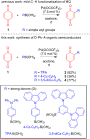
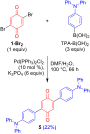
- LUMO energies of 2–5 are in good agreement with the calculated values (Figure 3). Photophysical properties We next investigated the photophysical properties of 2–5. The UV–vis absorption and photoluminescence (PL) spectra in degassed DCM solution are shown in Figure 5, and the data are summarized in
- theoretical, electrochemical, and photophysical properties of the donor–acceptor compounds 2–5 were determined in solution and thin film. While compounds 2, 4, and 5 were very poorly emissive, 3 showed a green emission with a biexponential lifetime characterized by a prompt nanosecond component and a delayed
- File 596: NMR spectra and supplementary photophysical measurements. Supporting Information File 597: Crystallographic data for 3 (CCDC 1836680). Supporting Information File 598: Crystallographic data for 4 (CCDC 1836681). Acknowledgements We thank Heriot-Watt University (James Watt Scholarship for DRS





Design, synthesis and investigation of water-soluble hemi-indigo photoswitches for bioapplications
Beilstein J. Org. Chem. 2019, 15, 2822–2829, doi:10.3762/bjoc.15.275
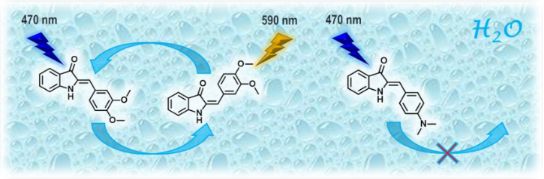
- alkylamino substituent only slightly influenced the photochemical and photophysical characteristics of the hemi-indigo Z-2 in comparison with the parent compound Z-1c (Figure 1D, Figure 2C, Table 1). Thus, the positions of the absorption maxima of both, the Z- and E-forms, the extent of conversion in PSSs
- . Photochemical and photophysical properties of hemi-indigo derivatives 1a–c and 2 in water. Supporting Information Supporting Information File 610: Additional spectral data, detailed description of the experiments performed, NMR of compounds Z-1a–c and LED characteristics. Acknowledgements This project has


Chemical tuning of photoswitchable azobenzenes: a photopharmacological case study using nicotinic transmission
Beilstein J. Org. Chem. 2019, 15, 2812–2821, doi:10.3762/bjoc.15.274
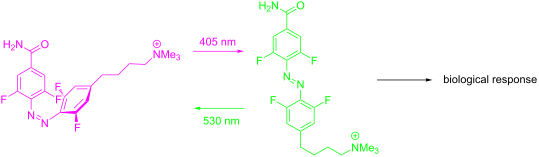
- preserving all the favorable photophysical properties of the parent 4FAB scaffold, however, the tetrafluoro motif can significantly perturb pharmacophore–protein interactions. In contrast, we found that the freely diffusible 4FABTA probe could be pre-set with green light into an OFF state that was




Dyes in modern organic chemistry
Beilstein J. Org. Chem. 2019, 15, 2798–2800, doi:10.3762/bjoc.15.272
- the compilation of the latest trends in the chemistry of organic dyes and it covers the diverse modern aspects with a special focus on organic synthesis, photochemical and photophysical studies, as well as on applications in (bio)analytical chemistry, materials science, biology, and medicine. I
Fluorinated maleimide-substituted porphyrins and chlorins: synthesis and characterization
Beilstein J. Org. Chem. 2019, 15, 2704–2709, doi:10.3762/bjoc.15.263

- thus to affect the photophysical, photochemical and tumor-specific properties of the porphyrin system. Such an approach provides a platform to new photosensitizers with optimized characteristics useful for biomedical applications including PDT. Currently a number of investigations directed for the
- the maleimide group with its rich biological activity to the tetrapyrrole macrocycles with their unique photophysical properties may result in new conjugates with improved chemical, biological and anticancer characteristics [28]. Moreover, maleimide is a stable functionality that rapidly and


Emission solvatochromic, solid-state and aggregation-induced emissive α-pyrones and emission-tuneable 1H-pyridines by Michael addition–cyclocondensation sequences
Beilstein J. Org. Chem. 2019, 15, 2684–2703, doi:10.3762/bjoc.15.262
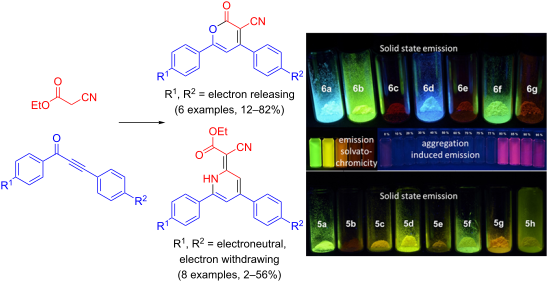
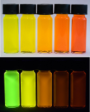
- , dimethylamino-substituted α-pyrones, as donor–acceptor systems, display remarkable photophysical properties, such as strongly red-shifted absorption and emission maxima with daylight fluorescence and fluorescence quantum yields up to 99% in solution and around 11% in the solid state, as well as pronounced
- achieved [4]. Small molecule organic fluorophores are particularly advantageous due to the potential of a tailored fine-tuning of their photophysical properties through synthetic modifications [5]. Based on their structural features, functionalized organic chromophores, containing N-, O- or S-atoms, are
- photophysical studies (absorption and emission spectroscopy) and the studies on the electronic structure were accompanied by TD-DFT calculations for assigning the dominant longest-wavelength absorption bands. Results and Discussion Synthesis and tentative mechanism Recently, we reported a straightforward access




A photochemical determination of luminescence efficiency of upconverting nanoparticles
Beilstein J. Org. Chem. 2019, 15, 2671–2677, doi:10.3762/bjoc.15.260
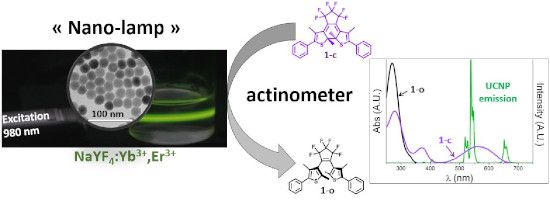
- to estimate their impact on the biological medium. Sophisticated photophysical measurements under near infrared excitation have been developed only by few teams. Here, we present the first attempt towards a simple and cheap photochemical approach consisting of an actinometric characterization of the
- efficiency of these green-emitting “nanolamps”. The agreement of the collected data with the previous published results validates this approach. Keywords: actinometry; diarylethene; lanthanide; photochemistry; upconverting nanoparticle; Introduction The photophysical property of converting low-energy light


Plasma membrane imaging with a fluorescent benzothiadiazole derivative
Beilstein J. Org. Chem. 2019, 15, 2644–2654, doi:10.3762/bjoc.15.257
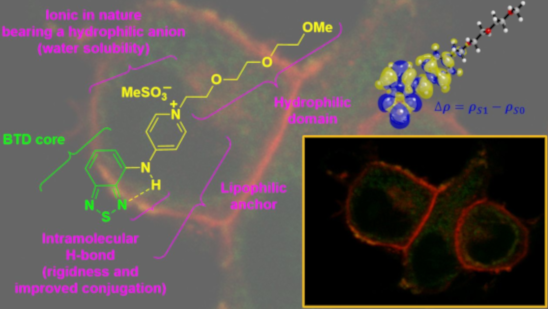
- -soluble and selective bioprobe for plasma membrane imaging. The new compound was efficiently synthesized in a two-step procedure with good yields. The photophysical properties were evaluated and the dye proved to have an excellent photostability in several solvents. DFT calculations were found in
- derivative. The photophysical properties of the new compound BTDE-4APTEG have been investigated and the results are summarized in Table 1 and presented in Figure 2. All absorption maxima were observed in the UV region close to 375 nm and with reasonable molar extinction coefficients. Large Stokes shifts were
- bioimaging experiments and proved to be stable under constant light irradiation for more than 4 hours (see Figure S4 in Supporting Information File 1). Theoretical calculations were then performed for a better comprehension of the photophysical data obtained for BTD-4APTEG by means of the time-dependent


Arylisoquinoline-derived organoboron dyes with a triaryl skeleton show dual fluorescence
Beilstein J. Org. Chem. 2019, 15, 2612–2622, doi:10.3762/bjoc.15.254
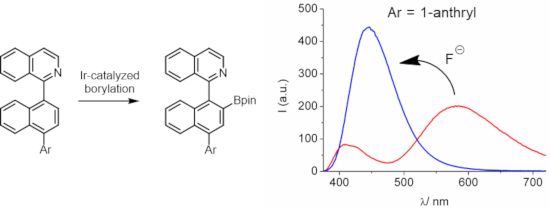
- advantageous photophysical properties that include spectrally tunable and highly intense fluorescence [1][2]. On the one hand, those compounds that contain the boron atom in a valence-saturated situation corresponding to sp3 hybridization (such as Bodipy dyes [3][4], N,C-chelate organoboron dyes [5][6][7][8][9
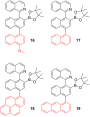
- electron-transfer phenomena or two-photon absorption [32][33][34][35][36]. As part of our research program we have developed arylisoquinolines that integrate a boronic acid ester [37][38][39] or a BMes2 unit [6][40]. The presence of the boron-substituent confers interesting photophysical properties to
- the verification of the effect of aromatic conjugation (naphthyl, anthryl, pyrenyl) and electron-donor strength (naphthyl versus 4-methoxynaphthyl) on the photophysical properties. Beside the observation of interesting dual emission properties for these dyes, some showed a pronounced ratiometric



Probing of local polarity in poly(methyl methacrylate) with the charge transfer transition in Nile red
Beilstein J. Org. Chem. 2019, 15, 2552–2562, doi:10.3762/bjoc.15.248
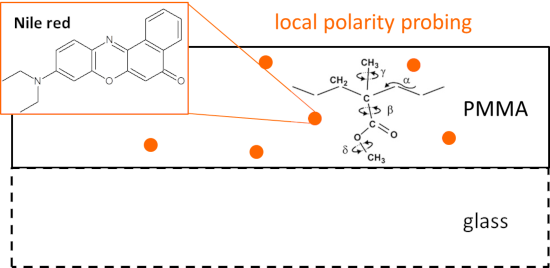
- substrate-supported ultrathin films [13], the analysis of the photophysical properties of tracer dye molecules was found to be beneficial. In time-resolved fluorescence measurements and dye diffusion studies, the nanoenvironments in polymersomes could be assigned [1][12], solute transport be characterized



Self-assembled coordination thioether silver(I) macrocyclic complexes for homogeneous catalysis
Beilstein J. Org. Chem. 2019, 15, 2465–2472, doi:10.3762/bjoc.15.239
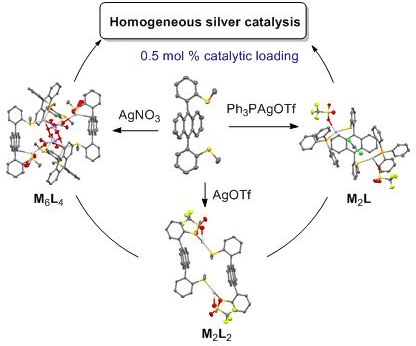
- ). Finally, the photophysical properties of ligand syn-1 (20 μM) and complexes 1a–d (30 μM) were evaluated in dichloromethane (Supporting Information File 1, Figures S4–S8). The UV–visible and fluorescence emission spectra (λexc = 345 nm) of ligand and complexes were similar and correspond to those of 9,10


Synthesis of a dihalogenated pyridinyl silicon rhodamine for mitochondrial imaging by a halogen dance rearrangement
Beilstein J. Org. Chem. 2019, 15, 2333–2343, doi:10.3762/bjoc.15.226
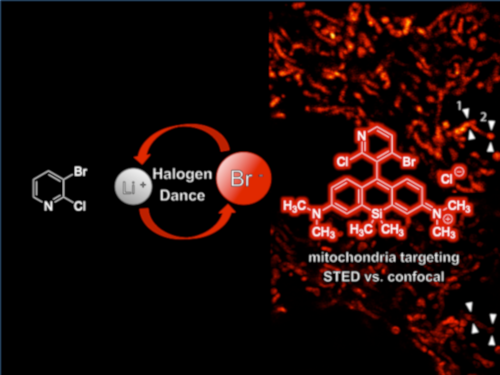
- broad field of application. Their excellent spectral (absorption and emission bands in the near-infrared region), photophysical (bright and photostable) and biochemical (biocompatible, biological stable and cell membrane permeable) properties make them useful tools in live cell super-resolution
- photophysical properties of numerous silicon rhodamines leading to further insights into the correlation of the dyes’ chemical structure with their fluorogenic behavior [27]. Regarding the quantum yield, Hanaoka et al. have shown that introduction of methyl, methoxy or dimethylamine groups into the benzene
- experiments (supported by DFT calculations) on the orbital effects of both halogens and the nitrogen position in the pyridine ring are needed to explain these effects with confidence. In addition, our SiR dye 15 displays photophysical properties (extinction coefficient, quantum yield, lifetime) in the same