


Search results
Search for "reductive elimination" in Full Text gives 183 result(s) in Beilstein Journal of Organic Chemistry.
Transition-metal-catalyzed synthesis of phenols and aryl thiols
Beilstein J. Org. Chem. 2017, 13, 589–611, doi:10.3762/bjoc.13.58

- formation of a copper(I) complex from the 1,2-ketone and the hydroxy group, which further coupled with aryl iodides through oxidative addition to generate a copper(III) complex. Phenols were liberated by the following reductive elimination [29]. You and co-workers used the same copper catalyst and reported


Direct arylation catalysis with chloro[8-(dimesitylboryl)quinoline-κN]copper(I)
Beilstein J. Org. Chem. 2016, 12, 2757–2762, doi:10.3762/bjoc.12.272
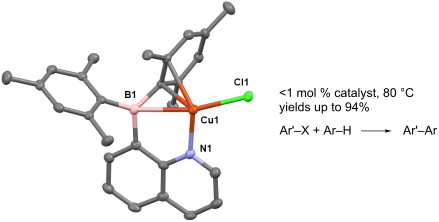
- ]. Recently, we reported the Pd(II) complex catalyzed Heck-type C–C coupling [51]. The observation may implicate reductive elimination and oxidative addition can cycle repeatedly on the palladium center coordinated to 1. With this in mind, we sought to utilize the Cu(I) complex, chloro[8-(dimesitylboryl
- reactions and, more specifically, direct arylation have been the subject of intense interest. Mechanistic models appear to diverge along those favoring oxidative addition/reductive elimination via Cu(I)/Cu(III) versus proposals favoring a single electron transfer (SET) pathway [55][56]. In the base-promoted
- -enediol in situ as an electron donor [62]. While the SET mechanism has drawn much interest, our observation of large rate enhancement upon addition of the preformed catalyst 2 may be better described with a metalation–deprotonation step followed by oxidative addition/reductive elimination (Scheme 2) [63


A new paradigm for designing ring construction strategies for green organic synthesis: implications for the discovery of multicomponent reactions to build molecules containing a single ring
Beilstein J. Org. Chem. 2016, 12, 2420–2442, doi:10.3762/bjoc.12.236
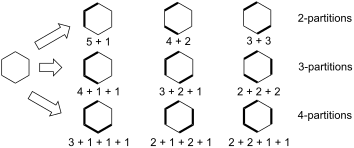
- a cyclic enamine followed by reductive elimination of the amine moiety using lithium in liquid ammonia [150]. We may be able to repeat the exercise now using all possible 3-partition target bond dissection maps shown in Figure 6. For brevity the results are given in Supporting Information File 1 in


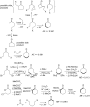


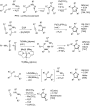


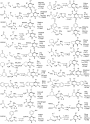
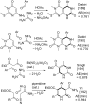


Enantioconvergent catalysis
Beilstein J. Org. Chem. 2016, 12, 2038–2045, doi:10.3762/bjoc.12.192
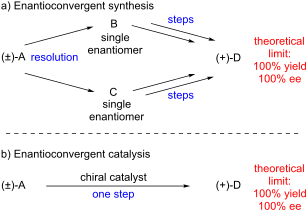
- these two complexes was not observed directly for this system, extrapolation from related systems gives a rate more than 105 times greater than the observable rates of C–P reductive elimination. Since the rate of inversion is much greater than the rate of bond formation, Curtin–Hammett/Winstein–Holness


Catalytic Chan–Lam coupling using a ‘tube-in-tube’ reactor to deliver molecular oxygen as an oxidant
Beilstein J. Org. Chem. 2016, 12, 1598–1607, doi:10.3762/bjoc.12.156
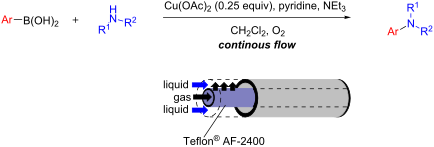
- more atom economical way of catalysing the Chan–Lam reaction using a sub-stoichiometric amount of copper and oxygen gas as the oxidant. The use of oxygen provides the necessary oxidant to reoxidise the Cu(I) that forms after the C–N reductive elimination back to Cu(II), allowing for sub-stoichiometric


A T-shape diphosphinoborane palladium(0) complex
Beilstein J. Org. Chem. 2016, 12, 1573–1576, doi:10.3762/bjoc.12.152
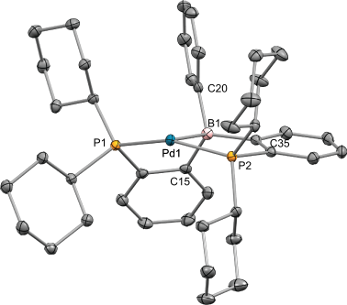
- between the oxidations states Pd(0)/Pd(II) is of potential interest for organometallic transformations involved in homogeneous catalysis, such as the reductive elimination. Here we report the synthesis of the diphosphinoborane (o-PCy2-C6H4)2BPh ligand CyDPBPh. CyDPBPh reacts with CpPd(η3-C3H5) yielding


Methylpalladium complexes with pyrimidine-functionalized N-heterocyclic carbene ligands
Beilstein J. Org. Chem. 2016, 12, 1557–1565, doi:10.3762/bjoc.12.150
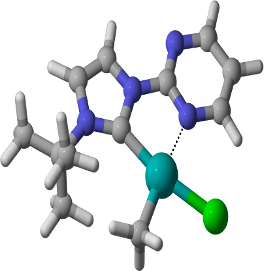
- like the bis(1,1'-dimethyl-3,3'-methylenediimidazoline-2,2'-diylidene)palladium(II) dibromide [L2PdBr2] consists of three steps: electrophilic substitution, oxidation and reductive elimination involving a palladium(IV) intermediate [26]. But we also experimentally set out to investigate potential
- (see experimental details). The result indicates that an oxidation/reductive elimination cycle took place (Scheme 3, upper pathway). The direct reductive elimination of methyl trifluoroacetate from complex 13 by heating complex 13 in DMSO-d6 up to 90 °C in the presence of sodium trifluoroacetate [30
- bistrifluoroacetate complex 14 from this complex under oxidizing reaction conditions points to a Pd(II)/Pd(IV)-mechanism for the reductive elimination of the observed product methyl trifluoroacetate. The dimethyl complex [((pym)^(NHC-DIPP))PdII(CH3)2] 15 could be synthesized to demonstrate the accessibility of these


On the mechanism of imine elimination from Fischer tungsten carbene complexes
Beilstein J. Org. Chem. 2016, 12, 1322–1333, doi:10.3762/bjoc.12.125
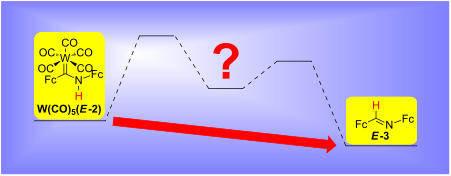
- dissociation, followed by an oxidative addition/pseudorotation/reductive elimination pathway with short-lived, elusive seven-coordinate hydrido tungsten(II) intermediates cis(N,H)-W(CO)4(H)(Z-15) and cis(C,H)-W(CO)4(H)(Z-15). Keywords: carbene complexes; ferrocene; imine; mechanism; tungsten; Introduction
- (pathway 3a and 3b, Scheme 4) giving W(CO)4(E-3) or W(CO)4(Z-3), respectively. Furthermore, the free coordination site in W(CO)4(E-2) or W(CO)4(Z-2) offers an oxidative addition/pseudorotation/reductive elimination pathway via the hydrido tungsten(II) complexes W(CO)4(H)(Z-15) with the formally anionic
- (H)(Z-15) (ΔG‡ = 86 kJ mol−1) enables a low-energy reductive elimination (ΔG‡ = 40 kJ mol−1) to give the imine complex W(CO)4(Z-3) (Figure 1). The overall Gibbs free energy of activation amounts to only ΔG‡total = 183 kJ mol−1 with the RDI W(CO)4(E-2) and the RDTS TS(W(CO)4(Z-2) → cis(N,H)-W(CO)4(H




Multicomponent reactions: A simple and efficient route to heterocyclic phosphonates
Beilstein J. Org. Chem. 2016, 12, 1269–1301, doi:10.3762/bjoc.12.121
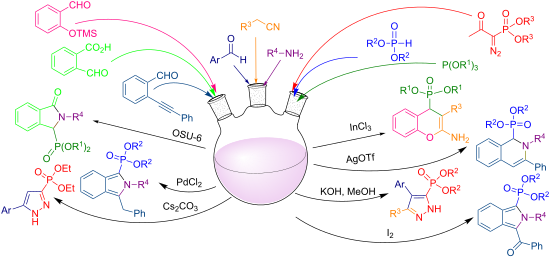
- phosphorylated quinazoline 203 through reductive elimination. A silver-catalyzed three-component reaction of α-isocyanophosphonates 206, ketones 205 and amines 204 under microwave irradiation to afford (2-imidazolin-4-yl)phosphonates 210 has recently been reported (Scheme 43) [81]. The yields of the products


Palladium-catalyzed picolinamide-directed iodination of remote ortho-C−H bonds of arenes: Synthesis of tetrahydroquinolines
Beilstein J. Org. Chem. 2016, 12, 1243–1249, doi:10.3762/bjoc.12.119
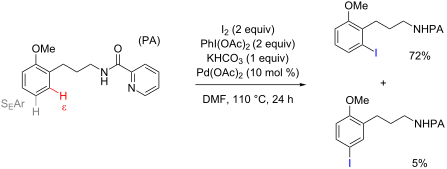
- , entries 9 and 10) [34][35]. By analogy with similar Pd-catalyzed directed C–H halogenation reactions, we speculate that the catalytic cycle follows a sequence of C−H palladation, oxidative addition and reductive elimination [36][37]. With the best conditions in hand (Table 1, entries 9 and 10), we then


Cationic Pd(II)-catalyzed C–H activation/cross-coupling reactions at room temperature: synthetic and mechanistic studies
Beilstein J. Org. Chem. 2016, 12, 1040–1064, doi:10.3762/bjoc.12.99
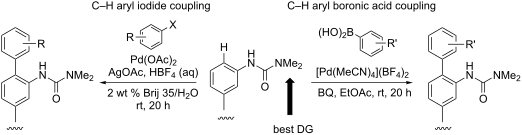
- the product from their 5-membered isoxazoline-containing palladacycle [160][168][225]. Although BQ is sometimes used as a ligand for palladium to accelerate reductive elimination [103][226][227][228][229][230], its presence was not necessary in our stoichiometric reaction of a cationic 6-membered ring
- hydroquinone as a byproduct. For the Fujiwara–Moritani coupling, addition of the palladacycle 6 to an acrylate followed by β-hydride elimination and reductive elimination of HPd+BF4− would result in a Pd(0) species unable to participate in palladacycle formation until it is oxidized by BQ to Pd2+(BF4)2
- presumably starts from the generation of a cationic palladacycle, which may undergo a facile transmetalation with an arylboronic acid without prior activation by base (Scheme 24) [241][242][243][244][245][246][247][248]. This step is followed by reductive elimination of a diarylpalladium(II) species






Catalytic asymmetric synthesis of biologically important 3-hydroxyoxindoles: an update
Beilstein J. Org. Chem. 2016, 12, 1000–1039, doi:10.3762/bjoc.12.98
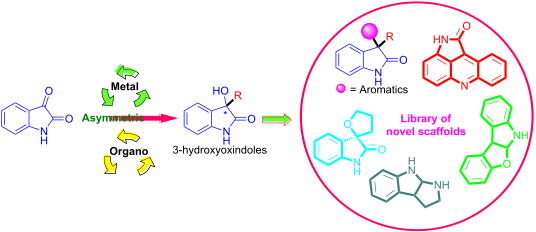
- alkoxide species C. Reductive elimination of species C gave the product and regenerated the active iridium catalyst. Recently, Qiu and co-workers developed a novel chiral ligand L5 based on a chiral-bridged biphenyl backbone and successfully achieved the asymmetric addition of arylboronic acids to N
- protonolysis of I by adamantanecarboxylic acid, followed by exchange of the carboxylate II with 3-hydroxy-2-oxindole (rapid). β-Hydride elimination of III generated ruthenium hydride IV and N-benzylisatin. Subsequent C–H reductive elimination of IV produced the product and regenerated the ruthenium(0) complex




Pyridylidene ligand facilitates gold-catalyzed oxidative C–H arylation of heterocycles
Beilstein J. Org. Chem. 2015, 11, 2737–2746, doi:10.3762/bjoc.11.295
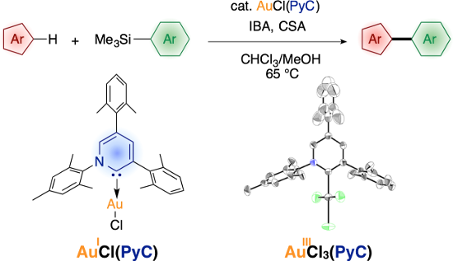
- be a key step in the catalytic cycle consisting of transmetalation with arylsilane, C–H activation and reductive elimination [69]. While gold(I) complexes bearing various ligands are used as gold(III) precursors, it remains unclear whether ligands can still coordinate to the gold center or not under
- electrophilic metalation of heteroarene 1 with C with concurrent generation of an acid (HX) produces diarylated gold(III) species D. Finally, the reductive elimination from D releases the coupling product 3 along with the regeneration of gold(I) species A. The side reaction leading to the homocoupling product
- calculations on the oxidation process of the AuCl(ligand) to AuCl3(ligand) also clarified the advantage of the PyC ligand over IPr by 3.6 kcal mol–1 (see Supporting Information File 1 for details). While it still remains unclear how the PyC ligand affects the transmetalation, C–H metalation and reductive




Copper-catalyzed aminooxygenation of styrenes with N-fluorobenzenesulfonimide and N-hydroxyphthalimide derivatives
Beilstein J. Org. Chem. 2015, 11, 2721–2726, doi:10.3762/bjoc.11.293
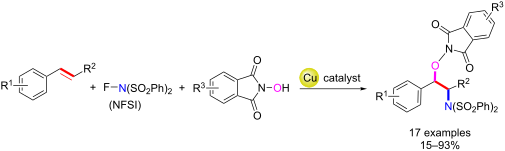
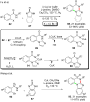
- (II)–F species IV. The combination of the intermediates III and IV gave the Cu(III) species V having a C–Cu bond, which reacted with 2a to generate Cu(III)–O species VI, along with the loss of HF. Finally, the reductive elimination of VI afforded aminooxygenation product 3g. Finally, we tried to




Recent advances in copper-catalyzed C–H bond amidation
Beilstein J. Org. Chem. 2015, 11, 2209–2222, doi:10.3762/bjoc.11.240

- applicable for the synthesis of 2-amino-1-methylindoles 37 via C–H amidation of indoles 36 by employing benzene as the medium (Scheme 11). While the authors proposed that the mechanism in the selective C-2 amidation of N-methylindoles resulted from a classical oxidative addition/reductive elimination Cu(III




Coupling of α,α-difluoro-substituted organozinc reagents with 1-bromoalkynes
Beilstein J. Org. Chem. 2015, 11, 2145–2149, doi:10.3762/bjoc.11.231

- interacts with bromoalkyne 3 either by oxidative addition generating copper(III) intermediate 6 or by triple bond carbometallation [38] generating copper(I) intermediate 7. Subsequent reductive elimination (from 6) or β-elimination (from 7) leads to the product and regenerates the copper(I) catalyst


The facile construction of the phthalazin-1(2H)-one scaffold via copper-mediated C–H(sp2)/C–H(sp) coupling under mild conditions
Beilstein J. Org. Chem. 2015, 11, 1624–1631, doi:10.3762/bjoc.11.177

- organocopper(II) complex M2, which undergoes Cu(OAc)2-promoted oxidation and intramolecular C–H cupration to deliver chelated organocopper(III) intermediate M4. The corresponding product 3a is formed by the subsequent reductive elimination and intramolecular annulation. Conclusion In conclusion, we have


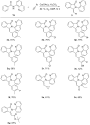


Pd(OAc)2-catalyzed dehydrogenative C–H activation: An expedient synthesis of uracil-annulated β-carbolinones
Beilstein J. Org. Chem. 2015, 11, 1360–1366, doi:10.3762/bjoc.11.146
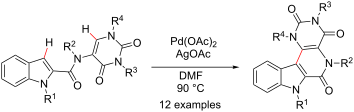
- a seven membered palladacycle B which in turn produces the product β-carbolinones after reductive elimination from the 7-membered palladacycle B. The catalytic cycle is completed by AgOAc. Conclusion In conclusion we have developed an elegant method for the preparation of uracil annulated β




Glycoluril–tetrathiafulvalene molecular clips: on the influence of electronic and spatial properties for binding neutral accepting guests
Beilstein J. Org. Chem. 2015, 11, 1023–1036, doi:10.3762/bjoc.11.115
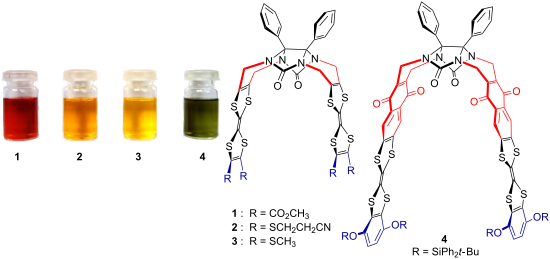
- situ to the transient diene by reductive elimination using naked iodide [37][38][39] or the iodo-ionic liquid 1-butyl-3-methylimidazolium iodide [40]. After purification by column chromatography on silica gel, we noted that complete aromatization has occurred concomitantly and molecular clip 4 was




Hydrogenation of unactivated enamines to tertiary amines: rhodium complexes of fluorinated phosphines give marked improvements in catalytic activity
Beilstein J. Org. Chem. 2015, 11, 622–627, doi:10.3762/bjoc.11.70

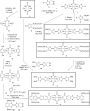
- significantly [14]. DFT calculations revealed that in the hydrogenation of these aldehyde-derived enamines, the final stage of hydrogenation, reductive elimination was the rate-determining step. This is in contrast to nearly all studies on homogeneous hydrogenation of alkenes where oxidative addition, and
- hydrogenated faster. A possible reason for the enamine 1f being reduced slower than 1g may come from the fact that 1f is a much more stable enamine (see enamine synthesis section, Supporting Information File 1). It is well known that the reductive elimination is sped up with more bulky ligands – i.e., when the
- issue with the strong π-acceptor ligand triphenylphosphite. We note here that an earlier attempt by some of us using chiral phosphites in this type of reaction gave very low conversions to product under these conditions. The ligand electronic effect clearly supports our earlier proposal of the reductive



Weakly nucleophilic potassium aryltrifluoroborates in palladium-catalyzed Suzuki–Miyaura reactions: relative reactivity of K[4-RC6F4BF3] and the role of silver-assistance in acceleration of transmetallation
Beilstein J. Org. Chem. 2015, 11, 608–616, doi:10.3762/bjoc.11.68

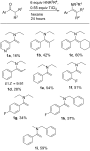
- undergoes transmetallation with 4-MeOC6H4B(OH)2 [21]. The subsequent reductive elimination leads to the corresponding polyfluorobiphenyl. In contrary, the reaction of trans-C6F5Pd(PEt3)2I with 2,4,6-C6F3H2B(OH)2 and Ag2O leads to an unsymmetrical diarylpalladium complex trans-(C6F5)Pd(PEt3)2(2,4,6-C6F3H2
- neutral complex ArPdX by the oxidative addition of ArX to Pd(0) species. This step precedes the subsequent transformation of ArPdX and does not influence the reactivity of organoboron partner K[4-RC6F4BF3] as well as its behavior in transmetallation and/or reductive elimination steps. For the further
- . There is a popular notion that the transmetallation gives both cis- and trans-ArPdLnAr'. First of them is low stable and undergoes easy reductive elimination to biphenyl. trans-ArPdLnAr' can react only after transformation to the corresponding cis-isomer [40][41]. Complexes with polyfluorinated aryl


Cross-dehydrogenative coupling for the intermolecular C–O bond formation
Beilstein J. Org. Chem. 2015, 11, 92–146, doi:10.3762/bjoc.11.13
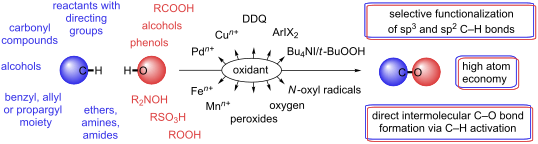
- (II) complex is oxidized by silver(I) ions to Cu(III) complex 18, and the C–O bond is formed via reductive elimination. The drawbacks of this method are the use of large amounts of silver triflate and alcohol and the high temperature of the reaction. The Pd(OAc)2/persulfate system was used in the
- reductive elimination to give product 235 (Scheme 49) [217]. The Pd(OAc)2·[1,2-bis(phenylsulfinyl)ethane]-catalyzed enantioselective acetoxylation of terminal alkenes was accomplished in the presence of a chiral Lewis acid; ee = 45–63%; the reaction was performed with a small excess of AcOH (1.1 equiv) in
- ligand facilitates the reductive elimination of the allyl ester from the π-allyl–palladium intermediate [220]. Linear E-allyl acetates were synthesized also by the acetoxylation of terminal alkenes with the PdCl2/NaOAc/AcOH/O2 system (5 atm) in N,N-dimethylacetamide [221]. The Wacker reaction giving









Sequential decarboxylative azide–alkyne cycloaddition and dehydrogenative coupling reactions: one-pot synthesis of polycyclic fused triazoles
Beilstein J. Org. Chem. 2014, 10, 3031–3037, doi:10.3762/bjoc.10.321
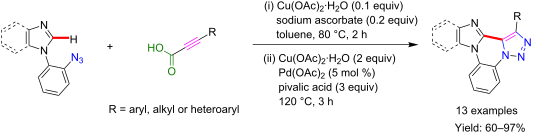
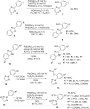
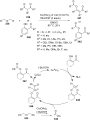
- reductive elimination reaction yields the polycyclic triazoles 4. Conclusion In summary, we have successfully developed an efficient and convenient one-pot protocol for the synthesis of novel benzimidazole and imidazole-fused 1,2,3-triazoloquinoxaline derivatives. The key finding of this work is the


Palladium-catalysed cyclisation of alkenols: Synthesis of oxaheterocycles as core intermediates of natural compounds
Beilstein J. Org. Chem. 2014, 10, 2077–2086, doi:10.3762/bjoc.10.216
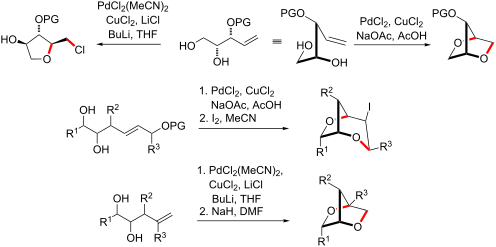
- formed from σ-alkyl PdII-complexes F and G by reductive elimination of Pd0 (Scheme 6). Additionally, the X-ray analysis [44] of 53 confirmed the absolute configuration and structure of the six-membered heterocycle (Figure 4). Recently, Wolfe reported a tetrahydrofuran-forming reaction via Pd-catalysed



Synthesis of ethoxy dibenzooxaphosphorin oxides through palladium-catalyzed C(sp2)–H activation/C–O formation
Beilstein J. Org. Chem. 2014, 10, 1220–1227, doi:10.3762/bjoc.10.120
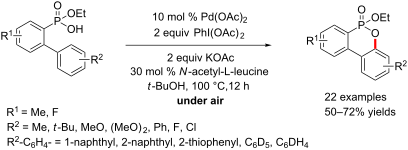
- PhI(OAc)2. However, no cyclized product was observed. This result indicates that the C–O reductive elimination from Pd(II) is not favorable. Because both the intermolecular and intramolecular competition experiments exhibited no significant kinetic isotope effect (kH/kD = 1.0 and 0.6; Scheme 8), we
- hypothesize that the C–O reductive elimination step is the rate-determining step. A feasible mechanism involving the Pd(II)/Pd(IV) catalytic cycle is described in Scheme 9. The C–H activation might be efficiently accelerated by the N–H activation propelled by N-Ac-L-Leu-OH (L9) as a ligand [53][54][55
- ], resulting in the formation of palladacycle III. Thereafter, ethoxy dibenzooxaphosphorin oxide 2a is obtained from the oxidation of the Pd(II) to Pd(IV) species IV and the subsequent C–O reductive elimination. Conclusion In this paper, we have developed an efficient synthetic method for a wide range of





