


Search results
Search for "amine" in Full Text gives 1234 result(s) in Beilstein Journal of Organic Chemistry. Showing first 200.
Improved deconvolution of natural products’ protein targets using diagnostic ions from chemical proteomics linkers
Beilstein J. Org. Chem. 2024, 20, 2323–2341, doi:10.3762/bjoc.20.199
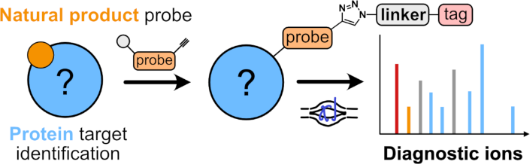
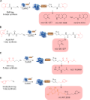
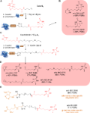
- . The fragmentation of the triazole ring leaving the primary amine and b-ion resulting from the fragmentation of the TEV-recognition peptide sequence. The chemical cleavage of the linker to release probe–peptide conjugates is achieved mainly by the change of the pH or via reducing conditions to release




Stereoselective mechanochemical synthesis of thiomalonate Michael adducts via iminium catalysis by chiral primary amines
Beilstein J. Org. Chem. 2024, 20, 2313–2322, doi:10.3762/bjoc.20.198
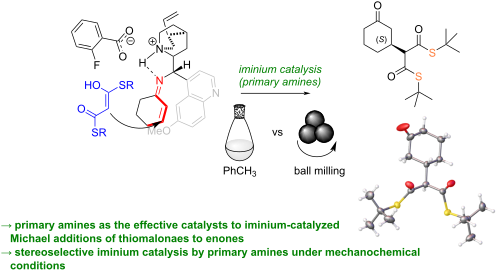
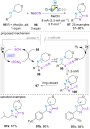
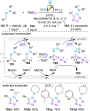
- studies by Bolm [12][13], and Juaristi et al. [14]. have significantly advanced chiral secondary amine-catalyzed stereoselective reactions under ball milling conditions, representing a widely explored activation mode in mechanochemical-mediated transformations. However, reports on chiral primary iminium
- [15][16] or iminium-ion catalysis [17] under ball-mill conditions are scarce, in contrast to the abundance of transformations catalyzed by such covalent catalysis. Among the numerous organocatalytic reactions facilitated by primary amine-based iminium ions, Michael-type additions deserve special
- by extended reaction times, sometimes up to 168 hours. An intriguing example involves the use of a bifunctional primary amine-sulfonamide catalyst, which activates benzylideneacetone towards dibenzyl malonate, with the presence of water accelerating the reaction [25]. An alternative approach, where


Catalysing (organo-)catalysis: Trends in the application of machine learning to enantioselective organocatalysis
Beilstein J. Org. Chem. 2024, 20, 2280–2304, doi:10.3762/bjoc.20.196
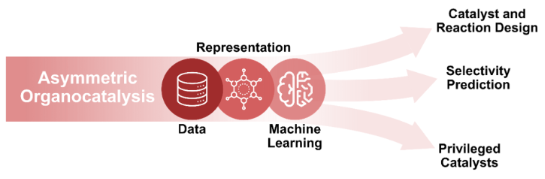
- including pyrimidines and pyrazines. The importance of mechanistic understanding for model building was underlined by Kuang et al. [126], where the authors considered multi-catalyst enantioselective reactions, where one catalyst was an organocatalyst, either CPA or an amine. The co-catalyst was included in
- expands the considerable reaction space in organocatalysis. The discussed principle of mechanistic transferability has also been employed outside of CPA catalysis, with a focus on amine-based hydrogen-bond donors, for example imidodiphosphorimidate-type catalysts for the construction of THF and THP rings
- for this reaction class (ee threshold 80%), even though amine-based catalysts demonstrate a higher average ee. Notably, this strategy is not restricted to literature-extracted examples and can also be applied to enantioselectivities calculated via quantum chemical calculations or predictions from an




Deuterated reagents in multicomponent reactions to afford deuterium-labeled products
Beilstein J. Org. Chem. 2024, 20, 2270–2279, doi:10.3762/bjoc.20.195
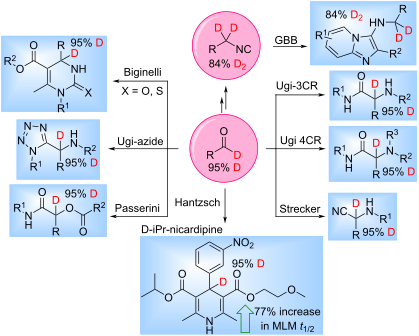
- method to prepare [D1]-formamides (D–C=O) is through a Leuckart–Wallach reaction with an amine and [D1]-methyl/ethyl formate or [D1]-dimethylformamide [19][20]. Stockmann and co-workers produced [D2]-formamides (N–D, D–C=O) via acid-catalyzed nitrile hydrolysis with HCl and D2O [21]. Thus, using the
- scope of reactivity and determination of deuterium retention using a combination of deuterated aldehydes, [D1]-, and/or [D2]-isocyanides. We began with the venerable Ugi 4-component reaction (Ugi-4CR), first reported by Ivar Ugi in 1959 [28]. The Ugi-4CR utilizes an amine, carbonyl, carboxylic acid, and
- is comprised of reaction of an isonitrile, amine, and aldehyde/ketone, in the presence of phenylphosphinic acid (PPA), to give α-amino amides [35]. Examples of deuterated Ugi-3CR products are represented in Scheme 4. Like the Ugi 4-CR reaction, there was no deuterium scrambling in the Ugi 3-CR. Using


Heterocycle-guided synthesis of m-hetarylanilines via three-component benzannulation
Beilstein J. Org. Chem. 2024, 20, 2208–2216, doi:10.3762/bjoc.20.188
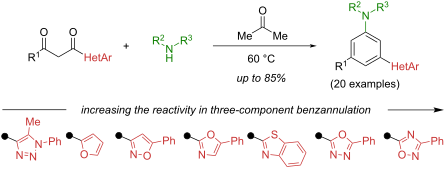
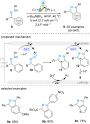
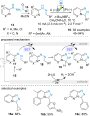
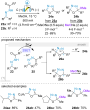
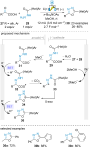
- was released [57] allowing direct comparison of different substituents. On the basis of the calculated Hammett constants, we have selected a model series of 1,3-diketones, bearing heterocyclic substituents with a range of electron-withdrawing ability (Figure 2). For the amine model series, we used
- amines with different nucleophilicity, namely benzylamine (primary alkylamine), morpholine (secondary alkylamine) and aniline (aromatic amine). We first examined the reaction of 1,2,4-oxadiazole-1,3-diketone 1a (σm/σp 0.463/0.575, which is quite close to the constants of the CO2Me group, so a successful
- reaction in the presence of molecular sieves and 1.5-fold excess of aniline (conditions B) dramatically reduced the reaction time to 1 d, allowing isolation of diarylamine 3ac in 75% yield (Scheme 2). Next, we started to screen various heterocyclic 1,3-diketones with the model amine series. The reaction of


Factors influencing the performance of organocatalysts immobilised on solid supports: A review
Beilstein J. Org. Chem. 2024, 20, 2129–2142, doi:10.3762/bjoc.20.183
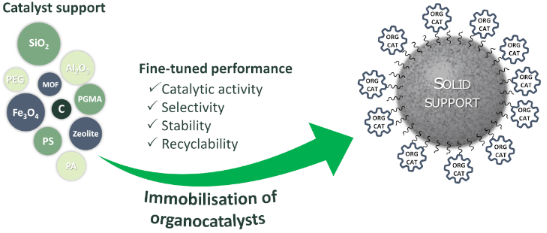
- spaces. The confinement of the heterogeneous version of cinchona amine and thiourea catalysts was reported, leading to improved enantioselectivity values in the Michael addition of nitromethane (5) to chalcone (6) through modification of the pore size of mesoporous silica 8 or 9 (Scheme 2) [63]. Thus
- by azodicarboxylates in a homogeneous phase, as noted by Takemoto [126], it was suggested that this interaction would be significantly impeded by the polymer backbone. Alternatively, it was proposed that this degradation could be due to protonation of the basic tertiary amine unit. It was found that
- influence of various linkers of cinchona squaramide organocatalysts immobilised on a poly(glycidyl methacrylate) (PGMA) solid support [127]. The support consisted of well-defined monodispersed PGMA microspheres, which were prepared through thorough parameter optimisation. Three amine-functionalised cinchona


Multicomponent syntheses of pyrazoles via (3 + 2)-cyclocondensation and (3 + 2)-cycloaddition key steps
Beilstein J. Org. Chem. 2024, 20, 2024–2077, doi:10.3762/bjoc.20.178
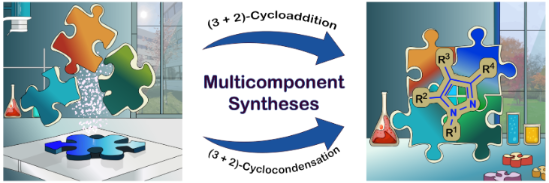
- fluoropyrazoles from fluorinated 1,3-dielectrophiles represents a crucial synthetic pathway. For example, 1,1,2,2-tetrafluoro-N,N-dimethylethan-1-amine (TFEDMA) (82) can be activated using BF3·OEt2 to generate an iminium salt 84 with increased electrophilicity. Subsequently, this intermediate reacts with various




Harnessing the versatility of hydrazones through electrosynthetic oxidative transformations
Beilstein J. Org. Chem. 2024, 20, 1988–2004, doi:10.3762/bjoc.20.175
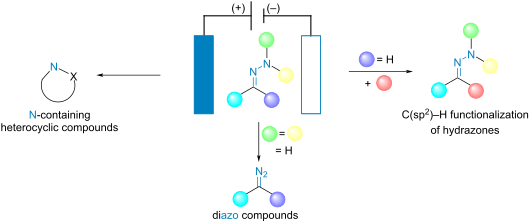
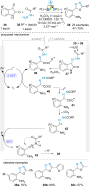
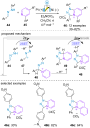
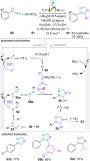
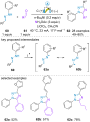
- iodonium through a two-electron process. Subsequent reaction with the hydrazone and deprotonation formed the N-iodo hydrazone intermediate 80, triggering the reaction with the amine 78 through cationic species 81. Final cyclization delivered the desired pyrazole 79 (Scheme 15) [60]. The group of D. Tang








1,2-Difluoroethylene (HFO-1132): synthesis and chemistry
Beilstein J. Org. Chem. 2024, 20, 1955–1966, doi:10.3762/bjoc.20.171
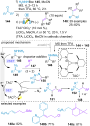
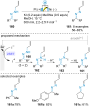
- (trifluoromethyl)amine easily reacted with (Z)-1,2-difluoroethylene to form the addition product in high yield (Scheme 11) [89]. However, the stereochemistry of this reaction has not been reported. A similar reaction of (Z)-1,2-difluoroethylene with N-chloroimidobis(sulfonyl fluoride) (Scheme 12) [90] was shown to
- -Difluoroethylene synthesis from perfluoropropyl vinyl ether. Deuteration reaction of 1,2-difluoroethylene. Halogen addition to 1,2-difluoroethylene. Hypohalite addition to 1,2-difluoroethylene. N-Bromobis(trifluoromethyl)amine addition to 1,2-difluoroethylene. N-Chloroimidobis(sulfonyl fluoride) addition to 1,2


Negishi-coupling-enabled synthesis of α-heteroaryl-α-amino acid building blocks for DNA-encoded chemical library applications
Beilstein J. Org. Chem. 2024, 20, 1922–1932, doi:10.3762/bjoc.20.168
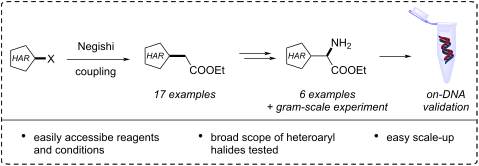
- and the temperature, all oxime derivatives underwent reduction to yield the corresponding amine. The amino esters were effectively safeguarded against degradation through the immediate formation of the HCl salt or by Boc-protection. This procedure allowed us to obtain all the protected amino acids in




Novel oxidative routes to N-arylpyridoindazolium salts
Beilstein J. Org. Chem. 2024, 20, 1906–1913, doi:10.3762/bjoc.20.166
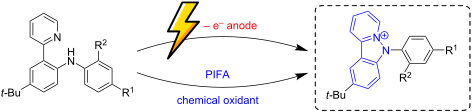
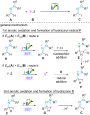
- direction of the potential sweep is changed after passing the first reduction peak of salt S2, the new peak appears at the potential of 0.89 V that completely coincides with the first oxidation peak of the amine precursor. The CV curve for the diarylamine, in its turn, exhibited (in the reverse scan after
- oxidation of the amine) a new reduction peak that coincides to the first reduction peak of the pyridoindazolium salt (one more peak at less negative potential in the reverse scan after amine oxidation corresponds to the reduction of the protonated pyridyl moiety of the diarylamine). Thus, the voltammetry
- amine oxidation is increased. Electrochemical synthesis of pyridoindazolium salts The results of the voltammetry testing allowed to assume that pyridoindazolium salts can also be obtained using an anodic synthesis. Electric current as a reagent is inherently safe and easily scalable; electrosynthesis is


Electrochemical radical cation aza-Wacker cyclizations
Beilstein J. Org. Chem. 2024, 20, 1900–1905, doi:10.3762/bjoc.20.165
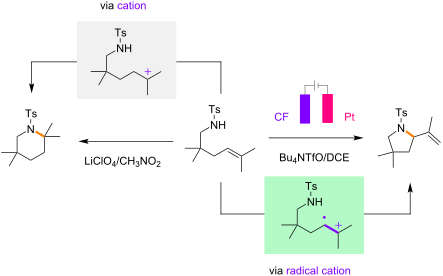
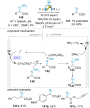
- the optimized conditions, unprotected amine 9 was not compatible. Although gem-dimethyl groups installed at the tether should have a positive impact on intramolecular cyclization, they were not essential for the reaction (10). In order to obtain mechanistic insight into the aza-Wacker cyclization




2-Heteroarylethylamines in medicinal chemistry: a review of 2-phenethylamine satellite chemical space
Beilstein J. Org. Chem. 2024, 20, 1880–1893, doi:10.3762/bjoc.20.163
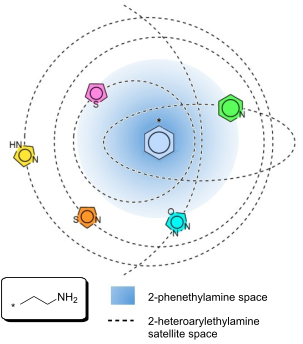
- rescaffolding procedures that can be conducted with this unit. In this regard, a review on the use of 2-heteroarylethylamines displaying pharmacological activity is reported. A detailed description of flexible, amine-opened motifs is provided, that describes therapeutic targets and other potent bioactive
- affinity to key phenethylamine targets like adrenergic or histamine-type receptors, but also to novel ones such as TAAR1 (trace-amine-associated receptor 1), σ1/2 (sigma receptors 1 and 2), or AChE (acetylcholinesterase). Similar to our previous review, a descriptive, simple scope is presented below to
- featuring an exocyclic amine (and their substitutions). Systems out of scope of this review are those, where: non-basic ethylamine systems are present (featuring other functionalities due to oxidation states), condensed or polycyclic systems are present and featuring a key amine embedded in a (poly)cycle




The Groebke–Blackburn–Bienaymé reaction in its maturity: innovation and improvements since its 21st birthday (2019–2023)
Beilstein J. Org. Chem. 2024, 20, 1839–1879, doi:10.3762/bjoc.20.162
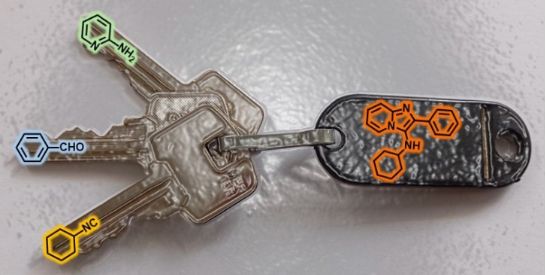
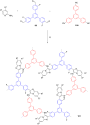
- . Jung and Shinde, on the other hand, synthetized a supramolecular acid catalyst 14 combining β-cyclodextrins with succinic acid and tested it in a GBB reaction between isatin (15), indazol-3-amine (16) and pentyl isocyanide (17), yielding, after a ring expansion triggered by a retro-aza-ene reaction via
- diaminoimidazopyrimidines 43. This substrate was already employed by Lavilla et al. [49] to obtain selectively imidazo[1,2-a]pyrimidin-7-amine derivatives, due to the higher reactivity of the amine in position 2. To uncover the reactivity of the amine in position 4, and thus obtain imidazo[1,2-c]pyrimidin-5-amines 43
- limited to methanol due to solubility problems, and HClO4 was selected because other Brønsted acids caused amine deprotection. The GBB adducts 58 could be further elaborated through a Buchwald intramolecular nucleophilic substitution/cyclization, as it will be described in section 3.3. 3 Novel scaffolds






Harnessing unprotected deactivated amines and arylglyoxals in the Ugi reaction for the synthesis of fused complex nitrogen heterocycles
Beilstein J. Org. Chem. 2024, 20, 1758–1766, doi:10.3762/bjoc.20.154
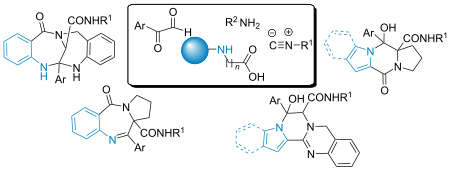
- that bear two functional groups. In order to avoid competitive reactions, these groups need to be compatible with the components of the Ugi reaction or the intermediates generated during the reaction. Thus, an amine can rarely be directly incorporated as an additional functional group, because of
- [11]. Different strategies have been developed to avoid these competitive reactions, the most common ones being the use of protecting groups (Ugi/deprotection/cyclization strategy) [12][13][14] or of surrogates of amines [15]. However, direct incorporation of the second amine without derivatization is
- the most desirable strategy from the point-of view of sustainability. This has been achieved following two different approaches: the blockage of the amine group throughout the reaction by the incorporation of an additional group on the carbonyl component [16][17][18] or the use of amine groups with a


Syntheses and medicinal chemistry of spiro heterocyclic steroids
Beilstein J. Org. Chem. 2024, 20, 1713–1745, doi:10.3762/bjoc.20.152
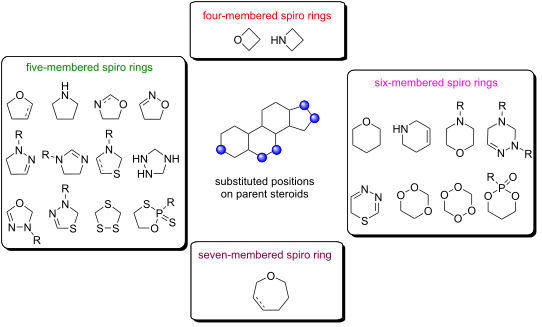
- tert-butylsulfinyl cleavage, yielding the 17-allyl-17-amine hydrochlorides 121a,b diastereomers. These hydrochlorides were then acrylated with acryloyl chloride. When starting from 121a, the bis-acylated compound 122a1 was only detected in traces (3% yield), with the mono-acylated derivative 122a2
- ester under basic conditions was carried out, followed by the transformation of the carboxyl group to the amides 165 and 166 by treatment with thionyl chloride and the corresponding amine. Tetraoxanes were obtained from ketones 163, 165, and 166 by a peroxyacylation reaction using an acidic hydrogen


Chemo-enzymatic total synthesis: current approaches toward the integration of chemical and enzymatic transformations
Beilstein J. Org. Chem. 2024, 20, 1693–1712, doi:10.3762/bjoc.20.151
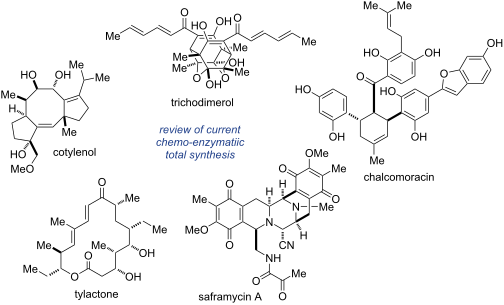
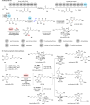
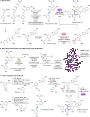
- pentacyclic secondary amine 97 bearing the ester linker in the C1 side chain in one pot. After removal of SfmC by precipitation and centrifugation, the reaction mixture containing secondary amine 97 was subjected to the reductive amination using 2-picoline borane as a hydride source, yielding tertiary amine
- chemo-enzymatic total synthesis of jorunnamycin A (103). SfmC-catalyzed enzymatic conversion followed by cyanation and N-methylation also converted substrate analog 101 to the corresponding pentacyclic tertiary amine 102 in 18% overall yield based on peptidyl aldehyde 101. Subsequent simple chemical




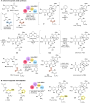
Methyltransferases from RiPP pathways: shaping the landscape of natural product chemistry
Beilstein J. Org. Chem. 2024, 20, 1652–1670, doi:10.3762/bjoc.20.147
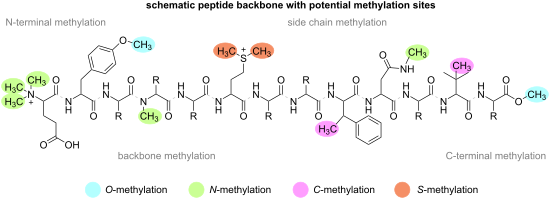
- [34]. In reductive amination, the substrate is usually an aldehyde or amine. After the formation of the iminium ion, it is reduced with the appropriate reagent to form the N-methylated amino acid. Different methods have been established using for example benzaldehyde as a protection group, sodium
- triethylsilane in TFA-CH3Cl, resulting in the N-methylated amino acid as the final product [38]. The third method for chemical N-methylation involves the use of protection groups that also enhance the reactivity of the primary amine (Figure 2). Once the amine is deprotonated, an electrophilic methylation reagent





Polymer degrading marine Microbulbifer bacteria: an un(der)utilized source of chemical and biocatalytic novelty
Beilstein J. Org. Chem. 2024, 20, 1635–1651, doi:10.3762/bjoc.20.146
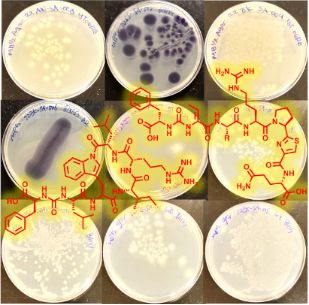
- NRPS-derived macrolactam ureidopeptide, bulbiferamide (27, Figure 10), was isolated and characterized from a coral-derived Microbulbifer sp. C10-1 by Igarashi and co-workers [7]. The ureido linkage did not allow for the peptide main chain in 27 to possess a terminal primary amine and none of the side
- chains possessed a nucleophilic primary amine. Curiously, the macrocyclizing amide bond was found to exist between a Trp side chain indole nitrogen and the C-terminal carboxylate. To the best of our knowledge, this was the first example of the involvement of a Trp indole in macrolactam formation in




Benzylic C(sp3)–H fluorination
Beilstein J. Org. Chem. 2024, 20, 1527–1547, doi:10.3762/bjoc.20.137

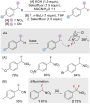
- yields, with the authors proposing that HFIP aided in stabilising the electrochemically generated benzylic radical cation intermediates. Secondary and tertiary benzylic substrates bearing halogen, ester, protected amine and alkyl functional groups tolerated the reaction conditions well. The authors




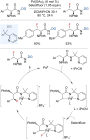


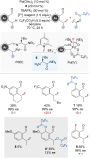


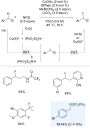


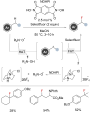


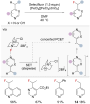


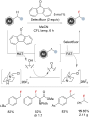

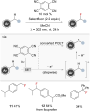


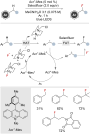



Primary amine-catalyzed enantioselective 1,4-Michael addition reaction of pyrazolin-5-ones to α,β-unsaturated ketones
Beilstein J. Org. Chem. 2024, 20, 1518–1526, doi:10.3762/bjoc.20.136
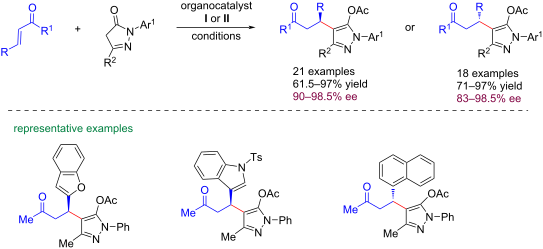
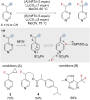
- 10.3762/bjoc.20.136 Abstract The enantioselective 1,4-addition reaction of pyrazolin-5-ones to α,β-unsaturated ketones catalyzed by a cinchona alkaloid-derived primary amine–Brønsted acid composite is reported. Both enantiomers of the anticipated pyrazole derivatives were obtained in good to excellent
- -covalent catalysis via bifunctional hydrogen-bonding organocatalysts. The C-4 nucleophilicity of pyrazolin-5-ones was also explored in enantioselective reactions with α,β-unsaturated carbonyl compounds through covalent catalysis with chiral amine-based catalysts; however, it has achieved limited success
- who reported a chiral amine-catalysed aza-Michael addition reaction of pyrazolin-5-ones with α,β-unsaturated ketones to access β-(3-hydroxypyrazol-1-yl)ketones (Scheme 1a) [22]. The developed reaction was restricted to α,β-unsaturated ketones with aliphatic substituents (Scheme 1a) [22]. Ji and Wang




Synthesis of 2-benzyl N-substituted anilines via imine condensation–isoaromatization of (E)-2-arylidene-3-cyclohexenones and primary amines
Beilstein J. Org. Chem. 2024, 20, 1468–1475, doi:10.3762/bjoc.20.130
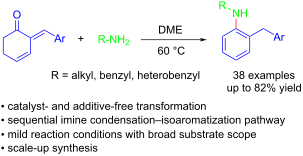
- ; primary amine; Introduction Aniline derivatives possessing arylmethyl substituents at the ortho position are an important class of amines. They have a wide variety of practical applications, ranging from anti-depression [1], being δ receptor stimulants in analgesic pharmaceuticals [2], to antioxidant
- was placed (E)-2-arylidene-3-cyclohexenone 2 (0.2 mmol), primary aliphatic amine 3 (2.0 mmol) and DME (2 mL). The reaction mixture was stirred at 60 °C and the reaction process was monitored by TLC analysis. After completion, the solvent was concentrated under reduced pressure and the residue was



Synthesis of substituted triazole–pyrazole hybrids using triazenylpyrazole precursors
Beilstein J. Org. Chem. 2024, 20, 1396–1404, doi:10.3762/bjoc.20.121
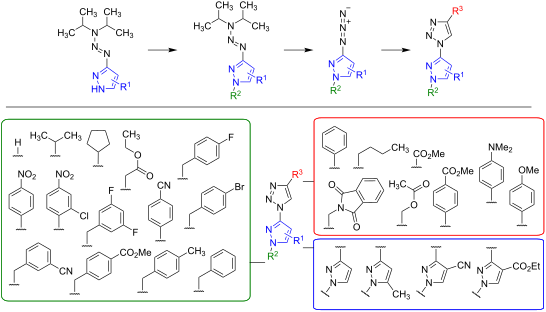
- 21gd could be isolated in quantitative yield with this technique, avoiding additional purification steps for the azide intermediate without any losses in product formation. The developed procedure was exemplarily transferred to solid-phase synthesis. In quantitative yields, 5-methyl-1H-pyrazol-3-amine
- pyrazole–triazole hybrids: synthesis of azides 7 or 8 from amines and organohalides and subsequent CuAAC to larger heterocyclic systems 9 or non-substituted amine products 10; Sakai reaction of α-ketoacetal 11 for the synthesis of N-substituted derivative 13 [14][16][17][18][19]. Synthesis of pyrazolyl


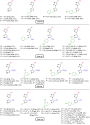


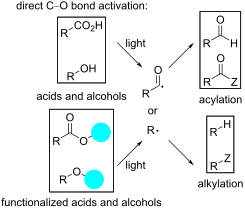
Generation of alkyl and acyl radicals by visible-light photoredox catalysis: direct activation of C–O bonds in organic transformations
Beilstein J. Org. Chem. 2024, 20, 1348–1375, doi:10.3762/bjoc.20.119
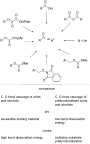
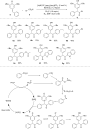
- catalyst is first excited and then transfers one electron to the thiocarbamate moiety to form a thiocarbamate radical anion, with change in oxidation state from III to IV. Next, the sacrificial electron donor Hünig base successfully converts [Ir(IV)] to [Ir(III)], with concurrent formation of an amine






Sustainable tandem acylation/Diels–Alder reaction toward versatile tricyclic epoxyisoindole-7-carboxylic acids in renewable green solvents
Beilstein J. Org. Chem. 2024, 20, 1308–1319, doi:10.3762/bjoc.20.114
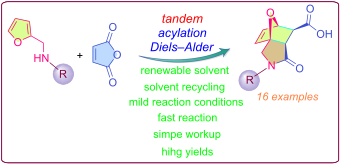
- ] cycloaddition between maleic anhydride and secondary amine occurs first, followed by the corresponding amidation (Figure 3, path II) [110]. Although IMDAF reactions involving furan systems bearing amide functionality are generally reversible [134], the formation of the addition products in high yields in this





