Search results
Search for "calculations" in Full Text gives 926 result(s) in Beilstein Journal of Organic Chemistry. Showing first 200.
Predicting bond dissociation energies of cyclic hypervalent halogen reagents using DFT calculations and graph attention network model
Beilstein J. Org. Chem. 2024, 20, 1444–1452, doi:10.3762/bjoc.20.127
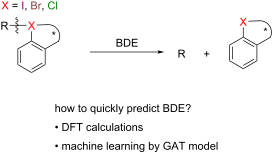
- DFT calculations for predicting key properties of organic molecules such as BDE, nucleophilicity, and electrophilicity [48][49][50][51][52][53][54][55][56][57][58][59][60]. Recently, applications of the Elastic Net model with Avalon fingerprints [55] and the deployment of artificial neural network
- iodine [61][62][63][64][65][66][67][68][69][70][71][72][73][74][75][76] and the computational database of organic species by Paton and co-workers [77], geometry optimizations and single point energy calculations for homolytic BDEs are both performed using M06-2X/def2-TZVPP [78][79][80] in the gas phase
- at 298.15 K by Gaussian 16 [81]. Frequency calculations confirmed that optimized structures are minima (no imaginary frequency). The accuracy of computational BDEs of halides using M06-2X/def2-TZVPP is also evaluated and compared to experimental BDEs, demonstrating the reliability of the method (see


A comparison of structure, bonding and non-covalent interactions of aryl halide and diarylhalonium halogen-bond donors
Beilstein J. Org. Chem. 2024, 20, 1428–1435, doi:10.3762/bjoc.20.125
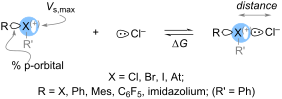
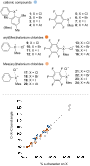
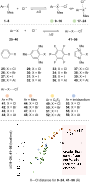
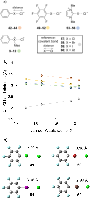
- the theoretical framework describing the structure, bonding, and reactivity of diarylhalonium compounds [27]. Although some relativistic effects of astatine may not be sufficiently incorporated in calculations [28], others have shown in theoretical and limited experimental studies that astatine does




Synthesis of cyclic β-1,6-oligosaccharides from glucosamine monomers by electrochemical polyglycosylation
Beilstein J. Org. Chem. 2024, 20, 1421–1427, doi:10.3762/bjoc.20.124
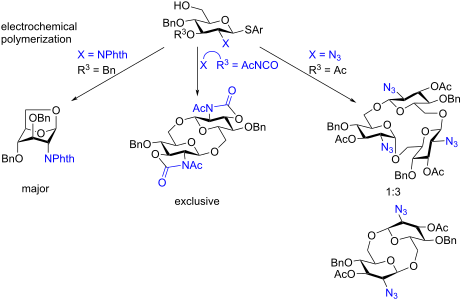
- DFT calculations in Supporting Information File 1). Therefore, it was proven that the 2,3-oxazolidinone protecting group was powerful enough to prevent intramolecular glycosylation of monomer 14. However, it did not prevent intramolecular glycosylation of the linear disaccharide and promote the
- monomers 6 with a 2-PhthN group. Electrochemical polyglycosylation of monomers 17 with a 2-azido group. Supporting Information Supporting Information File 18: Synthetic details, DFT calculations, and compound characterization data. Acknowledgements We thank Koganei Corporation (Tokyo, Japan) for donation


Computation-guided scaffold exploration of 2E,6E-1,10-trans/cis-eunicellanes
Beilstein J. Org. Chem. 2024, 20, 1320–1326, doi:10.3762/bjoc.20.115

- -eunicellane skeletons, respectively. Although the structures of these diterpenes only differed in their configuration at a single position, C1, they displayed distinct chemical and thermal reactivities. Here, we used a combination of quantum chemical calculations and chemical transformations to probe their
- rearrangement; DFT calculations; diterpene; electrophilic cyclization; eunicellane; Introduction The eunicellane diterpenoids are a family of nearly 400 natural products that present a conserved 6/10-bicyclic hydrocarbon framework [1][2][3]. Mostly known from soft corals [2], but with a growing number of
- chemically-induced cationic cyclization mechanisms, we performed quantum chemical calculations [mPW1PW91/6–31+G(d/p)/SMD(chloroform)] [13][14][15][16][17][18][19][20] to obtain the relative free energies of the cationic intermediates and transition states that interconvert them, as well as the relative free


Sustainable tandem acylation/Diels–Alder reaction toward versatile tricyclic epoxyisoindole-7-carboxylic acids in renewable green solvents
Beilstein J. Org. Chem. 2024, 20, 1308–1319, doi:10.3762/bjoc.20.114
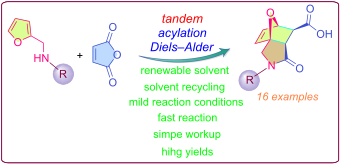
- (Figure 3, path I) [132]. Similarly, Tomberg et al., note that in such reactions, amide is formed rapidly by opening the maleic anhydride ring first, followed by a slower cyclization [133]. On the other hand, according to the results of some DFT calculations, Naguib et al., state that [4 + 2
- study indicates that the retro-IMDAF reaction does not occur under the reaction conditions developed. As seen in Figure 4b, the different sigma bond lengths formed in the exo transition state (calculations which were performed in Gaussian 16 Rev B.01 (Gaussian, Inc., Wallingford, CT, USA)) [135
- IMDAF reaction. IRC calculations of a) endo-, b) exo-transition structures and products for compound 2a (semi-empirical method, PM6) [136]. Synthesis of epoxyisoindole-7-carboxylic acids 2a–m and 2n–p. Possible side reactions of unsaturated fatty acids with maleic anhydride. Equilibrium of 2n–p with


Diameter-selective extraction of single-walled carbon nanotubes by interlocking with Cu-tethered square nanobrackets
Beilstein J. Org. Chem. 2024, 20, 1298–1307, doi:10.3762/bjoc.20.113
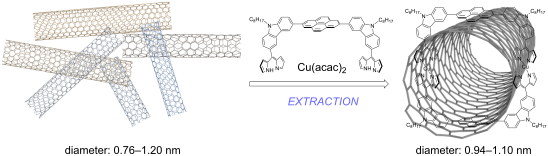
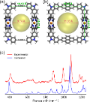
- diameter range. The diameter selectivity is supported by the theoretical calculations with the GFN2-xTB method, indicating that the most preferred SWNT diameter for the square Cu-nanobrackets is 1.04 nm. Keywords: complexation; diameter; extraction; interlock; nanobracket; single-walled carbon nanotubes
- summarized in a graphene map (Figure 5c). This shows that Cu-nanobrackets 1b preferentially recognize larger diameters with wider range (0.94–1.10 nm) than 1a (0.90–0.92 nm) due to the larger cavity with more flexibility of 1b than 1a. Theoretical calculations To interpret the diameter selectivity, the
- diameters ranging from 0.94 to 1.10 nm among ≈20 kinds of SWNTs from 0.76 to 1.20 nm in their diameters. The most preferable SWNTs for 1b are found to be 1.04 nm in diameter by theoretical calculations, supporting the experimental results. Experimental Materials and instruments Reagents were purchased from




Synthesis and physical properties of tunable aryl alkyl ionic liquids based on 1-aryl-4,5-dimethylimidazolium cations
Beilstein J. Org. Chem. 2024, 20, 1278–1285, doi:10.3762/bjoc.20.110
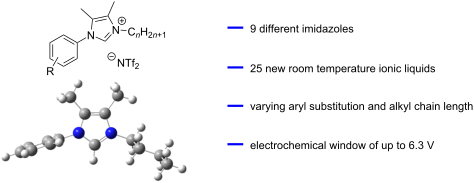
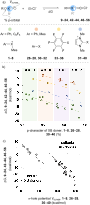
- start at 0 V. Structures of the imidazolium cations obtained by DFT calculations (B3LYP/6-311++G (d,p)). The electrostatic potentials are indicated by color (blue: positive; red: negative). Overview of the synthesis of compounds 1–63. Thermal decomposition point at 5% mass loss in °C for NTf2− TAAILs 37


Synthesis and optical properties of bis- and tris-alkynyl-2-trifluoromethylquinolines
Beilstein J. Org. Chem. 2024, 20, 1246–1255, doi:10.3762/bjoc.20.107
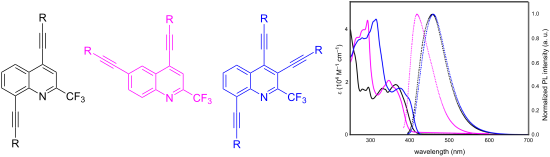
- different fine structures. However, TD-DFT calculations using the long-range correlated CAM-B3LYP/6-311G(d,p) level of theory reveal that the lowest energy band for all three derivatives 6a, 9a and 12a originate mainly from a HOMO→LUMO transition with some admixture of HOMO−1→LUMO+1 and HOMO−1→LUMO




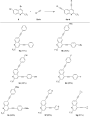


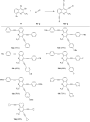


Mechanistic investigations of polyaza[7]helicene in photoredox and energy transfer catalysis
Beilstein J. Org. Chem. 2024, 20, 1236–1245, doi:10.3762/bjoc.20.106
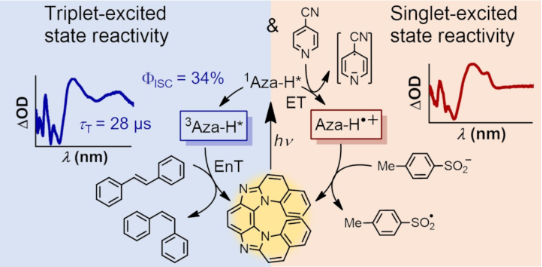
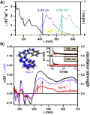
- Supporting Information File 72: General information, detailed experimental procedures, additional spectroscopic data, quantum-mechanical calculations, photostability and photoisomerization experiments. Funding We acknowledge generous financial support from the JGU Mainz and the German Federal Environmental




Competing electrophilic substitution and oxidative polymerization of arylamines with selenium dioxide
Beilstein J. Org. Chem. 2024, 20, 1221–1235, doi:10.3762/bjoc.20.105
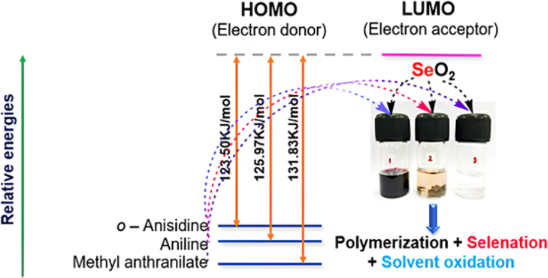
- calculations suggest that the highest occupied molecular orbital of methyl anthranilate was deeply buried, which suppressed the oxidative polymerization pathway. Due to solvent oxidation, oxamide formation was also noticed to a considerable extent. This study provides that utmost care must be exercised while
- with arylamines follows a complex reaction pathway, leading to a mixture of compounds. We established the possible reaction pathways using 77Se NMR spectroscopy and single-crystal X-ray crystallographic studies. Density functional theory (DFT) calculations were carried out to understand the relative
- interactions are rarely reported and currently gaining interest [59]. Computational studies To comprehend the role of electron-donating and -withdrawing groups in arylamine oxidation using SeO2 as oxidant, DFT calculations were carried out on the arylamines and SeO2 using Gaussian 16 [60]. The molecular


Stability trends in carbocation intermediates stemming from germacrene A and hedycaryol
Beilstein J. Org. Chem. 2024, 20, 1189–1197, doi:10.3762/bjoc.20.101
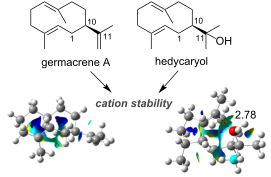
- reaction trajectory towards this pathway and make sure that it stays along this pathway and does not rearrange to a similar, more stable carbocation. Here, using density functional theory (DFT) calculations, we provide a rationale for the relative stability of the intermediate carbocations formed from
- and hedycaryol were prepared from their corresponding SMILES string using the RDKit library [30]. Electronic structure calculations on these carbocations were performed using the hybrid DFT functional M06-2X [31] and with the range-separated hybrid meta-GGA functional ωB97M-V [32] with the 6-31+G(d,p
- ) basis set [33]. Additionally, to check the reliability of the energy calculations single point calculations were also performed with the larger def2-TZVPP [34] basis set for both functionals and to account for intramolecular non-covalent interactions, D3 dispersion corrections were added to the M06-2X


Two-fold addition reaction of silylene to C60: structural and electronic properties of a bis-adduct
Beilstein J. Org. Chem. 2024, 20, 1179–1188, doi:10.3762/bjoc.20.100
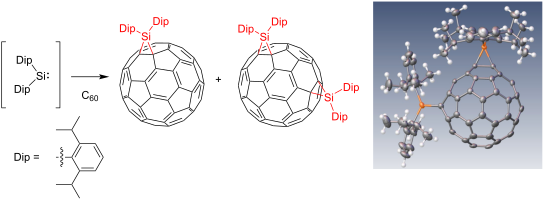
- silirane (silacyclopropane) derivative of fullerenes. Electrochemical measurements confirmed that the redox potentials of 3 are shifted cathodically compared to those of the parent mono-adduct 2. Density functional theory (DFT) calculations provided the basis for the electronic properties of compound 3
- -silylene adduct 3 of C60 based on spectroscopic measurements, X-ray crystallography, electrochemical analyses, and theoretical calculations. Results and Discussion Synthesis of bis-silylene adduct 3 The synthesis of the silylene adduct was conducted using a modified literature procedure [15]. A degassed
- . These results confirm that the two addends in 3 are both silirane structures, which represents the first example of a crystallographic analysis of silirane derivatives of fullerenes. Theoretical calculations Hirsch and co-workers reported the bis-functionalization of C60 using the Bingel–Hirsch, the


Manganese-catalyzed C–C and C–N bond formation with alcohols via borrowing hydrogen or hydrogen auto-transfer
Beilstein J. Org. Chem. 2024, 20, 1111–1166, doi:10.3762/bjoc.20.98

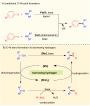
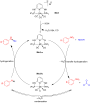
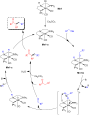
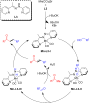
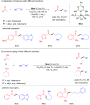
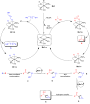
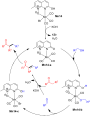
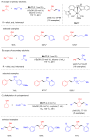
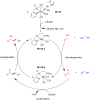
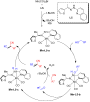
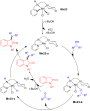
- polyethyleneimine derivatives by coupling ethylene glycol and ethylenediamine using manganese-pincer catalyst Mn1 (1 mol %), t-BuOK (10 mol %) in toluene at 150 °C (Scheme 21) [48]. The mechanistic investigation based on the experimental and DFT calculations suggested a BH pathway. First, dehydrogenation of the
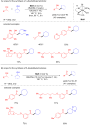
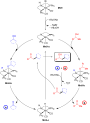
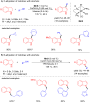
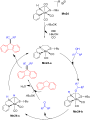
- amount of t-BuOK (20 mol %) in t-AmOH at 135 °C for 24 h allowed for the investigation of several alkyl and aryl ketones with amines and vicinal diols yielding good to excellent yields of the desired pyrroles (Scheme 70) with water and hydrogen gas being the only byproducts. DFT calculations suggested



























Kinetically stabilized 1,3-diarylisobenzofurans and the possibility of preparing large, persistent isoacenofurans with unusually small HOMO–LUMO gaps
Beilstein J. Org. Chem. 2024, 20, 1099–1110, doi:10.3762/bjoc.20.97
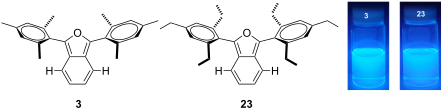
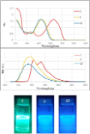
- Qian Liu Glen P. Miller Department of Chemistry, University of New Hampshire, 23 Academic Way, Durham, New Hampshire 03864-3598, USA 10.3762/bjoc.20.97 Abstract DFT calculations demonstrate that an isoacenofuran of any size possesses a smaller HOMO–LUMO gap than the corresponding acene bearing an
- . However, calculations indicate that the center ring of pentacene and other acenes is the most aromatic [2] and therefore resonance form P3 of Figure 1 is most significant. By contrast, isotetracenofuran and other isoacenofurans can only be drawn in one neutral, closed-shell resonance form in which only
- isopentacenofuran series (compounds 17–20). They possess HOMO–LUMO gaps between 1.25 and 1.36 eV, well below the 1.77 eV value calculated for hexacene. These Spartan ’20 [8] calculations confirm our expectation of a more highly delocalized π-system in any isoacenofuran (Figure 2) compared to the corresponding acene






Novel route to enhance the thermo-optical performance of bicyclic diene photoswitches for solar thermal batteries
Beilstein J. Org. Chem. 2024, 20, 1053–1068, doi:10.3762/bjoc.20.93
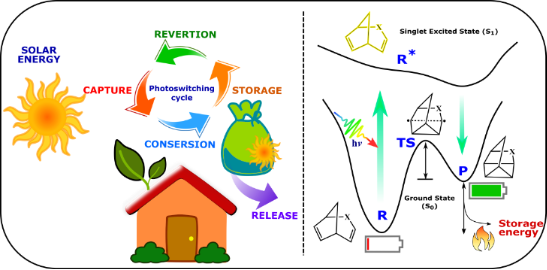
- barriers were accounted using the DLPNO-CCSD(T) and (8,8)-CASPT2 methods, respectively. The photophysical properties including the absorption onset, excitation wavelengths, and the absorption intensities were extensively investigated with the time-dependent calculations. The result provides information on
- is associated with dissociation of the photoproduct. To validate the interconnection of the TS with the metastable photoisomer and the expected degradation product, IRC calculations were performed. The IRC calculations confirm that the obtained TS interlinks the metastable photoproduct with an
- undesired byproduct (Figure 3). Calculations reveal that the barrier for thermal dissociation of the photoproduct type-Id (209.43 kJ/mol) is significantly larger than the TBR barrier accounted for all the studied photoswitches. Nevertheless, the results reflect the propensity of the type-Id system to yield


Structure–property relationships in dicyanopyrazinoquinoxalines and their hydrogen-bonding-capable dihydropyrazinoquinoxalinedione derivatives
Beilstein J. Org. Chem. 2024, 20, 1037–1052, doi:10.3762/bjoc.20.92
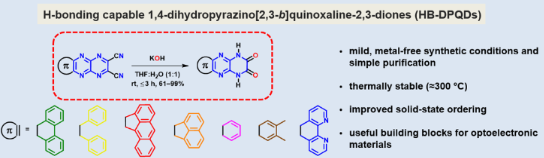
- illustrated in Figures S37–S41 (Supporting Information File 1). This serves as good evidence that the synthesized compounds exhibit no signs of aggregation in DMSO within the assessed concentration range (i.e., 2.5–45 μM). Electronic structure calculations Gas-phase computational investigations were conducted
- to estimate energies of the frontier molecular orbitals (FMOs), specifically the highest occupied molecular orbital (HOMO) and the lowest unoccupied molecular orbital (LUMO), for DCPQs 1a–7a as well as 1b–7b. The density functional theory (DFT) calculations were performed using the B3LYP/6-31+G
- ). Cyclic voltammetric measurements of DCPQs, specifically 4a and 6a, and DPQDs 4b and 6b, support the overall trends observed through the electronic structure calculations. X-ray crystallography Single crystal X-ray diffraction data could be obtained for 2b, 5b, and 6b. Figure 6 illustrates the single




Evaluation of the enantioselectivity of new chiral ligands based on imidazolidin-4-one derivatives
Beilstein J. Org. Chem. 2024, 20, 684–691, doi:10.3762/bjoc.20.62
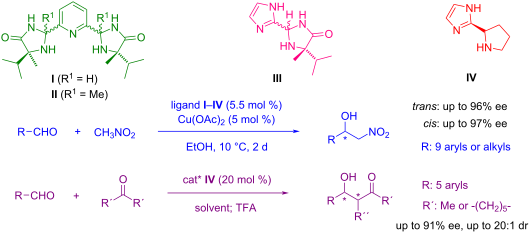
- tridentate chiral ligands: PyBOX [15] and PyBidine [16]. Additionally, we explored further modifications by substituting the pyridine moiety with an imidazole ring in ligand III (Figure 1), motivated by DFT calculations (see Supporting Information File 1, part S4) which confirmed that imidazole has a similar
- catalysed by copper(II) complex of ligand IV. Asymmetric aldol reactions of various aldehydes with ketones catalysed by compound IV. Supporting Information Supporting Information File 62: General information and experimental data of prepared compounds, copies of 1H and 13C NMR spectra and DFT calculations


Enhanced reactivity of Li+@C60 toward thermal [2 + 2] cycloaddition by encapsulated Li+ Lewis acid
Beilstein J. Org. Chem. 2024, 20, 653–660, doi:10.3762/bjoc.20.58
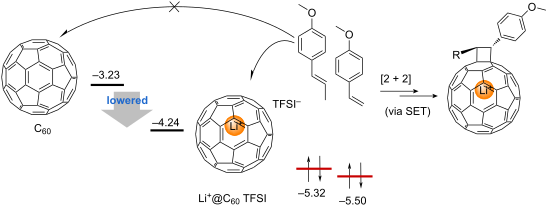
- of this straightforward and selective reaction for Li+@C60. Results and Discussion We began by performing density functional theory (DFT) calculations to screen the substrates with suitable HOMO levels for the thermal [2 + 2] cycloaddition with Li+@C60. The structures of several kinds of possible
- a HOMO level of −6.08 eV or higher, such as styrene derivatives 1, 2, and 3. Based on the results of theoretical calculations, styrene derivatives 1, 2, and 3 were selected as the reactants for the thermal [2 + 2] cycloaddition with Li+@C60. For comparison, we also investigated the reaction of




HPW-Catalyzed environmentally benign approach to imidazo[1,2-a]pyridines
Beilstein J. Org. Chem. 2024, 20, 628–637, doi:10.3762/bjoc.20.55
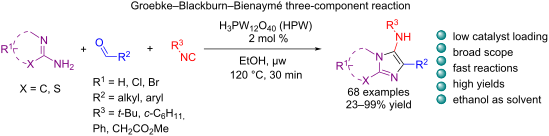
- protocol showed a lower E-factor by far, which makes it a cleaner and environmentally friendly process. Through the mass intensity parameter, our procedure also showed a lower mass loss compared to the total raw material used to produce a given mass of product. The calculations of these parameters can be
- conditions and Green Chemistry metrics for the GBB reactions under μw and conventional heating conditions.a Supporting Information Supporting Information File 44: Typical experimental procedures, FTIR, NMR and mass spectra of all compounds and GC metrics calculations. Funding The authors thank the




A laterally-fused N-heterocyclic carbene framework from polysubstituted aminoimidazo[5,1-b]oxazol-6-ium salts
Beilstein J. Org. Chem. 2024, 20, 621–627, doi:10.3762/bjoc.20.54
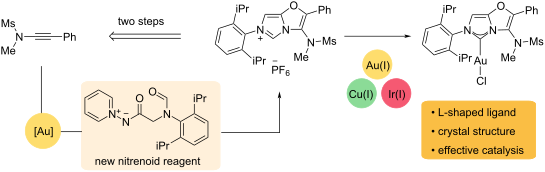
- radius 3.5 Å, mesh spacing 0.10, H atoms removed for calculations. Colour coding represents positioning of steric bulk relative to the centre of the sphere, scale in Å. Use of AImOxAuCl 13 in catalysis. aYields are calculated from the 1H NMR spectra against an internal standard unless otherwise stated


Chemical and biosynthetic potential of Penicillium shentong XL-F41
Beilstein J. Org. Chem. 2024, 20, 597–606, doi:10.3762/bjoc.20.52
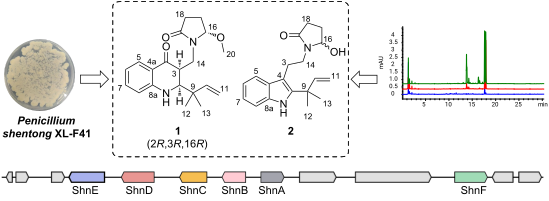
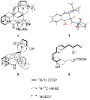
- inapplicability of the NOESY experiment. To establish the absolute configuration of compound 1, electron circular dichroism (ECD) calculations were conducted using the time-dependent density functional theory (TDDFT) approach at a B3LYP/6-311G (d,p) (IEFPCM) level (Figure 4). Considering the uncertainty of the




Possible bi-stable structures of pyrenebutanoic acid-linked protein molecules adsorbed on graphene: theoretical study
Beilstein J. Org. Chem. 2024, 20, 570–577, doi:10.3762/bjoc.20.49
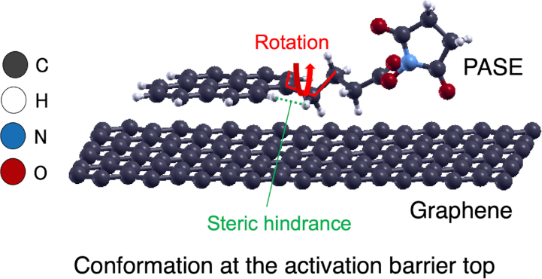
- . The results of the nudged elastic band calculations show that the energy difference between the conformations is about 0.35 eV and the activation barrier on the path is about 0.55 eV (Figure 2) [9]. We will refer to the pathway on the potential energy surface with such an activation barrier as an
- . A substitution effect that does not effectively change the potential energy surface is isotopic substitution. In fact, the adiabatic potential surface defined for a hypothetical motion at the absolute zero is not changed by a change in nuclear mass. Even in density functional theory calculations
- , 2, and the conformation at the activation barrier top, respectively. Acknowledgements We are grateful to Prof. H. Ogi, Prof. M. Ohtani, Prof. N. Nakamura, Prof. K. Tanigaki, Prof. S. Hagiwara, and Prof. K. Nakajima for fruitful discussions. The calculations were done at the computer centers of


Synthesis of photo- and ionochromic N-acylated 2-(aminomethylene)benzo[b]thiophene-3(2Н)-ones with a terminal phenanthroline group
Beilstein J. Org. Chem. 2024, 20, 552–560, doi:10.3762/bjoc.20.47
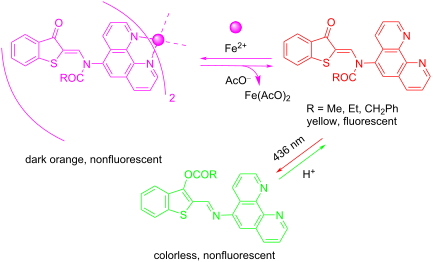
- )methyl)-N-phenylacetamide was used as an actinometer for the quantum yield calculations (φfl = 0.60 ± 0.005) [14][33]. For preparative purposes, a Sweko IP65 led emitter (SUL-S1-20W-230-4000K-WH) was used. Spectral-fluorescent experiments were performed using solutions in acetonitrile or DMSO in quartz
- g/cm3, 17777 reflections measured (9.61° ≤ 2Θ ≤ 152.768°), 4053 unique (Rint = 0.0201, Rσ = 0.0153) that were used in all calculations. The final R1 was 0.0307 (I ≥ 2σ(I)) and wR2 was 0.0813 (all data). Reflections were recorded and unit cell parameters were determined and refined using the


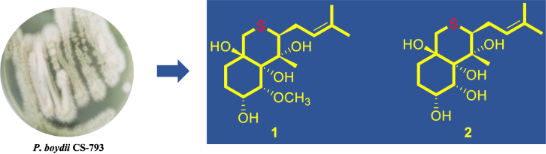
Pseudallenes A and B, new sulfur-containing ovalicin sesquiterpenoid derivatives with antimicrobial activity from the deep-sea cold seep sediment-derived fungus Pseudallescheria boydii CS-793
Beilstein J. Org. Chem. 2024, 20, 470–478, doi:10.3762/bjoc.20.42
- structures were solved by direct methods using the SHELXTL software package [18][19]. All non-hydrogen atoms were refined anisotropically. The H atoms were located by geometrical calculations, and their positions and thermal parameters were fixed during the structure refinement. The absolute structures were


Enhanced host–guest interaction between [10]cycloparaphenylene ([10]CPP) and [5]CPP by cationic charges
Beilstein J. Org. Chem. 2024, 20, 436–444, doi:10.3762/bjoc.20.38
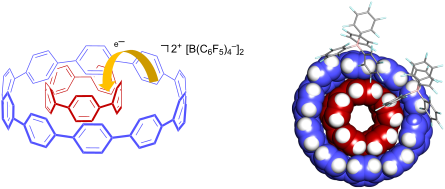
- , [10]CPP⊃[5]CPP2+. While the same host–guest complex consisted of neutral CPPs, [10]CPP⊃[5]CPP, was already reported, the cationic complex showed an about 20 times higher association constant in (CDCl2)2 at 25 °C (103 mol L−1). Electrochemical and photophysical analyses and theoretical calculations
- photophysical and electrochemical analyses and DFT calculations. Therefore, this CT is most likely the origin of the increased Ka value. We also discuss the charged double-layer structure, as determined by X-ray crystallographic analysis. Results and Discussion The size-complementary interaction between CPP2
- absorption bands in the visible region and characteristic broad absorption bands extending to the NIR region (≈2000 nm) (Figure 4, black line). According to time-dependent density functional theory (DFT) calculations at the ωB97-XD/6-31G* level of theory, the NIR absorption of the most thermodynamically