


Search results
Search for "density functional theory" in Full Text gives 304 result(s) in Beilstein Journal of Organic Chemistry. Showing first 200.
Experimental and computational electrochemistry of quinazolinespirohexadienone molecular switches – differential electrochromic vs photochromic behavior
Beilstein J. Org. Chem. 2019, 15, 2473–2485, doi:10.3762/bjoc.15.240
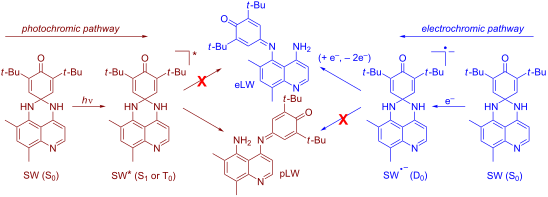
- cyclic voltammetry and 1H NMR analyses, in concert with computational modeling. These results are compared to those for the symmetric parent PSHD, which due to symmetry possesses only a single possible regioisomer upon either electrochemical or photochemical ring-opening. Density functional theory
- calculations of bond lengths, bond orders, and molecular orbitals allow the rationalization of this differential photochromic vs electrochromic behavior of the QSHDs. Keywords: cyclic voltammetry; density functional theory; heterocycles; molecular switches; photochromic photooxidants; spirocycles
- functional theory (DFT) calculated molecular orbitals (MOs, e.g., Figure 6 and Supporting Information File 1) indicate that the LUMO (MO 106 for 3a) lies exclusively on the dienone moiety both in 1b and in the quinazolinespirohexadienone photochromes 3a,b. Thus, the dienone moiety is likely the electrophore




Reversible switching of arylazopyrazole within a metal–organic cage
Beilstein J. Org. Chem. 2019, 15, 2398–2407, doi:10.3762/bjoc.15.232
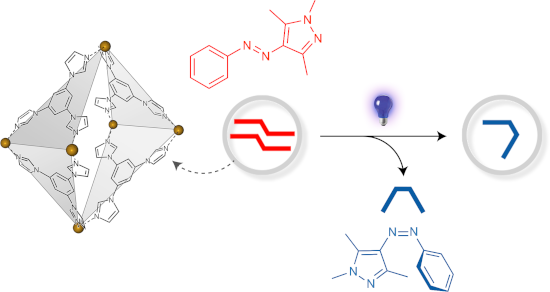
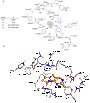
- -ray diffraction. To obtain hints about the packing of Z-1 within 2, we therefore performed density functional theory (DFT) calculations. Compared with the complex before photoisomerization, the cage in (Z-1)2 is severely distorted (Figure 5; see also Supporting Information File 3), assuming a bowl


![[Graphic 1]](/bjoc/content/inline/1860-5397-15-232-i3.svg?max-width=637&scale=1.18182) 2 (500 MHz, D2O, 298 K).
2 (500 MHz, D2O, 298 K).




Excited state dynamics for visible-light sensitization of a photochromic benzil-subsituted phenoxyl-imidazolyl radical complex
Beilstein J. Org. Chem. 2019, 15, 2369–2379, doi:10.3762/bjoc.15.229
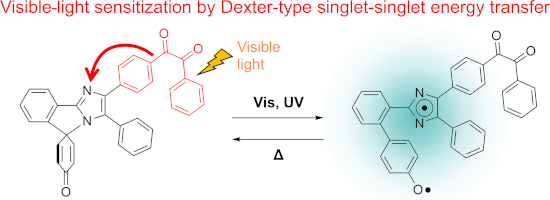
- chromatography (HPLC), and each isomer was characterized by steady-state absorption spectra and time-dependent density functional theory (TDDFT) calculations as shown below. Figure 1 shows the steady-state absorption spectra of the two isomers of Benzil-PIC and PIC in benzene at 298 K. While the absorption of



Current understanding and biotechnological application of the bacterial diterpene synthase CotB2
Beilstein J. Org. Chem. 2019, 15, 2355–2368, doi:10.3762/bjoc.15.228
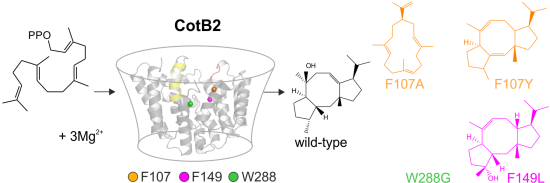
- rearrangement. Hong and Tantillo performed the first theoretical study of the reaction mechanism in CotB2 via gas phase density functional theory (DFT) calculations [33]. Simultaneously, Sato et al. also studied the CotB2 reaction mechanism in the gas phase using DFT, combined with experimental deuterium
- ], density functional theory calculations [33] as well as QM/MM simulations [37]. Variants of CotB2 open the route to a novel product portfolio with altered cyclic carbon skeletons, which can be converted into bioactive compounds by chemo-enzymatic methodologies. Modification descriptions are composed


Aggregation-induced emission effect on turn-off fluorescent switching of a photochromic diarylethene
Beilstein J. Org. Chem. 2019, 15, 2204–2212, doi:10.3762/bjoc.15.217
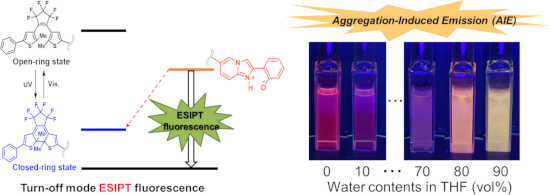
- functional theory (DFT) and time-dependent DFT (TDDFT). The excitation wavelengths as well as the emission wavelength qualitatively agrees with the experimental results. Since compound 1 consists of a diarylethene moiety and an imidazo[1,2-a]pyridine moiety, the characteristic of 1 has the combination of
- decreased gradually upon UV light irradiation accompanied with the formation of 1c, because of excitation energy transfer from the ESIPT moiety to the closed-ring isomer (Figure 5) [4]. The wavelengths of absorption (Table 3) and fluorescence (Table 4) were obtained computationally by using density


Azologization and repurposing of a hetero-stilbene-based kinase inhibitor: towards the design of photoswitchable sirtuin inhibitors
Beilstein J. Org. Chem. 2019, 15, 2170–2183, doi:10.3762/bjoc.15.214
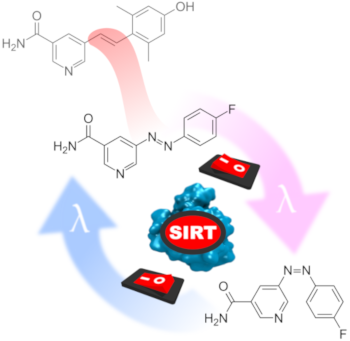
- functional theory (DFT) to optimize the ground state equilibrium structures of (E)-2b, (Z)-2b, 8a and 8b, and used time-dependent DFT (TDDFT) and high-level correlated methods to obtain UV–vis absorption energies and oscillator strengths. To obtain the simulated absorption spectrum and λmax values
- ortho methyl groups in 2f, intramolecular photocyclization could be prevented. To verify the hypothetical structures derived from irradiation of 2b, we carried out quantum chemical calculations of the double bond isomers (E)-2b and (Z)-2b as well as the oxidized compounds 8a and 8b. We used density


Bipolenins K–N: New sesquiterpenoids from the fungal plant pathogen Bipolaris sorokiniana
Beilstein J. Org. Chem. 2019, 15, 2020–2028, doi:10.3762/bjoc.15.198
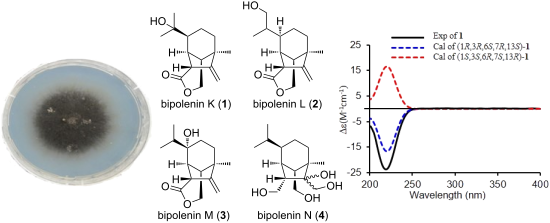
- -13 were α-oriented. The absolute configuration of 1 was determined to be 1R,3R,6S,7R,13S by comparison of the experimental electronic circular dichroism (ECD) spectrum with time-dependent density functional theory (TDDFT)-calculated ECD spectra of the two possible enantiomers of 1 (Figure 4


A review of the total syntheses of triptolide
Beilstein J. Org. Chem. 2019, 15, 1984–1995, doi:10.3762/bjoc.15.194
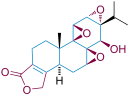
- -endo-trig cyclization of 2-alkenyl-1,3-dithiolanes to access trans-decalins (Figure 2, route K) [78]. Density functional theory calculation (DFT) studies indicated that the 2-alkenyl-1,3-dithiolane moiety acts as a latent initiator, which triggers the cationic 6-endo-trig cyclization in the presence of


Functional panchromatic BODIPY dyes with near-infrared absorption: design, synthesis, characterization and use in dye-sensitized solar cells
Beilstein J. Org. Chem. 2019, 15, 1758–1768, doi:10.3762/bjoc.15.169
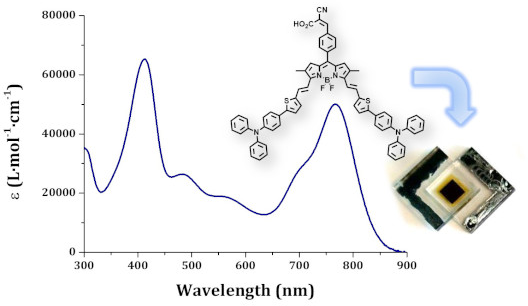
- were computed by density functional theory modelling (DFT) and characterized through UV–vis spectroscopy and cyclic voltammetry (CV) measurements. Finally, we report preliminary results obtained using these functional dyes as photosensitizers in dye-sensitized solar cells (DSSCs). Keywords: boron
- functional theory (TD-DFT) calculations on the four representative molecules displayed in Figure 2: Dyes (1 and 3) vs (2 and 4) differ by the position (2,6 or 1,7) of the methyl groups on the BODIPY core, while dyes (1 and 2) vs (3 and 4) differ by the presence (or not) of a triphenylamine donor group on the
- BODIPY derivative, we decided to synthetize the two molecular structures disclosed in Figure 1, namely BOD-TTPA-alk and BOD-TTPA. To support our molecular design, and especially to have better insight on the electronic structure and optical properties of the dyes, we performed (time-dependent) density




Synthesis, photophysical and electrochemical properties of pyridine, pyrazine and triazine-based (D–π–)2A fluorescent dyes
Beilstein J. Org. Chem. 2019, 15, 1712–1721, doi:10.3762/bjoc.15.167
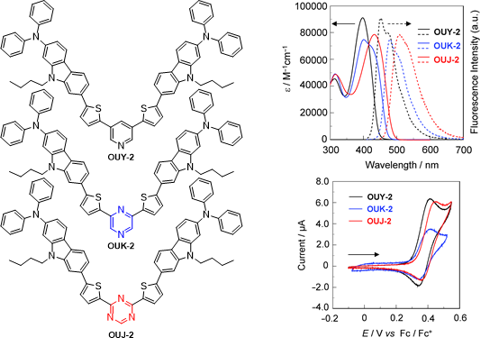
- properties of the three dyes were investigated by photoabsorption and fluorescence spectroscopy, Lippert–Mataga plots, cyclic voltammetry and density functional theory calculations. The photoabsorption maximum (λmax,abs) and the fluorescence maximum (λmax,fl) for the intramolecular charge-transfer
- , Lippert–Mataga plots, cyclic voltammetry and density functional theory (DFT) calculations, we reveal the photophysical and electrochemical properties of the (D–π–)2A fluorescent dyes OUY-2, OUK-2 and OUJ-2. Results and Discussion Synthesis The (D–π–)2A fluorescent dyes OUY-2 [2], OUK-2 [3][4] and OUJ-2




Water inside β-cyclodextrin cavity: amount, stability and mechanism of binding
Beilstein J. Org. Chem. 2019, 15, 1592–1600, doi:10.3762/bjoc.15.163
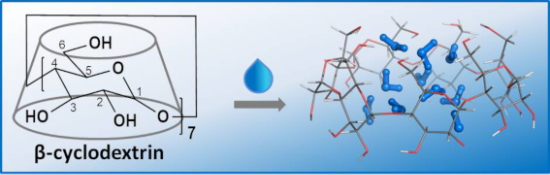
- experimental) approaches are sometimes conflicting and contradictory. There is no “standard” method to investigate the complexation behavior of CDs. Thus, in our study a computational quantum mechanical modelling method, namely density functional theory (DFT) was chosen to investigate the electronic structure


Synthesis of dipolar molecular rotors as linkers for metal-organic frameworks
Beilstein J. Org. Chem. 2019, 15, 1331–1338, doi:10.3762/bjoc.15.132

- dicarboxylic acid-substituted dipolar molecular rotors for the use as linker molecules in metal-organic frameworks (MOFs). The rotor molecules exhibit very low rotational barriers and decent to very high permanent, charge free dipole moments, as shown by density functional theory calculations on the isolated
- /def2SVP level of density functional theory. For this evaluation both carboxylic groups where fixed in a plane. In all cases, barriers for rotations are below 2 kcal mol−1. In the absence of intermolecular interactions there should be thermally excited rotation at room temperature and down to very low


Host–guest interactions between p-sulfonatocalix[4]arene and p-sulfonatothiacalix[4]arene and group IA, IIA and f-block metal cations: a DFT/SMD study
Beilstein J. Org. Chem. 2019, 15, 1321–1330, doi:10.3762/bjoc.15.131
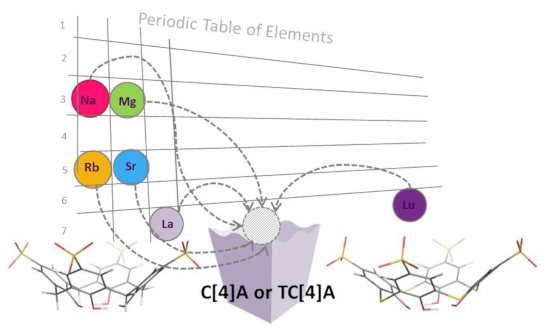
- between biological receptors and small ions. The complex formation behavior of water-soluble p-sulfonatocalix[4]arene and thiacalix[4]arene and group IA, IIA and f-block metal cations has been investigated computationally by means of density functional theory computations in the gas phase and in aqueous
- ]. Conclusion A systematic theoretical study of the group IA, IIA and f-block metal ions binding characteristics to p-sulfonatocalix[4]arene (C[4]A) and p-sulfonatothiacalix[4]arene (TC[4]A) has been performed using density functional theory combined with solvation model based on density (SMD) calculations. It





Mechanochemical Friedel–Crafts acylations
Beilstein J. Org. Chem. 2019, 15, 1313–1320, doi:10.3762/bjoc.15.130
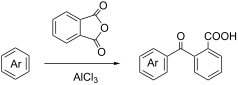
- transient reactive intermediates were predicted by density functional theory method B3LYP/6-31G* (Supporting Information File 1) [61]. The stretching of the +C≡O bond of the acylium ion was predicted to be at about 2300 cm−1. Raman spectroscopy revealed that the complexation of phthalic anhydride with AlCl3


Mechanochemical amorphization of chitin: impact of apparatus material on performance and contamination
Beilstein J. Org. Chem. 2019, 15, 1217–1225, doi:10.3762/bjoc.15.119
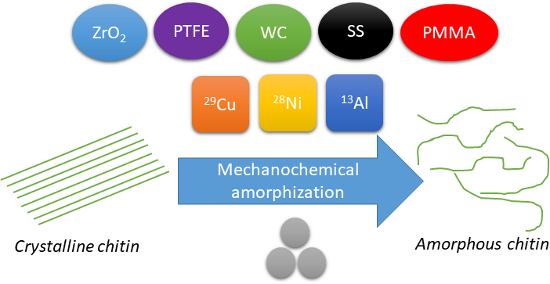
- systematic study of the effects of a number of medium parameters onto a model reaction, namely the amorphization of chitin where interchain stabilization is greater than 250 kJ/mol based on density functional theory (DFT) calculation [58]. We explored the role of the material of the jar and the ball, ball


Mechanochemical synthesis of hyper-crosslinked polymers: influences on their pore structure and adsorption behaviour for organic vapors
Beilstein J. Org. Chem. 2019, 15, 1154–1161, doi:10.3762/bjoc.15.112
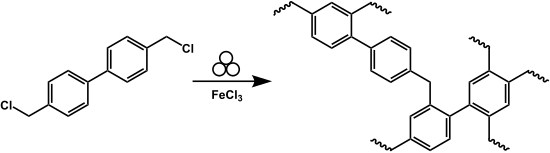
- proposed by Rouquerol and Llewellyn. Pore size distributions were calculated using the quenched solid density functional theory (QSDFT) method for carbon (slit pores, equilibrium kernel) on the adsorption branch. Total pore volumes were determined from the adsorption branch at p/p0 = 0.95. Prior to


Precious metal-free molecular machines for solar thermal energy storage
Beilstein J. Org. Chem. 2019, 15, 1096–1106, doi:10.3762/bjoc.15.106
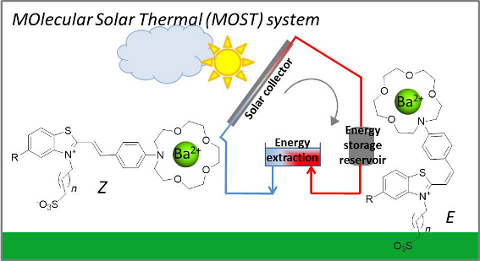
- photoisomerization with lifetimes of the higher energy form longer than 500 seconds. Density functional theory (DFT) calculations at the B3LYP/6-31+G(d,p) level were performed in order to predict the enthalpies (H) of the cis and trans isomers and the storage energies (ΔH) for the systems studied. Keywords: aza-15
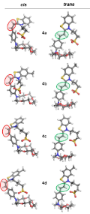
- density functional theory (DFT) calculations at the B3LYP/6-31+G(d,p) level. The first step in the molecular modelling investigation was the optimization of the molecular structures of the cis and trans isomers of dyes 4a–d (with the –(CH2)nSO3− (n = 3, 4) tails oriented to be in proximity to the aza-15
- polarizable continuum model (PCM) did not provide a good quantitative agreement with the experimental stability constants [23] so the data for ∆∆H in acetonitrile are not provided. Time-dependent density functional theory (TDDFT) calculations were used to probe the electronic reorganizations upon excitation




An anomalous addition of chlorosulfonyl isocyanate to a carbonyl group: the synthesis of ((3aS,7aR,E)-2-ethyl-3-oxo-2,3,3a,4,7,7a-hexahydro-1H-isoindol-1-ylidene)sulfamoyl chloride
Beilstein J. Org. Chem. 2019, 15, 931–936, doi:10.3762/bjoc.15.89
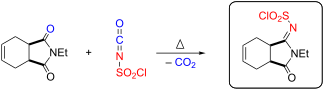
- release of carbon dioxide from the molecule. We performed theoretical computations to better understand the reaction mechanism shown in Scheme 4 (Figure 3). For this purpose, we employed density functional theory (DFT) calculations and performed geometric optimizations using the B3LYP functional [19][20




Photochemical generation of the 2,2,6,6-tetramethylpiperidine-1-oxyl (TEMPO) radical from caged nitroxides by near-infrared two-photon irradiation and its cytocidal effect on lung cancer cells
Beilstein J. Org. Chem. 2019, 15, 863–873, doi:10.3762/bjoc.15.84
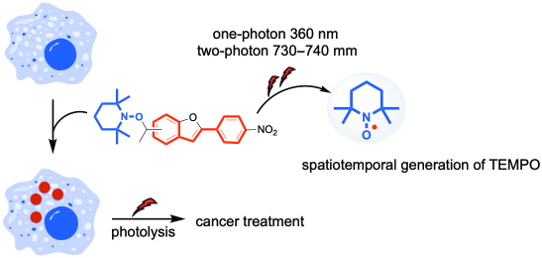
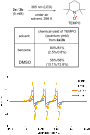
- yields in DMSO of 5a and 5b were determined to be 16.1 and 8.6%, respectively, although no emission was observed from these compounds in non-polar benzene, indicating that the excited state has zwitterionic character. The charge transfer transition was supported by time-dependent density functional
- theory (TD-DFT) calculations for 5a at the CAM-B3LYP/6-31G(d) level of theory (Supporting Information File 1, Figure S2). The fluorescence quantum yields of caged-TEMPO 2a and 2b were found to be 2.9 and 2.2% in DMSO, which are much smaller than those of 5a and 5b, respectively, suggesting the chemical








A diastereoselective approach to axially chiral biaryls via electrochemically enabled cyclization cascade
Beilstein J. Org. Chem. 2019, 15, 795–800, doi:10.3762/bjoc.15.76
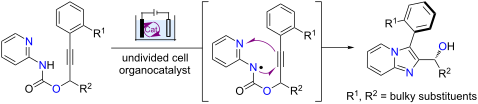
- moiety leads to the formation of 3a. Based on the proposed reaction mechanism and the results mentioned above, the cyclization of vinyl radical IV to give V is the atroposelective step. Density functional theory (DFT)-based calculations suggested that the cyclization of IV could be explained by a Curtin




Catalyst-free assembly of giant tris(heteroaryl)methanes: synthesis of novel pharmacophoric triads and model sterically crowded tris(heteroaryl/aryl)methyl cation salts
Beilstein J. Org. Chem. 2019, 15, 642–654, doi:10.3762/bjoc.15.60
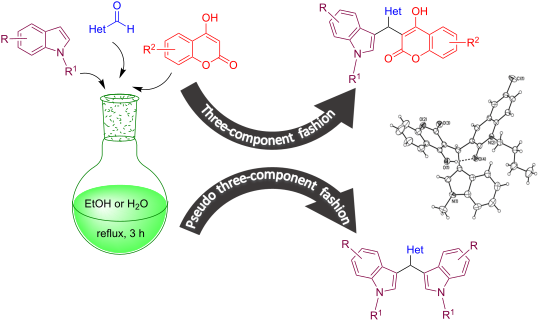
- over MgSO4, and concentrated under reduced pressure. Finally, the crystals were obtained after simple trituration with Et2O. Computational methods. Density functional theory (DFT) calculations were carried out with the Gaussian 09 program suite [66]. Geometries were fully optimized at the B3LYP [67][68









Computational characterization of enzyme-bound thiamin diphosphate reveals a surprisingly stable tricyclic state: implications for catalysis
Beilstein J. Org. Chem. 2019, 15, 145–159, doi:10.3762/bjoc.15.15
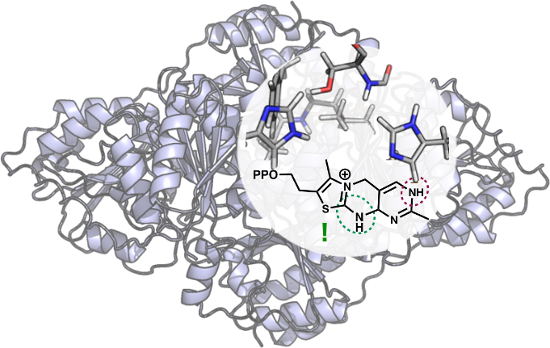
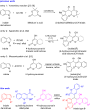
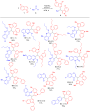
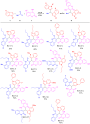
- understanding of the kinetics and mechanism of the individual reactions. In this paper we use density functional theory calculations to systematically study the different cofactor states in terms of energies and geometries. Benzoylformate decarboxylase (BFDC), which is a well characterized chiral catalyst
- the enzyme [19][20]. Thirty years later, density functional theory (DFT) calculations showed that the 4′-amino moiety of the cofactor can either accept or donate a proton in the reactions, depending on the protonation state of N1′ [21]. Orbital analysis of the IP/YIH+ reaction showed that full




Adhesion, forces and the stability of interfaces
Beilstein J. Org. Chem. 2019, 15, 106–129, doi:10.3762/bjoc.15.12

- : “Understanding the physics and chemistry of large molecules and solids would have been practically impossible if not for the principle of transferability” [43]. In the language of density functional theory, the concept of near-sightedness of electrons “…describes the fact that, for fixed chemical potential


Dispersion interactions
Beilstein J. Org. Chem. 2018, 14, 3076–3077, doi:10.3762/bjoc.14.286

- for all matter starting from atoms (e.g., the condensation of helium) over molecules (e.g., aggregation) to materials (e.g., adhesion). It is also difficult to include in theoretical approaches and for the longest time it had been left virtually unnoticed that many density functional theory (DFT

The activity of indenylidene derivatives in olefin metathesis catalysts
Beilstein J. Org. Chem. 2018, 14, 2956–2963, doi:10.3762/bjoc.14.275
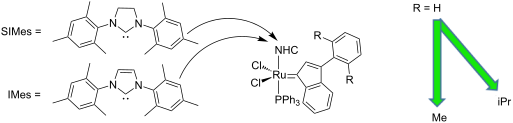
- turnover event of an olefin metathesis reaction using a new family of homogenous Ru-based catalysts bearing modified indenylidene ligands has been investigated, using methoxyethylene as a substrate. The study is carried out by means of density functional theory (DFT). The indenylidene ligands are decorated
- [29][30][31]. We are interested in evaluating, by density functional theory (DFT) calculations, the difference in the activation step between complexes 1–6 in Scheme 1, whose reactivity and properties have been reported already (for 1 and 2) [24][32][33]. Predictive catalysis will be used here to





