Search results
Search for "dimer" in Full Text gives 381 result(s) in Beilstein Journal of Organic Chemistry. Showing first 200.
Silanediol versus chlorosilanol: hydrolyses and hydrogen-bonding catalyses with fenchole-based silanes
Beilstein J. Org. Chem. 2019, 15, 167–186, doi:10.3762/bjoc.15.17
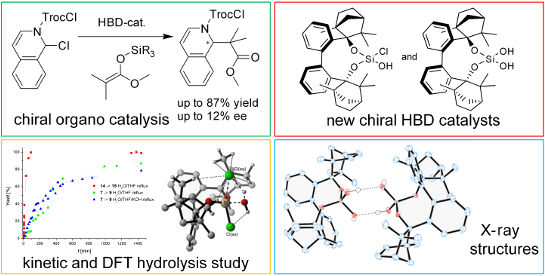
- chlorid stronger with two hydrogen bridges, than BIFOXSiCl(OH) (8) with just one hydrogen bridge. The BIFOXSi(OH)2 (9) dimer forms hydrogen bridges, which are stronger than hydrogen bridges with water, but less stronger than hydrogen bridges to chloride (50.97 kcal mol−1 vs 29.18 kcal mol−1 vs 19.88 kcal
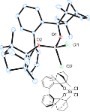
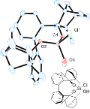
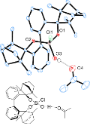
- available (+)-fenchone has 98% enantiomeric purity, BIFOXSi(OH)2 can be further purified. rac-BIFOXSi(OH)2 crystallizes as a dimer from toluene (Figure 14). BIFOXSi(OH)2 (9) crystallizes as a tetramer from n-hexane (Figure 15), where six OH groups build a network of hydrogen bonds. Thus the polar core is
- points/transition states, as well as experimental details can be found in Supporting Information File 1. CCDC-1833170 (BIFOXSiCl2 (7)), CCDC-1833171 (BIFOXSiCl(OH) (8)), CCDC-1833172 (BIFOXSi(OH)2 (9, dimer)), CCDC-1833173 (BIFOXSi(OH)2 (9, tetramer)), CCDC-1833174 (BIFOXSiCl(OH) 8·acetone) and CCDC








Unexpected loss of stereoselectivity in glycosylation reactions during the synthesis of chondroitin sulfate oligosaccharides
Beilstein J. Org. Chem. 2019, 15, 137–144, doi:10.3762/bjoc.15.14
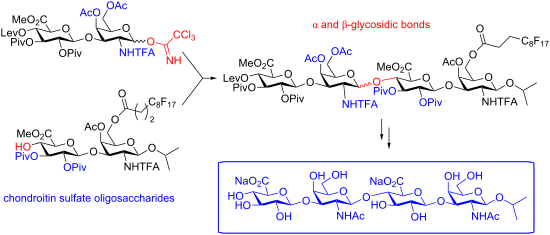
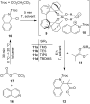
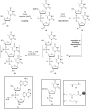
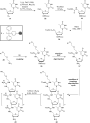
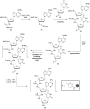
- assays, deprotection of dimer 6 and tetramer 14β were accomplished (Scheme 5). Compound 14α was also submitted to the deprotection sequence to obtain a non-natural α-containing oligosaccharide. Basic hydrolysis using H2O2/LiOH and then NaOH followed by selective N-acetylation in MeOH afforded CS


Adhesion, forces and the stability of interfaces
Beilstein J. Org. Chem. 2019, 15, 106–129, doi:10.3762/bjoc.15.12
- , even today it is more often claimed than actually demonstrated that hydrogen-bonded complexes are predominantly stabilized by electrostatics [6]. If any other interaction but electrostatics is considered, it is “charge-transfer”, which suggests that the dimer stabilization is caused by an electron
- series starts with dipoles, whereas in non-polar molecules it starts with quadrupoles or higher multipoles. Accordingly, there will always be electrostatic interactions of different ranges between molecules with static multipoles. For example, the T-shaped equilibrium structure of the benzene dimer is


Fabrication of supramolecular cyclodextrin–fullerene nonwovens by electrospinning
Beilstein J. Org. Chem. 2019, 15, 89–95, doi:10.3762/bjoc.15.10
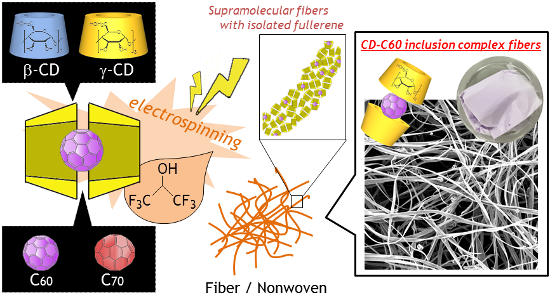
- ) inclusion complex, γ-CD dimer, and γ-CD monomer in HFIP. Interestingly the γ-CD–C60 (1:1) inclusion complex, which is the supposed intermediate, is not detected (Figure 2c in Supporting Information File 1). Therefore, we considered that all C60 molecules in the solution should be present as the 2:1 complex


The influence of the cationic carbenes on the initiation kinetics of ruthenium-based metathesis catalysts; a DFT study
Beilstein J. Org. Chem. 2018, 14, 2872–2880, doi:10.3762/bjoc.14.266
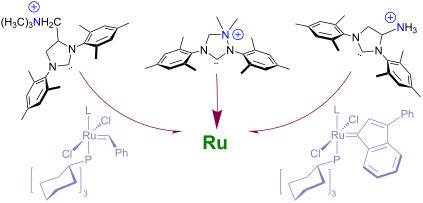
- interesting phenomenon, despite its very limited impact on their propensity to form transition metal complexes (Scheme 2) [50]. Many works have been devoted to the study of carbene dimerization and present evidence that mechanism of monomer–dimer equilibrium depends on the balance between the electronic and
- Gibbs free energy difference for the symmetric dimer A. In the case of carbene 3, the Gibbs free energy of dimerization could not be estimated due to instability of the monomer during geometry optimization. Thus, the results indicate higher stability of dimers for all examined NHC, which are in



Dispersion-mediated steering of organic adsorbates on a precovered silicon surface
Beilstein J. Org. Chem. 2018, 14, 2715–2721, doi:10.3762/bjoc.14.249
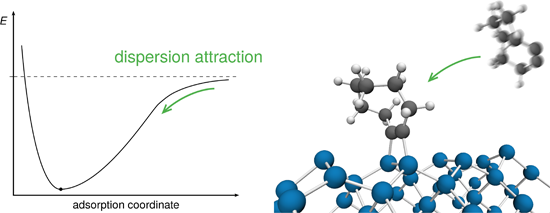
- reflected in the Lewis structure is the tilting of the molecule upon adsorption leading to a chair-like conformer bending over the dimer rows on the surface [7]. Starting from this precovered surface (i.e., decorated with one adsorbate in the unit cell), we now investigate the adsorption of a second
- molecule of 1 on a neighbouring dimer leading to structure 3 (Figure 2). Although repulsive interactions might be expected for adsorption close to a rather large adsorbate, we find this mode to be the most stable adsorption mode for two molecules of 1 in the unit cell. Due to their conformational
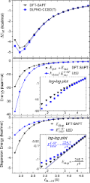
- . This can be seen in the difference plot between the PES of the clean and precovered surface in Figure 5c. Only weak preference for the surface dimer adjacent to the already adsorbed molecule is found (less than 5 kJ·mol−1), which can be attributed to weak electrostatic attraction between the two


Non-native autoinducer analogs capable of modulating the SdiA quorum sensing receptor in Salmonella enterica serovar Typhimurium
Beilstein J. Org. Chem. 2018, 14, 2651–2664, doi:10.3762/bjoc.14.243
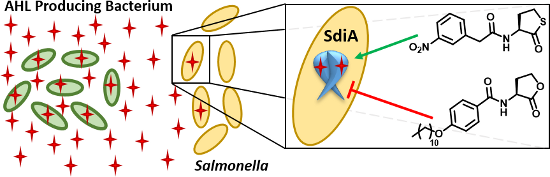
- [37]. Recently, two groups reported X-ray crystal structures of full-length EHEC SdiA as a homodimer in the presence of four naturally occurring AHLs (shown in Figure 1B) [21][22]. These studies reveal a structure for the SdiA dimer that incorporates LBD and DBD domains comparable to those of the


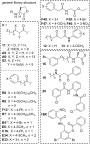

Synergistic approach to polycycles through Suzuki–Miyaura cross coupling and metathesis as key steps
Beilstein J. Org. Chem. 2018, 14, 2468–2481, doi:10.3762/bjoc.14.223
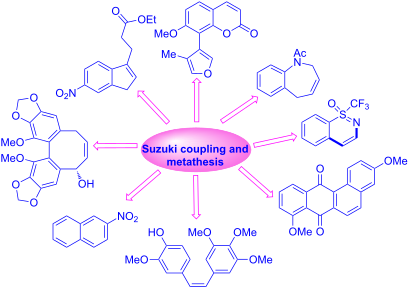
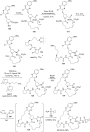
- SM cross coupling followed by RCM as key steps [50]. To this end, dibromo compound 123 was subjected to diallylation by using allylboronate ester 12 to form the diallyl derivative 124 (73%). Treatment of compound 124 with G-I catalyst 1 gave unsaturated dimer 126 (30%) and monomer 125 (15


Efficient catalytic alkyne metathesis with a fluoroalkoxy-supported ditungsten(III) complex
Beilstein J. Org. Chem. 2018, 14, 2425–2434, doi:10.3762/bjoc.14.220
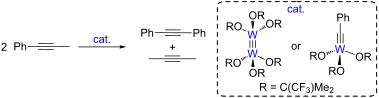
- ]. The desired hexakis(fluoroalkoxide) dimer [Mo2{OC(CF3)2Me}6] (Mo2F6) was first isolated by D. Rogers and his group by salt metathesis of [Mo2Cl6(dme)2] with 6 equiv of NaOC(CF3)2Me (Scheme 2) [73]. This reaction affords a red, sparingly soluble complex in moderate yield (28%). The bimetallic tungsten


Nucleoside macrocycles formed by intramolecular click reaction: efficient cyclization of pyrimidine nucleosides decorated with 5'-azido residues and 5-octadiynyl side chains
Beilstein J. Org. Chem. 2018, 14, 2404–2410, doi:10.3762/bjoc.14.217
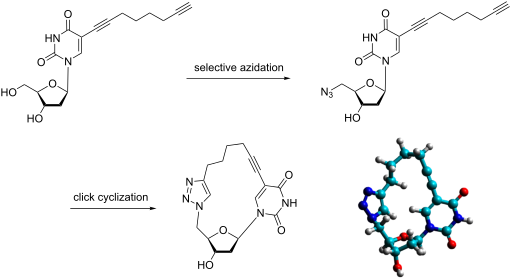
- ) sulfate and ascorbic acid. TLC monitoring showed that the cyclization failed. Then, tris(benzyltriazoylmethyl)amine (TBTA) [40][41][42] was added as catalyst and macrocycle 4 was formed in 71% yield, which is extremely high for an intramolecular cyclization. The dimeric product 3 and the cyclic dimer 5


Dynamic light scattering studies of the effects of salts on the diffusivity of cationic and anionic cavitands
Beilstein J. Org. Chem. 2018, 14, 2212–2219, doi:10.3762/bjoc.14.195
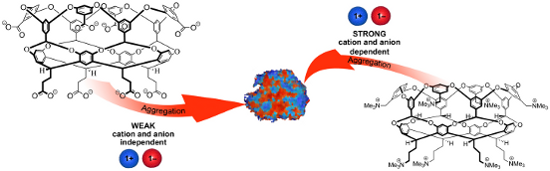
- − leads to an increase in the hydrodynamic diameter, with NaBr giving the largest increase to 2.6 nm. This corresponds to the formation of a dimer aggregate. Aggregation was even more extreme with the I− salts. All I− salts caused extensive aggregation of the host, and a determination of the maximum size


Selective formation of a zwitterion adduct and bicarbonate salt in the efficient CO2 fixation by N-benzyl cyclic guanidine under dry and wet conditions
Beilstein J. Org. Chem. 2018, 14, 2204–2211, doi:10.3762/bjoc.14.194

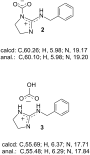
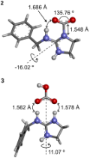
- until 102 °C (i) and 173 °C (ii), respectively, and then the thermal decomposition of 2 has occurred completely around 270 °C (iii). This three-step behavior of weight loss suggested the dimer form of 2, which was constructed by the weak interaction between the anionic oxygen on the trapped CO2 and the
- active hydrogen on the nitrogen atom. Namely, one molecule of CO2 was released from the dimer of 2 in the first step, and then the intermediate complex was prepared from 1 and 2 due to the coordination between two anionic oxygens on the trapped CO2 and two active hydrogens on the guanidine moiety. Then
- , another CO2 molecule was released from the intermediate complex (2+1 dimer) and the dimer was decomposed into two molecules of 1 in the second step. The observed weight loss due to the released CO2 in each step agreed with the theoretical one (obs. (i) 10.3%, (ii) 10.6%, and (iii) 78.4%, theor. (i) 10.1






Tetrathiafulvalene – a redox-switchable building block to control motion in mechanically interlocked molecules
Beilstein J. Org. Chem. 2018, 14, 2163–2185, doi:10.3762/bjoc.14.190
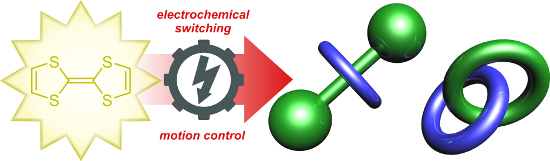
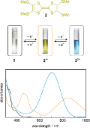
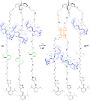
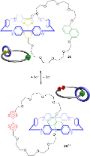
- strong absorption bands (≈450 and 800 nm), which yield an orange-brown solution. Initially, the low-energy band of 2●+ between 600–1000 nm was interpreted as a signature for an unusually stable TTF dimer [31]. However, later investigations showed that this band is an intrinsic SOMO-1→SOMO transition in
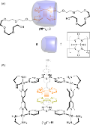
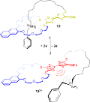
- so-called mixed-valence dimer (12) ●+. A mixed-valence dimer can be identified by splitting of the first TTF oxidation potential into two distinguishable waves. This change in redox behavior can be followed by electrochemical methods such as cyclic voltammetry. Another indication for a mixed-valence
- dimer interaction can be an emergent low-energy absorption band, usually in the NIR region. Both monomers show usually no absorption in this region. The radical-cation dimer (1●+)2 instead forms from two 1●+ radical cations and exhibits a very unusual binding situation. Whereas both monomers are











Evaluation of dispersion type metal···π arene interaction in arylbismuth compounds – an experimental and theoretical study
Beilstein J. Org. Chem. 2018, 14, 2125–2145, doi:10.3762/bjoc.14.187
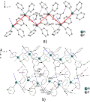
- the sum of the energies of all unrelaxed monomers (crystal structure geometry) included in the tetramer or dimer. Interaction energies of tetrameric, trimeric, and dimeric structures can yield information about the additivity of intermolecular interactions. Additionally, interaction energies of all Bi
- with this specific monomer are broken, which can involve contacts between neighboring molecules or long-range interactions. In tetramer 1a-1 the energy needed to remove one of the outer monomers (3 and 4) is almost equal to the interaction energy of one Bi···π arene dimer. This indicates that only one
- dimer breaks. To remove one of the inner monomers (2 or 1) an energy of 92 kJ mol−1 is required. This energy is very close to the sum of the interaction energies of two dimers. For example, Eremove of monomer 2 in tetramer 1a-1 is roughly the sum of the interaction energies of two Bi···π arene dimers




The phenyl vinyl ether–methanol complex: a model system for quantum chemistry benchmarking
Beilstein J. Org. Chem. 2018, 14, 1642–1654, doi:10.3762/bjoc.14.140
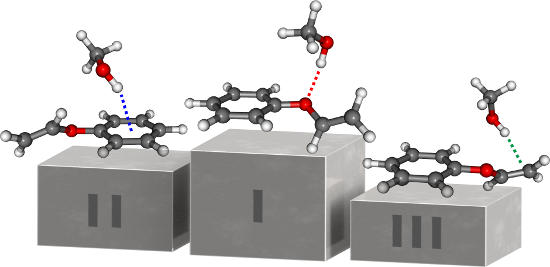
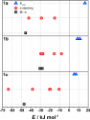
- repetition rate of 64 Hz. For the spectrum of the PVE–MeOH dimer, 3 million FIDs were co-added. A resulting signal-to-noise ratio of about 500:1 to 600:1 for the stronger transitions of the dominant complex allowed us to determine the positions of the carbon atoms with respect to the center of mass of the
- are shown in Figure 3. Besides methanol monomer, methanol dimer and a signal clearly attributed to a larger cluster, only a single, reasonably narrow absorption at 3625 cm−1 is observed. It can be attributed to mixed dimers of MeOH with PVE and allows for a single rigorous conclusion, due to the
- linearity of the technique and the comparable IR absorption cross section of all predicted dimer conformations (cf. Table 1 and Table S1, Supporting Information File 1): the global minimum structure and any other, higher lying isomers which are initially formed and impeded from relaxation to the global


Drug targeting to decrease cardiotoxicity – determination of the cytotoxic effect of GnRH-based conjugates containing doxorubicin, daunorubicin and methotrexate on human cardiomyocytes and endothelial cells
Beilstein J. Org. Chem. 2018, 14, 1583–1594, doi:10.3762/bjoc.14.136
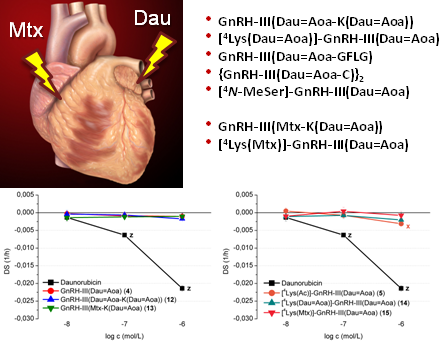
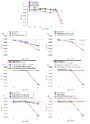
- bifunctional daunorubicin-GnRH-III conjugates without spacer and modified in position 4 with Lys; (e) {GnRH-III(Dau=Aoa-C)}2 dimer and conjugates modified in position 4 with N-MeSer; (f) GFLG or YRRL spacer containing monomer and dimer conjugates (g) GnRH-III conjugates containing methotrexate and daunorubicin
- conjugates containing doxorubicin without spacer sequence; (c) with spacer sequence GFLG; (d) oxime bond-linked, mono- and bifunctional daunorubicin-GnRH-III conjugates without spacer and modified in position 4 with Lys; (e) {GnRH-III(Dau=Aoa-C)}2 dimer and conjugates modified in position 4 with N-MeSer; (f
- ) GFLG or YRRL spacer containing monomer and dimer conjugates; (g) GnRH-III conjugates containing methotrexate and daunorubicin. Comparative study of cytotoxic effects and cardiotoxicity elicited by GnRH-based antitumor compounds (1–15) and reference substances (AN-152, Dox, Dau, Mtx). IC50 values show


Steric “attraction”: not by dispersion alone
Beilstein J. Org. Chem. 2018, 14, 1482–1490, doi:10.3762/bjoc.14.125
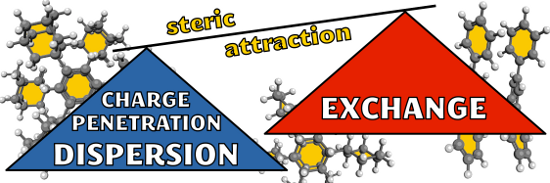
- not even a limit and stable diamondoid dimer with a central C–C bond as long as 1.71 Å has been achieved [7][8]. Bulky alkyl groups assist not only in achieving the longest C–C bonds, but also the shortest intermolecular H···H contacts [9], which are otherwise tackled by squeezing them inside the
- cages [10]. Intermolecular interactions in hydrocarbons are also subject to significant dispersion contribution. In the unsaturated systems, from benzene dimer to higher acenes and, ultimately, graphenes, dispersion is increasingly the key force behind the π–π stacking interactions [11]. Large and flat
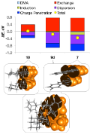
- -tert-butylphenyl)methane dimer (the system mentioned above for its shortest intermolecular H···H contacts) comes from stabilizing electrostatics [9]. Similarly, the interaction energy difference between the all-meta-tert-butyl-hexaphenylethane and the bare hexaphenylethane features ≈14% electrostatic



Recent applications of chiral calixarenes in asymmetric catalysis
Beilstein J. Org. Chem. 2018, 14, 1389–1412, doi:10.3762/bjoc.14.117
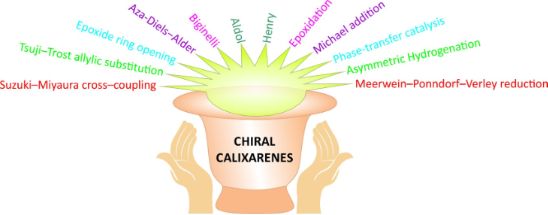
- reactions were compared to that of the model diphenylphosphino ferrocenes. When the allylpalladium chloride dimer was used as palladium precursor, good yields were obtained after 24 h. However, enantiomeric excesses for (S)-27 and (S)-28 (<5%) were lower than those obtained by using other phosphine-ether


A three-armed cryptand with triazine and pyridine units: synthesis, structure and complexation with polycyclic aromatic compounds
Beilstein J. Org. Chem. 2018, 14, 1370–1377, doi:10.3762/bjoc.14.115
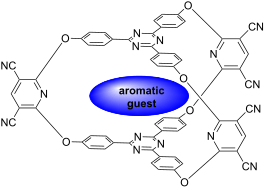
- is larger than the distance (3.15 Å) determined for the triazine dimer [41]. As next step, the polycyclic aromatic hydrocarbons anthracene and pyrene were intercalated between the caps of the cryptand. The optimized geometry structures of these host–guest complexes were obtained using the same method




Oligonucleotide analogues with cationic backbone linkages
Beilstein J. Org. Chem. 2018, 14, 1293–1308, doi:10.3762/bjoc.14.111
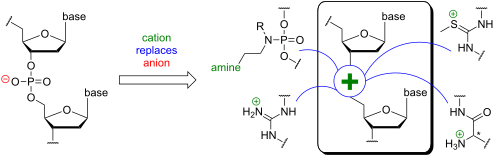
- aminoalkyl phosphoramidate-linked oligonucleotide 18. To study the hybridization properties of such cationic oligonucleotide analogues with native DNA and RNA, Letsinger and co-workers performed UV-monitored thermal denaturation experiments [40][41]. In the case of the modified deoxyadenosyl dimer 11
- ≈25 °C for the according hybridization with DNA was observed [40]. In addition, the cationic dimer 11 was shown to bind more tightly to native RNA and DNA strands in the presence of magnesium chloride [40]. For the cationic T-oligomer 18, Letsinger and co-workers reported a strongly reduced absorbance
- , thus weakening the attraction of the oppositely charged backbones [41]. In order to elucidate the stability of aminoethyl phosphoramidate-linked oligonucleotides to nuclease-catalysed degradation, Letsinger and co-workers described the incubation of such oligomers, the deoxyadenosyl dimer 11 and DNA





Are dispersion corrections accurate outside equilibrium? A case study on benzene
Beilstein J. Org. Chem. 2018, 14, 1181–1191, doi:10.3762/bjoc.14.99
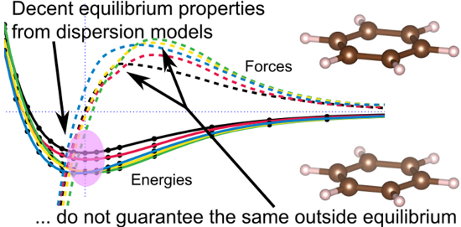
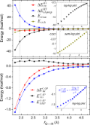
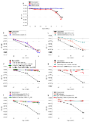
- -energy curves of the benzene dimer to determine if they are capable of describing forces and energies outside equilibrium. We find the exchange-hole dipole moment (XDM) model describes most cases with the highest overall agreement with reference data for energies and forces, with many-body dispersion
- approaches in reproducing the energetics of the benzene dimer, an important model system, in different geometries. The coupled-cluster with singles, doubles and perturbative triples [CCSD(T)] benchmark set of Sinnokrot et al. [20] is used, with the aim of establishing which approximations can best reproduce
- ][35][36]. However, the most extreme deviations from the pairwise model do not affect the benzene dimer system. Note, the importance of higher-order (many-body) dispersion terms in “typical” systems has been the subject of some debate. It is critical to differentiate between non-additive many-body


One hundred years of benzotropone chemistry
Beilstein J. Org. Chem. 2018, 14, 1120–1180, doi:10.3762/bjoc.14.98








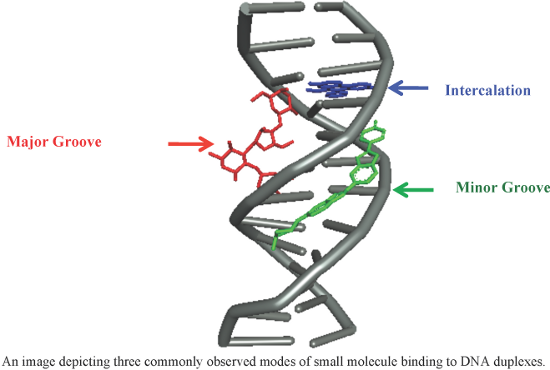
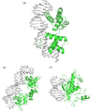
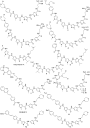
An overview of recent advances in duplex DNA recognition by small molecules
Beilstein J. Org. Chem. 2018, 14, 1051–1086, doi:10.3762/bjoc.14.93






Correlation effects and many-body interactions in water clusters
Beilstein J. Org. Chem. 2018, 14, 979–991, doi:10.3762/bjoc.14.83
- ; Introduction The description of the intermolecular interactions between water molecules is essential for an understanding of the structures and properties of water through the different stages of assemblies, from the dimer over the liquid phase to the bulk phase. Moreover, many chemical processes are
- high-level quantum chemistry results for the water dimer. Force fields belonging to this category are, e.g., the TTM3-F and TTM4-F models [6][7], the AMOEBA force field [8][9], the DPP2 model [10] and various force fields derived by Szalewicz and co-workers [11][12][13]. There also exist a number of
- essential to describe the structures of (H2O)2 and (H2O)3 in many different conformations [15]. A rather good correlation between the coupled-cluster energies and the force-field energies is found for the polarisable AMOEBA2003 [9][16] and TTM4-F [17] potentials both for the dimer and for the trimer. Both


Local energy decomposition analysis of hydrogen-bonded dimers within a domain-based pair natural orbital coupled cluster study
Beilstein J. Org. Chem. 2018, 14, 919–929, doi:10.3762/bjoc.14.79
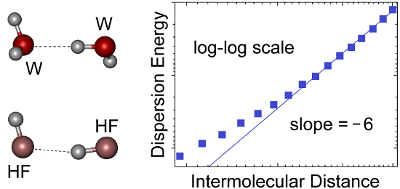
- the computational details, computed geometries and dissociation energies are compared with previously published experimental and computational data. In the following section, the decay of LED terms with the intermolecular distance between the monomers is discussed for the water dimer case, and results
- minimum (Conf1 of Figure 1) are compared with available experimental data and previously published computational predictions. For the water dimer in its global minimum, experiments estimate an r0(O···O) distance between 2.946 and 2.976 Å [67]. The CCSD(T)-based best estimate of re(O···O) reported in
- literature is 2.912 ± 0.005 Å [68]. The re(O···O) distance calculated in this work at the RI-MP2/aug-cc-pVTZ level (2.908 Å) is very close to the CCSD(T) prediction. The effect of excitations beyond CCSD(T) has been shown to be negligible by means of CCSDTQ calculations [69]. For the HF dimer, the re(F···F