


Search results
Search for "UV–vis" in Full Text gives 649 result(s) in Beilstein Journal of Organic Chemistry. Showing first 200.
Substituted nitrogen-bridged diazocines
Beilstein J. Org. Chem. 2021, 17, 1503–1508, doi:10.3762/bjoc.17.107
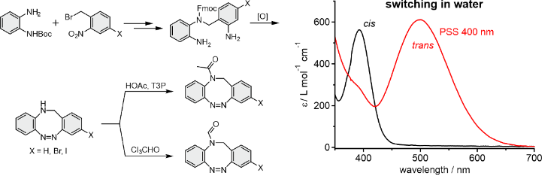
- anhydride of acetic acid and T3P (propanephosphonic acid anhydride). The formylation of NH-diazocines 9a–c was accomplished with chloral [23] under non-acidic conditions. Investigation of the photophysical properties The UV–vis spectra of diazocines 10a–c, and 11a–c were recorded in acetonitrile at 25 °C
- this work. UV–vis spectra of 3-bromo and 3-iodo, and unsubstituted CH2NAc-bridged (10a–c) and CH2NCHO-bridged (11a–c) diazocines. The spectra of Z-isomers are given in black, the photostationary states at 400 nm are represented as dashed red lines and the extrapolated spectra of the pure E-isomers are
- in blue. UV–vis spectra of 3-bromo-NAc-diazocine 10a and N-formyl-diazocine 11c in water. Spectra of Z-isomers (black curve), the photostationary states at 400 nm (dashed red line), and the extrapolated spectra of the pure E-isomers (blue). Synthesis of 3-bromo- and 3-iodo-acetylated CH2NR diazocines


Synthesis of 1-indolyl-3,5,8-substituted γ-carbolines: one-pot solvent-free protocol and biological evaluation
Beilstein J. Org. Chem. 2021, 17, 1453–1463, doi:10.3762/bjoc.17.101
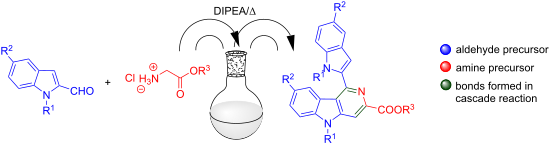
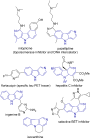
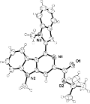
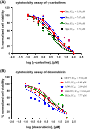
- derivative 3ac (10 nM, 100 nM, 1 μM, 10 μM, and 100 μM), the cellular uptake and distribution was monitored by using confocal microscopy (λex = 405 nm; λem range = 420–470 nm). Selected examples of compounds containing the γ-carboline core. Single-crystal XRD structure of 3ac (CCDC: 1897787). UV–vis







Analogs of the carotane antibiotic fulvoferruginin from submerged cultures of a Thai Marasmius sp.
Beilstein J. Org. Chem. 2021, 17, 1385–1391, doi:10.3762/bjoc.17.97
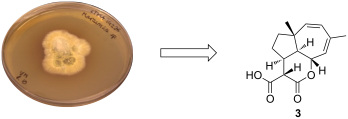
- with an MCP 150 polarimeter (Anton Paar, Graz, Austria). The CD spectra were obtained from a JASCO spectropolarimeter, model J-815 (Pfungstadt, Germany). The UV spectra were recorded on a Shimadzu UV–vis spectrophotometer UV-2450 (Duisburg, Germany). Isolation and identification of fungal material



Design, synthesis and photophysical properties of novel star-shaped truxene-based heterocycles utilizing ring-closing metathesis, Clauson–Kaas, Van Leusen and Ullmann-type reactions as key tools
Beilstein J. Org. Chem. 2021, 17, 1374–1384, doi:10.3762/bjoc.17.96
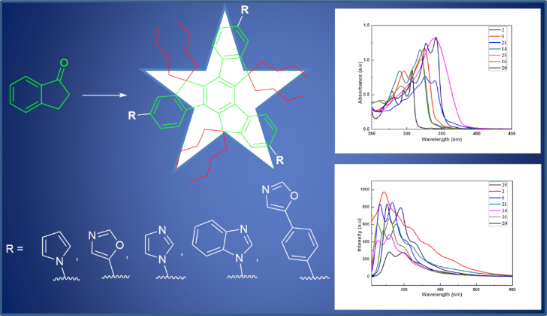
- ) furnished the triformyltruxene 24 (Scheme 7). Finally, the crude product 24 was directly treated with TosMIC under Van Leusen oxazole conditions to provide the required product 25 in 23% yield (two steps) as depicted in Scheme 7. Absorption and emission spectra The UV–vis absorption as well as fluorescence
- 600 to 4000 cm−1. UV–vis spectra were recorded on a UV-1800 Shimadzu spectrophotometer and the fluorescence spectra were recorded on an Agilent Carry Eclipse spectrofluorimeter. Synthesis of 10,15-dihydro-5H-diindeno[1,2-a:1',2'-c]fluorene (7): Truxene scaffold 7 was prepared according to a literature


Antiviral therapy in shrimp through plant virus VLP containing VP28 dsRNA against WSSV
Beilstein J. Org. Chem. 2021, 17, 1360–1373, doi:10.3762/bjoc.17.95
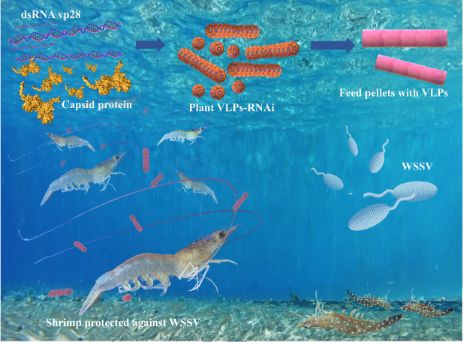
- sodium acetate, 8 mM magnesium acetate, pH 4.5). All the procedure was done at 4 °C. The virus’s concentration and purity were determined by UV–vis spectrophotometry, and the virus aliquots were kept at −80 °C. The protein purification was performed according to a previously described protocol [40
- the capsid protein (CP) was recovered. Later, the CP was dialyzed against a buffer (1 M NaCl, 20 mM Tris, 1 mM EDTA, pH 7.2) overnight. The protein concentration and purity were determined by UV–vis spectrophotometry; only CP samples with the wavelength ratio 280/260 ≥ 1.5 were used for the VLPs



Photoinduced post-modification of graphitic carbon nitride-embedded hydrogels: synthesis of 'hydrophobic hydrogels' and pore substructuring
Beilstein J. Org. Chem. 2021, 17, 1323–1334, doi:10.3762/bjoc.17.92
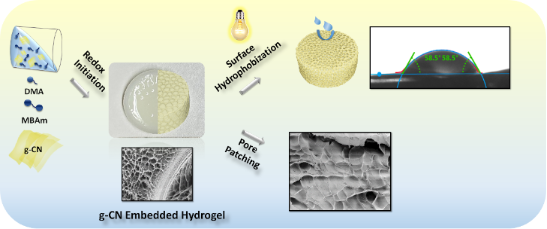
- , and at last the intensified peak at 1419 cm−1 indicates a C–N stretching of the thiazole ring. Proceeding the examination by UV–vis spectroscopy, overlaid absorption spectra of the samples revealed the photophysical differences as expected, since HG does not consist of photoactive g-CN particles in
- profiles of RhB swollen hydrogels. HG, HGCM, and HGCM-vTA have been immersed in RhB solution for 24 hours, then washed with distilled water every 24 hours, and all collected samples were investigated by UV–vis spectroscopy until reaching the minimum dye absorbance (Figure 3c,d, Supporting Information File
- , respectively, and left overnight. Released contents of each cation were analyzed via ICP-OES. Characterization: Fourier transform infrared (FTIR) spectra were acquired on a Nicolet iS 5 FT-IR spectrometer. Solid-state ultraviolet−visible (UV−vis) spectroscopy for grinded samples was performed via a Cary 500


Structural effects of meso-halogenation on porphyrins
Beilstein J. Org. Chem. 2021, 17, 1149–1170, doi:10.3762/bjoc.17.88
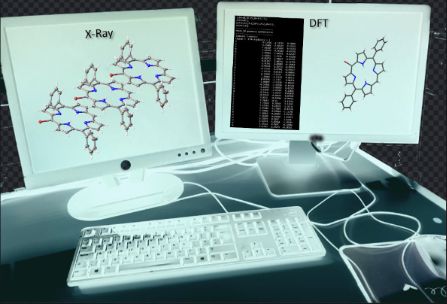
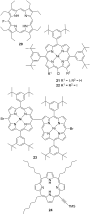
- , 134.8, 137.7, 138.9, 142.1 ppm; UV–vis (DCM) λmax (log ε) 420 (5.30), 519 (3.91), 555 (3.68), 596 (3.38) nm; HRMS−MALDI (m/z): [M+] calcd for C40H29ClN4, 600.2081; found, 600.2050. Note on synthesis of chloro derivatives of porphyrins The reaction entailed an attempt to prepare a meso–meso linked




Synthetic reactions driven by electron-donor–acceptor (EDA) complexes
Beilstein J. Org. Chem. 2021, 17, 771–799, doi:10.3762/bjoc.17.67

- phenomena based on the electron-donor–acceptor (EDA) complex [1][2][3]. Significantly, a broad absorption peak unrelated to the structure, called charge-transfer band, is typically located in the visible region of the UV–vis spectrum [4], which manifests the color variability of the mixed solution of the
- indole derivatives 100 under blue-light irradiation (Scheme 35). Given the UV–vis spectra of the reaction mixture and its components, there was no evidence of the formation of a ternary EDA complex between Katritzky salt 99, 98, and morpholine. Moreover, the TDDFT calculation showed that electron
- between radicals was carried out, affording thioether derivative 132 (Scheme 46). It has been proved by UV–vis spectroscopy and TDDFT calculations that the EDA complex was formed between an electron-rich mercaptan anion and electron-deficient aryl halides. Most importantly, this approach can be


Synthesis of dibenzosuberenone-based novel polycyclic π-conjugated dihydropyridazines, pyridazines and pyrroles
Beilstein J. Org. Chem. 2021, 17, 719–729, doi:10.3762/bjoc.17.61
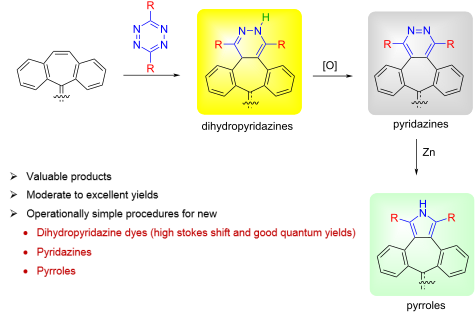
- calculated by comparison with a well-known reference, quinine sulfate, in 0.5 M H2SO4 solution (ФF = 0.546) as the standard dye (Table 2). When the UV–vis and fluorescence spectra of pyridazines and pyrroles were examined, it was seen that generally, they did not have effective absorbance or emission
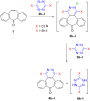
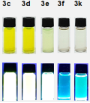
- . Structures of s-tetrazines 2a–l. UV–vis spectra of 3c–f and 3k in CH3CN at rt (c = 5 μM). Fluorescence spectra of 3c–f and 3k in CH3CN at rt (c = 5 μM). Ambient (top) and fluorescence (bottom, under 365 nm UV light) images of 3c–f and 3k in CH3CN. Inverse electron-demand Diels–Alder reactions of




Synthesis of (Z)-3-[amino(phenyl)methylidene]-1,3-dihydro-2H-indol-2-ones using an Eschenmoser coupling reaction
Beilstein J. Org. Chem. 2021, 17, 527–539, doi:10.3762/bjoc.17.47

- ATR diamond crystal (neat solid samples). Flash chromatography was performed using a Büchi Reveleris® X2 flash chromatography system equipped with a UV–vis/ELSD detector and Reveleris Flash pure cartridges (12–40 g, 35–45 μm, 53–80 Å) or puriFlash® Alumine N 32/63 µm cartridges (12 g). General


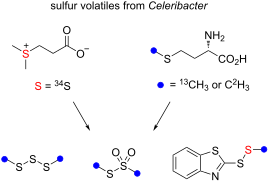
Identification of volatiles from six marine Celeribacter strains
Beilstein J. Org. Chem. 2021, 17, 420–430, doi:10.3762/bjoc.17.38
- spectra were recorded on a Bruker α spectrometer equipped with a diamond-ATR probe, and qualitative signal intensities are reported by w (weak), m (medium), and s (strong). HPLC purification of compound 42 was performed on an Azura HPLC system (Knauer, Berlin, Germany) equipped with a UV–vis detector MWL
- 2.1L (deuterium lamp, 190–700 nm) and a YMC ChiralART Cellulose-SC column (5 μm; 250 × 20 mm) with a guard column of the same type (30 × 20 mm). The elution was performed with hexane/propanol 60:40 (isocratic) at a flow rate of 10 mL min−1 (36 bar). The UV–vis absorption was monitored at 275 nm




Mesoionic tetrazolium-5-aminides: Synthesis, molecular and crystal structures, UV–vis spectra, and DFT calculations
Beilstein J. Org. Chem. 2021, 17, 385–395, doi:10.3762/bjoc.17.34
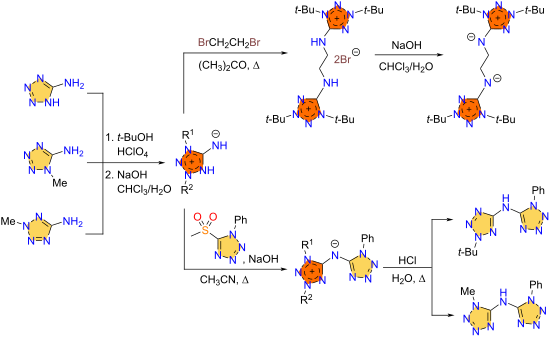
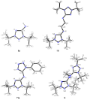
- -(methylsulfonyl)-1-phenyl-1H-tetrazole with substitution of bromine and methylsulfonyl groups giving the corresponding tetrazolium salts or conjugate aminides. The obtained mesoionic tetrazoles have been characterized by elemental analysis, FTIR, NMR, and UV–vis spectroscopy, TGA/DSC analysis and for 1,3-di-tert
- : aminotetrazoles; DFT; mesoionic compounds; UV–vis spectra; X-ray analysis; Introduction 5-Aminotetrazoles are one of the most available and valuable tetrazole derivatives. So, due to the thermal stability and high nitrogen content the parent 5-aminotetrazole (1, Figure 1) is of practical interest as a gas
- structures are known [17][28]. Thus, the information on tetrazole-5-aminides is very limited and fragmentary. In the present work, we try to fill this gap by carrying out experimental (synthesis, X-ray, UV–vis) and theoretical density functional theory (DFT) studies of some selected 1,3-dialkyltetrazolium-5




Annulation of a 1,3-dithiole ring to a sterically hindered o-quinone core. Novel ditopic redox-active ligands
Beilstein J. Org. Chem. 2021, 17, 273–282, doi:10.3762/bjoc.17.26
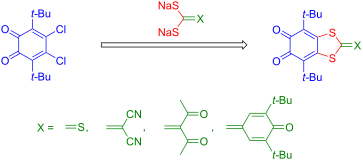
- found to be a stronger oxidant than 36Q [16]. A very similar redox behavior and shifts of reduction potential values were observed for p-quinone derivatives with attached 1,3-dithiole rings [27][49]. UV–vis spectroscopy Sterically hindered o-quinones are deep-colored compounds. Any changes in their
- redox or/and coordination state are accompanied by changes in UV–vis spectra. For compounds 3a, 6a–d and 7 UV–vis spectra were recorded in CH3CN (see Supporting Information File 1 and Table 2). It is noteworthy that o-quinones with annulated 1,3-dithiole group seem to be more even highly colored species
- than 36Q. Compounds 3a and 6a exhibit two-bands in the UV–vis spectra those are typical of sterically hindered o-quinones. Taking into account the previously studied spectra of substituted derivatives of 36Q, an intensive short-wave band could be assigned to the n–π* transition, whereas the wide long


Multiswitchable photoacid–hydroxyflavylium–polyelectrolyte nano-assemblies
Beilstein J. Org. Chem. 2021, 17, 166–185, doi:10.3762/bjoc.17.17
- particles, and information on the molecular structure was gained by UV–vis spectroscopy. Isothermal titration calorimetry (ITC) provided information on the thermodynamics and interaction forces in the supramolecular assembly formation. Keywords: electrostatic self-assembly; hydroxyflavylium
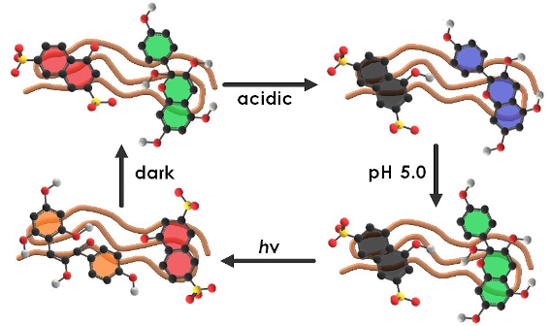
- nanoscale structure, as indicated in Scheme 3. To gain fundamental understanding on these possibilities, different trigger paths and the dependency on the assembly composition were studied with regard to the effect on the nano-assembly characteristics by dynamic and static light scattering, UV–vis
- followed with UV–vis spectroscopy to monitor the differences between the states. As can be seen in Figure 1, the different forms of Flavy vary in the light absorption. While the forms A and AH+ show an absorption at λ = 500 and λ = 550 nm, respectively, due to their expanded electronic system, the




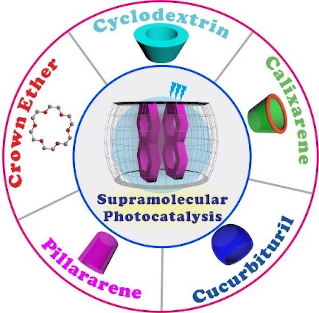
Insight into functionalized-macrocycles-guided supramolecular photocatalysis
Beilstein J. Org. Chem. 2021, 17, 139–155, doi:10.3762/bjoc.17.15
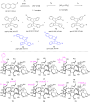
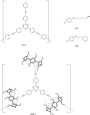
- authenticated by isothermal calorimetric titration or fluorescence titration and stopped-flow analysis. Furthermore, the quantum yield and reaction velocity of the photocatalysis can be verified by actinometry and UV–vis measurements. Therefore, with the aid of various analytical and spectroscopic studies, we






Tuning the solid-state emission of liquid crystalline nitro-cyanostilbene by halogen bonding
Beilstein J. Org. Chem. 2021, 17, 124–131, doi:10.3762/bjoc.17.13
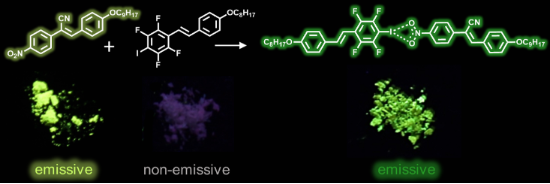
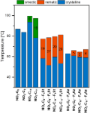
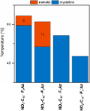
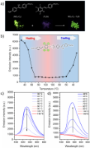
- assemblies by UV–vis and fluorescence spectroscopy. The NO2-Cn building blocks are moderately fluorescent in the solid state and F4St as well as F4Az show no significant fluorescence. However, upon formation of the halogen-bonded assemblies the fluorescence of the materials is significantly changed. Since






Circularly polarized luminescent systems fabricated by Tröger's base derivatives through two different strategies
Beilstein J. Org. Chem. 2021, 17, 52–57, doi:10.3762/bjoc.17.6
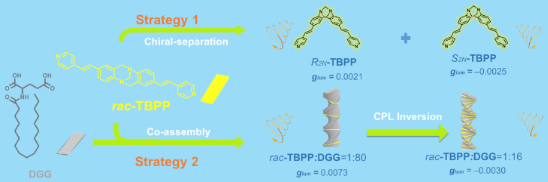
- carboxyl groups in DGG. Moreover, the morphologies of rac-TBPP/DGG co-gels might be different due to the changing stoichiometric ratios. In order to get an indepth understanding on the inversion of CPL handedness, rac-TBPP/DGG co-gels at molar ratios of 1:16 and 1:80 were explored further by UV–vis and
- FTIR (fourier transform infrared) spectra. UV–vis absorption spectra of rac-TBPP/DGG co-gels exhibited a strong absorption band at 333 nm, assigned to the conjugated structure of benzene and pyridine in the rac-TBPP (Figure 3a). However, a red-shift broaden absorption band situated at 372 nm appears in
- spectra of rac-TBPP/DGG co-gel (red line) and rac-TBPP/LGG (blue line) co-gel at the molar ratio of 1:80. (a) UV–vis absorption spectra of rac-TBPP and rac-TBPP/DGG co-gel (rac-TBPP/DGG = 1:80). (b) FTIR spectra of DGG and rac-TBPP/DGG co-gels at molar ratios of 1:80 and 1:16, respectively. SEM images of


Control over size, shape, and photonics of self-assembled organic nanocrystals
Beilstein J. Org. Chem. 2021, 17, 42–51, doi:10.3762/bjoc.17.5
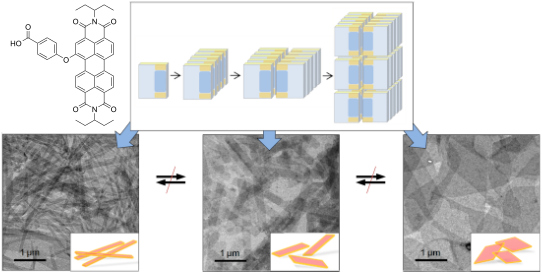
- , followed by the immediate evaporation of THF in a high-vacuum and adding water to reach a 1 × 10⁻⁴ M concentration. The self-assembly is instantaneous, as indicated by a color change from bright orange to pink in all systems. UV–vis spectra of compound 1 in aqueous medium exhibit a 0-0/0-1 vibronic band
- applicability of organic nanocrystals. Experimental General information The 1H and 13C NMR spectra were recorded at 20 °C on a 300 MHz NMR spectrometer (Bruker). Electrospray ionization (ESI) mass spectrometry was performed using a Micromass Platform instrument. UV–vis absorption and fluorescence measurements
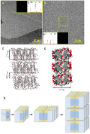
- ) and Origin 7.5 (OriginLab) softwares. Chemical structure of compound 1 and UV–vis spectra in an aggregating aqueous medium and in the disaggregating solvent THF. Transmission electron microscopy (TEM) images (left, zoomed-out and zoomed-in; 1 × 10⁻⁴ M solutions of 1 deposited on TEM grids) and crystal




The fluorescence of a mercury probe based on osthol
Beilstein J. Org. Chem. 2021, 17, 22–27, doi:10.3762/bjoc.17.3
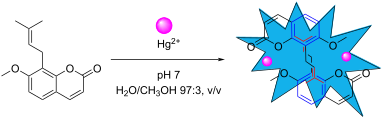
- fluorescence, UV–vis spectrophotometry, mass spectrometry, and 1H NMR spectroscopy, and the recognition mechanism is discussed. The results showed that OST and Hg2+ can form a complex with a stoichiometric ratio of 1:1. The binding constant was 1.552 × 10⁵ L∙mol−1, having a highly efficient and specific
- to a higher field. Because Hh is located in the central area of the shield and Hi is at the edge of the shield, the Δδ value of Hh is relatively large, and finally both moved to δ 1.35. Based on the 1H NMR and mass spectrometry data, combined with the analysis of the UV–vis spectrum, the interaction


Synthesis, crystal structures and properties of carbazole-based [6]helicenes fused with an azine ring
Beilstein J. Org. Chem. 2021, 17, 11–21, doi:10.3762/bjoc.17.2
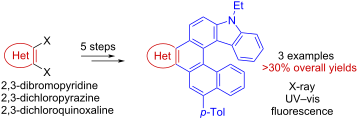
- were used as starting materials. To discern the effect of merging an azine moiety within a helical skeleton, the X-ray structures, UV–vis absorption and fluorescence spectra of the helicenes were investigated and compared to that of the parent carbazole-based [6]helicene (7H-phenanthro[3,4-c]carbazole
- absorption of quinoxaline-fused [6]helicene 10a was red-shifted by 19 nm (Table 7). Compounds 10 exhibited almost a solvent independence of UV–vis absorption spectra (Supporting Information File 1, Figure S41). The optical band gaps (Egopt), estimated from the onset point of the absorption spectra, for [6
- ]helicenes 10. Supporting Information Supporting Information File 76: Experimental procedures and analytical data, copies of 1H and 13C NMR spectra of all new compounds, X-ray data for 9c and 10a–c, HPLC spectra of helicenes 10a–c, UV–vis and fluorescence spectra of 10a–c. Acknowledgements The authors



Naphthalonitriles featuring efficient emission in solution and in the solid state
Beilstein J. Org. Chem. 2020, 16, 2960–2970, doi:10.3762/bjoc.16.246
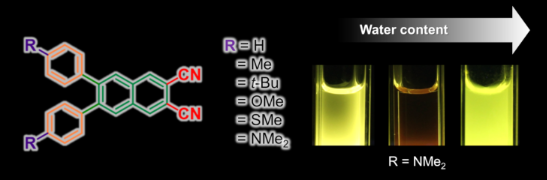
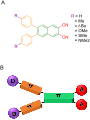
- monomeric species in dilute solutions The UV–vis absorption spectra of the six samples in THF are shown in Figure 3. The p-substituents on the phenyl group at the γ-position of the naphthalonitrile cause drastic changes in the electronic properties of the compounds. For H, Me, t-Bu, OMe, SMe and NMe2, the



Construction of pillar[4]arene[1]quinone–1,10-dibromodecane pseudorotaxanes in solution and in the solid state
Beilstein J. Org. Chem. 2020, 16, 2954–2959, doi:10.3762/bjoc.16.245
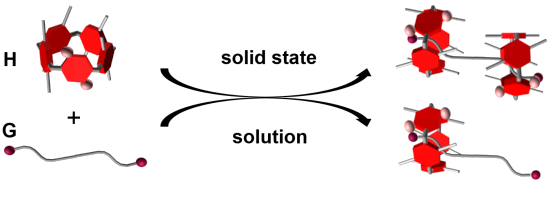
- , which agreed with the formation of the complexation; the alkyl chains of G were encapsulated in the cavity of H. This further indicated that the interactions between H and G were weak. UV–vis absorption properties of the complex in solution Based on the UV–vis properties of H, we wondered the influence
- of G on the optical properties of H, so an UV–vis spectroscopy experiment was carried out. We investigated the changes in the UV–vis absorption of the complex at different guest concentrations corresponding to 0.5 and 1 equiv. As shown in Figure 4, the concentration of G did not affect the absorption
- between H and G were weak and that there was a complexation competition with solvent molecules. Furthermore, the addition of G did not change the maximum UV–vis absorption wavelength of H. The bromine atoms at the periphery of the guest molecule provide convenience for the further capping of the


UV resonance Raman spectroscopy of the supramolecular ligand guanidiniocarbonyl indole (GCI) with 244 nm laser excitation
Beilstein J. Org. Chem. 2020, 16, 2911–2919, doi:10.3762/bjoc.16.240
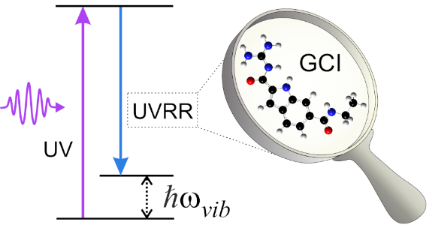
- choosing the laser wavelength in electronic resonance and the enhanced Raman spectrum involving only vibrational modes of the molecular subunit is selectively detectable. Since the GCP exhibits electronic resonances in the ultraviolet region with an absorption maximum at ca. 298 nm (see UV–vis absorption
- pyrrole ring, which leads to different optical absorption properties in the UV–visible range (see Figure 1). Based on the UV–vis absorption spectrum, we expect a stronger resonance enhancement for GCI than GCP at 244 nm excitation due to its higher absorbance. Again, a 244 nm excitation is necessary for
- form a laminar liquid column in air at the laser focus. The laser radiation was focused by two cylindrical lenses to create a line focus along the sample liquid column and a 90° scattering geometry was used for collecting the Raman scattered light. The UV–vis absorption spectra were acquired with a UV


Incorporation of a metal-mediated base pair into an ATP aptamer – using silver(I) ions to modulate aptamer function
Beilstein J. Org. Chem. 2020, 16, 2870–2879, doi:10.3762/bjoc.16.236
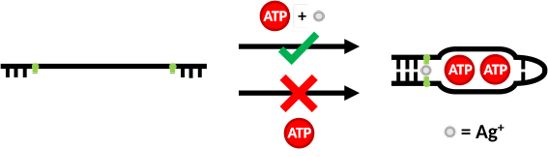
- washing with buffer. The elution was quantified by UV–vis spectroscopy. In the absence of Ag(I), the aptamer derivatives bearing imidazole residues show a lower affinity to ATP than the unmodified aptamer (Figure 9). While only 17% of the DNA is eluted in the five washing fractions of 1af, the amount of


Selective recognition of ATP by multivalent nano-assemblies of bisimidazolium amphiphiles through “turn-on” fluorescence response
Beilstein J. Org. Chem. 2020, 16, 2728–2738, doi:10.3762/bjoc.16.223
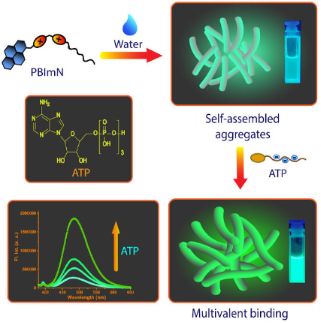
- . Sodium chloride, 28% ammonia solution and all the solvents were purchased from Merck. Milli-Q water was used for all the experiments. UV–vis spectroscopic measurements were carried out in Agilent Cary 8454 spectrophotometer. Emission spectroscopic measurements were carried out in a Horiba Fluoromax 4





