


Search results
Search for "dye" in Full Text gives 278 result(s) in Beilstein Journal of Organic Chemistry. Showing first 200.
Interactions between photoacidic 3-hydroxynaphtho[1,2-b]quinolizinium and cucurbit[7]uril: Influence on acidity in the ground and excited state
Beilstein J. Org. Chem. 2017, 13, 203–212, doi:10.3762/bjoc.13.23
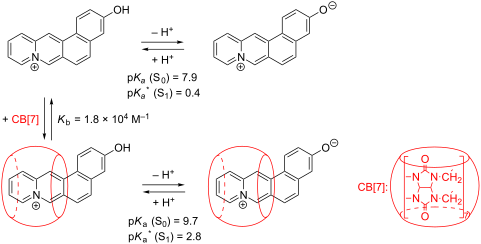
- ]quinolizinium was synthesized by cyclodehydration route and its optical properties in different media were investigated. The absorption and emission spectra of this compound depend on the pH of the solution. Thus, at higher pH values the deprotonation yields a merocyanine-type dye that exhibits significantly


A new class of organogelators based on triphenylmethyl derivatives of primary alcohols: hydrophobic interactions alone can mediate gelation
Beilstein J. Org. Chem. 2017, 13, 138–149, doi:10.3762/bjoc.13.17
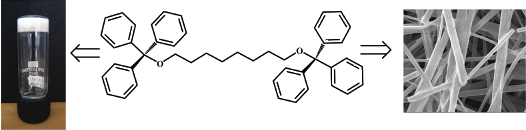
- the gel were carried out using scanning electron microscopy, FTIR spectroscopy, rheology and powder XRD techniques. This gel also showed a good absorption profile for a water soluble dye. Given the non-polar nature of this molecule, gel formation is likely to be mediated by hydrophobic interactions
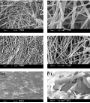
- linear molecular arrays and also between two-dimensional planar arrays. The weak intensity peak at 22.39° (3.96 Å) can be attributed to the presence of π–π stacking between benzene rings of adjacent triphenylmethyl groups. Dye absorption studies Dyes are commercially important and are widely used in many
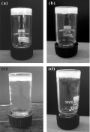
- character (perhaps with a large π surface area, e.g., Direct Red 80). The hypothesis being hydrophobic interactions between the non-polar self-assembled TPM-G12 microstructures with Direct Red 80 may facilitate dye absorption and removal. Figure 10a shows the time-dependent dye absorption profile of Direct






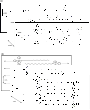

A postsynthetically 2’-“clickable” uridine with arabino configuration and its application for fluorescent labeling and imaging of DNA
Beilstein J. Org. Chem. 2017, 13, 127–137, doi:10.3762/bjoc.13.16
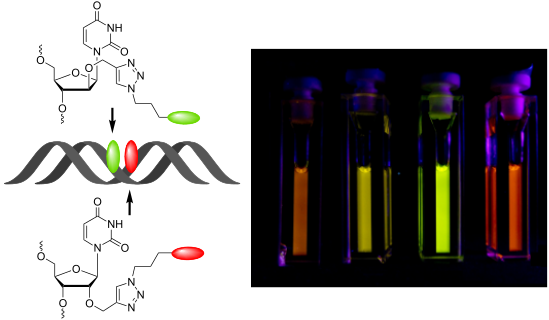
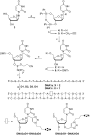
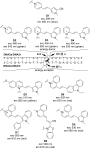
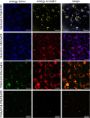
- donors in the energy transfer-based DNA systems (vide infra). The corresponding dye azides were synthesized as previously described [19][23][24]. The modified double strands (ds) DNA2aD1 to DNA2aD4 were compared with their structural counterpart among the duplexes DNA2rD1 to DNA2rD4 with respect to their
- -modified duplexes. The stabilization of dsDNA2a ranges only from 0.7 °C for D1 to 3.2 °C for D3 and D4, whereas the stabilizing effects for dsDNA2r are more diverse, ranging from 2.0 °C for D1 to 3.7 °C for D3. Obviously, the dye interactions with double-stranded DNA do slightly depend on the type of dye
- . In D1 and D2, the pyridinium part is connected to the rest of the dye by its 4-position, in D3 and D4 via its 2-position. The latter connectivity has a larger stabilizing influence on the DNA2a double strands. The fluorescence quantum yields of dsDNA2a are all higher than the corresponding ones of



Stabilization of nanosized titanium dioxide by cyclodextrin polymers and its photocatalytic effect on the degradation of wastewater pollutants
Beilstein J. Org. Chem. 2016, 12, 2873–2882, doi:10.3762/bjoc.12.286
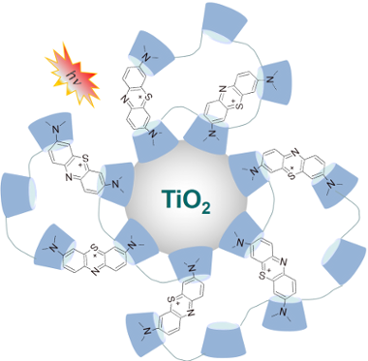
- . CMBCD-P itself showed a catalytic effect on the UV degradation of methylene blue. In addition to enhancing the colloid stability of nanoTiO2 CMBCD-P showed also synergistic effects in catalyzing the photodecomposition process of the dye. On the other hand, ibuprofen as a model pharmaceutical, a
- . Photocatalytic effect of the CMBCD-P stabilized nanoTiO2 dispersions The photocatalytic effect of nanoTiO2 on the decomposition of two model contaminants: a dye (methylene blue, MB) and a drug (ibuprofen, IBR) was studied in various media (distilled water, NaCl solution and tap water) in the presence and absence
- . The polymer itself showed some catalytic effect: the rate of degradation of MB was slightly increased in all the three media resulting in the shortest half-life time in tap water similarly to the dye alone. The catalytic effect of nanoTiO2 itself could be measured only in distilled water, as both in



Biomimetic synthesis and HPLC–ECD analysis of the isomers of dracocephins A and B
Beilstein J. Org. Chem. 2016, 12, 2523–2534, doi:10.3762/bjoc.12.247

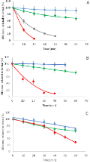
- increase P-gp inhibitory activity [18]. Based on the unaltered accumulation of rhodamine 123, a P-gp substrate fluorescent dye, in the P-gp transfected L5178MDR cells, we observed that none of the synthesized compounds inhibits this transporter. The antioxidant activity of dracocephins A and B was also


Synthesis, dynamic NMR characterization and XRD studies of novel N,N’-substituted piperazines for bioorthogonal labeling
Beilstein J. Org. Chem. 2016, 12, 2478–2489, doi:10.3762/bjoc.12.242
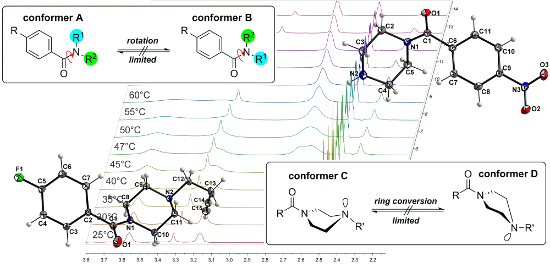
- connection to the label (e.g., fluorescence dye, radionuclide) and the second is used for the introduction of a (bioorthogonal) functional group (e.g., azide, alkyne, phosphane, tetrazine) to later connect to the biomolecule via bioorthogonal ligation. Our aim was the development of novel, N,N




Thiophene-forming one-pot synthesis of three thienyl-bridged oligophenothiazines and their electronic properties
Beilstein J. Org. Chem. 2016, 12, 2055–2064, doi:10.3762/bjoc.12.194
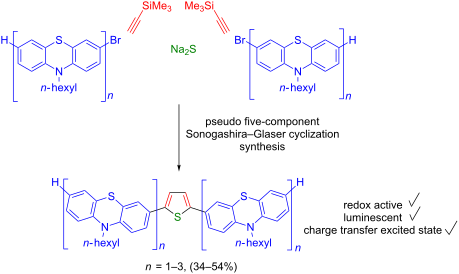
- -transfer characteristics [59][60][61][62][63], as hole-transport materials [64], for applications in mesoporous organo silica hybrid materials [65], and as chromophores in dye-sensitized solar cells [66][67][68]. Furthermore, (oligo)phenothiazines in their native reduced forms display a pronounced ability


The in situ generation and reactive quench of diazonium compounds in the synthesis of azo compounds in microreactors
Beilstein J. Org. Chem. 2016, 12, 1987–2004, doi:10.3762/bjoc.12.186
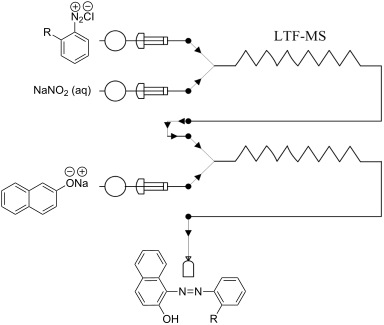
- II azo dye was used as a model reaction for the study. At found optimal azo coupling reaction temperature and pH an investigation of the optimum flow rates of the reactants for the diazotization and azo coupling reactions in Little Things Factory-MS microreactors was performed. A conversion of 98
- life. Even with a number of dye degradation techniques [22] currently being employed in waste water treatment, a certain percentage of the dyestuffs is still found in water bodies. This therefore is motivation for developing better methods or techniques or processes that can be used independently or in
- conjunction with the existing techniques. Microreactor technology is one such technology that can be used in the manufacture of these dyes. If used in conjunction with existing azo dye degradation techniques the amount of waste generated can easily be managed. Hisamoto et al., for example, used ‘phase


Synthesis and characterization of fluorinated azadipyrromethene complexes as acceptors for organic photovoltaics
Beilstein J. Org. Chem. 2016, 12, 1925–1938, doi:10.3762/bjoc.12.182
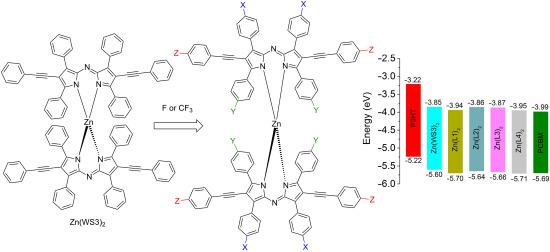
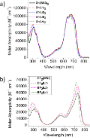
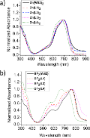
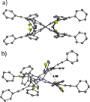
- substitution at the pyrrolic phenylacetylene moieties. The later complexes are expected to be stronger electron acceptors than Zn(WS3)2, and may enable charge transfer from other conjugated polymer donors that have lower energy levels than poly(3-hexylthiophene) (P3HT). Keywords: dye; fluorine; near-IR




A flow reactor setup for photochemistry of biphasic gas/liquid reactions
Beilstein J. Org. Chem. 2016, 12, 1798–1811, doi:10.3762/bjoc.12.170
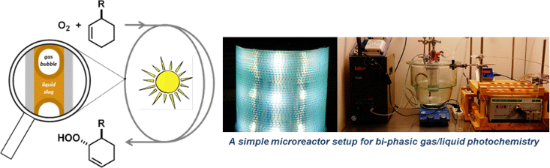
- standard batch reactions at 10−4–10−2 M concentrations of the dye so that large volumes of the reaction remain in the dark [9][52]. It is important to note that the magnitude of attenuation coefficients of the employed chromophores is a key difference between the recently emerging field of photocatalysis
- penetration depth in a solution of acetonitrile (Figure 2) [63]. The high surface-to-volume ratio of microreactors thus increases the relative pathway of light through the solution, speeds up the rate of reactions, and minimizes competing side reactions [11][52][64][65]. Total light absorption of dye
- optimal tubing gauge of photoreactors allows irradiation of the whole reactor width, which is determined by the Beer–Lambert law. The light intensity within the reactor is dependent on the concentration and absorption coefficient of the absorbing materials (reactor walls, dye, etc.). Generally, the used


3,6-Carbazole vs 2,7-carbazole: A comparative study of hole-transporting polymeric materials for inorganic–organic hybrid perovskite solar cells
Beilstein J. Org. Chem. 2016, 12, 1401–1409, doi:10.3762/bjoc.12.134
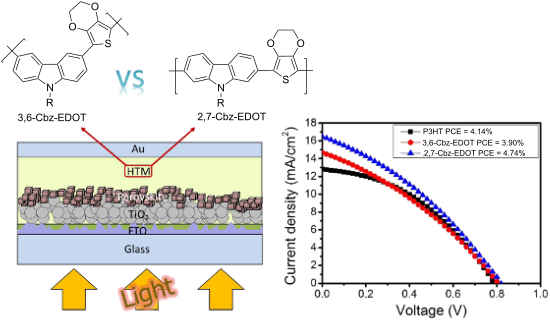
- the PCE of 4% [1], some key improvements have been made in designing device structures and fabrication methods, and the PCE of the PSCs rapidly increased to >20% [2][3][4][5]. Compared to the conventional organic photovoltaics and dye-sensitized solar cells (DSSCs), PSCs benefit from a broad light


From N-vinylpyrrolidone anions to modified paraffin-like oligomers via double alkylation with 1,8-dibromooctane: access to covalent networks and oligomeric amines for dye attachment
Beilstein J. Org. Chem. 2016, 12, 1395–1400, doi:10.3762/bjoc.12.133

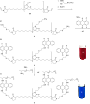
- poly(ethylene glycol) side chains. Keywords: double alkylation; modified N-vinylpyrrolidone; oligomeric anthraquinone dye; paraffin-like oligomer; radical thiol-ene click reaction; Introduction Poly(N-vinylpyrrolidone) (PVP) is established in daily life due to its high water solubility and
- present the synthesis of paraffin-like oligomers via double alkylation of N-VP with 1,8-dibromooctane. Additionally, this work focuses on the use of the free double bonds for radical crosslinking as well as thiol-ene modification for subsequent dye attachment. Results and Discussion N-Vinylpyrrolidone (1
- substituent of the attached anthraquinone moiety in 5 was replaced at elevated temperature with O-(2-aminopropyl)-O'-(2-methoxyethyl)propylene glycol (Jeffamine® M 600) yielding the branched blue-colored oligomeric dye 6. The deep blue color is a result of the presence of two amino groups in 1,4-position of



Artificial Diels–Alderase based on the transmembrane protein FhuA
Beilstein J. Org. Chem. 2016, 12, 1314–1321, doi:10.3762/bjoc.12.124
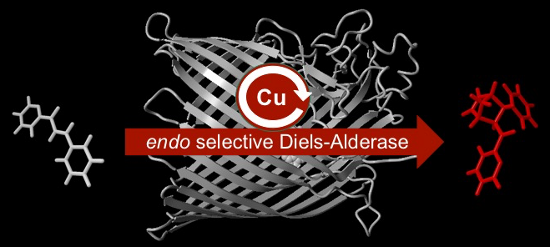
- dye ThioGlo® indicated that more than 95% of the cysteine residues were conjugated for each catalyst. Renaturing of the protein was successful in the case of the terpy ligand framework (for clarity of the location of the catalyst, see Figure S1 in Supporting Information File 1). After 3 days of


Synthesis of a deuterated probe for the confocal Raman microscopy imaging of squalenoyl nanomedicines
Beilstein J. Org. Chem. 2016, 12, 1127–1135, doi:10.3762/bjoc.12.109

- , the use of fluorescent probes requires the covalent binding of large dye molecules (bodipy, cyanine, rhodamine etc, ...) to the drug conjugate, thus potentially modifying its physicochemical profile as well as the in vivo fate and the pharmacological activity. A simple encapsulation of an amphiphilic


Stimuli-responsive HBPS-g-PDMAEMA and its application as nanocarrier in loading hydrophobic molecules
Beilstein J. Org. Chem. 2016, 12, 939–949, doi:10.3762/bjoc.12.92

- to water is a strong evidence for the loading capacity of HBPS-g-PDMAEMA for small hydrophobic molecules. To further confirm the capability of HBPE-g-PDMAEMA aggregates to encapsulate small hydrophobic molecules, Nile red (NR), a commonly used fluorescence dye was used as a model molecule. The




Indenopyrans – synthesis and photoluminescence properties
Beilstein J. Org. Chem. 2016, 12, 825–834, doi:10.3762/bjoc.12.81

- chromophores are valuable candidates for the fabrication of OLEDs [21][22], dye lasers [23], sensors [24], dye-sensitized solar cells, fluorescent probes [25] or logic gates [26]. Recently [27], 6-CF3-2H-pyran-2-ones have been reported as potential building blocks for the preparation of novel



New synthetic strategies for xanthene-dye-appended cyclodextrins
Beilstein J. Org. Chem. 2016, 12, 537–548, doi:10.3762/bjoc.12.53
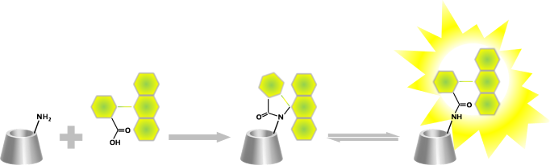
- can reversibly cyclize. In this context we report a green approach for the synthesis of switchable xanthene-dye-appended cyclodextrins based on the coupling agent 4-(4,6-dimethoxy-1,3,5-triazin-2-yl)-4-methylmorpholinium chloride (DMT-MM). By using 6-monoamino-β-cyclodextrin and commercially available
- supramolecular assembly of the xanthene-dye-appended cyclodextrins were developed based on the set of data collected by the extensive NMR characterization. Keywords: DMT-MM; fluorescein; rhodamine; supramolecular assembly; Introduction Cyclodextrins (CDs) are cyclic oligosaccharides consisting of 6, 7 or 8
- of the dye because of the laborious purification process. In order to reduce cost, one approach is to perform the condensation reaction that leads to the formation of the xanthene dyes by using previously functionalized reagents [7]. This approach is difficult to generalize and does not involve a


Copper-mediated arylation with arylboronic acids: Facile and modular synthesis of triarylmethanes
Beilstein J. Org. Chem. 2016, 12, 496–504, doi:10.3762/bjoc.12.49
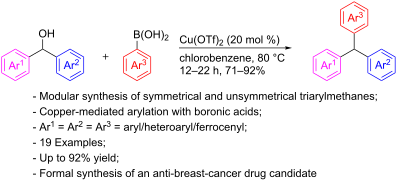
- triarylmethane motif are ubiquitous and found mainly in technologically and medicinally relevant molecules like dyes [6][7][8][9], pH indicators [10][11][12], fluorescent probes [13][14][15][16][17][18] and antibacterial drugs [19]. For example, malachite green (1) is a dye, cresol red (2) is a pH indicator and


Enabling technologies and green processes in cyclodextrin chemistry
Beilstein J. Org. Chem. 2016, 12, 278–294, doi:10.3762/bjoc.12.30
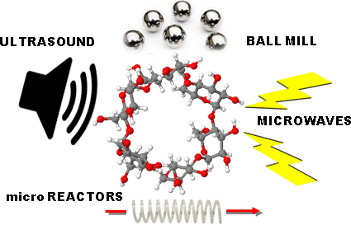
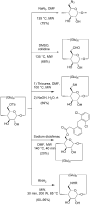
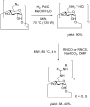
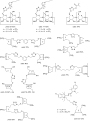
- entrance via confocal laser scanning microscopy [30]. Several types of dye moiety/CD derivatives have been suggested as "switch on" or "switch off" fluorescent chemical sensors. In these systems, the complexation with a guest molecule allows to enhance or decrease the fluorescence intensity. Two water
- in Scheme 10: CD-acryloyl derivative [60][61], β-CD/dye derivatives [31][62][63][64], CD-ionic liquid hybrids [65][66], CD-based iminosugar conjugates [67], water-soluble CD homo- and heterodimers [68][69], trimers [70][71] and oligomers [72] of α-, β- and γ-CD have all been successfully produced



Determination of formation constants and structural characterization of cyclodextrin inclusion complexes with two phenolic isomers: carvacrol and thymol
Beilstein J. Org. Chem. 2016, 12, 29–42, doi:10.3762/bjoc.12.5
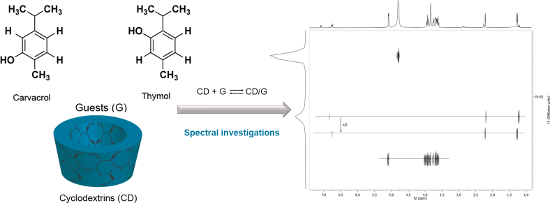
- inclusion complexes were determined by an UV–visible competitive method (or spectral displacement method) using the azo dye competitor MO [34]. This method requires a previous determination of Kf values of CD/MO inclusion complexes by a direct titration method. The competitive method was applied by adding 1




Bright molecules for sensing, computing and imaging: a tale of two once-troubled cities
Beilstein J. Org. Chem. 2015, 11, 2774–2784, doi:10.3762/bjoc.11.298
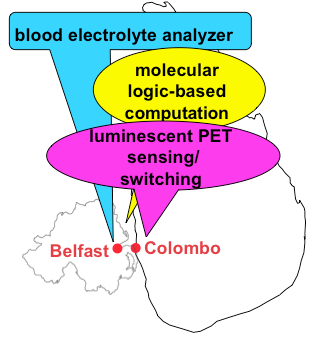
- naturally harnesses the diversity available in each of the three modules. For instance, the lumophore could be a fluorescent dye [3][24], a room temperature phosphor [25][26], or a lanthanide-based emitter [27][28]. Colleagues showed that even a quantum dot [29] would fit the bill. The receptor could be an







Smart molecules for imaging, sensing and health (SMITH)
Beilstein J. Org. Chem. 2015, 11, 2540–2548, doi:10.3762/bjoc.11.274
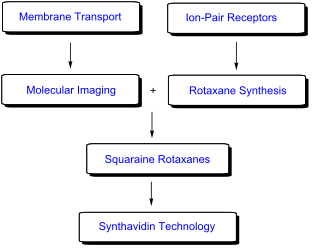
- nanomolar dissociation constants. The rate of macrocycle threading is insensitive to the length of the appended PEG chains. But the threading kinetics are greatly affected by the steric size of the second N-substituent at each end of the squaraine dye, and an N-propyl group produces a perfect mixture of
- kinetic and thermodynamic properties. The nanomolar affinity in water is exceptionally strong for a synthetic cyclophane host molecule, and it is driven by a large favorable change in enthalpy. The two oxygen atoms on the encapsulated squaraine dye form hydrogen bonds to the four macrocycle NH residues
- bacterial cells stained with fluorescent ZnDPA probe. (left) General structure of a squaraine rotaxane dye. (right) Fluorescence image of a living mouse dosed with a squaraine rotaxane probe that selectively targets bone. Reprinted with permission from [37]. Copyright (2013) American Chemical Society. The


Continuous formation of N-chloro-N,N-dialkylamine solutions in well-mixed meso-scale flow reactors
Beilstein J. Org. Chem. 2015, 11, 2408–2417, doi:10.3762/bjoc.11.262
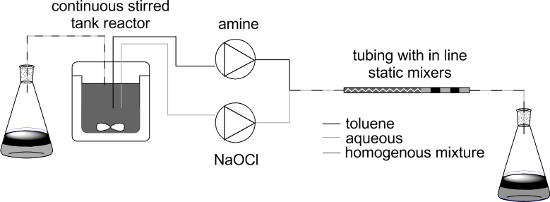
- inch ID, 3/16 inch OD) along the flow channel (Figure 2). The length of the reactor and number of static mixer inserts were adjusted to vary the residence time, thus maintaining sufficient flow rate to give effective mixing. Initial experiments using toluene and an aqueous dye were used to assess


Biocatalysis for the application of CO2 as a chemical feedstock
Beilstein J. Org. Chem. 2015, 11, 2370–2387, doi:10.3762/bjoc.11.259
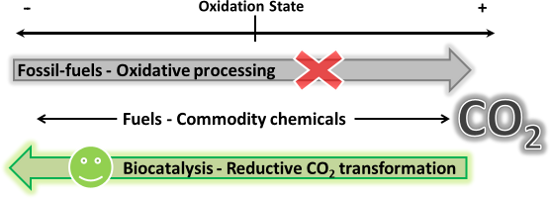
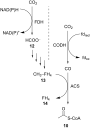
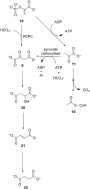
- CODH and photosensitised with a Ru dye to catalyse the reduction of CO2 using visible light. Further to this, the reported ability of a V-dependent nitrogenase to slowly reduce CO to various small-chain hydrocarbons holds much promise for the development of enzymatic processes to further transform CO






Preparation of Pickering emulsions through interfacial adsorption by soft cyclodextrin nanogels
Beilstein J. Org. Chem. 2015, 11, 2355–2364, doi:10.3762/bjoc.11.257
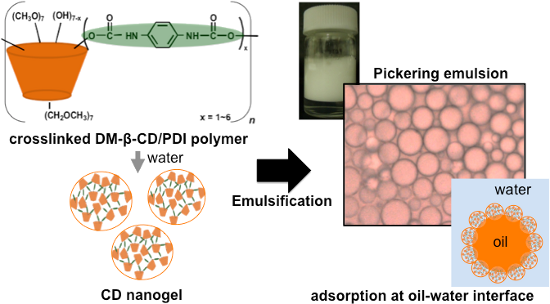
- hydrophilic DM-β-CD and lipophilic benzene parts, may be affected by their hydrophilic and lipophilic balance of the nanogels. Identification of the CD nanogel assembly at the interface Adsorption of a CD nanogel at the oil–water interface in the emulsion phase was identified using a fluorescent dye-labeling





