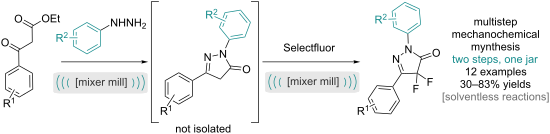
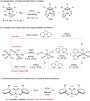
Search for "multistep" in Full Text gives 294 result(s) in Beilstein Journal of Organic Chemistry. Showing first 200.
Beilstein J. Org. Chem. 2017, 13, 1907–1931, doi:10.3762/bjoc.13.186
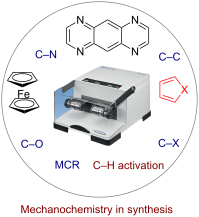
Graphical Abstract
Scheme 1: Mechanochemical aldol condensation reactions [48].
Scheme 2: Enantioselective organocatalyzed aldol reactions under mechanomilling. a) Based on binam-(S)-prolin...
Scheme 3: Mechanochemical Michael reaction [51].
Scheme 4: Mechanochemical organocatalytic asymmetric Michael reaction [52].
Scheme 5: Mechanochemical Morita–Baylis–Hillman (MBH) reaction [53].
Scheme 6: Mechanochemical Wittig reactions [55].
Scheme 7: Mechanochemical Suzuki reaction [56].
Scheme 8: Mechanochemical Suzuki–Miyaura coupling by LAG [57].
Scheme 9: Mechanochemical Heck reaction [59].
Scheme 10: a) Sonogashira coupling under milling conditions. b) The representative example of a double Sonogas...
Scheme 11: Copper-catalyzed CDC reaction under mechanomilling [67].
Scheme 12: Asymmetric alkynylation of prochiral sp3 C–H bonds via CDC [68].
Scheme 13: Fe(III)-catalyzed CDC coupling of 3-benzylindoles [69].
Scheme 14: Mechanochemical synthesis of 3-vinylindoles and β,β-diindolylpropionates [70].
Scheme 15: Mechanochemical C–N bond construction using anilines and arylboronic acids [78].
Scheme 16: Mechanochemical amidation reaction from aromatic aldehydes and N-chloramine [79].
Scheme 17: Mechanochemical CDC between benzaldehydes and benzyl amines [81].
Scheme 18: Mechanochemical protection of -NH2 and -COOH group of amino acids [85].
Scheme 19: Mechanochemical Ritter reaction [87].
Scheme 20: Mechanochemical synthesis of dialkyl carbonates [90].
Scheme 21: Mechanochemical transesterification reaction using basic Al2O3 [91].
Scheme 22: Mechanochemical carbamate synthesis [92].
Scheme 23: Mechanochemical bromination reaction using NaBr and oxone [96].
Scheme 24: Mechanochemical aryl halogenation reactions using NaX and oxone [97].
Scheme 25: Mechanochemical halogenation reaction of electron-rich arenes [88,98].
Scheme 26: Mechanochemical aryl halogenation reaction using trihaloisocyanuric acids [100].
Scheme 27: Mechanochemical fluorination reaction by LAG method [102].
Scheme 28: Mechanochemical Ugi reaction [116].
Scheme 29: Mechanochemical Passerine reaction [116].
Scheme 30: Mechanochemical synthesis of α-aminonitriles [120].
Scheme 31: Mechanochemical Hantzsch pyrrole synthesis [121].
Scheme 32: Mechanochemical Biginelli reaction by subcomponent synthesis approach [133].
Scheme 33: Mechanochemical asymmetric multicomponent reaction[134].
Scheme 34: Mechanochemical Paal–Knorr pyrrole synthesis [142].
Scheme 35: Mechanochemical synthesis of benzothiazole using ZnO nano particles [146].
Scheme 36: Mechanochemical synthesis of 1,2-di-substituted benzimidazoles [149].
Scheme 37: Mechanochemical click reaction using an alumina-supported Cu-catalyst [152].
Scheme 38: Mechanochemical click reaction using copper vial [155].
Scheme 39: Mechanochemical indole synthesis [157].
Scheme 40: Mechanochemical synthesis of chromene [158].
Scheme 41: Mechanochemical synthesis of azacenes [169].
Scheme 42: Mechanochemical oxidative C-P bond formation [170].
Scheme 43: Mechanochemical C–chalcogen bond formation [171].
Scheme 44: Solvent-free synthesis of an organometallic complex.
Scheme 45: Selective examples of mechano-synthesis of organometallic complexes. a) Halogenation reaction of Re...
Scheme 46: Mechanochemical activation of C–H bond of unsymmetrical azobenzene [178].
Scheme 47: Mechanochemical synthesis of organometallic pincer complex [179].
Scheme 48: Mechanochemical synthesis of tris(allyl)aluminum complex [180].
Scheme 49: Mechanochemical Ru-catalyzed olefin metathesis reaction [181].
Scheme 50: Rhodium(III)-catalyzed C–H bond functionalization under mechanochemical conditions [182].
Scheme 51: Mechanochemical Csp2–H bond amidation using Ir(III) catalyst [183].
Scheme 52: Mechanochemical Rh-catalyzed Csp2–X bond formation [184].
Scheme 53: Mechanochemical Pd-catalyzed C–H activation [185].
Scheme 54: Mechanochemical Csp2–H bond amidation using Rh catalyst.
Scheme 55: Mechanochemical synthesis of indoles using Rh catalyst [187].
Scheme 56: Mizoroki–Heck reaction of aminoacrylates with aryl halide in a ball-mill [58].
Scheme 57: IBX under mechanomilling conditions [8].
Scheme 58: Thiocarbamoylation of anilines; trapping of reactive aryl-N-thiocarbamoylbenzotriazole intermediate...
Beilstein J. Org. Chem. 2017, 13, 1478–1485, doi:10.3762/bjoc.13.146
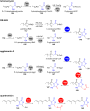
Graphical Abstract
Scheme 1: Our strategy for the concise synthesis of 2,4,5-trisubstituted oxazoles.
Scheme 2: Synthesis of DMPOPOP.
Beilstein J. Org. Chem. 2017, 13, 1310–1315, doi:10.3762/bjoc.13.127
Graphical Abstract
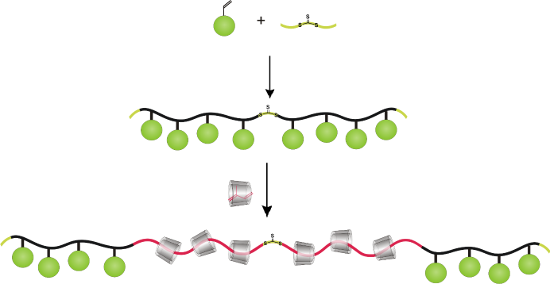
Scheme 1: Synthesis route of RAMEB based statistical polyrotaxane.
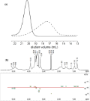
Figure 1: (a) GPC trace of the polyHEMA-co-polyisoprene polyrotaxane 1 and (b) 500 MHz 1H NMR and DOSY spectr...
Scheme 2: Schematic representation of the synthetic procedure for the preparation of randomly methylated β-CD...
Figure 2: (a) GPC traces of the macroCTA 5 (solid line) and the poly(TRIS-AAm)-b-polyisoprene-b-poly(TRIS-AAm...
Beilstein J. Org. Chem. 2017, 13, 1239–1279, doi:10.3762/bjoc.13.123
Graphical Abstract
Scheme 1: Solution-state conformations of D-glucose.
Scheme 2: Enzymatic synthesis of oligosaccharides.
Scheme 3: Enzymatic synthesis of a phosphorylated glycoprotein containing a mannose-6-phosphate (M6P)-termina...
Scheme 4: A) Selected GTs-mediated syntheses of oligosaccharides and other biologically active glycosides. B)...
Scheme 5: Enzymatic synthesis of nucleosides.
Scheme 6: Fischer glycosylation strategies.
Scheme 7: The basis of remote activation (adapted from [37]).
Scheme 8: Classic remote activation employing a MOP donor to access α-anomeric alcohols, carboxylates, and ph...
Figure 1: Synthesis of monoprotected glycosides from a (3-bromo-2-pyridyloxy) β-D-glycopyranosyl donor under ...
Scheme 9: Plausible mechanism for the synthesis of α-galactosides. TBDPS = tert-butyldiphenylsilyl.
Scheme 10: Synthesis of the 6-O-monoprotected galactopyranoside donor for remote activation.
Scheme 11: UDP-galactopyranose mutase-catalyzed isomerization of UDP-Galp to UDP-Galf.
Scheme 12: Synthesis of the 1-thioimidoyl galactofuranosyl donor.
Scheme 13: Glycosylation of MeOH using a self-activating donor in the absence of an external activator. a) Syn...
Scheme 14: The classical Lewis acid-catalyzed glycosylation.
Figure 2: Unprotected glycosyl donors used for the Lewis acid-catalyzed protecting group-free glycosylation r...
Scheme 15: Four-step synthesis of the phenyl β-galactothiopyranosyl donor.
Scheme 16: Protecting-group-free C3′-regioselective glycosylation of sucrose with α–F Glc.
Scheme 17: Synthesis of the α-fluoroglucosyl donor.
Figure 3: Protecting-group-free glycosyl donors and acceptors used in the Au(III)-catalyzed glycosylation.
Scheme 18: Synthesis of the mannosyl donor used in the study [62].
Scheme 19: The Pd-catalyzed stereoretentive glycosylation of arenes using anomeric stannane donors.
Scheme 20: Preparation of the protecting-group-free α and β-stannanes from advanced intermediates for stereoch...
Figure 4: Selective anomeric activating agents providing donors for direct activation of the anomeric carbon.
Scheme 21: One-step access to sugar oxazolines or 1,6-anhydrosugars.
Scheme 22: Enzymatic synthesis of a chitoheptaose using a mutant chitinase.
Scheme 23: One-pot access to glycosyl azides [73], dithiocarbamates [74], and aryl thiols using DMC activation and sub...
Scheme 24: Plausible reaction mechanism.
Scheme 25: Protecting-group-free synthesis of anomeric thiols from unprotected 2-deoxy-2-N-acetyl sugars.
Scheme 26: Protein conjugation of TTL221-PentK with a hyaluronan hexasaccharide thiol.
Scheme 27: Proposed mechanism.
Scheme 28: Direct two-step one-pot access to glycoconjugates through the in situ formation of the glycosyl azi...
Scheme 29: DMC as a phosphate-activating moiety for the synthesis of diphosphates. aβ-1,4-galactose transferas...
Figure 5: Triazinylmorpholinium salts as selective anomeric activating agents.
Scheme 30: One-step synthesis of DBT glycosides from unprotected sugars in aqueous medium.
Scheme 31: Postulated mechanism for the stereoselective formation of α-glycosides.
Scheme 32: DMT-donor synthesis used for metal-catalyzed glycosylation of simple alcohols.
Figure 6: Protecting group-free synthesis of glycosyl sulfonohydrazides (GSH).
Figure 7: The use of GSHs to access 1-O-phosphoryl and alkyl glycosides. A) Glycosylation of aliphatic alcoho...
Scheme 33: A) Proposed mechanism of glycosylation. B) Proposed mechanism for stereoselective azidation of the ...
Scheme 34: Mounting GlcNAc onto a sepharose solid support through a GSH donor.
Scheme 35: Lawesson’s reagent for the formation of 1,2-trans glycosides.
Scheme 36: Protecting-group-free protein conjugation via an in situ-formed thiol glycoside [98].
Scheme 37: pH-Specific glycosylation to functionalize SAMs on gold.
Figure 8: Protecting-group-free availability of phenolic glycosides under Mitsunobu conditions. DEAD = diethy...
Scheme 38: Accessing hydroxyazobenzenes under Mitsunobu conditions for the study of photoswitchable labels. DE...
Scheme 39: Stereoselective protecting-group-free glycosylation of D-glucose to provide the β-glucosyl benzoic ...
Figure 9: Direct synthesis of pyranosyl nucleosides from unactivated and unprotected ribose using optimized M...
Figure 10: Direct synthesis of furanosyl nucleosides from 5-O-monoprotected ribose in a one-pot glycosylation–...
Figure 11: Synthesis of ribofuranosides using a monoprotected ribosyl donor via an anhydrose intermediate.
Figure 12: C5′-modified nucleosides available under our conditions.
Scheme 40: Plausible reaction mechanism for the formation of the anhydrose.
Figure 13: Direct glycosylation of several aliphatic alcohols using catalytic Ti(Ot-Bu)4 in the presence of D-...
Figure 14: Access to glycosides using catalytic PPh3 and CBr4.
Figure 15: Access to ribofuranosyl glycosides as the major product under catalytic conditions. aLiOCl4 (2.0 eq...
Beilstein J. Org. Chem. 2017, 13, 1106–1118, doi:10.3762/bjoc.13.110
Graphical Abstract
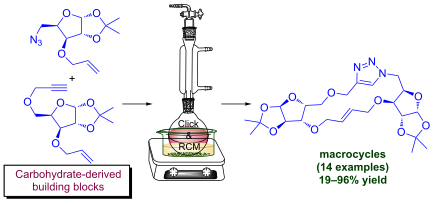
Figure 1: Build-couple-pair (B/C/P) strategy for macrocycles.
Figure 2: Different building blocks used for DOS.
Scheme 1: Cycloaddition reaction of alkyne-azide building block.
Scheme 2: Acetylation of macrocycle 4m.
Beilstein J. Org. Chem. 2017, 13, 960–987, doi:10.3762/bjoc.13.97
Graphical Abstract
Figure 1: A number of experiments for various optimization algorithms [46].
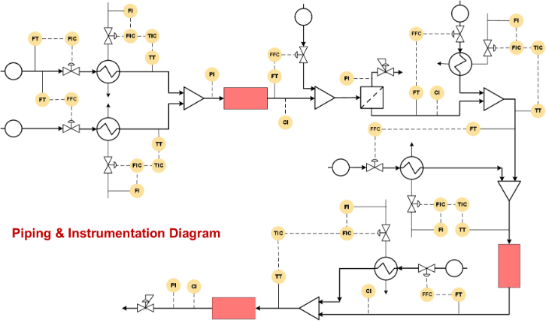
Figure 2: Symbols used for block and P&ID diagrams.
Scheme 1: Multistep synthesis of olanzapine (Hartwig et al. [10])
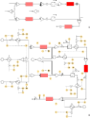
Figure 3: (A) Block diagram representation of the process shown in Scheme 1, (B) piping and instrumentation diagram o...
Scheme 2: Multistep flow synthesis for tamoxifen (Murray et al. [11]).
Figure 4: (A) Block diagram representation of the process shown in Scheme 2, (B) piping and instrumentation diagram o...
Figure 5: (A) Block diagram representation of the process shown in Scheme 3, (B) piping and instrumentation diagram o...
Scheme 3: Multistep flow synthesis of rufinamide (Zhang et al. [14]).
Figure 6: (A) Block diagram representation of the process shown in Scheme 4, (B) piping and instrumentation diagram o...
Scheme 4: Multistep synthesis for (±)-Oxomaritidine (Baxendale et al. [9]).
Figure 7: (A) Block diagram representation of the process shown in Scheme 5, (B) piping and instrumentation diagram o...
Scheme 5: Multistep synthesis for ibuprofen (Snead and Jamison [60]).
Scheme 6: Multistep synthesis for cinnarizine and buclizine derivatives (Borukhova et al. [23])
Figure 8: (A) Block diagram representation of the process shown in Scheme 6, (B) piping and instrumentation diagram o...
Scheme 7: Multistep synthesis for (S)-rolipram (Tsubogo et al. [4])
Figure 9: (A) Block diagram representation of the process shown in Scheme 7 (colours for each reactor shows different...
Figure 10: (A) Block diagram representation of the process shown in Scheme 8, (B) piping and instrumentation diagram o...
Scheme 8: Multistep synthesis for amitriptyline (Kupracz and Kirschning [7]).
Beilstein J. Org. Chem. 2017, 13, 806–816, doi:10.3762/bjoc.13.81
Graphical Abstract
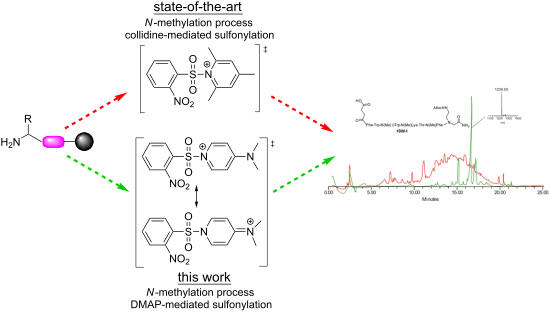
Figure 1: Collidine-assisted vs DMAP-assisted N-methylation process on solid support. (A) Collidine-assisted ...
Figure 2: Motifs 1–5 were used as models for the optimization of the N-methylation process. i) Introduction o...
Figure 3: Sulfonylation optimization study. HPLC trace overlay that shows the sulfonylation of motif 4 to yie...
Figure 4: DFT calculations for the reaction of o-NBS-Cl with a) collidine and b) DMAP. The structure of the r...
Figure 5: Methylation of motif 3a to 3b using various reaction conditions. HPLC trace overlay presents the ef...
Figure 6: Optimization of o-NBS removal reaction conditions demonstrated on motif 5b. HPLC trace overlay of i...
Figure 7: HPLC trace overlay and MS analysis of the somatostatin analogue, 1SW-1, which was Nα-methylated on ...
Beilstein J. Org. Chem. 2017, 13, 768–778, doi:10.3762/bjoc.13.76
Graphical Abstract
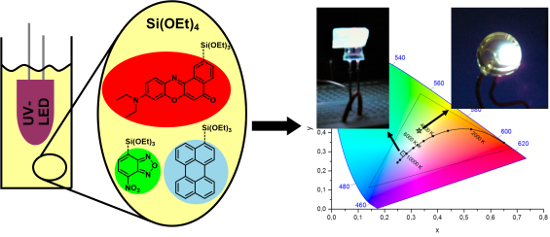
Scheme 1: Synthesis of the triethoxysilyl-functionalized dye precursors 8, 9, and 10.
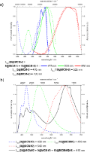
Figure 1: Absorption (a) and emission (b) spectra of perylene 9, benzofurazane 10, and Nile red precursors 8 ...
Figure 2: CIE 1931 color space chromaticity diagram (2° observer) with the CIE chromaticity coordinates of th...
Figure 3: Number of molecules per 100 nm² and quantum yields of 8@MCM in relation to the loading of hybrid ma...
Figure 4: Solid-state fluorescence quantum yields Φf of grafted hybrid materials in relation to the calculate...
Figure 5: CIE 1931 color space chromaticity diagram (2° observer) with the color space accessible by mixing t...
Figure 6: a) Suspensions of the dye-functionalized silica hybrid materials 8@MCM-3, 9@MCM-3, and 10@MCM-6 as ...
Figure 7: a) Excitation and b) emission spectra of the single dye-functionalized hybrid materials 8@MCM-2, 9@...
Figure 8: Emission spectra of blend [8@MCM-2 + 9@MCM-3 + 10@MCM-6]-1 at different excitation wavelengths (2nd...
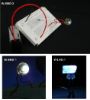
Figure 9: Coating of the a) conventional diode setup and b) surface-mounted device (SMD) (left: prior to the ...
Figure 10: Pictures of the coated LEDs in compact device set-up (SMD) and conventional diode design (LED).
Figure 11: CIE chromaticity coordinates of the coated LEDs in compact device set-up (SMD) and conventional dio...
Beilstein J. Org. Chem. 2017, 13, 589–611, doi:10.3762/bjoc.13.58

Graphical Abstract
Figure 1: Examples of drugs bearing phenol or aryl thiol as central structural motifs.
Scheme 1: Hydroxylation of aryl halides using biphenylphosphine as ligand.
Scheme 2: Hydroxylation of aryl halides using tert-butylphosphine as ligand.
Scheme 3: Hydroxylation of aryl halides using imidazole typed phosphine ligands.
Scheme 4: [Pd(cod)(CH2SiMe3)2] catalyzed hydroxylation of aryl halides.
Scheme 5: Pd/PANI catalyzed hydroxylation of hydroxylation of aryl halides.
Scheme 6: MCM-41-dzt-Pd catalyzed hydroxylation of aryl halides.
Scheme 7: Hydroxylation of aryl halides using dibenzoylmethane as ligand.
Scheme 8: Hydroxylation of aryl halides using 2,2’-bipyridine as ligand.
Scheme 9: Hydroxylation of aryl bromides using imidazolyl pyridine as ligand.
Scheme 10: Hydroxylation of aryl halides using DMEDA as ligand.
Scheme 11: Hydroxylation of aryl halides using PAO as ligand.
Scheme 12: Hydroxylation of aryl halides using D-glucose as ligand.
Scheme 13: Hydroxylation of aryl halides using INDION-770 as ligand.
Scheme 14: PEG-400 mediated hydroxylation of aryl halides.
Scheme 15: Hydroxylation of aryl halides using glycolic acid as ligand.
Scheme 16: Hydroxylation of aryl halides using L-sodium ascorbate as ligand.
Scheme 17: Difunctionalized ethanes mediated hydroxylation of aryl iodides.
Scheme 18: Hydroxylation of aryl halides using 2-methyl-8-hydroxylquinoline as ligand.
Scheme 19: Hydroxylation of aryl halides using 8-hydroxyquinolin-N-oxide as ligand.
Scheme 20: Hydroxylation of aryl halides using lithium pipecolinate as ligand.
Scheme 21: Hydroxylation of aryl halides using L-lithium prolinate.
Scheme 22: Hydroxylation of aryl halides using triethanolamine as ligand.
Scheme 23: CuI-nanoparticle-catalyzed hydroxylation of aryl halides.
Scheme 24: Cu-g-C3N4-catalyzed hydroxylation of aryl bromides.
Scheme 25: Cu(OAc)2-mediated hydroxylation of (2-pyridyl)arenes.
Scheme 26: Removable pyridine moiety directed hydroxylation of arenes.
Scheme 27: Removable quinoline moiety directed hydroxylation of arenes.
Scheme 28: CuCl2 catalyzed hydroxylation of benzimidazoles and benzoxazoles.
Scheme 29: Disulfide-directed C–H hydroxylation.
Scheme 30: Pd(OAc)2-catalyzed hydroxylation of diarylpyridines.
Scheme 31: PdCl2-catalyzed hydroxylation of 2-arylpyridines.
Scheme 32: PdCl2-catalyzed hydroxylation of 2-arylpyridines.
Scheme 33: Pd(OAc)2-catalyzed hydroxylation of 2-arylpyridines.
Scheme 34: Pd(CH3CN)2Cl2-catalyzed hydroxylation of 2-arylpyridines.
Scheme 35: Pd(OAc)2-catalyzed hydroxylation of benzothiazolylarenes.
Scheme 36: Pd(OAc)2 catalyzed hydroxylation of benzimidazolylarenes.
Scheme 37: Dioxane mediated hydroxylation of 2-heteroarylarenes.
Scheme 38: Hydroxylation of oxime methyl ester.
Scheme 39: CN-directed meta-hydroxylation.
Scheme 40: Pd(OAc)2-catalyzed hydroxylation of benzoic acids.
Scheme 41: Pd(OAc)2-catalyzed hydroxylation of biaryl or aryl alkyl ketones.
Scheme 42: Pd(OAc)2 and Pd(TFA)2 catalyzed hydroxylation of aryl ketones.
Scheme 43: Pd(OAc)2 catalyzed hydroxylation of aryl ketones.
Scheme 44: Pd(TFA)2-catalyzed hydroxylation of aryl phosphonates.
Scheme 45: Hydroxy group directed hydroxylation.
Scheme 46: [Ru(O2CMes)2(p-cymene)] catalyzed hydroxylation of benzamides and aryl ketones.
Scheme 47: [RuCl2(p-cymene)]2-catalyzed hydroxylation of benzamides and carbamates.
Scheme 48: [RuCl2(p-cymene)]2 catalyzed hydroxylation of benzaldehydes.
Scheme 49: [RuCl2(p-cymene)]2 catalyzed hydroxylation of ethyl benzoates, benzamides and carbamates.
Scheme 50: Different regioselective ortho-hydroxylation.
Scheme 51: Ruthenium-complex-catalyzed hydroxylation of flavones.
Scheme 52: Vanadium-catalyzed hydroxylation of arenes.
Scheme 53: VOSiW-catalyzed hydroxylation of arenes.
Scheme 54: Synthesis of aryl thiols using thiourea as thiol source.
Scheme 55: Synthesis of aryl thiols using alkyl thiol as thiol source.
Scheme 56: Synthesis of 1-thionaphthol using HS-TIPS as thiol source.
Scheme 57: Synthesis of aryl thiols using sodium thiosulfate as thiol source.
Scheme 58: Synthesis of thiophenol using thiobenzoic acid as thiol source.
Scheme 59: Synthesis of aryl thiols using sulfur powder as thiol source.
Scheme 60: CuI-nanoparticles catalyzed synthesis of aryl thiols.
Scheme 61: Synthesis of aryl thiols using Na2S·5H2O as thiol source.
Scheme 62: Synthesis of aryl thiols using 1,2-ethanedithiol as thiol source.
Beilstein J. Org. Chem. 2017, 13, 520–542, doi:10.3762/bjoc.13.51
Graphical Abstract
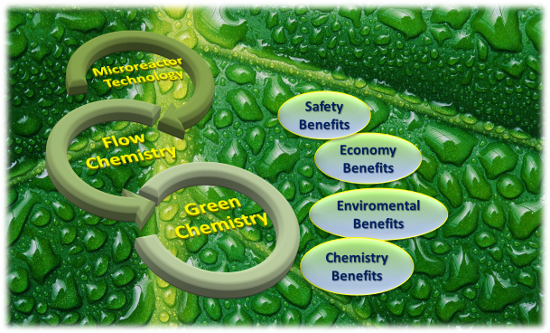
Figure 1: Microreactor technologies and flow chemistry for a sustainable chemistry.
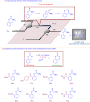
Scheme 1: A flow microreactor system for the generation and trapping of highly unstable carbamoyllithium spec...
Scheme 2: Flow synthesis of functionalized α-ketoamides.
Scheme 3: Reactions of benzyllithiums.
Scheme 4: Trapping of benzyllithiums bearing carbonyl groups enabled by a flow microreactor. (Adapted with pe...
Scheme 5: External trapping of chloromethyllithium in a flow microreactor system.
Scheme 6: Scope for the direct tert-butoxycarbonylation using a flow microreactor system.
Scheme 7: Control of anionic Fries rearrangement reactions by using submillisecond residence time. (Adapted w...
Figure 2: Chip microreactor (CMR) fabricated with six layers of polyimide films. (Reproduced with permission ...
Scheme 8: Flow microreactor system for lithiation, borylation, Suzuki–Miyaura coupling and selected examples ...
Scheme 9: Experimental setup for the flow synthesis of 2-fluorobi(hetero)aryls by directed lithiation, zincat...
Scheme 10: Experimental setup for the coupling of fluoro-substituted pyridines. (Adapted with permission from [53]...
Scheme 11: Continuous flow process setup for the preparation of 11 (Reproduced with permission from [54], copyrigh...
Scheme 12: Continuous-flow photocatalytic oxidation of thiols to disulfides.
Scheme 13: Trifluoromethylation by continuous-flow photoredox catalysis.
Scheme 14: Flow photochemical synthesis of 6(5H)-phenanthridiones from 2-chlorobenzamides.
Scheme 15: Synthesis of biaryls 14a–g under photochemical flow conditions.
Scheme 16: Flow oxidation of hydrazones to diazo compounds.
Scheme 17: Synthetic use of flow-generated diazo compounds.
Scheme 18: Ley’s flow approach for the generation of diazo compounds.
Scheme 19: Iterative strategy for the sequential coupling of diazo compounds.
Scheme 20: Integrated synthesis of Bakuchiol precursor via flow-generated diazo compounds.
Scheme 21: Kappe’s continuous-flow reduction of olefines with diimide.
Scheme 22: Multi-injection setup for the reduction of artemisinic acid.
Scheme 23: Flow reactor system for multistep synthesis of (S)-rolipram. Pumps are labelled a, b, c, d and e; L...
Figure 3: Reconfigurable modules and flowcharts for API synthesis. (Reproduced with permission from [85], copyrig...
Figure 4: Reconfigurable system for continuous production and formulation of APIs. (Reproduced with permissio...
Beilstein J. Org. Chem. 2017, 13, 372–383, doi:10.3762/bjoc.13.40
Graphical Abstract
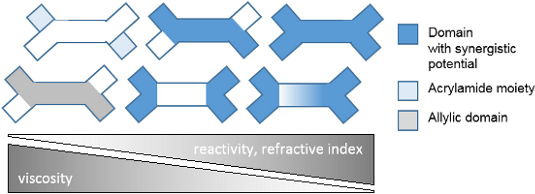
Scheme 1: Top: Overview of the synthesized crosslinkers 1–6 and their correlation to each other via formal re...
Scheme 2: Synthetic pathways to structurally related compounds 1–6.
Scheme 3: Byproducts 8a and 9a.
Scheme 4: Synthetic pathways towards the planned cis-intermediate 19.
Scheme 5: Comparison of structural elements of 1–6 in the 1H NMR spectra (400 MHz).
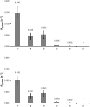
Figure 1: Refractive indices (RI) and viscosities (η) of crosslinkers 1–6 (* solid at room temperature).
Figure 2: Exemplary photo-DSC plots for the curing of 1 and 3–6 at 37 °C.
Figure 3: tmax for the curing of 1 and 3–6 at 37 °C (* no polymerization heat detected).
Figure 4: Rp, max for the curing of 1–6 at 37 °C for a) top: ∆Hp of allyl groups = 87.5 kJ·mol−1 and b) botto...
Figure 5: Polymerization heat, ∆Hp for the curing of 1–6 at 37 °C (* no polymerization heat detected).
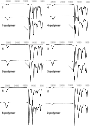
Figure 6: FTIR spectra of 1–6 before (top) and after (bottom) curing; the arrows indicate emerging, character...
Scheme 6: Proposed reaction pathways for the intramolecular propagation within 1.
Figure 7: Flexural strength (FS) and E-modulus of cured crosslinkers 1–6; letters refer to statistical groups...
Beilstein J. Org. Chem. 2017, 13, 303–312, doi:10.3762/bjoc.13.33
Graphical Abstract
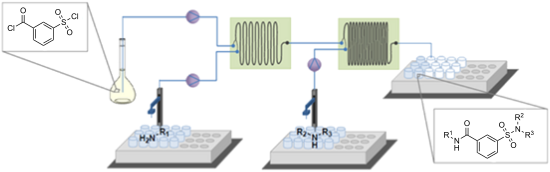
Figure 1: m-Sulfamoylbenzamides as Sirtuin 2 inhibitors (SIRT2) or suppressor of polyglutamine aggregation (p...
Figure 2: Syrris AFRICA system.
Beilstein J. Org. Chem. 2017, 13, 239–246, doi:10.3762/bjoc.13.26
Graphical Abstract
Scheme 1: In-flask (batch) preparation of imidazo[1,2-a]pyridin-2-yl-1,2,4-oxadiazoles (S1P1 agonists) [27].
Scheme 2: Gram-scale synthesis of mGlu5 NAM by continuous flow in combination with microfluidic extraction.
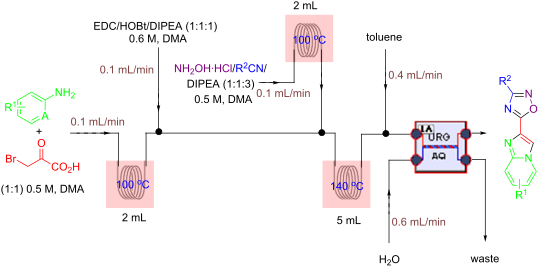
Scheme 3: Gram-scale synthesis of imidazo[1,2-a]pyridin-2-yl-1,2,4-oxadiazole S1P1 agonist scaffold by contin...
Beilstein J. Org. Chem. 2016, 12, 2748–2756, doi:10.3762/bjoc.12.271
Graphical Abstract
Scheme 1: Multiple O-trimethylsilylations of saccharide compounds.
Beilstein J. Org. Chem. 2016, 12, 2222–2233, doi:10.3762/bjoc.12.214
Graphical Abstract
Figure 1: Chemical structures of bioactive substrates and their partition in subsets.
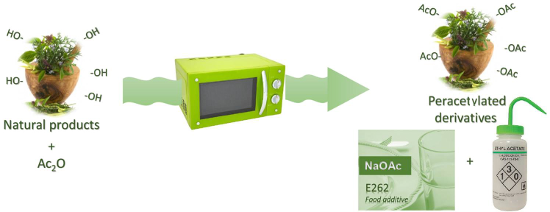
Scheme 1: Solvent-free and catalyst-free MW-assisted acetylation protocol.
Figure 2: MW-assisted acetylation T-program for different subset of substrates.
Figure 3: LCHRMS (m/z, [M + Na]+ and [M − H]− only for entry F) spectrum of O-acetylated quercetin (reaction ...
Beilstein J. Org. Chem. 2016, 12, 2055–2064, doi:10.3762/bjoc.12.194
Graphical Abstract
Figure 1: Thienyl-bridged oligophenothiazines as topological hybrids of (oligo)phenothiazines and 2,5-di(hete...
Scheme 1: One-pot bromine-lithium-exchange-borylation-Suzuki (BLEBS) synthesis of 7-bromo-substituted phenoth...
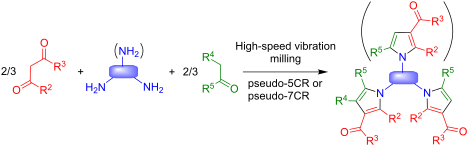
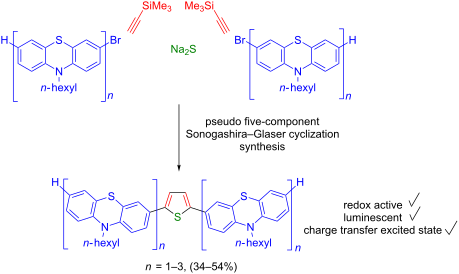
Scheme 2: Pseudo five-component Sonogashira-Glaser-cyclization synthesis of thienyl-bridged oligophenothiazin...
Figure 2: Cyclic voltammograms of compounds 3 (recorded in CH2Cl2, T = 293 K, electrolyte n-Bu4N+PF6−, Pt wor...
Figure 3: UV–vis (solid lines) and fluorescence spectra (dashed lines) of the thienyl-bridged oligophenothiaz...
Figure 4: DFT-calculated minimum conformer of the 2,5-bis(terphenothiazinyl)thiophene 3c (calculated with the...
Figure 5: Relevant Kohn–Sham FMOs contributing to the S1 states that are assigned to the longest wavelengths ...
Beilstein J. Org. Chem. 2016, 12, 1647–1748, doi:10.3762/bjoc.12.162
Graphical Abstract
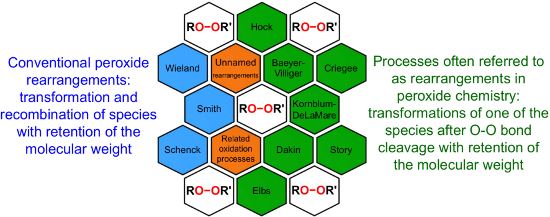
Figure 1: The named transformations considered in this review.
Scheme 1: The Baeyer–Villiger oxidation.
Scheme 2: The general mechanism of the peracid-promoted Baeyer–Villiger oxidation.
Scheme 3: General mechanism of the Lewis acid-catalyzed Baeyer–Villiger rearrangement.
Scheme 4: The theoretically studied mechanism of the BV oxidation reaction promoted by H2O2 and the Lewis aci...
Scheme 5: Proton movements in the transition states of the Baeyer–Villiger oxidation.
Scheme 6: The dependence of the course of the Baeyer–Villiger oxidation on the type of O–O-bond cleavage in t...
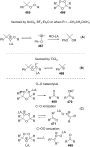
Scheme 7: The acid-catalyzed Baeyer–Villiger oxidation of cyclic epoxy ketones 22.
Scheme 8: Oxidation of isophorone oxide 29.
Scheme 9: Synthesis of acyl phosphate 32 from acyl phosphonate 31.
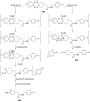
Scheme 10: Synthesis of aflatoxin B2 (36).
Scheme 11: The Baeyer–Villiger rearrangement of ketones 37 to lactones 38.
Scheme 12: Synthesis of 3,4-dimethoxybenzoic acid (40) via Baeyer–Villiger oxidation.
Scheme 13: Oxone transforms α,β-unsaturated ketones 43 into vinyl acetates 44.
Scheme 14: The Baeyer–Villiger oxidation of ketones 45 using diaryl diselenide and hydrogen peroxide.
Scheme 15: Baeyer–Villiger oxidation of (E)-2-methylenecyclobutanones.
Scheme 16: Oxidation of β-ionone (56) by H2O2/(BnSe)2 with formation of (E)-2-(2,6,6-trimethylcyclohex-1-en-1-...
Scheme 17: The mechanism of oxidation of ketones 58a–f by hydrogen peroxide in the presence of arsonated polys...
Scheme 18: Oxidation of ketone (58b) by H2O2 to 6-methylcaprolactone (59b) catalyzed by Pt complex 66·BF4.
Scheme 19: Oxidation of ketones 67 with H2O2 in the presence of [(dppb}Pt(µ-OH)]22+.
Scheme 20: The mechanism of oxidation of ketones 67 in the presence of [(dppb}Pt(µ-OH)]22+ and H2O2.
Scheme 21: Oxidation of benzaldehydes 69 in the presence of the H2O2/MeReO3 system.
Scheme 22: Oxidation of acetophenones 72 in the presence of the H2O2/MeReO3 system.
Scheme 23: Baeyer–Villiger oxidation of 2-adamantanone (45c) in the presence of Sn-containing mesoporous silic...
Scheme 24: Aerobic Baeyer–Villiger oxidation of ketones 76 using metal-free carbon.
Scheme 25: A regioselective Baeyer-Villiger oxidation of functionalized cyclohexenones 78 into a dihydrooxepin...
Scheme 26: The oxidation of aldehydes and ketones 80 by H2O2 catalyzed by Co4HP2Mo15V3O62.
Scheme 27: The cleavage of ketones 82 with hydrogen peroxide in alkaline solution.
Scheme 28: Oxidation of ketones 85 to esters 86 with H2O2–urea in the presence of KHCO3.
Scheme 29: Mechanism of the asymmetric oxidation of cyclopentane-1,2-dione 87a with the Ti(OiPr)4/(+)DET/t-BuO...
Scheme 30: The oxidation of cis-4-tert-butyl-2-fluorocyclohexanone (93) with m-chloroperbenzoic acid.
Scheme 31: The mechanism of the asymmetric oxidation of 3-substituted cyclobutanone 96a in the presence of chi...
Scheme 32: Enantioselective Baeyer–Villiger oxidation of cyclic ketones 98.
Scheme 33: Regio- and enantioselective Baeyer–Villiger oxidation of cyclic ketones 101.
Scheme 34: The proposed mechanism of the Baeyer–Villiger oxidation of acetal 105f.
Scheme 35: Synthesis of hydroxy-10H-acridin-9-one 117 from tetramethoxyanthracene 114.
Scheme 36: The Baeyer–Villiger oxidation of the fully substituted pyrrole 120.
Scheme 37: The Criegee rearrangement.
Scheme 38: The mechanism of the Criegee reaction of a peracid with a tertiary alcohol 122.
Scheme 39: Criegee rearrangement of decaline ethylperoxoate 127 into ketal 128.
Scheme 40: The ionic cleavage of 2-methoxy-2-propyl perester 129.
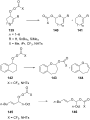
Scheme 41: The Criegee rearrangement of α-methoxy hydroperoxide 136.
Scheme 42: Synthesis of enol esters and acetals via the Criegee rearrangement.
Scheme 43: Proposed mechanism of the transformation of 1-hydroperoxy-2-oxabicycloalkanones 147a–d.
Scheme 44: Transformation of 3-hydroxy-1,2-dioxolanes 151 into diketone derivatives 152.
Scheme 45: Criegee rearrangement of peroxide 153 with the mono-, di-, and tri-O-insertion.
Scheme 46: The sequential Criegee rearrangements of adamantanes 157a,b.
Scheme 47: Synthesis of diaryl carbonates 160a–d from triarylmethanols 159a–d through successive oxygen insert...
Scheme 48: The synthesis of sesquiterpenes 162 from ketone 161 with a Criegee rearrangement as one key step.
Scheme 49: Synthesis of trans-hydrindan derivatives 164, 165.
Scheme 50: The Hock rearrangement.
Scheme 51: The general scheme of the cumene process.
Scheme 52: The Hock rearrangement of aliphatic hydroperoxides.
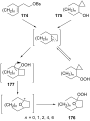
Scheme 53: The mechanism of solvolysis of brosylates 174a–c and spiro cyclopropyl carbinols 175a–c in THF/H2O2....
Scheme 54: The fragmentation mechanism of hydroperoxy acetals 178 to esters 179.
Scheme 55: The acid-catalyzed rearrangement of phenylcyclopentyl hydroperoxide 181.
Scheme 56: The peroxidation of tertiary alcohols in the presence of a catalytic amount of acid.
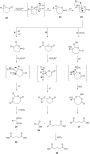
Scheme 57: The acid-catalyzed reaction of bicyclic secondary alcohols 192 with hydrogen peroxide.
Scheme 58: The photooxidation of 5,6-disubstituted 3,4-dihydro-2H-pyrans 196.
Scheme 59: The oxidation of tertiary alcohols 200a–g, 203a,b, and 206.
Scheme 60: Transformation of functional peroxide 209 leading to 2,3-disubstitued furans 210 in one step.
Scheme 61: The synthesis of carbazoles 213 via peroxide rearrangement.
Scheme 62: The construction of C–N bonds using the Hock rearrangement.
Scheme 63: The synthesis of moiety 218 from 217 which is a structural motif in the antitumor–antibiotic of CC-...
Scheme 64: The in vivo oxidation steps of cholesterol (219) by singlet oxygen.
Scheme 65: The proposed mechanism of the rearrangement of cholesterol-5α-OOH 220.
Scheme 66: Photochemical route to artemisinin via Hock rearrangement of 223.
Scheme 67: The Kornblum–DeLaMare rearrangement.
Scheme 68: Kornblum–DeLaMare transformation of 1-phenylethyl tert-butyl peroxide (225).
Scheme 69: The synthesis 4-hydroxyenones 230 from peroxide 229.
Scheme 70: The Kornblum–DeLaMare rearrangement of peroxide 232.
Scheme 71: The reduction of peroxide 234.
Scheme 72: The Kornblum–DeLaMare rearrangement of endoperoxide 236.
Scheme 73: The rearrangement of peroxide 238 under Kornblum–DeLaMare conditions.
Scheme 74: The proposed mechanism of rearrangement of peroxide 238.
Scheme 75: The Kornblum–DeLaMare rearrangement of peroxides 242a,b.
Scheme 76: The base-catalyzed rearrangements of bicyclic endoperoxides having electron-withdrawing substituent...
Scheme 77: The base-catalyzed rearrangements of bicyclic endoperoxides 249a,b having electron-donating substit...
Scheme 78: The base-catalyzed rearrangements of bridge-head substituted bicyclic endoperoxides 251a,b.
Scheme 79: The Kornblum–DeLaMare rearrangement of hydroperoxide 253.
Scheme 80: Synthesis of β-hydroxy hydroperoxide 254 from endoperoxide 253.
Scheme 81: The amine-catalyzed rearrangement of bicyclic endoperoxide 263.
Scheme 82: The base-catalyzed rearrangement of meso-endoperoxide 268 into 269.
Scheme 83: The photooxidation of 271 and subsequent Kornblum–DeLaMare reaction.
Scheme 84: The Kornblum–DeLaMare rearrangement as one step in the oxidation reaction of enamines.
Scheme 85: The Kornblum–DeLaMare rearrangement of 3,5-dihydro-1,2-dioxenes 284, 1,2-dioxanes 286, and tert-but...
Scheme 86: The Kornblum–DeLaMare rearrangement of epoxy dioxanes 290a–d.
Scheme 87: Rearrangement of prostaglandin H2 292.
Scheme 88: The synthesis of epicoccin G (297).
Scheme 89: The Kornblum–DeLaMare rearrangement used in the synthesis of phomactin A.
Scheme 90: The Kornblum–DeLaMare rearrangement in the synthesis of 3H-quinazolin-4-one 303.
Scheme 91: The Kornblum–DeLaMare rearrangement in the synthesis of dolabriferol (308).
Scheme 92: Sequential transformation of 3-substituted 2-pyridones 309 into 3-hydroxypyridine-2,6-diones 311 in...
Scheme 93: The Kornblum–DeLaMare rearrangement of peroxide 312 into hydroxy enone 313.
Scheme 94: The Kornblum–DeLaMare rearrangement in the synthesis of polyfunctionalized carbonyl compounds 317.
Scheme 95: The Kornblum–DeLaMare rearrangement in the synthesis of (Z)-β-perfluoroalkylenaminones 320.
Scheme 96: The Kornblum–DeLaMare rearrangement in the synthesis of γ-ketoester 322.
Scheme 97: The Kornblum–DeLaMare rearrangement in the synthesis of diterpenoids 326 and 328.
Scheme 98: The synthesis of natural products hainanolidol (331) and harringtonolide (332) from peroxide 329.
Scheme 99: The synthesis of trans-fused butyrolactones 339 and 340.
Scheme 100: The synthesis of leucosceptroid C (343) and leucosceptroid P (344) via the Kornblum–DeLaMare rearra...
Scheme 101: The Dakin oxidation of arylaldehydes or acetophenones.
Scheme 102: The mechanism of the Dakin oxidation.
Scheme 103: A solvent-free Dakin reaction of aromatic aldehydes 356.
Scheme 104: The organocatalytic Dakin oxidation of electron-rich arylaldehydes 358.
Scheme 105: The Dakin oxidation of electron-rich arylaldehydes 361.
Scheme 106: The Dakin oxidation of arylaldehydes 358 in water extract of banana (WEB).
Scheme 107: A one-pot approach towards indolo[2,1-b]quinazolines 364 from indole-3-carbaldehydes 363 through th...
Scheme 108: The synthesis of phenols 367a–c from benzaldehydes 366a-c via acid-catalyzed Dakin oxidation.
Scheme 109: Possible transformation paths of the highly polarized boric acid coordinated H2O2–aldehyde adduct 3...
Scheme 110: The Elbs oxidation of phenols 375 to hydroquinones.
Scheme 111: The mechanism of the Elbs persulfate oxidation of phenols 375 affording p-hydroquinones 376.
Scheme 112: Oxidation of 2-pyridones 380 under Elbs persulfate oxidation conditions.
Scheme 113: Synthesis of 3-hydroxy-4-pyridone (384) via an Elbs oxidation of 4-pyridone (382).
Scheme 114: The Schenck rearrangement.
Scheme 115: The Smith rearrangement.
Scheme 116: Three main pathways of the Schenck rearrangement.
Scheme 117: The isomerization of hydroperoxides 388 and 389.
Scheme 118: Trapping of dioxacyclopentyl radical 392 by oxygen.
Scheme 119: The hypothetical mechanism of the Schenck rearrangement of peroxide 394.
Scheme 120: The autoxidation of oleic acid (397) with the use of labeled isotope 18O2.
Scheme 121: The rearrangement of 18O-labeled hydroperoxide 400 under an atmosphere of 16O2.
Scheme 122: The rearrangement of the oleate-derived allylic hydroperoxides (S)-421 and (R)-425.
Scheme 123: Mechanisms of Schenck and Smith rearrangements.
Scheme 124: The rearrangement and cyclization of 433.
Scheme 125: The Wieland rearrangement.
Scheme 126: The rearrangement of bis(triphenylsilyl) 439 or bis(triphenylgermyl) 441 peroxides.
Scheme 127: The oxidative transformation of cyclic ketones.
Scheme 128: The hydroxylation of cyclohexene (447) in the presence of tungstic acid.
Scheme 129: The oxidation of cyclohexene (447) under the action of hydrogen peroxide.
Scheme 130: The reaction of butenylacetylacetone 455 with hydrogen peroxide.
Scheme 131: The oxidation of bridged 1,2,4,5-tetraoxanes.
Scheme 132: The proposed mechanism for the oxidation of bridged 1,2,4,5-tetraoxanes.
Scheme 133: The rearrangement of ozonides.
Scheme 134: The acid-catalyzed oxidative rearrangement of malondialdehydes 462 under the action of H2O2.
Scheme 135: Pathways of the Lewis acid-catalyzed cleavage of dialkyl peroxides 465 and ozonides 466.
Scheme 136: The mechanism of the transformation of (tert-butyldioxy)cyclohexanedienones 472.
Scheme 137: The synthesis of Vitamin K3 from 472a.
Scheme 138: Proposed mechanism for the transformation of 478d into silylated endoperoxide 479d.
Scheme 139: The rearrangement of hydroperoxide 485 to form diketone 486.
Scheme 140: The base-catalyzed rearrangement of cyclic peroxides 488a–g.
Scheme 141: Synthesis of chiral epoxides and aldols from peroxy hemiketals 491.
Scheme 142: The multistep transformation of (R)-carvone (494) to endoperoxides 496a–e.
Scheme 143: The decomposition of anthracene endoperoxide 499.
Scheme 144: Synthesis of esters 503 from aldehydes 501 via rearrangement of peroxides 502.
Scheme 145: Two possible paths for the base-promoted decomposition of α-azidoperoxides 502.
Scheme 146: The Story decomposition of cyclic diperoxide 506a.
Scheme 147: The Story decomposition of cyclic triperoxide 506b.
Scheme 148: The thermal rearrangement of endoperoxides A into diepoxides B.
Scheme 149: The transformation of peroxide 510 in the synthesis of stemolide (511).
Scheme 150: The possible mechanism of the rearrangement of endoperoxide 261g.
Scheme 151: The photooxidation of indene 517.
Scheme 152: The isomerization of ascaridole (523).
Scheme 153: The isomerization of peroxide 525.
Scheme 154: The thermal transformation of endoperoxide 355.
Scheme 155: The photooxidation of cyclopentadiene (529) at a temperature higher than 0 °C.
Scheme 156: The thermal rearrangement of endoperoxides 538a,b.
Scheme 157: The transformation of peroxides 541.
Scheme 158: The thermal rearrangements of strained cyclic peroxides.
Scheme 159: The thermal rearrangement of diacyl peroxide 551 in the synthesis of C4-epi-lomaiviticin B core 553....
Scheme 160: The 1O2 oxidation of tryptophan (554) and rearrangement of dioxetane intermediate 555.
Scheme 161: The Fe(II)-promoted cleavage of aryl-substituted bicyclic peroxides.
Scheme 162: The proposed mechanism of the Fe(II)-promoted rearrangement of 557a–c.
Scheme 163: The reaction of dioxolane 563 with Fe(II) sulfate.
Scheme 164: Fe(II)-promoted rearrangement of 1,2-dioxane 565.
Scheme 165: Fe(II) cysteinate-promoted rearrangement of 1,2-dioxolane 568.
Scheme 166: The transformation of 1,2-dioxanes 572a–c under the action of FeCl2.
Scheme 167: Fe(II) cysteinate-promoted transformation of tetraoxane 574.
Scheme 168: The CoTPP-catalyzed transformation of bicyclic endoperoxides 600a–d.
Scheme 169: The CoTPP-catalyzed transformation of epoxy-1,2-dioxanes.
Scheme 170: The Ru(II)-catalyzed reactions of 1,4-endoperoxide 261g.
Scheme 171: The Ru(II)-catalyzed transformation as a key step in the synthesis of elyiapyrone A (610) from 1,4-...
Scheme 172: Peroxides with antimalarial activity.
Scheme 173: The interaction of iron ions with artemisinin (616).
Scheme 174: The interaction of FeCl2 with 1,2-dioxanes 623, 624.
Scheme 175: The mechanism of reaction 623 and 624 with Fe(II)Cl2.
Scheme 176: The reaction of bicyclic natural endoperoxides G3-factors 631–633 with FeSO4.
Scheme 177: The transformation of terpene cardamom peroxide 639.
Scheme 178: The different ways of the cleavage of tetraoxane 643.
Scheme 179: The LC–MS analysis of interaction of tetraoxane 646 with iron(II)heme 647.
Scheme 180: The rearrangement of 3,6-epidioxy-1,10-bisaboladiene (EDBD, 649).
Scheme 181: Easily oxidized substrates.
Scheme 182: Biopathway of synthesis of prostaglandins.
Scheme 183: The reduction and rearrangements of isoprostanes.
Scheme 184: The partial mechanism for linoleate 658 oxidation.
Scheme 185: The transformation of lipid hydroperoxide.
Scheme 186: The acid-catalyzed cleavage of the product from free-radical oxidation of cholesterol (667).
Scheme 187: Two pathways of catechols oxidation.
Scheme 188: Criegee-like or Hock-like rearrangement of the intermediate hydroperoxide 675 in dioxygenase enzyme...
Scheme 189: Carotinoides 679 cleavage by carotenoid cleavage dioxygenases.
Beilstein J. Org. Chem. 2016, 12, 1512–1550, doi:10.3762/bjoc.12.148
Graphical Abstract
Scheme 1: Schematic description of the cyclisation reaction catalysed by TE domains. In most cases, the nucle...
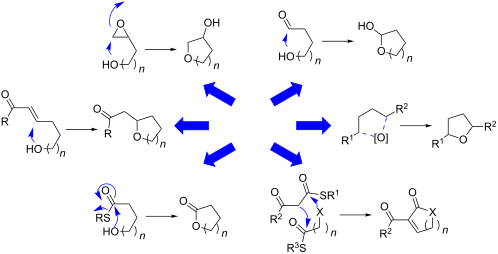
Scheme 2: Mechanisms for the formation of oxygen heterocycles. The degree of substitution can differ from tha...
Scheme 3: Pyran-ring formation in pederin (24) biosynthesis. Incubation of recombinant PedPS7 with substrate ...
Scheme 4: The domain AmbDH3 from ambruticin biosynthesis catalyses the dehydration of 25 and subsequent cycli...
Scheme 5: SalBIII catalyses dehydration of 29 and subsequent cyclisation to tetrahydropyran 30 [18].
Figure 1: All pyranonaphtoquinones contain either the naphtha[2,3-c]pyran-5,10-dione (32) or the regioisomeri...
Scheme 6: Pyran-ring formation in actinorhodin (34) biosynthesis. DNPA: 4-dihydro-9-hydroxy-1-methyl-10-oxo-3H...
Scheme 7: Pyran formation in granaticin (36) biosynthesis. DNPA: 4-dihydro-9-hydroxy-1-methyl-10-oxo-3H-napht...
Scheme 8: Pyran formation in alnumycin (37) biosynthesis. Adapted from [21].
Scheme 9: Biosynthesis of pseudomonic acid A (61). The pyran ring is initially formed in 57 after dehydrogena...
Scheme 10: Epoxidation–cyclisation leads to the formation of the tetrahydropyran ring in the western part of t...
Scheme 11: a) Nonactin (70) is formed from heterodimers of (−)(+)-dimeric nonactic acid and (+)(−)-dimeric non...
Figure 2: Pamamycins (73) are macrodiolide antibiotics containing three tetrahydrofuran moieties, which are a...
Scheme 12: A PS domain homolog in oocydin A (76) biosynthesis is proposed to catalyse furan formation via an o...
Scheme 13: Mechanism of oxidation–furan cyclisation by AurH, which converts (+)-deoxyaureothin (77) into (+)-a...
Scheme 14: Leupyrrin A2 (80) and the proposed biosynthesis of its furylidene moiety [69,70].
Scheme 15: Asperfuranone (93) biosynthesis, adapted from [75].
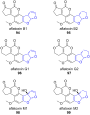
Figure 3: The four major aflatoxins produced by Aspergilli are the types B1, B2, G1 and G2 (94–97). In the di...
Scheme 16: Overview on aflatoxin B1 (94) biosynthesis. HOMST = 11-hydroxy-O-methylsterigmatocystin [78,79,82-106].
Scheme 17: A zipper mechanism leads to the formation of oxygen heterocycles in monensin biosynthesis [109-111].
Scheme 18: Formation of the 2,6-dioxabicyclo[3.2.1]octane (DBO) ring system in aurovertin B (118) biosynthesis ...
Figure 4: Structures of the epoxide-containing polyketides epothilone A (119) and oleandomycin (120) [123-125].
Scheme 19: Structures of phoslactomycin B (121) (a) and jerangolid A (122) (b). The heterocycle-forming steps ...
Scheme 20: a) Structures of rhizoxin (130) and cycloheximide (131). Model for the formation of δ-lactones (b) ...
Scheme 21: EncM catalyses a dual oxidation sequence and following processing of the highly reactive intermedia...
Figure 5: Mesomeric structures of tetronates [138,139].
Figure 6: Structures of tetronates for which gene clusters have been sequenced. The tetronate moiety is shown...
Scheme 22: Conserved steps for formation and processing in several 3-acyl-tetronate biosynthetic pathways were...
Scheme 23: In versipelostatin A (153) biosynthesis, VstJ is a candidate enzyme for catalysing the [4 + 2] cycl...
Scheme 24: a) Structures of some thiotetronate antibiotics. b) Biosynthesis of thiolactomycin (165) as propose...
Scheme 25: Aureusidine synthase (AS) catalyses phenolic oxidation and conjugate addition of chalcones leading ...
Scheme 26: a) Oxidative cyclisation is a key step in the biosynthesis of spirobenzofuranes 189, 192 and 193. b...
Scheme 27: A bicyclisation mechanism forms a β-lactone and a pyrrolidinone and removes the precursor from the ...
Scheme 28: Spontaneous cyclisation leads to off-loading of ebelactone A (201) from the PKS machinery [163].
Scheme 29: Mechanisms for the formation of nitrogen heterocycles.
Scheme 30: Biosynthesis of highly substituted α-pyridinones. a) Feeding experiments confirmed the polyketide o...
Scheme 31: Acridone synthase (ACS) catalyses the formation of 1,3-dihydroxy-N-methylacridone (224) by condensa...
Scheme 32: A Dieckmann condensation leads to the formation of a 3-acyl-4-hydroxypyridin-2-one 227 and removes ...
Scheme 33: a) Biosynthesis of the pyridinone tenellin (234). b) A radical mechanism was proposed for the ring-...
Scheme 34: a) Oxazole-containing PKS–NRPS-derived natural products oxazolomycin (244) and conglobatin (245). b...
Scheme 35: Structure of tetramic acids 251 (a) and major tautomers of 3-acyltetramic acids 252a–d (b). Adapted...
Scheme 36: Equisetin biosynthesis. R*: terminal reductive domain. Adapted from [202].
Scheme 37: a) Polyketides for which a similar biosynthetic logic was suggested. b) Pseurotin A (256) biosynthe...
Figure 7: Representative examples of PTMs with varying ring sizes and oxidation patterns [205,206].
Scheme 38: Ikarugamycin biosynthesis. Adapted from [209-211].
Scheme 39: Tetramate formation in pyrroindomycin aglycone (279) biosynthesis [213-215].
Scheme 40: Dieckmann cyclases catalyse tetramate or 2-pyridone formation in the biosynthesis of, for example, ...
Beilstein J. Org. Chem. 2016, 12, 1401–1409, doi:10.3762/bjoc.12.134
Graphical Abstract
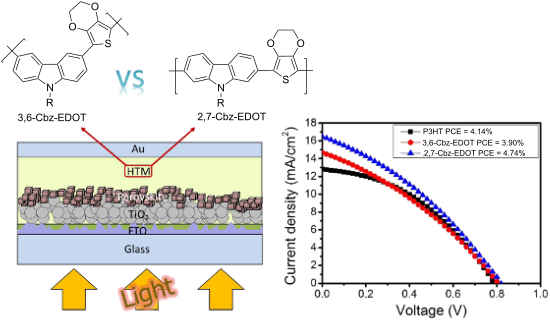
Scheme 1: Synthesis of 3,6-Cbz-EDOT and 2,7-Cbz-EDOT by Stille polycondensation.
Figure 1: (a) Normalized UV–vis absorption of Cbz-EDOT polymers in CH2Cl2 measured at 10−5 M repeat unit−1 an...
Figure 2: Energy level diagram of PSC components including P3HT, 3,6-Cbz-EDOT, and 2,7-Cbz-EDOT.
Figure 3: (a) Current density–voltage curves and (b) incident photon to current conversion efficiency (IPCE) ...
Figure 4: Impedance spectroscopy characterization of the PSCs with different HTMs over the frequency range fr...
Beilstein J. Org. Chem. 2016, 12, 1170–1177, doi:10.3762/bjoc.12.112
Graphical Abstract
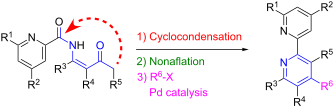
Scheme 1: Synthesis of highly functionalized 2,2'-bipyridines 4a and 5b from symmetrical 1,3-diketones 1a and ...
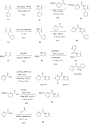
Scheme 2: Synthesis of β-ketoenamines 2c–e and of β-ketoenamides 3c–h.
Scheme 3: Synthesis of α-methoxy-β-ketoenamine 2i, its N-acylation to 3i and the reaction of β-ketoenamide 3a...
Scheme 4: Cyclizations of β-ketoenamide 3i leading to 2,2´-bipyridine derivative 4i or to the related 2-(2-py...
Scheme 5: Suzuki-couplings of 2,2'-bipyrid-4-yl nonaflates 5a and 5b to compounds 9 and 10.
Scheme 6: Palladium-catalyzed couplings of chloro-substituted 2,2'-bipyrid-4-yl nonaflate 5g leading to compo...
Beilstein J. Org. Chem. 2016, 12, 835–845, doi:10.3762/bjoc.12.82
Graphical Abstract
Figure 1: Types of aryl pyridines and pyrimidines already prepared in our group [23-27].
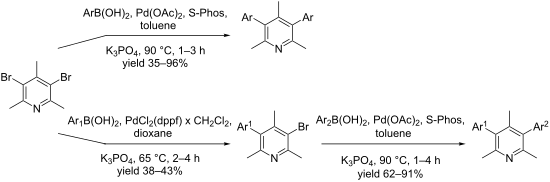
Scheme 1: Synthesis of diarylpyridines 4–29.
Scheme 2: Synthetic routes leading to unsymmetrically substituted arylpyridines.
Scheme 3: Preparation of unsymmetrical 3,5-diaryl-2,4,6-trimethylpyridines 46–56.
Scheme 4: Preparation of unsymmetrical 3,5-diaryl-4-chloro-2,6-dimethylpyridines 68–71.
Beilstein J. Org. Chem. 2016, 12, 415–428, doi:10.3762/bjoc.12.45
Graphical Abstract
Figure 1: Two-dimensional structure and nomenclature of the oxazolidinone linezolid. The different rings are ...
Figure 2: Superposition of all low energy minima of linezolid applying AMBER (left) and OPLS-AA (right) force...
Figure 3: Superposition of the found global linezolid gas phase minimum (AMBER on the left and OPLS-AA on the...
Figure 4: RMSD/Potential energy plots for linezolid in the gas phase. The OPLS-AA plot is characterized by an...
Figure 5: Model building process. a) linezolid bound to the 50S subunit from Haloarcula marismortui, code 3CP...
Figure 6: Superposition of all 43 minima of the ribosome–linezolid complex. Linezolid is shown in yellow and ...
Figure 7: Comparison between ribo/S-lzd and ribo/R-lzd (quasi) global minima. On top, a 2D interaction diagra...
Scheme 1: Experimentally characterized linezolid analogues that were used as test cases for our simulation pr...
Scheme 2: Predicted new linezolid-like candidates.
Beilstein J. Org. Chem. 2016, 12, 391–405, doi:10.3762/bjoc.12.42
Graphical Abstract
Scheme 1: Reaction of trimethylsilyl cyanide with tricarbonyl (η5-cyclohexadienyl)iron(1+) salts. Reproduced ...
Figure 1: (a) Supramolecular pore formers. Reproduced with permission from [6]. Copyright 1990 Elsevier. (b) Uni...
Figure 2: An intelligent liquid crystal to read out saccharide structure as a color-change. Picture provided ...
Scheme 2: Polymeric boronic acid receptor units developed by Wulff. Reproduced from [16]. Copyright 1982 Internat...
Figure 3: Fluorescence photoinduced electron transfer (PET) pH sensor developed by A. P. De Silva.
Figure 4: Fluorescence PET sensor for saccharides.
Figure 5: (a) Glucose selective PET system. (b) Chiral discriminating PET system.
Figure 6: (a) Fluorescence photoinduced electron transfer (PET) cation sensors developed by A. P. De Silva. (...
Figure 7: (a) Pyrene diboronic acids (n = 3–8). (b) Pyrene monoboronic acid. (c) Block chart showing the rela...
Figure 8: Glysure Continuous Intravascular Glucose Monitoring (CIGM) System. Image provided by Nicholas P. Ba...
Figure 9: Chiral discrimination of D- and L-tartaric acid by (R)-8 at pH 5.6. [(R)-8] = 5.0 × 10⁻⁶ mol dm−3, ...
Figure 10: Chiral discriminating sensor (relative stereochemistry shown) constructed using a good fluorophore ...
Figure 11: Fluorescence emission intensity-pH profile of: (a) Sensor 15: 1.0 × 10⁻⁶ mol dm−3 (λex 370 nm, λem ...
Figure 12: Modular chiral discriminating d-PET systems (relative stereochemistry shown).
Figure 13: With Matthew Davidson and Steven Bull during “World Cup” lecture tour of Japan in 2002. (Left) Priv...
Figure 14: Preparation of chiral boron reagent and use as catalyst for aza-Diels–Alder reactions.
Figure 15: Chiral three component self-assembling system.
Beilstein J. Org. Chem. 2016, 12, 22–28, doi:10.3762/bjoc.12.4
Graphical Abstract
Figure 1: Examples of valuable 1,2-oxyamino-containing molecules.
Scheme 1: Strategies for intermolecular olefin oxyamination.
Scheme 2: Examples of carboxylic acids in the olefin oxyamination reaction. Reaction conditions: 1 (1.2 mmol,...
Scheme 3: Examples of O-benzoylhydroxylamines in the olefin oxyamination reaction. Reaction conditions: 1a (1...
Beilstein J. Org. Chem. 2016, 12, 5–15, doi:10.3762/bjoc.12.2
Graphical Abstract
Figure 1: Selected classical and heterogeneous ruthenium complexes.
Figure 2: Applications of NHC ammonium-tagged catalysts.
Scheme 1: Synthesis of ammonium-tagged complex 8.
Scheme 2: Model RCM reaction.
Figure 3: Influence of temperature and concentration on RCM of 9. Conditions: 1 mol % of 8-C* (5 wt % on C*),...
Figure 4: Presentation of various Ru-based catalysts. From the left: 20 mg of Gre-II powder, 20 mg of 8 as fi...
Figure 5: Influence of the support type on the metathesis outcome. Conditions: 1 mol % 8, toluene 80 °C; [9] ...
Figure 6: Filtration of the reaction mixture after RCM of 9 catalysed by 1 mol % of 8-powder.
Figure 7: Split test during RCM of 9 (1 mol % cat, toluene 80 °C, [9] = 0.2 M). The reaction mixtures were fi...
Scheme 3: Model metathesis reactions used in tests.
Figure 8: RCM of 9 catalysed by 8 and 8-Fe. Conditions: 1 mol % catalyst, toluene 80 °C, [9] = 0.2 M.
Figure 9: Removal of 8-Fe and subsequent recovery of 8. A: stirred reaction mixture containing 8-Fe, B: the s...
Scheme 4: Supported catalyst 8 in sequential cross metathesis and reduction.