


Search results
Search for "chromatography" in Full Text gives 1989 result(s) in Beilstein Journal of Organic Chemistry. Showing first 200.
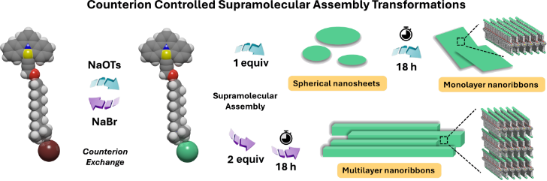
Controlled supramolecular assemblies of luminescent tridentate cyclometalated alkynylgold(III) amphiphiles in aqueous media
Beilstein J. Org. Chem. 2026, 22, 1097–1106, doi:10.3762/bjoc.22.88
- commercial reagents were purchased from Acros Organics, Aladdin, Bidepharm, Dieckmann, Macklin and Tokyo Chemical Industry Co. Ltd, and were used as received unless otherwise specified. All reactions were performed under nitrogen unless otherwise specified. Analytical thin-layer chromatography (TLC) was
- performed with Macherey-Nagel Silica gel 60 UV254 aluminum plates and visualization was accomplished by UV light (254 nm) or staining with phosphomolybdic acid (PMA) followed by heating. Flash column chromatography was performed using Macherey-Nagel Silica gel 60 (230–400 mesh). Deuterated solvents were
- subjected to column chromatography on silica gel (hexane/ethyl acetate 10:1 (v/v, Rf = 0.5) to afford compound 1 as pale-yellow liquid (284 mg, 1.09 mmol) in 50% yield. 1H NMR (600 MHz, CDCl3) δ 4.08 (s, 2H), 3.46 (t, J = 6.6 Hz, 2H), 3.36 (t, J = 7.0 Hz, 2H), 2.39 (s, 1H), 1.80 (q, J = 7.3 Hz, 2H), 1.54 (t


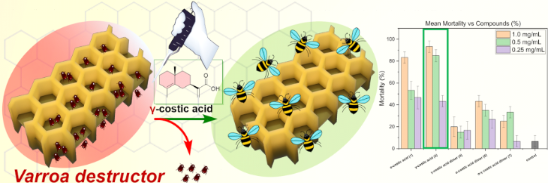
Synthesis and acaricidal activity against Varroa destructor of α- and γ-costic acid dimers
Beilstein J. Org. Chem. 2026, 22, 1088–1096, doi:10.3762/bjoc.22.87
- otherwise stated. Flash chromatography was performed using 60–200 mesh silica gel. 1H NMR and 13C NMR spectra were recorded on Varian (Palo Alto, CA, USA) 400 MHz and 500 MHz and 100 MHz and 125 MHz spectrometers, respectively, at ambient temperature in CDCl3, unless otherwise noted, using the same solvent
- ) and integration. Low and high-resolution mass spectra (LR- and HRESIMS) were acquired on a Q-Exactive hybrid quadrupole-orbitrap mass spectrometer (Thermo Scientific, San Jose, CA, USA). Analytical and preparative thin-layer chromatography (TLC) was carried out on silica gel, Kieselgel 60, F254, 0.25
- and 0.5 mm plates (Merck, Darmstadt, Germany), respectively. Column chromatography was performed on a silica gel column, Kieselgel 60, 0.063–0.200 mm (Merck). Synthesis of γ-costic acid (3) and γ-costic acid diester (4) α-Costic acid (1, 1.0 equiv), ethylene glycol (0.5 equiv) and p-toluenesulfonic


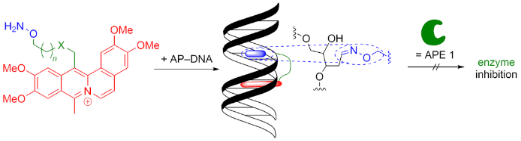
Synthesis of functionalized, 13-alkyl-substituted coralyne derivatives and investigation of their interactions with duplex and abasic site-containing DNA
Beilstein J. Org. Chem. 2026, 22, 1057–1066, doi:10.3762/bjoc.22.84
- a mixture of counter anions PF6− and Cl−. Therefore, the product was converted into its bromide salt by ion exchange chromatography to give coralyne 2e in an overall yield of 70%. Likewise, coralyne 2d was functionalized with an aminooxyalkyl linker [37] by PyBOP-assisted coupling and ion metathesis
- (2.50 M in hexane); Tokio Chemical Industries Co., Ltd. (Tokio, JPN): papaverine hydrochloride (98%). Column chromatography: silica gel (60 M, 40–63 µm, 230–400 mesh ASTM, Macherey-Nagel GmBH & Co. KG). Ethyl 4-iodobutanoate [46] and 1,1-dimethylethyl N-(3-aminopropoxy)carbamate hydrochloride [37] were


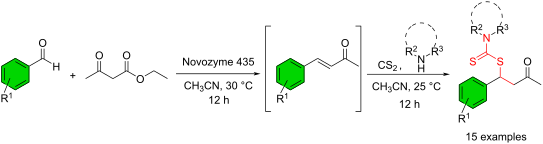
One-pot four-component sequential synthesis of S-alkyl dithiocarbamates using lipase as a biocatalyst
Beilstein J. Org. Chem. 2026, 22, 1048–1056, doi:10.3762/bjoc.22.83
- of the reaction was monitored via thin-layer chromatography and after stirring for 12 h at 30 °C, no further product formation was observed. Under these conditions, the yield of product 6b was 36% (Table 1, entry 1), with a side product also forming at a yield of 31%. This side product was identified
- was a generous gift from Novozymes (Denmark). Progress of the reactions was monitored by thin-layer chromatography (TLC, performed on pre-coated Merck silica gel 60 F254 plates). All organic synthesis products were purified by preparative thin-layer chromatography (TLC), (CAMAG® instrument, in-house
- reaction vessel. The reaction mixture was stirred at 30 °C for 12 hours using a magnetic stirrer. The formation of the Michael acceptor was monitored via thin-layer chromatography (TLC). Afterward, carbon disulfide (0.4 mmol) and amine (0.2 mmol) were introduced into the reaction mixture, and stirring was


Synthesis of novel 1,2,4-oxadiazole-isoxazoline hybrids and their in silico potential with adenosine receptors
Beilstein J. Org. Chem. 2026, 22, 1033–1047, doi:10.3762/bjoc.22.82
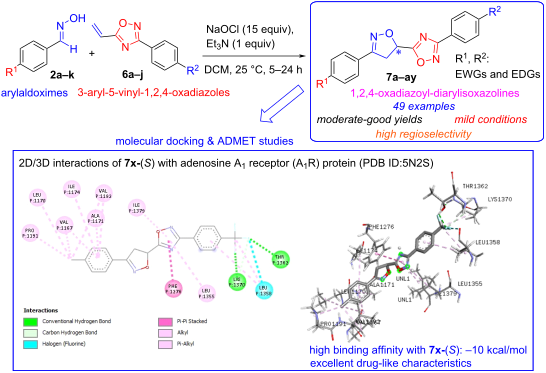
- purification by flash column chromatography using ethyl acetate/hexanes. Evaluation of the nitrile oxide cycloaddition results revealed that reactions involving p-chlorobenzaldoxime (2b), p-isopropylbenzaldoxime (2c), and p-tolylaldoxime (2f) proceeded with moderate to high efficiency, affording the
- conditions for reaction times ranging from 5 to 24 h. The corresponding 1,2,4-oxadiazolyl-diarylisoxazoline derivatives 7aa–ay were isolated in moderate to good yields after purification by flash column chromatography. The highest yield (97%) was obtained from the cycloaddition of p-bromobenzaldoxime (2g


Semisynthesis, characterisation, and antibacterial evaluation of a novel lecanoric acid-derived amide library
Beilstein J. Org. Chem. 2026, 22, 1023–1032, doi:10.3762/bjoc.22.81
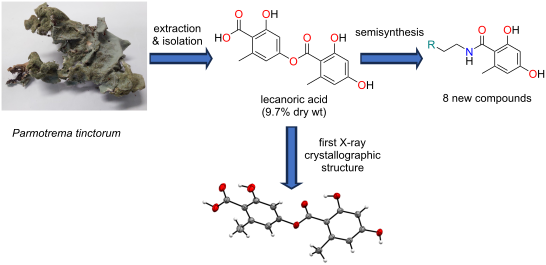
- sequentially extracted with CH2Cl2 and MeOH, with the resulting extracts separately evaporated under reduced pressure. The CH2Cl2 extract was first fractionated using silica gel flash column chromatography, employing a stepwise solvent gradient from 100% n-hexane to 100% EtOAc. Each fraction was analysed by
- Spectrometer coupled to a USB-ISS-UV–vis integrated sampling system. FTIR spectra were recorded on a Perkin Elmer Spectrum Two FTIR spectrophotometer equipped with Perkin Elmer’s UATR-TWO diamond ATR. Isolute® silica SPE columns (5 g or 10 g; 50 µm, 60 Å) were utilised for flash-column chromatography. Alltech
- ) was used for RP-HPLC separations of the reaction products. The column was connected to a Waters 600 pump fitted with a Waters 996 photodiode array detector and a Gilson 717-plus autosampler. Merck silica gel 60 F254 pre-coated aluminium plates were used for thin-layer chromatography (TLC) and analysed


Z-Selective semihydrogenation of alkynes via Ni/Lewis acid synergistic catalyzed system using DMF as hydrogen source and solvent
Beilstein J. Org. Chem. 2026, 22, 1004–1012, doi:10.3762/bjoc.22.79
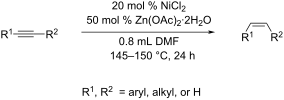
- complete consumption of the starting material, heating was discontinued. After cooling to room temperature, the volatiles were removed under reduced pressure. The resulting crude residue was purified by flash column chromatography on silica gel (eluent: petroleum ether) to afford pure (Z)-stilbene (2a) as

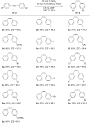


Rh(III)-catalyzed chelation-assisted C–H activation/annulation of 2-arylimidazolines with cyclic diazo-1,3-dicarbonyl compounds: a novel approach to tetracyclic annulated derivatives of 2,3-dihydroimidazo[2,1-a]isoquinoline
Beilstein J. Org. Chem. 2026, 22, 997–1003, doi:10.3762/bjoc.22.78
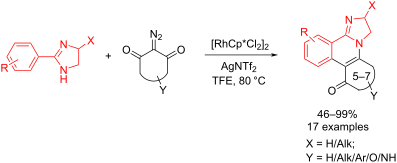
- reaction mixtures by NMR, none of them could be isolated in pure form by column chromatography. The following reaction mechanism can be proposed according to the literature data [18] (Figure 3a). The catalytic cycle begins with the formation of monomeric Rh(III)-catalyst A from the reaction of [RhCp*Cl2]2


The role of spacer length and flexibility in peptide self-assembly
Beilstein J. Org. Chem. 2026, 22, 986–996, doi:10.3762/bjoc.22.77
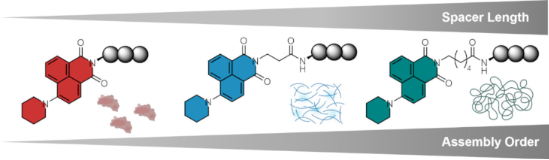
- (C0-Nap, 5) was obtained from compound 2 and ʟ-isoleucine. The products were washed with 1 M HCl and brine and did not require further purification. The naphthalene imides 3, 4, and 5 were obtained with good yields (87–99%) and in high purities (90–95%) as characterized by liquid chromatography–mass
- using PyBOP® and N,N’-DIPEA. All peptides were purified via high performance liquid chromatography (HPLC) and subsequently characterized using LC–MS and NMR spectroscopy revealing high purities (>95%) with overall yields between 25–37% (Supporting Information File 1, Figures S25–S33). Supramolecular


A practical CO2-mediated synthesis of 5,6-carboxylated silicon-rhodamines for targeted probe development
Beilstein J. Org. Chem. 2026, 22, 915–924, doi:10.3762/bjoc.22.72
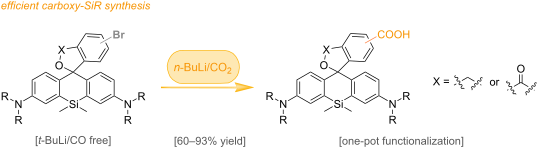
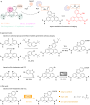
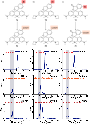
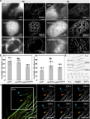
- derivatives can be directly used in subsequent amidation reactions with targeting ligands without column chromatography, facilitating the rapid construction of high-performance targeted fluorescent probes. Overall, this strategy provides a straightforward, efficient, and practical synthetic route for the



Cascade transformation of 2-(diazoacetyl)-2H-azirines to 2-aroyl-3-hydroxy-1H-pyrroles via condensation with aromatic aldehydes
Beilstein J. Org. Chem. 2026, 22, 897–904, doi:10.3762/bjoc.22.70
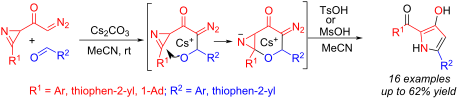
- (probably 4a; Scheme 1, R = Ph, Ar = 4-FC6H4) turned out to be extremely unstable and could not be isolated either by crystallization or by chromatography on silica gel or alumina, which led to its complete decomposition. Fortunately, the corresponding product of the reaction of 2-(2-diazoacetyl)-3-(3


Chiral cyclopropenimine-catalyzed enantioselective Michael reactions of phenol and benzofuran-derived α,β-unsaturated pyrazolamides with benzophenone-imine of glycine esters
Beilstein J. Org. Chem. 2026, 22, 888–896, doi:10.3762/bjoc.22.69
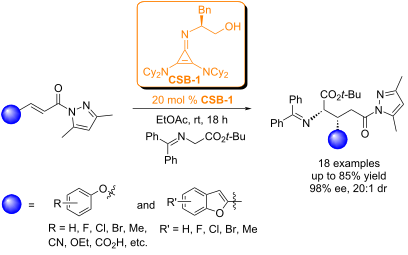
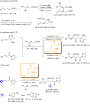
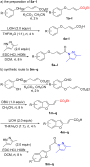
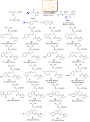
- reaction was completed (detected by TLC), the solvent was removed by a rotary evaporator under reduced pressure. The residue was purified by flash column chromatography (petroether/EtOAc/Et3N 40:1:0.01–20:1:0.01, v/v) to afford pure 6a as a colorless sticky oil. Typical procedure for in situ acidic
- dried over Na2SO4 and the solvent was evaporated under vacuum. The residue was purified by flash column chromatography to afford pure 7d as a white solid. Bioactive molecules with benzofuran and pyroglutamic acid motif. CSB-1-catalyzed Michael reactions of α,β-unsaturated compouds with glycine






Site-specific labelling of native peptides and proteins: chemical and enzymatic strategies
Beilstein J. Org. Chem. 2026, 22, 857–881, doi:10.3762/bjoc.22.67
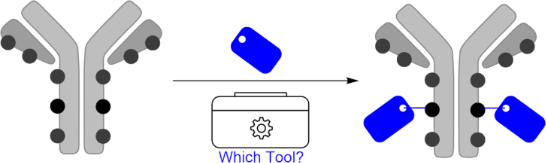
- chromatography, while also offering well-defined pharmacokinetic and pharmacodynamic profiles. Homogeneous batches of labelled proteins thus improve therapeutic indices and reproducibility, key determinants of clinical trial outcomes. Usability. Effective strategies act directly on native proteins, avoiding
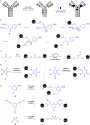
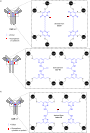
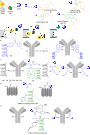
- sites (to improve stability and solvent tolerance). The engineered enzyme PGAA1-AcRd3 selectively introduced a benzoyl group at the N-terminus of chain A, whereas PGAdimer-HRd3 catalysed deprotection enabling formation of dimerised insulin candidates under mild chemoenzymatic conditions. Chromatography





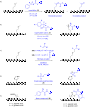

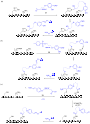
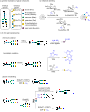


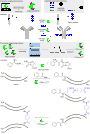
Synthesis and structural elucidation of a novel bis-spirooxindole from isatin and ethylenediamine
Beilstein J. Org. Chem. 2026, 22, 813–820, doi:10.3762/bjoc.22.63

- reduced pressure and the mixture was purified by column chromatography (DCM/Me2CO gradient from 8:2 to 6:4) to give 30 as yellow oil (1.04 g, 2.99 mmol, 61%). HRMS m/z: [M + H]+ calcd. for [C20H21N4O2 + H]+, 349.1665; found, 349.1674; 1H NMR (300 MHz, MeOD) δ 7.19–7.17 (m, 2H, H4’, H4’’), 6.92 (ddd, J


Knoevenagel condensation of 4,5- and 1,8-diazafluorenes
Beilstein J. Org. Chem. 2026, 22, 803–812, doi:10.3762/bjoc.22.62
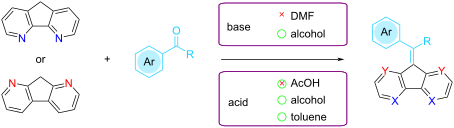
- condensation using TiCl4 and pyridine, is cheaper, easier to apply, and the pure target product simply precipitated from the reaction mixture instead of extraction and purification by column chromatography. Di(pyridin-2-yl)methylene)-9H-diazafluorenes Furthermore, since ketones are generally considered to be
- additional purification. Reaction mixtures were monitored by TLC using Macherey-Nagel pre-coated TLC-sheets Alugram Xtra SIL G/UV254. For column chromatography Macherey-Nagel Kieselgel 60 was used. NMR spectra of products were recorded with Bruker AV 300, Bruker AV 400, and Bruker DRX 500 spectrometers in
- , methanol, hexane, and dried in air. In the case of absence of any precipitate, the solutions were extracted with chloroform, dried over anhydrous MgSO4 and concentrated under reduced pressure. The products were purified either by column chromatography on silica gel (eluent ethyl acetate) or by addition of


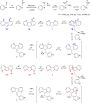


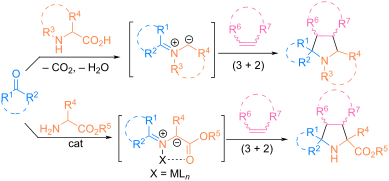
Synthesis of heterocycles based on azomethine ylides from α-amino acids (or amines) and carbonyl compounds
Beilstein J. Org. Chem. 2026, 22, 705–741, doi:10.3762/bjoc.22.55
- racemic 2-hexalicene iminoester 49 to C60 fullerene 50 (Scheme 23). During the reaction, two diastereomeric helicenepyrrolidino[3.4:1.2][60]fullerenes 51a and 51b are formed with a good enantiomeric excess. Further separation of the two diastereomers using column chromatography allows one to obtain


Anti-invasive and cytotoxic evaluation of a (+)-pinoresinol-based semisynthetic library against glioblastoma
Beilstein J. Org. Chem. 2026, 22, 691–704, doi:10.3762/bjoc.22.54
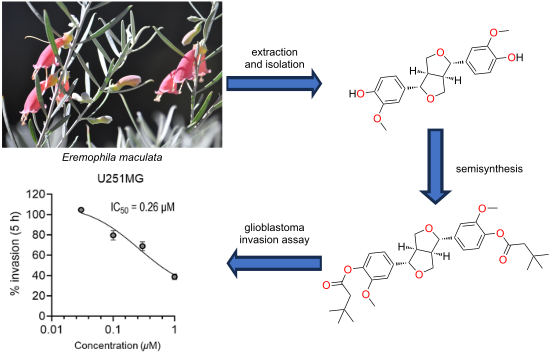
- -Aldrich. All solvents used for chromatography, UV–vis, ECD, [α]D, and MS were Honeywell Burdick & Jackson brand or Lab-Scan HPLC grade. H2O was filtered using a Sartorius Stedium Arium Pro VF ultrapure H2O system. Plant material E. maculata seeds used in these studies were obtained from the NatureBank
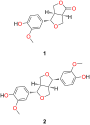
- -dried and ground seeds of E. maculata (10 g) were extracted with CH2Cl2 (250 mL, 2 h; 250 mL, 16 h) to afford 120.5 mg of crude CH2Cl2 extract. Subsequent extraction with MeOH (250 mL, 2 h; 250 mL, 16 h) afforded 1.43 g of crude MeOH extract. The CH2Cl2 extract (120.5 mg) was subjected to chromatography



Synthesis of depressin, cryptomeridiol and 4-epi-cryptomeridiol enabled by a terpenoid chiral pool-producing platform
Beilstein J. Org. Chem. 2026, 22, 683–690, doi:10.3762/bjoc.22.53
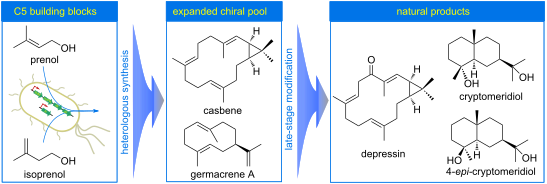
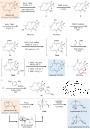
- diastereomers (dr = 5:3) under Luche reduction conditions. These two diastereomers were difficult to be separated from each other using normal column chromatography and therefore were used in the next deoxygenation steps as a mixture. Attempts to form the xanthate for Barton–McCombie deoxygenation [61][62], or
- could be easily separated by column chromatography, and their physicochemical data were in consistent with those reported [35]. Conclusion The use of the chiral pool substrates containing complex chiral skeletons and suitable positioned functional groups would change the starting point of natural


Hydrogen production from formic acid catalyzed by NHC–Cu complexes
Beilstein J. Org. Chem. 2026, 22, 620–627, doi:10.3762/bjoc.22.48
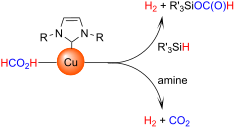
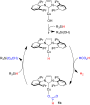
- decomposition in the presence of PhSiH3 was investigated. Surprisingly, gas-chromatography analyses showed that only H2 was released. Remarkably, neither CO nor CO2 were detected (see Supporting Information File 1, section 5). To obtain more information on the mechanism of this reaction, isotopic labeling



Towards the targeted protein degradation of CK2: design and synthesis of CAM4066-based PROTACs
Beilstein J. Org. Chem. 2026, 22, 611–619, doi:10.3762/bjoc.22.47
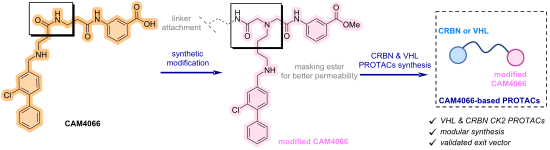
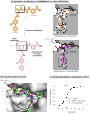
- construction. The synthesis of the ATP-site binder began with the alkylation of commercially available methyl 3-aminobenzoate (3) using bromoacetyl bromide. Although initial purification via silica gel chromatography led to substantial product loss, isolation by simple aqueous workup afforded the intermediate

Experimental and DFT studies on the regioselective methanolysis of 5-azido-9-oxabicyclo[6.1.0]nonan-4-yl 4-nitrobenzoate isomers
Beilstein J. Org. Chem. 2026, 22, 547–556, doi:10.3762/bjoc.22.40
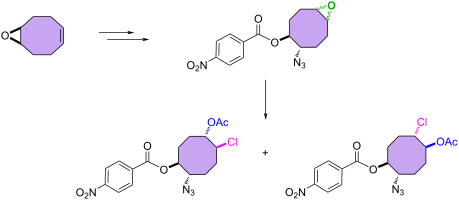
- and 9b, respectively, but all attempts to separate the isomeric epoxides 9a and 9b by column chromatography or crystallization failed. Eight-membered rings are known to preferentially adopt boat-chair conformations, which minimize torsional and transannular strain [24]. To further rationalize the
- ) MHz Bruker spectrometers and are reported in δ units with SiMe4 as internal standard. HRMS spectra were obtained on a Bruker microTOF-Q or Agilent 6530 Accurate Mass Q-TOF instrument. Melting points were determined on a GallenKamp MPD 350. Column chromatography was performed on silica gel (60 mesh
- under reduced pressure. The crude product was purified by silica gel column chromatography eluting with pure hexane to give as the first fraction monoepoxide 6 (1.09 g, 8.78 mmol, 95%, a colourless oil) and as the second bisepoxide (0.07 g, 0.5 mmol, 5%, a white solid). The spectroscopic data are in


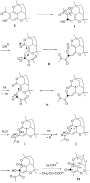
Melifoliox B, a novel phloroglucin derivative isolated from Melicope barbigera (Rutaceae) and synthesis of new oxidation products from melifoliones A and B
Beilstein J. Org. Chem. 2026, 22, 535–546, doi:10.3762/bjoc.22.39
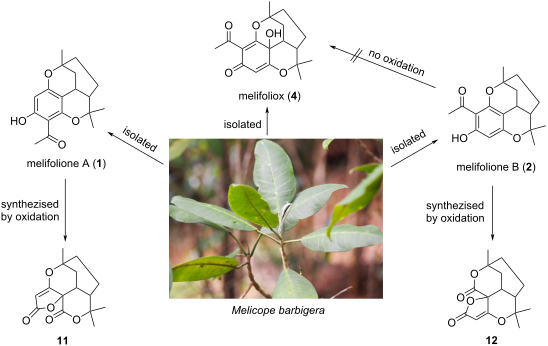
- , Germany). High resolution mass spectra were recorded on a FTHRMS-Orbitrap mass spectrometer (Thermo-Finnigan, Waltham, MA, USA). Merck MN silica gel 60 M (0.04–0.063 mm) was used as stationary phase for column chromatography. TLC was performed on silica gel 60 F254 plates with UV-detection. Solvents and



Get a better glimpse on sequential photoreactions of trisnorbornadienes with 19F NMR spectroscopy
Beilstein J. Org. Chem. 2026, 22, 527–534, doi:10.3762/bjoc.22.38
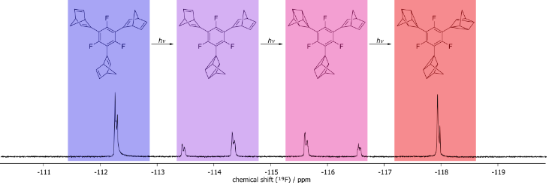
- layer was separated and dried with Na2SO4. The drying agent was filtered off, the solvent was removed under reduced pressure, and the crude product was purified by column chromatography (SiO2, n-hexane, Rf = 0.44) and recrystallization from n-pentane. The product was obtained as colorless cubes (84.0 mg


Modern synthetic pathways towards eribulin and its subunits
Beilstein J. Org. Chem. 2026, 22, 495–526, doi:10.3762/bjoc.22.37
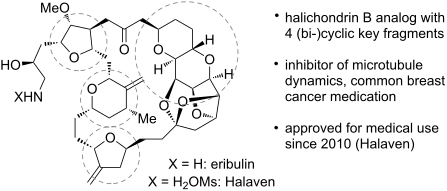
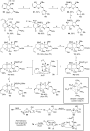
- subsequent oxy-Michael reaction. The mixture (137 + 138) was treated with p-TsOH leading to alcohols 139 and 140, which were separated via chromatography. From 140, Bn-deprotection of the primary, followed by Bn-protection of the secondary alcohol unit afforded 141 in 52% yield. Eventually, the ester motif
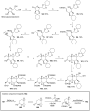
- allylated with crotyl bromide according to a procedure from Loh and co-workers [92]. The diastereomeric mixture thus obtained was separated via chromatography and (R)-151 was protected using BnBr. After hydroboration–oxidation and DMP-oxidation to the respective aldehyde, Ohira–Bestman reaction was applied
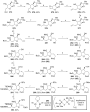
- esterification with EtI were conducted to form 318. TBDPS-protection and reduction yielded alcohol 319 in 58%, which was further oxidized to the respective aldehyde and olefinated leading to a 4:1 (Z/E) mixture of 320. The isomers were separated via chromatography, then, (Z)-320 was deprotected under acidic








Synthesis and uranyl(VI) extraction performance of a calix[4]pyrrole–tetrahydroxamic acid receptor
Beilstein J. Org. Chem. 2026, 22, 486–494, doi:10.3762/bjoc.22.36
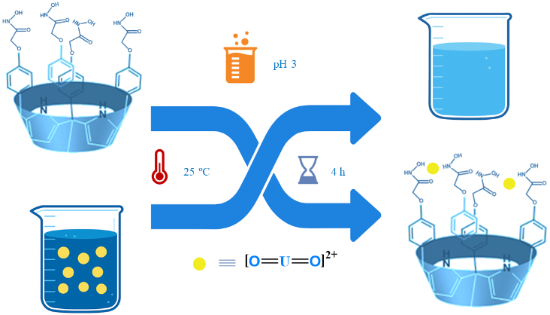
- using thin-layer chromatography, with the appearance of the characteristic red spot upon treatment with FeCl3 confirming the presence of the hydroxamic acid functionality. Moreover, the formation of the tetra-hydroxamic acid product was confirmed by 1H NMR spectroscopy in deuterated DMSO, as evidenced





