


Search results
Search for "solvent effects" in Full Text gives 106 result(s) in Beilstein Journal of Organic Chemistry.
The role of spacer length and flexibility in peptide self-assembly
Beilstein J. Org. Chem. 2026, 22, 986–996, doi:10.3762/bjoc.22.77
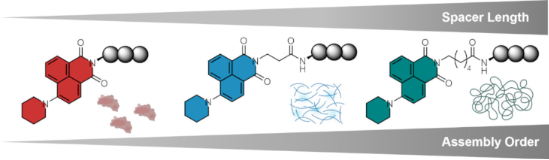
- behavior of molecules by monitoring spectral changes upon increasing the fraction of an organic co-solvent. A gradual, linear change in signal intensity or chemical shift with increasing co-solvent content is indicative of simple dissolution and bulk solvent effects. In contrast, a pronounced transition


Recent advances in the stereoselective synthesis of distal biaxially chiral molecules
Beilstein J. Org. Chem. 2026, 22, 461–479, doi:10.3762/bjoc.22.34
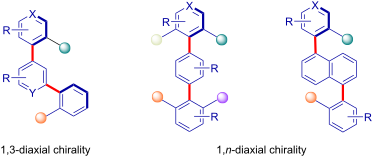
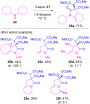
- –C derivatives through reaction of 1-alkynylnaphthalenes with benzamides. In this context they observed that the stereoselectivity of the alkyne insertion could be tuned by solvent effects, particularly with hexafluoroisopropanol, which induced inversion of the C–C axial configuration (not shown). In


Efficient solid-phase synthesis and structural characterization of segetalins A–H, J and K
Beilstein J. Org. Chem. 2025, 21, 2612–2617, doi:10.3762/bjoc.21.202

- –220 nm and a maximum below 200 nm. CD spectroscopy revealed that cyclic topology shifts characteristic peaks and stabilizes secondary structures through cooperative ring size/sequence/solvent effects [30]. TFE disrupts the hydrogen-bonding network of water, reduces solvent polarity, and enhances the


The intramolecular stabilizing effects of O-benzoyl substituents as a driving force of the acid-promoted pyranoside-into-furanoside rearrangement
Beilstein J. Org. Chem. 2025, 21, 2456–2464, doi:10.3762/bjoc.21.187
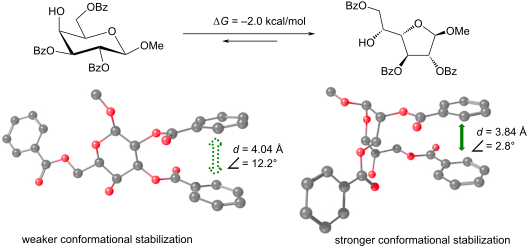
- employed. CPCM model [35] with the default parameters for methylene chloride was used to account for bulk solvent effects. Such choice of computational parameters for protected carbohydrate molecules was validated in our previous investigation [36]. The defgrid3 option was used throughout the calculations




Pathway economy in cyclization of 1,n-enynes
Beilstein J. Org. Chem. 2025, 21, 2260–2282, doi:10.3762/bjoc.21.173
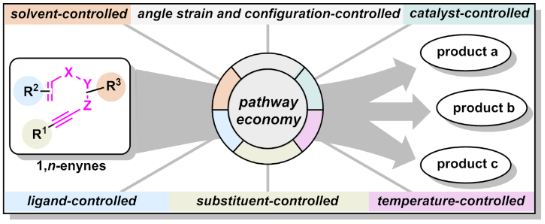
- (THF) was used as solvent, the proton elimination and protodeauration led to the formation of dihydrophenanthrene 12 due to solvent effects (Scheme 3, path b). This pathway-controlled approach for the syntheses of phenanthrenes complemented the established protocols. In 2020, Mutra et al. achieved a


Continuous-flow-enabled intensification in nitration processes: a review of technological developments and practical applications over the past decade
Beilstein J. Org. Chem. 2025, 21, 1678–1699, doi:10.3762/bjoc.21.132
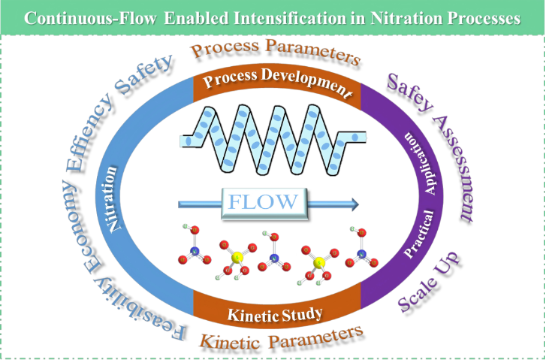
- process hazards through the evaluation of thermal safety parameters and DFT calculations revealed catalytic and solvent effects of ionic liquids in nitration [9]. In addition, researchers have focused on improving nitration processes through process intensification strategies by integrating advanced



Azobenzene protonation as a tool for temperature sensing
Beilstein J. Org. Chem. 2025, 21, 1528–1534, doi:10.3762/bjoc.21.115
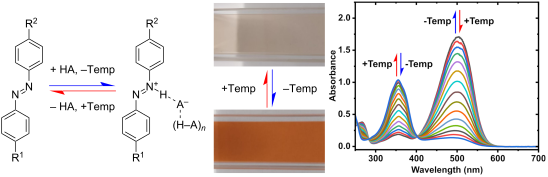
- propensity (∆G° = −5.81, −5.25, and −2.55 kcal/mol for 3, 2, and 1, respectively). The protonation is more favorable in DCE (∆G° between −2.55 and −5.81 kcal/mol) than in MeCN (∆G° between −1.74 and −4.74 kcal/mol), highlighting solvent effects on reactivity. For 3 in DCE, the addition of a second MSA


Enhancing chemical synthesis planning: automated quantum mechanics-based regioselectivity prediction for C–H activation with directing groups
Beilstein J. Org. Chem. 2025, 21, 1171–1182, doi:10.3762/bjoc.21.94
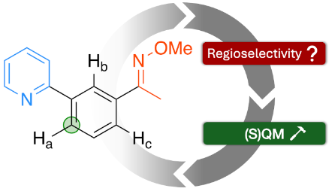
- simulating different solvent effects or examining the impact of different catalysts and ligands, extending beyond Pd(OAc)2. Additionally, accounting for varying reaction conditions, like conducting the reaction in acidic or basic environments, is possible by adjustments to the substrate-SMILES. Protonation


Synthesis, structure, ionochromic and cytotoxic properties of new 2-(indolin-2-yl)-1,3-tropolones
Beilstein J. Org. Chem. 2025, 21, 358–368, doi:10.3762/bjoc.21.26
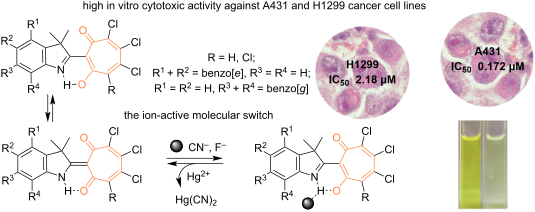
- ://www.ccdc.cam.ac.uk/data_request/cif. Computational methods Quantum chemical calculations were performed using the Gaussian 09 software package [34] with hybrid functional PBE0 [35][36] and 6-311+G (d,p) basis set. Solvent effects were modeled by using polarizable continuum model (PCM) [37] within the integral




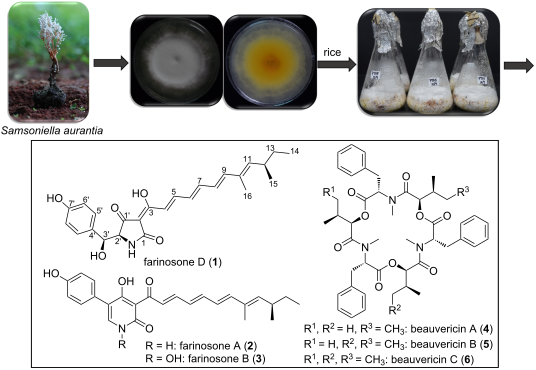
Antibiofilm and cytotoxic metabolites from the entomopathogenic fungus Samsoniella aurantia
Beilstein J. Org. Chem. 2025, 21, 327–339, doi:10.3762/bjoc.21.23
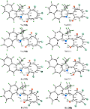
- on forces and step size. The IEFPCM solvent model [33] was used to simulate the solvent effects of methanol and frequency calculations were used to determine the conformers as minima. Conformers 4.5 kcal/mol above the lowest energy conformer and double conformers were discarded. Time-dependent DFT


Machine learning-guided strategies for reaction conditions design and optimization
Beilstein J. Org. Chem. 2024, 20, 2476–2492, doi:10.3762/bjoc.20.212
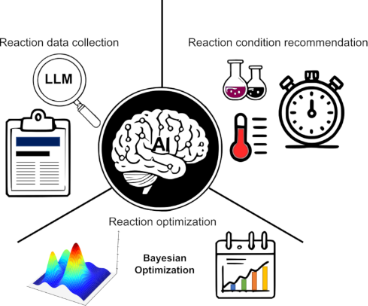
- solvent effects may complicate the results [122]. Therefore, reaction-level DFT-based descriptors are not widely used for reaction featurization. A more popular alternative is the differential reaction fingerprint (DRFP) developed by Probst et al. [123], which converts a reaction SMILES sequence into a


Hypervalent iodine-mediated cyclization of bishomoallylamides to prolinols
Beilstein J. Org. Chem. 2024, 20, 2455–2460, doi:10.3762/bjoc.20.209
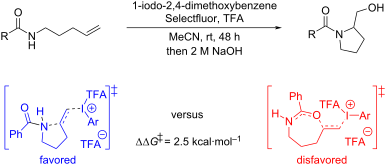
- previous report on N-alkenylamide cyclizations. B) An overview of the present work. Calculated mechanism for the cyclization of amide 3a optimized at the B3LYP/ 6-31+G(d,p) level of theory with SDDall used for iodine. Solvent effects were considered using the CPCM model. All ΔG values are in kcal·mol−1


Divergent role of PIDA and PIFA in the AlX3 (X = Cl, Br) halogenation of 2-naphthol: a mechanistic study
Beilstein J. Org. Chem. 2024, 20, 1580–1589, doi:10.3762/bjoc.20.141
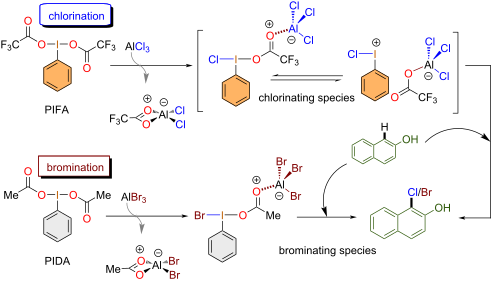
- values as Gibbs free energy at 298 K and 1 atm. All our calculations were performed in the gas phase. Then, the solvent effects were included according to the polarizable continuum model via the solvent model density (SMD) option considering Truhlar’s model [36][37][38][39][40] and MeCN as the solvent


Sustainable tandem acylation/Diels–Alder reaction toward versatile tricyclic epoxyisoindole-7-carboxylic acids in renewable green solvents
Beilstein J. Org. Chem. 2024, 20, 1308–1319, doi:10.3762/bjoc.20.114
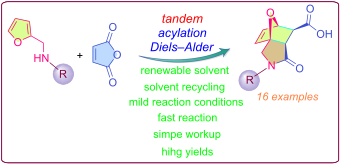
- yields and the desired stereoselectivity [59][60][61]. The viscous nature of the aminofuranes usually requires the use of toxic solvents such as toluene, and in some studies, solvents such as DMSO, which are difficult to remove from the reaction medium [62][63][64]. Although solvent effects are of little


Structure–property relationships in dicyanopyrazinoquinoxalines and their hydrogen-bonding-capable dihydropyrazinoquinoxalinedione derivatives
Beilstein J. Org. Chem. 2024, 20, 1037–1052, doi:10.3762/bjoc.20.92
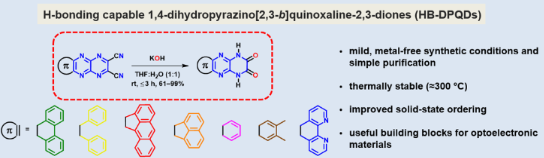
- and aromatic groups as strong donors in the backbone; the dione groups in the case of DPQDs diminish the acceptor properties of the aza π-system. It is worth mentioning that ICT is significantly influenced by solvent polarity and the comprehensive study of solvent effects is not within the scope of




Ligand effects, solvent cooperation, and large kinetic solvent deuterium isotope effects in gold(I)-catalyzed intramolecular alkene hydroamination
Beilstein J. Org. Chem. 2024, 20, 479–496, doi:10.3762/bjoc.20.43
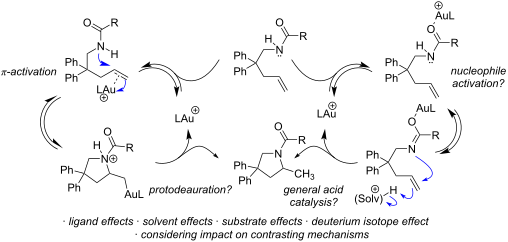
- mechanism in Scheme 2). Solvent effects: Michon and co-workers reported the beneficial assistance of water on enantioselective hydroamination, with the perchlorate being the best performing counterion. They propose that the anion is acting as a salting-in agent to contribute to better solvation of catalyst
- here. Previous discussions of solvent effects focus on the ability to support or disrupt substrate metal interactions. Acetonitrile was shown to coordinate to gold more strongly than C–C multiple bonds, thus highly disfavoring the necessary π-coordination to initiate reactivity, and acetonitrile
- deviating from classic π-activation. Solvent effects that subtly impact solubility and proton transfer processes are likely to mask the impact of individual mechanistic steps involving gold and are not adequate to distinguish between the contrasting mechanisms under consideration here (Scheme 1 vs Scheme 2






Exploring the role of halogen bonding in iodonium ylides: insights into unexpected reactivity and reaction control
Beilstein J. Org. Chem. 2023, 19, 1171–1190, doi:10.3762/bjoc.19.86
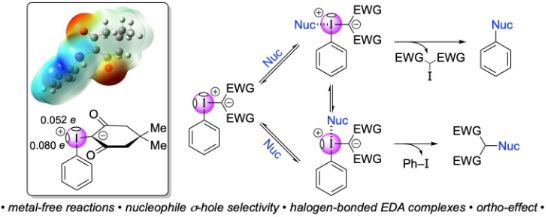
- intermediate was not viable under such mild conditions. The initially proposed ionic pathway (Figure 5, left) was abandoned as solvent effects had little influence on the reaction rate, and since no Wagner–Meerwein rearrangement products were detected with bicyclic olefin precursors. Radical-based pathways








Phenanthridine–pyrene conjugates as fluorescent probes for DNA/RNA and an inactive mutant of dipeptidyl peptidase enzyme
Beilstein J. Org. Chem. 2023, 19, 550–565, doi:10.3762/bjoc.19.40
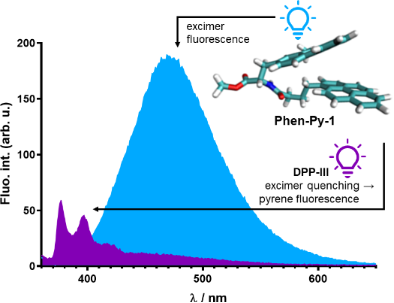
- , and then did TD-DFT calculations at the same level of theory. Solvent effects were modeled using the SMD implicit water solvation. The obtained vertical transitions corresponding to absorption maxima at pH 7.0 are 260 and 372 nm (Phen-Py-1), and 270 and 397 nm (Phen-Py-2). At pH 5.0 vertical
- package [55], with the water solvent effects modeled through the implicit SMD solvation [56]. The choice of such computational setup was prompted by its success in reproducing various features of different organic [57][58], organometallic [59], and protein systems [60], being particularly accurate for




Naphthalimide-phenothiazine dyads: effect of conformational flexibility and matching of the energy of the charge-transfer state and the localized triplet excited state on the thermally activated delayed fluorescence
Beilstein J. Org. Chem. 2022, 18, 1435–1453, doi:10.3762/bjoc.18.149
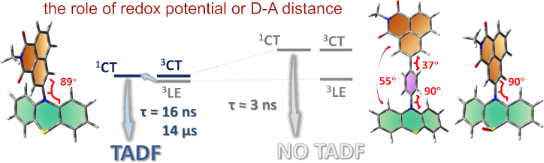
- ) using the same functional and basis sets as in the ground-state optimizations [61]. TDA-TD-DFT is preferred over standard (or “full”) TD-DFT as the former is often more reliable for triplet excited states. Solvent effects were included using the polarizable continuum model (PCM) [62][63][64]. The above
A Streptomyces P450 enzyme dimerizes isoflavones from plants
Beilstein J. Org. Chem. 2022, 18, 1107–1115, doi:10.3762/bjoc.18.113
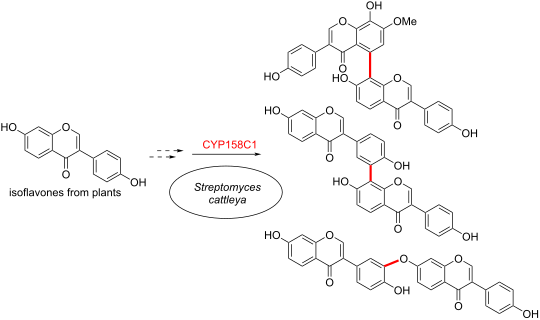
- conformers were chosen for ECD calculations in methanol at the B3LYP/6-311+G (d,p) level. Solvent effects were taken into consideration using the self-consistent reaction field (SCRF) method with the polarizable continuum model (PCM). The ECD spectrum was generated by the SpecDis program [42] using a


Morita–Baylis–Hillman reaction of 3-formyl-9H-pyrido[3,4-b]indoles and fluorescence studies of the products
Beilstein J. Org. Chem. 2022, 18, 926–934, doi:10.3762/bjoc.18.92
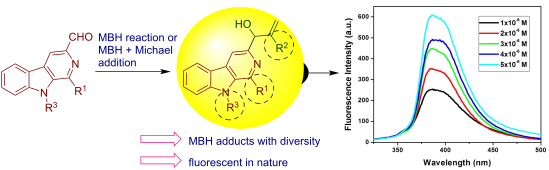
- exhibit excellent fluorescence characteristics. Different parameters like contact time, concentration, solvent effects and substituent effects were examined for obtaining the optimal results. It was observed that the MBH derivatives exhibited excellent fluorescence characteristics at a concentration of 5


Comparative study of thermally activated delayed fluorescent properties of donor–acceptor and donor–acceptor–donor architectures based on phenoxazine and dibenzo[a,j]phenazine
Beilstein J. Org. Chem. 2022, 18, 459–468, doi:10.3762/bjoc.18.48
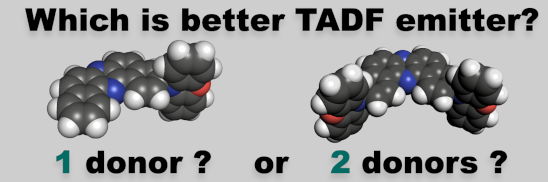
- collected in Table S1 (Supporting Information File 1). The Tamm–Dancoff (TDA) approximation was used in all excited state calculations and solvent effects were included by means of the polarizable continuum model (PCM) associated with a perturbative state specific solvation method using toluene as solvent


Iridium-catalyzed hydroacylation reactions of C1-substituted oxabenzonorbornadienes with salicylaldehyde: an experimental and computational study
Beilstein J. Org. Chem. 2022, 18, 251–261, doi:10.3762/bjoc.18.30
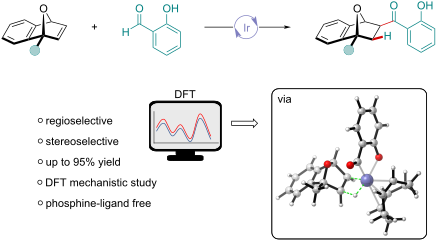
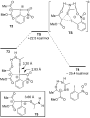
- local minima have only real frequencies, while transition-state structures were characterized by exactly one imaginary frequency. Solvent effects (solvent = 1,4-dioxane) were taken into account using the polarized continuum model (PCM) of Tomasi and co-workers [72] and were involved in all geometry


Electron-rich triarylphosphines as nucleophilic catalysts for oxa-Michael reactions
Beilstein J. Org. Chem. 2021, 17, 1689–1697, doi:10.3762/bjoc.17.117
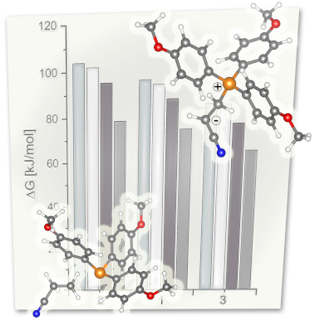
- calculations, temperature effects (298 K) and zero-point energies have been approximated by the rigid-rotor-harmonic oscillator (RRHO) approximation. The zero-point energies have been scaled by a factor of 1.0030 (B3LYP/def2-TZVPPD) and 1.0302 (PBE/def2-SVPD) to account for anharmonic effects [52]. Solvent
- effects of chloroform have been considered for calculation of the Gibbs free energy (ΔG) of zwitterion formation and were calculated by the conductor-like screening model (COSMO) [53][54] with a dielectric constant of 4.8 and a radius of 3.17. Our best estimate for the calculation of zwitterion energies


The synthesis of chiral β-naphthyl-β-sulfanyl ketones via enantioselective sulfa-Michael reaction in the presence of a bifunctional cinchona/sulfonamide organocatalyst
Beilstein J. Org. Chem. 2021, 17, 494–503, doi:10.3762/bjoc.17.43
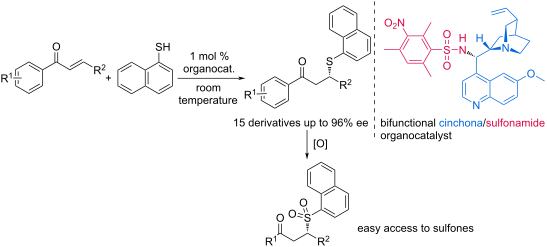
- ). The solvent effects on the SMA of the chalcone derivatives and naphthalene-1-thiol are summarized in Figure 2. This behavior might be related to the better stabilization of the transition state of the substrates containing electron-withdrawing substituents or halogen atoms with THF, or vice versa. In





