


Search results
Search for "trichlorosilane" in Full Text gives 12 result(s) in Beilstein Journal of Organic Chemistry.
Synthesis of diaryl phosphates using phytic acid as a phosphorus source
Beilstein J. Org. Chem. 2026, 22, 213–223, doi:10.3762/bjoc.22.15
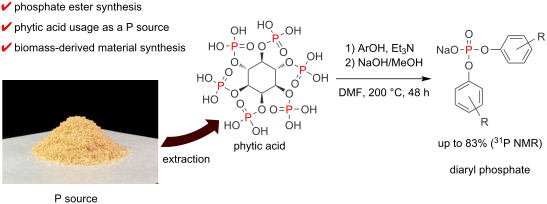
- -free synthetic methods have been reported for the synthesis of phosphorus compounds (Figure 2A) [35][36][37][38][39][40][41]. Cummins’s group demonstrated that phosphoric acid and condensed phosphoric acid can be reduced using trichlorosilane. The resulting intermediate, the bis(trichlorosilyl




Pd-Catalyzed asymmetric allylic amination with isatin using a P,olefin-type chiral ligand with C–N bond axial chirality
Beilstein J. Org. Chem. 2025, 21, 1018–1023, doi:10.3762/bjoc.21.83
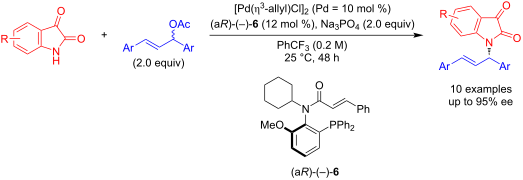
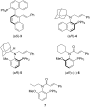
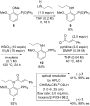
- reaction with nucleophilic lithium amide from n-propylamine, the reduction of phosphine oxide 9 by trichlorosilane/triethylamine, and the N-acylation of 10 with cinnamoyl chloride in three steps (Scheme 1). We also analyzed amide compound 7 by HPLC analysis using a chiral stationary phase column with a CD




1,2-Difluoroethylene (HFO-1132): synthesis and chemistry
Beilstein J. Org. Chem. 2024, 20, 1955–1966, doi:10.3762/bjoc.20.171
- fluorinated ones, occurred similar to HF addition [90]. Miscellaneous additions: In reference [91], the addition of trichlorosilane to 1,2-difluoroethylene (Scheme 13) was reported by the Haszeldine group. The reaction under UV irradiation produced the corresponding trichlorosilane in 85% yield, and the
- -difluoroethylene. Trichlorosilane addition to 1,2-difluoroethylene. SF5Br addition to 1,2-difluoroethylene. PCl3/O2 addition to 1,2-difluoroethylene. Reaction of tetramethyldiarsine with 1,2-difluoroethylene. Reaction of trichlorofluoromethane with 1,2-difluoroethylene. Addition of perfluoroalkyl iodides to 1,2


A new route for the synthesis of 1-deazaguanine and 1-deazahypoxanthine
Beilstein J. Org. Chem. 2022, 18, 1617–1624, doi:10.3762/bjoc.18.172
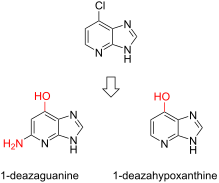
- tert-butyloxycarbonyl-protected and deprotected 2-nitro-intermediates 20 and 21, respectively [23][24][25]. The nitro group was then selectively reduced using trichlorosilane and N,N-diisopropylethylamine (DIPEA) to form benzyl-protected 1-deazaguanine 22 [26]. Finally, the O6-benzyl moiety was cleaved
- ). Reduction: The mixture from the above procedure was suspended in dry dichloromethane (8 mL) at 0 °C, and N,N-diisopropylethylamine (DIPEA, 1.06 g, 1.43 mL, 8.21 mmol) was added. A solution containing dry dichloromethane (4 mL) and trichlorosilane (HSiCl3, 778 mg, 581 µL, 5.74 mmol) was prepared at 0 °C


N-Sulfinylpyrrolidine-containing ureas and thioureas as bifunctional organocatalysts
Beilstein J. Org. Chem. 2021, 17, 2629–2641, doi:10.3762/bjoc.17.176
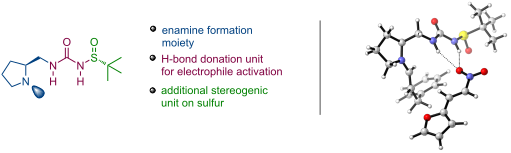
- , including enantioselective H-bonding-catalyzed additions to aliphatic N-Boc-imines with high stereoselectivity [22]. A broad range of β-aminonitroolefins were reduced to chiral β-aminonitroalkanes in high yields and excellent enantioselectivities using trichlorosilane as a reducing agent and an N


Sigmatropic rearrangements of cyclopropenylcarbinol derivatives. Access to diversely substituted alkylidenecyclopropanes
Beilstein J. Org. Chem. 2019, 15, 333–350, doi:10.3762/bjoc.15.29
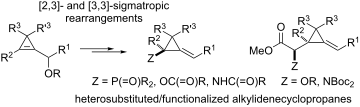
- corresponding phosphine 4 (94%) by treatment with trichlorosilane, without affecting the (arylmethylene)cyclopropane moiety (Scheme 4). The great efficiency of the [2,3]-sigmatropic rearrangement of phosphinites 2a–h lacking substituents at C3 is in striking contrast with the reactivity of phosphinites







Continuous-flow synthesis of primary amines: Metal-free reduction of aliphatic and aromatic nitro derivatives with trichlorosilane
Beilstein J. Org. Chem. 2016, 12, 2614–2619, doi:10.3762/bjoc.12.257
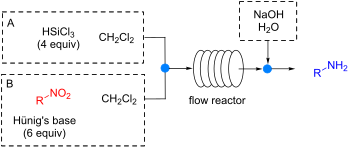
- Riccardo Porta Alessandra Puglisi Giacomo Colombo Sergio Rossi Maurizio Benaglia Dipartimento di Chimica, Università di Milano, Via Golgi 19, 20133, Milano, Italy 10.3762/bjoc.12.257 Abstract The metal-free reduction of nitro compounds to amines mediated by trichlorosilane was successfully
- synthetically relevant intermediates (precursors of baclofen and boscalid). Keywords: chemoselectivity; continuous processes; flow synthesis; nitro reduction; trichlorosilane; Introduction The reduction of nitro compounds to amines is a fundamental transformation in organic synthesis. The nitration of
- plethora of further synthetic elaborations. Among the different available methodologies for the reduction of nitro compounds [8], we have recently reported a very convenient, mild, metal-free and inexpensive procedure, of wide applicability [9][10]. The simple combination of trichlorosilane (HSiCl3) and a


Gallium-containing polymer brush film as efficient supported Lewis acid catalyst in a glass microreactor
Beilstein J. Org. Chem. 2013, 9, 1698–1704, doi:10.3762/bjoc.9.194
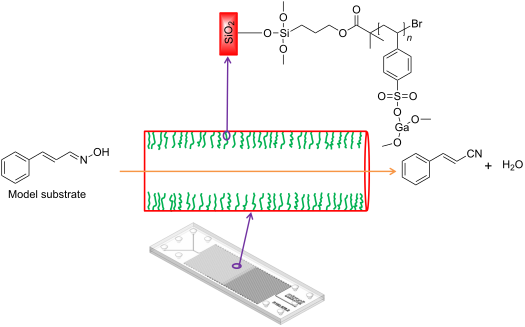
- (Enschede, The Netherlands). Synthesis of the catalytic polymer coating Immobilization of the trichlorosilane initiator and the polymer brushes synthesis on the silicon oxide surface [19][20] and the microchannels [16] were carried out following literature procedures. A solution of styrene sulfonate (1.25 g


Enantioselective reduction of ketoimines promoted by easily available (S)-proline derivatives
Beilstein J. Org. Chem. 2013, 9, 633–640, doi:10.3762/bjoc.9.71

- 10.3762/bjoc.9.71 Abstract The behavior of readily synthesized and even commercially available (S)-proline derivatives, was studied in the trichlorosilane-mediated reduction of ketoimines. A small library of structurally and electronically modified chiral Lewis bases was considered; such compounds were
- studies were also performed in order to elucidate the origin of the stereoselection. Keywords: chiral prolines; imine reduction; Lewis bases; organocatalysis; trichlorosilane; Introduction The reaction with stoichiometric amounts of trichlorosilane in the presence of a chiral catalyst is a well
- selectivity was achieved by tuning the metal catalyst. In the trichlorosilane-mediated reductions in this work we aimed to exploit the imine activation by the acid proton of the carboxylic group, which can act at the same time as a Lewis basic site to coordinate the silicon atom and hopefully control the


Reciprocal polyhedra and the Euler relationship: cage hydrocarbons, CnHn and closo-boranes [BxHx]2−
Beilstein J. Org. Chem. 2011, 7, 222–233, doi:10.3762/bjoc.7.30
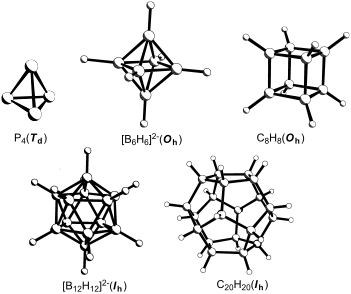
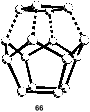
- , 72, and E = Ge, 73, where R is again a bulky group, are also well-known (Scheme 15). Indeed, octakis(t-butyldimethylsilyl)octasilane, (72a), is obtained in 72% yield by treatment of the corresponding trichlorosilane precursor with sodium in toluene at 90 °C. These systems have been thoroughly






Enantioselective synthesis of tricyclic amino acid derivatives based on a rigid 4-azatricyclo[5.2.1.02,6]decane skeleton
Beilstein J. Org. Chem. 2009, 5, No. 81, doi:10.3762/bjoc.5.81

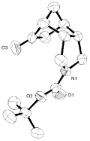
- trichlorosilane in the presence of a catalytic amount of [Pd(C3H5)Cl]2 and (R)-MOP [(R)-2-diphenylphosphino-2′-methoxy-1,1′-binaphthyl], followed by SiCl3/OH exchange, delivered the exo-alcohol 12 in 81% yield and 85% ee, as determined from the (S)- and (R)-Mosher esters of 12. After oxidation (see Scheme 1), the




Enantiospecific synthesis of [2.2]paracyclophane- 4-thiol and derivatives
Beilstein J. Org. Chem. 2009, 5, No. 9, doi:10.3762/bjoc.5.9
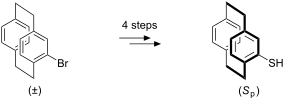
- was investigated (Scheme 1). The first step, the reduction of (Sp,RS)-5 to sulfide (Sp)-6, proved the most problematic; use of a large excess of trichlorosilane and triethylamine resulted in deoxygenation in moderate yield after recrystallisation [40]. By comparison, reduction of the less hindered
- by sulfinyl-directed ortho lithiation with n-butyllithium followed by reaction with tosyl azide. The resulting azo[2.2]paracyclophane was reduced in situ to give the amine (Rp,RS)-8 in good yield for the two steps (Scheme 2). Trichlorosilane-mediated deoxygenation proceeded uneventfully to furnished
- , 207 [[2.2]paracyclophane]+, 152, 136, 123, 104, 91, 78 (Found: [M]+, 312.1545. C20H24OS requires [M]+, 312.1542). (Sp)-(+)-4-tert-Butylsulfanyl[2.2]paracyclophane [(Sp)-6] Triethylamine (11.92 mL, 85.58 mmol, 10 equiv) was added to a solution of trichlorosilane (17.9 mL, 128.36 mmol, 15 equiv) and (Sp





