


Search results
Search for "detection" in Full Text gives 832 result(s) in Beilstein Journal of Nanotechnology. Showing first 200.
Photochemical synthesis of silver nanoprisms via green LED irradiation and evaluation of SERS activity
Beilstein J. Nanotechnol. 2025, 16, 1417–1427, doi:10.3762/bjnano.16.103
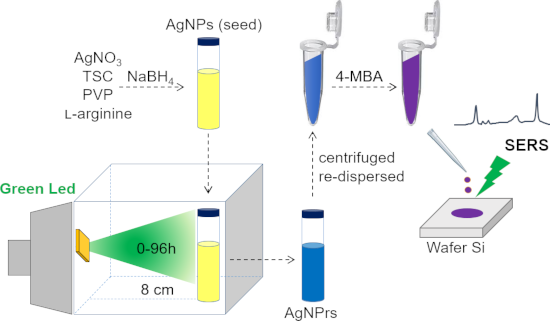
- enhancement factor of 1.15 × 10⁶, enabling detection limits down to 10−9 M. These findings demonstrate that green LED-mediated synthesis provides a simple, environmentally friendly route to fabricate high-yield AgNPrs with superior SERS capabilities, suitable for ultrasensitive chemical and biological sensing
- various solid supports such as glass [11], quartz, silicon, or aluminum foil [12]. A recent trend in the development of practical SERS substrates emphasizes flexibility and portability for field-deployable Raman detection. Accordingly, several groups have developed paper-based [13] or cotton-based [14
- confirm that AgNPrs exhibited superior SERS performance, consistent with prior studies investigating the direct SERS detection of 4-MBA [18][19]. Due to their anisotropic structure, AgNPrs concentrate surface electrons and form electromagnetic “hot spots” at the edges and tip of the nanoprisms [22][24][25


The role of biochar in combating microplastic pollution: a bibliometric analysis in environmental contexts
Beilstein J. Nanotechnol. 2025, 16, 1401–1416, doi:10.3762/bjnano.16.102

- thickness reflects the strength of relationships between nodes [28]. The betweenness centrality of a node was defined using the Kleinberg burst detection algorithm, measuring the node’s influence within the network. The centrality value δs*ν was calculated as: Nodes with high centrality values are
- towards nanoscale MP removal due to their hazardous implications. However, NP detection remains complex, requiring state-of-the-art methodologies [30]. For soil matrices, studies aim to enhance soil properties, enzyme activity and beneficial microbial communities, ultimately improving crop productivity



Parylene-coated platinum nanowire electrodes for biomolecular sensing applications
Beilstein J. Nanotechnol. 2025, 16, 1392–1400, doi:10.3762/bjnano.16.101
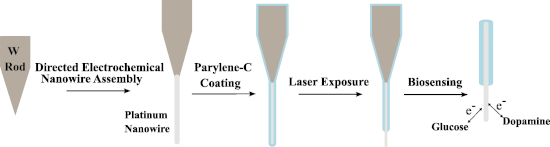
- testing with glucose and dopamine demonstrate limits of detection of 30 nM and 0.01 mM, respectively. The R-squared values for peak current versus concentration are 0.985 and 0.994, indicating strong linear correlations. These nanoscale electrodes hold great promise for single-cell biosensing applications
- , with diameters ranging from 0.4 to 100 nm and lengths extending from a few micrometers to several centimeters [7]. The functionalization of CNTs is achieved by surface modification through various methods including covalent bonding, adsorption, and detection group attachment [7][8]. Palve et al
- . developed a glucose sensor using copper nanowires and CNTs, achieving a limit of detection as low as 0.3 nM, highlighting the remarkable sensitivity of CNT-based electrodes [9]. Nevertheless, several studies reported the toxicity of CNTs for tissues and cells including loss of cellular integrity, DNA damage


Synthesis and antibacterial properties of nanosilver-modified cellulose triacetate membranes for seawater desalination
Beilstein J. Nanotechnol. 2025, 16, 1380–1391, doi:10.3762/bjnano.16.100
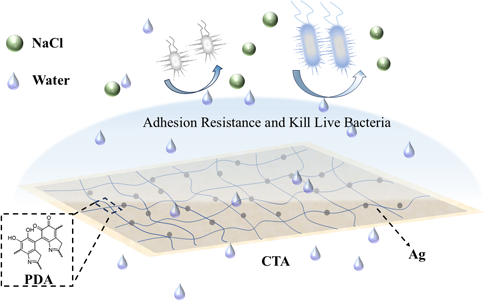
- primarily due to the particularly low content of PDA in the PCTA composite membrane, which significantly impacts the detection of PDA in NMR. The low concentration of PDA results in signal intensities that are much lower compared to the dominant signals from other components in the sample, such as CTA
- . Although modern NMR instruments have improved sensitivity, there is still a practical detection threshold. If the concentration of PDA falls below this threshold, the signal may not be detectable or may be too weak to provide meaningful information. These factors make it challenging to detect and quantify
- Ag nanoparticles. The stability of Ag, even in such low quantities, is indicated by their resistance to decomposition or volatilization at temperatures up to 800 °C. However, due to the extremely low content of Ag, the residual mass is within the detection limit of the TGA instrument, and thus the


Better together: biomimetic nanomedicines for high performance tumor therapy
Beilstein J. Nanotechnol. 2025, 16, 1246–1276, doi:10.3762/bjnano.16.92
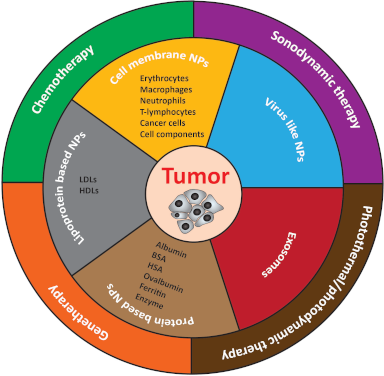
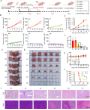
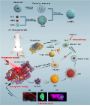
- altered metabolic responses inevitably leads to treatment failure [5][6][7]. Anyhow, an early detection of cancer enhances treatment success and increases survival. However, monotherapies proved limited therapeutic efficacy. Thus, an effective multiple cancer therapeutic regimen has been employed to








Hydrogels and nanogels: effectiveness in dermal applications
Beilstein J. Nanotechnol. 2025, 16, 1216–1233, doi:10.3762/bjnano.16.90
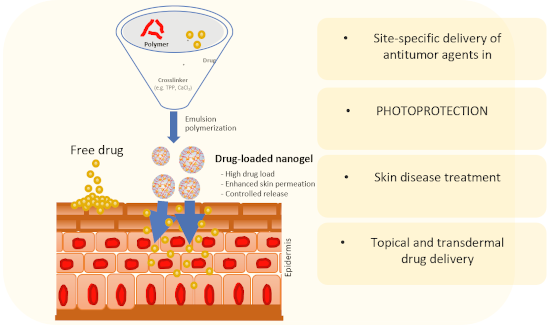
- [20][21], drug monitoring in biological fluids [22], CO2 absorption from the atmosphere [23], dye removal from industrial effluents [24], cavity-prevention in oral products [25], insect repellent coating for textiles [26], lead detection in water reservoirs [27], production of vaccines [28], and


Chitosan nanocomposite containing rotenoids: an alternative bioinsecticidal approach for the management of Aedes aegypti
Beilstein J. Nanotechnol. 2025, 16, 1197–1208, doi:10.3762/bjnano.16.88
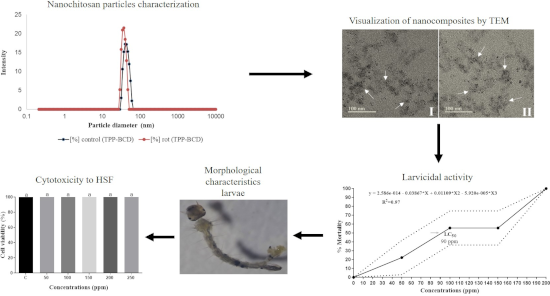
- encapsulation efficiency is estimated to be ≥99% within the detection limits of high-performance liquid chromatography (HPLC) and thin-layer chromatography (TLC) methods applied, indicating a highly effective incorporation of the rotenoids into the nanochitosan matrix. In addition to the high encapsulation



Electronic and optical properties of chloropicrin adsorbed ZnS nanotubes: first principle analysis
Beilstein J. Nanotechnol. 2025, 16, 1184–1196, doi:10.3762/bjnano.16.87
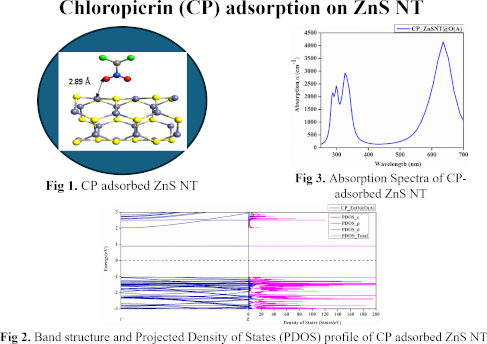
- ZnO@ZnS heterostructures and ZnS NTs exhibited superior amperometric cholesterol sensing performance, with ZnS NTs achieving the highest sensitivity (598 mA/m2) and low detection limits among the configurations studied. Despite these advances, the use of ZnS NT for detecting chloropicrin (CP), a
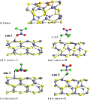
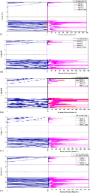
- in altering the electronic and optical properties of ZnS NT. A higher charge transfer improves sensor sensitivity, allowing the detection of CP at lower concentrations, whereas the weak physisorption led by the van der Waals forces may help with the reusability of sensor devices. Table 2 highlights
- broader spectral sensitivity, making Orientation C a versatile configuration for applications requiring multi-wavelength optical detection. Orientation D, on the other hand, shows absorption spectra similar to that of pristine ZnS NT, with only a slight redshift and weak absorption in the visible range



Piezoelectricity of hexagonal boron nitrides improves bone tissue generation as tested on osteoblasts
Beilstein J. Nanotechnol. 2025, 16, 1068–1081, doi:10.3762/bjnano.16.78
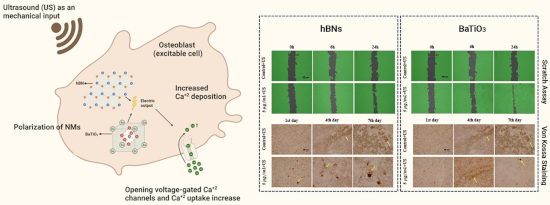
- osteoblast cell activity, the HOb cell line (cell line no. 406-05a, European Collection of Cell Cultures, UK) was chosen due to its sensitivity to mechanical and electric stimuli. Cell viability, reactive oxygen species (ROS) detection, cellular uptake, scratch, and von Kossa staining assays (Abcam, UK) were
- % CO2. Afterward, the absorbance was measured at 570–600 nm to determine cell viability via a Tecan microplate reader. The linear regression method calculated the half-maximal inhibitory concentration (IC50) values. Reactive oxygen species detection assay The ROS detection was carried out using the 2’,7
- /cm2) in this study supports the noninvasive nature of the stimulation and minimizes the likelihood of permanent cellular damage. ROS detection assay Concentration-dependent ROS% levels in the cells treated with hBNs, hBNs+US, BaTiO3, and BaTiO3+US are shown in Figure 3. In the control+US group used


Soft materials nanoarchitectonics: liquid crystals, polymers, gels, biomaterials, and others
Beilstein J. Nanotechnol. 2025, 16, 1025–1067, doi:10.3762/bjnano.16.77






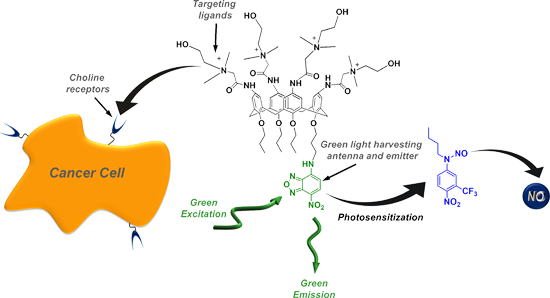
A calix[4]arene-based supramolecular nanoassembly targeting cancer cells and triggering the release of nitric oxide with green light
Beilstein J. Nanotechnol. 2025, 16, 1003–1013, doi:10.3762/bjnano.16.75
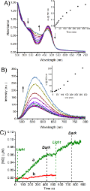
- amperometric detection of this radical species through an ultrasensitive NO electrode while alternating cycles of light/dark. Figure 5C shows that the NO generation is achieved exclusively upon green light excitation of the nanoassembly and stops once the irradiation source is switched off. The quantum yield
- amperometric detection with a World Precision Instrument, ISO-NO meter, equipped with a data acquisition system, and based on direct amperometric detection of NO with a short response time (<5 s) and sensitivity range from 1 nM to 20 mM. The analog signal was digitalized with a four-channel recording system


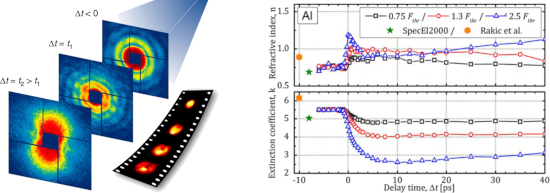
Time-resolved probing of laser-induced nanostructuring processes in liquids
Beilstein J. Nanotechnol. 2025, 16, 968–1002, doi:10.3762/bjnano.16.74


Shape, membrane morphology, and morphodynamic response of metabolically active human mitochondria revealed by scanning ion conductance microscopy
Beilstein J. Nanotechnol. 2025, 16, 951–967, doi:10.3762/bjnano.16.73
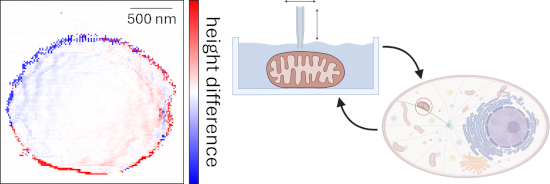
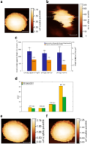
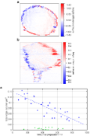
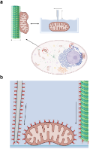
- detection of smaller proteins. Identifying proteins on or within membranes would require advanced mathematical extraction techniques, such as deep learning-based analysis. Throughout the SICM measurements, no appreciable changes in the shape or undulation amplitude of the mitochondria were observed. This
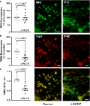
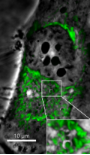
- Fisher Scientific Inc., USA) for 30 min at 37 °C, followed by staining with 5 mmol·L−1 TMRE (Molecular Probes Invitrogen Detection Technologies, Thermo Fisher Scientific Inc., USA) for 30 min at 37 °C. The samples were analysed using a Fluoview FV10i confocal microscope (Olympus, Germany). Oxygen
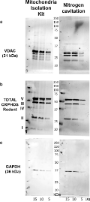
- control (Student’s t-test). Scale bars: 2 μm. Characterisation of isolated mitochondria by Western blot analyses. Detection of specific proteins of (a) the outer (voltage-dependent anion channel, VDAC) and (b) the inner (complexes of the respiratory chain and ATP synthesis, OXPHOS) mitochondrial membrane



Heat-induced transformation of nickel-coated polycrystalline diamond film studied in situ by XPS and NEXAFS
Beilstein J. Nanotechnol. 2025, 16, 887–898, doi:10.3762/bjnano.16.67
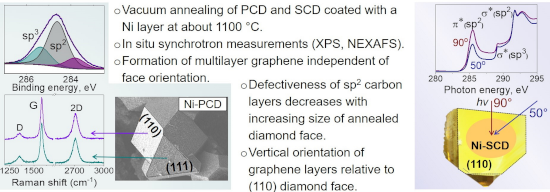
- . Element mapping analysis based on energy-dispersive X-ray (EDX) spectroscopy revealed a uniform distribution of nickel particles in the top layers of all diamond faces after annealing (Supporting Information File 1, Figure S4). The low resolution of the EDX instrument used did not allow the detection of


Insights into the electronic and atomic structures of cerium oxide-based ultrathin films and nanostructures using high-brilliance light sources
Beilstein J. Nanotechnol. 2025, 16, 860–871, doi:10.3762/bjnano.16.65
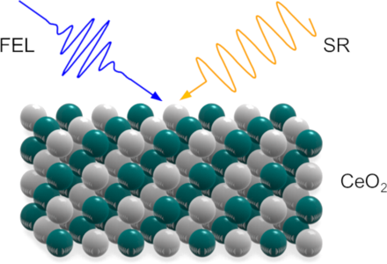
- provided complementary information to that obtained by synchrotron radiation-based photoemission on cerium oxide-based materials. The depth sensitivity of XAS can be tuned on a much wider range than XPS by choosing the desired absorption edge and by selecting a specific detection mode. Moreover
- catalysts. In the soft X-ray range, the relatively high absorption of X-rays by gases or liquids at ambient pressure and the limited inelastic mean free path of secondary electrons, when total electron yield is used as a detection mode, put some constraints on the application of ambient pressure XAS in the


Morphology and properties of pyrite nanoparticles obtained by pulsed laser ablation in liquid and thin films for photodetection
Beilstein J. Nanotechnol. 2025, 16, 785–805, doi:10.3762/bjnano.16.60
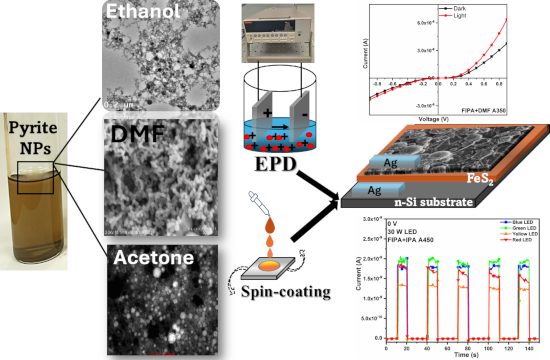
- nanoparticles in photodetection is that the practical detection wavelength range for conventional photosensors may be efficiently tuned by the wavelength-shifting capabilities of nanoparticles, making them appealing candidates for photon detection. The dimensions of the NPs play a crucial role in the shift of






Changes of structural, magnetic and spectroscopic properties of microencapsulated iron sucrose nanoparticles in saline
Beilstein J. Nanotechnol. 2025, 16, 762–784, doi:10.3762/bjnano.16.59
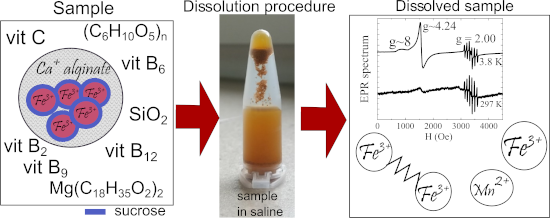
- Fe-containing nanoparticles in the FS0 sample. However, the detection of isolated crystalline nanoparticles with an Fe-containing core does not exclude the possibility of the presence of other forms of iron-containing compounds in the FS0 sample. Comparing the XRD and TEM results for the FST sample





Thickness dependent oxidation in CrCl3: a scanning X-ray photoemission and Kelvin probe microscopies study
Beilstein J. Nanotechnol. 2025, 16, 749–761, doi:10.3762/bjnano.16.58
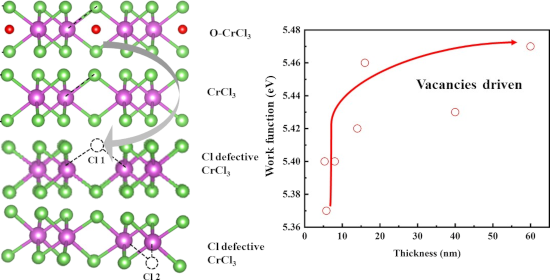
- by the special design of the detection system [23]. In SPEM, the spectra can be recorded in three modes, namely, (1) “focused” (beam size of ≈130 nm), (2) “unfocused” (beam size of ≈2 μm), and (3) the so-called OSA mode with a beam size of ≈75 μm. Figure 4 presents XPS survey spectra obtained with





Synthesis of a multicomponent cellulose-based adsorbent for tetracycline removal from aquaculture water
Beilstein J. Nanotechnol. 2025, 16, 728–739, doi:10.3762/bjnano.16.56
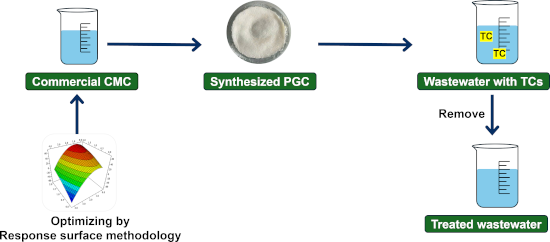
- involvement of Zn2+ in dissolving CMC. The sharp peak at 568 cm−1 corresponds to a Ca‒O bond [25]. EDX EDX analysis revealed the elemental composition of the PGC material, as detailed in Figure 3a,b. Notably, the detection of elements, particularly Zn, in PGC confirms the role of Zn2+ ions in cellulose
- . Additionally, the detection of sulfur in PGC indicates the potential presence of residual ZnSO4 precursor. Figure 3c–l present significant changes in the elemental distribution of O, S, Zn, and Ca in PGC compared to pristine CMC. These elements display a higher density on the surface of PGC. Brunauer–Emmett


Nanostructured materials characterized by scanning photoelectron spectromicroscopy
Beilstein J. Nanotechnol. 2025, 16, 700–710, doi:10.3762/bjnano.16.54
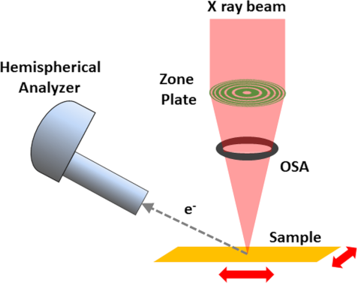
- four decades, several important upgrades have spread the original ability of XPS of chemical analysis to include, for instance, band mapping through angle resolved measurements (ARPES), spin detection, and imaging or spectromicroscopy at a nanoscale spatial resolution [9][10]. It is worth noting that
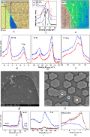
- charged relative to each other. It is evident that this is the mechanism by which the individual fragments are linked into a single crystal. The SPEM technique is fundamental for the detection of such inhomogeneities, given that the photoelectron yield depth in this instance does not exceed 12 angstroms
- surface chemical changes, local charging, and space-charge effects. To partially mitigate this effects, strong efforts must be spent in the development of new photoelectron detection systems capable of collecting the majority of electrons, currently wasted due to the limited acceptance angles of


Colloidal few layered graphene–tannic acid preserves the biocompatibility of periodontal ligament cells
Beilstein J. Nanotechnol. 2025, 16, 664–677, doi:10.3762/bjnano.16.51
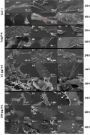
- = 405 nm, using a bandpass emission filter from 406 to 486 nm. The total nuclear volume was determined by optimizing the slicing distance [41]. CV was calculated using a MATLAB script based on Irianto et al.’s method [42], which uses a Sobel gradient-based edge detection technique to assess nuclear edge




Nanoscale capacitance spectroscopy based on multifrequency electrostatic force microscopy
Beilstein J. Nanotechnol. 2025, 16, 637–651, doi:10.3762/bjnano.16.49
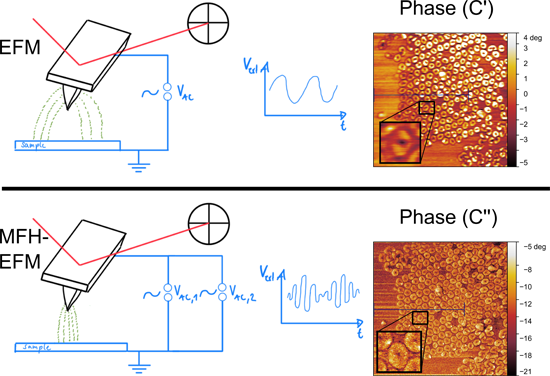
- study materials such as perovskite solar cells [18][19][20] and Li-ion batteries [21][22][23]. AFM enables simultaneous acquisition of topographic and electronic data by applying AC or DC voltages across the tip–sample gap, allowing for the detection of capacitive forces [24][25] or contact potential
- to at least 50 MHz, limited by the bandwidth of the LIA. To reach a nanoscale-sensitive measurement of the dielectric constant in media besides air, a detection at higher excitation frequencies in the megahertz regime is strictly necessary [59]. The indirect detection of local capacitance variations
- multiple of the frequency gap Δω = (ωm,2 − ωm,1) (see Figure 1). Note that the use of integer multiples is a technical limitation coming from our LIA. In principle, any combination of frequencies with Δω = (ωm,2 − ωm,1) would work. We then use lock-in detection to measure the induced mechanical excitation




Nanomaterials in targeting amyloid-β oligomers: current advances and future directions for Alzheimer's disease diagnosis and therapy
Beilstein J. Nanotechnol. 2025, 16, 561–580, doi:10.3762/bjnano.16.44
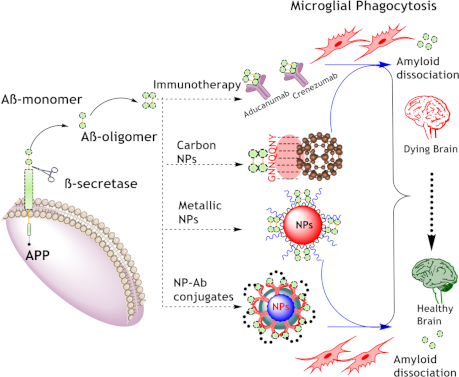
- local inflammation, and impair autophagy processes, which collectively contribute to neuronal loss. As such, targeting AβOs specifically, rather than solely focusing on amyloid-β fibrils (AβFs), may offer a more effective therapeutic approach for AD. Recent advances in detection and diagnosis have
- into their potential for clinical application. This comprehensive overview highlights the current advancements in NM-based therapies for AD and outlines future research directions aimed at optimizing these innovative treatments. Keywords: Alzheimer’s disease; amyloid; amyloid-β oligomers; detection
- toxic conformer of amyloid oligomers. Instead, it appears to be the result of a diverse and heterogeneous population of oligomers. Understanding the factors that influence their toxic nature is crucial for developing tools for early detection and treatment. Despite years of research, targeting AβOs has


Retrieval of B1 phase from high-pressure B2 phase for CdO nanoparticles by electronic excitations in CdxZn1−xO composite thin films
Beilstein J. Nanotechnol. 2025, 16, 551–560, doi:10.3762/bjnano.16.43
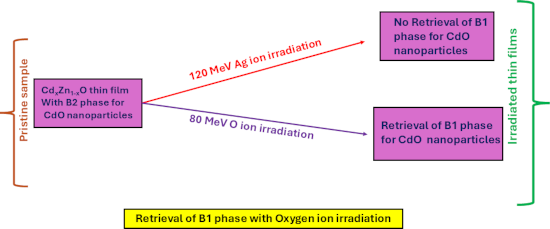
- film. This observation further supports the presence of the Zn2SiO4 phase in the CZ900_313O thin film, which has not been detected in the XRD pattern due to limitations in detection sensitivity. Thus, X-ray absorption spectroscopy (XAS) has effectively addressed this limitation, providing evidence for


Functionalized gold nanoflowers on carbon screen-printed electrodes: an electrochemical platform for biosensing hemagglutinin protein of influenza A H1N1 virus
Beilstein J. Nanotechnol. 2025, 16, 540–550, doi:10.3762/bjnano.16.42
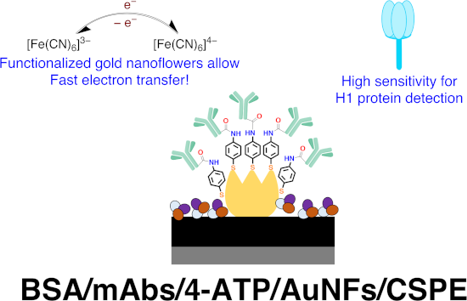
- .16.42 Abstract An electrochemical biosensor based on modified carbon screen-printed electrodes was developed for the detection of hemagglutinin of influenza A H1N1 virus (H1). Gold nanoflowers were electrodeposited on the electrode to increase conductivity and surface area. The electrochemical signal
- current across the electrode as a function of H1 concentration. This was performed on a series of samples of artificial saliva containing H1 protein in a clinically relevant concentration range. In these experiments, the biosensor showed a limit of detection of 19 pg/mL. Finally, the biosensor platform
- lengthy protocols that take a few days to complete, and they fail to detect the virus at early stages of infection because of the low concentration of viral particles. However, detection of viral infections at early stages of infection is essential to prevent the dissemination of pathogens and the





