

Search results
Search for "X-ray" in Full Text gives 1076 result(s) in Beilstein Journal of Nanotechnology. Showing first 200.
The role of a tantalum interlayer in enhancing the properties of Fe3O4 thin films
Beilstein J. Nanotechnol. 2024, 15, 1253–1259, doi:10.3762/bjnano.15.101
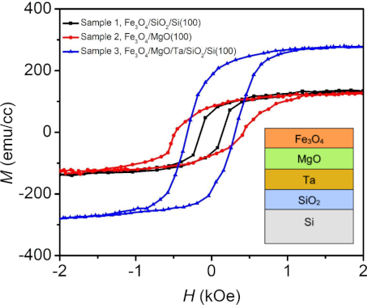
- morphological, structural, and magnetic properties of the deposited samples were characterized with atomic force microscopy, X-ray diffractometry, and vibrating sample magnetometry. The polycrystalline Fe3O4 film grown on MgO/Ta/SiO2/Si(100) presented very interesting morphology and structure characteristics
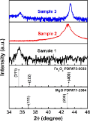
- films on three different types of substrates, namely an amorphous SiO2/Si(100) substrate, a single crystal MgO(100) substrate, and a buffer layer consisting of MgO/Ta/SiO2/Si(100). The properties of Fe3O4 thin films were analyzed using atomic force microscopy (AFM), X-ray diffractometry (XRD), and
- (400) peaks [26][27]: where n is the order of diffraction (n = 1) and λ is the X-ray wavelength (Cu Kα, λ = 1.5406 Å). The lattice constant a of the three Fe3O4 samples was determined by [27][28]: The microstrain in these samples can be calculated from the lattice constant a above by using the


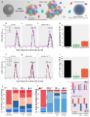
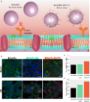
Dual-functionalized architecture enables stable and tumor cell-specific SiO2NPs in complex biological fluids
Beilstein J. Nanotechnol. 2024, 15, 1238–1252, doi:10.3762/bjnano.15.100

Realizing active targeting in cancer nanomedicine with ultrasmall nanoparticles
Beilstein J. Nanotechnol. 2024, 15, 1208–1226, doi:10.3762/bjnano.15.98
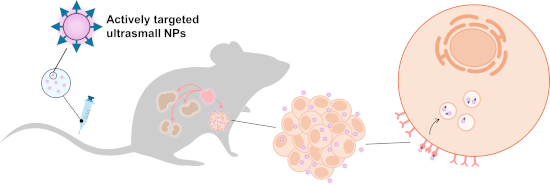
- function as a more conventional NP platform in nanomedicine applications [18][21][22][38][39][40]. In diagnostic applications, usNPs have been employed in diverse imaging modalities, including optical imaging [41][42], X-ray computer tomography [43], photoacoustic imaging [41][44], magnetic resonance
- particles at 4 h p.i., highlighting the superior efficacy of the active targeting strategy over EPR-based passive targeting. X-ray irradiation of tumor-bearing mice treated with targeted AuNCs demonstrated a significant enhancement in radiotherapy effectiveness (Figure 5C). In combination, the selective


Photocatalytic methane oxidation over a TiO2/SiNWs p–n junction catalyst at room temperature
Beilstein J. Nanotechnol. 2024, 15, 1132–1141, doi:10.3762/bjnano.15.92
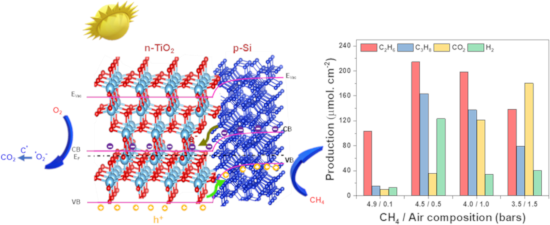
- respective limitations. This study offers new insights into the design of an efficient system for OCM. Results and Discussion Structural and morphological properties For understanding the crystalline structure of TiO2 and SiNWs, X-ray diffraction patterns were recorded as displayed in Figure 1. The XRD
- properties of as-synthesized samples were analyzed using an X-ray diffraction system (XRD, Rigaku, SmartLab) with a 2θ range of 20–80° and a field-emission scanning electron microscope (FE-SEM, Hitachi, S-4700). The absorption properties of the thin films were analyzed using a diffuse reflectance UV–vis


Direct electron beam writing of silver using a β-diketonate precursor: first insights
Beilstein J. Nanotechnol. 2024, 15, 1117–1124, doi:10.3762/bjnano.15.90
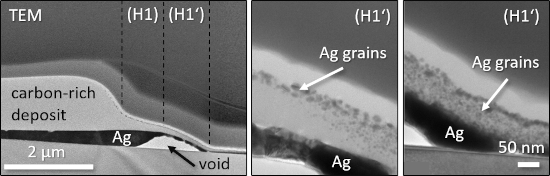
- in a field-emission Hitachi S-4800 SEM. The chemical composition of the deposits was determined using energy-dispersive X-ray (EDX) spectroscopy using a Hitachi S-4800 SEM equipped with an EDAX Genesis 4000 detector and a Tescan Mira dual-beam instrument with an EDAX EDX system. To prove for
- the formation mechanism of the interfacial silver layer deserves further in-depth studies, which are beyond the scope of this article. These studies would involve surface science approaches using mass spectrometry and/or other spectroscopic techniques, such as X-ray photoelectron spectroscopy, and


Unveiling the potential of alginate-based nanomaterials in sensing technology and smart delivery applications
Beilstein J. Nanotechnol. 2024, 15, 1077–1104, doi:10.3762/bjnano.15.88

- a monolayer of gas coverage. The surface area of nanomaterials can also be determined by X-ray photoelectron spectroscopy and secondary ion mass spectroscopy [64][65]. Zeta potential: The zeta potential of nanoparticles can be calculated from the electrophoretic mobility of particles in a particular


Effect of wavelength and liquid on formation of Ag, Au, Ag/Au nanoparticles via picosecond laser ablation and SERS-based detection of DMMP
Beilstein J. Nanotechnol. 2024, 15, 1054–1069, doi:10.3762/bjnano.15.86
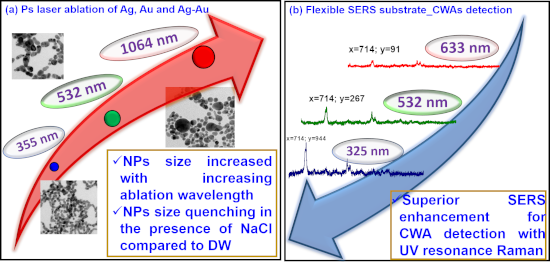
- -dispersive X-ray spectroscopy. Furthermore, NPs of various sizes ranging from 6 to 35 nm were loaded onto a filter paper by a simple and effective drop-casting approach to achieve flexible surface-enhanced Raman spectroscopy (SERS) substrates/sensors. These substrates were tested using a simple, portable
- imaging due to the nonconductive nature of the FP substrate. FESEM energy-dispersive X-ray spectroscopy (EDX) mapping investigations were conducted on Ag/Au alloy NPs deposited on a Si substrate by drop casting 10 µL to avoid confusion in the data caused by the Au coating. Transmission electron microscopy


Entry of nanoparticles into cells and tissues: status and challenges
Beilstein J. Nanotechnol. 2024, 15, 1017–1029, doi:10.3762/bjnano.15.83
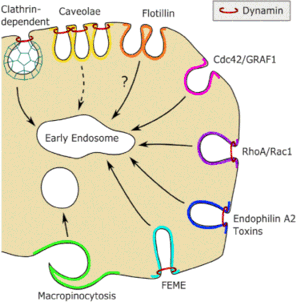
- imaging (i.e., positron emission tomography (PET), single-photon emission computed tomography (SPECT), optical/fluorescence, magnetic resonance imaging (MRI), computed tomography (CT; using X-ray) and ultrasound imaging), and the spatial resolution, depth of imaging, sensitivity, and advantages


Atomistic insights into the morphological dynamics of gold and platinum nanoparticles: MD simulations in vacuum and aqueous media
Beilstein J. Nanotechnol. 2024, 15, 995–1009, doi:10.3762/bjnano.15.81
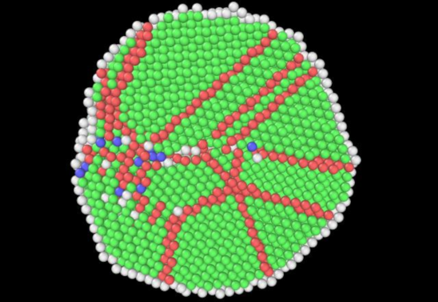
- possess a higher level of crystallinity than the gold counterparts under the same conditions because of the stronger cohesive forces that drive the crystallization process. This observation is also supported by the simulated X-ray powder diffraction patterns of the nanomaterials. The larger NPs have a
- [53]. A combined molecular dynamics and X-ray diffraction analysis of gold NPs has been carried out by Kamiński et al. [54]. The dynamical stability and vibrational properties of Pt nanoclusters by ab initio methods were investigated by Maldonado et al. [55]. A comprehensive review of Pt NPs has been
- their energy interactions. The morphological changes in the NPs are measured using both atomic parameters, such as the coordination number and the Berry parameter, and cluster parameters, such as the X-ray powder diffraction pattern and the asphericity parameter. Furthermore, we extract qualitative


Facile synthesis of Fe-based metal–organic frameworks from Fe2O3 nanoparticles and their application for CO2/N2 separation
Beilstein J. Nanotechnol. 2024, 15, 897–908, doi:10.3762/bjnano.15.74
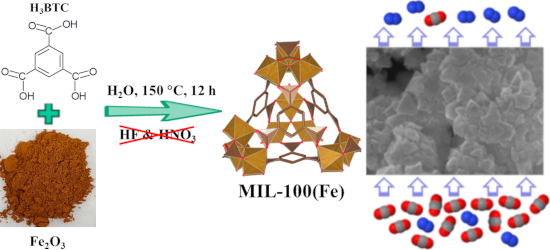
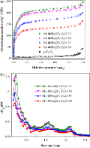
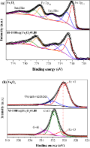
- and yield of the as-prepared MIL-100(Fe) materials, including thermogravimetric analysis (TGA), Fourier-transform infrared (FTIR) spectroscopy, powder X-ray diffraction (PXRD) measurements, determination of textural properties, scanning electron microscopy (SEM), and X-ray photoelectron spectroscopy
- Information File 1. Characterizations The materials’ crystalline structure was identified via room-temperature powder X-ray diffraction (PXRD) patterns from a MiniFlex600 system (Rigaku, Japan). The scan covered a 2θ range of 3–40° at a speed of 6°·min−1. Information regarding the morphologies of Fe2O3 and M





Intermixing of MoS2 and WS2 photocatalysts toward methylene blue photodegradation
Beilstein J. Nanotechnol. 2024, 15, 817–829, doi:10.3762/bjnano.15.68
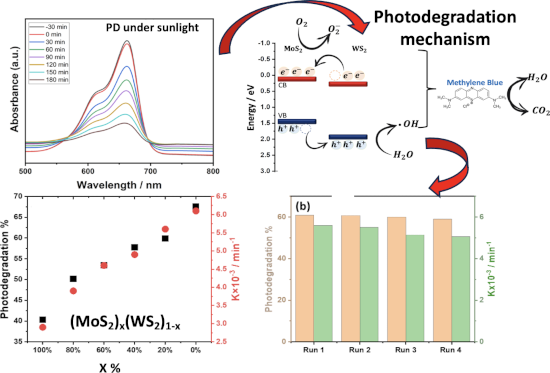
- , the positions of the E12g and A1g vibrational modes in the composite sample did not exhibit any noticeable shifts compared to the observed peaks in individual samples as reported in previous studies [26]. The X-ray diffraction (XRD) diagram shown in Figure 2a exhibits the diffraction peaks at 14.25
- additional peaks observed in all XRD diagrams at ≈37° and ≈69° positions are due to the silicon substrate. The X-ray photoelectron spectroscopy (XPS) survey scans and high-resolution scans for all samples are presented in Figure 3a–j. All XPS analyses were first calibrated using the C 1s peak of carbon at
- experiments, we weighed the samples using a sensitive electronic balance (Secura microbalance, Sartorius) with an accuracy down to 0.01 mg. Structural, crystalline, and vibrational properties of the fabricated materials were examined utilizing X-ray diffraction (D8 Discover diffractometer, Bruker) with a Kα


Electrospun polysuccinimide scaffolds containing different salts as potential wound dressing material
Beilstein J. Nanotechnol. 2024, 15, 781–796, doi:10.3762/bjnano.15.65
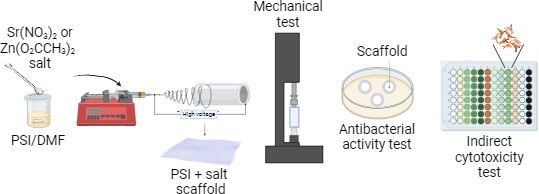
- polymer-based systems (<500 nm). Fourier-transform infrared spectroscopy was applied to verify the presence of salts in the scaffolds and to determine the interaction between the salt and the polymer. Another analysis, energy-dispersive X-ray spectroscopy, was carried out to determine strontium and zinc
- . Scanning electron microscopy and energy-dispersive X-ray spectroscopy Scanning electron microscopy images were taken to determine the fiber diameters of salt-containing polymer scaffolds. They were made at the Budapest University of Technology and Economics, Department of Polymer Technology, applying a
- FTIR analysis, we used an energy-dispersive X-ray spectroscopy (EDX) detector during the SEM measurements to show the presence of salts in the fibers. The EDX spectra were taken at a voltage of 15 kV. Mechanical properties A mechanical testing machine (4952, Instron, USA) and the associated software



Effect of repeating hydrothermal growth processes and rapid thermal annealing on CuO thin film properties
Beilstein J. Nanotechnol. 2024, 15, 743–754, doi:10.3762/bjnano.15.62
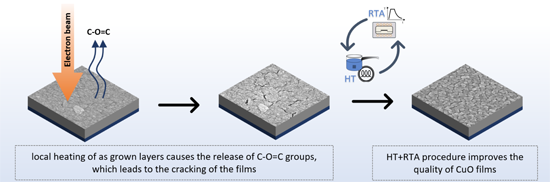
- characterized using an analytical scanning electron microscope (SEM) Hitachi SU-70 with the X-ray microanalysis system (EDX) enabling composition analysis (Thermo Fisher Pathfinder system with a silicon drift detector). Additionally, in the study, a scanning probe microscope (Dimension Icon, Bruker) was used
- underwent structural analysis using a high-resolution X-ray diffractometer X’Pert Pro MRD (Panalytical) equipped with a Cu anode (λ = 1.54060 Å). X-ray photoelectron spectroscopy (XPS) measurements were conducted utilizing a Scienta R4000 hemispherical analyzer with a pass energy of 200 eV and monochromatic




Level set simulation of focused ion beam sputtering of a multilayer substrate
Beilstein J. Nanotechnol. 2024, 15, 733–742, doi:10.3762/bjnano.15.61
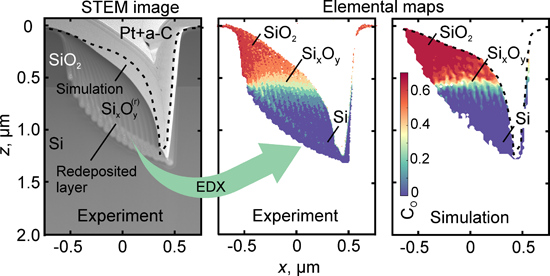
- understanding of the sputtering process, the distribution of oxygen atoms in the redeposited layer derived from the numerical data was compared with the corresponding elemental map acquired by energy-dispersive X-ray microanalysis. Keywords: electron microscopy; focused ion beam; level set simulation
- devices including Fresnel zone plates [4], X-ray lenses [5], optical tweezers [6], and plasmonic antennas [7]. The application of the FIB method is not limited to patterning single-component targets. This technique can also be employed for the modification of multilayer substrates. Depending on the task
- -dispersive X-ray microanalysis with a focus on the distribution of oxygen atoms in the redeposited layer, which was recognized in the elemental map acquired for silicon, oxygen and gallium by the presence of Ga atoms. Subsequent analysis of silicon and oxygen concentrations was performed only in the gallium

![[Graphic 55]](/bjnano/content/inline/2190-4286-15-61-i68.svg?max-width=637&scale=1.18182)


Simultaneous electrochemical determination of uric acid and hypoxanthine at a TiO2/graphene quantum dot-modified electrode
Beilstein J. Nanotechnol. 2024, 15, 719–732, doi:10.3762/bjnano.15.60
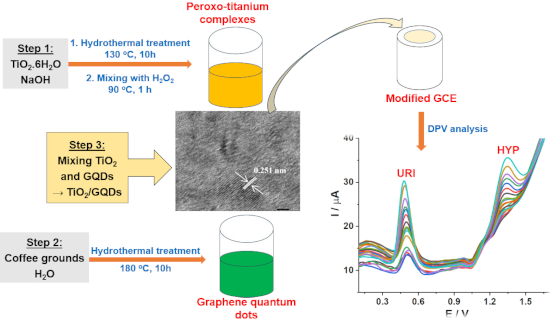
- composite (TiO2/GQDs) obtained by in situ synthesis of GQDs, derived from coffee grounds, and peroxo titanium complexes was used as electrode modifier in the simultaneous electrochemical determination of uric acid and hypoxanthine. The TiO2/GQDs material was characterized by photoluminescence, X-ray
- diffraction, Raman spectroscopy, high-resolution transmission electron microscopy, and energy-dispersive X-ray mapping. The TiO2/GQDs-GCE exhibits better electrochemical activity for uric acid and hypoxanthine than GQDs/GCE or TiO2/GCE in differential pulse voltammetry (DPV) measurements. Under optimized
- provided by the Merck company, Germany. Stock solutions of URI and HYP were prepared prior to use. Equipment The X-ray diffraction patterns of the suspensions of GQDs, peroxo titanium complexes, and TiO2/GQDs were recorded on a D8 Advance, Bruker, Germany with background subtraction. The morphologies of


Elastic modulus of β-Ga2O3 nanowires measured by resonance and three-point bending techniques
Beilstein J. Nanotechnol. 2024, 15, 704–712, doi:10.3762/bjnano.15.58
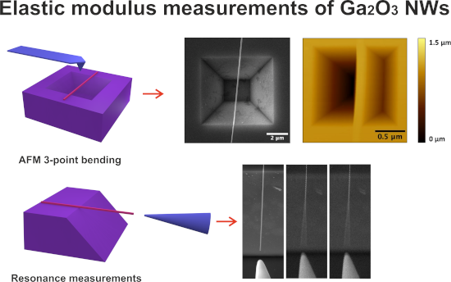
- of the synthesised NWs were investigated using X-ray diffraction, transmission and scanning electron microscopies. The resonance tests yielded the mean elastic modulus of 34.5 GPa, while 75.8 GPa mean value was obtained via three-point bending. The measured elastic moduli values indicate the need for
- -Ga2O3 NW synthesis methods and detailed post-examination of their mechanical properties before considering their application in future nanoscale devices. Results For structural analysis of the as-grown NW arrays on Si(100)/SiO2 substrates, X-ray diffraction (XRD) measurements were conducted. The marked
- information on the crystalline structure of NWs. Fast Fourier transformation was performed on the obtained TEM images to determine crystalline orientations. The structure was also analysed using XRD on a Rigaku MiniFlex 600 X-ray powder diffractometer. The measurements were conducted in Bragg–Brentano θ/2θ


Gold nanomakura: nanoarchitectonics and their photothermal response in association with carrageenan hydrogels
Beilstein J. Nanotechnol. 2024, 15, 678–693, doi:10.3762/bjnano.15.56
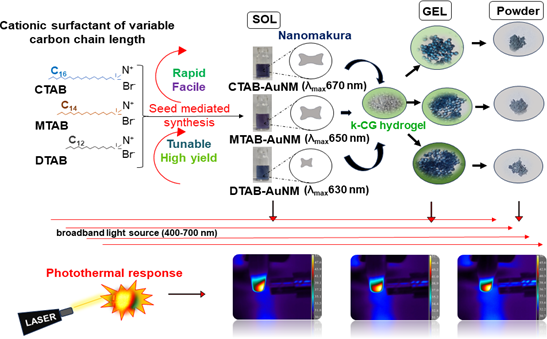
- . Also, the photothermal responses of the nanoparticles in association with k-CG hydrogels were assessed, indicating their potential in biomedical applications. Furthermore, characterization such as zeta potential, crystallinity, and surface functionalization were investigated through ZetaSizer, X-ray
- , respectively. The observed trend in decreasing aspect ratio is CTAB-AuNM > MTAB-AuNM > DTAB-AuNM. Fourier-transform infrared spectroscopy and X-ray diffraction analysis The CTAB-, MTAB-, and DTAB-capped gold nanoparticles exhibited strong peaks at 2848 and 2915 cm−1 due to symmetric and asymmetric C–H
- scanning electron microscopy with energy-dispersive X-ray spectroscopy (SEM/EDX) of the powdered form of AuNM, as shown in Supporting Information File 1, Figure S4. Growth mechanism in AuNMs during seed-mediated synthesis Seed-mediated synthesis approach has been adopted in the present work which is quite






Exfoliation of titanium nitride using a non-thermal plasma process
Beilstein J. Nanotechnol. 2024, 15, 631–637, doi:10.3762/bjnano.15.53
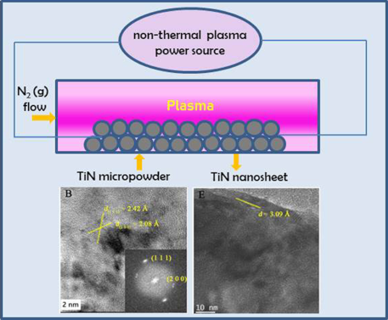
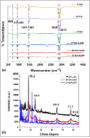
- temperature to generate ionized particles. These ionized species interact with the ceramic crystal of TiN, resulting in a pronounced structural expansion. The exfoliated TiN products were comprehensively characterized using transmission electron microscopy, X-ray diffraction, and Raman spectroscopy
- microscope operating at 200 kV. X-ray diffraction (XRD) analysis was conducted using a diffractometer (Miniflex II) with Cu Kα radiation over a 2θ range of 20–90°, with a scan speed of 2° per minute. Furthermore, Raman spectra were obtained using a spectrometer (Horiba Scientific MacroRam Raman) equipped
- peak positions, approximately 0.1° less positive, was observed in the X-ray diffractograms for the exfoliated material. This shift aligns with the indications of reduced crystallite size and is consistent with the outcomes reported by de Souza et al. [17], who obtained few layers of hexagonal BN using



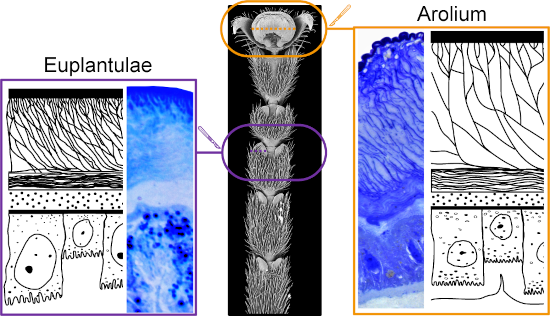
Comparative analysis of the ultrastructure and adhesive secretion pathways of different smooth attachment pads of the stick insect Medauroidea extradentata (Phasmatodea)
Beilstein J. Nanotechnol. 2024, 15, 612–630, doi:10.3762/bjnano.15.52
- tarsus was dehydrated with an ascending EtOH sequence at 4 °C on a shaker, and subsequently critical point dried using Leica EM CPD300 (Leica, Wetzlar, Germany). The tarsus was scanned using a Skyscan®1172 µCT (Bruker micro‐CT; CT‐scanner settings: X‐ray source: 40 kV, 250 μA, 360 rotation, 0.2 rotation
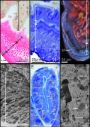
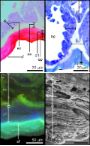
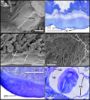
- the ventral side of the euplantulae revealed a dense hull (lighter grey) and a more X-ray transparent body (darker grey) (Figure 4A). Toluidine blue staining detected a darker blue stained hull and a lighter blue body (Figure 4B). The SEM images unveiled a rather smooth surface topography (Figure 4C




AFM-IR investigation of thin PECVD SiOx films on a polypropylene substrate in the surface-sensitive mode
Beilstein J. Nanotechnol. 2024, 15, 603–611, doi:10.3762/bjnano.15.51
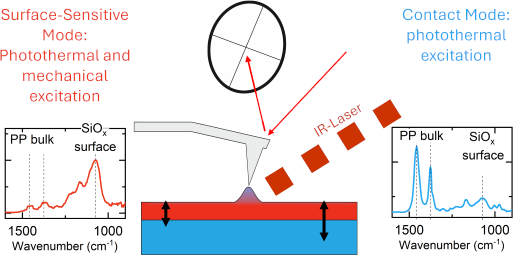
- with a 5 nm SiOx coating was used and, additionally to the AFM-IR spectra, a hyperspectral image was collected in contact mode. In addition to photothermal AFM-IR measurements in contact mode and surface-sensitive mode, the surface was analyzed with near-ambient pressure X-ray photoelectron
- spectroscopy (NAP-XPS) using a NAP-XPS system with a Phoibos150 NAP analyzer from Specs Surface Nano Analysis GmbH. The setup has a µ-FOCUS 600 X-ray monochromator NAP source working with monochromatic Al Kα radiation at 1468.7 eV. The power was set to 50 W for all measurements. For the environmental charge


Stiffness calibration of qPlus sensors at low temperature through thermal noise measurements
Beilstein J. Nanotechnol. 2024, 15, 580–602, doi:10.3762/bjnano.15.50
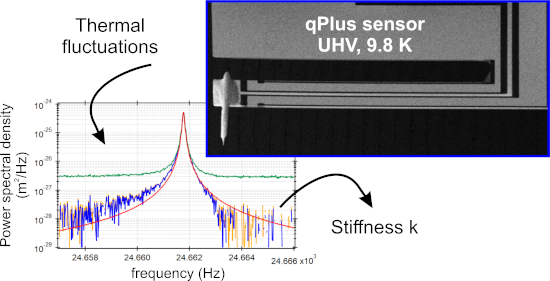
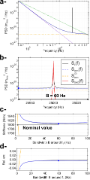
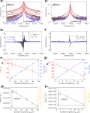
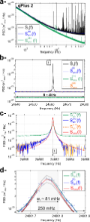
- used for imaging. At 15 kV, the resolution is 0.6 nm. Energy-dispersive X-ray spectroscopy (EDS) chemical analyses have been performed too, for which an EDAX Octane Silicon Dri Detector (129 eV energy resolution for manganese) coupled to the SEM was used at 15 kV. A large side view (cf. Figure 1a

Radiofrequency enhances drug release from responsive nanoflowers for hepatocellular carcinoma therapy
Beilstein J. Nanotechnol. 2024, 15, 569–579, doi:10.3762/bjnano.15.49
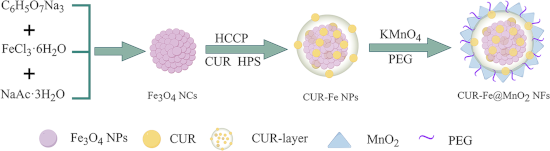
- substituted by O–H. Additionally, other characteristic absorption peaks of CUR and HPS were retained. These findings confirmed the successful synthesis of CUR-Fe@MnO2 NFs. According to the X-ray diffraction (XRD) pattern (Figure 2g), the 2θ diffraction peaks at 30.1° (220), 35.4° (311), 37.0° (222), 43.1
- Scientific, USA) in the range of 400–4000 cm−1. The X-ray diffractometer patterns were characterized by the X-ray diffractometer (D8 ADVANCE, Bruker, Karlsruhe, Germany). The iron and manganese concentrations were determined using an inductively coupled plasma mass spectrometry (ICP‒MS) (7800, Agilent, Santa


Aero-ZnS prepared by physical vapor transport on three-dimensional networks of sacrificial ZnO microtetrapods
Beilstein J. Nanotechnol. 2024, 15, 490–499, doi:10.3762/bjnano.15.44
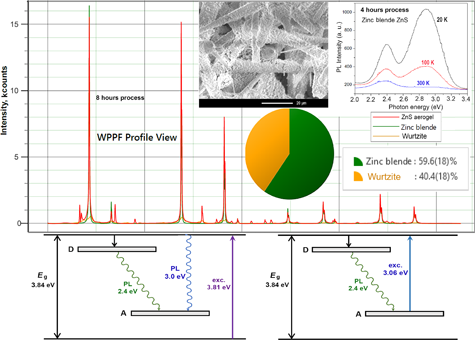
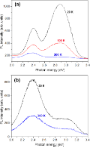
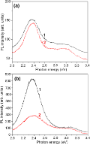
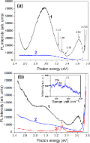
- produced material is investigated by scanning electron microscopy (SEM), while its crystalline and optical qualities are assessed by X-ray diffraction (XRD) analysis and photoluminescence (PL) spectroscopy, respectively. We demonstrate possibilities for controlling the composition and the crystallographic
- sensor applications. Keywords: aeromaterial; crystallographic structure; luminescence; physical vapor transport; scanning electron microscopy (SEM); X-ray diffraction (XRD); Introduction Porous materials represent a class of solid-state networks widely used in adsorptive and photocatalytic removal of
- Instruments. The structural properties were investigated by X-ray diffraction measurements on a Rigaku MiniFlex 600 diffractometer with Cu Kα radiation (λ=1.540598 Å) in a standard 2θ Bragg–Brentano configuration, operating at 45 kV beam voltage and 15 mA beam current. Photoluminescence (PL) was excited by



Photocatalytic degradation of methylene blue under visible light by cobalt ferrite nanoparticles/graphene quantum dots
Beilstein J. Nanotechnol. 2024, 15, 475–489, doi:10.3762/bjnano.15.43
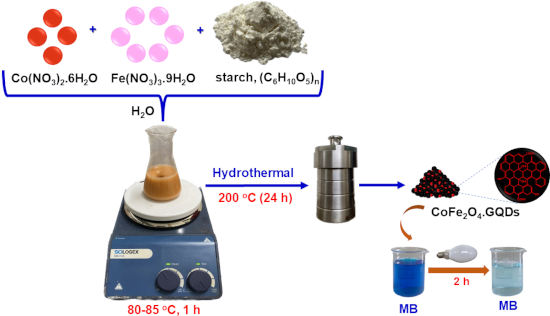
- synthesize cobalt ferrite nanoparticles/graphene quantum dots (CF/GQDs). The material was prepared from a homogeneous mixture of iron nitrate, cobalt nitrate, and starch at 140, 180 and 200 °C in a 24 h thermal hydrolysis process. The obtained materials were characterised by using X-ray diffraction, scanning
- benzoquinone (C6H4O2) was provided by Sigma-Aldrich, USA. Sodium hydroxide (NaOH, ≥96%) and hydrogen chloride (HCl, 38%) were purchased from Xilong, China. Instruments X-ray diffraction (XRD) patterns were recorded by using a D8 Advance (Bruker, Germany) with Cu Kα radiation (λ = 0.154 nm). Fourier-transform
- Tristar-3030 system (Micromeritics, USA). The magnetic properties were measured on a Micro Sense vibrating-sample magnetometer (VSM) at room temperature. Scanning electron microscopy (SEM) observations and energy-dispersive X-ray elemental mapping (EDX mapping) were carried out on a Hitachi S-4800 FESEM




Fabrication of nanocrystal forms of ᴅ-cycloserine and their application for transdermal and enteric drug delivery systems
Beilstein J. Nanotechnol. 2024, 15, 465–474, doi:10.3762/bjnano.15.42
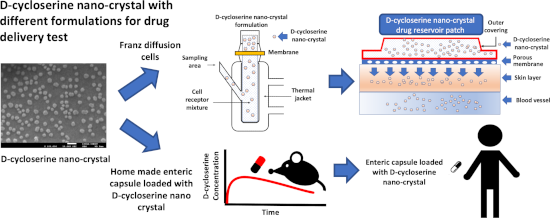
- improve the bioavailability. In this study, for the first time, DCS, a highly water-soluble compound, has formed nanocrystals and this was confirmed by scanning electronic microscopy and X-ray powder diffraction. Furthermore, DCS nanocrystals were applied to several formulations to test their stability
- ., Ltd.) for 10 min. The collection was vacuum-dried to obtain DCS nanocrystals. Characterization of DCS nanocrystals The DCS nanocrystals were analyzed via scanning electronic microscopy (SEM, JEOL Ltd.) and X-ray powder diffraction (XRPD, Bruker AXS GmbH). For SEM, commercial DCS was spreaded onto a
- formulation in the transdermal delivery system. Scanning electron microscopy images of commercial DCS (A) and DCS nanocrystals (B). The X-ray powder diffraction spectra of DCD nanocrystal and commercial DCS. The pH stability test of DCS in neutral (pH 7.4) and acidic (pH 1.2) environments (p < 0.01). In vitro