Search results
Search for "response" in Full Text gives 1025 result(s) in Beilstein Journal of Nanotechnology. Showing first 200.
Time-resolved probing of laser-induced nanostructuring processes in liquids
Beilstein J. Nanotechnol. 2025, 16, 968–1002, doi:10.3762/bjnano.16.74
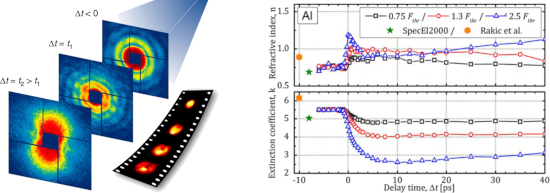
- laser-excited NPs. While the TAS technique provides insight into the electronic properties of the NPs, it is, however, unable to reveal the response of the surrounding liquid to the excitation. To this end, the time-resolved scattering techniques based on X-rays and electrons are more appropriate
- within a liquid environment. Potential applications of UED include investigating the non-thermal heating of water molecules surrounding NPs, which occurs on femtosecond to picosecond timescales, as well as examining the response of the water environment to heat transfer and the mechanical work performed
- understanding of the optical response of the SPR helped to clarify specifics of electron dynamics and coupling to the phonons and close boundaries. Valleé and Del Fatti et al. [117][118] and others [119][120] addressed size effects of electron dynamics as well structural relaxations by these model systems


Shape, membrane morphology, and morphodynamic response of metabolically active human mitochondria revealed by scanning ion conductance microscopy
Beilstein J. Nanotechnol. 2025, 16, 951–967, doi:10.3762/bjnano.16.73
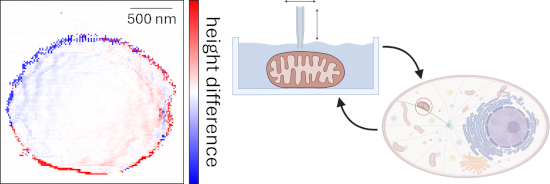
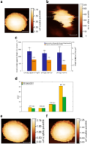
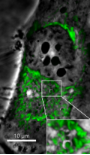
- SPM techniques, the time constant is sufficiently large to allow a morphodynamic response. Morphodynamic effects are particularly pronounced at the edges of mitochondria. When a mitochondrion adopts a more spherical shape through morphodynamic activity, the maximum apparent height increases slightly
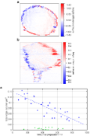
- morphodynamic response of mitochondria. Figure 5c illustrates the correlation between the measured TEV and the time elapsed since sample preparation tP. The time elapsed since sample preparation begins after the thawing of the isolated mitochondria. The observed time dependence of TEV(tP) (blue markers) follows
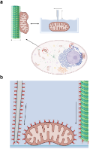
- , with response times of the order of seconds or less [6][41][50]. The binding process between microtubules and mitochondria is well known [40][41]. The precise mechanism by which mitochondria and microtubules locate each other remains unclear, but their interaction is too directional to be coincidental



Tendency in tip polarity changes in non-contact atomic force microscopy imaging on a fluorite surface
Beilstein J. Nanotechnol. 2025, 16, 944–950, doi:10.3762/bjnano.16.72
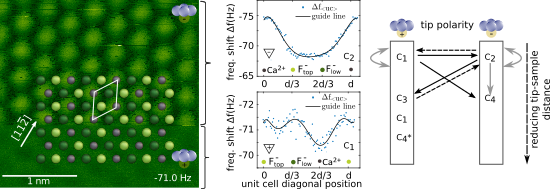
- foremost tip atom may rearrange to minimize the tip surface energy in response to increasing tip–sample interaction forces. Here, we perform an experimental investigation of tip changes during NC-AFM imaging of a CaF2(111) surface with non-functionalized tips at both room temperature (RT) and low


Synthesis of biowaste-derived carbon-dot-mediated silver nanoparticles and the evaluation of electrochemical properties for supercapacitor electrodes
Beilstein J. Nanotechnol. 2025, 16, 933–943, doi:10.3762/bjnano.16.71
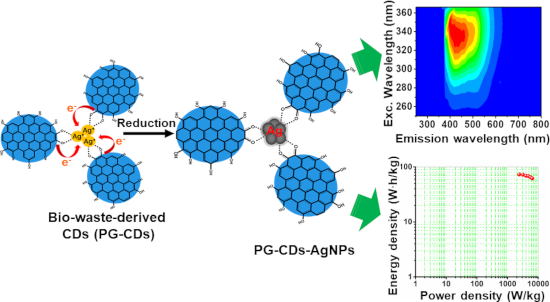
- activity, which can then optimize the capacitive response. Supporting Information File 1, section S1 contains the details of the electrochemical characterization techniques. Figure 5a depicts the CV plot of PG-CDs-AgNPs electrode at various scan rates (5–200 mV/s). It is evident through the PG-CDs-AgNPs CV


Ar+ implantation-induced tailoring of RF-sputtered ZnO films: structural, morphological, and optical properties
Beilstein J. Nanotechnol. 2025, 16, 872–886, doi:10.3762/bjnano.16.66
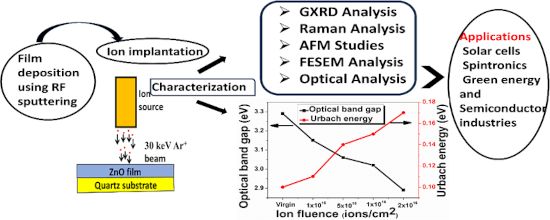
- response to a rise in ion fluence. The ion implantation-induced lattice disorder and lattice damage as functions of the ion fluence were studied in terms of displacement produced per atom in the host lattice calculated using TRIM simulations [19] and were correlated with changes in Urbach energy. The films
- with an increase in ion fluence, which is coherent with a decrease in particle size. This depicts the effect of the surface morphology on the optical response of implanted films [44]. The intensity of these absorption peaks rises with the increase in ion fluence, which points towards an increase in


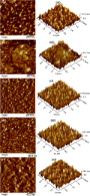
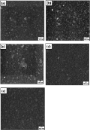


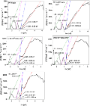


Facile one-step radio frequency magnetron sputtering of Ni/NiO on stainless steel for an efficient electrode for hydrogen evolution reaction
Beilstein J. Nanotechnol. 2025, 16, 837–846, doi:10.3762/bjnano.16.63
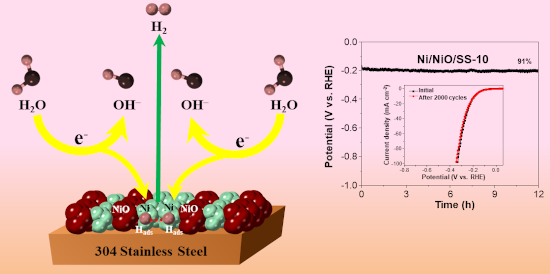
- long-term electrochemical stability of the Ni/NiO/SS-10 electrode via three methods, that is, chronopotentiometry, CV, and chronoamperometry. The potential–time response revealed that approximately 91% of the initial voltage is retained after 12 h of continuous hydrogen production at a cathodic current
- /NiO/SS-20 electrodes at an overpotential of 200 mV. (c) Potential–time response of the Ni/NiO/SS-10 electrode measured over a period of 12 h. Inset: Polarization curves recorded initially and after 2000 CV cycles of the Ni/NiO/SS-10 electrode. (d) Chronoamperometric curve of Ni/NiO/SS-10 electrode
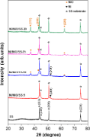


Synthesis and magnetic transitions of rare-earth-free Fe–Mn–Ni–Si-based compositionally complex alloys at bulk and nanoscale
Beilstein J. Nanotechnol. 2025, 16, 823–836, doi:10.3762/bjnano.16.62
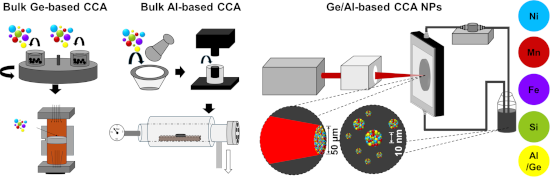
- ablation in liquid; rare-earth free; Introduction Magnetic phase transitions are characterized by changes in the material’s magnetic properties in response to varying conditions such as applied magnetic or electric fields, temperature, and/or pressure. In particular, the magnetic phase transition at the
- Ni55.2Mn18.6Ga26.2, a giant magnetocaloric response with a ΔS of −20.4 J·kg−1·K−1 at 317 K in a 5 T field can be achieved compared to Ni57.2Mn15.9Ga27.0 where a ΔS of just −2 J·kg−1·K−1 at 310 K was witnessed. Within the myriad of material systems exhibiting magnetic transitions, compositionally complex alloys (CCAs
- , regardless of the target preparation technique. Additionally Gatsa et al. [49] provide a realistic perspective that the CCA NPs production using a multibeam PLAL approach can be scaled up to ca. 3 g·h−1. The CCA NPs produced by PLAL have shown a promising response as catalysts for oxygen reduction reactions


Morphology and properties of pyrite nanoparticles obtained by pulsed laser ablation in liquid and thin films for photodetection
Beilstein J. Nanotechnol. 2025, 16, 785–805, doi:10.3762/bjnano.16.60
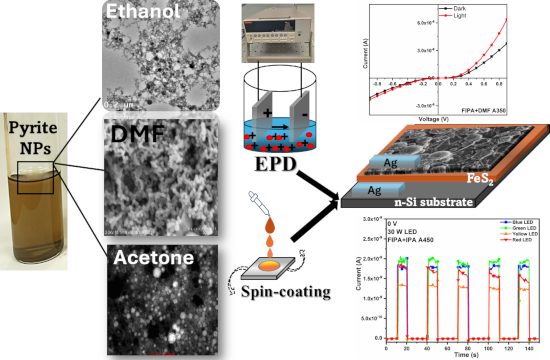
- number of benefits, including small size, light weight, affordable price, low power consumption, high photoresponsivity, quick response, and most importantly, it independently operates without an external power supply and relies on the built-in potential, which helps to save energy [33]. Moreover, self
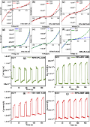
- LEDs were 465, 520, 590, and 620 nm for blue, green, yellow, and red LEDs, respectively. In the self-powered mode, spikes and overshoots can be seen in the transient photocurrent response of FIPA+IPA A350 film (Figure 11b and Supporting Information File 1, Figure S6b), which are typically interpreted
- as indicators of surface recombination. Peter et al. have explained this mechanism in semiconductor photoanodes [63]. When light is turned on, an immediate photocurrent appears due to the rapid separation of electron–hole pairs in the space charge region. This initial response is followed by a decay






Serum heat inactivation diminishes ApoE-mediated uptake of D-Lin-MC3-DMA lipid nanoparticles
Beilstein J. Nanotechnol. 2025, 16, 740–748, doi:10.3762/bjnano.16.57
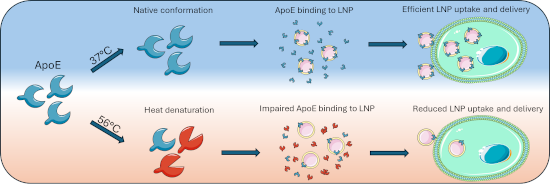
- Biosciences). Cell mean fluorescence intensity (MFI) was analyzed with FACS Diva software. ApoE dose response LNP uptake A day before the experiment, HMEC-1 were seeded in a gelatin coated 48-well plate (5 × 10⁴ cells/well) and allowed to adhere overnight. The next day, serum-free medium was supplemented with


Synthesis of a multicomponent cellulose-based adsorbent for tetracycline removal from aquaculture water
Beilstein J. Nanotechnol. 2025, 16, 728–739, doi:10.3762/bjnano.16.56
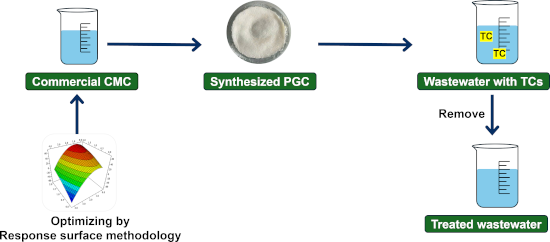
- -based multicomponent adsorbent material (PGC) synthesized from sodium carboxymethyl cellulose and investigated factors influencing its TC adsorption capacity. The synthesis process was optimized using parameters derived from the response surface methodology. The surface and structural properties of PGC
- effective adsorbent for the removal of average 70% TC antibiotic residues, particularly oxytetracycline, chlortetracycline, TC, and doxycycline. Keywords: adsorption; aquaculture water; removal efficiency; response surface methodology; tetracycline antibiotic; Introduction The aquaculture industry plays a
- ) and polyvinyl alcohol (PVA); and cationized with Ca2+ and Zn2+ for the removal of TC from aquaculture effluents. Our approach involves optimizing the material’s synthesis using the response surface methodology, and a wide range of characterization methods was performed to assess the surface


Nanostructured materials characterized by scanning photoelectron spectromicroscopy
Beilstein J. Nanotechnol. 2025, 16, 700–710, doi:10.3762/bjnano.16.54
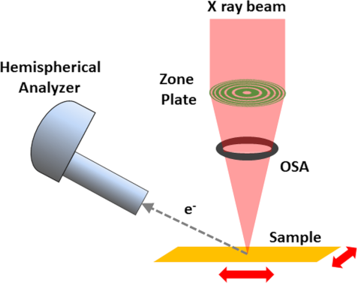
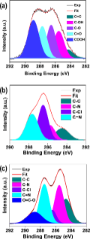
- spectroscopy can provide an elemental, chemical, and electronic mapping of sample surfaces in the pristine form or after/during their response to external stimuli such as temperature changes, electric and magnetic fields, and light and gas exposure. In the first example chemical heterogeneous layered
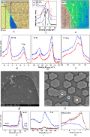


The impact of tris(pentafluorophenyl)borane hole transport layer doping on interfacial charge extraction and recombination
Beilstein J. Nanotechnol. 2025, 16, 678–689, doi:10.3762/bjnano.16.52
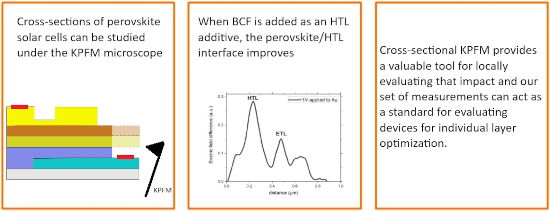
- for static KPFM, which allows us to evaluate the response of our cells under both applied voltages and under illumination. Kelvin probe force microscopy characterization with an applied voltage When charges get generated, they drift to the sides of the device to externally recombine, or in the case of


Colloidal few layered graphene–tannic acid preserves the biocompatibility of periodontal ligament cells
Beilstein J. Nanotechnol. 2025, 16, 664–677, doi:10.3762/bjnano.16.51
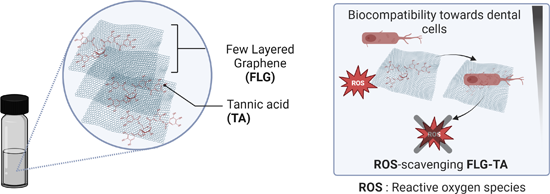
- . The cellular response on different graphene surfaces was previously studied, and it was demonstrated that substrate characteristics such as surface roughness, surface chemistry, and electronic properties can influence cell response [38]. The implications of these results are particularly significant




Nanoscale capacitance spectroscopy based on multifrequency electrostatic force microscopy
Beilstein J. Nanotechnol. 2025, 16, 637–651, doi:10.3762/bjnano.16.49
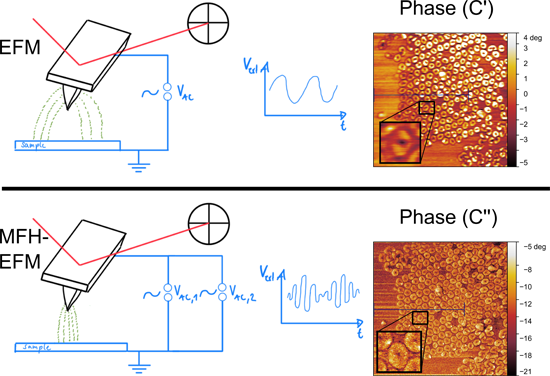
- frequency space. Single-pass second-harmonic EFM in the attractive regime has been used to detect the cantilever response at the second harmonic of the electrostatic force (2ω) [68][69][70][72] generated when Δωe spans the range from 8 kHz to 2 MHz [70]. SCFM in the megahertz regime has been implemented [70
- ][71] as well as a heterodyne-based EFM mode [59][72][73][78]. By using a low-frequency modulation of a high-frequency electrostatic drive, the response can be picked up either via a frequency shift or by an electrostatic response at one of the cantilever’s resonance frequencies. Thus, the dielectric
- response can be studied at almost arbitrary frequencies. Using this method, Gramse et al. have demonstrated broadband spectroscopy of dielectric layers in air [72] and water [59]. Building on this idea, we propose a novel, multifrequency AFM-based method for nanoscale capacitance characterization at




A formulation containing Cymbopogon flexuosus essential oil: improvement of biochemical parameters and oxidative stress in diabetic rats
Beilstein J. Nanotechnol. 2025, 16, 617–636, doi:10.3762/bjnano.16.48
- prescribed in DM therapy, they can result in limited efficacy and cause various adverse reactions such as dyspepsia, abdominal pain, nausea, and lactic acidosis [3], which vary according to the hypoglycemic agent used and the patient’s individual response. As an alternative to conventional DM treatments
- cytoplasmic vesicles, indicating dysfunction in metabolization and impaired cell metabolism. This finding, associated with necrosis and inflammation, suggests an exacerbated cellular response to an aggressive agent, leading to structural collapse of the liver tissue. These histopathological changes indicate
- . The structural alteration observed, marked by the separation of cells and loss of cohesion between them, compromised the integrity of the pancreatic parenchyma, which may indicate dysfunction in enzyme production and secretion, as well as an exacerbated inflammatory response. In addition, cell




Polyurethane/silk fibroin-based electrospun membranes for wound healing and skin substitute applications
Beilstein J. Nanotechnol. 2025, 16, 591–612, doi:10.3762/bjnano.16.46
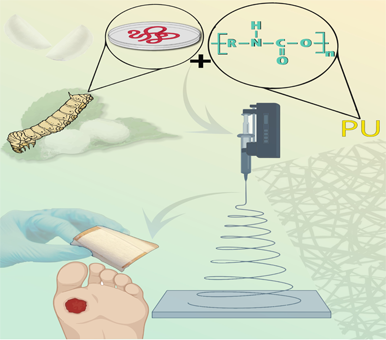
- response, is extensively investigated by addressing its molecular structure, composition, and medical uses. PU is a candidate for potential biomedical applications because of its strength, flexibility, biocompatibility, cell-adhesive properties, and high resistance to biodegradation. PU combined with silk
- remodeling of tissues or maturation [32]. Hemostasis After an injury, the first response is contraction blood vessels and coagulation of blood to reduce blood and fluid loss. Platelets play a key role in hemostasis function. Platelet receptors interact with ECM proteins, such as collagen, fibronectin, and
- wound from infection, and clears the debris [38]. Necrotic cells and injured tissue release signals that trigger the immune response. The resident immune cells such as Langerhans cells, mast cells, T cells, and macrophages respond to the injury-induced signals. Pro-inflammatory molecules, chemokines



Nanomaterials in targeting amyloid-β oligomers: current advances and future directions for Alzheimer's disease diagnosis and therapy
Beilstein J. Nanotechnol. 2025, 16, 561–580, doi:10.3762/bjnano.16.44
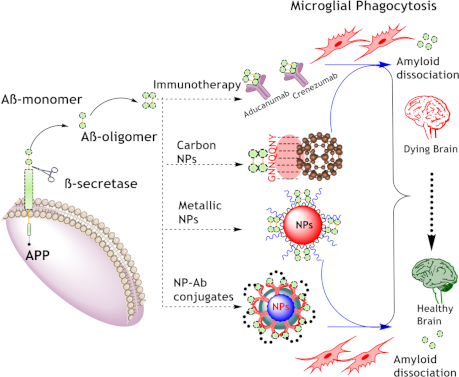
- exist in equilibrium with monomeric and fibrillar forms. This dynamic nature poses a challenge for therapies that rely on specific binding, as the target may change rapidly in response to environmental factors or therapeutic intervention. As a result, the predominant strategies for targeting AβOs have
- nanobiomaterials derived from cell primitives as a promising therapeutic strategy. These biomimetic nanomaterials, comprising components such as cells, extracellular vesicles (EVs), and cell membranes offer several advantages. Their nanoparticulate size facilitates long-term circulation, reduces immune response
- demonstrated a linear response over nine orders of magnitude, with a detection limit of 1 fg/mL. This approach holds promise for early diagnosis and treatment of amyloid-related diseases [64]. Moreover, antibodies can facilitate the uptake of NPs by cells, a crucial step for delivering therapeutic payloads to


Retrieval of B1 phase from high-pressure B2 phase for CdO nanoparticles by electronic excitations in CdxZn1−xO composite thin films
Beilstein J. Nanotechnol. 2025, 16, 551–560, doi:10.3762/bjnano.16.43
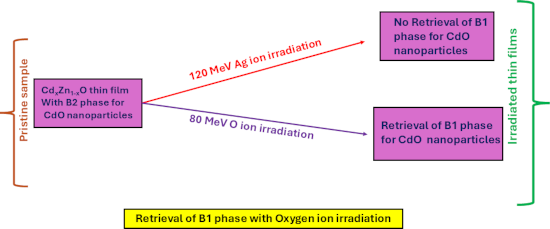
- irradiation stability of the B2 phase through SHI with 120 MeV silver and 80 MeV oxygen ions, revealing distinct behaviors in response to each ion type. Silver ion irradiation was shown to induce amorphization in the B2 phase, while oxygen ion irradiation led to the notable recovery of the B1 phase. This


Functionalized gold nanoflowers on carbon screen-printed electrodes: an electrochemical platform for biosensing hemagglutinin protein of influenza A H1N1 virus
Beilstein J. Nanotechnol. 2025, 16, 540–550, doi:10.3762/bjnano.16.42
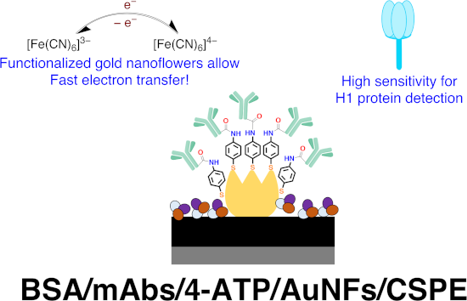
- quantify H1 of influenza A H1N1 virus at clinically relevant concentrations with high accuracy and sensitivity in a complex matrix such as artificial saliva (Figure 1). The biosensing system can also be coupled to a microfluidics system without significant decrease in the electrochemical response. The
- based on electrodeposition of gold nanoflowers increased the current response of the electrode because of the larger electroactive surface area compared to a CSPE (Figure 3). The CV analysis of the AuNFs/CSPE showed a peak-to-peak separation of 0.37 V. This value is smaller than in the commercial CSPE
- largest change in the CV was observed after the functionalization of the AuNFs with 4-ATP through stable Au–S bonds. In this case, the peak-to-peak separation for the 4-ATP/AuNFs/CSPE was 0.16 V, showing that the redox reversibility for the [Fe(CN)6]3−/4− pair and the current response of the electrode


Water in nanoporous hexagonal boron nitride nanosheets: a first-principles study
Beilstein J. Nanotechnol. 2025, 16, 510–519, doi:10.3762/bjnano.16.39
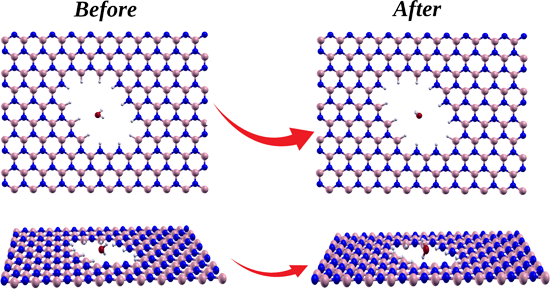
- graphene membranes interacting with water, where wrinkles significantly impact the mechanical response of the membranes when filled with water on a platform. Conclusion Our investigation of pores in a free-standing hexagonal boron nitride monolayer sheds light on the intricate interactions between 2D




Performance optimization of a microwave-coupled plasma-based ultralow-energy ECR ion source for silicon nanostructuring
Beilstein J. Nanotechnol. 2025, 16, 484–494, doi:10.3762/bjnano.16.37
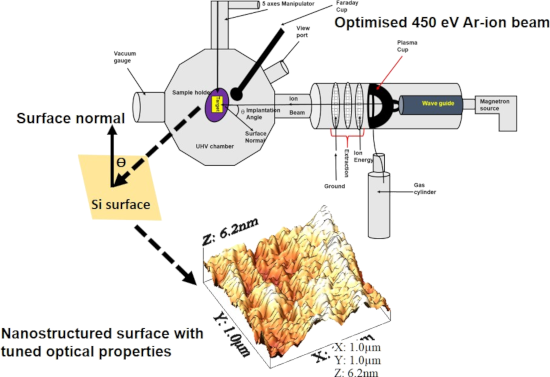
- confirm the formation of nanostructures as observed from atomic force microscopy (AFM) images. The thickness of the amorphous thin layer is in good agreement with Monte Carlo simulations (SRIM) [31]. The article further investigates and explains the optical response (by UV–vis spectrometry) of the
- surface The optical response of pristine and Ar-ion-induced nanopatterned silicon surfaces are investigated through UV–vis reflectivity measurements and presented in Figure 8. Figure 8a depicts the change in reflectivity of the silicon surface due to the presence of nanopatterns. With the increase of


Synthetic-polymer-assisted antisense oligonucleotide delivery: targeted approaches for precision disease treatment
Beilstein J. Nanotechnol. 2025, 16, 435–463, doi:10.3762/bjnano.16.34
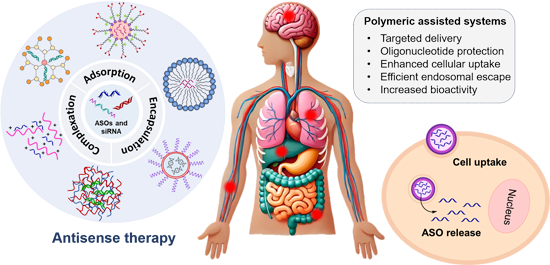
- by RNase H. Nevertheless, the low binding affinities to their target RNA can trigger immunostimulatory response and cause off-target effects [18]. To overcome these limitations, newer generations of antisense nucleotides were designed to improve binding affinity and hybridisation stability with
- amounts of tissue that need to be targeted to achieve a therapeutic response, and the large degree of tissue-to-tissue variability [44][45][46][47]. Negatively charged ASOs including phosphorothioate backbone oligonucleotides (PS), gapmer ASOs, tcDNA, and LNAs can interact with plasma proteins, which
- peptides on their surface significantly improved the intracellular delivery of LOR-2501, a negatively charged phosphorothioate ASO [121]. Another strategy to improve colloidal stability, decrease cytotoxicity and immune response, and reduce the renal clearance of PEI delivery systems is through the


Quantification of lead through rod-shaped silver-doped zinc oxide nanoparticles using an electrochemical approach
Beilstein J. Nanotechnol. 2025, 16, 422–434, doi:10.3762/bjnano.16.33
- response, and have a vast range of uses. Zinc oxide shows excellent features, such as nanoscale particles, highly crystalline nature, tunable shape, size and density, and a high aspect ratio. In summary, ZnO nanoparticles offer a versatile platform for technological advancements across fields such as
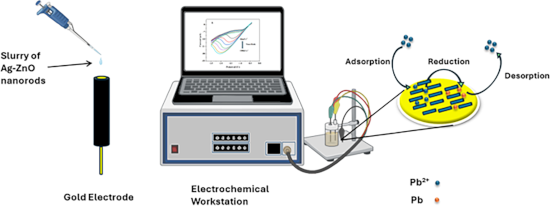
- different types of oxygen species (one at 528 eV due to lattice oxygen of ZnO and another at 530 eV due to presence of surface hydroxy group) [25][26]. Cyclic voltammetry of modified Ag@ZnO nanorods/gold electrode Figure 8 presents the results of an impedance analysis using a frequency-response analyzer
- counter electrode [27]. In order to investigate Ag@ZnO NRs response to lead, a standard cyclic voltammetry (CV) experiment was conducted both with and without lead. A typical CV sweep curve for a gold electrode modified with Ag@ZnO NRs in double-distilled water with (black line) and without (red line




Engineered PEG–PCL nanoparticles enable sensitive and selective detection of sodium dodecyl sulfate: a qualitative and quantitative analysis
Beilstein J. Nanotechnol. 2025, 16, 385–396, doi:10.3762/bjnano.16.29
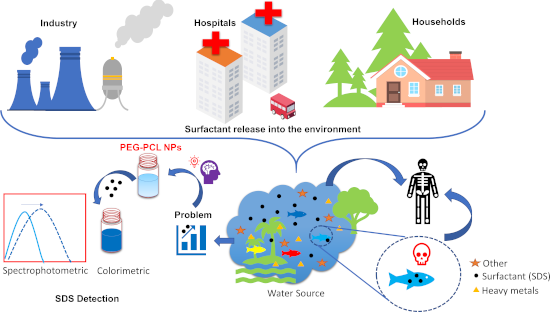
- synthesized nanoparticles exhibited a distinct colorimetric response to SDS when combined with the Bradford reagent, which acted as a linker molecule. Interference studies demonstrated the high selectivity of the method, even in the presence of various heavy metals and other surfactants. The method showed
- group containing all tested metals and surfactants, including SDS designated as SDS (+), and (3) a group encompassing all surfactants and metals except SDS designated as SDS (−). Colorimetric and spectrophotometric analyses were conducted to assess the response in each group. The quantitative estimation
- detection of SDS (Figure 4c,d). Selective colorimetric/spectrophotometric detection of SDS using PEG–PCL NPs The synthesized PEG–PCL nanoparticles demonstrated a unique colorimetric response in the presence of the Bradford reagent. This property was exploited to detect SDS using colorimetric and


Graphene oxide–chloroquine conjugate induces DNA damage in A549 lung cancer cells through autophagy modulation
Beilstein J. Nanotechnol. 2025, 16, 316–332, doi:10.3762/bjnano.16.24
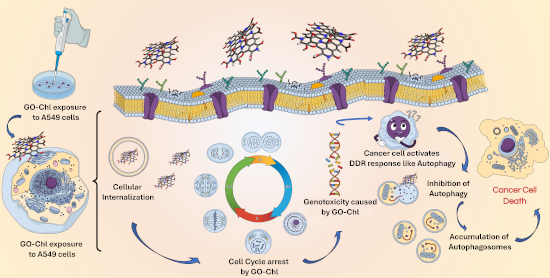
- .16.24 Abstract Autophagy is a highly regulated catabolic process by which unnecessary, dysfunctional, or damaged proteins and other cellular components are degraded and recycled to promote cellular differentiation, survival, and development. In response to endogenous or exogenous stresses, cancer cells
- -damage response. GO–Chl causes loss of plasma membrane integrity, cell cycle arrest, and significant genotoxicity in A549 cells. Further, elevated expression of key autophagy proteins beclin-1, ATG-7, LC-3-I/II, and SQSTM1/p62 reveal that inhibition of autophagy plays a crucial role in regulating DDR
- cancer cells, inducing a variety of DNA lesions. Cancer cells are equipped with complex molecular signaling pathways for recognition and repair of damaged DNA [4]. The activation of the DNA-damage response (DDR) machinery by phosphatidylinositol 3-kinase-related kinase (PIKKs) family proteins, such as