
Search results
Search for "reduction" in Full Text gives 1298 result(s) in Beilstein Journal of Nanotechnology. Showing first 200.
Effect of additives on the synthesis efficiency of nanoparticles by laser-induced reduction
Beilstein J. Nanotechnol. 2025, 16, 464–472, doi:10.3762/bjnano.16.35
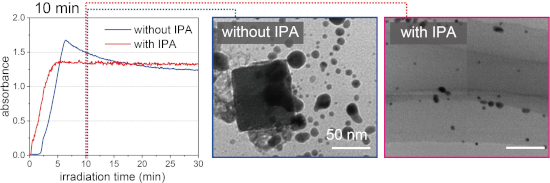
- Rikuto Kuroda Takahiro Nakamura Hideki Ina Shuhei Shibata illuminus Inc., 307 Wako Riken Incubation Plaza, 2–3–13, Minami, Wako, Saitama, 351–0104, Japan 10.3762/bjnano.16.35 Abstract Laser-induced reduction in liquid (LRL) is a physicochemical technique for synthesizing nanoparticles by
- applications. Keywords: laser-induced reduction; laser synthesis and processing of colloidal nanoparticles; production efficiency; Introduction Metal nanoparticles exhibit unique chemical, physical and optical properties that are not found in their bulk materials, and are used in a variety of fields
- including electrode materials [1], conductive pastes [2][3], catalysts [4][5], sensors [6][7][8], and drug delivery systems [9]. The chemical reduction [10] and the solvothermal methods [11][12] are well known for synthesizing nanoparticles in large quantities at low cost, but these methods require the use


Quantification of lead through rod-shaped silver-doped zinc oxide nanoparticles using an electrochemical approach
Beilstein J. Nanotechnol. 2025, 16, 422–434, doi:10.3762/bjnano.16.33
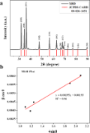
- the ZnO crystal lattice results in a decrement in the peak position values because Ag+ ion (12.2 nm) has a larger ionic size compared to that of the Zn2+ ion (7.4 nm). Consequently, the given data aligns with the decrease in the highest location of the point, indicating a reduction in the c-axis
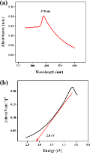
- ZnO frequently causes a reduction in the bandgap, leading to a shift toward longer wavelengths in the absorption spectra. The smaller bandgaps of the samples in optoelectronic devices provide a significant advantage [21]. Zeta potential of Ag@ZnO nanorods Surface properties of the synthesized Ag@ZnO
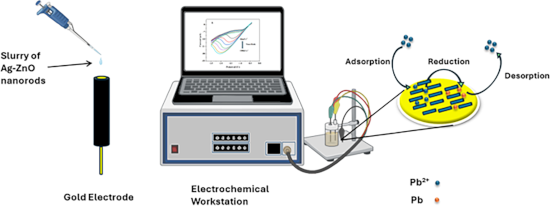
- ) lead at a 40 mV/s scan rate is shown in Figure 9. The obtained CV graph demonstrates that the gold electrode modified with Ag@ZnO NRs exhibits no response in the absence of lead (black line). However, when lead is introduced in moderate quantities, a significant reduction peak is distinctly observed in




Biomimetics and bioinspired surfaces: from nature to theory and applications
Beilstein J. Nanotechnol. 2025, 16, 418–421, doi:10.3762/bjnano.16.32
- Mechanics and Control for Aerospace Structures, College of Mechanical and Electrical Engineering, Nanjing University of Aeronautics and Astronautics, Nanjing, China 10.3762/bjnano.16.32 Keywords: adhesives; bioengineering; biomimetics; drag reduction; functional morphology; insects; medical coatings
- scaling on steel surfaces. Using silicone nanofilaments, they achieved 75.5% reduction of calcium carbonate deposition on treated steel samples. While many articles concentrated on using natural designs to inspire technological innovation (biology-push), others took an application-driven (technology-pull

Size control of nanoparticles synthesized by pulsed laser ablation in liquids using donut-shaped beams
Beilstein J. Nanotechnol. 2025, 16, 407–417, doi:10.3762/bjnano.16.31
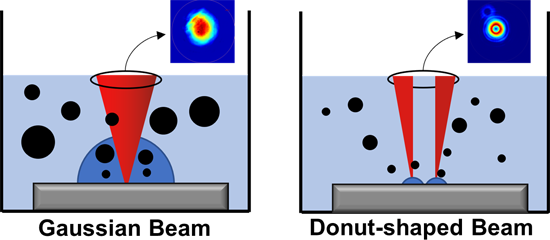
- laser beam. In experiments on pulsed laser ablation in water of gold, yttrium oxide, and high-entropy alloy targets with both Gaussian and donut-shaped beams, we observed a significant reduction in particle size, narrowing of the size distribution width, and an improvement in sphericity when utilizing
- phase transformation processes do not seem to have a major impact on the resulting sizes of NPs produced with donut-shaped pulses since the observed trends of size reduction and narrowing the distribution are similar to those for the other studied materials. The peak corresponding to the
- crystallographic plane (111) is very small but visible, whereas the other (200) and (220) peaks are not visible for the NPs. Laser irradiation plays a major role in the formation of HEA with strong (111) peak while minimizing (200) and (220) peaks [54]. The observed NP size-reduction trend for the donut-shaped


Development of a mucoadhesive drug delivery system and its interaction with gastric cells
Beilstein J. Nanotechnol. 2025, 16, 371–384, doi:10.3762/bjnano.16.28
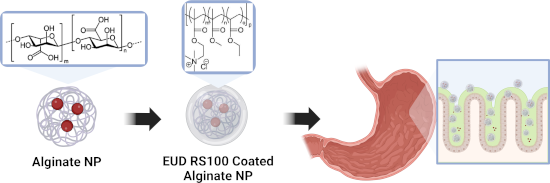
- complexes after mucin interaction. In addition to the size distribution and PDI alterations, the zeta potential of EudAlg nanoparticles shifted from 39.72 ± 6.7 to −12.13 ± 9.8 mV after interaction with mucin. The observed reduction in zeta potential is also attributed to the interaction and surrounding of
- 595 nm with a microplate reader (BioTek Synergy H1). From these optical density values, percent reduction values (representing the metabolic activity) were calculated for each time point. Data is represented as percent viability, which was calculated by the formula below. The viability percentages of


Pulsed laser in liquid grafting of gold nanoparticle–carbon support composites
Beilstein J. Nanotechnol. 2025, 16, 349–361, doi:10.3762/bjnano.16.26
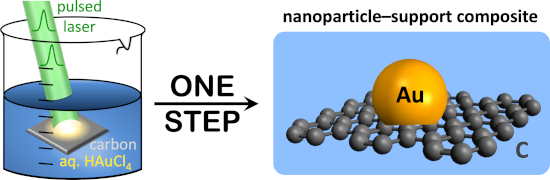
- electrocatalytic hydrogen evolution in aqueous bicarbonate reduction. Keywords: catalysis; composite; electroreduction; gold nanoparticles; impedance; Introduction The main challenge in the manufacturing of nanocatalyst-containing electrodes is the attachment of nanoparticles on electrode supports. Nanoparticles
- composites as cathodes in electrocatalytic aqueous bicarbonate reduction and compared their performance and electrical impedance to analogous electrodes that were conventionally prepared by electrostatically attaching commercial nucleation grown and citrate-capped gold nanoparticles to carbon fiber paper
- . Results and Discussion Carbon fiber paper served as electrode support material because graphite is cost-effective, scalable, and the premier electrode support material for reduction reactions [21]. Gold nanoparticles were laser grafted from aqueous HAuCl4 solution. The use of an aqueous liquid requires


Tailoring of physical properties of RF-sputtered ZnTe films: role of substrate temperature
Beilstein J. Nanotechnol. 2025, 16, 333–348, doi:10.3762/bjnano.16.25
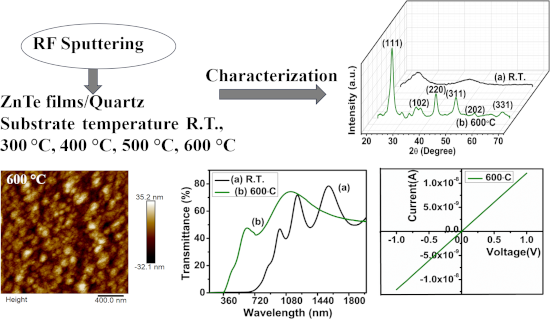
- leads to a reduction in microstrain and dislocation density. The optical studies using UV–vis–NIR spectroscopy reveal that the transmittance of films increases with substrate temperature. Further, the shift in transmittance threshold towards lower wavelengths with substrate temperature indicates that




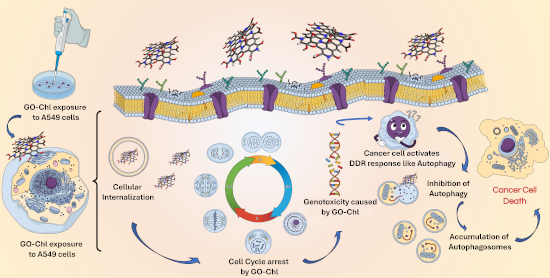
Graphene oxide–chloroquine conjugate induces DNA damage in A549 lung cancer cells through autophagy modulation
Beilstein J. Nanotechnol. 2025, 16, 316–332, doi:10.3762/bjnano.16.24
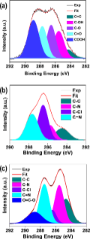
- functional groups in the GO–Chl nanoconjugate. The observed reduction in the intensity of COOH peaks for GO–Chl as compared to that of GO, could be attributed to the possible reduction of oxygen-rich functional groups as a result of their interaction with amino groups present in Chl [47]. It was observed



Fabrication and evaluation of BerNPs regarding the growth and development of Streptococcus mutans
Beilstein J. Nanotechnol. 2025, 16, 308–315, doi:10.3762/bjnano.16.23
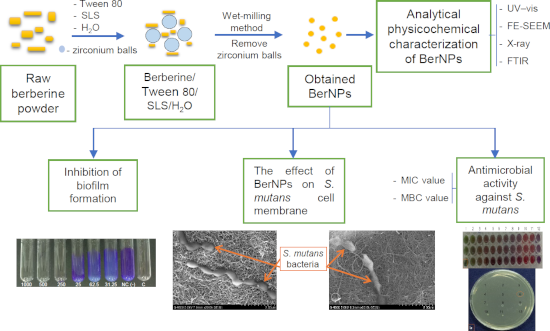
- an efficient technique for fabricating nanoparticles from crystalline structures of organic pharmaceutical raw materials [18]. Other studies have shown that incorporating surfactants into the wet ball milling process significantly enhances particle size reduction, facilitates the effective production




Enhancing mechanical properties of chitosan/PVA electrospun nanofibers: a comprehensive review
Beilstein J. Nanotechnol. 2025, 16, 286–307, doi:10.3762/bjnano.16.22
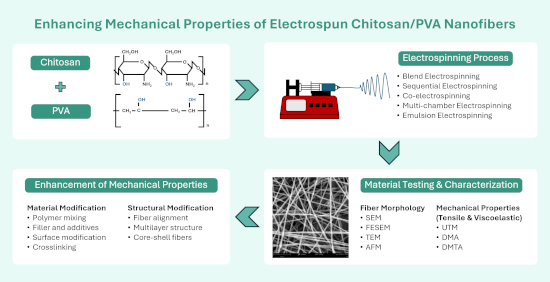
- ratio on tensile properties of the material. Koosha et al. [59] observed a reduction in ultimate tensile strength, Young’s modulus, elongation at break, and toughness with the incorporation of chitosan as opposed to pure PVA membranes. As the chitosan content increases, the tensile strength decreases
- was found to increase with increasing chitosan concentration, but only up to 3.5% (w/w); further increasing the concentration resulted in a significant reduction in elasticity. The elongation at break was also highest at a chitosan concentration of 3.5% (w/w). These results indicate that the


Emerging strategies in the sustainable removal of antibiotics using semiconductor-based photocatalysts
Beilstein J. Nanotechnol. 2025, 16, 264–285, doi:10.3762/bjnano.16.21
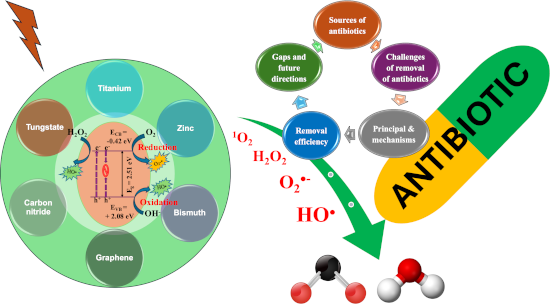
- − + h+ → HO• + H+) [35][57]. After excitation, H+ possesses the capacity to interact with electrons, generating thermal energy (H+ + e− → energy). This process results in a reduction of the photodegradation efficiency. Notably, the typical redox potential of photocatalysts must exceed that of HO•/OH
- effective segregation of light-induced charge carriers allows the CB of the second semiconductor and the VB of the first semiconductor to engage in reduction and oxidation processes, thus enhancing the photocatalytic activity. Although type-II heterojunctions can restrict photogenerated charge recombination
- eV, this material can efficiently absorb a significant amount of visible light, which is advantageous for both oxidation and reduction reactions [100]. Nevertheless, some noteworthy concerns arise, such as elevated rate of electron–hole recombination, limited surface area, restricted number of active



Preferential enrichment and extraction of laser-synthesized nanoparticles in organic phases
Beilstein J. Nanotechnol. 2025, 16, 254–263, doi:10.3762/bjnano.16.20
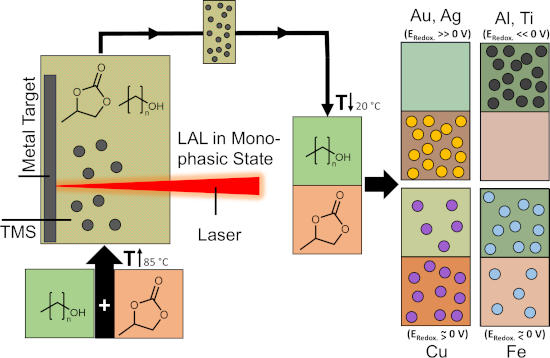
- system. The abundance of nanoparticles in PC or alcohol was found to correlate with the electrochemical reduction potential of the respective metal, where the noble metals were enriched within the more polar solvents. The polarity of the solvents (as function of the carbon chain length of the alcohol
- , polarity of the solvent, or even physical attributes (e.g., boiling point), phase transfer methods are essential. To close this knowledge gap, we have performed ablation of six different metals (Au, Ag, Cu, Fe, Al, and Ti) ranging from high to low standard electrochemical reduction potentials in a
- , changing the polarity of the non-polar solvent phase for the laser ablation of copper. Iron and copper stand in the middle of the investigated standard electrochemical reduction potential metal series and show quite interesting phase selectivity behavior. Moreover, cupreous nanoparticles are relevant for




Recent advances in photothermal nanomaterials for ophthalmic applications
Beilstein J. Nanotechnol. 2025, 16, 195–215, doi:10.3762/bjnano.16.16
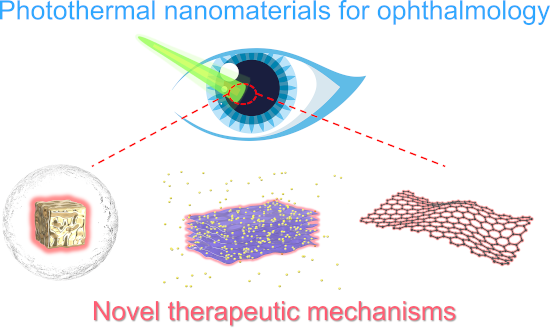
- ring, coupled with the controlled release of DOX, resulted in a significant reduction in PCO incidence, that is, only 28% in a rabbit model, 100 days post-surgery, through a combination of photothermal and drug therapy [116]. Additionally, two-dimensional Ti3C2 nanosheets loaded into IOLs were used for
- thermally destroys conjunctival fibroblasts and invasive bacteria around conjunctival vesicles, while the 5-fluorouracil (5-Fu) inhibits fibrous responses in filter vesicles, thus achieving effective IOP reduction [145]. 3.5 Endophthalmitis Endophthalmitis, commonly resulting from pathogenic infections, is


A review of metal-organic frameworks and polymers in mixed matrix membranes for CO2 capture
Beilstein J. Nanotechnol. 2025, 16, 155–186, doi:10.3762/bjnano.16.14
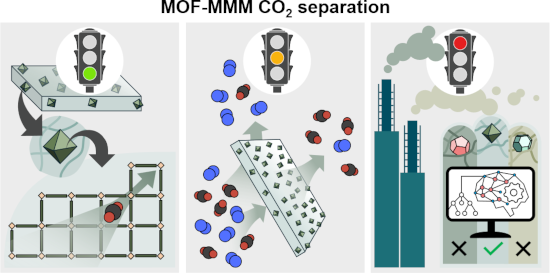
- unprecedented climate change with profound ecological and environmental consequences [1]. Therefore, the urgency of mitigating the environmental impact of elevated CO2 levels raises a strong motivation to achieve large-scale reduction of CO2 emissions [2]. In this context, CO2 capture processes have received
- application of the IL demonstrated effective adhesion between MOF–IL and IL–polymer interfaces. This resulted in a noticeable reduction of interfacial voids within the membrane, thereby facilitating a significant increment in CO2 selectivity [132]. The use of ILs (e.g., [P(3)Him][Tf2N], [Bmim][Tf2N], and




Nanocarriers and macrophage interaction: from a potential hurdle to an alternative therapeutic strategy
Beilstein J. Nanotechnol. 2025, 16, 97–118, doi:10.3762/bjnano.16.10
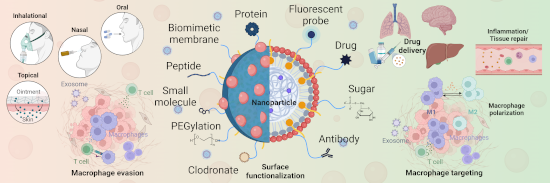
- ADP/ATP translocase in the mitochondria, ultimately leading to KCs apoptosis. When encapsulated in liposome in combination with nintedanib, a triple tyrosine kinase inhibitor, there is also a reduction in the secretion of inflammatory cytokines, which enhances the antifibrotic effects. This has been
- tirapazamine (TPZ), significantly enhanced drug accumulation in hypoxic regions of solid tumors. Macrophage-mediated delivery achieved a 3.7-fold greater tumor weight reduction than free TPZ alone or in NP form [59]. This method underscores the dual utility of macrophages as both therapeutic targets and
- STAT6 inhibitor AS1517499, zoledronic acid, or muramyl tripeptide (MTP), these liposomes inhibited M2 polarization. In preclinical breast cancer models, PAPC nanoliposomes reduced tumor growth, inhibited the M2 phenotype, and prevented pre-metastatic niche formation, achieving up to a 70% reduction in


Characterization of ZnO nanoparticles synthesized using probiotic Lactiplantibacillus plantarum GP258
Beilstein J. Nanotechnol. 2025, 16, 78–89, doi:10.3762/bjnano.16.8
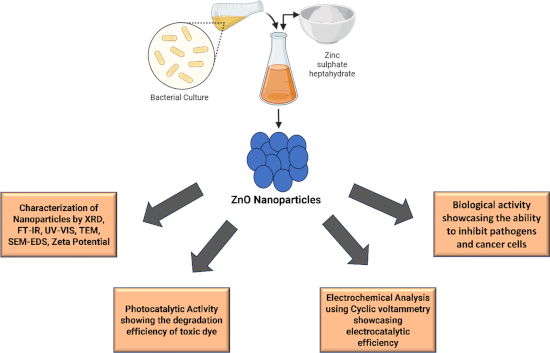
- nanoparticles (ZnO NPs), utilizing lactic acid bacteria isolated from curd as the key biological agent. Bacteria function as agents for both reduction and capping processes, which aids the synthesis of ZnO NPs. Various characterization techniques including XRD, FTIR, UV–vis, TEM, SEM-EDX, and zeta potential
- photocatalyst and 20 ppm of MB dye was exposed to UV light in order to initiate photodegradation. Measurements were taken at 15 min intervals to track the reduction in MB dye concentration. UV–visible spectrophotometry was used to measure the absorbance at 663 nm. Under UV irradiation, the photodegradation of
- reduction currents and increased peak oxidation, indicating rapid electron transport at the contacts between the electrolyte and electrode. Pseudo-capacitive behavior was observed in both electrolytes, where ionic conductivity influenced capacitance [17][18]. The addition of dextrose increased the redox



Instance maps as an organising concept for complex experimental workflows as demonstrated for (nano)material safety research
Beilstein J. Nanotechnol. 2025, 16, 57–77, doi:10.3762/bjnano.16.7
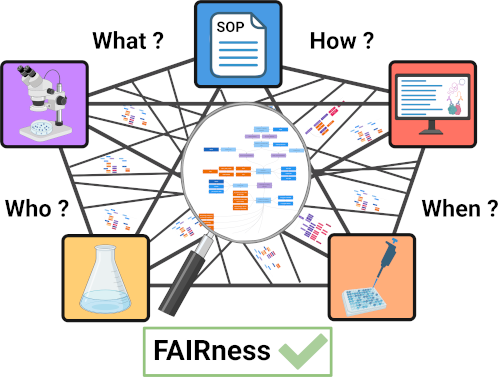
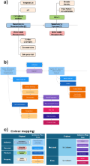
- polyvinylpyrrolidone (PVP) surface by reduction of silver nitrate in ethylene glycol with 10k PVP. The PVP-AgNPs are characterised regarding some of their physical attributes such as the particles’ shape, size, and crystalline phase. The particles are then sulfidised using different specified concentrations of the PVP


Advanced atomic force microscopy techniques V
Beilstein J. Nanotechnol. 2025, 16, 54–56, doi:10.3762/bjnano.16.6
- Joule dissipation leads to energy dissipation of the cantilever oscillation and a reduction in amplitude for constant excitation. They focus on two-dimensional materials and discuss how the reduction in amplitude resulting from energy dissipation influences the height measurement. In addition to the
Bioinspired nanofilament coatings for scale reduction on steel
Beilstein J. Nanotechnol. 2025, 16, 25–34, doi:10.3762/bjnano.16.3
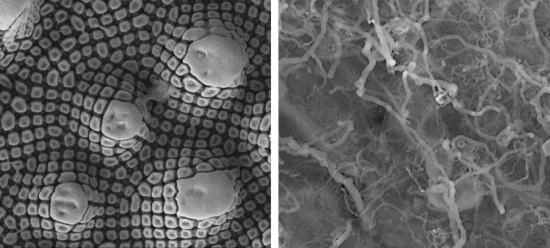
- stability on steel. Our study demonstrates the successful coating of stainless steel with SNFs, achieving super-hydrophobicity and resilience under high shear stress and explosion/decompression tests. Scaling experiments reveal a 75.5% reduction in calcium carbonate deposition on SNF-coated steel surfaces
- . This reduction is attributed to altered flow dynamics near the super-hydrophobic surface, inhibiting nucleation and growth of scale. Our findings highlight the potential of bioinspired SNF coatings to enhance the performance and longevity of steel surfaces in industrial environments. Keywords
- test. The water contact angle also remains unchanged after the decompression/explosion test (Figure 5D). Scale reduction on SNF-coated steel surfaces The scaling of SNF samples was tested in a flow loop designed for the observation of calcium carbonate scaling at surfaces. Coated and uncoated steel


Orientation-dependent photonic bandgaps in gold-dust weevil scales and their titania bioreplicates
Beilstein J. Nanotechnol. 2025, 16, 1–10, doi:10.3762/bjnano.16.1
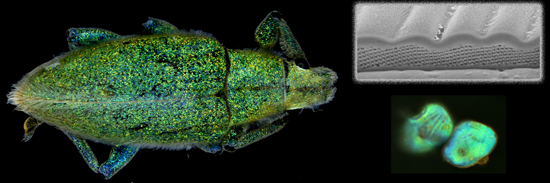
- step (130 °C). Raising the temperature slightly might increase the effective refractive index of titania before lattice degradation occurs. If the process could be additionally tuned by, for example, varying process times and chemical compositions (including hybrid sol/gels), a further reduction of


Mechanistic insights into endosomal escape by sodium oleate-modified liposomes
Beilstein J. Nanotechnol. 2024, 15, 1667–1685, doi:10.3762/bjnano.15.131
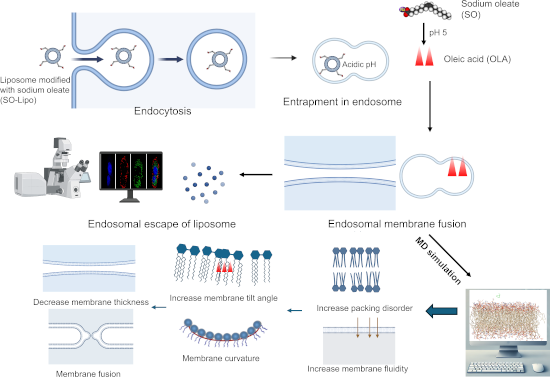
- notable stability across the studied pH range. In contrast, SO-Lipo exhibited a significant reduction in the negativity of its zeta potential (−0.86 ± 5.14 mV), consistent with the expected protonation of SO to OLA under acidic conditions. Most strikingly, AUR-Lipo underwent a critical transition, as
- reduction of resazurin to resorufin by metabolically active cells. The data reveal that Unmodified-Lipo exhibited minimal cytotoxicity at lower lipid concentrations (15.625 to 250 µM), with no statistically significant differences compared to untreated control cells (p > 0.05). However, at a concentration
- , respectively, demonstrating a dose-dependent cytotoxic effect at elevated lipid concentrations. SO-Lipo displayed a similar trend, maintaining non-significant cytotoxicity from 15.625 to 250 µM (p > 0.05), supporting the biocompatibility of the SO modification at lower concentrations. A noticeable reduction in




Fabrication of hafnium-based nanoparticles and nanostructures using picosecond laser ablation
Beilstein J. Nanotechnol. 2024, 15, 1639–1653, doi:10.3762/bjnano.15.129
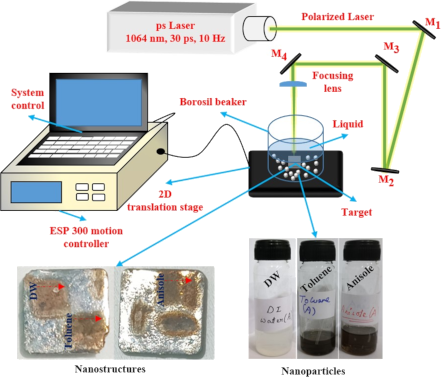
- liquids was also investigated. Experimental Materials Hf sponge was produced by metallurgical operations involving solvent extraction, briquetting, carbochlorination, Kroll reduction and vacuum distillation. The sponge samples were further refined by consolidation and refining under vacuum (3–6 × 10⁻⁵
- 60°) taken in the wavelength range from 250 to 1200 nm. The black curve corresponds to the reflectance spectrum of the reference pristine Si sample; the red curve is HfNPs-T, the blue curve is HfNPs-A, and the green curve is HfNPs-D. The values of the reflectance and reduction in the UV (λ = 250 nm
- with far superior and stable optical absorption compared to similar HfC NPs synthesised in our earlier work [31]. With an increase in angle, a reduction in absorption was observed for HfNPs-D, HfNPs-T, and HfNPs-A. A decrease in absorption was also observed with an increase in wavelength at a constant




Biomimetic nanocarriers: integrating natural functions for advanced therapeutic applications
Beilstein J. Nanotechnol. 2024, 15, 1619–1626, doi:10.3762/bjnano.15.127
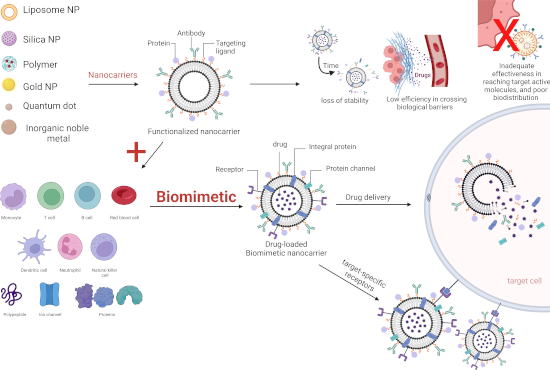
- activity of polylactic glycolic acid (PLGA) nanoparticles coated with membranes, Zhang et al. (2021) tested nanoparticles loaded with gambogic acid and coated with red-blood-cell-derived membranes in colorectal cancer cells. They demonstrated a reduction in phagocytosis, increasing the circulation time of
- the nanoparticles due to the coating [63]. A similar study with nanoparticles coated with cytotoxic T lymphocyte membranes for the treatment of gastric cancer showed a reduction in macrophage uptake compared to other membrane types [64]. Other studies on nanoparticles loaded with the antitumor


Liver-targeting iron oxide nanoparticles and their complexes with plant extracts for biocompatibility
Beilstein J. Nanotechnol. 2024, 15, 1593–1602, doi:10.3762/bjnano.15.125
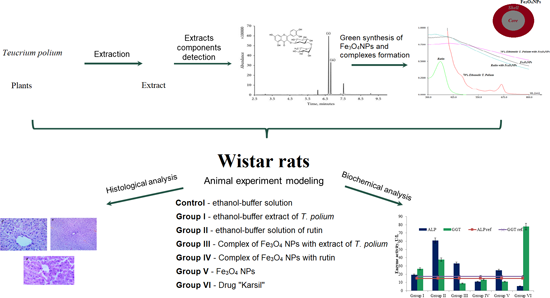
- hypolipidemic effect through a reduction in LDL cholesterol, despite preserving synthetic functions of the liver. Fe3O4 NPs enhance GPx activity, which is attributed to their peroxidase-like enzyme-mimetic properties, while concurrently preserving the architecture of liver tissue. Taking the above into account


Facile synthesis of size-tunable L-carnosine-capped silver nanoparticles and their role in metal ion sensing and catalytic degradation of p-nitrophenol
Beilstein J. Nanotechnol. 2024, 15, 1576–1592, doi:10.3762/bjnano.15.124
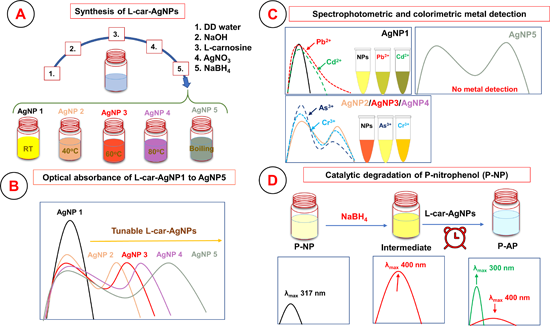
- purification. Before the experiment, glassware was cleaned with aqua regia and rinsed twice with double distilled (DD) water. Methods Tunable plasmonic silver nanoparticle synthesis using ʟ-carnosine Silver nanoparticles with tunable plasmon wavelength were synthesized using a wet-chemical reduction approach
- -chemical reduction approach. The precursor metal salt was reduced in the presence of the stabilizing or capping agent. Figure 1 shows a schematic representation of the ʟ-car-AgNP synthesis. The sample ʟ-car-AgNP1 was synthesized at room temperature by sequentially mixing water, NaOH, ʟ-carnosine, AgNO3